
“The best way to forget your troubles is to be constantly on the go. Keep on the crest of the wave all the time and never give yourself the time to think when things are bothering you”..Mae Murray, 1926
Posts Tagged With: Mae Murray
“Once you become a star, you are always a star.” – Mae Murray, protesting when the studio wanted to re-release Delicious Little Devil to cash-in on Rudolph Valentino’s popularity. Mae Murray demanded to retain her star billing.
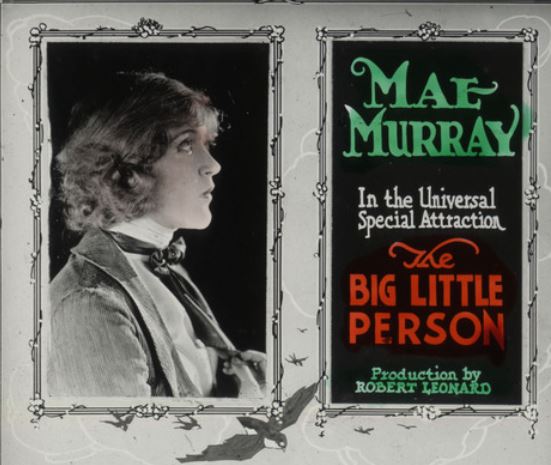
The best way to forget your troubles is to be constantly on the go. Keep on the crest of the wave all the time and never give yourself the time to think when things are bothering you..- Mae Murray, 1926
1925 – Ghosts of Christmas Past
The Christmas holidays in the 1920’s were all about fun, friends, and family with none of the commercialism that exists today. Rudolph Valentino may have had his share of memorable Christmas’s but his last one on this earth was not spent with the one he truly wanted to be with and that was his wife Natacha Rambova who was in the process of divorcing him.
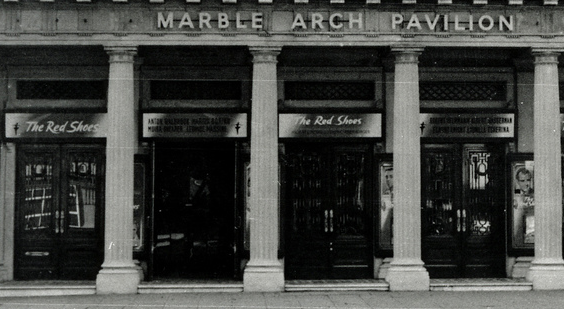

23 November 1925, Rudolph Valentino arrived in London to promote and attend the premiere of his movie “The Eagle” at the Marble Arch Pavilion. During his time in the city he stayed at the Hyde Park Hotel. Rudy’s last Christmas on earth was spent with the people that mattered most to him and that was with his sister Maria, Brother Alberto and his family. This was the first time in many years that the family was together. Brother Alberto was able to view firsthand the adoring crowds where people stopped traffic just for a glimpse of his famous brother. Although time spent together was special for the Guglielmi family Rudy sat down and as a family their futures were discussed. Dec 31st, Rudy traveled to Monte Carlo and spent New Year’s Eve with Mae Murray and good friend Manual Reachi, husband of former co-star Agnes Ayres. Rudolph Valentino celebrated the holidays as only he knew how. As the clock struck midnight and 1926 arrived Rudolph Valentino was still dealing with the ghosts of his Christmas past.
“Why sing of Joy if Joy is to be unheard. Why sing of Faith if Faith is to be barred. For all that is good is Forever alive, and all that is bad is dead before it is born”.
Categories: Uncategorized
Tags: Alberto Valentino, Mae Murray, Natacha Rambova, Rudolph Valentino
Leave a comment
The best way to forget your troubles is to be constantly on the go. Keep on the crest of the wave all the time and never give yourself the time to think when things are bothering you. –Mae Murray, 1926
“I don’t want to leave you Murray. You and I are in tune. You do things to my heart.” — Rudolph Valentino on Mae Murray
“The best way t…
“The best way to forget your troubles is to be constantly on the go. Keep on the crest of the wave all the time and never give yourself the time to think when things are bothering you.” Mae Murray, 1926, Former co-star of Rudolph Valentino
My Friendship with Rudolph Valentino
I had met many well-known personalities during those weeks in New York City and among them was Rudolph Valentino. He was a magnificently built man and his disposition was as delightful as his physique. Just to see his expressive hand lying on the back of a chair was art. Valentino and I happened to be in the same group one afternoon. He came over and sat by me and we seemed to be friends immediately. No wonder women were crazy about him. They were when I first met him, although he had not became famous as an actor then. But he had already done his chores and worked for recognition the hard way. I knew all this, somehow, without being told. Rudy and I had a unique understanding. We were attracted to each other from that first afternoon. Call it sex if you will, but more correctly call it a dancing friendship, which is why our bond lasted, lived long and strong. Rudy was drawn to me that first meeting and he was waiting for me after a Ziegfeld Folly Rehearsal that night. We went dancing – danced hours and hours. I’ll never forget that night another night of dancing rhythm. I was in all white and Rudy, tall and dark was in black we provided a striking contrast. When we walked onto the dance floor it seemed that everyone stopped to look at us. How Rudy loved to tango! He had a sense of timing quite unlike any other man I’ve ever danced with. It was late when we started home that night, and in the cab he put his arm around me. There was something sweet and tender, almost child-like about Valentino. I responded to this. I felt that he wanted to make love to me. I hoped he would have the intelligent grace to wish me luck and just be my friend. I wanted to keep his dancing friendship. Rudy was sought after. Women adored him became fools over him. I didn’t go that far. I have never been the clinging kind; Valentino seemed to find this attractive because he said that I did things to his heart. He became my shadow. I found him sitting in the theater during rehearsals watching and waiting for me. One evening he walked with me in the park. It might have looked strange to many of our friends had they seen us walking in Central Park at two in the morning holding hands, saying nothing, happy together. Now I was about to make “Delicious Little Devil” and word came to me that Rudolph was in serious trouble and needed help. Jack de Saulles had learned that Rudy would be his wife’s witness in her divorce from him. So, Jack to discredit Rudy’s testimony and through his influence, position and money, had been able to have Rudy held on a false charge. But Rudy was able to prove within a few days he was innocent of that charge and was freed. I knew the anguish in Rudy’s heart. I knew that he realized that he could do nothing to help the woman he loved, and that Jack was determined not to let her have her way in the divorce which meant taking the child with her to Chile. Rudy was now unable to get work in Cabarets. Jack had seen to that. In my picture Rudy took the part of the playboy son of an Irish contractor. The part brought him to the attention of the entire movie industry. He was very good. So good in fact that he was soon as we all know, launched on the brilliant career that began with his part in the Four Horsemen.

1919 The Delicious Little Devil
Rudolph Valentino shot to stardom in 1921 with the release of The Four Horsemen of the Apocalypse, The Conquering Power and The Sheik. He had already appeared in over twenty films, mostly in smaller roles (often as a villain) and with varied spellings of his name in the credits. He made seven pictures in 1919 alone. Of these, all but three were lost. Delicious Little Devil is one of the three existing Valentino efforts from 1919. He does play a romantic role in the film but is fourth billed — as Rudolpho De Valentina.
The name above the title in Delicious Little Devil is Mae Murray. The former Ziegfeld Girl had known Valentino in their New York days and lobbied for him to have the part in Delicious Little Devil. It helped that Murray’s husband, Robert Z. Leonard, was the director of the film. Or at least it seemed to help at first; later on, by Murray’s account, there was tension between Valentino and Leonard. She attributed the problem to jealousy, recalling how she and Valentino often danced between takes. In fairness, Leonard did cast Valentino opposite Mae again, in Big Little Person (1919) – but this time his role was an unsympathetic, two-timing fianc.
Robert Z. Leonard had himself been a silent actor, appearing in over 100 films before turning director for The Master Key (1914). He met Murray on 1916’s The Plow Girl. A few years, and several films later in 1918, they married. Leonard would direct Murray in twenty plus movies and they would form their own production company called Tiffany Productions. In 1924, Leonard directed Murray in Mademoiselle Midnight (1924) for MGM. This film kicked off a thirty-year association between Leonard and the studio. Unfortunately the Leonard-Murray relationship wasn’t so long-lived. The couple divorced in 1925 after seven years of marriage.
Another, even shorter union occurred in 1919 after Delicious Little Devil’s release. That was the year Valentino married actress Jean Acker in one of the shortest celebrity marriages on record. The couple wed on November 5 after a two-month courtship but the marriage only lasted a reported six hours. As the story goes, Acker and Valentino quarreled and she locked him out of their hotel room on their wedding night. They separated but the divorce wasn’t finalized until March 1923. In the meantime, Valentino met and eloped with former ballerina turned set designer Natacha Rambova in May 1922. He was charged with bigamy when it was discovered that he was not yet divorced. And Acker sued for the right to call herself his wife – literally. Acker was credited in the 1923 film The Woman in Chains as “Mrs. Rudolph Valentino.” Valentino remarried Rambova in 1923 after his divorce was granted. And he and Acker eventually reconciled, becoming friends before his 1926 death.
As for Delicious Little Devil, Valentino’s fourth billing would eventually come into dispute. Later, after he’d become famous, the studio wanted to reissue Delicious Little Devil and several other early Valentino pictures. The idea was to ride the wave of Valentino’s popularity by playing up his smaller roles in these films – to perhaps even add some new titles and to change the order of billing. But Mae Murray protested and demanded to retain her star billing. She was unfazed by Valentino’s newfound success and assured in her own stardom, remarking, “once you become a star, you are always a star.”
Director: Robert Z. Leonard
Screenplay: John B. Clymer, Harvey F. Thew
Cinematography: Allen G. Siegler
Cast: Mae Murray (Mary McGuire), Harry Rattenbury (Patrick McGuire), Richard Cummings (Uncle Barnley), Rudolph Valentino (as Rudolpho Valentina, Jimmy Calhoun), Ivor McFadden (Percy), Bertram Grassby (Duke de Sauterne).
Source:
TCM
23 Mar 1965 – Mae Murray Died
Mae Murray, the glamorous, famous, and beautiful Hollywood icon who told the press, “Once you become a star, you are always a star!” was found destitute at the age of 75, aimlessly wandering the streets of St Louis, Missouri.
Marie Adrienne Koenig was born of Austrian-Belgian parentage May 7, 1889, in Portsmouth, Virginia. Years later, she told everyone she was born Mae Murray, “On my father’s boat, whilst we were at sea.”
The imaginative and ethereal Mae also stated that a great-grandmother had raised her, placing her in several European convents. While in one of the churchyards, she told, she was punished for dancing in the gardens at night pretending to be a firefly and striking matches as she fluttered through the grounds.
In 1906, the stunning young performer made her Broadway debut in About Town. Murray then danced in three editions of the Ziegfeld Follies; in 1907 as the partner of the famous Vernon Castle, and alone in 1909 and 1915. The dazzling Murray also appeared in numerous other musical comedy roles and headlined performances in fashionable New York supper clubs.
Still in her teens, Mae married W.N. Shwenker Jr., the son of a millionaire. She got out of that marriage with some funds, and secured her second husband, producer Jay O’Brien, a stockbroker and Olympic bobsled champion known as the “Beau Brummel” of Broadway, and who proved to be helpful in Murray’s stage career.
Only days after their highly publicized wedding, and soon after her involvement with Rodolfo Guglielmi, a dancer billed as Signor Rodolfo who was later to become Rudolph Valentino, in the De Saules affair in New York in which Valentino’s socialite lover shot her husband to death for him, she dumped Jay and had the good fortune to marry Hollywood director Robert Z. Leonard. They lived in a beautiful apartment at 1 West 67th Street in New York. With this union she found her true destiny as a movie queen, and made her film debut in the east coast filmed To Have And To Hold (1916). Blonde and sensuous, standing five-foot-three with blue-gray eyes, the hideously arrogant Miss Murray was completely obsessed with her beauty.
She became famous for the extreme and unusual application of her lipstick, soon copied by millions of fans, and was widely known as “The Girl With The Bee-Stung Lips,” a title of which she tried to claim exclusive copyright. Often seen zipping through town in her custom-built Canary Yellow Pierce Arrow, the star was always opulently dressed and dripping in jewels. Once, reportedly, when purchasing some jewelry at Tiffany’s, she paid for it with tiny bags filled with gold dust.
In Hollywood, Murray’s films included The Right To Love (1920), The Gilded Lily (1921), The French Doll (1923), Jazzmania (1923), Circe The Enchantress (1924), and Fashions Row (1924). One critic wrote of her film Mademoiselle Midnight (1924) as “More of Mae Murray’s fuss and feathers thinly described as acting. This time Mae has her histrionic hysterics in Mexico. The general blurred impression given by the picture is this: Mae Murray-large mountains-Mae Murray-midnight love trysts-Mae Murray-a weird fandango by somebody described as a screen star-Mae Murray-cowboys having spasms-Mae Murray.”
The public loved her. The exquisite and elaborate costuming she insisted upon often brought her movies in way over their budget. Yet, Mae Murray danced her way to even greater heights of fame in Erich Von Stroheim’s The Merry Widow (1926). During the filming, their artistic differences and verbal brawls became an infamous Hollywood legend. She often referred to her director as “that dirty little Hun,” which she brazenly called him in front of a thousand extras magnificently dressed for a ballroom scene.
One day, her co-star John Gilbert walked off the set during one of his own disputes with Stroheim, and the tenuous Murray chased after him to the parking lot while wearing nothing at all but her shoes. Also during filming, the very young Joan Crawford often watched and studied Murray intently, learning how to be a star. The Merry Widow became MGM’s first big box office hit. The movie was extraordinary, with lavish production values and gorgeous photography. Mae Murray gave the best performance of her career, and then toured the nation holding lucrative performances of her Merry Widow Waltz. She followed this film success with Valencia (1926).
One of Murray’s glamorous screen rivals, Gloria Swanson, married the Marquis Henri de la Falaise de Coudray, and became royalty. This infuriated Murray, who wanted to become royalty too. Dumping her third husband, Murray found and married broke Ukrainian Prince David Mdivani in 1926. His royal status in his native Georgia was never truly established.
The headline producing ceremony included Rudolph Valentino, who died that same year, and his paramour, sultry star Pola Negri, Mae’s other screen rival, as matron of honor. Not to be outdone by Princess Mae, and not so long after the professed love of her life died, Negri married David’s equally broke brother Sergei in 1927 and became Princess Pola, as well as Princess Mae’s sister-in-law. The two Princesses were completely committed to the important cause of showing the world they were above mere mortals.
With Prince David, Murray had a son named Koran. Princess Mae was rarely photographed without her head swung way back, looking down her nose at her adoring husband and fans. She stated to the press, “I’ve always felt that my life touches another dimension.” When her marriage went bad, her doctor told her, “You live in a world of your own.”
Mae’s sweet Prince became her manager, took over her finances and insisted she walk out on her MGM contract to work independently. Soon, she found it difficult to get any roles at any studio. Sound film hit Hollywood. Her final movie was Bachelor Apartment (1931) with Irene Dunne, and the world was not pleased when it heard her voice.
By 1933, she was broke, ordered by the court to sell her opulent Playa del Rey estate to pay a judgement against her. Prince David now found her useless, and they soon divorced. In 1934, Murray declared bankruptcy. By September of 1936, she lost custody of Koran, and the former movie temptress was spending several nights sleeping on a park bench in New York, where she was arrested for vagrancy. The owners of the 67th Street residence where she resided luxuriously years before allowed her to live in the maid’s room of the building.
In 1950, back in California, Mae Murray was asked her opinion of the great film Sunset Boulevard, which starred her old rival from the silent film days, Gloria Swanson. Mae stated, “None of us floozies was ever that nuts.” Ironically, Mae was the nuttiest of them all. Walking down Sunset Boulevard with her head thrown back even further than she had done in her youth, Mae created a smoother jawline, watching the sky as she carelessly moved towards treacherous curbs and posts.
At the numerous charity balls she would attend, Mae Murray would ordain the orchestra to play the theme song from The Merry Widow soundtrack, waltzing to it by herself until all the elegant guests left the floor. In 1959, a biography of her life appeared, The Self Enchanted by Jane Ardmore, but the public was not interested. In 1961, she appeared on a television program where she stated that the only present day movie star who matched the talents of her time was the handsome Steve Reeves, famous for playing Hercules.
In 1964, living off charity and devoted friends, the poor deluded Murray continually traveled by transcontinental bus from coast to coast on a self promoted publicity tour, hoping for a comeback in movies. On the last of these excursions, she lost herself during a stopover in Kansas City, Missouri, and wandered to St. Louis. The Salvation Army found her and sent her back to her small Hollywood apartment near the Chinese Theatre, paid for by actor George Hamilton..
Mae Murray’s millions of dollars had been spent during a bitter life filled with lawsuits over salary agreements, damages, divorces, and bankruptcies. Some of Mae’s old friends made sure the still regally dressed and bejeweled star spent her last days in peace at the Motion Picture Country House where she often told the nurses, “I am Mae Murray, the Princess Mdivani,” and died in peace March 23, 1965.
During the height of the depression of the 1930’s, which had wiped away many fortunes, Mae Murray gave an interview, lucidly describing the Gods and Goddesses of her Hollywood days. “We were like dragonflies. We seemed to be suspended effortlessly in the air, but in reality our wings were beating very, very fast
Source:
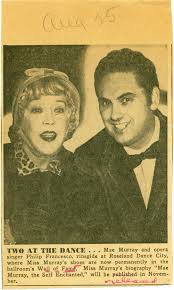
 All About Rudolph Valentino
You must be logged in to post a comment.