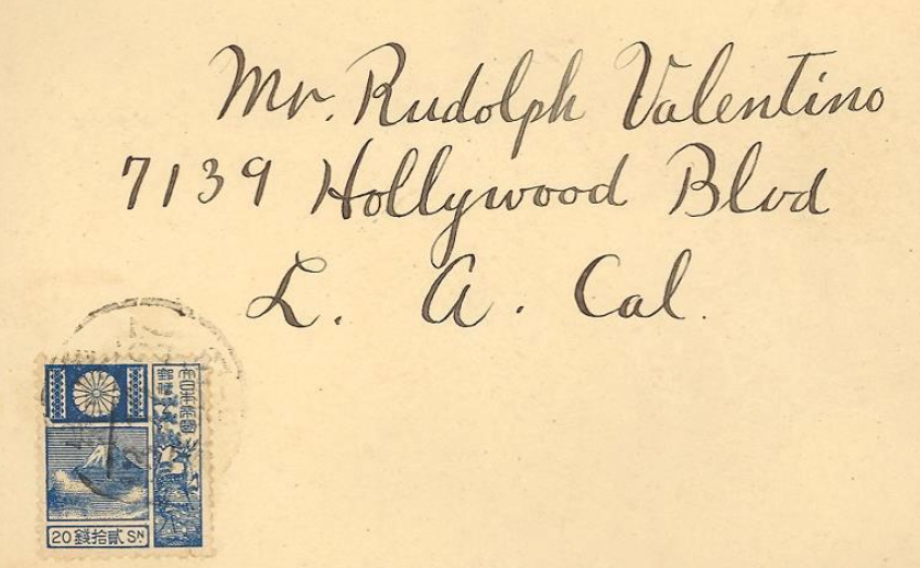
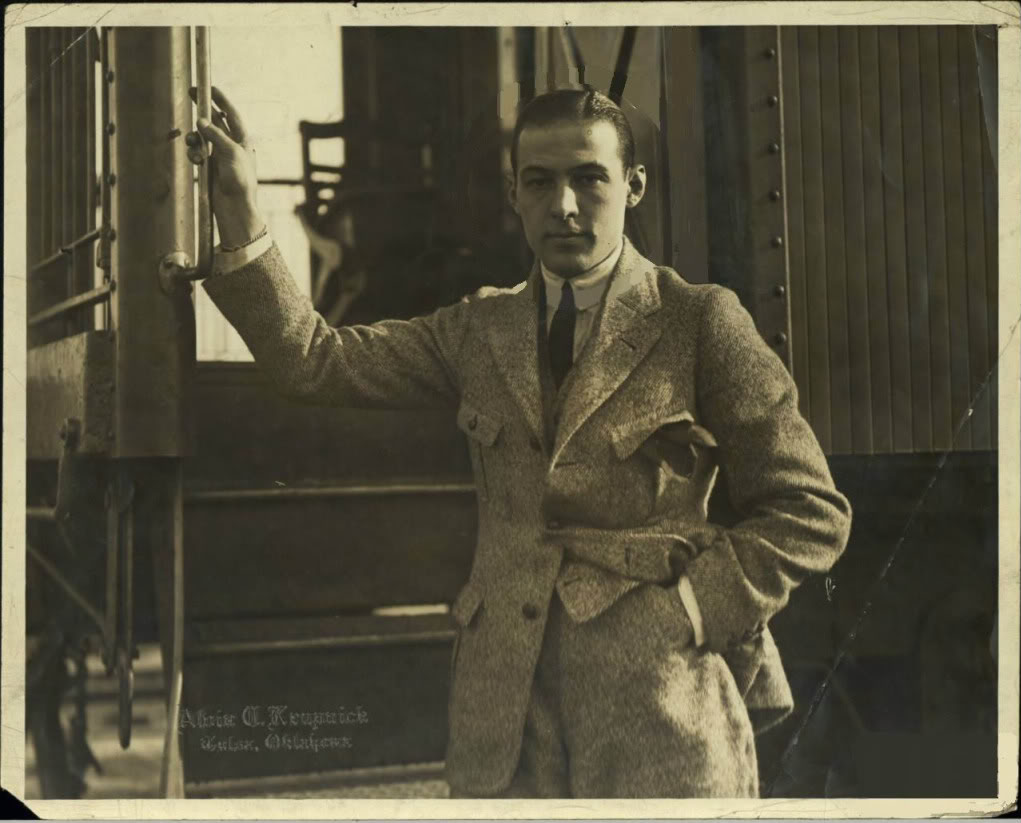
17 Dec 1926 – Will not Auction Rudolph Clothes off
The lavish wardrobe of Rudolph Valentino will not go on the auction block with the remainder of his personal effects now being sold here. George Ullman executor of the film star’s estate, ruled Thursday. The announcement was made as Ullman opened Valentinos trunks preparatory to placing their contents on sale. “I can’t do it,” he said. “Those clothes nearly talked to me. Rather than let anyone else have them, I’ll buy them myself if necessary.” Mrs Teresa Werner an aunt of Natacha Rambova, divorced wife of Rudolph Valentino and a share holder in the estate, with the actor’s brother and sister, was among the purchasers at today’s auction. She paid $70.00 for two sterling silver picture frames. Adolphe Menjou and Ernest Torrance, screen actors were also successful bidders, Menjou paying $56.00 for a small brass incense burner and Torrance $170 for an antique painting on a wooden panel.
2 Aug 1925 – Valentino is Heard by High School Students
Recent dispatches from Los Angeles tell of Rudolph Valentino having addressed 5000 Hollywood High School students at a gathering in Memorial Auditorium where he talked to them on the ethics of scholastic sports. The address was loudly applauded by the boys as well as the girls. The celebrated screen star also introduced to the students Federico Beltram-Masses noted Spanish painter who declared the greeting of the students had touched him more deeply than any other he had received in this country. Valentino translated the words of Beltram-Masses as the great artist English is not fluent. Beltram-Masses appeared with a deep gash on his forehead revealing him and Rudolph had been in an automobile accident which might have been serious as they were returning from San Francisco. The car struck a gulley and careened. The star was shaken severely but little hurt.

28 Dec 1924 – Mineralava Tour Stop Chicago Contest Winner Escapes Paupers Grave
On 27 Dec 1924, Angelita Cuccinello recently picked by Rudolph Valentino from among 10,000 contestants as Chicago’s Prettiest Girl was killed by a skidding truck. Her body laid unclaimed in the morgue for three days. She was saved from burial in Potters Field last night when Mrs. McGarity, blind wife of a lake captain paid a debit of gratitude by providing a fine coffin.
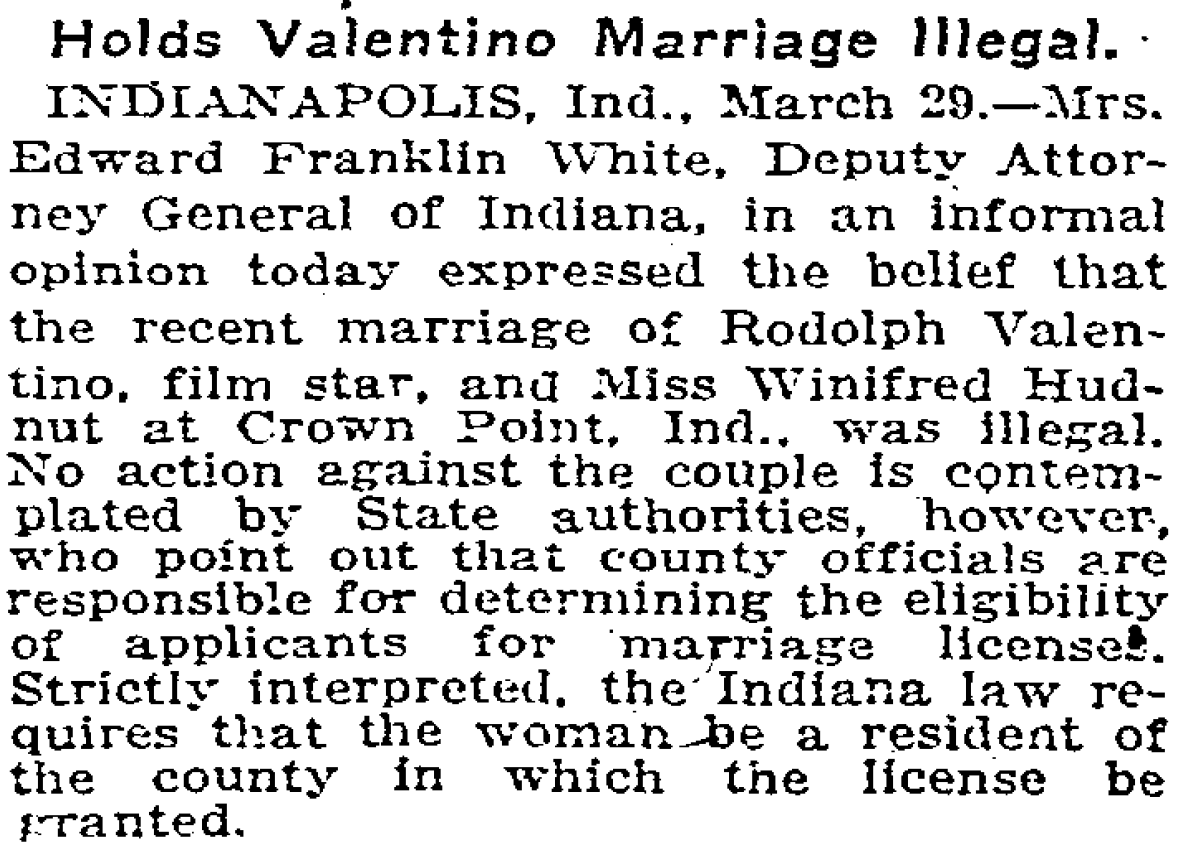
“I will say that the love made me do what I have done was prompted by the noblest intention that a man could have. I loved deeply. But in loving I have erred.”..Rudolph Valentino on marrying Natacha Rambova early.

18 July 1925 – Hollywood is Talking
All Hollywood is talking over the fact that Natacha Rambova has decided to stop running her husband’s affairs and produce pictures of her own. Mr. Rudolph Valentino from now on will be his own manager. Miss Rambova has hired Alan Hale as her director and her first picture will be called “What Price Beauty” staring Nita Naldi and Pierre Gendron, a newcomer. Miss Rambova will design the sets and costumes.
“The best way t…
“The best way to forget your troubles is to be constantly on the go. Keep on the crest of the wave all the time and never give yourself the time to think when things are bothering you.” Mae Murray, 1926, Former co-star of Rudolph Valentino
13 MAY 1922- Purchase of one of the handsomest homes in Hollywood by Rudolph Valentino
Rudolph Valentino, confirms the Impression that his engagement to Miss Natacha Rambova, which has just been announced, is to result in their early marriage. They will, however, defer their honeymoon until summer when they will enjoy a motor tour of Europe and pay a visit to the War’s family in Italy, whom he has not seen for a number of years. The bride-to-be. who is a daughter of Richard Hudnut. New York manufacturing chemist got her professional name when she became a premiere dancer with Theodore Kostloff
30 Jul 1922 – Interesting Facts
Dear Movie Man,
I think Rudolph Valentino is lovely. I saw in “The Sheik”. Where was he born? How old is he? Is he married and to whom? Will you please give me his address? Do you think he will send me his picture? From Bright Eyes, Jamestown, RI
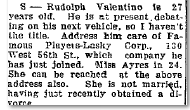
Rudolph Valentino is 27, born in Italy, married to Winifred Hudnut, he is with Lasky Studio, 1520 Vine Street, Los Angeles, CA. I say that at least 10 times every night in my sleep, I know it so well.
Lady Diane “Why…
Lady Diane “Why–why have you brought me here?” Ahmed “Mon Dieu, are you not woman enough to know?” From the movie The Sheik


My Friendship with Rudolph Valentino
I had met many well-known personalities during those weeks in New York City and among them was Rudolph Valentino. He was a magnificently built man and his disposition was as delightful as his physique. Just to see his expressive hand lying on the back of a chair was art. Valentino and I happened to be in the same group one afternoon. He came over and sat by me and we seemed to be friends immediately. No wonder women were crazy about him. They were when I first met him, although he had not became famous as an actor then. But he had already done his chores and worked for recognition the hard way. I knew all this, somehow, without being told. Rudy and I had a unique understanding. We were attracted to each other from that first afternoon. Call it sex if you will, but more correctly call it a dancing friendship, which is why our bond lasted, lived long and strong. Rudy was drawn to me that first meeting and he was waiting for me after a Ziegfeld Folly Rehearsal that night. We went dancing – danced hours and hours. I’ll never forget that night another night of dancing rhythm. I was in all white and Rudy, tall and dark was in black we provided a striking contrast. When we walked onto the dance floor it seemed that everyone stopped to look at us. How Rudy loved to tango! He had a sense of timing quite unlike any other man I’ve ever danced with. It was late when we started home that night, and in the cab he put his arm around me. There was something sweet and tender, almost child-like about Valentino. I responded to this. I felt that he wanted to make love to me. I hoped he would have the intelligent grace to wish me luck and just be my friend. I wanted to keep his dancing friendship. Rudy was sought after. Women adored him became fools over him. I didn’t go that far. I have never been the clinging kind; Valentino seemed to find this attractive because he said that I did things to his heart. He became my shadow. I found him sitting in the theater during rehearsals watching and waiting for me. One evening he walked with me in the park. It might have looked strange to many of our friends had they seen us walking in Central Park at two in the morning holding hands, saying nothing, happy together. Now I was about to make “Delicious Little Devil” and word came to me that Rudolph was in serious trouble and needed help. Jack de Saulles had learned that Rudy would be his wife’s witness in her divorce from him. So, Jack to discredit Rudy’s testimony and through his influence, position and money, had been able to have Rudy held on a false charge. But Rudy was able to prove within a few days he was innocent of that charge and was freed. I knew the anguish in Rudy’s heart. I knew that he realized that he could do nothing to help the woman he loved, and that Jack was determined not to let her have her way in the divorce which meant taking the child with her to Chile. Rudy was now unable to get work in Cabarets. Jack had seen to that. In my picture Rudy took the part of the playboy son of an Irish contractor. The part brought him to the attention of the entire movie industry. He was very good. So good in fact that he was soon as we all know, launched on the brilliant career that began with his part in the Four Horsemen.
1926 – In Memoriam Rudolph Valentino
He is not dead for whom the thousands weep. The strong young body only lies at rest, The dark eyes closed in lovely ancient sleep, The warm heart stilled within the quiet breast, Where trees and flowers fragrant vigil keep. Above the couch of their beloved guest. As gently as Loves tender hands, earth lies on his dark head and leaves his spirit free. To win the greater goals of Paradise, and know the triumphs of that mystery which, veiled beyond our mute, horizoned skies, grants youths brief flame immortality.
27 Oct 1923 Rudolph Valentino may come to Australia
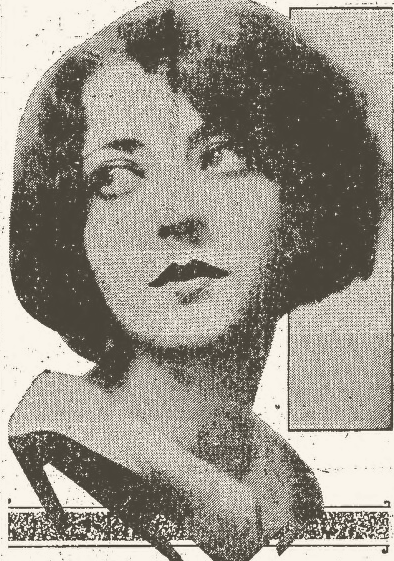
Rudolph Valentino may come to Australia. It is Rudolph Valentino’s ambition to start a company of his own, and it is his intention to have Mr. J.D. Williams in with him. He says that after he has selected a play, he may go to any place in the world to produce it, for he believes that a motion picture should be taken in real surroundings, not in a faked setting. “so my next film,” he states, “maybe produced anywhere in the world – maybe in Australia, which country, I admit, fascinates me,” I has long been his wish to go to Australia.
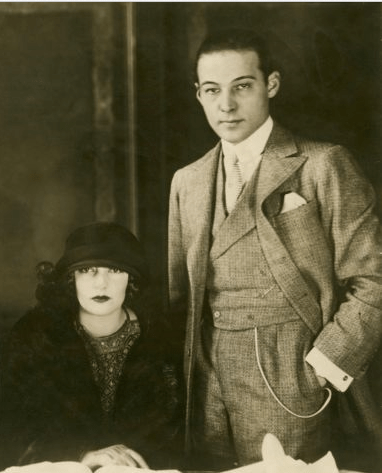
30 Jan 1926 Who was at the MET
Rudolph Valentino was a guest in Box 41, Metropolitan Opera House last evening. The film star was the object of general attention during intermissions, as he walked with his nephew a small boy in a sailor suit, on the grand tier promenade.
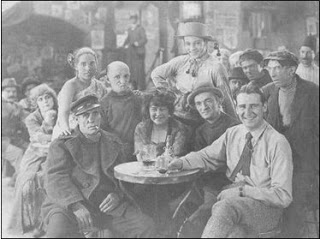
“Gossip – never…
“Gossip – never related in the same way. When you eat hash you do not always recognize the different kinds of meat in it, do you? So it is with Twice Told Tales”..Rudolph Valentino
20 Jul 1929 – Valentino Nephew wants to be a star
The name of Valentino may flash again across the silver screen Jean Guglielmi Valentino, 14 year old nephew of the late Rudolph Valentino has arrived in New York from Italy in quest of film laurels. He announced his hopes to take sheik roles in Hollywood pictures.

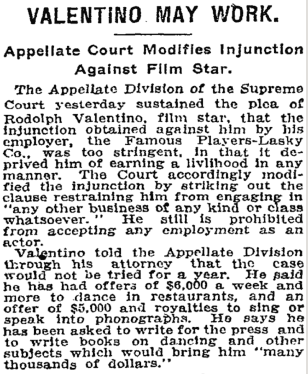
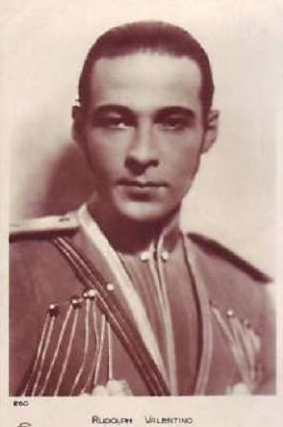

3 Oct 1926 – Valentino’s Victories
Rudolph Valentino’s death has created a remarkable demand for all films in which he was featured, and in this respect he is unique. Old pictures of his have been revived later productions are having a new popularity. Virtually “discovered” as regards the prominent part of his success in 1920 by June Mathis and featured in the celebrated Rex Ingram/Mathis picture of the war, Valentino’s career as regards its major portion was only six years in duration. During that time he spent nearly two years away from the screen. His romantic appeal and fame have been world-wide and apparently are even despite his death.
8 Jul 1926 – Pola and Rudy Vie on Screen
Pola Negri and Rudolph Valentino maybe subjects for cupids attention
and they may be married in Europe next year, as Pola’s mother recently
announced. But box-office rivalry goes on just the same! This fact is
strikingly borne out by the appearance of Rudy and Pola on the screen
this week at different theaters. Valentino opens today in a special
premiere showing the “The Son of the Sheik” at the Million Dollar
Theater. This film is a sequel to “The Sheik” and marks his return to
the burning sands and equally burning love scenes that proved so
successful in the earlier picture. Valentino will have as his guests at
the second performance this evening a large party of motion picture
stars. “Good And Naughty” is the new alluring title of Miss Negri’s new
vehicle, which will be seen at the Metropolitan beginning tomorrow. The
polish star plays a role wherein love is the inspiration that leads the
heroine to throw off her dowdiness and reveal her true loveliness.
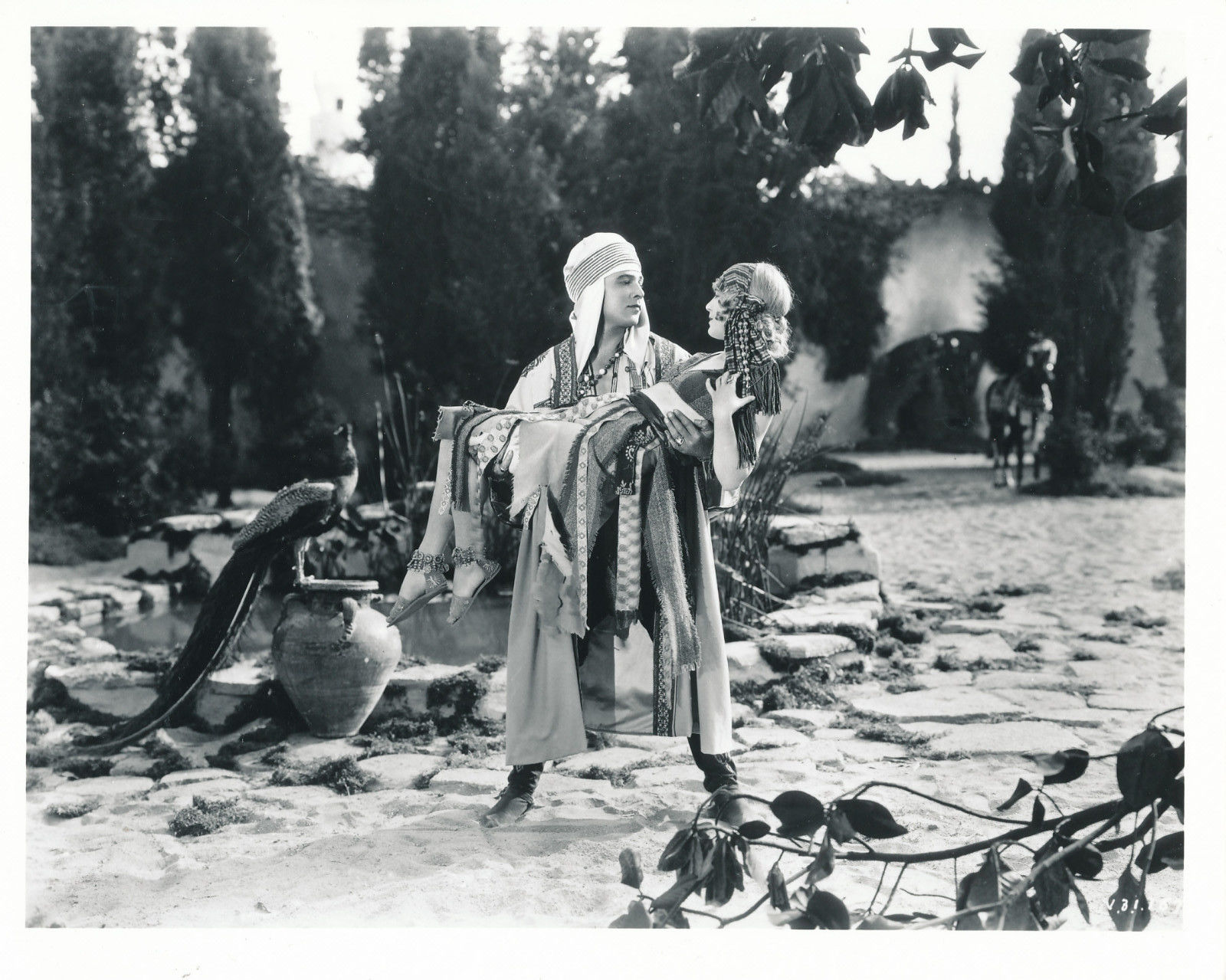
30 Nov 1924 – Valentino and Close-Ups
No one of the stars want to be stars anymore. They all want to be producers and it doesn’t seem to bother them in the least whether they submerge their personalities to some extent, so long as the resulting feature is enticing to the public. Now it appears that Rudolph Valentino is also wanting to become a producer through his independent efforts. Valentino said that his purpose above all, under his new contract, would be to make pictures that will be outstanding as pictures. All the details of actual production will come under the supervision of his wife Natacha Rambova and he is making the choice of the members of the cast and is going to get the very best talent available. Furthermore, he plans to develop new talent, or at the least new phase of the personalities of established favorites. Notably he is using Nita Naldi heretofore the vamp as a heroine. Valentino’s experience with “Monsieur Beaucaire” is a case in point. “When they first showed my wife this picture at the studio, it was overburdened with close-ups of myself,” he said. “My wife insisted on the removal of dozens of them. “Somebody concerned in the cutting and directing, remarked to her that he hardly thought this course would be satisfactory to me, but she quickly informed him that despite any beliefs to the contrary, unnecessary close-ups were not my idea of starring.” Which should settle for a time at least, these rumors that Valentino is intent on acquiring as much footage as possible when he is appearing in a picture

4 Oct 1926 – Actor’s Relatives Demand that Brother be Co-Executor
Relatives of the late Rudolph Valentino will refrain from contest of his will provided Alberto Guglielmi, the late actor’s brother is named co-executor of the estate with George Ullman, attorneys for Guglielmi and his sister announced in court tonight when the will came up for probate. Ullman, who was Valentino’s business manager, is named executor and trustee by the will. The hearing was continued for a week. The will leaves virtually all the estate to Mr. Ullman, as trustee for Guglielmi, his sister Maria and Mrs. Teresa Werner, the aunt of Valentino’s second wife, Natacha Rambova. It provides for final distribution to be made in accordance with the oral instructions Valentino gave Mr. Ullman.
“He couldn’t kn…
“He couldn’t knock your hat off.” –Jack Dempsey, on sparring with Rudolph Valentino
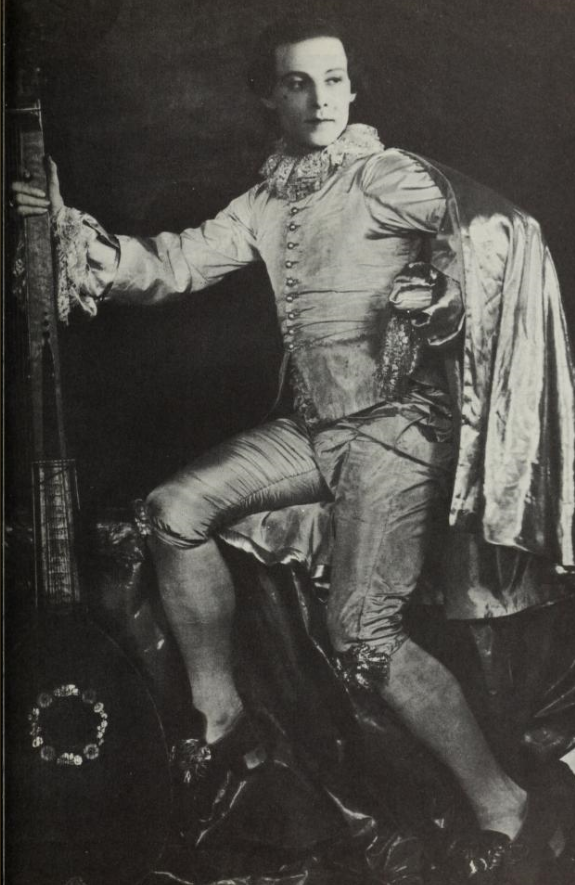
12 Dec 1926 – Hundreds throng to Valentino Auction
The name of Rudolph Valentino is still one to conjure with. On the first day, that his mountainside home, “Falcon Lair” was thrown open to the public, the caretaker counted 500 persons going through the house. It had been opened to the public to display the personal effects of the dead star preliminary to the auction in which the house was sold yesterday for $145,000. The collections of art objects, thirty five oil paintings, antique furniture and books; in fact, the complete furnishings and belongings of Valentino’s home, go on the auction block. Only the clothing of the actor, some 65 suits is held out. These garments are being retained by friends for sentimental reasons. In spite of the location of the house, which is at 2 Bella Drive, high up a steep mountain road on one of the smaller mountain crests above Hollywood and Beverly Hills and far from any casual motorist, streams of people file in from morning till the house is closed in the evening. Included with the house in the auction were eight and one and half acres of gardens above it and six and three fourths acres of unimproved area. The old home at 6776 Wedgewood Place in Whitley Heights and the four lots next to it, which formed the home of Rudy when he was married to Natacha Rambova, remain to be sold. There has been some talk of preserving one of his collections of antique objects as a memorial to be placed in a local museum.
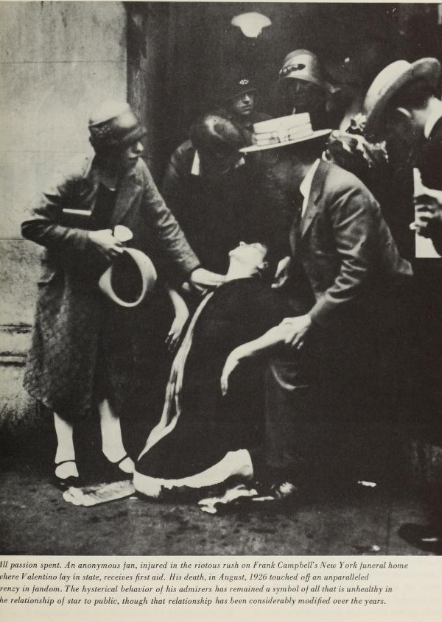

18 Nov 1906 – At Close Range with Alla Nazimova the Russo-English Actress
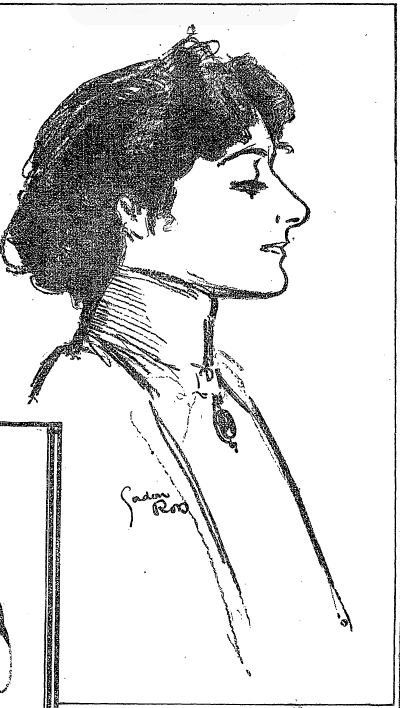
Alla Nazimova, who first became known in NY about a year and a half ago through her performances in Russian with Paul Orieneff, has acquired an international reputation in seven years of professional endeavor. Moreover, she enjoys the singular distinction of never having appeared except as the star of any organization with which she has played. Mme Nazimova is so utterly foreign that her mere presence carries with it an atmosphere of the Crimea, where she was born, on the shores of the Black Sea. She is dark, with such an intense, passionate, concentrated depth of coloring as is unknown to brunettes of the Western Hemisphere. Her hair is black as jet, and if such a thing is possible, her eyes are even blacker than her hair. Her face and carriage are spirited; her features are clear cut. Power, rather than gentleness; ambition, rather than introspection, and above all a mastering love of conquest, is the traits most apparent in her expression. Yet, though she looks like the very typification and ideal of all the Russian Countesses over imagined in all the dramas of Slavic intrigue, Alla Nazimova has a more feminine side, by no means in abeyance. She speaks of Paul Orleneff and his simplicity with regard to matters of stage management apart from the interpretation of his individual roles; with almost motherly tenderness and indulgence she says she is all the more fond of. “The way I came to go on the stage at all was a kind of accident.” she said, as if to volunteer personal reminiscences. “After all it was very silly” she continued with a sudden burst of vivacity. “When I was 13 years old, I attended boarding school. I knew nothing about plays, and had scarcely ever been inside a theatre. At Christmas time we wanted to give a play and we chose a piece called Gossip a play that dealt with boarding school life and had two main characters, the teacher and the school gossip. I wanted to play both the leading parts. All the preparation we made for the performance was to sit around a table and read the parts. It never entered my head what trouble I should have when the two leading characters were on the stage at the same time. “I was only a little girl, and I wore short skirts. When I was standing there before the people and discovered that I must be two people at the same time I had what I thought was an inspiration. For the ‘gossip’ I stood up in my short skirts and delivered my lines. Then, when I had to be the teacher the head of the school, you know I squatted down so as to make the skirts touch the floor. That was how I tried to distinguish between the two characters. The trouble, of which I never dreamed, was that the real head teacher of the school was very short, and humpbacked. She thought I was imitating her, and never forgave me. And so that was my first experience at trying to be an actress. “I remained at the school about two years longer. That was in Odessa, by the way. When the school burned down I came into a family where the young ladies were enthusiastic amateurs. I used to go with them to the theatre. Whenever they were in a performance. I would beg them to wear something of mine a shawl, a hair comb, or anything just so, I could feel that a little part of myself was on the stage! That was very silly too. When I had finished the course at the school I went to the conservatory to become a violinist. The interviewer, who had been glancing from time to time at a violin case that stood in one corner of the room, had the explanation for which he had been waiting. Therefore, he held his peace rather than diverts or interrupts the course of the narrative. For two years, I studied to become a violinist continued Mme Nazimova. “Then they sent me to the conservatory in Moscow, where they supposed I would complete my musical education. I went to a dramatic school instead. “In Moscow, there are many such schools, but the most important is the Philharmonic, where I went. The Philharmonic Society is a tremendous institution, and includes all branches of musical and dramatic training. “In the whole school there are several hundred pupils. In my own class of the dramatic school there were 52 girls the first year. At the opening of the second year, there were only 16. They weed them out after the end of the first season, and those who are left have to agree to go to the school for two years more. No public performances are given until the end of the last year, when they give what is called the public examinations. At the examination, I played in Ibsen’s ‘Little Eyolf.’ After that I became a star in a stock company.” “You become a star immediately after leaving the school!” exclaimed the reporter. This seemed a rapid transystem to stardom which even the American method does not equal. Mme Nazimova took it as a matter of course. “Why certainly,” she answered, apparently surprised at the doubt her remark had occasioned. “I guess you don’t understand about the schools in Russia;” this with a smile. “I don’t like to say complimentary things about myself, but you’re evidently going to make me do it. I graduated with the gold medal and a diploma which gave me the right to be a leading woman.” “And a gold medal works such wonders as that in Russia?” “Of course, in every class one of the scholars gets such a medal and diploma. She show them when she goes to the dramatic bureau to apply for work and they find her a position as a leading woman. I wasn’t quite exact when I said I became a leading woman immediately, though I could have done so. As a matter of fact, I spent another year in Moscow studying stage management and not acting at all. After I spent 3 years as leading woman in various stock companies. I went to St Petersburg and became leading woman of the Imperial Theater. I stayed there just one season. Then Orleneff and I left Russia to play ‘The Chosen People’. You see, I have never had any artistic difficulties. My only hardships have been financial. I have always had engagements and in Russia they pay liberal salaries. But you have to buy your own clothes there and when you are performing in several different places each week, the expense is something frightful. I used to love to go home in the summer and not have to think about anything. Here the managers attend to all that expense and it is such a relief. Another question the reporter posed was “what sort of roles did you play in Russia? All sorts. I played Zaza and some characters like that. But I detest them. I hate them! They don’t give me anything to think about. Consider how many passions and motives and characters men have a chance to interpret. Women it is almost always the same sort of thing. Always the same old story with nothing intellectual in it. “Don’t you like to make love?” the reporter put the question blandly. “Oh, I don’t object to making love,” she replied quick as a flash. “But I would rather have the romance in real life. On the stage I want something different. Just stop to analyze Zaza and what is there in it? He loves me I love him. We love each other. Then, I am jealous. I love him and he doesn’t love me. He goes away. I suffer. He comes back, loves me and I don’t’ love him. “That’s the sort of thing we women generally have to do. We must always be in love. We are the butterflies, the adventuresses, the abandoned girls. We are always made to revolve about the men. Fortunately there are some plays, like ‘The Master Builder’ which gives us just as much a chance as the men to think on the stage! “I played ‘L’Aigion,’ it has been splendidly translated into Russian” I like the verse and pathos if it. Orlenoff and I alternated in the title role. That is the only male role I ever attempted. ‘Even in Russia they always spoke of me as the representative of the Scandinavian and Germanic schools. My greatest successes were made in plays by Ibsen, Sudermann, and Hauptmann. I performed very few of the native Russian dramas or, if I did they were not of the native Russian kind. “The trouble here is that people make a mystery of Ibsen. While we were rehearsing ‘Hedda Gobler’ all the actors kept waiting for the mystery, and were surprised because it never came. As a matter of fact, Ibsen has nothing mysterious about him. If only, you take what he wrote exactly and literally as he wrote it. I see nothing uncertain even about the ending of ‘A Doll’s House’. Of course, Nora never came back. She might have changed, but her husband would always have remained the same. Almost every day at rehearsal the actors would mistake some of my lines for directions they supposed I was giving them just because I simply talked the words. “After the first rehearsal of ‘Hedda Gabler’ at the Princess, a new, big feeling of sympathy came over me. I don’t understand what it was or how it made me do what I did. I only know that the very same day I sat down and wrote a long letter home saying that I should never come back there to live. I mean to stay here and work here always.


1919 The Delicious Little Devil
Rudolph Valentino shot to stardom in 1921 with the release of The Four Horsemen of the Apocalypse, The Conquering Power and The Sheik. He had already appeared in over twenty films, mostly in smaller roles (often as a villain) and with varied spellings of his name in the credits. He made seven pictures in 1919 alone. Of these, all but three were lost. Delicious Little Devil is one of the three existing Valentino efforts from 1919. He does play a romantic role in the film but is fourth billed — as Rudolpho De Valentina.
The name above the title in Delicious Little Devil is Mae Murray. The former Ziegfeld Girl had known Valentino in their New York days and lobbied for him to have the part in Delicious Little Devil. It helped that Murray’s husband, Robert Z. Leonard, was the director of the film. Or at least it seemed to help at first; later on, by Murray’s account, there was tension between Valentino and Leonard. She attributed the problem to jealousy, recalling how she and Valentino often danced between takes. In fairness, Leonard did cast Valentino opposite Mae again, in Big Little Person (1919) – but this time his role was an unsympathetic, two-timing fianc.
Robert Z. Leonard had himself been a silent actor, appearing in over 100 films before turning director for The Master Key (1914). He met Murray on 1916’s The Plow Girl. A few years, and several films later in 1918, they married. Leonard would direct Murray in twenty plus movies and they would form their own production company called Tiffany Productions. In 1924, Leonard directed Murray in Mademoiselle Midnight (1924) for MGM. This film kicked off a thirty-year association between Leonard and the studio. Unfortunately the Leonard-Murray relationship wasn’t so long-lived. The couple divorced in 1925 after seven years of marriage.
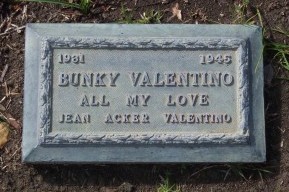
Another, even shorter union occurred in 1919 after Delicious Little Devil’s release. That was the year Valentino married actress Jean Acker in one of the shortest celebrity marriages on record. The couple wed on November 5 after a two-month courtship but the marriage only lasted a reported six hours. As the story goes, Acker and Valentino quarreled and she locked him out of their hotel room on their wedding night. They separated but the divorce wasn’t finalized until March 1923. In the meantime, Valentino met and eloped with former ballerina turned set designer Natacha Rambova in May 1922. He was charged with bigamy when it was discovered that he was not yet divorced. And Acker sued for the right to call herself his wife – literally. Acker was credited in the 1923 film The Woman in Chains as “Mrs. Rudolph Valentino.” Valentino remarried Rambova in 1923 after his divorce was granted. And he and Acker eventually reconciled, becoming friends before his 1926 death.
As for Delicious Little Devil, Valentino’s fourth billing would eventually come into dispute. Later, after he’d become famous, the studio wanted to reissue Delicious Little Devil and several other early Valentino pictures. The idea was to ride the wave of Valentino’s popularity by playing up his smaller roles in these films – to perhaps even add some new titles and to change the order of billing. But Mae Murray protested and demanded to retain her star billing. She was unfazed by Valentino’s newfound success and assured in her own stardom, remarking, “once you become a star, you are always a star.”
Director: Robert Z. Leonard
Screenplay: John B. Clymer, Harvey F. Thew
Cinematography: Allen G. Siegler
Cast: Mae Murray (Mary McGuire), Harry Rattenbury (Patrick McGuire), Richard Cummings (Uncle Barnley), Rudolph Valentino (as Rudolpho Valentina, Jimmy Calhoun), Ivor McFadden (Percy), Bertram Grassby (Duke de Sauterne).
Source:
TCM
1923 – The Kaleidoscope of Love “Synonyms and Antonyms” Pg123

Rudolph Valentino describes its birth, rise, fall, and disintegration of love.
A-Adoration, Anticipation, Affinity, Arguments
B-Beauty, Bliss, Bitterness, Bondage
C-Caresses, Circumstances, Confidence, Charm
D-Desire, Delusion, Dreams, Divorce
E-Ecstasy, Engagement, Ego, End
F-Fascination, Forgetfulness, Flatter, Faith
G-Gossip, Gratitude, Gifts, Goodbye
H-Happiness, Honor, Heartache, Hell
I-Intuition, Irony, Idolatry, Integrity
J-Jealousy, Joy, Justice, June
K-Kisses, Keepsakes, Knowledge, Kismet
L-Lips, Loneliness, Logic, Longing
M-Marriage, Morality, Money, Man
N-No, Nearest, Novelty. Never
O-Opposition, Own, Offering, Opulence
P-Passion, Promise, Pride, Proposal
Q-Quality, Quest, Queries, Quarrels
R-Romance, Reveries, Realization, Remembrance
S-Sympathy, Sacrifice, Shame, Settlement
T-Thoughts, Truth, Temper, Tears
U-Unkindness, Understanding, Uncertainty, Unfaithfulness
V-Virtue, Vanity, Vows, Vengeance
W- Wisdom, Wishes, Wedlock, Woman
X-The unknown love
Y-Youth, Yearning, Yes, Yawn
Z=Zenith, Zest, Zeal, Zero
“There will sim…
“There will simply have to be some sort of adjustment and frankly I haven’t the least idea how we can arrange matters so that we can live together without constant irritation cropping up. My husband wants me to give up work and devote myself to the home. If I did that, what should I do with all my idle hours? We have servants who are much more capable of running the house than I am. I have always worked all my life I have had the urge to create. I cannot give this up it is part of myself.” –Natacha Rambova on her separation from Rudolph Valentino
Jun 1921 – Rex Ingram Recognition
Rex Ingram, Silent Film Director, was in New Haven, CT on his old Art School, the University of Yale, who conferred on him a Bachelor of Fine Arts Degree in recognition, for his merits for the art of the cinema and especially for directing “The Four Horsemen of the Apocalypse”. It was the first time, a University recognized motion picture as an art –the first time in the world!
30 Oct 1940 – Valentino’s Nephew Sues for Royalties
Jean Valentino whose right name is Jean Guglielmi nephew and sole heir of the late Rudolph Valentino, Silent Film Actor is trying to collect through the law courts $20,000 which he claims is due him as royalties on reissues of “Son of the Sheik” and “The Eagle” which were distributed a couple of years ago.

1926 – This weeks News in Hollywood
Monday – Pola says “Yes” and Rudy says “No”
Tuesday – Rudy says “Yes” and Pola says “No”
Wednesday- Pola says “I go to Europe”
Thursday – Pola says “I do not go to Europe”
Friday – Pola has dinner with Rudy
Saturday – Rudy has dinner with Pola
Sunday – A holiday
May 2014 – Premio Rodolfo Valentino Italian Excellence Awards Report
Mr. Simon Constable, recently attended the Premio Rodolfo Valentino Italian Excellence Awards, Castellaneta, Italy. He has graciously reported on attending the awards ceremony as well as supply photos of this prestigious event for this blog. I would like to personally thank him on his generosity in sharing his observations for this blogs readers.
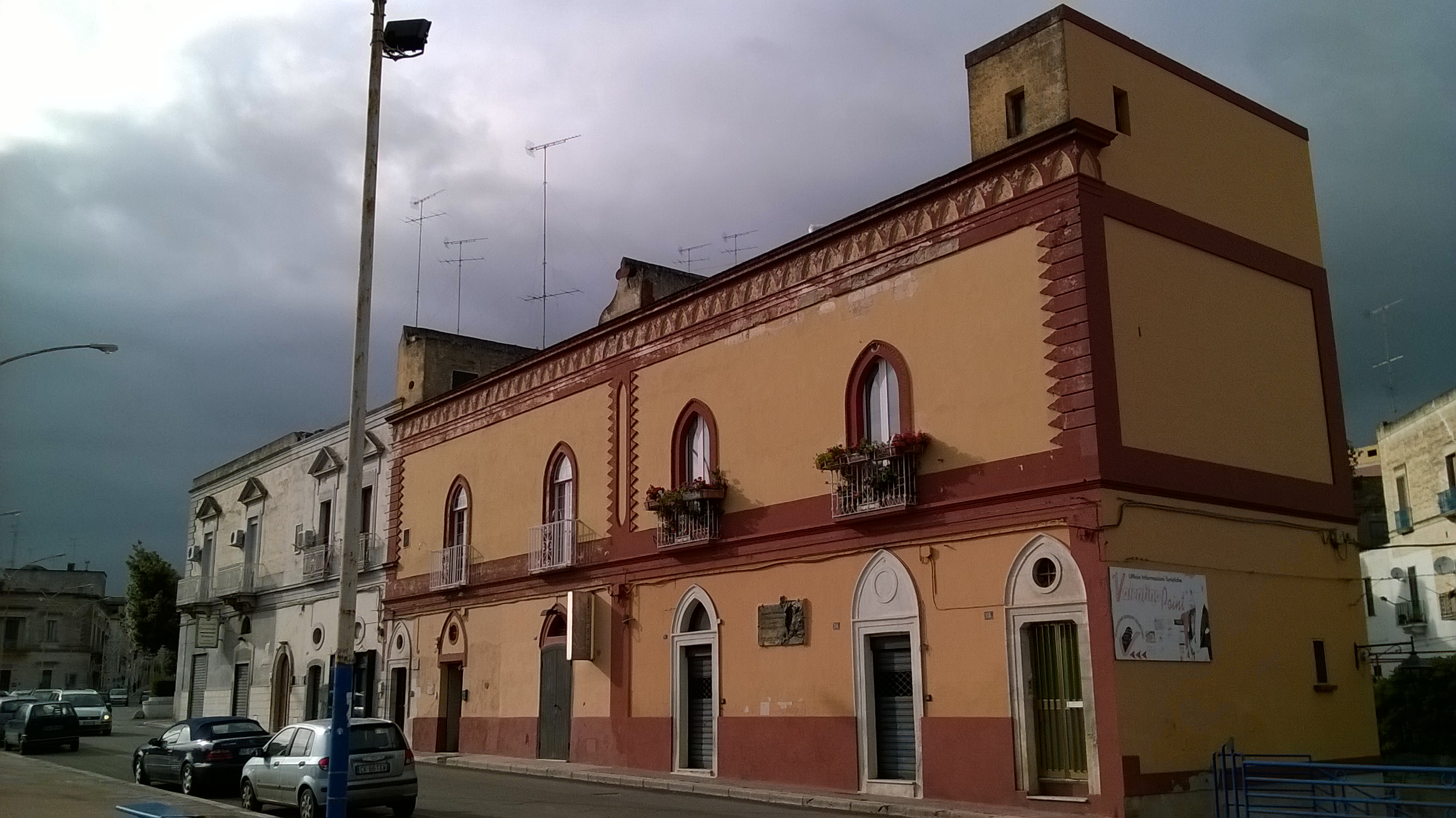
The rain that fell on my first full day in Castellaneta was, according to the managers of my accommodation, unusual for the time of year — and I believed them. This was Italy, in early May, what was going on? Why was it so wet? Being British I was, of course, unfazed; besides, it would take more than a gentle pitter-patter to prevent me investigating Rudy’s birthplace. With my main purpose on the 4th – attending the Premio Rudolfo Valentino Italian Excellence Awards – hours away, I aimed (under an umbrella, and with my travel companion) for Valentino’s childhood home. Unsurprisingly, after viewing it from all possible angles, I was overcome with emotion. Here was where the story began. Where he was born, took initial steps, and spent those early formative years. And there was I, was more than a century later, gazing at it, damp but happy. After a walk to the top of Via Roma, snapping and filming as I went; a cappuccino at Bar Valentino; a tasty snack elsewhere; and a wander ‘round the oldest part of town, it was time for the ceremony: at Teatro Valentino, at 7:30 p.m. I was expectant.
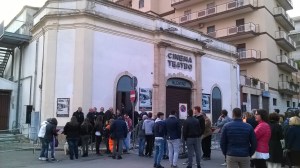
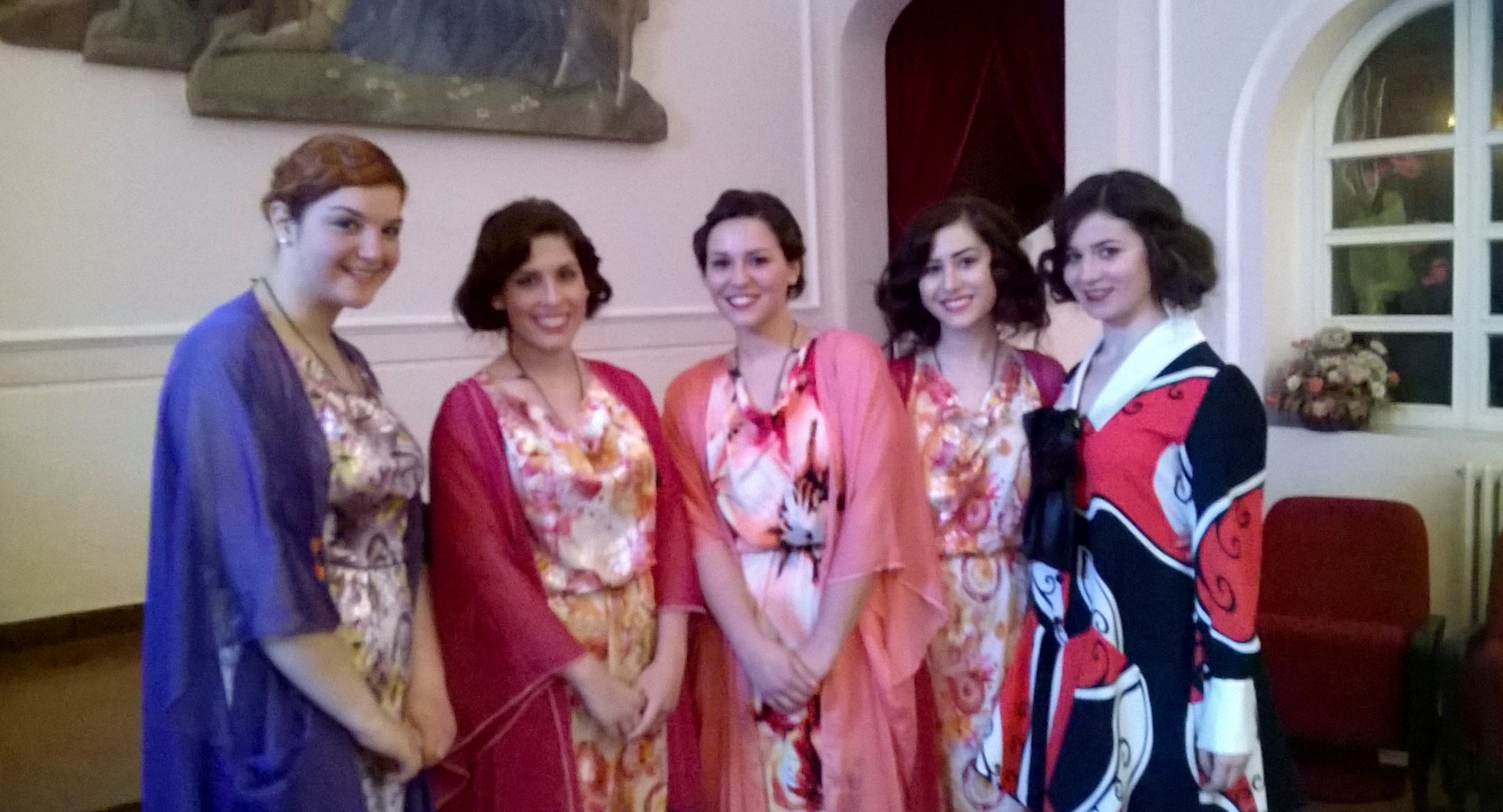
By now traffic flow had been restricted with barricades, the local law and medics were in attendance, and a large crowd of spectators had gathered. The air truly buzzed with anticipation. As I understand it, the purpose of the awards is to, in Rudy’s name, recognize and celebrate Italian excellence. Meaning that, annually, the creativity of Valentino’s countrymen will be showcased and rewarded in Castellaneta. I have to say that it is an inspired idea and, obviously, LONG overdue. As we all know, long before The Oscars, Rudolph Valentino was a man who very much felt that achievement in his field should be rewarded. And he was obviously extremely proud of his national heritage and Italian culture in general. A little early (7:15 p.m.), we made our way to the barrier, and I explained that we were on the list, and that our tickets were waiting inside. The theatre that bears his name is a charming one. Like Rudy himself, it isn’t big, but it packs-a-punch. The interior is, like him, elegant. It embodies him somehow — if that’s possible. After collecting our tickets I paused to photograph the charming usherettes, and then we headed up the left-hand stairs to the gallery.
How early we were was apparent once we were upstairs, as there were perhaps only 50 or so people inside, including technicians. Italians being Italian things are more relaxed and leisurely. So, with little else to do, we stood at the gallery rail, chatting (for about an hour) as the venue filled-up. An enjoyable sixty minutes of people watching.
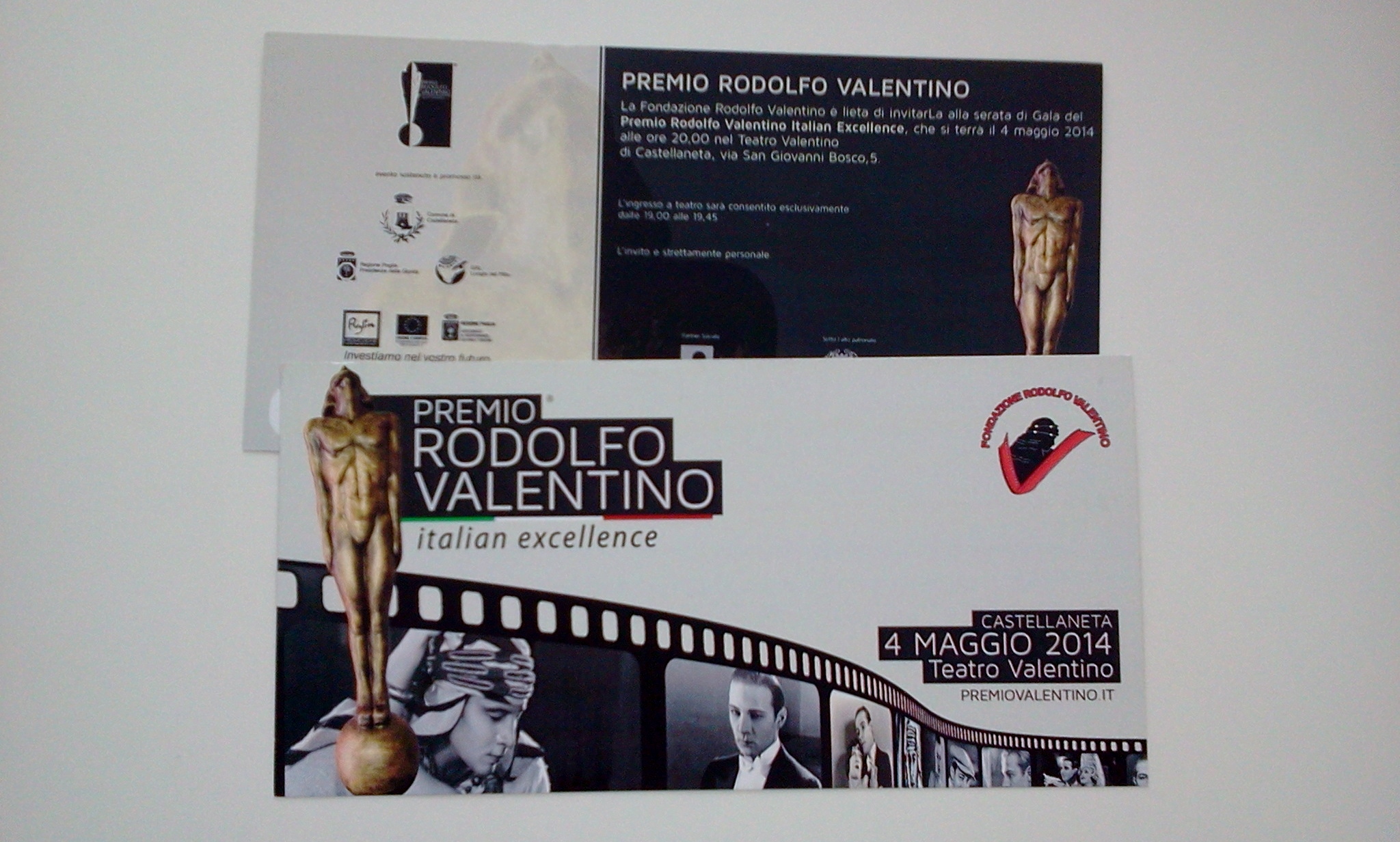
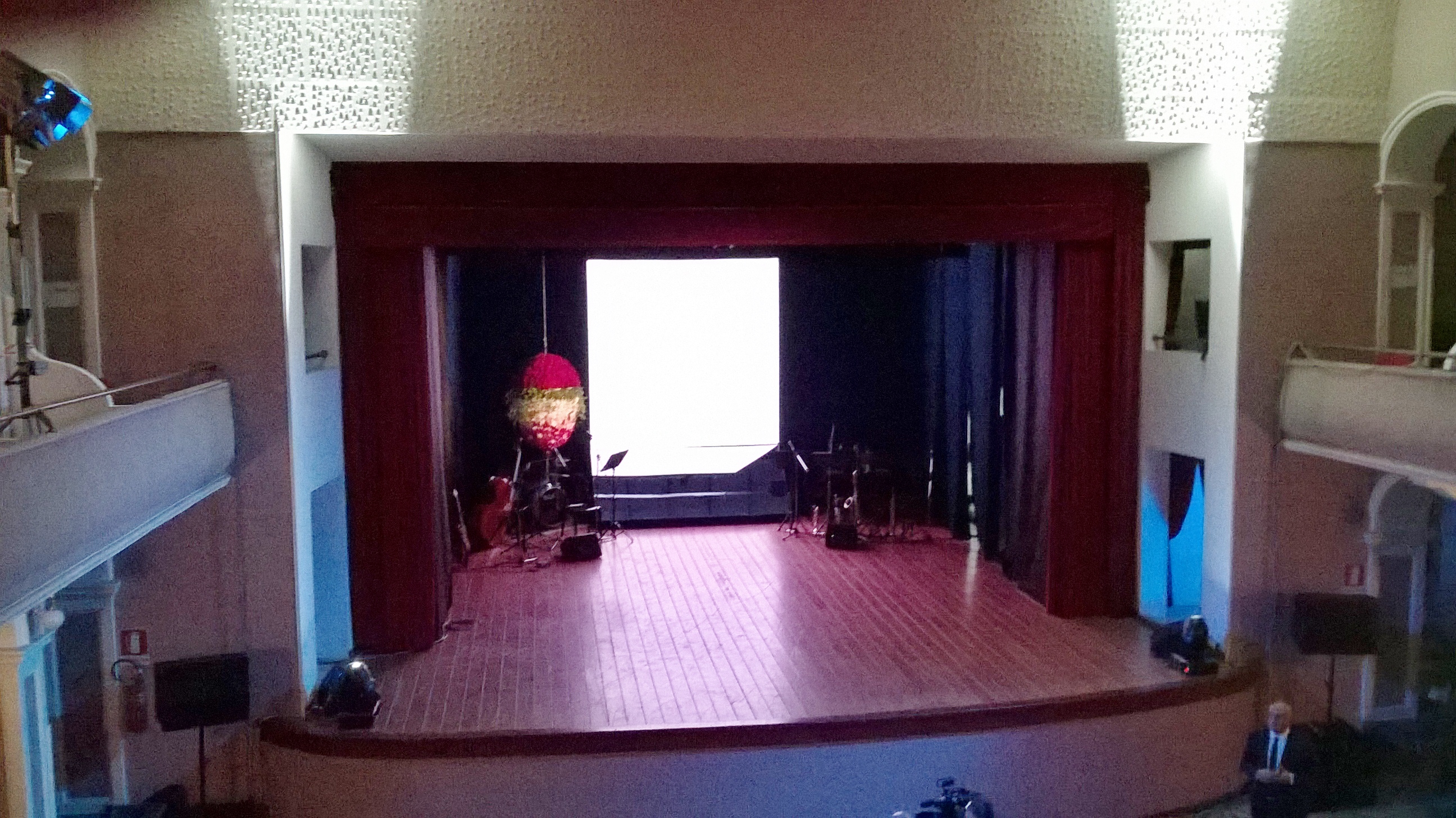
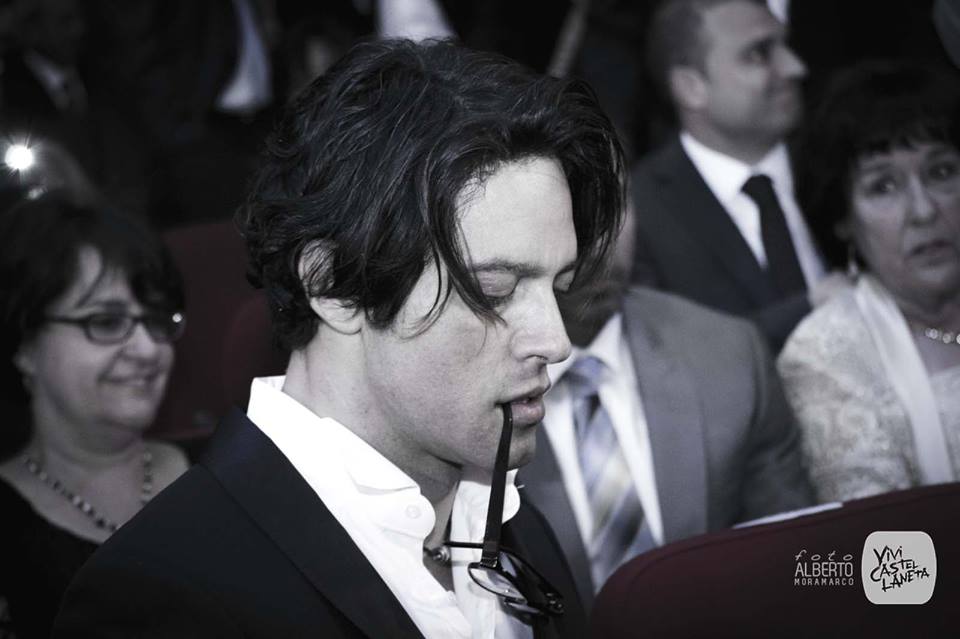
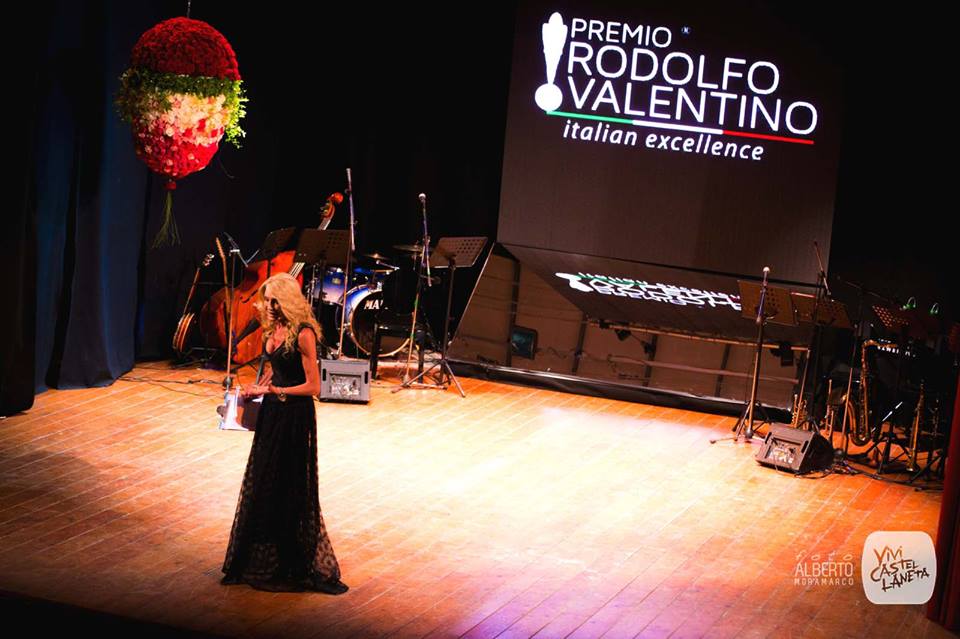
At around 8:30 p.m., an announcement, by its tone, suggested that the start of the proceedings was imminent and so we took our seats. (It was at this late point that Gabriel Garko appeared, something the Ladies present found pleasing.) Sure enough, at about 8:45 p.m. the evening commenced, with a large image of Rudy slowly appearing square by square, on the screen, at the back of the stage, and a voice-over in Italian telling his story. This was then followed by a wonderful dance routine, by an extremely talented troupe, to a song that seemed to be titled: “Oh, Oh, Rudy,” but actually, after an online check, appears to have been “Hello, Rudy” from “Ciao, Rudy” (1966). The presenter, Gabriella Carlucci, then walked on stage to welcome us all properly and to host the evening. (Dressed dramatically in black lace she didn’t drop-the-ball once for the next four hours.) What followed was a series of early awards to excellent Italians punctuated by Jazz music and dancing. First-up was Elisabetta Bedori, a local fashion designer, who received a beautiful Newcomer award and a bouquet. Then, Michele Gaudiomonte, (another designer) joined Gabriella, and he was followed in-turn by Michele Mirabella, famous Actor and Presenter, for the first Rudolph Valentino Award of the night. (He spoke for some time and got many laughs.)
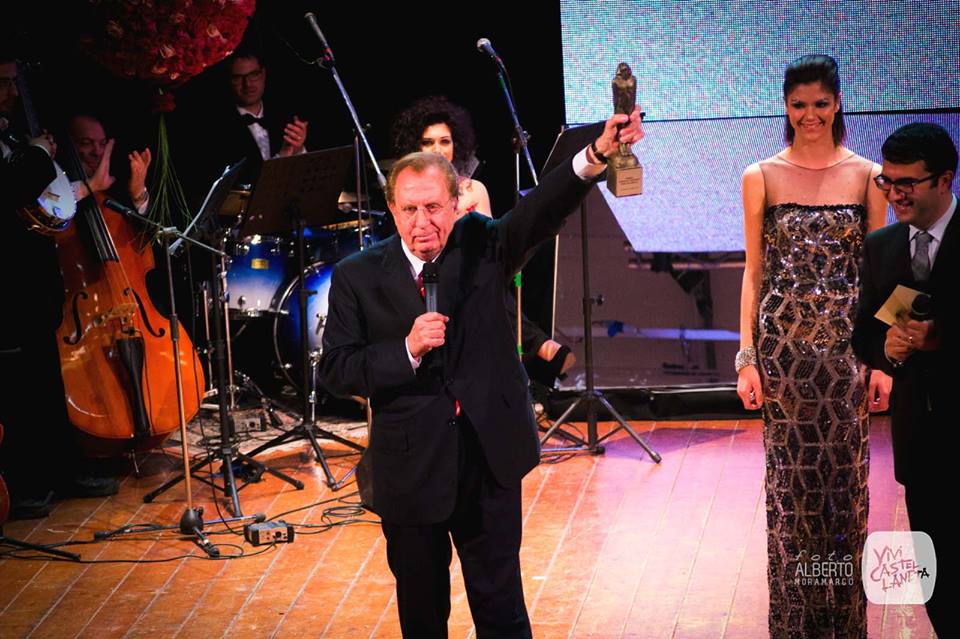
At around this time the Great Grand niece of Rudy joined Gabriella Carlucci, which was a lovely surprise and very appropriate. She said something in Italian and apologized for not being able to speak the language. She then spoke about her Great Uncle and how she felt it was a great thing that the awards were being held in Castellaneta. His legacy, she said, was the realism with which he acted. An award for Beppe Fiorello followed. He sang a little of “Volare” but I never heard him mention Rudy or Rudolph Valentino, strangely; which was a shame. Then we had a rendition / version of “Cabaret,” from the musical, by a singer and live band. On reflection I suppose it was appropriate, as Valentino DID go to Germany at about that time: though Chris. Isherwood was more late Twenties / early Thirties, actually. If my memory serves me correctly we then had a wonderful Tango dance by Sebastian Arce and Mariana Montes. And I mean WONDERFUL — especially considering that Montes was clearly pregnant. They strolled-on, and, until they strolled-off again, they were totally transfixing.

The award to Pippo Baudo, the television personality, was of great interest because he talked not just about Valentino, but also of Marcello Mastroianni, and introduced a rare TV clip of his portrayal of Valentino in “Ciao, Rudy.” I have to say, this was one of the highlights of the event for me as I had never seen it, and Mastroianni, dressed and dancing as Julio, was very spectacular and convincing. It was a fantastic and thrilling moment.
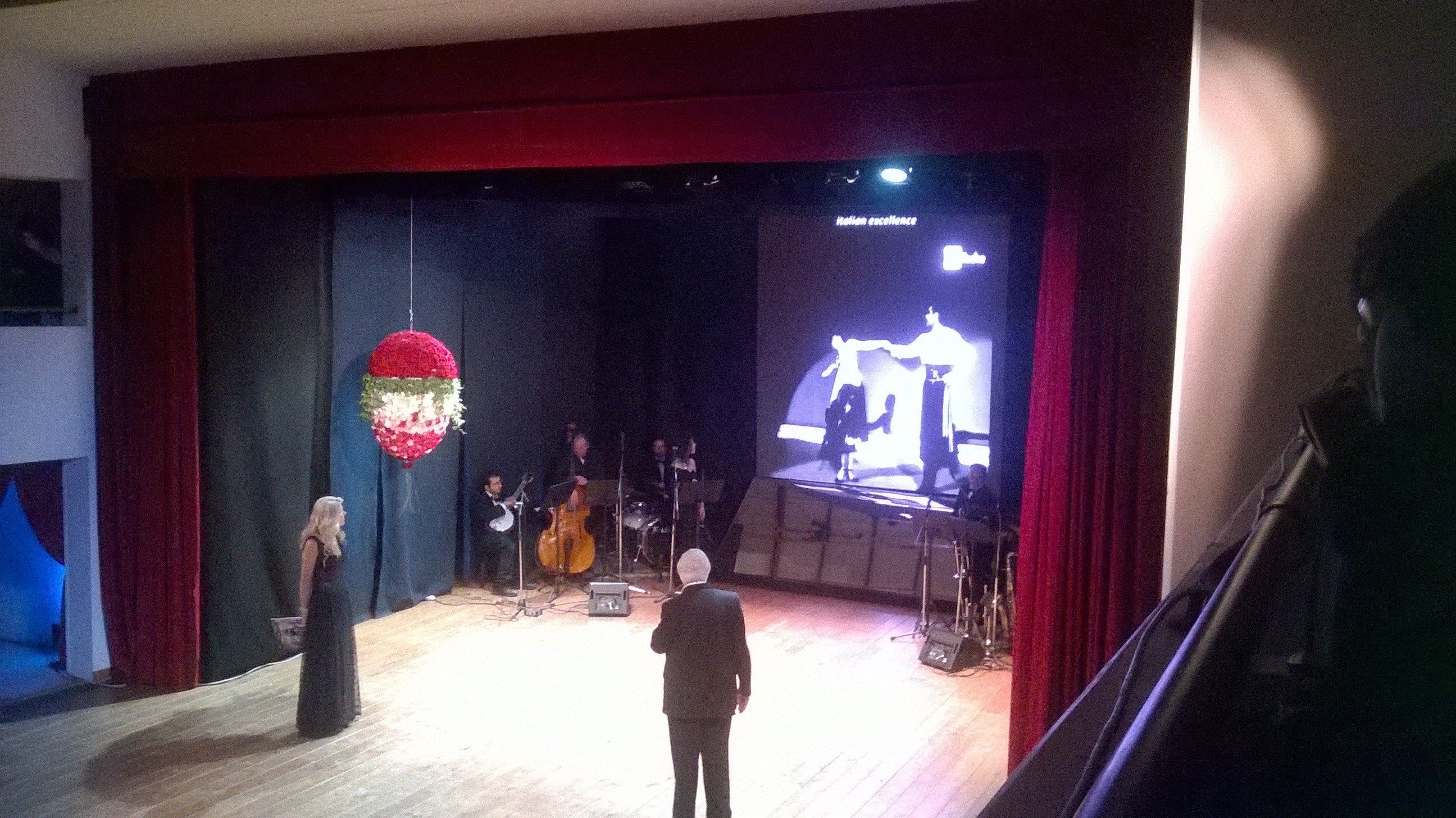
MORE awards followed (Maison Gattinoni, Massimo Ghini, Maria Pia Ammirati), there was more Jazz, more talking, then more dancing and yet more awards. Paolo Maria Scalondro spoke. And then it was, finally, at a very late point, time for Gabriel Garko to walk under the lights. Charismatic, tall, handsome – if slightly tired looking – and rather rock-and-roll with his eye make-up, he spoke at length, and sent the females – and some males, too, I’m certain – wild.
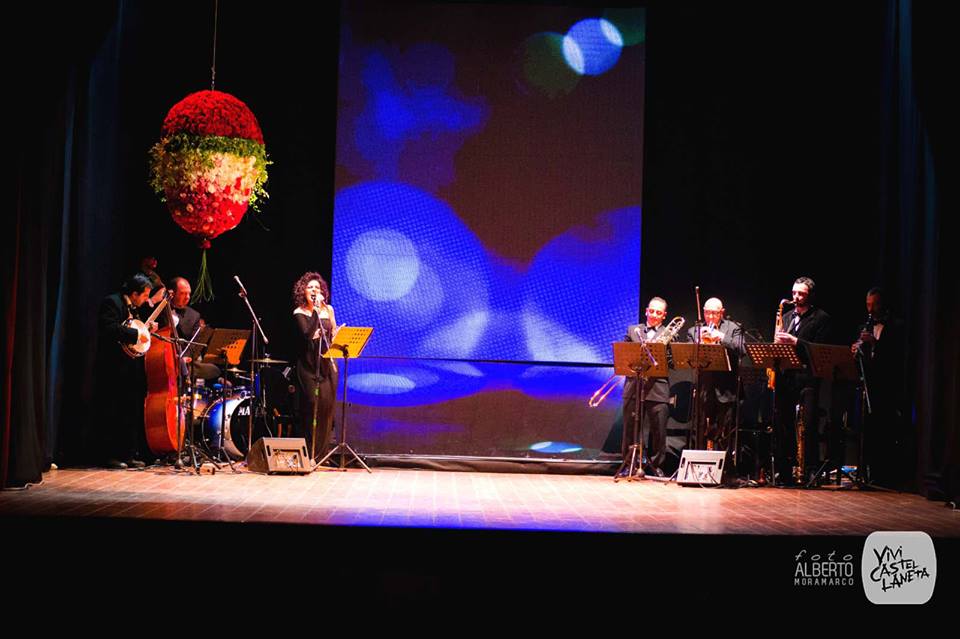
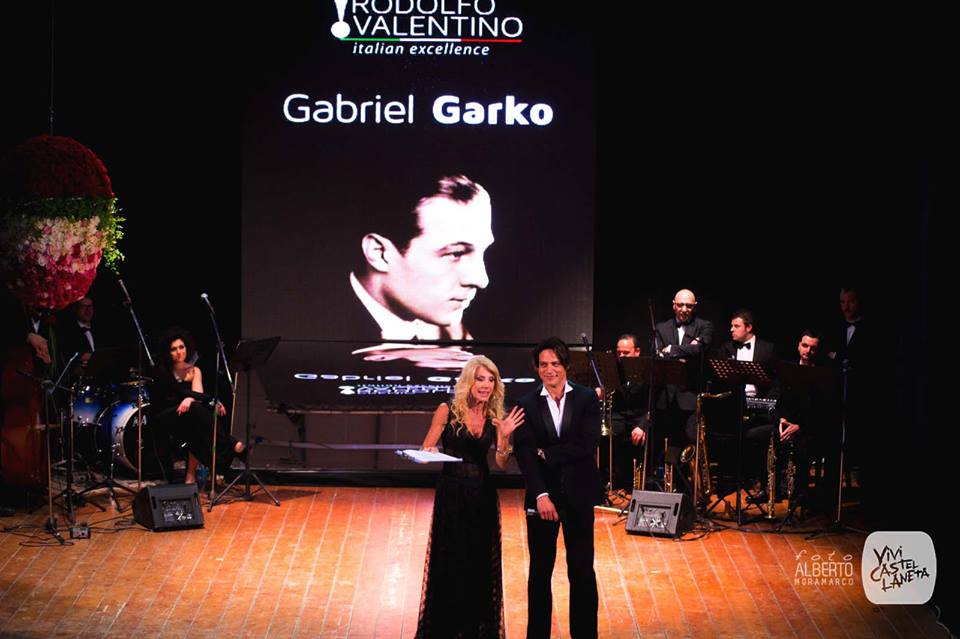
And then, so suddenly, it was all over. Having to rush, as I did (due to an early start on Monday), we left after Mr. Garko received HIS statuette; ahead of the crush and into the night air, and to our waiting car. What a day. What an experience. I was privileged indeed to see Rudolph Valentino given the respect he is due and in his hometown of Castellaneta. The tributes had fallen upon him like the many raindrops earlier, they wetted and soaked him, gave him life again and left his image glistening, shining and sparkling. He dries-out now until the next time, when he is showered and praised for his achievements once more. I hope, again, to be there — even if I have to get drenched!
Simon Constable (May, 2014)
2014 Rudolph Valentino Excellence Awards

Reporter Simon Constable recently attended the 2014 Rudolph Valentino Excellence Awards
Did you Know?
Rudolph Valentino is 5 feet and 11 inches in height and weights 155 lbs.
May 1925 – Valentino to Build New Home
Rudolph Valentino is building himself a desert home in Palm Springs on the edge of the California desert just three and one-half hours from Los Angeles. He says he hopes thus to get away from the noise of the city. Everywhere he goes, he claims, he is recognized and his tired of being the center of attraction. There is a stock farm for the breeding of Arabian thoroughbreds near Palm Springs and this place has a real interest for the sheik.
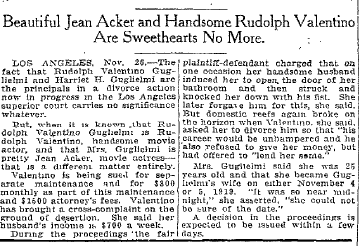
3 Aug 1921, Rudolph Valentino Court Continues
When Judge Walton Wood learned that Jean Acker, who is suing her husband Rudolph Valentino for separate maintenance is earning $200.00 a week, he excused Valentino from paying her any further alimony until October 17th at which date the case is to be continued. And if you give them the arm they will cry for the moon.
9 Jul 1921 – Rudolph Valentino Court Results
Rudolph Valentino was recently ordered by the Court of Los Angeles to pay his wife Jean Acker, $100.00 a week pending trial of her suit for separate maintenance.
3 Jul 1921 – Rudolph Valentino in Court
Rudolph Valentino was summoned into court at Los Angeles and charged with an arrearage of $800.00 in alimony due his wife. He promised to pay up at the rate of $50.00 a week.
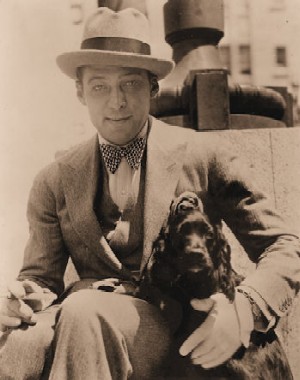
21 Dec 1924 The Secrets of Valentino’s Life
In honor of the birthday of Rudolph Valentino, I will be publishing an article from 1924 about the secrets of Valentino’s life.
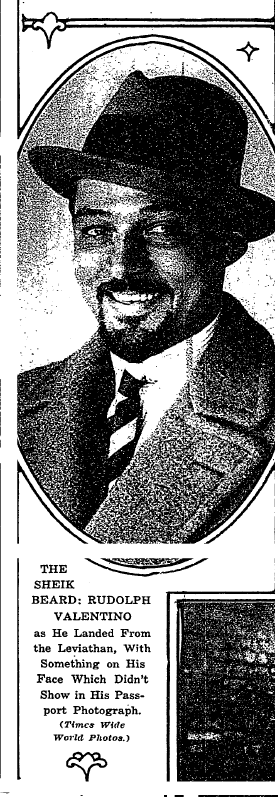
It is all very well, but there is just something special about Rudolph Valentino. Oh no, dear messieurs he is not effeminate, not a particle. Thus do you console yourselves upon an error, condone your envy and misjudge the ladies. None go quick as my sex to resent effeminacy in the male. Not thus can our enthusiastic admiration be aroused. There is no gainsaying that the gentleman has a compelling fascination for me, and should I say it in largely because of his agreeably self-confident masculinity, just as men adore agreeably self-confident femininity. My visit, coincided with the removal of the famous beard, and I met him direct from the hands of his barber. Alas I did not obtain a precious lock thereof. He oozed relief, that pesky beard, grown for the leading role of “The Red Power” had ruined his European vacation. Even a Valentino shudders to be seen in the unlovely early stages of chinful growth. He had the thing for four solid months. His wife had actually grown to like it. But today, Valentino was himself again. A very easy man to talk to is Valentino and to listen to. “Who really found you I asked?” “I have heard so many claimants.” “For seven long years, working hard, playing small parts in sometime atrocious pictures. I labored to be found,” he smiled. “But it was June Mathis who opened the door of opportunity for me. It was she who saw me for the part in the “Four Horsemen”. Ah yes, June Mathis. With Valentino speaking so gratefully of her I wanted to know how it happened that June Mathis had left his employ. Because you know directly he entered independent production he had hastened to attach June to his staff to write the scenario of his first picture. So he frowned unhappily. “I cannot tell you how sorry I was not to be able to accept her script. But it just would not do, and we were wasting too much time. So we just had to postpone that production. I shall make these modern picture Cobra sternly finely resisting Nita Naldi’s wiles. And we shall see him in ordinary modern clothes minus the allurement of the costume pictures. It is good to hear this man talking about his pictures. I too, had heard that Mrs. Valentino provided all the managing ability of the firm. But I don’t believe that now. You see, he met Natacha Rambova when he was earning only an uncertain and precarious $175.00 a week and she was getting $5000 a picture as an art director. Were he employing her now at that figure instead of being married to her he would be a foolish man not to give her full sway in her special department. And he has the shrewd business sense to do that now. “I made Monsieur Beaucaire without interference he said. And was allowed my own way in everything under my contract with Famous Players. But I did not cut the picture myself my wife did that. “She made an exquisite job of it.” I declared. And he accepted the compliment for both of them just as any producer would. “What sort of little boy were you”? “A very troublesome little boy, who occasioned his mother much sorrow, he admitted.” You would never, never, guess what kind of sorrow. His besetting sin, if you please, was falling in love with grown-up ladies as old as his own mamma. “You don’t mean that they fell in love with you that young, do you”? “No indeed, the ladies do not fall in love with me, he insisted modestly.” “That mountain of fan love letters, I reminded him.” Oh they are in love with the characters I play not with me the man.” That is why I do not like personal appearances. In Italy I felt I was in the soup or must fall out of the window, but I made it better by wearing my costume of the play, he explained. “he really managed to look thoroughly modest as he said this “Come tell me, what is your pet egotism’? I asked. “Oh, I have one. Very surely he admitted, laughing gaily, and affectionately stroking that recently revealed chin “and it is that my seven years of hard work and poor pay before June Mathis opened the door for me have been rewarded, that I have proved my ability that I can make good pictures, that I can act, and that I have some good artistic and business judgment are, I am not ashamed to show you my egotism he concluded. Well, maybe he was fascinating me, but he was wearing regular clothes and he says he isn’t fascinating in that way, but anyway I found myself agreeing with him. I think that is a pretty reasonable sort of egotism for him to indulge when he can do it as gracefully as he does. He sighed artfully at this point “Isn’t it dreadful to see those fine old trees being cut down in the street outside he said? Just to make a street wider and they take fifty years to grow to such beauty. Well I just felt as if I wanted to pet and comfort him about it. I asked him for an autograph and this is what he wrote on my picture. “Hoping to be kindly remembered.” Rudolph Valentino. Now wasn’t that modestly, artful and discreet and graceful bearing in mind that I am a newspaper woman.
“Just a packet …
“Just a packet of letters tied with a bit of blue. Just a packet of letters that once were read by you. To one who proved unworthy of the love inscribed within. The tiny packet of letters, a witness of my sin.”– Rudolph Valentino, 1924
2014 – Interview with Mr. Tracy Terhune
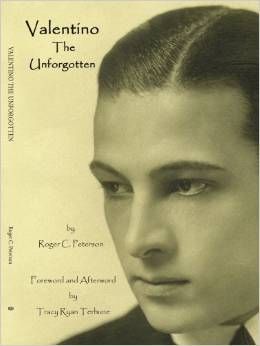
The blog is all about Rudolph Valentino his life, his family, those who were affected by him and those countless of people who loved him for his craft. Through research and reading there is still a lot of information out there that is still unknown. In this blog, I hope you the reader enjoy through discovery the new and interesting things about Rudolph Valentino.
As a noted book collector on Rudolph Valentino one of my favorite authors is Mr. Tracy Terhune, Producer, Collector, Valentino Memorial Committee Member, and Author I recently reached out to him and he kindly granted me a short interview for which I humbly thank him.
You are a noted Valentino collector, author and authority. What is your favorite item out of your collection and why?Since day one of collecting on Rudolph Valentino I have enjoyed collecting personal items that had a direct connection to him. He had such lavish exquisite taste in his cars and homes and furnishings within the home. I have several favorites but I will say that the ring he wore in The Eagle is my favorite. It was actually worn by him in three films (Sainted Devil, Cobra & The Eagle) However in The Eagle the ring played a minor part of the plot of the story. It was owned by Margaret Strong of the Strong Museum in New York. In the early 1980’s the Franklin Mint created a limited edition semi replica made out of black onyx and silver. Last year the Strong Museum which specializes in dolls decided to put it up for auction to fund their acquisition account. I am glad to say that I won the auction for it in Beverly Hills.
Rudolph Valentino had many films. Could you please tell us what is your favorite Rudolph Valentino film and why?
My favorite is Son of the Sheik. It’s his best in my opinion. But I also enjoy The Eagle, Beyond The Rocks, Camille and Moran of the Lady Letty. The Four Horseman is also another favorite.
Tracy you are very active in the planning process with the yearly Valentino Memorial. Every year it is a monumental success and a true tribute to Rudolph Valentino. What inspires you to continue? What will be in store for this year’s Valentino Memorial Service?
I am very proud of my involvement with the Valentino Memorial. It’s the oldest continuing annual event in Hollywood History. It has taken place every year since 1927, the first anniversary of his passing. This year will mark its 87th occurrence. The thing that inspires me to continue is to keep this charming yet quirky at times service going in a dignified and respectful manor. Yet, at the same time we want it to be fun and enjoyable. We always strive for the right mix. I have never had anyone who actually attended one of the Valentino Memorials ever complain that we did something in poor taste or disrespectful to Rudy. I am pleased that in recent years two members of the Valentino family accepted the offer to be our guest speaker. They openly expressed gratitude and their praise for the Valentino Memorial Service. That meant a lot to me on a personal level.
Tracey why are you such a fan of Rudolph Valentino?The reason I am a fan is that he deserves to be remembered. The fact he had great sadness over him and was so mis-used throughout his life. By studio chiefs, by his wives, business managers. The fact that he became a star in 1921 and by 1926 he was gone. Truly like a comet blazing across the cinema screen. All at 31. That’s why I like the slogan first used at the 1928 Valentino Memorial – “We Never Forget”
Tracey will you be writing any future books on Rudolph Valentino? Or any other projects you would like to share?
I have a couple of projects in the works, but mainly my goal this year is to get my website back up and running again. Its’ been down for a couple years and I’d like to get that done. I have also talked very briefly with Kevin Brownlow’s company about releasing The Eagle on Blu ray. The original camera negative survives and the print from it is razor sharp. It’s almost a crime that it sits unreleased due to the funding it would cost for a high resolution scan and the Carl Davis score.
I hope you enjoyed this interview folks. I am hoping to feature future interviews in this blog of other noted Valentino authors.
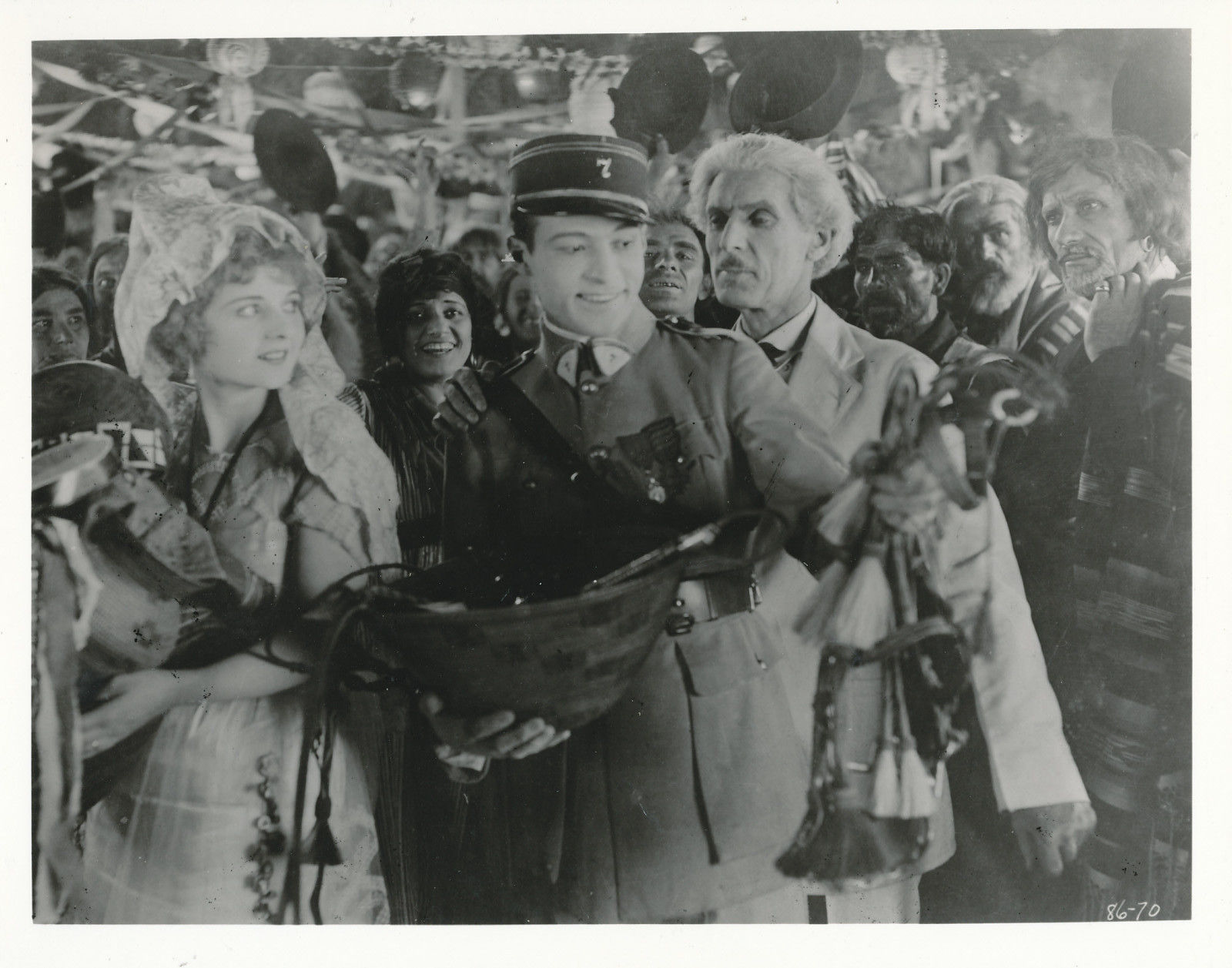
“I do not care …
“I do not care for money made easily. It is not lasting I know. I do not care for friends made easily. They are not lasting I know. I do not care for anything that comes easily. It is never lasts I know. But I fell in love with you easily. But not lastingly you know.”–Rudolph Valentino , 14 Jan 1924
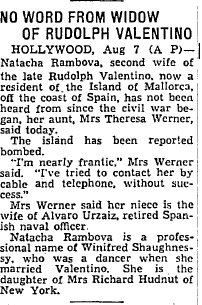
30 Sep 1934 – Alberto Valentino New Movie
Alberto Valentino, brother of the late Rudolph Valentino will appear as an Italian Opera Singer in Paramount Pictures “Enter Madame.”


You must be logged in to post a comment.