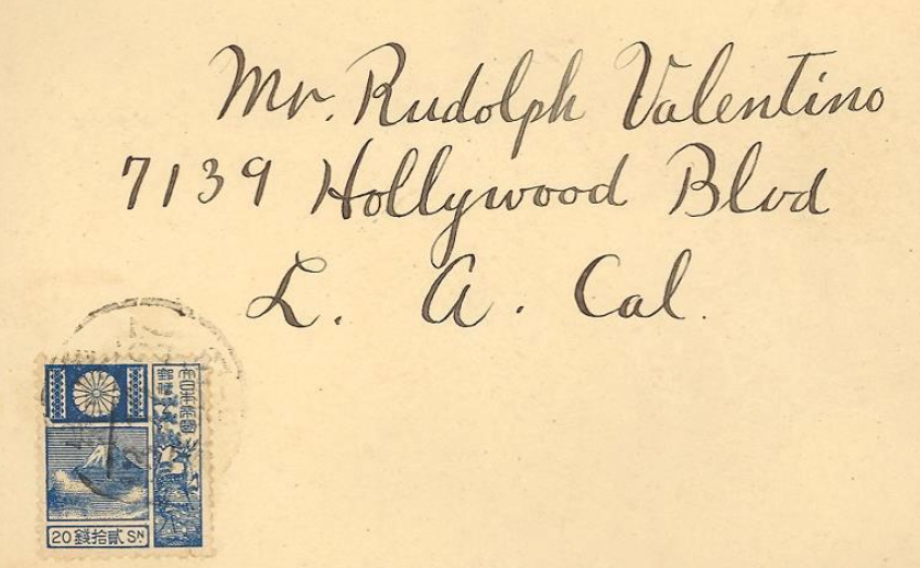
I had met many well-known personalities during those weeks in New York City and among them was Rudolph Valentino. He was a magnificently built man and his disposition was as delightful as his physique. Just to see his expressive hand lying on the back of a chair was art. Valentino and I happened to be in the same group one afternoon. He came over and sat by me and we seemed to be friends immediately. No wonder women were crazy about him. They were when I first met him, although he had not became famous as an actor then. But he had already done his chores and worked for recognition the hard way. I knew all this, somehow, without being told. Rudy and I had a unique understanding. We were attracted to each other from that first afternoon. Call it sex if you will, but more correctly call it a dancing friendship, which is why our bond lasted, lived long and strong. Rudy was drawn to me that first meeting and he was waiting for me after a Ziegfeld Folly Rehearsal that night. We went dancing – danced hours and hours. I’ll never forget that night another night of dancing rhythm. I was in all white and Rudy, tall and dark was in black we provided a striking contrast. When we walked onto the dance floor it seemed that everyone stopped to look at us. How Rudy loved to tango! He had a sense of timing quite unlike any other man I’ve ever danced with. It was late when we started home that night, and in the cab he put his arm around me. There was something sweet and tender, almost child-like about Valentino. I responded to this. I felt that he wanted to make love to me. I hoped he would have the intelligent grace to wish me luck and just be my friend. I wanted to keep his dancing friendship. Rudy was sought after. Women adored him became fools over him. I didn’t go that far. I have never been the clinging kind; Valentino seemed to find this attractive because he said that I did things to his heart. He became my shadow. I found him sitting in the theater during rehearsals watching and waiting for me. One evening he walked with me in the park. It might have looked strange to many of our friends had they seen us walking in Central Park at two in the morning holding hands, saying nothing, happy together. Now I was about to make “Delicious Little Devil” and word came to me that Rudolph was in serious trouble and needed help. Jack de Saulles had learned that Rudy would be his wife’s witness in her divorce from him. So, Jack to discredit Rudy’s testimony and through his influence, position and money, had been able to have Rudy held on a false charge. But Rudy was able to prove within a few days he was innocent of that charge and was freed. I knew the anguish in Rudy’s heart. I knew that he realized that he could do nothing to help the woman he loved, and that Jack was determined not to let her have her way in the divorce which meant taking the child with her to Chile. Rudy was now unable to get work in Cabarets. Jack had seen to that. In my picture Rudy took the part of the playboy son of an Irish contractor. The part brought him to the attention of the entire movie industry. He was very good. So good in fact that he was soon as we all know, launched on the brilliant career that began with his part in the Four Horsemen.
Posts Tagged With: Rudolph Valentino
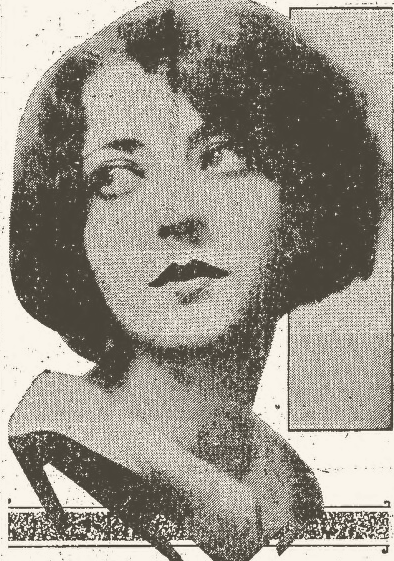
27 Oct 1923 Rudolph Valentino may come to Australia
Rudolph Valentino may come to Australia. It is Rudolph Valentino’s ambition to start a company of his own, and it is his intention to have Mr. J.D. Williams in with him. He says that after he has selected a play, he may go to any place in the world to produce it, for he believes that a motion picture should be taken in real surroundings, not in a faked setting. “so my next film,” he states, “maybe produced anywhere in the world – maybe in Australia, which country, I admit, fascinates me,” I has long been his wish to go to Australia.
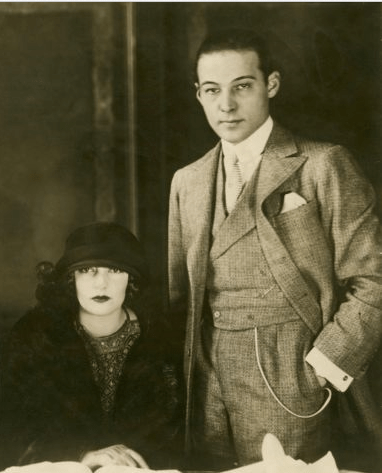
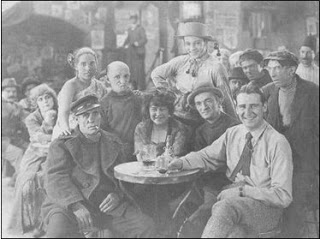
“Gossip – never…
“Gossip – never related in the same way. When you eat hash you do not always recognize the different kinds of meat in it, do you? So it is with Twice Told Tales”..Rudolph Valentino

3 Oct 1926 – Valentino’s Victories
Rudolph Valentino’s death has created a remarkable demand for all films in which he was featured, and in this respect he is unique. Old pictures of his have been revived later productions are having a new popularity. Virtually “discovered” as regards the prominent part of his success in 1920 by June Mathis and featured in the celebrated Rex Ingram/Mathis picture of the war, Valentino’s career as regards its major portion was only six years in duration. During that time he spent nearly two years away from the screen. His romantic appeal and fame have been world-wide and apparently are even despite his death.
8 Jul 1926 – Pola and Rudy Vie on Screen
Pola Negri and Rudolph Valentino maybe subjects for cupids attention
and they may be married in Europe next year, as Pola’s mother recently
announced. But box-office rivalry goes on just the same! This fact is
strikingly borne out by the appearance of Rudy and Pola on the screen
this week at different theaters. Valentino opens today in a special
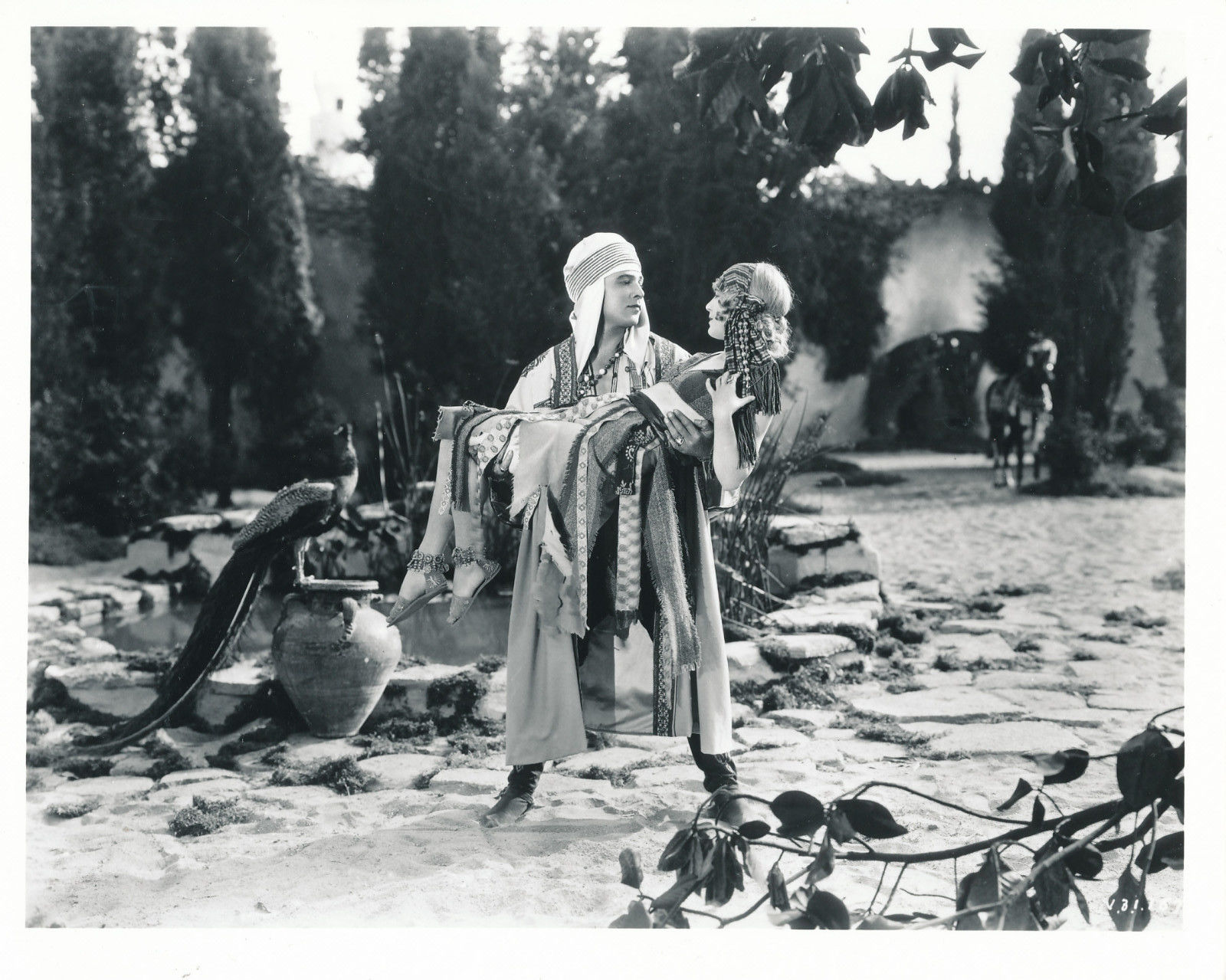
premiere showing the “The Son of the Sheik” at the Million Dollar
Theater. This film is a sequel to “The Sheik” and marks his return to
the burning sands and equally burning love scenes that proved so
successful in the earlier picture. Valentino will have as his guests at
the second performance this evening a large party of motion picture
stars. “Good And Naughty” is the new alluring title of Miss Negri’s new
vehicle, which will be seen at the Metropolitan beginning tomorrow. The
polish star plays a role wherein love is the inspiration that leads the
heroine to throw off her dowdiness and reveal her true loveliness.
30 Nov 1924 – Valentino and Close-Ups
No one of the stars want to be stars anymore. They all want to be producers and it doesn’t seem to bother them in the least whether they submerge their personalities to some extent, so long as the resulting feature is enticing to the public. Now it appears that Rudolph Valentino is also wanting to become a producer through his independent efforts. Valentino said that his purpose above all, under his new contract, would be to make pictures that will be outstanding as pictures. All the details of actual production will come under the supervision of his wife Natacha Rambova and he is making the choice of the members of the cast and is going to get the very best talent available. Furthermore, he plans to develop new talent, or at the least new phase of the personalities of established favorites. Notably he is using Nita Naldi heretofore the vamp as a heroine. Valentino’s experience with “Monsieur Beaucaire” is a case in point. “When they first showed my wife this picture at the studio, it was overburdened with close-ups of myself,” he said. “My wife insisted on the removal of dozens of them. “Somebody concerned in the cutting and directing, remarked to her that he hardly thought this course would be satisfactory to me, but she quickly informed him that despite any beliefs to the contrary, unnecessary close-ups were not my idea of starring.” Which should settle for a time at least, these rumors that Valentino is intent on acquiring as much footage as possible when he is appearing in a picture

4 Oct 1926 – Actor’s Relatives Demand that Brother be Co-Executor
Relatives of the late Rudolph Valentino will refrain from contest of his will provided Alberto Guglielmi, the late actor’s brother is named co-executor of the estate with George Ullman, attorneys for Guglielmi and his sister announced in court tonight when the will came up for probate. Ullman, who was Valentino’s business manager, is named executor and trustee by the will. The hearing was continued for a week. The will leaves virtually all the estate to Mr. Ullman, as trustee for Guglielmi, his sister Maria and Mrs. Teresa Werner, the aunt of Valentino’s second wife, Natacha Rambova. It provides for final distribution to be made in accordance with the oral instructions Valentino gave Mr. Ullman.
“He couldn’t kn…
“He couldn’t knock your hat off.” –Jack Dempsey, on sparring with Rudolph Valentino
12 Dec 1926 – Hundreds throng to Valentino Auction
The name of Rudolph Valentino is still one to conjure with. On the first day, that his mountainside home, “Falcon Lair” was thrown open to the public, the caretaker counted 500 persons going through the house. It had been opened to the public to display the personal effects of the dead star preliminary to the auction in which the house was sold yesterday for $145,000. The collections of art objects, thirty five oil paintings, antique furniture and books; in fact, the complete furnishings and belongings of Valentino’s home, go on the auction block. Only the clothing of the actor, some 65 suits is held out. These garments are being retained by friends for sentimental reasons. In spite of the location of the house, which is at 2 Bella Drive, high up a steep mountain road on one of the smaller mountain crests above Hollywood and Beverly Hills and far from any casual motorist, streams of people file in from morning till the house is closed in the evening. Included with the house in the auction were eight and one and half acres of gardens above it and six and three fourths acres of unimproved area. The old home at 6776 Wedgewood Place in Whitley Heights and the four lots next to it, which formed the home of Rudy when he was married to Natacha Rambova, remain to be sold. There has been some talk of preserving one of his collections of antique objects as a memorial to be placed in a local museum.



1919 The Delicious Little Devil
Rudolph Valentino shot to stardom in 1921 with the release of The Four Horsemen of the Apocalypse, The Conquering Power and The Sheik. He had already appeared in over twenty films, mostly in smaller roles (often as a villain) and with varied spellings of his name in the credits. He made seven pictures in 1919 alone. Of these, all but three were lost. Delicious Little Devil is one of the three existing Valentino efforts from 1919. He does play a romantic role in the film but is fourth billed — as Rudolpho De Valentina.
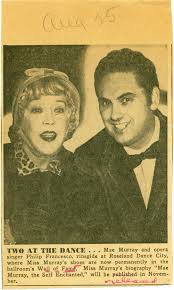
The name above the title in Delicious Little Devil is Mae Murray. The former Ziegfeld Girl had known Valentino in their New York days and lobbied for him to have the part in Delicious Little Devil. It helped that Murray’s husband, Robert Z. Leonard, was the director of the film. Or at least it seemed to help at first; later on, by Murray’s account, there was tension between Valentino and Leonard. She attributed the problem to jealousy, recalling how she and Valentino often danced between takes. In fairness, Leonard did cast Valentino opposite Mae again, in Big Little Person (1919) – but this time his role was an unsympathetic, two-timing fianc.
Robert Z. Leonard had himself been a silent actor, appearing in over 100 films before turning director for The Master Key (1914). He met Murray on 1916’s The Plow Girl. A few years, and several films later in 1918, they married. Leonard would direct Murray in twenty plus movies and they would form their own production company called Tiffany Productions. In 1924, Leonard directed Murray in Mademoiselle Midnight (1924) for MGM. This film kicked off a thirty-year association between Leonard and the studio. Unfortunately the Leonard-Murray relationship wasn’t so long-lived. The couple divorced in 1925 after seven years of marriage.
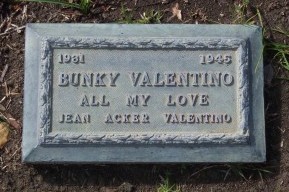
Another, even shorter union occurred in 1919 after Delicious Little Devil’s release. That was the year Valentino married actress Jean Acker in one of the shortest celebrity marriages on record. The couple wed on November 5 after a two-month courtship but the marriage only lasted a reported six hours. As the story goes, Acker and Valentino quarreled and she locked him out of their hotel room on their wedding night. They separated but the divorce wasn’t finalized until March 1923. In the meantime, Valentino met and eloped with former ballerina turned set designer Natacha Rambova in May 1922. He was charged with bigamy when it was discovered that he was not yet divorced. And Acker sued for the right to call herself his wife – literally. Acker was credited in the 1923 film The Woman in Chains as “Mrs. Rudolph Valentino.” Valentino remarried Rambova in 1923 after his divorce was granted. And he and Acker eventually reconciled, becoming friends before his 1926 death.
As for Delicious Little Devil, Valentino’s fourth billing would eventually come into dispute. Later, after he’d become famous, the studio wanted to reissue Delicious Little Devil and several other early Valentino pictures. The idea was to ride the wave of Valentino’s popularity by playing up his smaller roles in these films – to perhaps even add some new titles and to change the order of billing. But Mae Murray protested and demanded to retain her star billing. She was unfazed by Valentino’s newfound success and assured in her own stardom, remarking, “once you become a star, you are always a star.”
Director: Robert Z. Leonard
Screenplay: John B. Clymer, Harvey F. Thew
Cinematography: Allen G. Siegler
Cast: Mae Murray (Mary McGuire), Harry Rattenbury (Patrick McGuire), Richard Cummings (Uncle Barnley), Rudolph Valentino (as Rudolpho Valentina, Jimmy Calhoun), Ivor McFadden (Percy), Bertram Grassby (Duke de Sauterne).
Source:
TCM
1923 – The Kaleidoscope of Love “Synonyms and Antonyms” Pg123

Rudolph Valentino describes its birth, rise, fall, and disintegration of love.
A-Adoration, Anticipation, Affinity, Arguments
B-Beauty, Bliss, Bitterness, Bondage
C-Caresses, Circumstances, Confidence, Charm
D-Desire, Delusion, Dreams, Divorce
E-Ecstasy, Engagement, Ego, End
F-Fascination, Forgetfulness, Flatter, Faith
G-Gossip, Gratitude, Gifts, Goodbye
H-Happiness, Honor, Heartache, Hell
I-Intuition, Irony, Idolatry, Integrity
J-Jealousy, Joy, Justice, June
K-Kisses, Keepsakes, Knowledge, Kismet
L-Lips, Loneliness, Logic, Longing
M-Marriage, Morality, Money, Man
N-No, Nearest, Novelty. Never
O-Opposition, Own, Offering, Opulence
P-Passion, Promise, Pride, Proposal
Q-Quality, Quest, Queries, Quarrels
R-Romance, Reveries, Realization, Remembrance
S-Sympathy, Sacrifice, Shame, Settlement
T-Thoughts, Truth, Temper, Tears
U-Unkindness, Understanding, Uncertainty, Unfaithfulness
V-Virtue, Vanity, Vows, Vengeance
W- Wisdom, Wishes, Wedlock, Woman
X-The unknown love
Y-Youth, Yearning, Yes, Yawn
Z=Zenith, Zest, Zeal, Zero
“There will sim…
“There will simply have to be some sort of adjustment and frankly I haven’t the least idea how we can arrange matters so that we can live together without constant irritation cropping up. My husband wants me to give up work and devote myself to the home. If I did that, what should I do with all my idle hours? We have servants who are much more capable of running the house than I am. I have always worked all my life I have had the urge to create. I cannot give this up it is part of myself.” –Natacha Rambova on her separation from Rudolph Valentino
Jun 1921 – Rex Ingram Recognition
Rex Ingram, Silent Film Director, was in New Haven, CT on his old Art School, the University of Yale, who conferred on him a Bachelor of Fine Arts Degree in recognition, for his merits for the art of the cinema and especially for directing “The Four Horsemen of the Apocalypse”. It was the first time, a University recognized motion picture as an art –the first time in the world!
30 Oct 1940 – Valentino’s Nephew Sues for Royalties
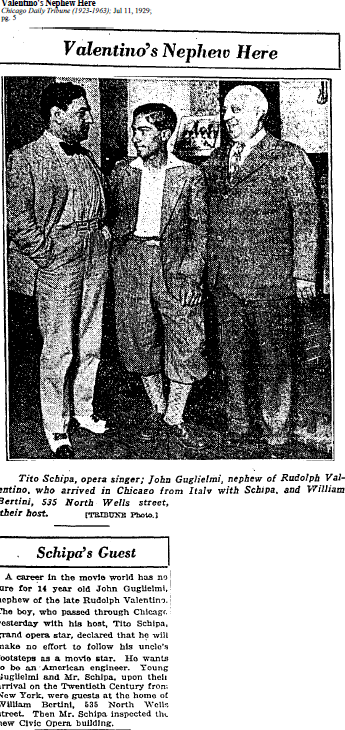
Jean Valentino whose right name is Jean Guglielmi nephew and sole heir of the late Rudolph Valentino, Silent Film Actor is trying to collect through the law courts $20,000 which he claims is due him as royalties on reissues of “Son of the Sheik” and “The Eagle” which were distributed a couple of years ago.

1926 – This weeks News in Hollywood
Monday – Pola says “Yes” and Rudy says “No”
Tuesday – Rudy says “Yes” and Pola says “No”
Wednesday- Pola says “I go to Europe”
Thursday – Pola says “I do not go to Europe”
Friday – Pola has dinner with Rudy
Saturday – Rudy has dinner with Pola
Sunday – A holiday
May 2014 – Premio Rodolfo Valentino Italian Excellence Awards Report
Mr. Simon Constable, recently attended the Premio Rodolfo Valentino Italian Excellence Awards, Castellaneta, Italy. He has graciously reported on attending the awards ceremony as well as supply photos of this prestigious event for this blog. I would like to personally thank him on his generosity in sharing his observations for this blogs readers.
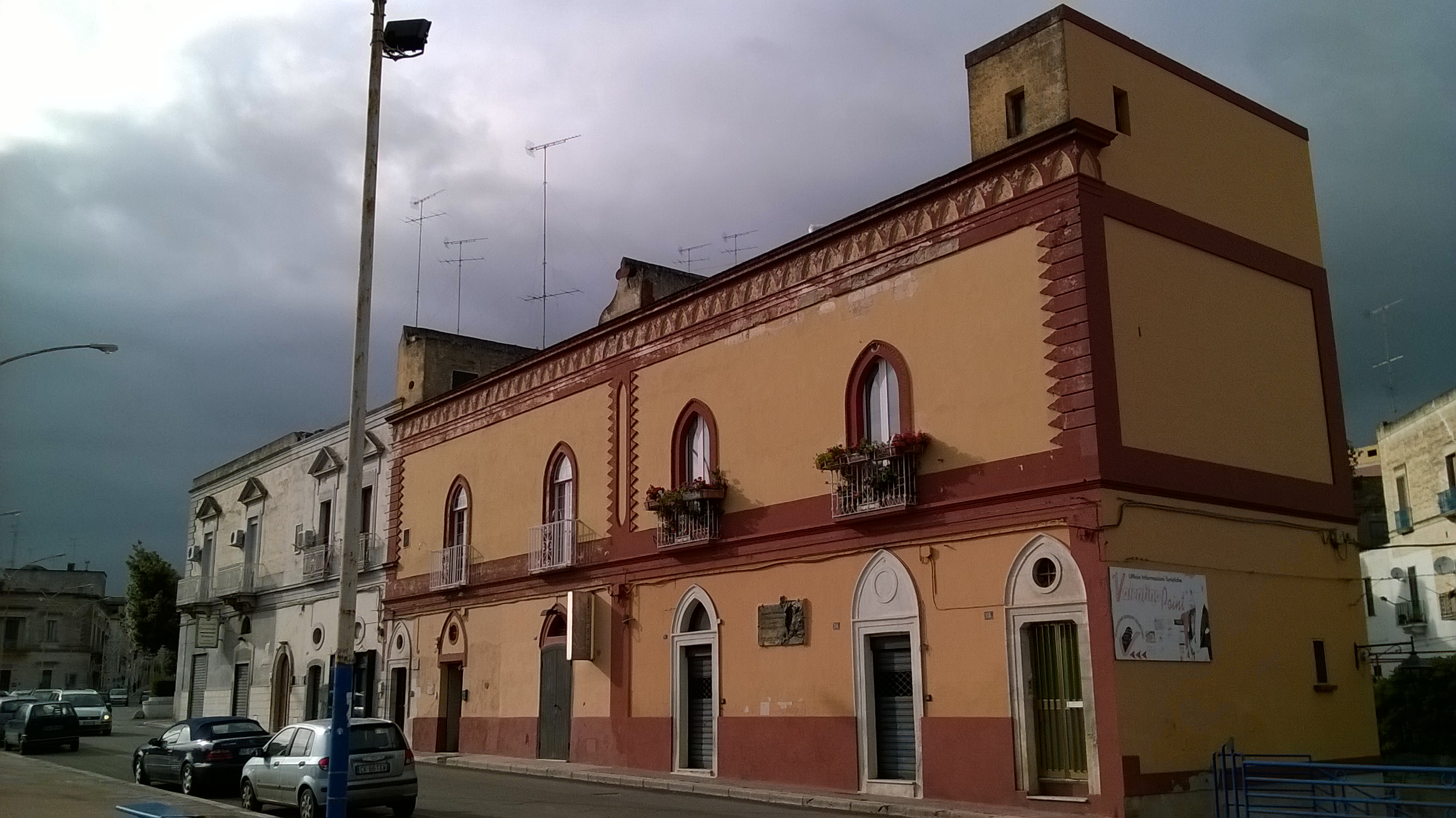
The rain that fell on my first full day in Castellaneta was, according to the managers of my accommodation, unusual for the time of year — and I believed them. This was Italy, in early May, what was going on? Why was it so wet? Being British I was, of course, unfazed; besides, it would take more than a gentle pitter-patter to prevent me investigating Rudy’s birthplace. With my main purpose on the 4th – attending the Premio Rudolfo Valentino Italian Excellence Awards – hours away, I aimed (under an umbrella, and with my travel companion) for Valentino’s childhood home. Unsurprisingly, after viewing it from all possible angles, I was overcome with emotion. Here was where the story began. Where he was born, took initial steps, and spent those early formative years. And there was I, was more than a century later, gazing at it, damp but happy. After a walk to the top of Via Roma, snapping and filming as I went; a cappuccino at Bar Valentino; a tasty snack elsewhere; and a wander ‘round the oldest part of town, it was time for the ceremony: at Teatro Valentino, at 7:30 p.m. I was expectant.
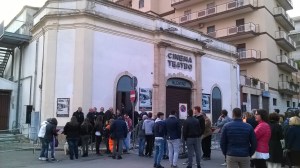
By now traffic flow had been restricted with barricades, the local law and medics were in attendance, and a large crowd of spectators had gathered. The air truly buzzed with anticipation. As I understand it, the purpose of the awards is to, in Rudy’s name, recognize and celebrate Italian excellence. Meaning that, annually, the creativity of Valentino’s countrymen will be showcased and rewarded in Castellaneta. I have to say that it is an inspired idea and, obviously, LONG overdue. As we all know, long before The Oscars, Rudolph Valentino was a man who very much felt that achievement in his field should be rewarded. And he was obviously extremely proud of his national heritage and Italian culture in general. A little early (7:15 p.m.), we made our way to the barrier, and I explained that we were on the list, and that our tickets were waiting inside. The theatre that bears his name is a charming one. Like Rudy himself, it isn’t big, but it packs-a-punch. The interior is, like him, elegant. It embodies him somehow — if that’s possible. After collecting our tickets I paused to photograph the charming usherettes, and then we headed up the left-hand stairs to the gallery.
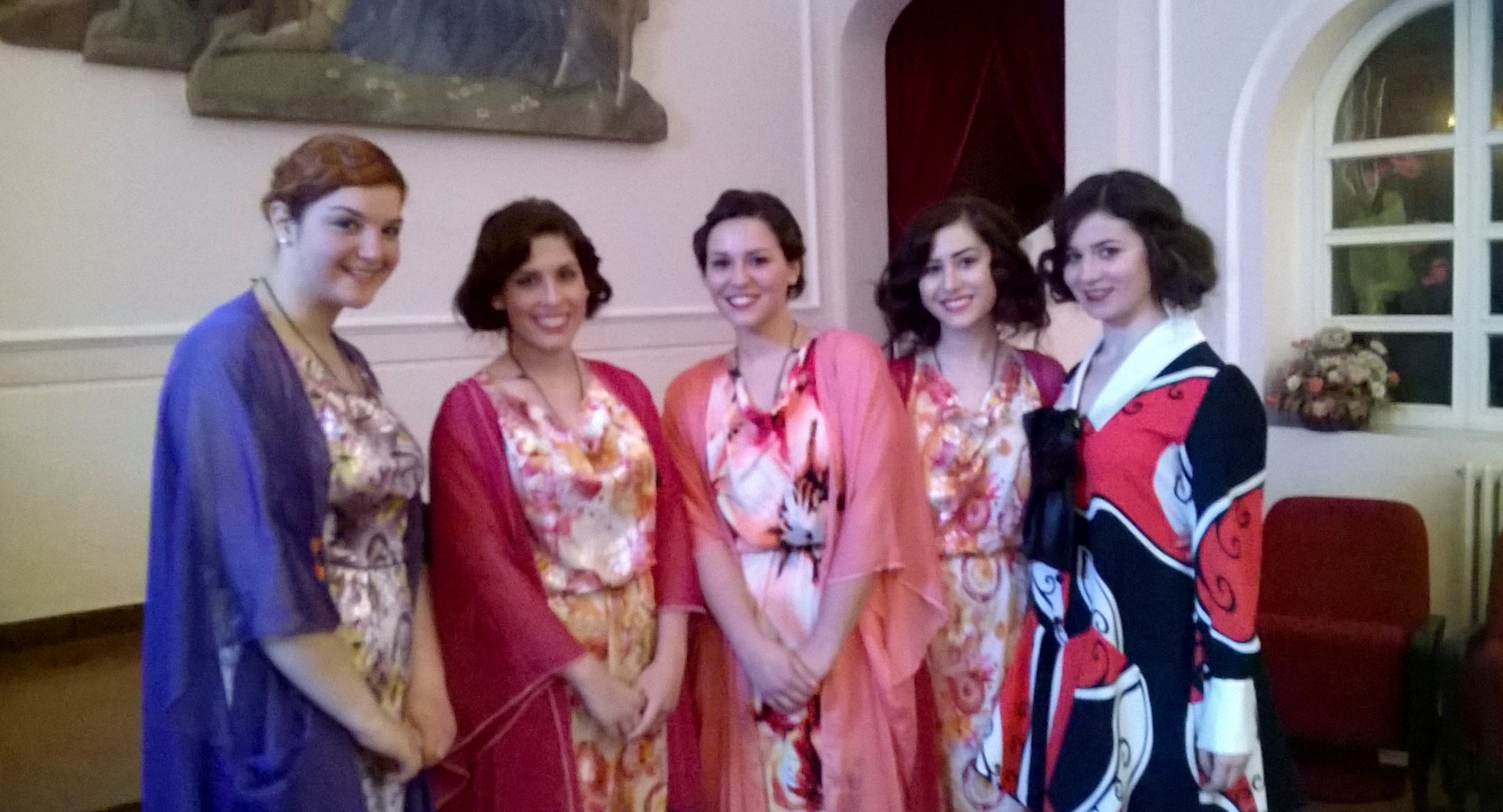
How early we were was apparent once we were upstairs, as there were perhaps only 50 or so people inside, including technicians. Italians being Italian things are more relaxed and leisurely. So, with little else to do, we stood at the gallery rail, chatting (for about an hour) as the venue filled-up. An enjoyable sixty minutes of people watching.
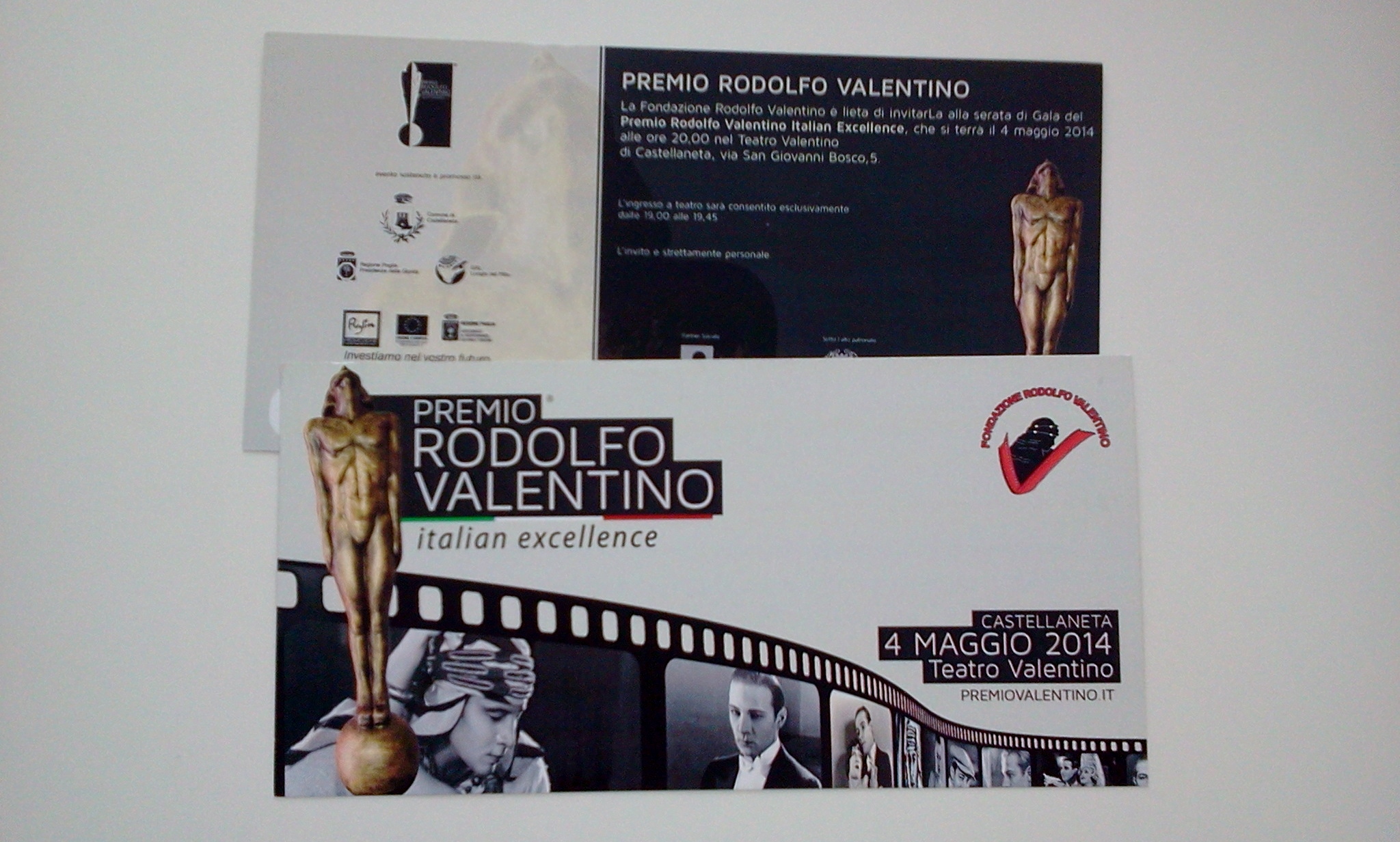
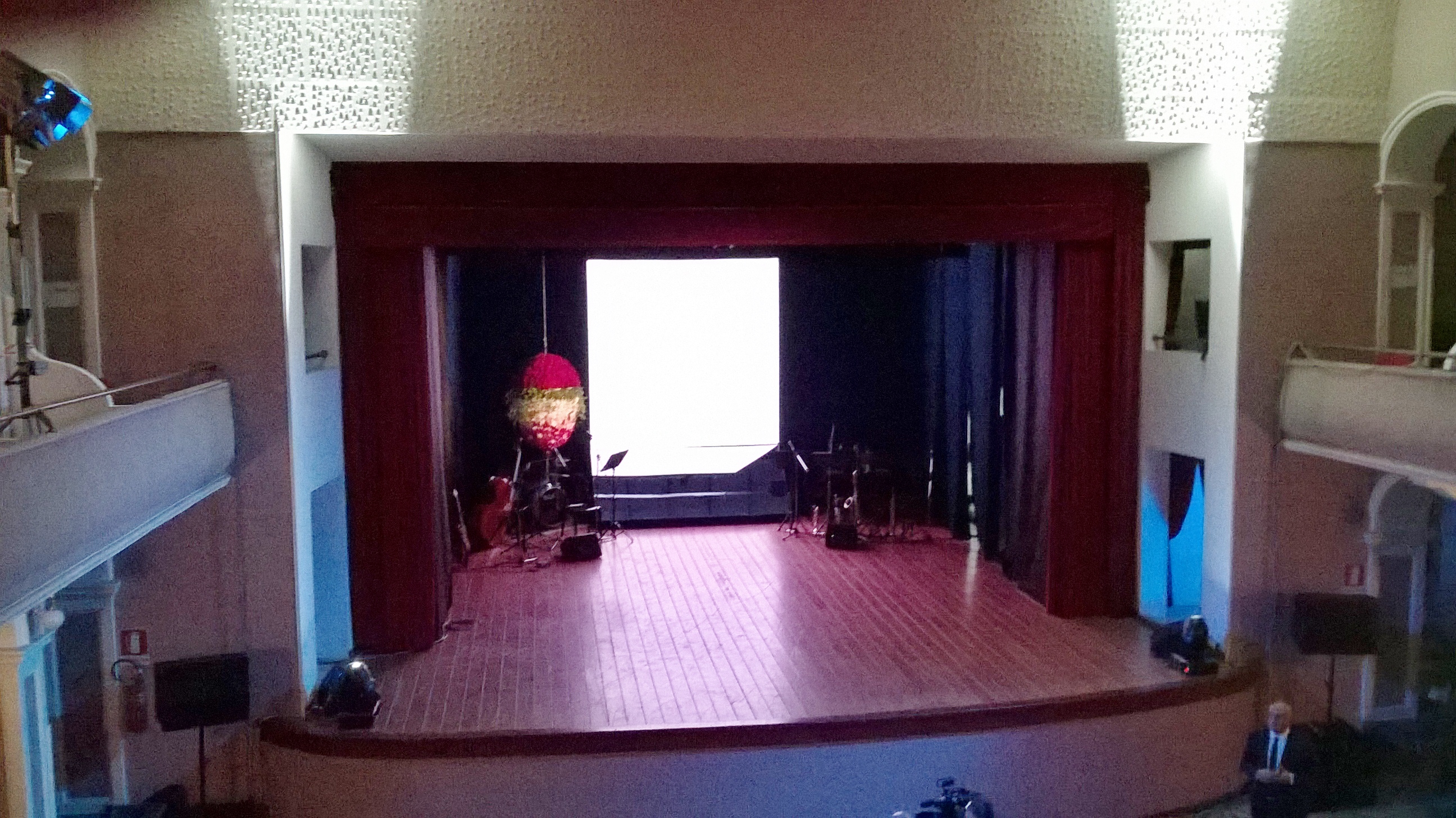
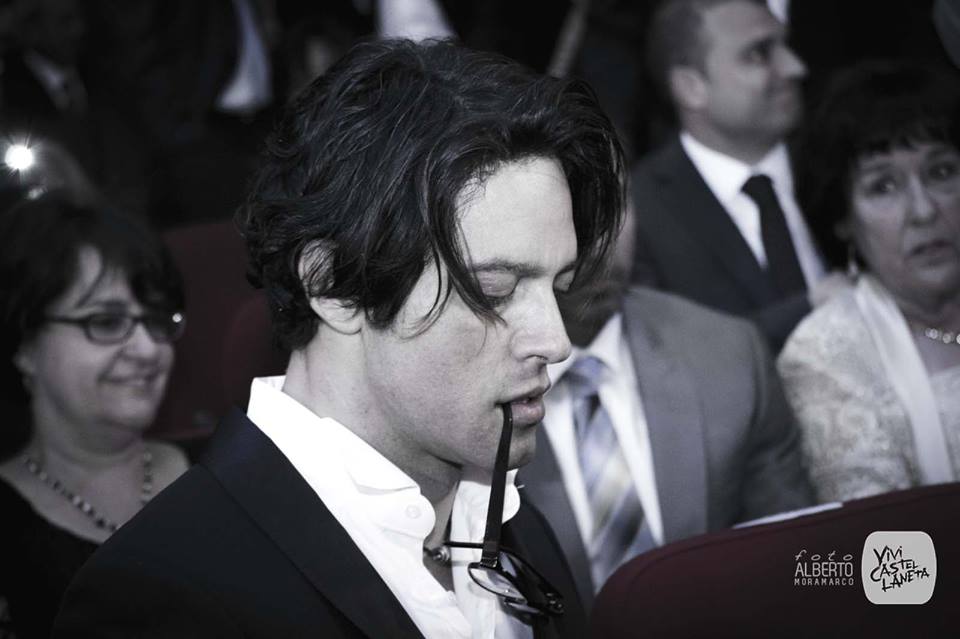
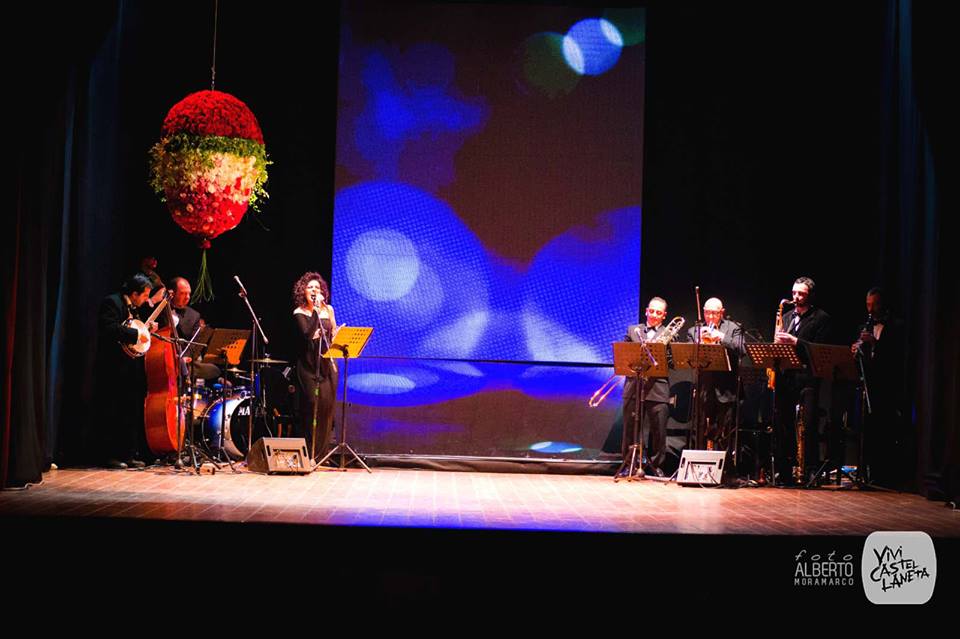
At around 8:30 p.m., an announcement, by its tone, suggested that the start of the proceedings was imminent and so we took our seats. (It was at this late point that Gabriel Garko appeared, something the Ladies present found pleasing.) Sure enough, at about 8:45 p.m. the evening commenced, with a large image of Rudy slowly appearing square by square, on the screen, at the back of the stage, and a voice-over in Italian telling his story. This was then followed by a wonderful dance routine, by an extremely talented troupe, to a song that seemed to be titled: “Oh, Oh, Rudy,” but actually, after an online check, appears to have been “Hello, Rudy” from “Ciao, Rudy” (1966). The presenter, Gabriella Carlucci, then walked on stage to welcome us all properly and to host the evening. (Dressed dramatically in black lace she didn’t drop-the-ball once for the next four hours.) What followed was a series of early awards to excellent Italians punctuated by Jazz music and dancing. First-up was Elisabetta Bedori, a local fashion designer, who received a beautiful Newcomer award and a bouquet. Then, Michele Gaudiomonte, (another designer) joined Gabriella, and he was followed in-turn by Michele Mirabella, famous Actor and Presenter, for the first Rudolph Valentino Award of the night. (He spoke for some time and got many laughs.)
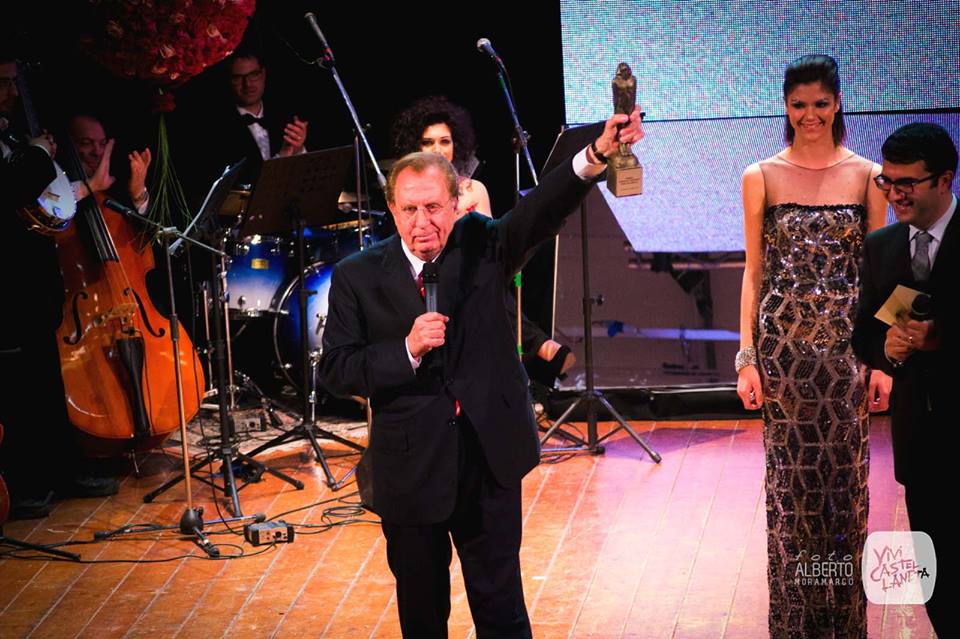
At around this time the Great Grand niece of Rudy joined Gabriella Carlucci, which was a lovely surprise and very appropriate. She said something in Italian and apologized for not being able to speak the language. She then spoke about her Great Uncle and how she felt it was a great thing that the awards were being held in Castellaneta. His legacy, she said, was the realism with which he acted. An award for Beppe Fiorello followed. He sang a little of “Volare” but I never heard him mention Rudy or Rudolph Valentino, strangely; which was a shame. Then we had a rendition / version of “Cabaret,” from the musical, by a singer and live band. On reflection I suppose it was appropriate, as Valentino DID go to Germany at about that time: though Chris. Isherwood was more late Twenties / early Thirties, actually. If my memory serves me correctly we then had a wonderful Tango dance by Sebastian Arce and Mariana Montes. And I mean WONDERFUL — especially considering that Montes was clearly pregnant. They strolled-on, and, until they strolled-off again, they were totally transfixing.

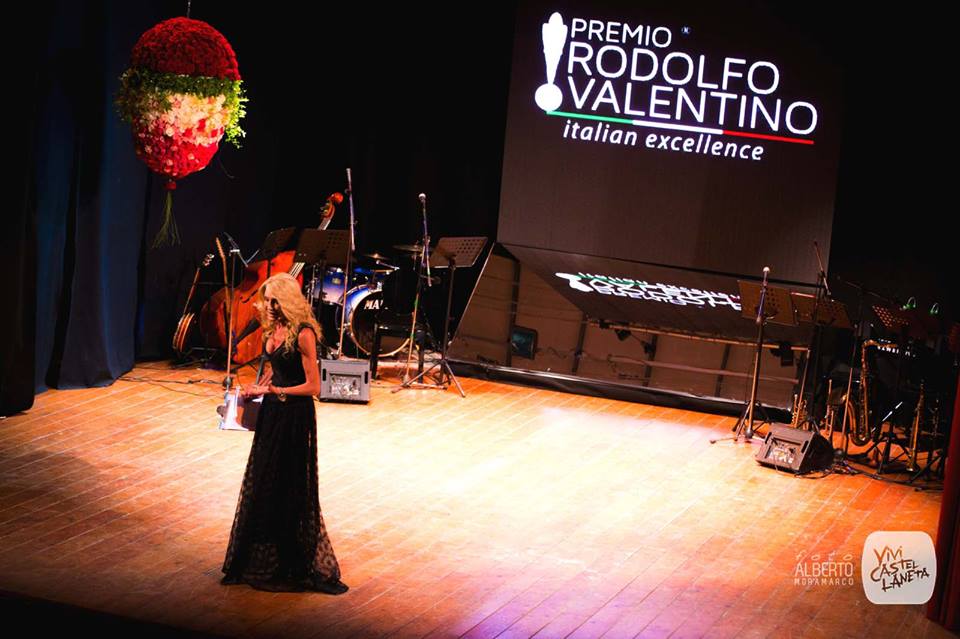
The award to Pippo Baudo, the television personality, was of great interest because he talked not just about Valentino, but also of Marcello Mastroianni, and introduced a rare TV clip of his portrayal of Valentino in “Ciao, Rudy.” I have to say, this was one of the highlights of the event for me as I had never seen it, and Mastroianni, dressed and dancing as Julio, was very spectacular and convincing. It was a fantastic and thrilling moment.
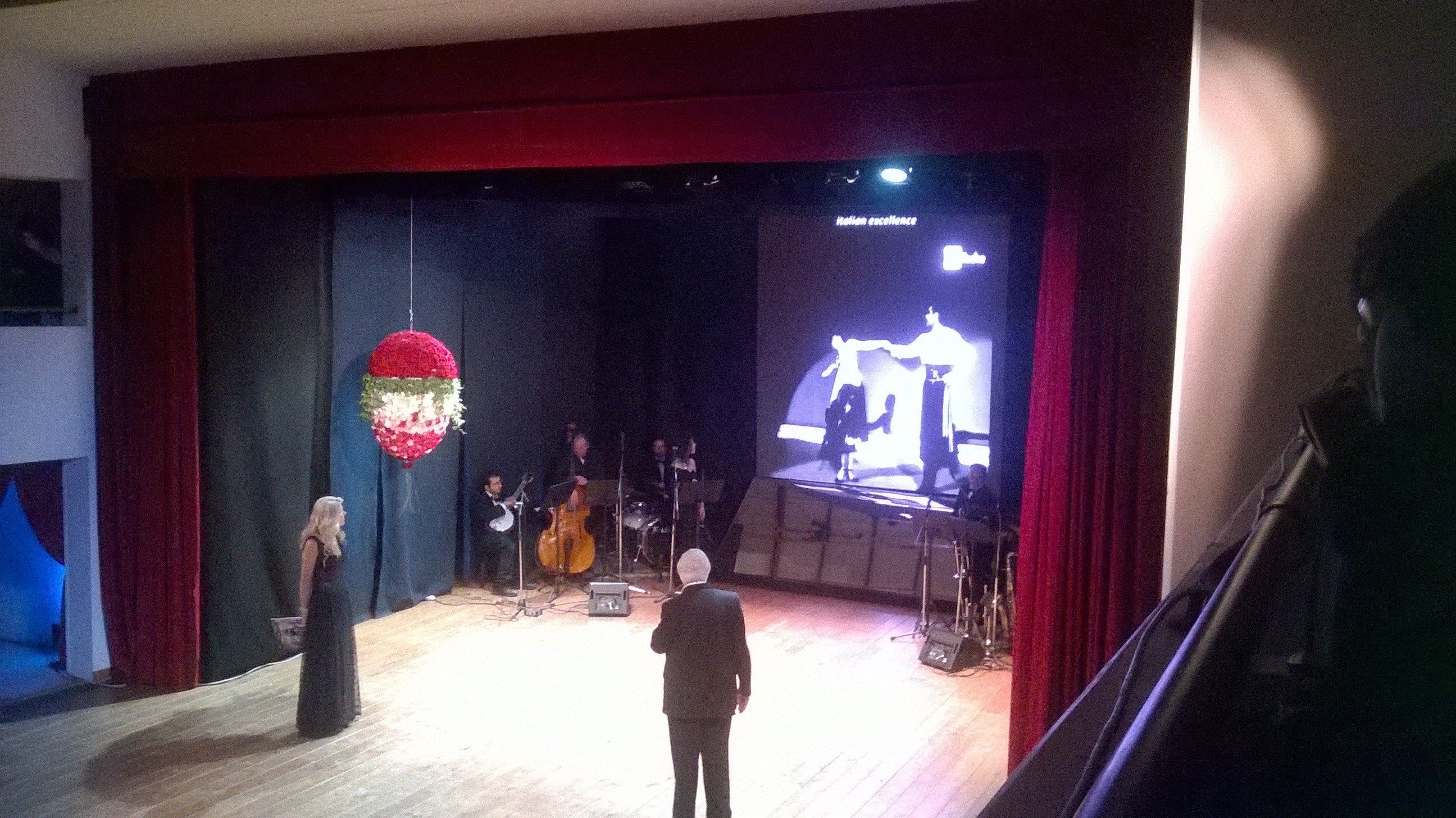
MORE awards followed (Maison Gattinoni, Massimo Ghini, Maria Pia Ammirati), there was more Jazz, more talking, then more dancing and yet more awards. Paolo Maria Scalondro spoke. And then it was, finally, at a very late point, time for Gabriel Garko to walk under the lights. Charismatic, tall, handsome – if slightly tired looking – and rather rock-and-roll with his eye make-up, he spoke at length, and sent the females – and some males, too, I’m certain – wild.
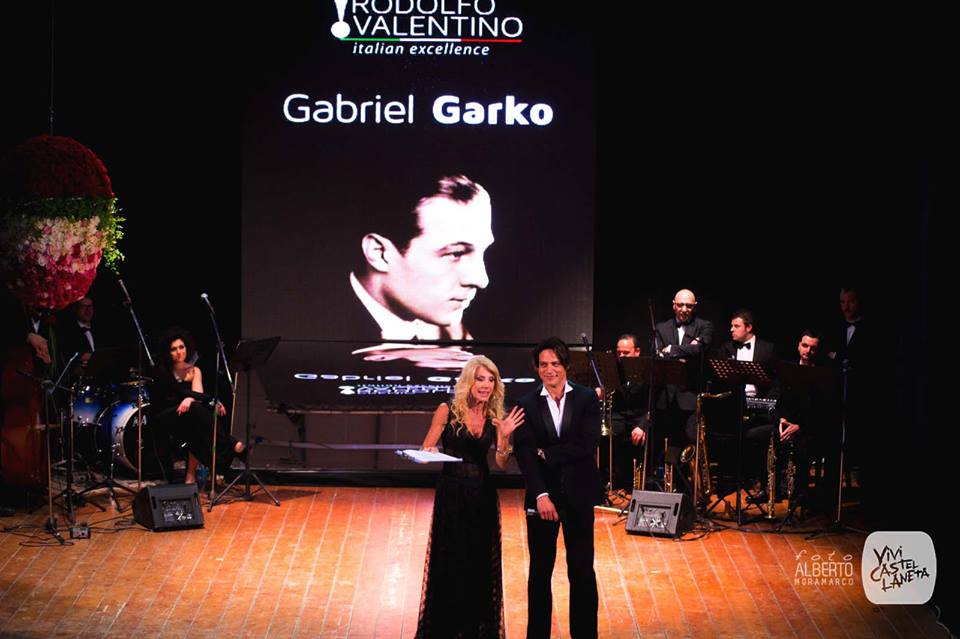
And then, so suddenly, it was all over. Having to rush, as I did (due to an early start on Monday), we left after Mr. Garko received HIS statuette; ahead of the crush and into the night air, and to our waiting car. What a day. What an experience. I was privileged indeed to see Rudolph Valentino given the respect he is due and in his hometown of Castellaneta. The tributes had fallen upon him like the many raindrops earlier, they wetted and soaked him, gave him life again and left his image glistening, shining and sparkling. He dries-out now until the next time, when he is showered and praised for his achievements once more. I hope, again, to be there — even if I have to get drenched!
Simon Constable (May, 2014)
2014 Rudolph Valentino Excellence Awards

Reporter Simon Constable recently attended the 2014 Rudolph Valentino Excellence Awards
Did you Know?
Rudolph Valentino is 5 feet and 11 inches in height and weights 155 lbs.
May 1925 – Valentino to Build New Home
Rudolph Valentino is building himself a desert home in Palm Springs on the edge of the California desert just three and one-half hours from Los Angeles. He says he hopes thus to get away from the noise of the city. Everywhere he goes, he claims, he is recognized and his tired of being the center of attraction. There is a stock farm for the breeding of Arabian thoroughbreds near Palm Springs and this place has a real interest for the sheik.
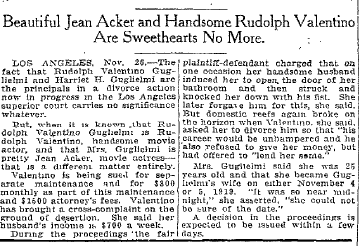
3 Aug 1921, Rudolph Valentino Court Continues
When Judge Walton Wood learned that Jean Acker, who is suing her husband Rudolph Valentino for separate maintenance is earning $200.00 a week, he excused Valentino from paying her any further alimony until October 17th at which date the case is to be continued. And if you give them the arm they will cry for the moon.
9 Jul 1921 – Rudolph Valentino Court Results
Rudolph Valentino was recently ordered by the Court of Los Angeles to pay his wife Jean Acker, $100.00 a week pending trial of her suit for separate maintenance.
3 Jul 1921 – Rudolph Valentino in Court
Rudolph Valentino was summoned into court at Los Angeles and charged with an arrearage of $800.00 in alimony due his wife. He promised to pay up at the rate of $50.00 a week.
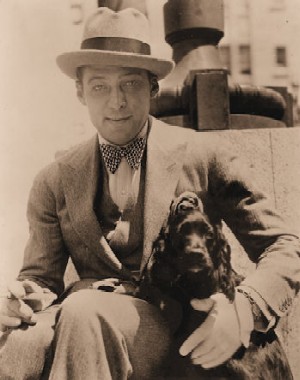
21 Dec 1924 The Secrets of Valentino’s Life
In honor of the birthday of Rudolph Valentino, I will be publishing an article from 1924 about the secrets of Valentino’s life.
It is all very well, but there is just something special about Rudolph Valentino. Oh no, dear messieurs he is not effeminate, not a particle. Thus do you console yourselves upon an error, condone your envy and misjudge the ladies. None go quick as my sex to resent effeminacy in the male. Not thus can our enthusiastic admiration be aroused. There is no gainsaying that the gentleman has a compelling fascination for me, and should I say it in largely because of his agreeably self-confident masculinity, just as men adore agreeably self-confident femininity. My visit, coincided with the removal of the famous beard, and I met him direct from the hands of his barber. Alas I did not obtain a precious lock thereof. He oozed relief, that pesky beard, grown for the leading role of “The Red Power” had ruined his European vacation. Even a Valentino shudders to be seen in the unlovely early stages of chinful growth. He had the thing for four solid months. His wife had actually grown to like it. But today, Valentino was himself again. A very easy man to talk to is Valentino and to listen to. “Who really found you I asked?” “I have heard so many claimants.” “For seven long years, working hard, playing small parts in sometime atrocious pictures. I labored to be found,” he smiled. “But it was June Mathis who opened the door of opportunity for me. It was she who saw me for the part in the “Four Horsemen”. Ah yes, June Mathis. With Valentino speaking so gratefully of her I wanted to know how it happened that June Mathis had left his employ. Because you know directly he entered independent production he had hastened to attach June to his staff to write the scenario of his first picture. So he frowned unhappily. “I cannot tell you how sorry I was not to be able to accept her script. But it just would not do, and we were wasting too much time. So we just had to postpone that production. I shall make these modern picture Cobra sternly finely resisting Nita Naldi’s wiles. And we shall see him in ordinary modern clothes minus the allurement of the costume pictures. It is good to hear this man talking about his pictures. I too, had heard that Mrs. Valentino provided all the managing ability of the firm. But I don’t believe that now. You see, he met Natacha Rambova when he was earning only an uncertain and precarious $175.00 a week and she was getting $5000 a picture as an art director. Were he employing her now at that figure instead of being married to her he would be a foolish man not to give her full sway in her special department. And he has the shrewd business sense to do that now. “I made Monsieur Beaucaire without interference he said. And was allowed my own way in everything under my contract with Famous Players. But I did not cut the picture myself my wife did that. “She made an exquisite job of it.” I declared. And he accepted the compliment for both of them just as any producer would. “What sort of little boy were you”? “A very troublesome little boy, who occasioned his mother much sorrow, he admitted.” You would never, never, guess what kind of sorrow. His besetting sin, if you please, was falling in love with grown-up ladies as old as his own mamma. “You don’t mean that they fell in love with you that young, do you”? “No indeed, the ladies do not fall in love with me, he insisted modestly.” “That mountain of fan love letters, I reminded him.” Oh they are in love with the characters I play not with me the man.” That is why I do not like personal appearances. In Italy I felt I was in the soup or must fall out of the window, but I made it better by wearing my costume of the play, he explained. “he really managed to look thoroughly modest as he said this “Come tell me, what is your pet egotism’? I asked. “Oh, I have one. Very surely he admitted, laughing gaily, and affectionately stroking that recently revealed chin “and it is that my seven years of hard work and poor pay before June Mathis opened the door for me have been rewarded, that I have proved my ability that I can make good pictures, that I can act, and that I have some good artistic and business judgment are, I am not ashamed to show you my egotism he concluded. Well, maybe he was fascinating me, but he was wearing regular clothes and he says he isn’t fascinating in that way, but anyway I found myself agreeing with him. I think that is a pretty reasonable sort of egotism for him to indulge when he can do it as gracefully as he does. He sighed artfully at this point “Isn’t it dreadful to see those fine old trees being cut down in the street outside he said? Just to make a street wider and they take fifty years to grow to such beauty. Well I just felt as if I wanted to pet and comfort him about it. I asked him for an autograph and this is what he wrote on my picture. “Hoping to be kindly remembered.” Rudolph Valentino. Now wasn’t that modestly, artful and discreet and graceful bearing in mind that I am a newspaper woman.
“Just a packet …
“Just a packet of letters tied with a bit of blue. Just a packet of letters that once were read by you. To one who proved unworthy of the love inscribed within. The tiny packet of letters, a witness of my sin.”– Rudolph Valentino, 1924
2014 – Interview with Mr. Tracy Terhune
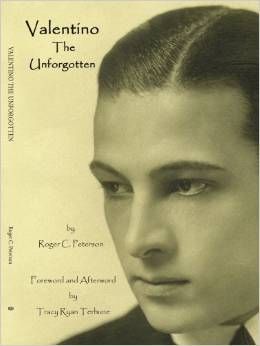
The blog is all about Rudolph Valentino his life, his family, those who were affected by him and those countless of people who loved him for his craft. Through research and reading there is still a lot of information out there that is still unknown. In this blog, I hope you the reader enjoy through discovery the new and interesting things about Rudolph Valentino.
As a noted book collector on Rudolph Valentino one of my favorite authors is Mr. Tracy Terhune, Producer, Collector, Valentino Memorial Committee Member, and Author I recently reached out to him and he kindly granted me a short interview for which I humbly thank him.
You are a noted Valentino collector, author and authority. What is your favorite item out of your collection and why?Since day one of collecting on Rudolph Valentino I have enjoyed collecting personal items that had a direct connection to him. He had such lavish exquisite taste in his cars and homes and furnishings within the home. I have several favorites but I will say that the ring he wore in The Eagle is my favorite. It was actually worn by him in three films (Sainted Devil, Cobra & The Eagle) However in The Eagle the ring played a minor part of the plot of the story. It was owned by Margaret Strong of the Strong Museum in New York. In the early 1980’s the Franklin Mint created a limited edition semi replica made out of black onyx and silver. Last year the Strong Museum which specializes in dolls decided to put it up for auction to fund their acquisition account. I am glad to say that I won the auction for it in Beverly Hills.
Rudolph Valentino had many films. Could you please tell us what is your favorite Rudolph Valentino film and why?
My favorite is Son of the Sheik. It’s his best in my opinion. But I also enjoy The Eagle, Beyond The Rocks, Camille and Moran of the Lady Letty. The Four Horseman is also another favorite.
Tracy you are very active in the planning process with the yearly Valentino Memorial. Every year it is a monumental success and a true tribute to Rudolph Valentino. What inspires you to continue? What will be in store for this year’s Valentino Memorial Service?
I am very proud of my involvement with the Valentino Memorial. It’s the oldest continuing annual event in Hollywood History. It has taken place every year since 1927, the first anniversary of his passing. This year will mark its 87th occurrence. The thing that inspires me to continue is to keep this charming yet quirky at times service going in a dignified and respectful manor. Yet, at the same time we want it to be fun and enjoyable. We always strive for the right mix. I have never had anyone who actually attended one of the Valentino Memorials ever complain that we did something in poor taste or disrespectful to Rudy. I am pleased that in recent years two members of the Valentino family accepted the offer to be our guest speaker. They openly expressed gratitude and their praise for the Valentino Memorial Service. That meant a lot to me on a personal level.
Tracey why are you such a fan of Rudolph Valentino?The reason I am a fan is that he deserves to be remembered. The fact he had great sadness over him and was so mis-used throughout his life. By studio chiefs, by his wives, business managers. The fact that he became a star in 1921 and by 1926 he was gone. Truly like a comet blazing across the cinema screen. All at 31. That’s why I like the slogan first used at the 1928 Valentino Memorial – “We Never Forget”
Tracey will you be writing any future books on Rudolph Valentino? Or any other projects you would like to share?
I have a couple of projects in the works, but mainly my goal this year is to get my website back up and running again. Its’ been down for a couple years and I’d like to get that done. I have also talked very briefly with Kevin Brownlow’s company about releasing The Eagle on Blu ray. The original camera negative survives and the print from it is razor sharp. It’s almost a crime that it sits unreleased due to the funding it would cost for a high resolution scan and the Carl Davis score.
I hope you enjoyed this interview folks. I am hoping to feature future interviews in this blog of other noted Valentino authors.
“I do not care …
“I do not care for money made easily. It is not lasting I know. I do not care for friends made easily. They are not lasting I know. I do not care for anything that comes easily. It is never lasts I know. But I fell in love with you easily. But not lastingly you know.”–Rudolph Valentino , 14 Jan 1924
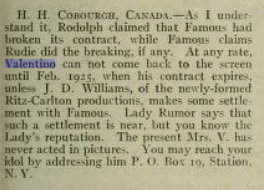
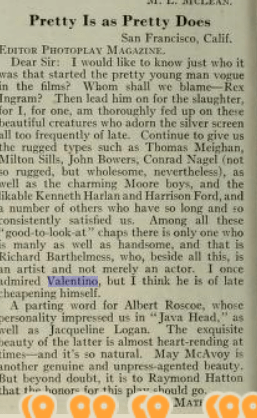
“When …
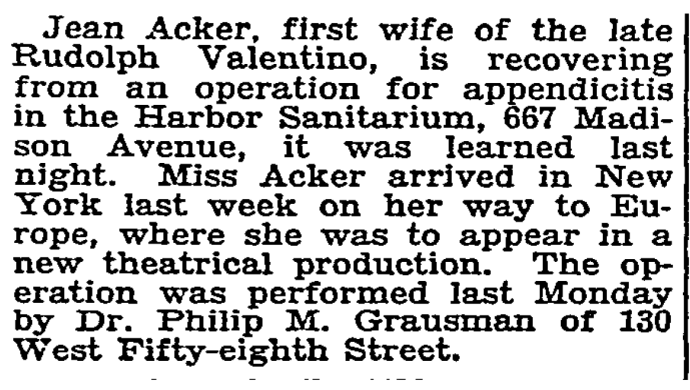
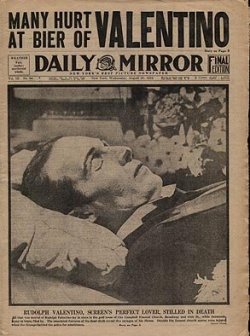
“When asked why she married Valentino, she replied, “It was simply a case of California, the glamour of the Southern moonlight and the fascinating love-making of the man.”–Jean Acker, Former Wife of Rudolph Valentino
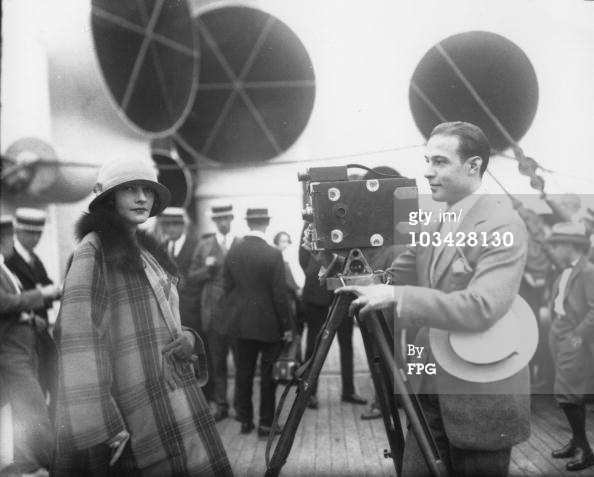
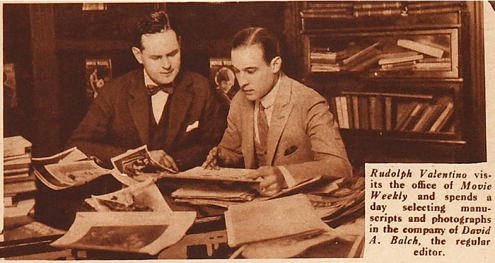
27 Aug 1930 – Rudolph Valentino owed some money
A minor Hollywood sensation has been caused by the suit which Alberto Guglielmi and Maria Strade brother and sister of the late Rudolph Valentino have filed against George Ullman. They charge Ullman with mismanagement of the estate and diverting large sums of money for his own use. Ullman, in the answer he has filed to the charges, says that, far from mismanaging the estate, he found it in a debt-ridden condition and spent years ironing it out. It was Valentino who wrecked his own estate, Ullman claims, for he died leaving debits of over $60,000 into a surplus of $100,000 to be distributed among the heirs. A court hearing will take place at the end of this month, and a decision reached as is whether Ullman shall be permitted to continue as manager and executor of the estate.
18 Jan 1933 – Miss Rambova Home Ransacked
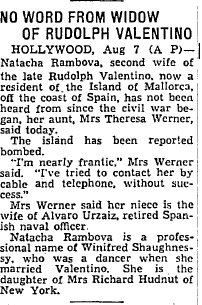
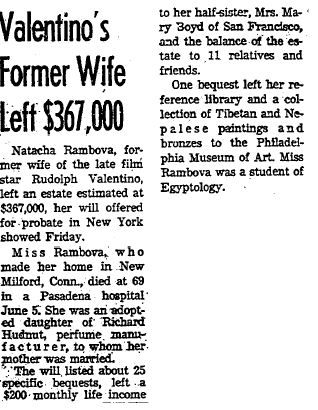
Thieves entered the Majorca home of Natacha Rambova, former wife of Rudolph Valentino and ransacked the establishment. They stole a revolver but did not steal any jewelry. Authorities investigated on the theory that the thieves were looking for papers. Miss Rambova would not comment.
24 Oct 1926 – Valentino Manager Writes Valentino’s Story
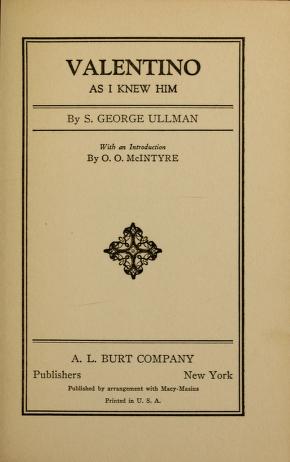
A book dealing with intimately with the late Rudolph Valentino was issued yesterday by Macy-Masius, publishers. The book by S.George Ullman, for many years the film star’s manager. It is called “Valentino as I knew him.” A preface has been written by O.O. McIntyre. Mr. Ullman traced Valentino’s career and devoted much space to explaining his last illness. On the question of whether Valentino was engaged to Pola Negri at the time of his death, Mr. Ullman said that “he never told me so, and I never asked him”. The author however, added that Valentino had vowed never to re-marry until he had finished his movie career.
“The biggest th…
“The biggest thing that Rudolph Valentino did was die”..–Alice Terry, Lead actress Four Horsemen of the Apocalypse on his death.
7 Feb 1948 Restauranteur Holds Valentino IOU
Manhattan restauranteur Sam Slavin still holds an IOU from Rudolph Valentino for $10.00. He lent Rudy money when the great silent film star worked in Slavin’s place for $12.00 a week. Valentino many times tried to buy it back, but Slavin always refused to sell. And its still there, framed, on the wall of the restaurant.
8 Oct 1927 – A New Valentino?
Rumors that Alberto Valentino is being groomed to succeed his late brother, Rudolph Valentino, on the screen have been received. It is stated that-Gugiielmi has submitted to vain operation of plastic surgery. Alberto Valentino’s face, it is said, has been re-modeled on lines resembling those of the late screen idol, his bold and belting nose being altered to a classical shape. Guglielmi came to the US a year ago to attend his brother’s funeral
23 Mar 1965 – Mae Murray Died
Mae Murray, the glamorous, famous, and beautiful Hollywood icon who told the press, “Once you become a star, you are always a star!” was found destitute at the age of 75, aimlessly wandering the streets of St Louis, Missouri.
Marie Adrienne Koenig was born of Austrian-Belgian parentage May 7, 1889, in Portsmouth, Virginia. Years later, she told everyone she was born Mae Murray, “On my father’s boat, whilst we were at sea.”
The imaginative and ethereal Mae also stated that a great-grandmother had raised her, placing her in several European convents. While in one of the churchyards, she told, she was punished for dancing in the gardens at night pretending to be a firefly and striking matches as she fluttered through the grounds.
In 1906, the stunning young performer made her Broadway debut in About Town. Murray then danced in three editions of the Ziegfeld Follies; in 1907 as the partner of the famous Vernon Castle, and alone in 1909 and 1915. The dazzling Murray also appeared in numerous other musical comedy roles and headlined performances in fashionable New York supper clubs.
Still in her teens, Mae married W.N. Shwenker Jr., the son of a millionaire. She got out of that marriage with some funds, and secured her second husband, producer Jay O’Brien, a stockbroker and Olympic bobsled champion known as the “Beau Brummel” of Broadway, and who proved to be helpful in Murray’s stage career.
Only days after their highly publicized wedding, and soon after her involvement with Rodolfo Guglielmi, a dancer billed as Signor Rodolfo who was later to become Rudolph Valentino, in the De Saules affair in New York in which Valentino’s socialite lover shot her husband to death for him, she dumped Jay and had the good fortune to marry Hollywood director Robert Z. Leonard. They lived in a beautiful apartment at 1 West 67th Street in New York. With this union she found her true destiny as a movie queen, and made her film debut in the east coast filmed To Have And To Hold (1916). Blonde and sensuous, standing five-foot-three with blue-gray eyes, the hideously arrogant Miss Murray was completely obsessed with her beauty.
She became famous for the extreme and unusual application of her lipstick, soon copied by millions of fans, and was widely known as “The Girl With The Bee-Stung Lips,” a title of which she tried to claim exclusive copyright. Often seen zipping through town in her custom-built Canary Yellow Pierce Arrow, the star was always opulently dressed and dripping in jewels. Once, reportedly, when purchasing some jewelry at Tiffany’s, she paid for it with tiny bags filled with gold dust.
In Hollywood, Murray’s films included The Right To Love (1920), The Gilded Lily (1921), The French Doll (1923), Jazzmania (1923), Circe The Enchantress (1924), and Fashions Row (1924). One critic wrote of her film Mademoiselle Midnight (1924) as “More of Mae Murray’s fuss and feathers thinly described as acting. This time Mae has her histrionic hysterics in Mexico. The general blurred impression given by the picture is this: Mae Murray-large mountains-Mae Murray-midnight love trysts-Mae Murray-a weird fandango by somebody described as a screen star-Mae Murray-cowboys having spasms-Mae Murray.”
The public loved her. The exquisite and elaborate costuming she insisted upon often brought her movies in way over their budget. Yet, Mae Murray danced her way to even greater heights of fame in Erich Von Stroheim’s The Merry Widow (1926). During the filming, their artistic differences and verbal brawls became an infamous Hollywood legend. She often referred to her director as “that dirty little Hun,” which she brazenly called him in front of a thousand extras magnificently dressed for a ballroom scene.
One day, her co-star John Gilbert walked off the set during one of his own disputes with Stroheim, and the tenuous Murray chased after him to the parking lot while wearing nothing at all but her shoes. Also during filming, the very young Joan Crawford often watched and studied Murray intently, learning how to be a star. The Merry Widow became MGM’s first big box office hit. The movie was extraordinary, with lavish production values and gorgeous photography. Mae Murray gave the best performance of her career, and then toured the nation holding lucrative performances of her Merry Widow Waltz. She followed this film success with Valencia (1926).
One of Murray’s glamorous screen rivals, Gloria Swanson, married the Marquis Henri de la Falaise de Coudray, and became royalty. This infuriated Murray, who wanted to become royalty too. Dumping her third husband, Murray found and married broke Ukrainian Prince David Mdivani in 1926. His royal status in his native Georgia was never truly established.
The headline producing ceremony included Rudolph Valentino, who died that same year, and his paramour, sultry star Pola Negri, Mae’s other screen rival, as matron of honor. Not to be outdone by Princess Mae, and not so long after the professed love of her life died, Negri married David’s equally broke brother Sergei in 1927 and became Princess Pola, as well as Princess Mae’s sister-in-law. The two Princesses were completely committed to the important cause of showing the world they were above mere mortals.
With Prince David, Murray had a son named Koran. Princess Mae was rarely photographed without her head swung way back, looking down her nose at her adoring husband and fans. She stated to the press, “I’ve always felt that my life touches another dimension.” When her marriage went bad, her doctor told her, “You live in a world of your own.”
Mae’s sweet Prince became her manager, took over her finances and insisted she walk out on her MGM contract to work independently. Soon, she found it difficult to get any roles at any studio. Sound film hit Hollywood. Her final movie was Bachelor Apartment (1931) with Irene Dunne, and the world was not pleased when it heard her voice.
By 1933, she was broke, ordered by the court to sell her opulent Playa del Rey estate to pay a judgement against her. Prince David now found her useless, and they soon divorced. In 1934, Murray declared bankruptcy. By September of 1936, she lost custody of Koran, and the former movie temptress was spending several nights sleeping on a park bench in New York, where she was arrested for vagrancy. The owners of the 67th Street residence where she resided luxuriously years before allowed her to live in the maid’s room of the building.
In 1950, back in California, Mae Murray was asked her opinion of the great film Sunset Boulevard, which starred her old rival from the silent film days, Gloria Swanson. Mae stated, “None of us floozies was ever that nuts.” Ironically, Mae was the nuttiest of them all. Walking down Sunset Boulevard with her head thrown back even further than she had done in her youth, Mae created a smoother jawline, watching the sky as she carelessly moved towards treacherous curbs and posts.
At the numerous charity balls she would attend, Mae Murray would ordain the orchestra to play the theme song from The Merry Widow soundtrack, waltzing to it by herself until all the elegant guests left the floor. In 1959, a biography of her life appeared, The Self Enchanted by Jane Ardmore, but the public was not interested. In 1961, she appeared on a television program where she stated that the only present day movie star who matched the talents of her time was the handsome Steve Reeves, famous for playing Hercules.
In 1964, living off charity and devoted friends, the poor deluded Murray continually traveled by transcontinental bus from coast to coast on a self promoted publicity tour, hoping for a comeback in movies. On the last of these excursions, she lost herself during a stopover in Kansas City, Missouri, and wandered to St. Louis. The Salvation Army found her and sent her back to her small Hollywood apartment near the Chinese Theatre, paid for by actor George Hamilton..
Mae Murray’s millions of dollars had been spent during a bitter life filled with lawsuits over salary agreements, damages, divorces, and bankruptcies. Some of Mae’s old friends made sure the still regally dressed and bejeweled star spent her last days in peace at the Motion Picture Country House where she often told the nurses, “I am Mae Murray, the Princess Mdivani,” and died in peace March 23, 1965.
During the height of the depression of the 1930’s, which had wiped away many fortunes, Mae Murray gave an interview, lucidly describing the Gods and Goddesses of her Hollywood days. “We were like dragonflies. We seemed to be suspended effortlessly in the air, but in reality our wings were beating very, very fast
Source:
“Valentino said…
“Valentino said there’s nothing like tile for a tango!” — Norma Desmond to Joe Gillis in Sunset Boulevard (1950)
1918 – Synopsis of “The Married Virgin”
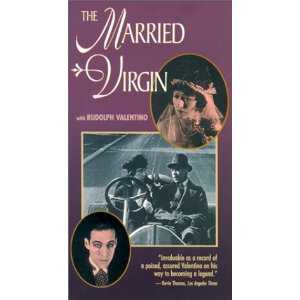
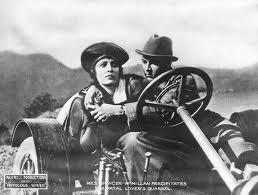
Mrs. John McMillan is having an affair, unknown to her husband and her stepdaughter Mary, with fortune hunter Count Roberto di San Fraccini. Overhearing a man threaten her husband with exposure for his connection with a murder unless he agrees to pay a huge sum of money, Mrs. McMillan conceives of a scheme with her lover the Count to acquire Mary’s dowry. Roberto informs Mary that in return for her hand in marriage, he will save her father from life in prison. Although desperately in love with Douglas, a young engineer, Mary agrees to the sacrifice, entering into a marriage in name only. Roberto continues his affair with Mrs. McMillan until, during an automobile ride, an accident occurs and she is killed. Roberto, fearing that he may be blamed, runs away. Mary then secures an annulment of her marriage to Roberto, thus freeing her to marry Douglas, the man she loves
The Married Virgin is an American film drama first released in 1918, directed by Joseph Maxwell. The film was scored by Brian Benison. It stars Vera Sisson, Rudolph Valentino, Frank Newburg, Kathleen Kirkham, Lillian Leighton, and Edward Jobson. It has also been released under the title: Frivolous Wives. It is a Maxwell Production, distributed by General Film Company. Film Length is 1 hour and 11 minutes.
.
1918 The Cast of the “Married Virgin”
Director Joseph Maxwell, Fidelity Pictures
Screenplay/Story Hayden Talbot
Cast Vera Sisson, Rodolfo di Valentini, Frank Newburg, Kathleen Kirkham, Edward Jobson, Lillian Leighton
Plot – Rudolph Valentino’s first film as a leading man where he plays Count Roberto di Fraccini, a fortune hunter having an affair with the wife of a wealthy older businessman. In order to save her wealthy father from disgrace and a possible prison sentence, a daughter agrees to marry the gigolo who’s been blackmailing him. What the daughter doesn’t know, however, is that the gigolo is actually in cahoots with her father’s new wife, a conniving schemer who plans to fleece her new husband for everything he has, then flee the country with her lover.

1923 Paul Poiret Clothing Designer to Natacha Rambova
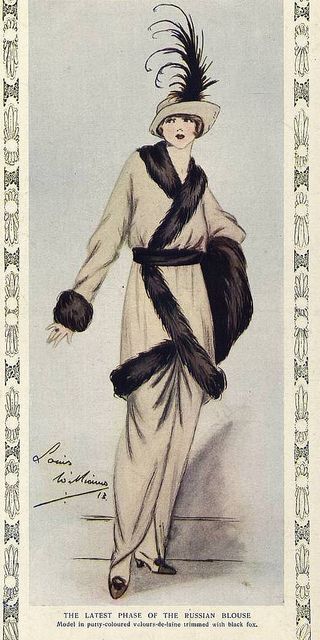
Paul Poiret was the favorite clothing designer of Natacha Rambova who felt he understood her as no one else did when it came to making clothes that favored her flamboyant personality.
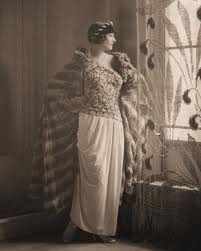
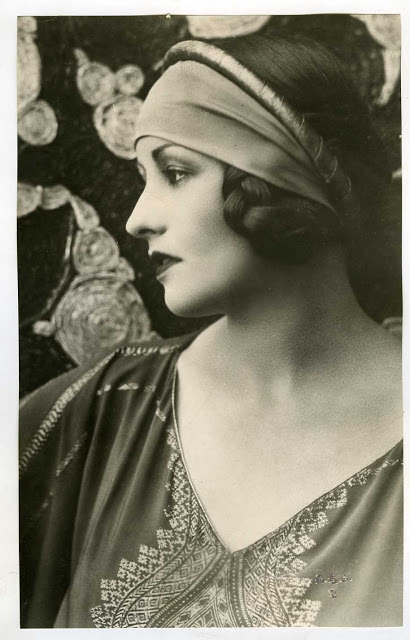
In 1879, Paul Poiret was born in Paris he interned at Jacques Doucet who was a famous couturier of the time. In 1901, he was hired by the famous Worth House of Design. In 1903, he set up his own Atelier of Poiret. In the early 1900’s which was considered one of Poirets influential periods in fashion he was interested in “The Orient” Russian and Cubism. Poiret claimed to have been a Persian prince in a previous life. Significantly, the first Asian-inspired piece he ever designed, while still at Worth, was controversial. A simple Chinese-style cloak called Confucius; it offended the occidental sensibilities of an important client, a Russian princess. To her grand eyes it seemed shockingly simple, the kind of thing a peasant might wear; when Poiret opened his own establishment such mandarin-robe-style cloaks would be best-sellers This had a great impact on Natacha’s own aesthetic which is what she became known for. In 1913, he came to NY and was a clothing designer to Cecille B. Demille. In 1923, Natacha first visited his Atelier which was documented in a Photoplay magazine article. His clothing displayed vibrant colors which managed to capture her personality. In Jan 1924, during another visit to his salon, Rudolph Valentino was quoted as saying that “he is the one costumier in Paris best suited to Natacha’s style, even temperament. We went to one or two other places and looked at their models, but for the most part they were wishy-washy things of pastel shades, with oddments of flowers here and there. Natacha cannot wear that sort of thing. She is not at all the type. She looks best in vivid colors, no one color over another, but all colors that are violent and definite. Scarlet’s, vermilions, strong blues, empathic greens, and loud voiced yellows”. Natacha’s next visit was Aug 1924; she came by his Atelier to pick up some dresses that she had ordered. In 1925, she staged a media event when she traveled from Los Angeles to Paris to pose for photographer James Abbe at famous clothing designer Paul Poiret’s salon. She modeled a pearl-embroidered white velvet gown and a chinchilla cloak, and declared Poiret her favorite couturier. In 1929, Poiret closed his Atelier because his aesthetics conflicted with modernism even though his designs back in the early 1900’s were advanced for the times. In 1944, Paul Poiret died in poverty virtually forgotten. However, through research a new generation has come to appreciate his genius in costume design. In 1927, when Natacha Rambova because a clothing designer in her own right, she did use Paul Poiret as an inspiration but with her own dramatic touch in the clothing that she designed.
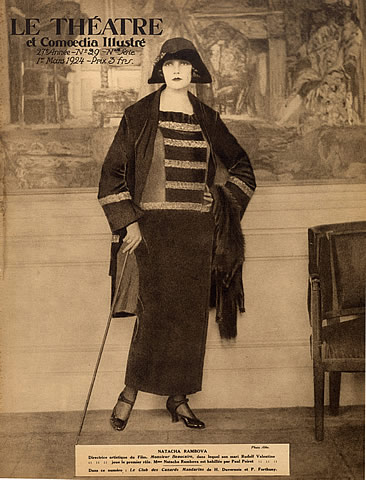
“But if ever my…
“But if ever my belief in myself should utterly fail me. If the day should come when my struggle for my individual Right should wear me threadbare of further effort, then I should come to a garden place where the sky would ever be blue above me, where my feet would press soil as vernal and virgin as I could find, where, below me, under white cliff’s, the sea could sing me its immemorial lullaby. I think, there must, at one time or another, have been sailors in my family. For the sea pounds in my veins with a tune I still remember and I know that I could not have remembered it in this life I have lived”.–Rudolph Valentino


You must be logged in to post a comment.