
Uncategorized
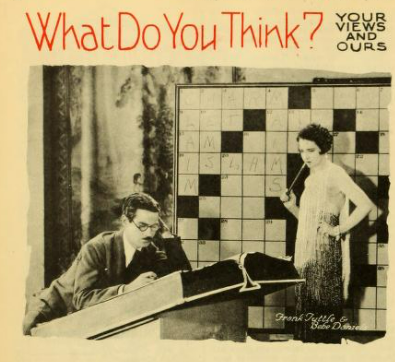
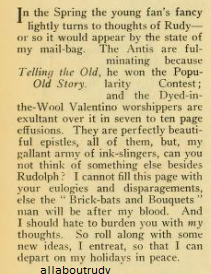
Oct 1923 – What do you think?
Categories: Uncategorized
Tags: Mrs. Rudolph Valentino, Rudolph Valentino
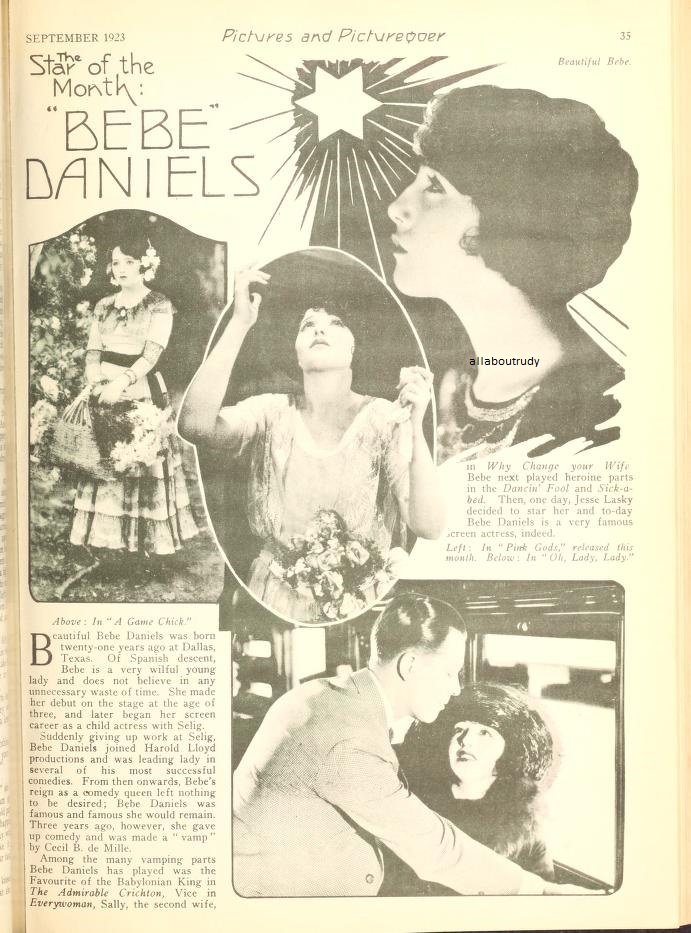
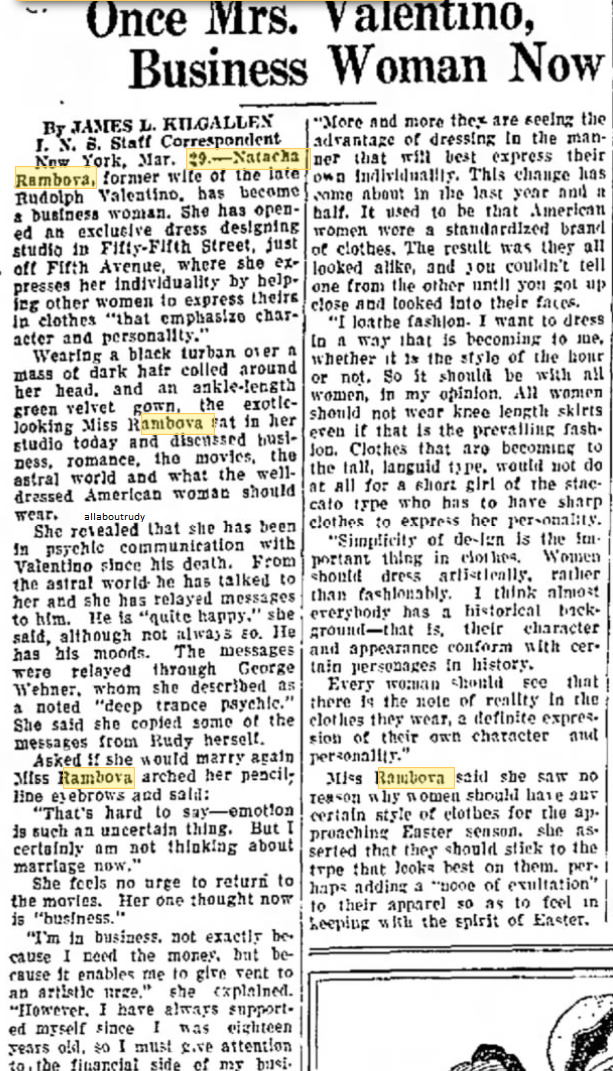
29 Sep – Silent Movie Day Rudolph Valentino Movies

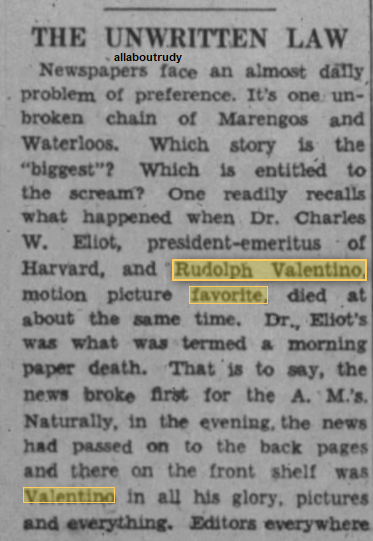
What does this day have in common with Rudolph Valentino? According to the official Silent Movie Day website “Silent Movie Day is an annual celebration of silent movies, a vastly misunderstood and neglected cinematic art form”. We celebrate Valentino’s life annually and of course his life has been both publicly and personally misunderstood and his movies have been neglected by the cinema community. When I try to speak with anyone about my interest in silent films, I see a disinterested look on their face. Immediately I feel like why waste time speaking with someone who doesn’t understand a cinematic artform that is the very cradle of the Hollywood movie industry. But for those rare few who mutually agree, there is something special and mysterious about Silent Films it’s wonderful to have these meaningful conversations that are both enlightening and rewarding. Sometimes, I feel unless one lives in the L.A. area to celebrate what is left of Hollywood history by attending cinematic events or exhibits, they are left out and I do agree with this. For example, when the unfortunate pandemic hit the world a few years ago, everyone had to adjust the way things were ran. Virtual events were available everywhere, and I felt blessed to be able to see Silent Film festivals online. Nowadays they are no longer available and trying to find out about new virtual events is hard. Recently I posted a question in a silent film related social media group innocently asking about “where could I go to see what silent film events are online” my question was both deleted, and I am no longer a member of this group. Now am I offended? No, it doesn’t because there is such a decent lack in humanity these days and I see this in the real and virtual worlds. I often think how Valentino must of felt in his professional and personal life when things didn’t exactly turn out how they might. Sometimes we have no choice but to live and let live. Letting go and moving on are indeed the best route to take. For this special day, Silent Films are a joy to watch, and the beauty is in the acting and movie plots. Take a moment and enjoy a Rudolph Valentino movie.
Categories: Uncategorized
Tags: National Silent Movie Day, Rudolph Valentino
25 Sep 1926 – Diseuse a la Francasise
Mlle Damia, a friend of Rudolph Valentino’s and a diseuse from Paris, made her American debut at the Forty-Ninth Street Theatre yesterday afternoon in a private recital of songs chiefly on tragic themes. In a brief introduction, Henry E. Dixey commented upon Mlle. Damia’s skill in a pantomime and, obviously referring to Raquel Meller, asked the audience to receive her on her own terms. However, fair that request may be, one can hardly report Mlle without comparing her to la Meller, whose art, technically, hers resembles so closely. Like Meller she appears alone before a black drop curtain and sings dramatic poems, accompanied by a string orchestra. In appearance Mlle Damia is less exotic; and her art is emotional rather than strangely vibrant. For ten years of so Mlle Damia has been appearing as a “lyric tragedienne” on Paris stages as one number in a program. Obviously, that is the most practical way to present her, the first half of the program yesterday afternoon, consisting of rather turgidly emotional songs, did not express the most attractive qualities of her pantomimic abilities. Although an undercurrent of tragedy ran through the second half of the program, the songs were lighter and better contrasted. Singing the colorful “La Femme a la Rose,” Mlle Damia was particularly pungent in her expression of character. In “La Supplane,” a war mother hunting her for her sons grave, she communicated admirably the pathos and agony of so tragic a figure. “La Fanchette” represented her a s a sailor who has determined to murder his unfaithful mistress; in this song Mlle. Damia was graphically pictorial. Her most spirited number was the rather macabre “Les Deux Menetriers,” written by Jean Richepin; Mlle Damia described it perfectly. Unfortunately, we in America have little of the pantomimic tradition in our stage life; and, no doubt, few of the qualities of judgment necessary to appreciative reception. Like chamber music, it is for those who catch the overtones and the nuances. Mlle Damias art has fullness. Beyond the symmetry of gestures and the plasticity of facial expression there is a firm solidity. If she lacks the versatility of a virtuoso, she is nevertheless thorough; and if she is not capricious, she is frank and profound. Our revue stage would profit by a regular expression of her art. Contrasted with more usual and blatant numbers of the familiar revue, Mlle Damia’s art would emerge as a pleasing expression of quality.
Categories: Uncategorized
Tags: Mlle Damia, Rudolph Valentino
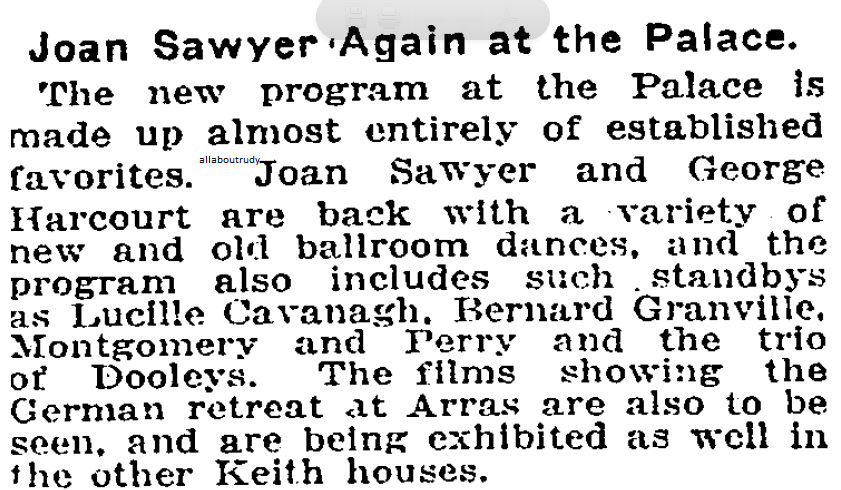
18 Sep 1917 – Joan Sawyer Again at the Palace
Categories: Uncategorized
Tags: George Harcourt, Joan Sawyer
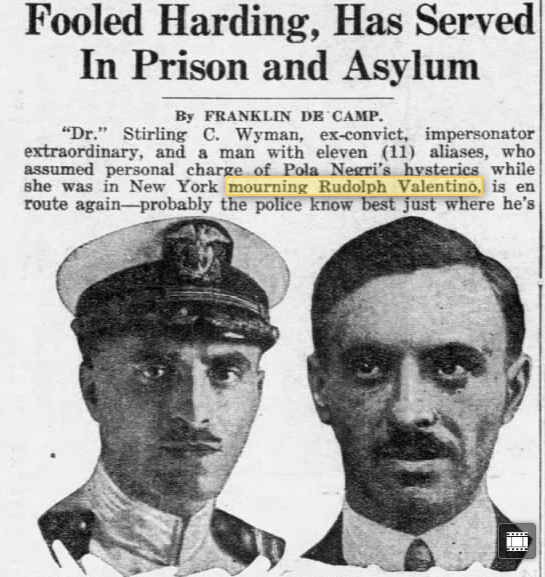
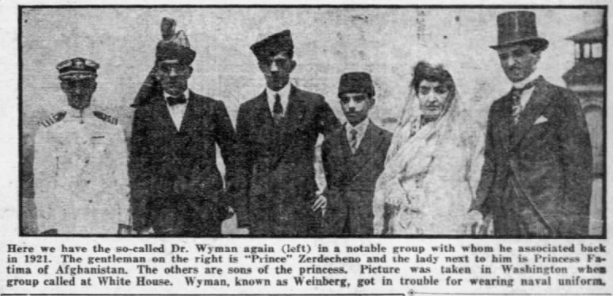
12 Sep 1926 – Fake Dr Goes to Trial
Categories: Uncategorized
Tags: Death of Rudolph Valentino, Pola Negri
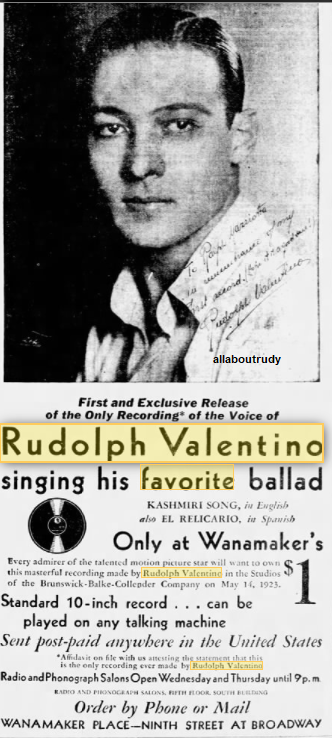
10 Sep 1930 – Valentino Record For Sale
Categories: Uncategorized
Tags: Death of Rudolph Valentino, El Relicario, Kashmiri Love Song
Categories: Uncategorized
Tags: Alberto Valentino, Death of Rudolph Valentino, Dr. Sterling Wyman, George Ullman, Pola Negri
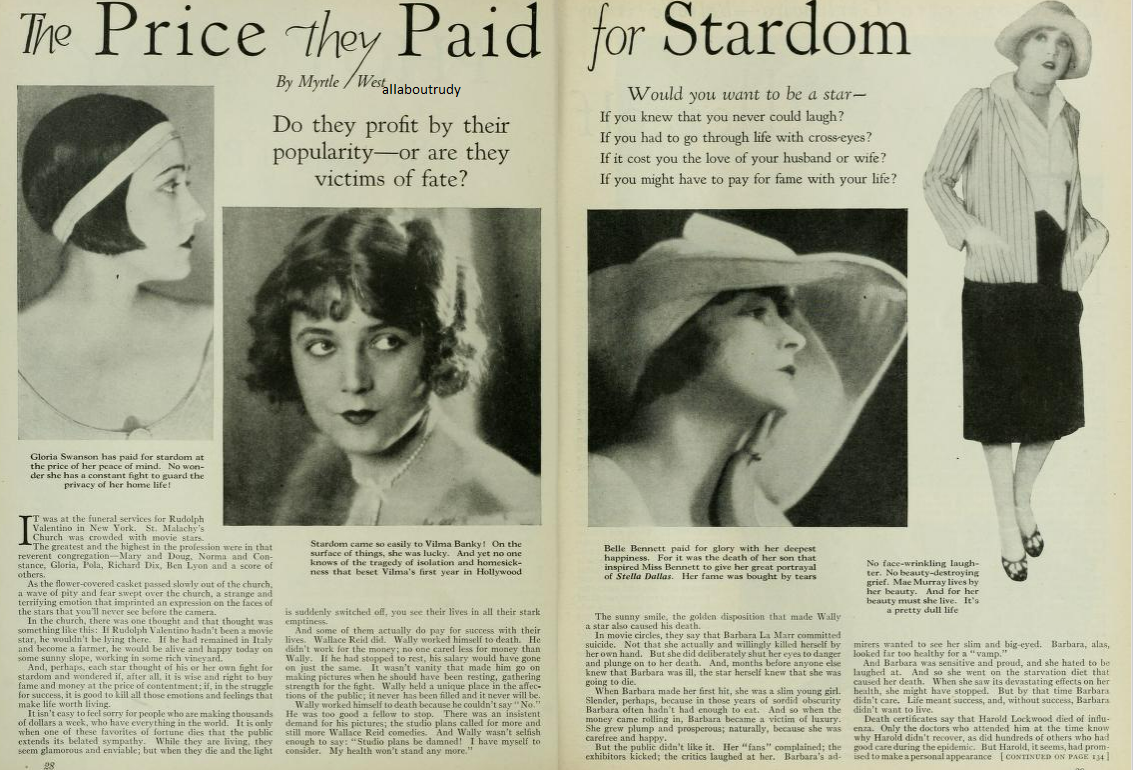
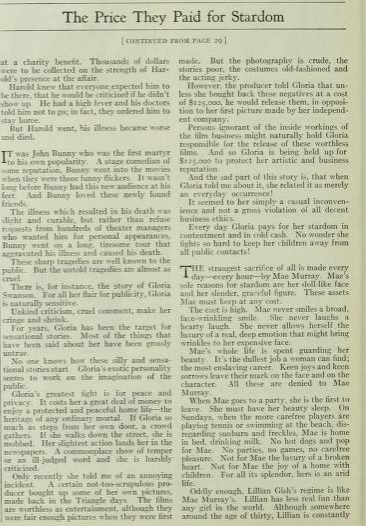
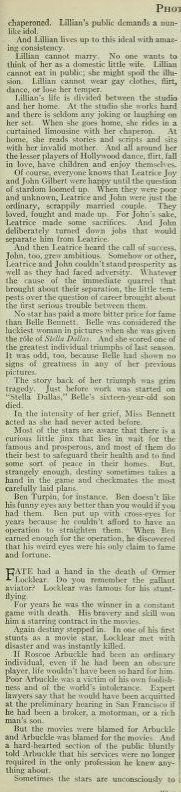
1926 – Price of Fame
Categories: Uncategorized
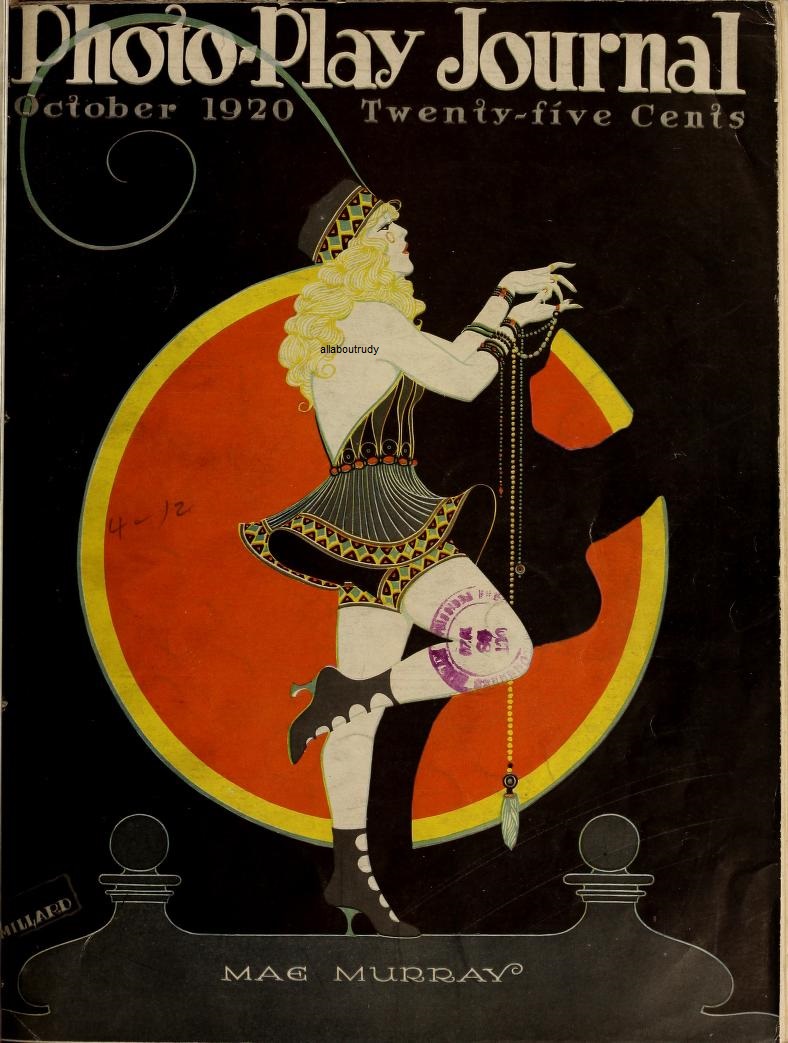
Tags: Death of Rudolph Valentino, Gloria Swanson, Mae Murray, Vilma Banky
Sep 1923 – The Reason Why, Pictures & Picturegoer Magazine
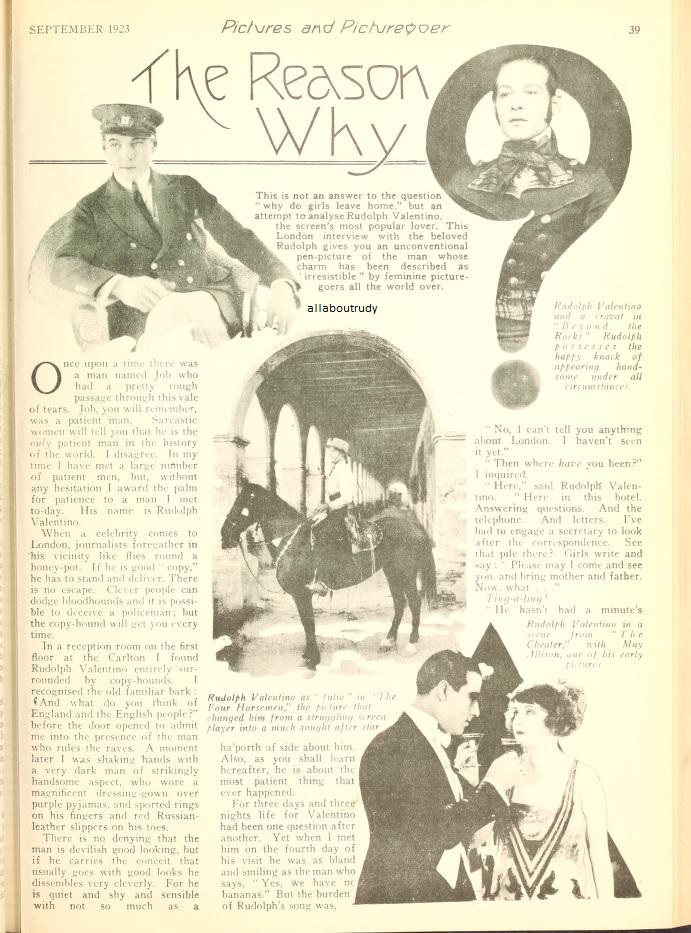
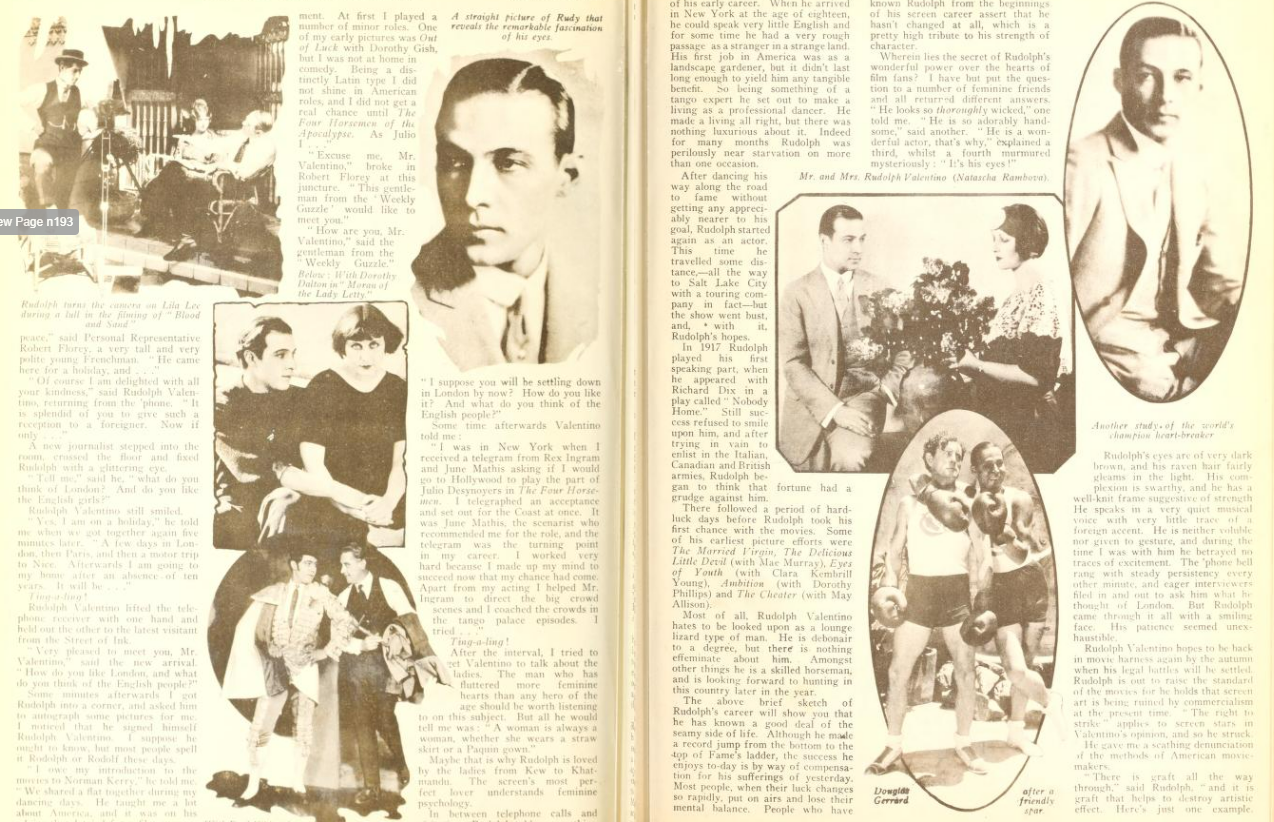
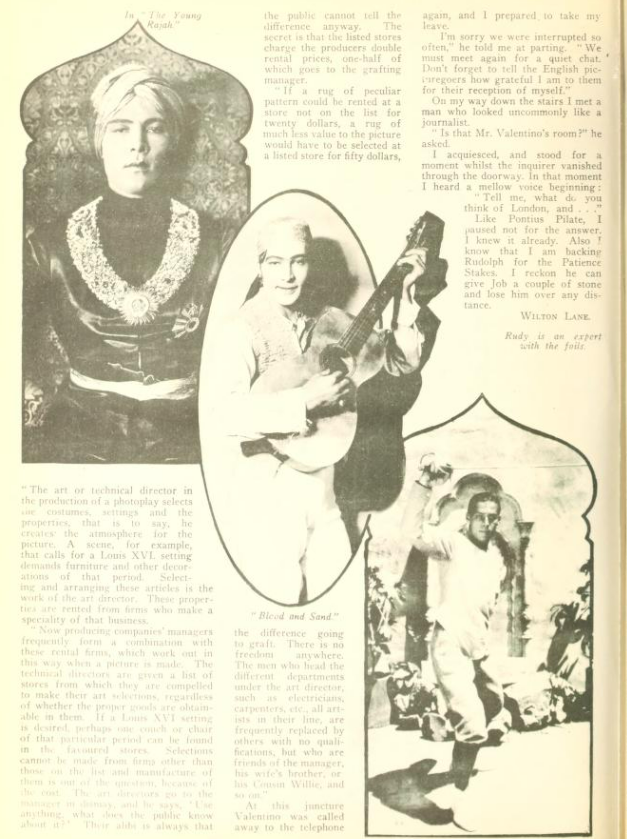
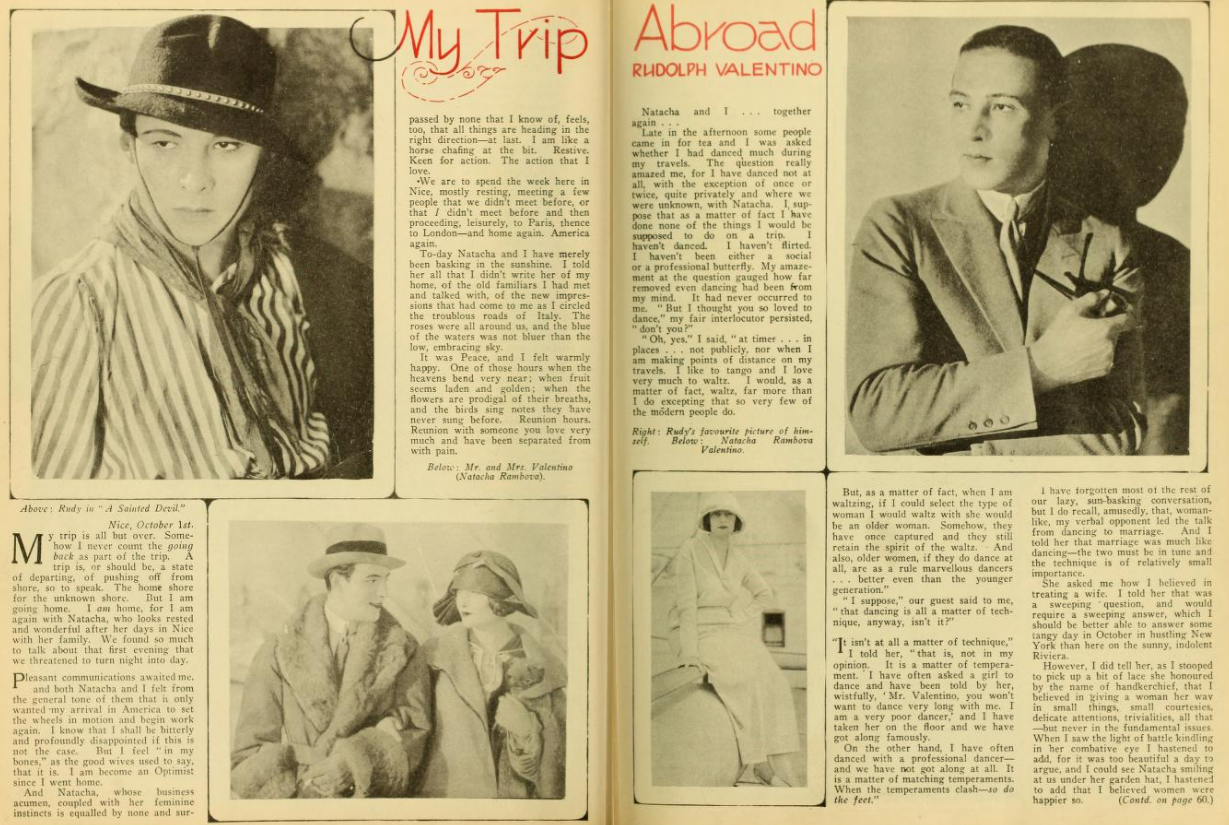
This is not an answer to the question “why do girls leave home,” but an attempt to analyse Rudolph Valentino, the screen’s most popular lover. This London interview with the beloved Rudolph gives you an unconventional pen-picture of the man whose charm has been described as “irresistible” by feminine picturegoers all the world over. Once upon a time there was a man named Job who had a pretty rough passage through this vale of tears. Job, as you remember, was a patient man. Sarcastic women will tell you that he is the _only_ patient man in the history of the world. I disagree. In my time I have met a large number of patient men, but without any hesitation I award the palm of patience to a man I met to-day. His name is Rudolph Valentino.When a celebrity comes to London, journalists foregather in his vicinity like flies round a honeypot. If he is good “copy,” he has to stand and deliver. There is no escape. Clever people can dodge bloodhounds and it is possible to deceive a police officer; but the copy-hound will get you every time. In a reception room on the first floor at the Carlton I found Rudolph Valentino entirely surrounded by copy-hounds. I recognised the old familiar bark: “And what do you think of England and the English people?” before the door opened to admit me into the presence of the man who rules the raves. A moment later I was shaking hands with a dark man of strikingly handsome aspect, who wore a magnificent dressing-gown over purple pyjamas, and sported rings on his fingers and red Russian-leather slippers on his toes. There is no denying that the man is devilish good looking, but if he carries the conceit that usually goes with good looks he dissembles very cleverly. For he is quiet and shy and sensible with not so much as a ha’porth of side about him. Also, as you shall learn hereafter, he is about the most patient thing that ever happened. For three days and three nights life for Valentino had been one question after another. Yet when I met him on the fourth day of his visit he was as bland and smiling as the man who says, “Yes, we have no bananas.” But the burden of Rudolph’s song was, “No, I can’t tell you anything about London. I haven’t seen it yet.”Then where _have_ you been?” I inquired. “Here,” said Rudolph Valentino. “Here in this hotel answering questions. And the telephone. And letters. I’ve had to engage a secretary to look after the correspondence. See that pile there? Girls write and say: “Please may I see you and bring your mother and father. Now what.”Ting-a-ling! He hasn’t had a minute’s peace, said Personal Representative Robert Florey, a very tall and very polite young Frenchman. “He came here for a holiday, and “Of course I am delighted with all your kindness, ” said Rudolph Valentino, returning from the ‘phone. “It is splendid of you to give such a reception to a foreigner. Now if only.”A new journalist stepped into the room, crossed the floor and fixed Rudolph with a glittering eye. “Tell me,”said he, “what do you think of London? And do you like the English girls?” Rudolph Valentino still smiled. “Yes, I am on a holiday,” he told me when we got together again five minutes later. “A few days in London, then Paris, and then a motor trip to Nice. Afterwards I am going to my home after an absence of ten years. It will be.”Ting-a-ling! Rudolph Valentino lifted the telephone receiver with one hand and held out the other to the latest visitant from the Street of Ink. “Very pleased to meet you, Mr. Valentino,” said the new arrival. “How do you like London, and what do you think of the English people?” Some minutes afterwards I got Rudolph into a corner and asked him to autograph some pictures for me. I noticed that he signed himself Rudolph Valentino. I suppose he ought to know, but most people spell it Rodolph or Rodolf these days.”I owe my introduction to the movies to Norman Kerry,” he told me. “We shared a flat together during my dancing days. He taught me a lot about America, and it was on his advice that I tried for a film engagement. At first, I played a number of minor roles. One of my early pictures was “Out of Luck” with Dorothy Gish, but I was not at home in comedy. Being a distinct Latin type I did not shine in American roles, and I did not get a real chance until “The Four Horsemen of the Apocalypse.” As Julio I “Excuse me, Mr. Valentino,” broke in Robert Florey at this juncture. “This gentleman from the ‘Weekly Guzzle’ would like to meet you. “How are you, Mr. Valentino?” said the gentleman from the “Weekly Guzzle.” “I suppose you will be settling down in London by now. How do you like it and what do you think of the English people?” Sometime afterwards Valentino told me: “I was in New York when I received a telegram from Rex Ingram and June Mathis asking if I would go to Hollywood to play the part of Julio Desnoyers in “The Four Horsemen.” I telegraphed an acceptance and set out for the Coast at once. It was June Mathis, the scenarist who recommended me for the role, and the telegram was the turning point in my career. I worked very hard because I made up my mind to succeed now that my chance had come. Apart from my acting I helped Mr. Ingram to direct the big crowd scenes and I coached the crowds in the tango palace episodes. I tried “Ting-a-ling! After the interval, I tried to get Valentino to talk about the ladies. The man who has fluttered more feminine hearts than any hero of the age should be worth listening to on this subject. But all he would tell me was: “A woman is always a woman, whether she wears a straw skirt or a Paquin gown.” Maybe that is why Rudolph is loved by the ladies from Kew to Khatmandu. The screen’s most perfect lover understands feminine psychology. In between telephone calls and visitations, Rudolph told me something of his early career. When he arrived in New York at the age of eighteen, he could speak very little English and for some time he had a very rough passage as a stranger in a strange land. His first job in America was as a landscape gardener, but it didn’t last long enough to yield him any tangible benefit. So being something of a tango expert he set out to make a living as a professional dancer. He made a living all right, but there was nothing luxurious about it. Indeed, for many months Rudolph was perilously near starvation on more than one occasion. After dancing his way along the road to fame without getting any appreciably nearer to his goal, Rodolph started again as an actor. This time he travelled some distance, –all the way to Salt Lake City with a touring company in fact–but the show went bust, and, with it, Rudolph’s hopes. In 1917 played his first speaking part, when he appeared with Richard Dix in a play called “Nobody Home.” Still success refused to smile upon him, and after trying in vain to enlist in the Italian, Canadian and British armies, Rudolph began to think that fortune had a grudge against him. There followed a period of hard-luck days before Rudolph took his first chance with the movies. Some of his earlier picture efforts were “The Married Virgin,” “The Delicious Little Devil” (with Mae Murray), “Eyes of Youth” (with Clara Kembill-Young), “Ambition” (with Dorothy Phillips) and “The Cheater” (with May Allison). Most of all, Rudolph Valentino hates to be looked upon as a lounge lizard type of man. He is debonair to a degree, but there is nothing effeminate about him. Amongst other things he is a skilled horseman and is looking forward to hunting in this country later in the year. The above brief sketch of Rudolph’s career will show you that he has known a good deal of the seamy side of life. Although he made a record jump from the bottom of Fame’s ladder, the success he enjoys to-day is by way of compensation for his sufferings of yesterday. Most people, when their luck changes so rapidly, put on airs and lose their mental balance. People who have known Rudolph from the beginning of his screen career assert that he hasn’t changed at all, which is a pretty high tribute to his strength of character. Wherein lies the secret of Rudolph’s wonderful power over the hearts of film fans. I have but put the question to a number of feminine friends and all returned different answers. “He looks so _thoroughly_ wicked,” one told me. “He is so adorably handsome,” said another. “He is a wonderful actor, and that’s why,” explained a third, whilst a fourth murmured mysteriously: “It’s his eyes!” Rudolph’s eyes are of very dark brown, and his raven hair fairly gleams in the light. His complexion is swarthy, and he has a well-knit frame suggestive of strength. He speaks in a very quiet musical voice with very little trace of a foreign accent. He is neither voluble nor given to gesture, and during the time I was with him he betrayed no traces of excitement. The ‘phone bell rang with steady persistency every other minute, and eager interviewers filed in and out to ask him what he thought of London. But Rudolph came through it all with a smiling face. His patience seemed inexhaustible. Rudolph Valentino hopes to be back in movie harness again by the autumn when his legal battles will be settled. Rudolph is out to raise the standard of the movies for he holds that screen art is being ruined by commercialism at the present time. “The right to strike” applies to screen stars in Valentino’s opinion, and so he struck. He gave me a scathing denunciation of the methods of American moviemakers. “There is graft all the way through,” said Rudolph, “and it is graft that helps to destroy artistic effect. Here’s just one example the art or technical director in the production of a photoplay selects the costumes, settings and the properties, which is to say, he creates the atmosphere for the picture. A scene, for example, which calls for a Louis XVI setting demands furniture and other decorations of that period. Selecting and arranging these articles is the work of the art director. These properties are rented from firms who make a specialty of that business. “Now producing companies’ managers frequently form a combination with these rental firms, which work out in this way when a picture is made. The technical directors are given a list of stores from which they are compelled to make their art selections, regardless of whether the proper goods are obtainable in them. If a Louis XVI setting is desired, perhaps one couch or chair of that particular period can be found in the favoured stores. Selections cannot be made from firms other than those on the list and manufacture of them is out of the question, because of the cost. The art directors go to the manager in dismay, and he says, “Use anything, what does the public know about it?” Their alibi is always that the public cannot tell the difference anyway. The secret is that the listed stores charge the producers double rental prices, one-half of which goes to the grafting manager. “If a rug of particular pattern could be rented at a store not on the list for twenty dollars, a rug of much less value to the picture would have to be selected at a listed store for fifty dollars, the difference going to graft. There is no freedom anywhere. The men who head the different departments under the art director, such as the electricians, carpenters, etc., all artists in their line, are frequently replaced by others with no qualifications, but who are friends of the manager, his wife’s brother, or his cousin Willie, and so on. “At this juncture Valentino was called away to the telephone again, and I prepared to take my leave. “I’m sorry we were interrupted so often,” he told me at parting. “We must meet again for a quiet chat. Don’t forget to tell the English picturegoers how grateful I am to them for their reception of myself. “On my way down the stairs I met a man who looked uncommonly like a journalist. “Is that Mr. Valentino’s room?” he asked. I acquiesced and stood for a moment whilst the inquirer vanished through the doorway. In that moment I heard a mellow voice beginning: “tell me, what do you think of London, like Pontius Pilate, I paused not for the answer. I knew it already. Also, I know that I am backing Rudolph Valentino for the Patience Stakes. I reckon he can give Job a couple of stone and lose him over any distance.
Categories: Uncategorized
Tags: Mr. Valentino, Robert Florey, Rudolph Valentino
1937 – Hollywood Forever Cemetery
Categories: Uncategorized
Tags: Death of Rudolph Valentino, Hollywood Forever Cemetery
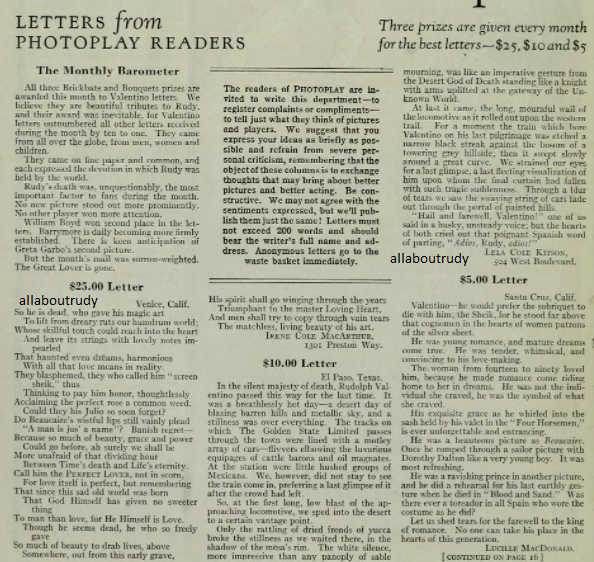
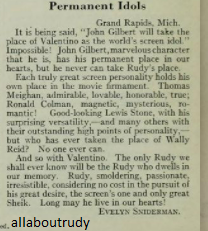
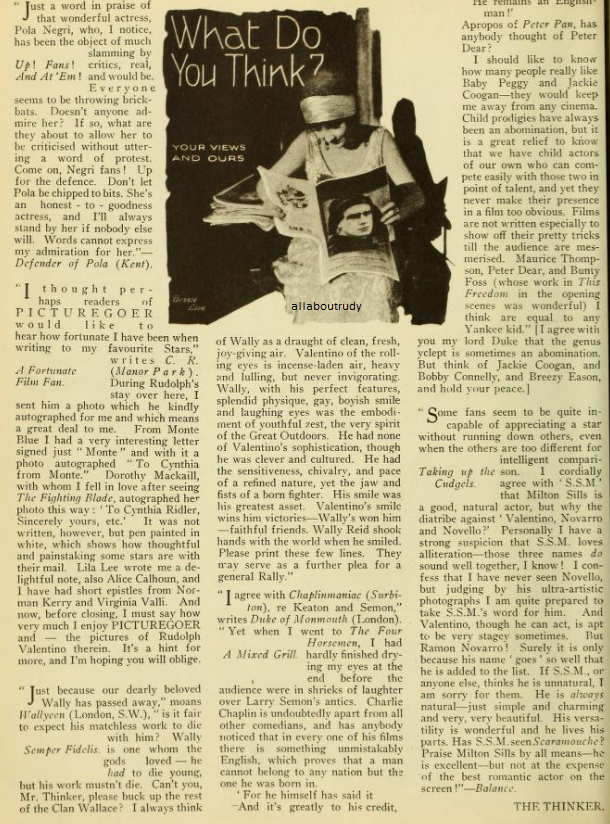
Sep 1923 – What do you think?
Categories: Uncategorized
Tags: Charlie Chaplain, Milton Sills, Pola Negri, Ramon Navarro, Rudolph Valentino, Wallace Reid
1926 – Valentino Memory
In 1925, famous ice carver Hans Hansen, was an onboard employee on the USS Leviathan. He was called upon to create an ice for a famous passenger Rudolph Valentino. Mr. Valentino insisted on numerous table decorations of ice when he gave shipboard teas for women admirers. Hansen says he never had just one woman to tea, but always a convey of them and las lax about paying for the dazzling icy décor. “Excuse me”, Hansen said, “ but I hated that guy”.
Categories: Uncategorized
Tags: Death of Rudolph Valentino, Hans Hansen, USS Leviathan

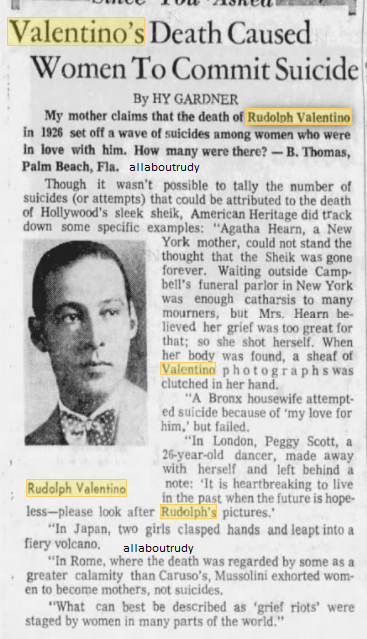
28 Aug 26 – Valentino Partially Insured by M.P. Capital
The life of Rudolph Valentino was insured for a sum ranging between $150,000 and $200,000 by the Cinema Finance Corp of Los Angeles which is completely owned by M.P. Capital Corp. The Cost company participated in the financing of several of Valentino’s films. Collateral was supplied in the form of this interest in the two pictures he made for Ritz Carlton, Famous Players-Lasky and by real estate. Considerably additional insurance was carried. Arthur Brisbane in his column today in the American says “Millions all over the world as far as moving pictures spread learn with deep regret of the death of Rudolph Valentino, who had made so important a place for himself in a great art. A very young man of intense feeling and Earnestness Valentino held his place without a rival in the field. His life was too short but it was not wasted”.
I deeply regret Mr. Valentino’s death. He had a distinguished career and was prepared to do yet further work. His death is a great loss. Will Hayes
Those of us who know Rudolph Valentino and watched his amazing rise to fame are profoundly shocked by his untimely death. The loss is a great one. Sidney Kent, General Manager Famous Players-Lasky
I cannot express my grief over the loss of Valentino. He was a friend. Marcus Lowe.
Besides being a brilliant actor, he was a most loveable man and a credit to the industry. Richard Rowland
The passing of Valentino find s the entire motion picture industry in mourning. He was stricken at the height of a remarkable and well-deserved success. His death is a loss.
Nicholas Schenck, Executive Vice President, Lowes INC and M-G-M. Rudolph Valentino was a great artist. In his dath, the motion picture loses a vivid personality who has brought romance and entertainment into the lives of millions throughout the world .
Adolph Zukor, President Famous Players- Lasky
He was one of the greatest artists of the screen. Is passing will be mourned throughout the world. Wallace Beery
Rudolph Valentino was a distinct personality that cannot be replaced. His passing leaves big gap in the motion picture world. Madge Bellamy
The shock of Valentino’s death is overwhelming. He was a great actor, a fine person and sincere friend. Major Edward Bowes, Vice President, MGM, Managing Director Capital Theater
In the death of Rudolph Valentino the screen has lost its most picturesque and outstanding personality/ A charming gentleman and brilliant actor who had but scratched the surface of his great talent Herbert Brenon
In the passing of Valentino the picture industry has lost one of its true geniuses – Ricardo Cortez
The loss of a true friend and a great artist leaves one with a helpless feeling of inexpressible remorse. Screenland and its followers will never forget him. Bebe Daniels
We have suffered an irreparable loss. We have lost a true artist and a real man. Reginald Denny
The public knew and loved Valentino as an artist. We knew and loved Rudy as a man Richard Dix
The world will miss Valentino the actor. I miss him as a friend. Allan Dwan
The screen has lost one of its greatest figures. As a showman, I have found him one of the greatest box office attractions because of his distinctive characterization of the ideal lover. Sid Grauman
To have known Valentino and to have worked with him is to have known a great and sincere artist. He was a craftsman of the highest integrity. Forrest Halsey, Scene Preparer Monsieur Beaucaire
To be wiped out when he had reached the highest point in his career is the real tragedy. Howard Higgin
His death marks the passing of a great public idol, who can never be forgotten by the millions who admire him Hope Higgins
The news of the death of Valentino struck me like a thunderbolt. Jack Holt.
Rudolph Valentino’s death means perhaps the greatest loss the screen has ever had. Leatrice Joy
It was a great shock. There is a gap in Hollywood that cannot be stilled. Laura LaPlante
Rudy was a true friend, a real sportsman, an athlete, and a gentleman, and one of the greatest individual figures our industry has developed. Rod LaRocque
I am deeply shocked at his death. The motion picture industry has lost one of its most wonderful actors. Ben Lyon
The screen has lost one of its most brilliant figures Dorothy Mackaill
Rudolph Valentino’s death was a great shock to me. He was a remarkable actor and the picture industry loses one of its most colorful personalities in his passing. Thomas Meighan
To me, it was Valentino’s youth which makes his death so sad. Lois Moran
He is a type that comes perhaps, but once in history. Ray Rockett
The world has lost a real gentleman. Alfred Santell
I am with millions of other admirers am bowed with sorrow..Florence Vidor
I am deeply shocked to hear of Valentino’s death. He was one of the finest men I have met during my motion picture career. I knew Rudolph Valentino for 7 years and there was absolutely no change in his character when he became a public idol. Lois Wilson.
May the thoughts and prayers of the millions who loved Rudy help him on his journey to the unknown. As a personal friend and admirer my humble prayer follows him. Gloria Swanson
Nothing has ever affected me so deeply. Rudy had a tremendous personality which made him loved by everyone who was able to get within his natural reserve. He was a dear friend of mine. Mal St. Clair
Categories: Uncategorized
Tags: Death of Rudolph Valentino
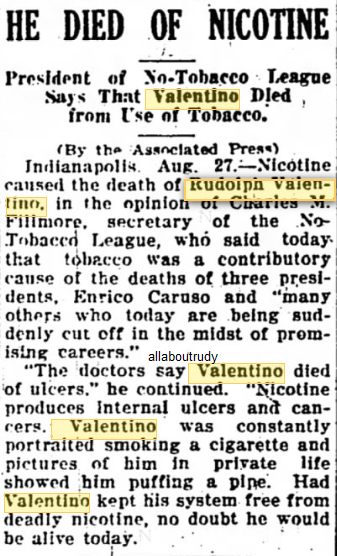

23 Aug 2023 – 96th Annual Valentino Memorial Service Review, Hollywood Forever, L.A.

Every year, the Valentino community comes together on this day, united in memory of Rudolph Valentino. Once again, with great anticipation we were all able to view the service virtually and everyone appreciated the excellent sound quality, the exceptional and moving performances of the accompanied singers, the talented musical director, and public event speakers all who were simply marvelous and ensured the Annual Rudolph Valentino Service was conducted in a fitting and respectful manner in tribute to a silent film star who continues to inspire through the generations.

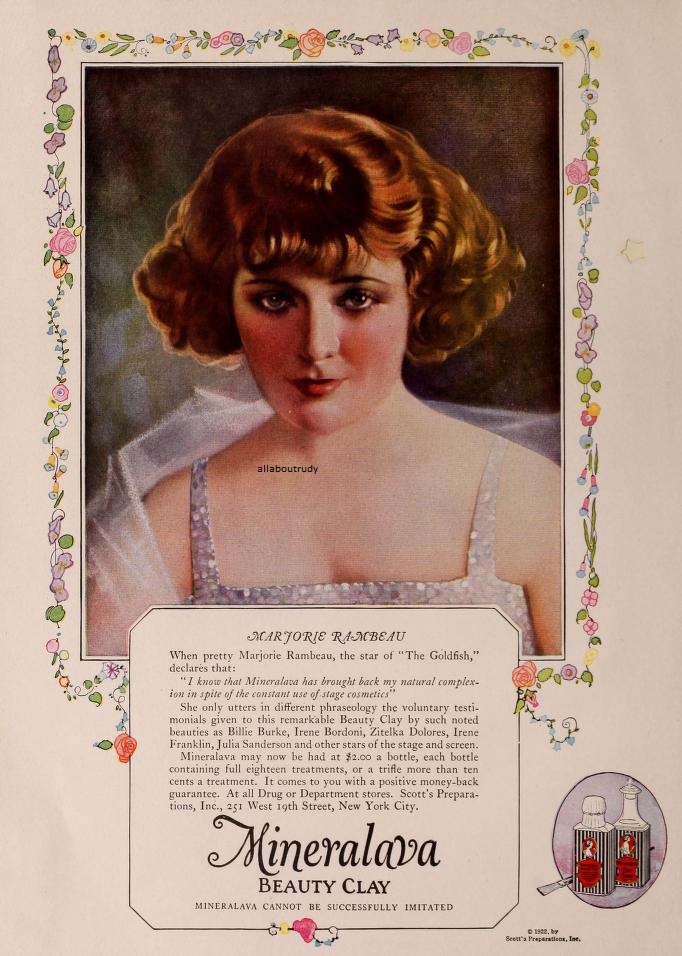
The wonderful video montages and music of the 100th anniversary tributes of Daydreams Poetry Book, Marriage of Rudolph & Natacha Rambova, Mineralava Tour, Kashmiri Love Song were all very moving.
Yet for us, this wonderful memorial service ended all too soon. Our thoughts were with those there, who gave their all which is a true tribute and testimony to the preservation of Valentino’s memory.
I want to personally thank Mr. Tracy Terhune and all who work endlessly hard to ensure that the service is one of reverent and respect and that was exactly what it was.

Aug 1936 – Ten Years On…
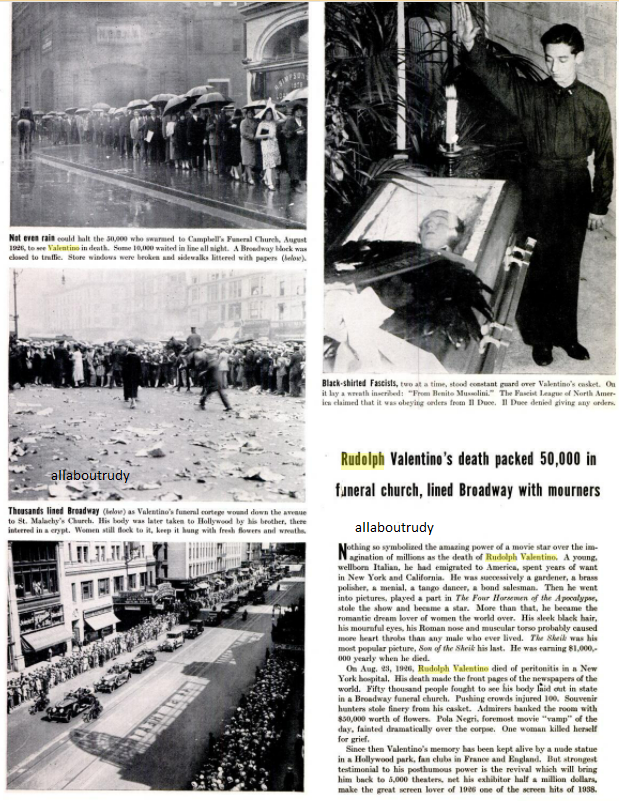
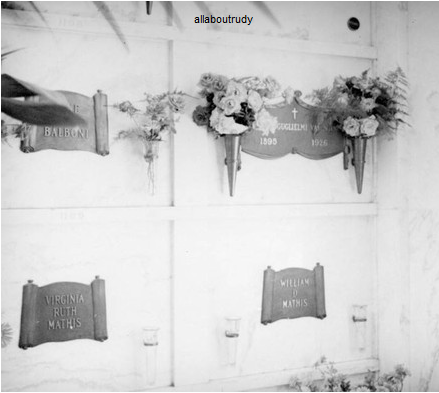
Ten years ago, Rudolph Valentino died in New York City at the age of 31. Today he lies in a borrowed crypt and his fortune whittled down to nothing. The three women in his life are living successful lives of their own. His first wife Jean Acker is in Hollywood, substituting for a movie role in Camille vacated by the illness of Adrienne Matzenpauer and still using his name as a means of making money. His second wife, Natacha Rambova, living in Palma Mallorca and is a wife of a Spanish nobleman. The third woman Pola Negri who at the time of his death, announced to the world she was his fiancé and went on to marry a fake Prince.
The fortune he had at one time was estimated by friends at $2,000,000 was found to be in reality next to nothing. His manager said, “he was always in debt”. In 1932, a court appraisal showed $400,000 had been paid out in monetary claims against the estate had dwindled that amount down significantly. Yet Rudolph Valentino at the time was the highest paid actor. Joseph Schenck chairman of United Artists said Valentino earned $1,000,000 in the year, before his death and spent it lavishly on jewelry, paintings, travels, and horses. When he started out, he was early $5.00 a day as an extra. In 1926, he was under contract at $200,000 for two movies a year, plus one fourth of a producer fee a gross income from his pictures more than the value of his salary.
In London, there is a Rudolph Valentino Memorial Association which from time to time inserts obituary notices about him in the newspapers and supports a roof top garden named after him. In June of this year, buyers paid $23 for the contents of three trunks he left in Turin, Italy he left in 1925. They contained old clothes. Roger Peterson manager of Cathedral Mausoleum says from time to time complains to police people are chipping marble off the Valentino crypt. A few women still come occasionally to pray and leave flowers, he said recently, and one visits the tomb regularly and her name is Jean Acker. Mr. Peterson is talking about writing a book.
Categories: Uncategorized
Tags: George Ullman, Jean Acker, Joseph Schenck, Natacha Rambova, Pola Negri
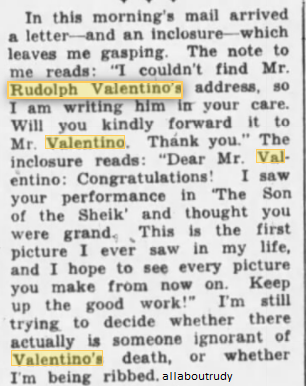
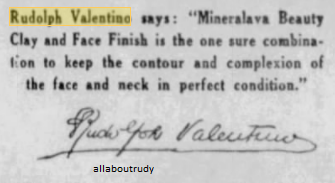
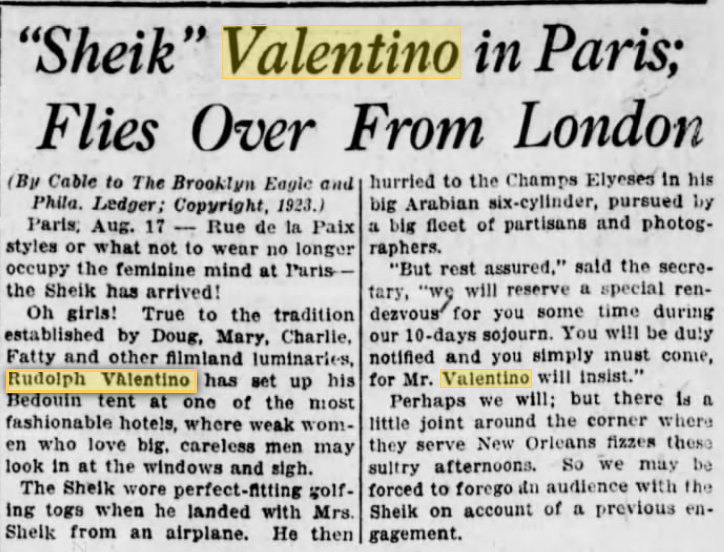
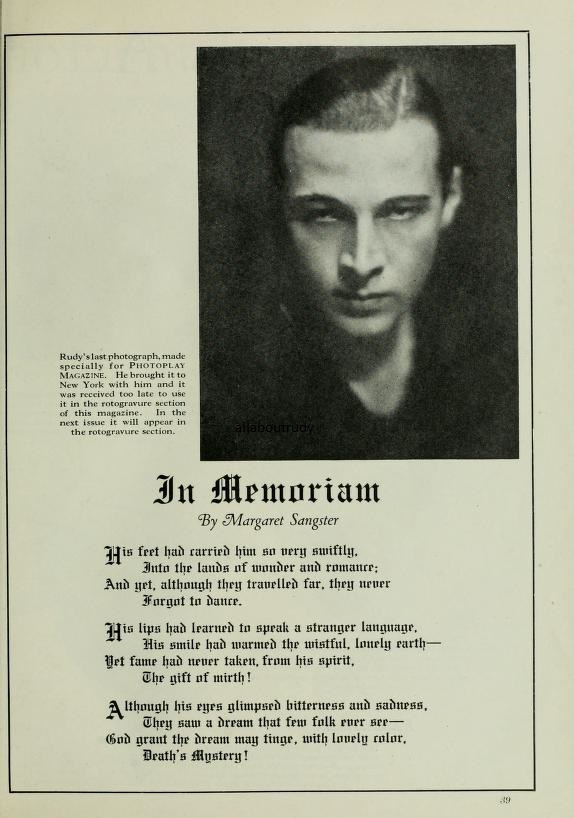
August/September 2023 – Months Special to Rudolph Valentino Fans
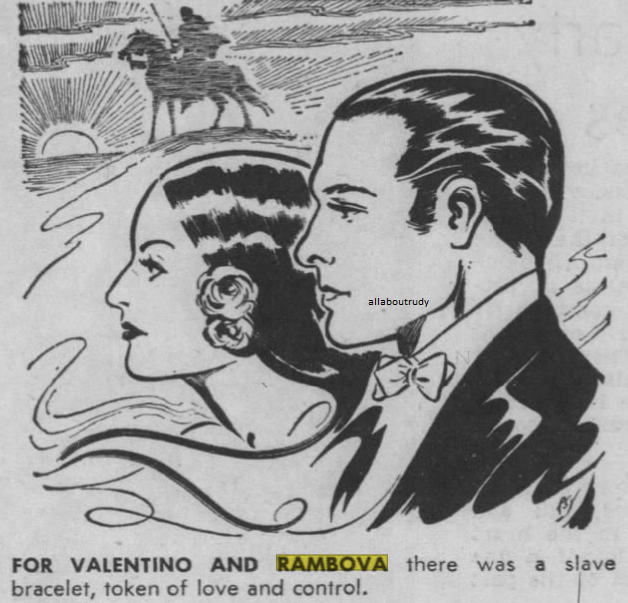
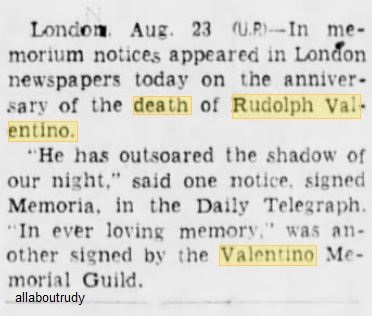
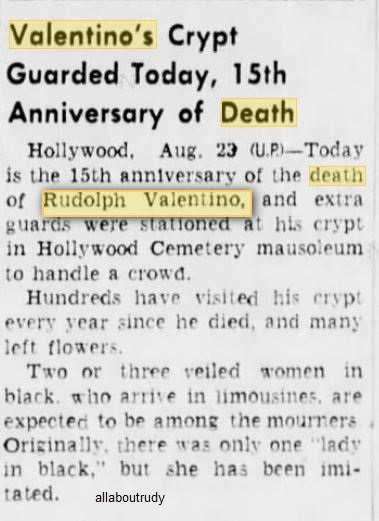
For fans of both this blog and the late silent film actor Rudolph Valentino know there are two month (Aug & Sep) out of the calendar year, which makes us stop for a moment to pay a tribute to our favorite actor. Although none of us ever personally knew him yet each one of us feels as though we do. For example, each milestone of his movie career and life has been discussed, dissected, detailed, delved into a degree until we can recite from memory. We have a renewed sense of appreciation for his wit and wisdom and his presence on the big screen that comes to life only for us each time we watch a movie of his. Sadness may suddenly come upon us on the anniversary of his death (23 August) and the days that follow.
But with the passage of time, new generations of fans come forth who discovered what we all have and that is appreciation for silent film genre and Rudolph Valentino.
Categories: Uncategorized
Tags: Death of Rudolph Valentino
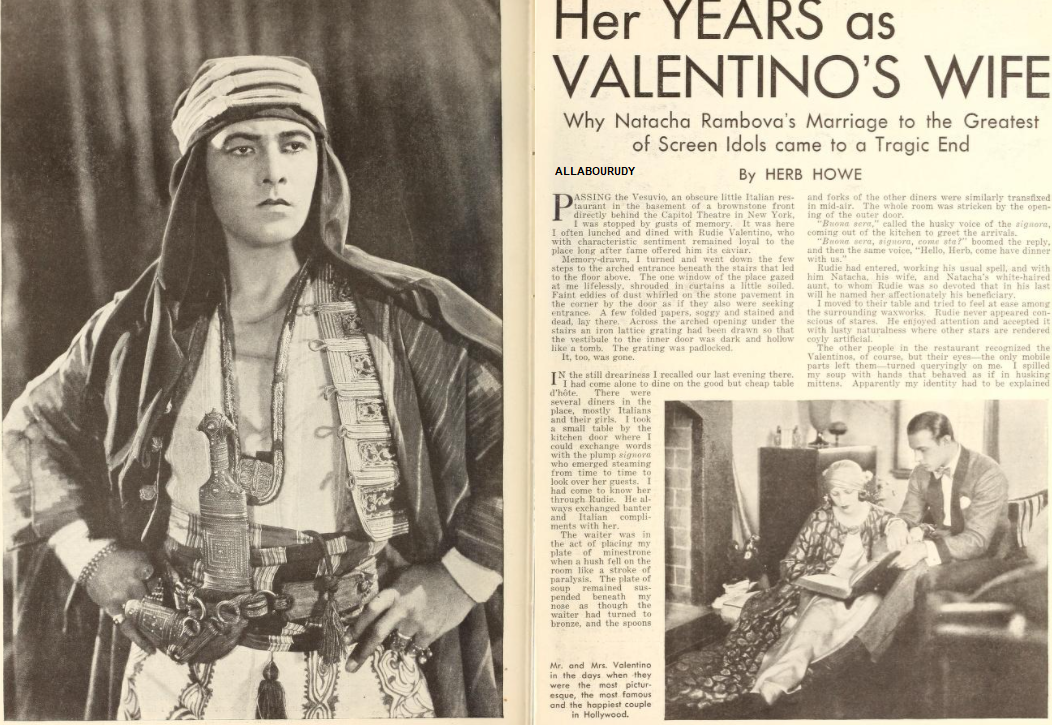

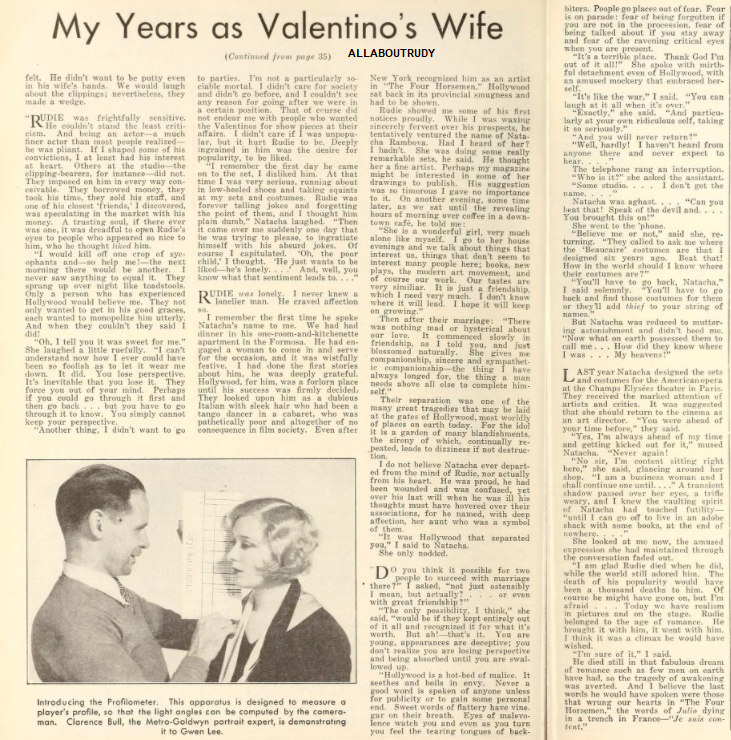
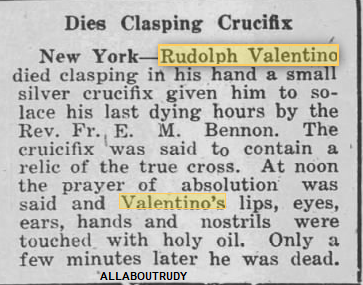
Rudy reconciled with the Catholic church and went back to the religion of his youth. For someone who said he was not a religous person it’s interesting how he turned to the comfort of his faith to give him peace. Oftentimes, people will feel at home with other religions and explore what is beyond their own back yard. But in the end, when individuals get older and wiser they will return and seek guidance and comfort in heavenly places.
Categories: Uncategorized
Tags: Death of Rudolph Valentino
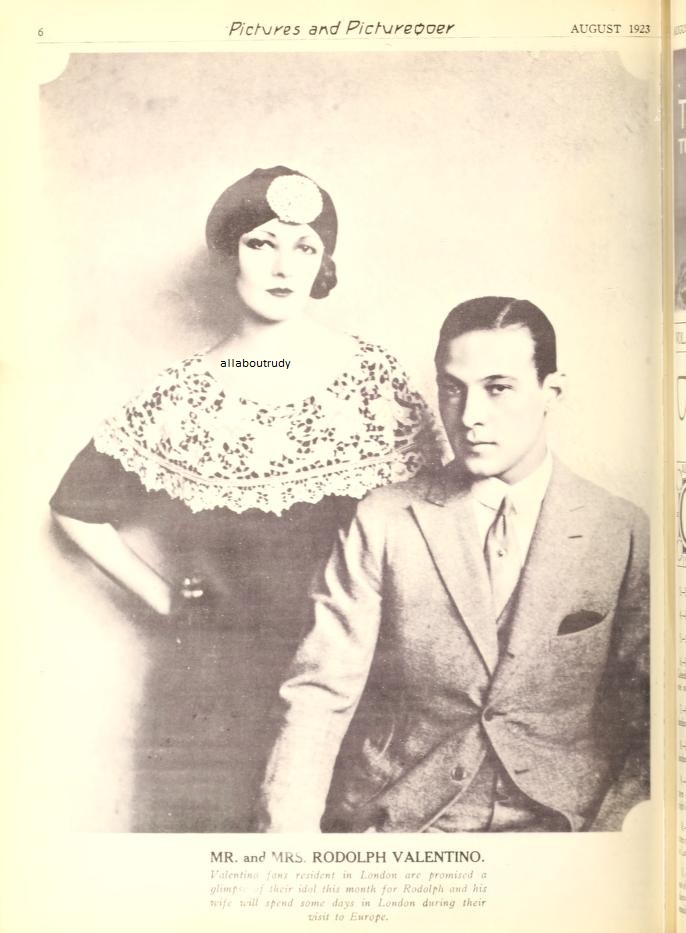

Aug 1923 – What do you think?
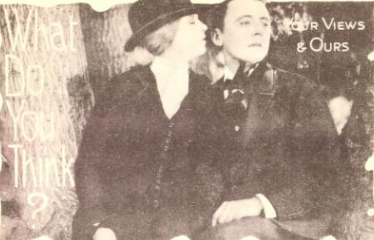
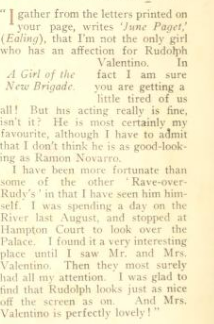
I have seen my favourite actor in my favourite book, which is Rodolph Valentino in “The Sheik”, and both were splendid. But Agnes Ayres spoilt the film, she was nothing like the character “Diana” of the book. She did not have the look, or the personality and I was hoping for someone more believable. Eileen Percy would have been lots better. Why have the producers spoiled a splendid film by mis-casting the heroine in this fashion?
From Susanne Yorkshire
Categories: Uncategorized
Tags: Agnes Ayres, Rudolph Valentino
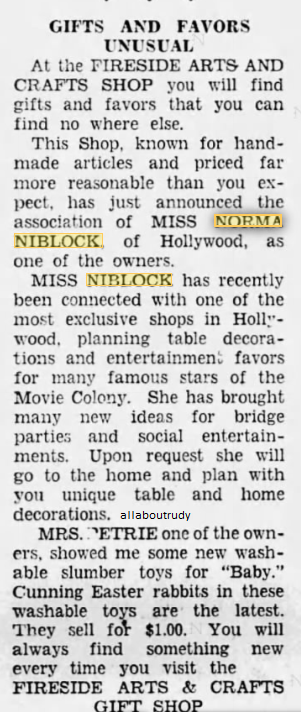
1929 – Mineralava Beauty Contest Winner Associates with Hollywood Arts & Crafts Shop
Categories: Uncategorized
Tags: Norma Niblock
Aug 2023 – 96th Annual Valentino Memorial Service, Hollywood Forever Cemetery
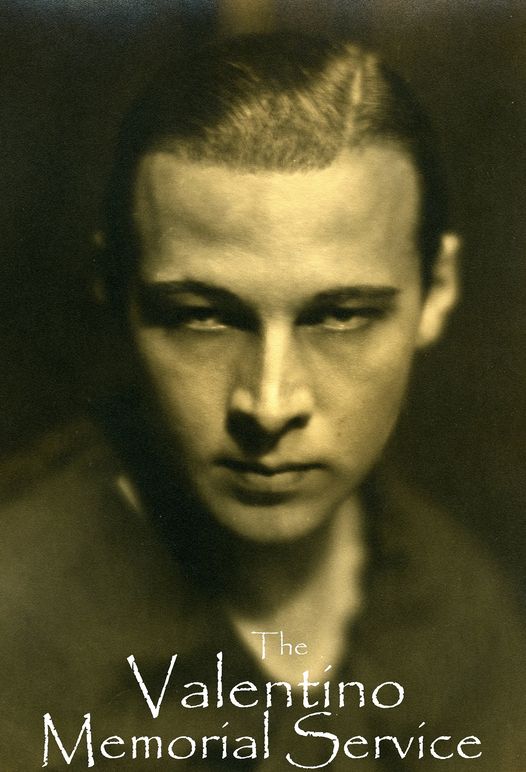
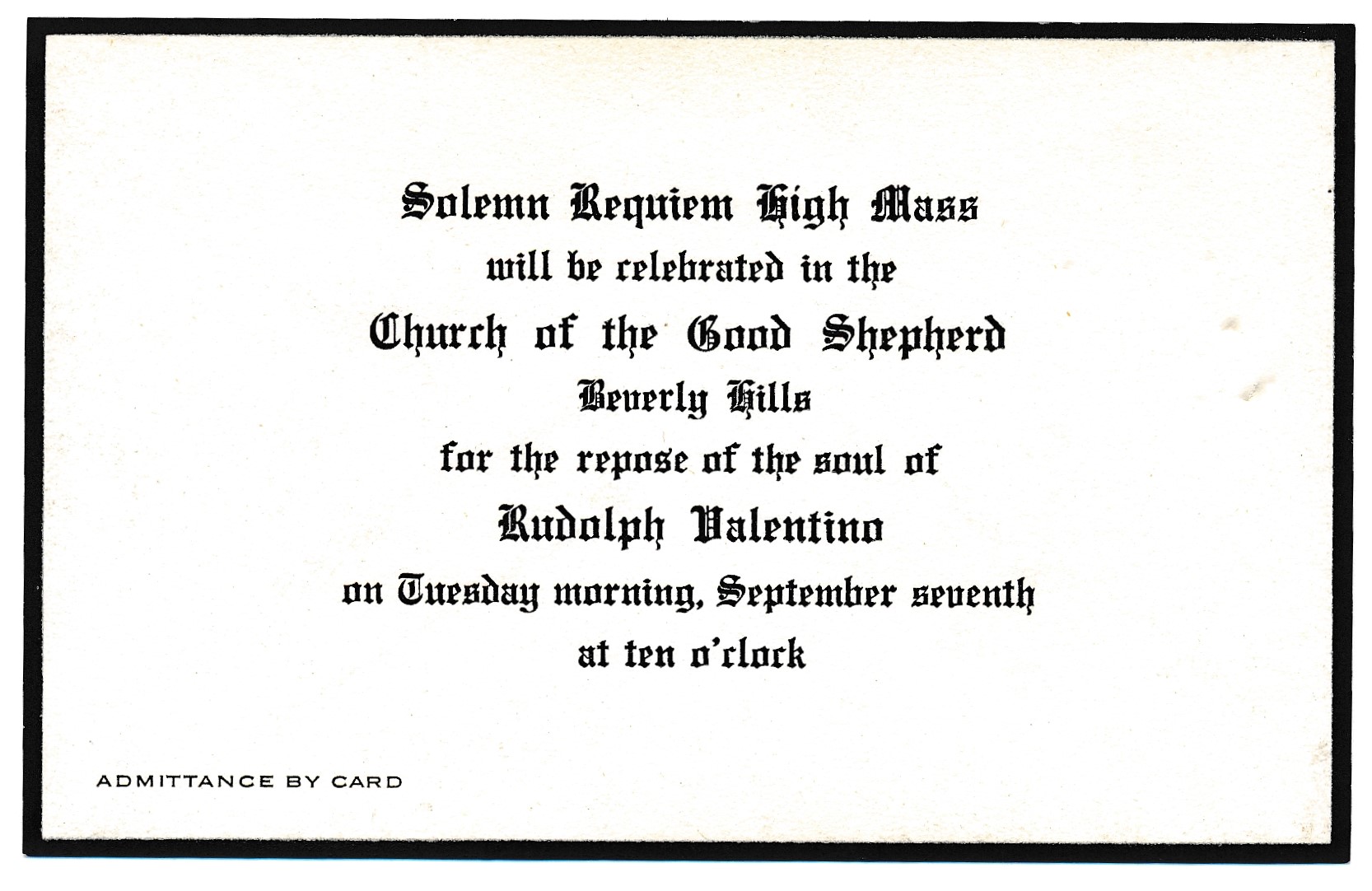
As a reminder, the Annual Valentino Memorial Service is once again upon us. This tasteful event is a celebration of the memory of silent film actor Rudolph Valentino. Each year, is a program honoring his life and legacy.
The date is 23 August 2023, Hollywood Forever Cemetery, Cathedral Masoleum, Hollywood, CA. This event is free to the public and will be streamed live on Facebook.
Categories: Uncategorized
Tags: 96th Annual Valentino Memorial Service, Death of Rudolph Valentino, Tracy Terhune
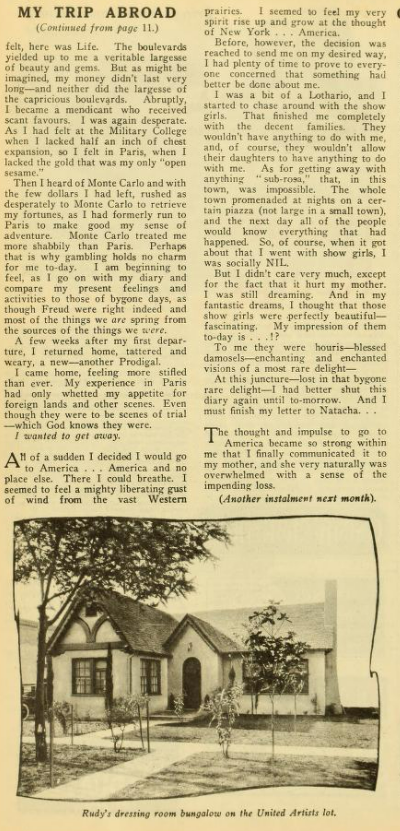
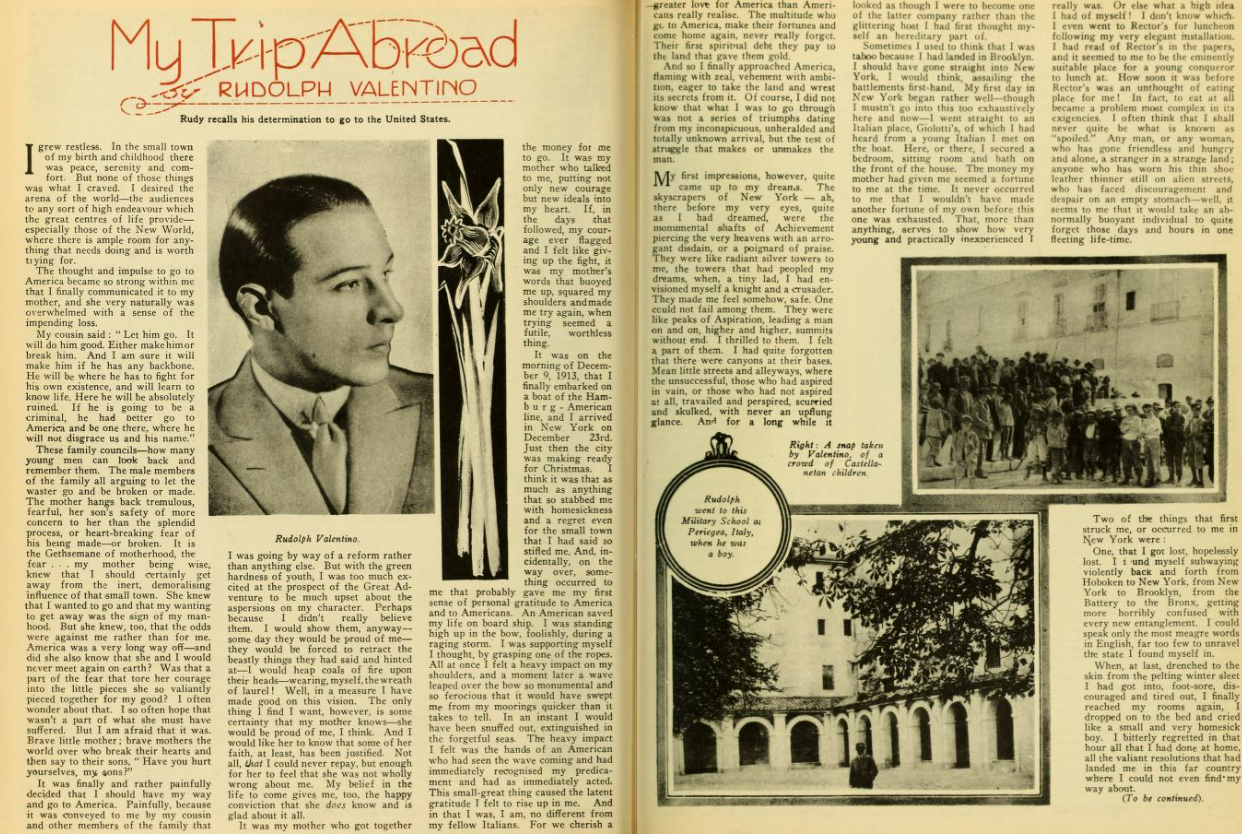
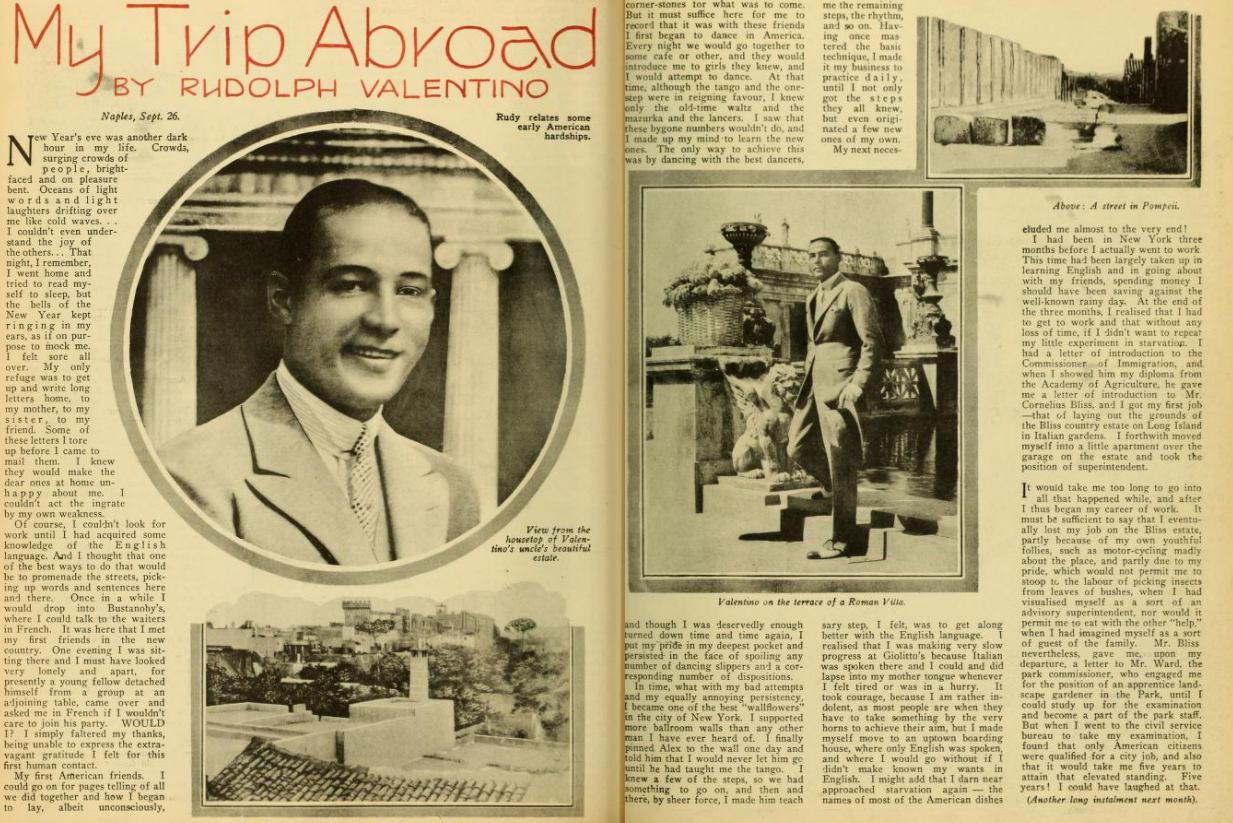
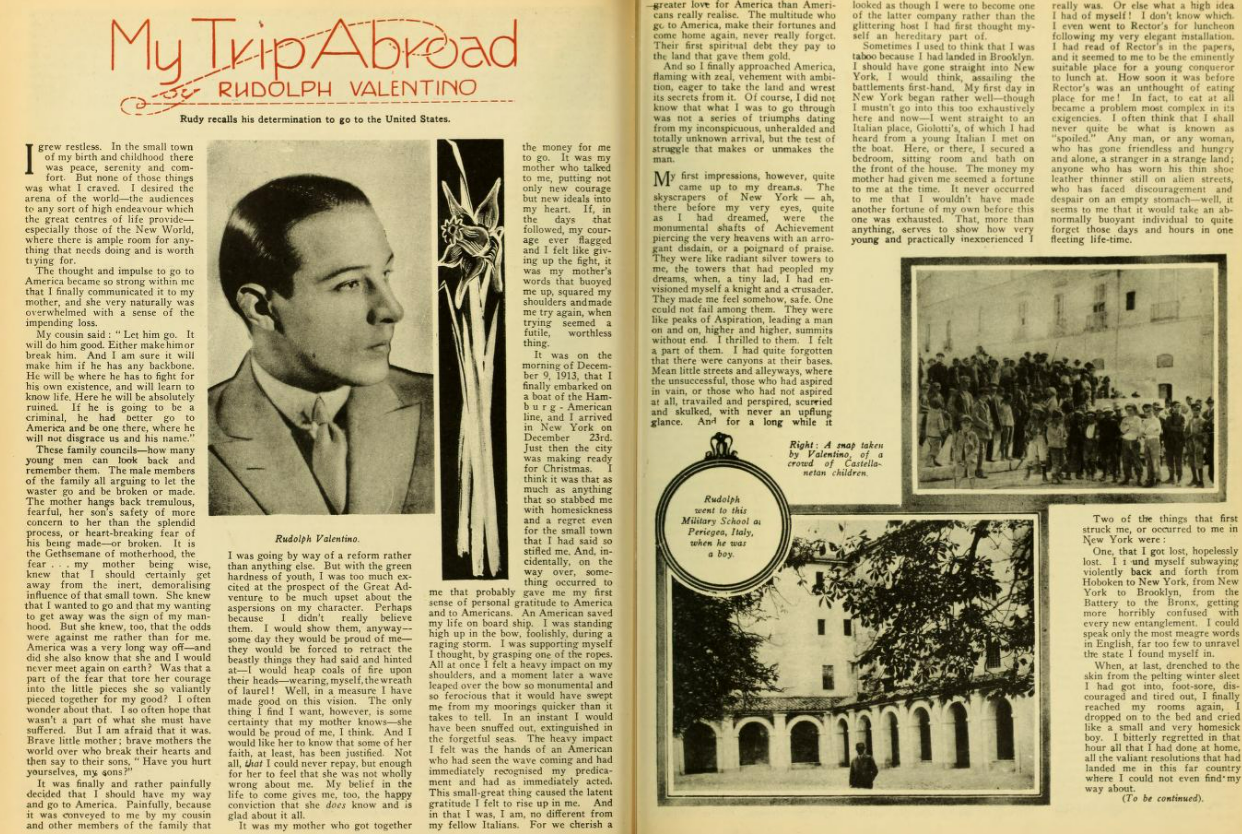
Categories: Uncategorized
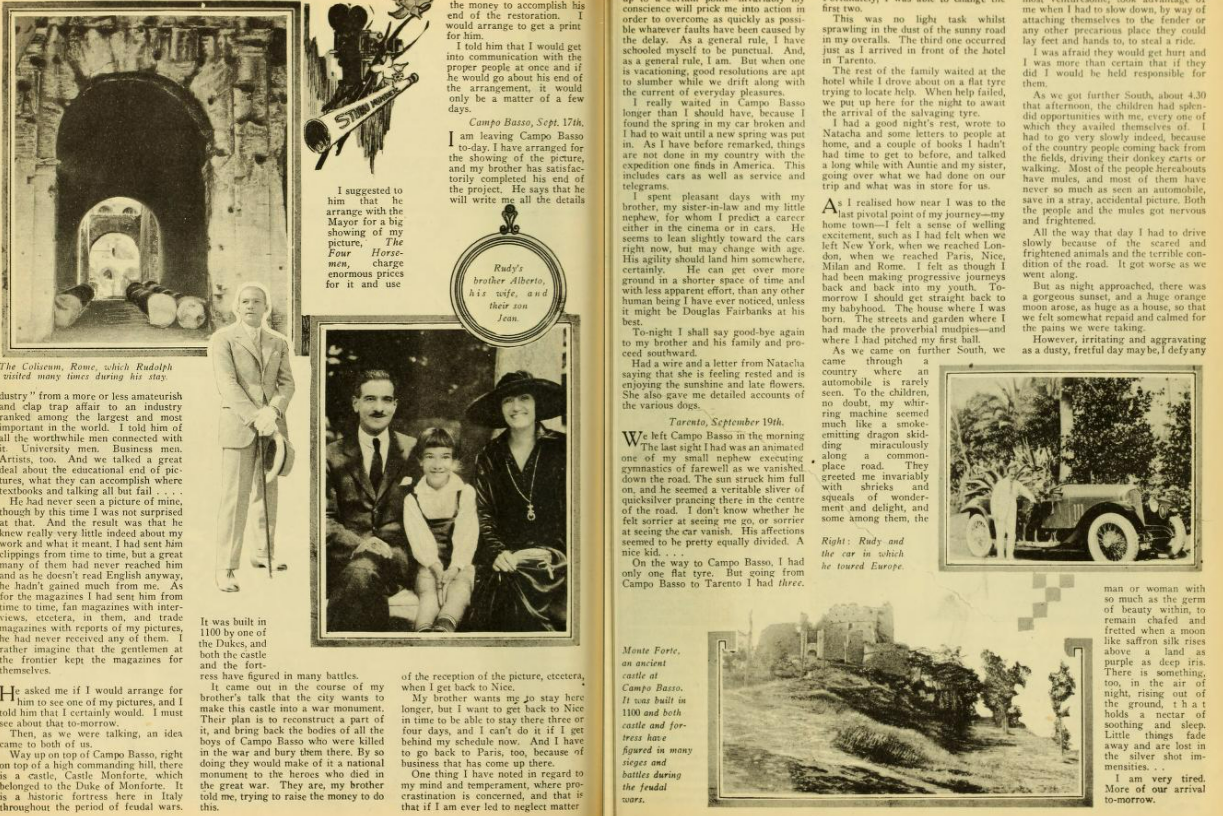
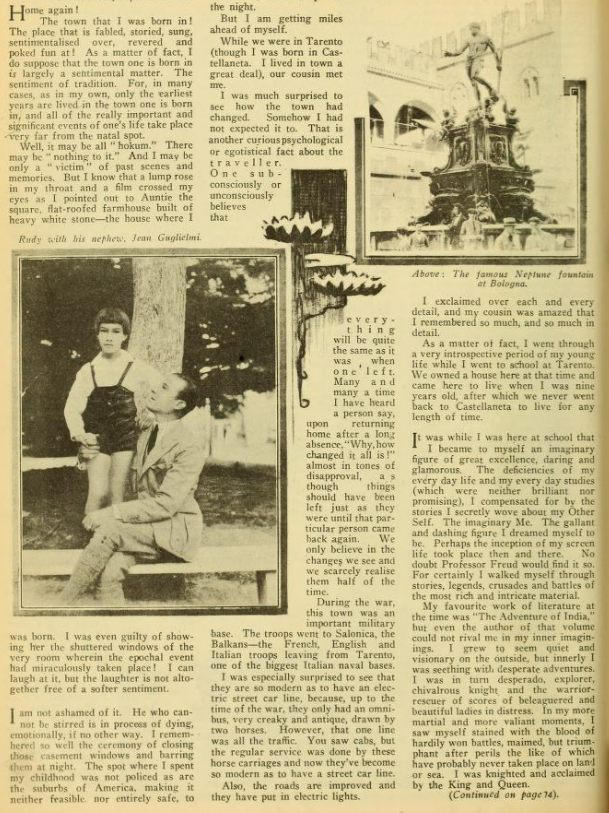
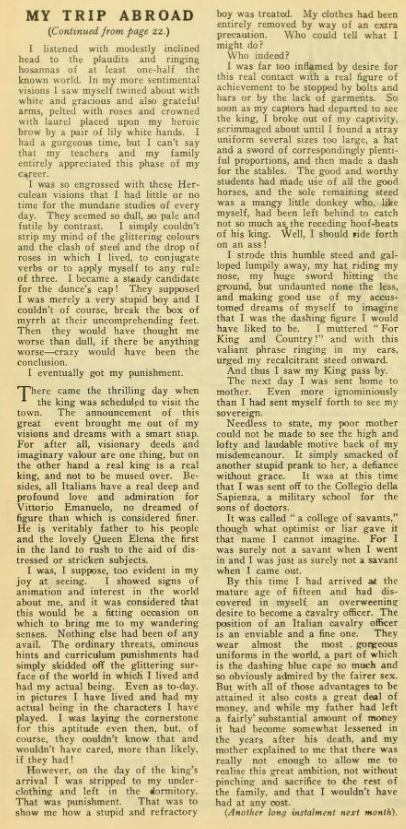
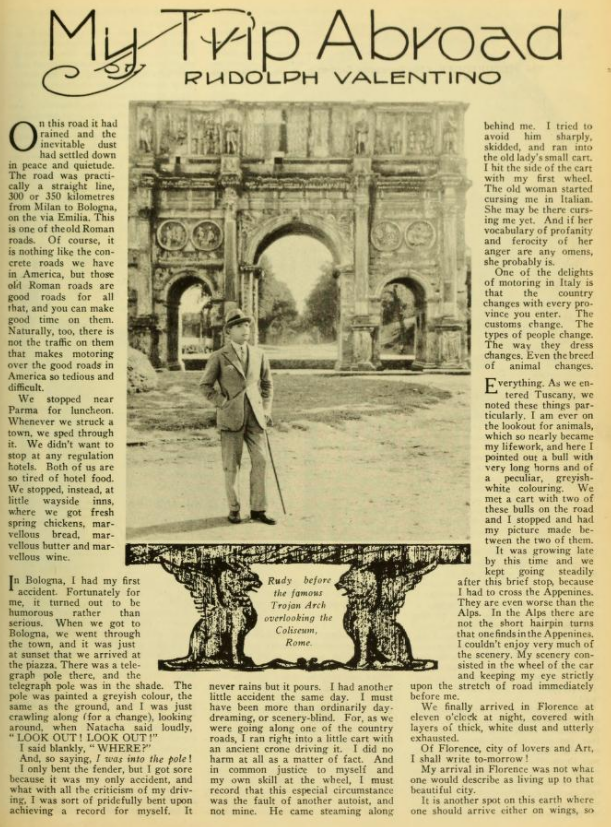
Tags: Alberto Valentino, Jean Valentino, Natacha Rambova, Rudolph Valentino
 All About Rudolph Valentino
You must be logged in to post a comment.