
Posts Tagged With: Pola Negri
2019 – The Similarities in the Lives of Russ Columbo and Rudolph Valentino
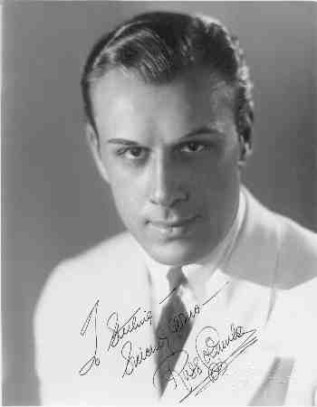
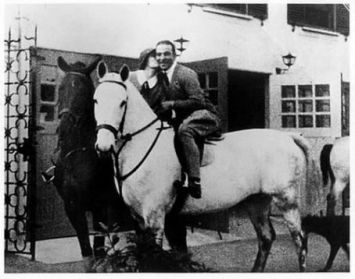
Russ Columbo was born Ruggiero Eugenio di Rodolfo Colombo on 14 Jan 1908, in Camden, N.J., the 12th and final child of Italian immigrants Nicola and Giulia Perseri Colombo. Rudolph Valentino was born Rodolfo Pietro Filiberto Raffaello Guglielmi on 06 May 1895 in Castellaneta, Italy, the middle child to Italian and French parents Giovanni and Marie Berthe Guglielmi. Their life’s journey took them to Los Angeles where both found their way into motion pictures and instant fame. Russ Columbo was “discovered” by Silent Film actress Pola Negri who was once romantically involved with Rudolph Valentino. Russ Columbo was grateful for the employment opportunity that Pola provided. He composed many love songs to her and sang them over the air-waves of the radio world yet romance was not on the cards for them.
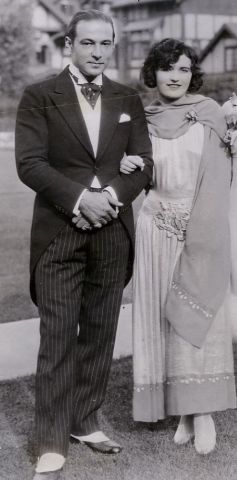
In 1926, Marion Davies had a conversation with Pola about romance. Marion Davies told Pola “there is no point in living like a nun. Come to my costume party dressed to represent the character you have most enjoyed portraying on the screen”. Pola Negri attended dressed in a Czarina costume from her movie “Forbidden Paradise”. The costume fitted perfectly and was all white and gold she looked like a queen. Rudolph Valentino disappointed in love attended the same party dressed in a matador costume from his movie “Blood and Sand”. Marion Davies costume party was a major success filled with the most famous movies stars of the day. The hostess was talking with a group of guests near the entrance to her home when she introduced her friend Pola to Rudolph Valentino. Pola recalls that exact moment “he was holding my hand and was taller than I imagined he would be. I felt as if my eyes were a camera focused on his life, and I remembered sharply all the things I read about him. That he was just separated from his wife Natacha Rambova. There was disillusion written all over his face. As if I saw him in a film now, he was motionless-stopped before me as suddenly as a heartbeat. I saw the hint of a dimple in his chin, his full sensitive lips partly opened. But his eyes held me they were wide set and so dark I could not see his pupils. My eyes met his and I thought you can hold me forever if you try. We danced a tango together and I was in his arms. I closed my eyes and we fell into the mad contagious rhythm. As if we had danced together always. We never missed a beat. The other couples on the floor stopped and watched us. The night seemed magical and I felt as though I was falling in love with him. The music stopped and without looking up again, without speaking I turned on my heel, and walked out of the ballroom to my waiting car and left the party. While walking up to my front door suddenly out of the shadows a man appeared and said why run away from something you know we both have tried to find all our lives. Before I could answer, I was in his arms”. There were rumors of an engagement, but it’s believed that Rudolph was looking for companionship and Pola was looking for publicity. On 23 Aug 1926, Russ Columbo was on the same movie set as Pola Negri. He was playing Dvorak’s Humoresque as background music and overheard the sad news, Rudolph Valentino just died so he stopped playing. Pola noticed there was no music and Russ Colombo was wearing a sad expression on his face. She asked what was going on and why did you quit playing? He told her the news and she fainted. Russ Columbo was asked about whether she fainted for real or publicity. Columbo said it was not faked but she truly did appear traumatic and was inconsolable over her loss. Months after his death, it was reported Pola Negri chose a tiger eye ring from Rudolph Valentino’s personal effects. According to Internet sources, Pola became deathly sick and it was said the ring was cursed. Supposedly, she gave this ring to Russ Columbo saying, “from one Valentino to another Valentino”. It is said, that the ring caused the untimely death of Russ Columbo from an accidental shooting.
Categories: Uncategorized
Tags: Pola Negri, Rudolph Valentino, Russ Columbo

26 Dec 1929 – Pola Burns her Divorce Papers
Pola Negri, film star and her husband pseudo Prince Serge M’divani celebrated Christmas with a Yule fire at the Crillon Hotel the fire being kindled with papers in the divorce case which they both agreed to drop a few days ago. “We intended to burn them ceremonially at our chateau said pseudo Prince. “But we couldn’t wait” So we burned them at the hotel. They were an eyesore to us, and we are so happy. M’divani and Miss Negri left later for the chateau to spend the holidays. They exchanged Christmas presents. The pseudo prince received two racehorses which are to form the nucleus of a racing stable and Miss Negri will she received a diamond and emerald necklace sources said was paid for by her money.
Categories: Uncategorized
Tags: Fake Prince M'Divani, Pola Negri
3 Nov 1926- The Secrets of Valentinos Last Romance
A cat may look at the Queen but a little chorus girl even though she may be one of Ziegfeld’s most glorified may not publicly make indiscreet remarks about a great movie star. This Marion Kay Benda, one of the follies beauties, discovered when, in an interview given immediately after the death of Rudolph Valentino she said “He was not engaged to marry Miss Negri, you’ll notice all the statements have come from her. He never denied any of them because he was too fine. He did think a great deal of her, but he had absolutely no intention of marrying her. I know. He often, in my presence, refused to speak to her on long distance telephone calls. “No one knew him as I did. He was the most wonderful person I have ever known. I can’t believe that he is dead. He was so fine, so wonderful, so sincere, and I know he liked me very much. He couldn’t stand “rounder’s” and his ideals were of the highest. In every sense of the word he was an artist.” A rumor was circulating at that time that Miss Benda and Valentino were secretly married a few weeks before, this the show girl denied. “Oh those things always are said” she complained. “People cannot understand being simply good friends. I’ve known Mr. Valentino for four weeks and I saw him a great deal. Often we hired a cab and drove through Central Park after the show and then there were early morning walks and talks.” It was in the company of Miss Benda that Valentino attended his last social evening. The two of them, accompanied by Buzz Warburton, jr. went to Texas Guinn’s Night Club on the evening preceding the star’s fatal operation. During Valentino’s illness there was a long procession of greater and lesser lights of the theatrical world calling at the hospital and leaving flowers, but all visitors were denied admittance to the sickroom. And it wasn’t of his companions in the night clubs and after-theater suppers that Rudolph spoke when he was strong enough to talk but of his friends in the movie world. Welcome enough, then, were the tempestuous Polish star’s long-distance telephone calls. The little chorus girl who believes that “no one knew him as I knew him” was evidently quite forgotten. Her change as a protégé of the famous sheik had been snatched from her, and the limelight of public interest shone on her only for a moment and then promptly turned in another direction. Stars in the movie world are the “clannish” on earth. They have their scraps and jealousies, rivalries and revenges in private life, just like other folks, but it is an unwritten law that those shall never be divulged for publication. One great consolation Miss Negri has, and that is that it was her image which floated across the mind of Valentino the last moment before he lost conscious contact with life. Dawn was just breaking in the sky when Dr. Meeker noticed that his patient was trying to say something. After a night of agony he was too weak to raise his voice above a whisper. The doctor placed his ear near the dying star’s lips and just managed to catch the words “Pola, Pola” if she does not come in time…tell her I think of her. Those were the last words Valentino uttered in English. From that time on, until he passed away at midday, delirium and coma alternated, and all the incoherent remarks which passed his lips were in the old mother tongue. This message was relayed by Dr. Meeker to Mary Pickford and from her to Norma Talmadge. The Polish actress received it in the Campbell undertaking rooms at the funeral of Valentino began. There was so much talk about whether Pola and Rudy were or were not engaged that finally the star herself denied it. “We were not formally betrothed,” she gave out the statement while enroute to Hollywood on the funeral train. “Rudy never believed in formal engagements neither do I”. “The reason the betrothal was never announced was that Rudy thought such an arrangement appeared too businesslike a proposition, and I agreed with him.” We frequently discussed our marriage plans for next April, and our closest friends knew of them. We thought our private lives belonged to us, and we did not want to make publicity of it. In a very clever composition contained in a book of poems in verse and prose which the late star published two years ago, he expressed a pessimistic viewpoint towards romance. Under the title “The Kaleidoscope of Love Synonyms and Antonyms,” he describes its birth, rise, fall, and disintegration. Is analysis runs as follows:
A-Adoration, Anticipation, Affinity, Arguments
B-Beauty, Bliss, Bitterness, Bondage
C-Caresses, Circumstances, Confidence, Charm
D-Desire, Delusion, Dreams, Divorce
E-Ecstasy, Engagement, Ego, End
F-Fascination, Forgetfulness, Flatter, Faith
G-Gossip, Gratitude, Gifts, Goodbye
H-Happiness, Honor, Heartache, Hell
I-Intuition, Irony, Idolatry, Integrity
J-Jealousy, Joy, Justice, June
K-Kisses, Keepsakes, Knowledge, Kismet
L-Lips, Loneliness, Logic, Longing
M-Marriage, Morality, Money, Man
N-No, Nearest, Novelty. Never
O-Opposition, Own, Offering, Opulence
P-Passion, Promise, Pride, Proposal
Q-Quality, Quest, Queries, Quarrels
R-Romance, Reveries, Realization, Remembrance
S-Sympathy, Sacrifice, Shame, Settlement
T-Thoughts, Truth, Temper, Tears
U-Unkindness, Understanding, Uncertainty, Unfaithfulness
V-Virtue, Vanity, Vows, Vengeance
W- Wisdom, Wishes, Wedlock, Woman
X-The unknown love
Y-Youth, Yearning, Yes, Yawn
Z=Zenith, Zest, Zeal, Zero
So he described in 26 versions the span between the alpha and the omega of the little game of love. In real life, Valentino was as much the great lover as he was on the screen, but he failed to domineer over the ladies he wooed and won without the air of the scenario writer to chasten their independence of spirit. Jean Acker, his first wife, went “on the road” in vaudeville very shortly after their marriage, and it was not until a few weeks before the star’s death that they were reconciled. Natacha Rambova, her successor, also insisted on putting her career first, and, in spite of many reported attempts to adjust matters, this marriage too went on the rocks. Had Valentino Married Pola, would their union have been any more permanent? At the time the exotic Natacha Rambova left her famous husband, ostensibly on a “vacation from matrimony” she was asked if a divorce were in the offering. “I don’t know,” she answered. “There will simply have to be some sort of adjustment. And frankly I haven’t the least idea how we can arrange matters so that we can live together without constant irritation cropping up. “My husband wants me to give up work and devote myself to the home. If I did that, what should I do with all my idle hours?” We have servants who are much more capable of running the house than I am. I have always worked all my life I have had the urge to create. I cannot give this up it is part of myself”. So Natacha Rambova sailed to Paris. At the finish of his picture Valentino came to New York. He as was his habit, refused to commit himself beyond giving more or less of a repetition of what his beautiful wife had said. He was seen a lot in the company of Mae Murray, who had just returned from Paris, where she had obtained a divorce from Bob Leonard, the Broadway matchmakers got busy, but both denied any romantic attachment. Miss Murray intimated that reconciliation with her former husband might be possible; Valentino was less frank, but those who looked wisely declared that the Valentino-Rambova frayed romance was on the verge of a renaissance. As things turned out, the little follies girl was quite correct in her statement that Rudy and Pola were not engaged. However, she spoke out of her turn and was set down.
Categories: Uncategorized
Tags: Natacha Rambova, Pola Negri, Rudolph Valentino
1959-1962 – Pola Negri at the Menger Hotel, San Antonio Texas

Pola Negri’s story from rags-to-riches-to rags story reads like an E True Hollywood Story. Pola was a wealthy woman when she arrived in America in the early 1920’s. In 1927, she married a fake prince named M’Divani who stole all her money and ended up dead broke like her fellow silent actress Mae Murray. In the 1930’s -1940’s would see Pola touring Vaudeville circuits to earn money to pay for her medical bills. She would return to Germany and continue making motion pictures there. After WWII Pola came back to America and did whatever work she could to continue to survive. In 1950, she turned down Billy Wilder’s invitation to play Norma Desmond in the movie Sunset Boulevard. Pola’s saving grace was a wealthy Texan named Margaret West who was from a prominent family in San Antonio, Texas. Both Margaret and Pola became friends in the early 1930’s. Margaret who was not hurting for money did what she could for her friend while both were living in California.

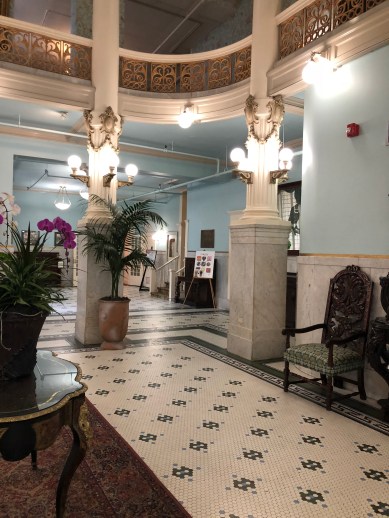
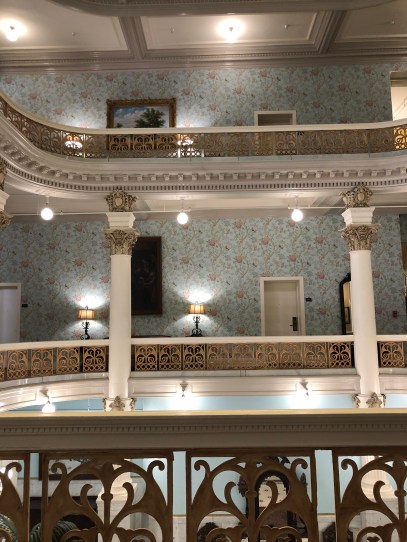
In 1959, both mutually decided to travel to Margarets hometown of San Antonio Texas. Upon their arrival they lived at the Menger Hotel, San Antonio, Texas. The Menger Hotel, is one of the state’s oldest and best-known hotels, was opened by William Menger on Alamo Square in San Antonio on January 31, 1859. They stayed there for 2 years while Margaret’s home in Olmos Park was under construction. Pola fell in love with the city. Eventually both friends traveled between her Rafter S ranch in Zavala County and her San Antonio home until her death in 1963. Margaret West left her estate to Pola who lived in the city till her death in 1987.
Categories: Uncategorized
Tags: Death of Rudolph Valentino, Pola Negri
11 Feb 1945 Red Banker Tells How Valentino his boss, had to ‘fight’ girls too
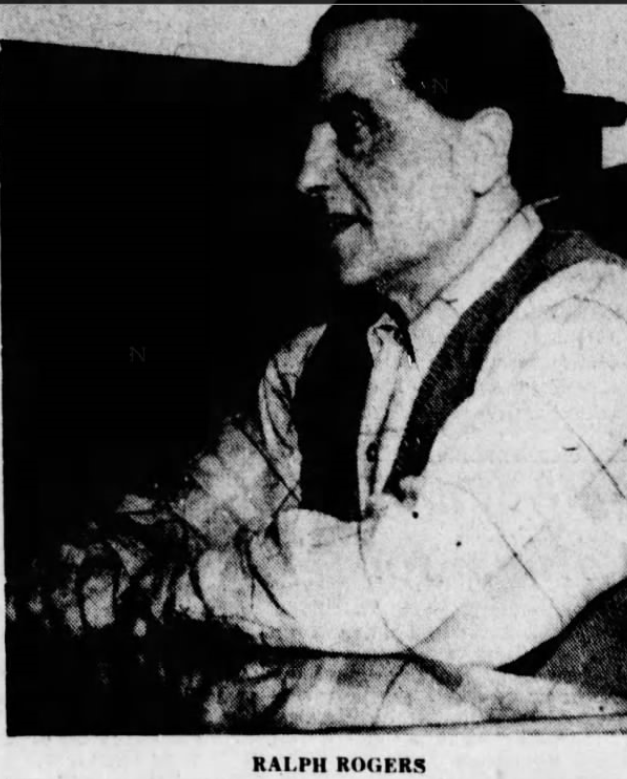
Ralph Rogers, is a dark, florid man of 45 behind whose quiet, brown eyes are the memories of two decades ago when he led a more colorful life as body-guard, valet, chauffeur for the late Rudolph Valentino. He was the late film lover’s companion the night Valentino won 450,000 francs and broke the bank at Monte Carlo. He was with him in an automobile crash near Hollywood when those who rushed to the scene stole bits of the shattered Valentino car as souvenirs, forgetting the begrimed, bleeding victims of the crash. He was aboard ship with him when Benito Mussolini warned the late Rudy by wireless not to put foot on Italian soil with immediate induction in the army as an alternative. He spent three hectic years trying to save his boss from girls and women who besieged him for autographs, sometimes tearing at his clothes, even snipping hairs from his dog for mementos. One night while enroute from Europe to America aboard the Vaterland, later the Leviathan, women banged on the doors of once was the Kaisers Suite demanding the public appearance of Valentino who wanted only to be left alone to sleep. In some European Capitals the besieged Valentino had to employ the utmost diplomacy to shoo away an occasional princess, baroness, or countess. All this, and more besides are among the memories of Ralph Rogers, 110 Monmouth Street here when he is not engaged in the operation of his small Italian restaurant on Broad Street, Shrewsbury. His getting the job as Valentino’s man Friday was by accident. Rogers was employed in the main showrooms of the Isotta-Frachini Company, New York City. His boss was a chap named D’Annunzio son of the famous Italian poet and patriot. Valentino drove an Isotta and had dropped in wit the problem of getting a man to go to Europe with him to drive the car. D’Annunzio suggested Ralph Rogers. Rogers accepted but in the back of his mind he figured he might get the chance to visit his relatives in Sorento. “We toured Europe the days and nights were always exciting and interested. But Valentino was never interested too greatly in women perhaps they annoyed him too much. In Europe it was very bad the way they kept after him. During the years from 1923-1026 when I was with him, I know of only one woman Valentino seemed to care anything about and that was Pola Negri. In my humble opinion she was the only girl Valentino seemed to really care for. The night Valentino broke the bank at Monte Carlo I was beside him most of the evening. I say it was 450,000 francs he won it may have been 500,000 or 550.000. I can only remember that I had to carry the money out in a bag to the car and that the place closed down tight, turning all the guests away. It was very bad night for the old gambling house. Papers all over the world were full of the story the next day. “While we were in France, I mentioned to Valentino I had relatives in Sorrento. He told me to take his car and drive there and to spend as much time as I liked. He was a wonderfully democratic fellow, very generous and very understanding. He was what you might say a ‘swell guy’ all around”. When we arrived back in New York disembarking from the Vaterland Valentino told me he would like to keep me and asked would I be willing to be employed by him instead of going back to my old job. He said we got along so well he would not like to see me go. I decided I would remain with him. “Out around the Pacific coast when women couldn’t get close enough to Valentino in his car they would actually shinny up to the roof of the car and peer in at him. He had his troubles with the women. Ralph Rogers never saw Valentino when thougsands streamed into Campbell Funeral Parlor to view the late film idols body. “Just as in life” Rogers says, the crush of women was too great. I stood outside and looked. I saw those women lineup for blocks. I shook my head with the memory of a real fine fellow I would never see again. Up to a year ago, Ralph Rogers was still wearing pajamas Valentino had given him. He Loved fine pajamas said Ralph. He had them by the dozen and they were made of the finest materials, personally made for him to last a life time. They did for him, and lasted another 20 years for me. The last pair I abandoned just about a year ago.
Categories: Uncategorized
Tags: Pola Negri, Ralph Rogers, Rudolph Valentino
1 Mar 1926 – Costume Party
Rudolph Valentino, Manuel Reachi and Pola Negri at a costume party. 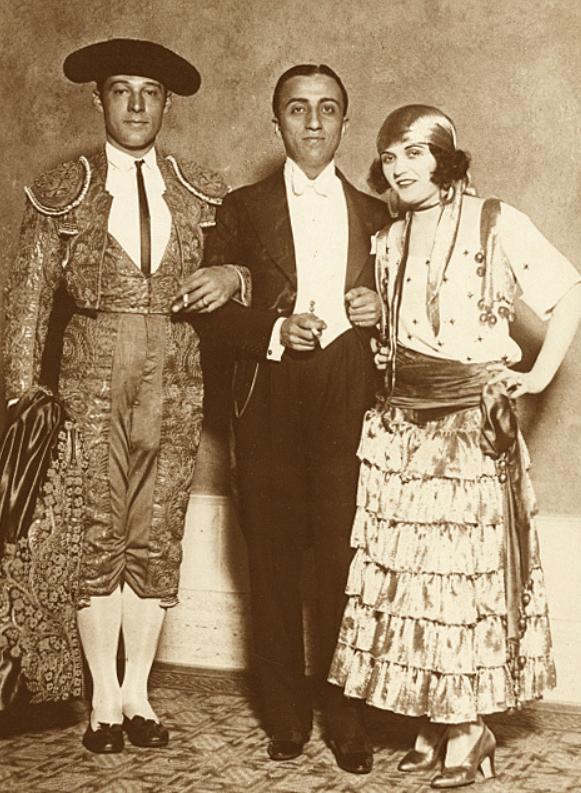
Categories: Uncategorized
Tags: Manual Reachi, Pola Negri, Rudolph Valentino
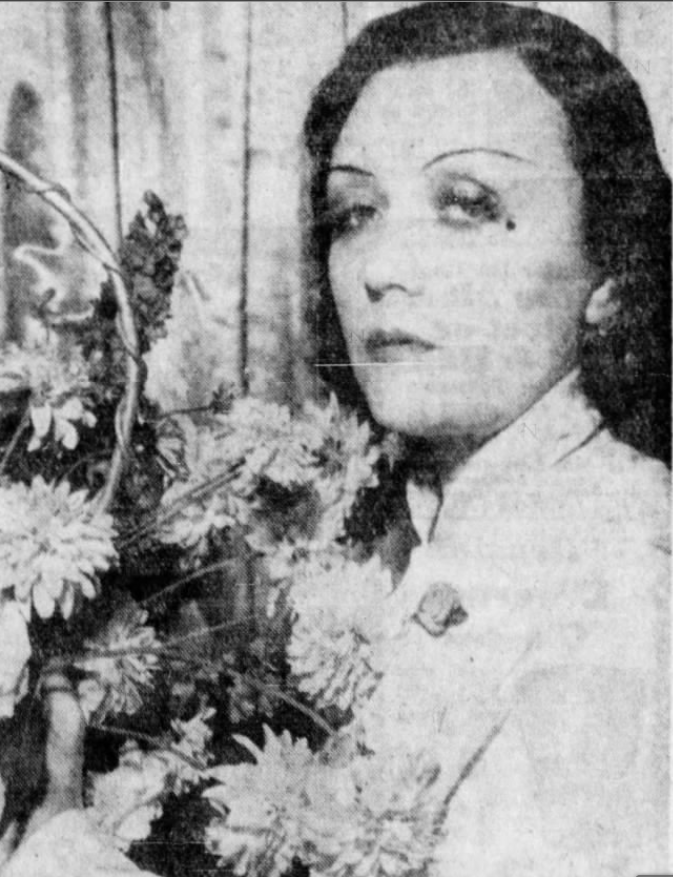
1953 – Valentino Chapter The Public is Never Wrong
Late in 1921, our advertising copywriters took off their gloves, spit on their hands and hammered out some remarkable advice to the public. By this time all readers over forty, and doubtless most of those under, will have guessed the rest. The picture was, of course, The Sheik, with Rudolph Valentino. Top billing went not to Valentino but to the leading lady, Agnes Ayres. Valentino was twenty-six years old and had been in Hollywood for several years, dancing as a professional partner and sometimes playing bit movie parts, chiefly as a villain. Recently he had gained attention as a tango-dancing Argentine in The Four Horsemen of the Apocalypse, made by another company. When we hired him for The Sheik we expected that he would perform satisfactorily, but little more. We certainly did not expect him to convulse the nation. Valentino was as strange a man as I ever met. Before going into his personality, however, it would seem worthwhile, taking into account what happened afterward, to review The Sheik. The story was taken from a novel of the same title by Edith M. Hull, an Englishwoman. After publication abroad the book became a sensational best seller in America. We paid $50,000 for the screen rights, a very large sum for the time, with the idea that the novel’s popularity would assure the picture’s success. The story gets underway with Diana Mayo (Agnes Ayres), a haughty English girl visiting in Biskra, remarking that marriage is captivity. Since Diana is a willful adventurous girl who dislikes the restraining hand of her cautious brother, one knows that trouble is brewing the moment she spots Sheik Ahmed Ben Hassan (Rudolph Valentino) and their eyes meet. The distance between them is roughly 150 feet, yet she quails, to use understatement, visibly. One might have thought he had hit her on the head with a thrown rock. There was nothing subtle about film emotion in those days. Learning that non-Arabs are forbidden at the fete the Sheik is holding in the Biskra Casino that night, Diana disguises herself as a slave girl and wins admission. The Sheik discovers her identity as she is about to be auctioned off along with other slaves. He allows her to escape, but later that night appears under her window singing “I’m the Sheik of Araby, Your love belongs to me. At night when you’re asleep into your tent I creep. Valentino moved his lips hardly at all when he sang. As a matter of fact his acting was largely confined to protruding his large, almost occult eyes until vast areas of white were visible, drawing back the lips of his wide sensuous mouth to bare his gleaming teeth, and flaring nostrils. But to get back to the film story. Next day, the Sheik attacks Diana’s caravan and packs her off to the desert oasis camp. Though he regards her as his bride, she fends off his advances. Yet it is soon apparent that she is falling in love with him. After a week of virtual slavery Diana begins to like it at the camp. Then she learns that Raoul de Saint Hubert, a French author and friend of the Sheik is coming to visit. Ashamed to be found in her slave like condition by a fellow European, Diana stampedes her guard’s horse while riding in the desert and makes a dash for freedom. Her horse breaks a leg and she staggers across the sand toward a distant caravan. This is the caravan of the dread bandit Omair (Walter Long). Omair makes her a captive for plainly evil reasons. But soon the Sheik having been informed of Diana’s escape by the stampeded guard, attaches the caravan and rescues her. The French author (Adolph Menjou) rebukes the Sheik for what seems to him a selfish attitude toward the girl. Next day while Diana and the Frenchman are riding in the desert, Omair swoops down, wounds the author, and carries the girl off to his strong-hold. The Sheik gathers his horsemen and rides to the rescue. Meanwhile at the strong-hold, Omair pursues the “white gazelle” as he calls Diana, around and around a room in his harem house. One of the bandit’s wives is fed up with him, has advised Diana to commit suicide rather than become the brute’s victim. But Diana, having faith in the Sheik, fights gamely The Sheik and his horsemen assault the strong-hold’s walls. Once inside, the Sheik bests Omair in a hand-to-hand struggle. But at the moment of victory, a huge slave hits him a terrible blow on the head. For some day’s he lies at deaths door. Now the Frenchman tells Diana the true story of the Sheik. He is no Arab at all, but of English and Spanish descent. When a baby he was abandoned in the desert. An old sheik found him, reared him, had him educated in France, and eventually left him in command of the tribe. And so the story draws to a happy ending. The Sheik recovers and the two lovers set off for civilization and marriage. The public, especially the women, mobbed the theaters, and it was not very long before the psychologists were busying themselves with explanations. The simplest, I gathered, was that a surprisingly large number of American women wanted a mounted Sheik to carry them into the desert. Doubtless, for only a short stay, as in the case of Diana, after which they would be returned to civilization in style. Adult males were inclined to regard The Sheik with some levity. But the youths began to model themselves on Valentino, especially after he had appeared in Blood and Sand for us. In the latter picture, playing a Spanish bullfighter, he affected sideburns, sleek hair, and wide bottomed trousers. Soon thousands of boys and young men had cultivated sideburns, allowing their hair to grow long, plastered it down, and were wearing bell-bottomed pants. Lads in this getup were called “sheiks”. Thus two of Valentino’s roles were combined to get a modern sheik. As audience today viewing The Sheik laughs at the melodramatic story, the exaggerated gestures, and Valentino’s wild-eyed stares and heaving panting while demonstrating his affection for Diana. Yet some of the impact of his personality remains. He created an atmosphere of otherworldliness. And with reason, for there was much of it about him. Valentino born Rodolph Guguliemi in the village of Castellaneta in southern Italy of a French mother and an Italian father. When 18 he went to Paris and a year later migrated to New York City. It is known that he worked as a dishwasher, landscape gardener, paid dancing partner or gigolo. After a couple of years, he secured occasional vaudeville work as a partner of female dancers of more reputation than his own. Improvident by nature with expensive tastes, Valentino lived from day to day as best he could. All his life he was in debt, from $1. To $100,000, according to his status. Being fully convinced that a supernatural “Power” watched over him he did not worry. Mortal men found this power of Valentino’s hard to deal with. We raised his salary far above the terms of his contract. That seemingly only whetted the power’s appetite. It became downright unreasonable after Blood and Sand, with the lads of America imitating Valentino and women organizing worshipful cults. Evidently the power had mistakenly got the notion that we had agreed to make Blood and Sand in Spain any rate the idea crept into Valentino’s head. He became dissatisfied with his dressing quarters, wishing to be surrounded, apparently in the splendor of a powerful sheik of the dessert. Valentino rarely smiled on the screen and off, and I cannot recall ever having seen him laugh. It is true he could be charming when he wished. In dealing with a lady interviewer for example, he would give her a sort of look as if aware of something quite special in her, and treat her in an aloof but nevertheless cordial manner. On the other hand, he could be extremely temperamental. Harry Reichenbach, the public relations genius who had reversed Sam Goldwyn’s buzzer system, was now working for us. One day he called at Valentino’s dressing room to discuss publicity matters. “Does he know you”? a valet inquired. “Well”, Reichenbach replied “he used to borrow two or three dollars at a time from me and always knew to whom to bring it back”. The valet went away but soon returned with a word that his master was resting. It was my custom, as it had been in the old Twenty-sixth Street Studio, to go out on the sets every morning when in Hollywood. This provided an opportunity to get better acquainted with the players and technicians. Besides putting me closer to production, I hoped that such visits would make everybody feel that the business office was more than a place where we made contracts and counted money. The fact was that we kept as close tabs on the human element as on box-office receipts. Also, I was secretly envious of those who had an intimate hand in production, and, making myself inconspicuous, often watched activities. One day, I was privileged to see a Valentino exhibition such as I had been hearing about. He was arguing with an assistant director what about I did not know, and did not inquire. His face grew pale with fury, his eyes protruded in a wilder stare than any he had managed on the screen, and his whole body commenced to quiver. He was obviously in or near, a state of hysteria. I departed as quietly as I had come. The situation grew worse instead of better, and finally Valentino departed from the studios, making it plain that he had no intention of returning. We secured an injunction preventing him from appearing on the screen for anybody else. This did not bother him very much. He went on a lucrative dancing tour and was able to borrow all the money he needed. Valentino was married but the relationship had not lasted long, although it was still in technical force. Now he was in love with a beautiful girl named Winifred O’Shaughnessy. Her mother married Richard Hudnut, cosmetics manufacturer, and Winifred sometimes used his surname. She preferred, however, to be known as Natacha Rambova, a name of her own choosing. She was art director for Alla Nazimova, the celebrated Russian actress who was one of our stars. Like Valentino, Natacha believed herself to be guided by a supernatural power. They were married before Valentino’s divorce decree was final, and he was arrested in Los Angeles for bigamy. He got out of that by convincing authorities that the marriage was never consummated, and the ceremony was repeated as soon as legal obstacles were cleared away. Natacha Rambova appeared, as Valentino’s business agent wrote later, “cold, mysterious, oriental.” She affected Oriental garb and manners. Yet she had served Alla Nazimova competently, was familiar with picture making, and we felt she would be a good influence on Valentino. At any rate she brought him back to us. Now, as it turned out, we had two powers to deal with. She was the stronger personality of the two, or else her power secured domination over his. It was our custom to give stars a good deal of contractual leeway in their material. Natacha began to insert herself into the smallest details and he backed her in everything. His new pictures, Monsieur Beaucaire and The Sainted Devil, were less successful than those which had gone before. The Valentino cults continued to blossom, but his publicity was not always good. Newspapers poked fun at the sleek hair and powered faces of the “sheiks”. The situation was not helped when it became known that Valentino wore a slave bracelet. Many people believed it to be a publicity stunt. But the fact was that Natacha Rambova had given it to him. Any suggestion that he discard it sent him into a rage. A book he published, titled Day Dreams caused raised eyebrows. Both he and his Natacha believed in automatic writing and it seems that the real author was his power, or the combined powers, working through him. An item titled “Your Kiss” is a good sample.
Your kiss A flame Of Passions fire, The sensitive Seal Of love In the desire, The Fragrance of Your Caress; Alas At times I find Exquisite bitterness in Your kiss.
We did not care to renew Valentino’s contract, particularly since he and his wife wanted even more control over his pictures. He made arrangements with a new company, founded for the purpose, and work was begun on a film titled variously The Scarlet Power and The Hooded Falcon, dealing with the Moors in early Spain. Author of this story was Natacha Rambova. After the two had spent 80,000 traveling in Europe for background material and exotic props, the story was put aside. Another Cobra, was substituted with Natacha in full charge. It did poorly and the venture with the new company was at an end. Joseph Schenck was now handling the business affairs of United Artists, and he took a chance with Valentino being careful to draw the papers in a manner keeping decisions out of the hands of either Valentino or Natacha. Valentino accepted the terms, though reluctantly. Not long afterward the couple separated and Natacha sued for divorce. United Artists filmed The Son of the Sheik, which as it turned out, was the celebrated lover’s final picture. Valentino’s publicity became increasingly less favorable. He called his Hollywood home Falcon Lair, which opened him to some ridicule. The fun poked at the “sheiks” increased as the title of his new picture became known. He was in Chicago when the Chicago Tribune carried an editorial headed “The Pink Powder Puffs”. One of the editorial writers, it seems, had visited the men’s rest room of a popular dance emporium and there was a coin device containing face powder. Many of the young men carried their own powder puffs, and the could hold it under the machine and by inserting a coin get a sprinkle of powder. The editorial, taking this situation as its theme, viewed the younger male generation with alarm. Most of the blame was placed on “Rudy” the beautiful gardener’s boy, and sorrow was expressed that he had not been drowned long ago. IN an earlier editorial the Tribune made fun of his slave bracelet. Valentino’s “face paled, his eyes blazed, and his muscles stiffened” when he saw it according to the later account of his business manager. Seizing a pen, Valentino addressed an open letter “To the Man (?) Who Wrote the Editorial Headed “The Pink Powder Puffs” he handed it to a rival newspaper. “I call you a contemptible coward” Valentino had flung at the editorial writer, inviting him to come out from behind his anonymity for either a boxing or wrestling contest. After expressing hope that “I will have an opportunity to demonstrate to you that the wrist under the slave bracelet may snap a real fist into your sagging jaw,” he closed with “Utter Contempt”. That was in Aug 1925 Valentino came on to New York, and I was surprised to receive a telephone call from him inviting me to lunch. “It is only that I would like to see you” Valentino said “No business”. I would have agreed in any circumstance, but I was sure that he was telling the truth about not coming with a business proposition, since he was well set with United Artists. “Certainly, I answered where”? “The Colony” I had already guessed his choice since The Colony was probably New York’s most expensive restaurant. He liked the best. We set the time. Valentino and I had barely reached The Colony when it became apparent that every woman in the place having the slightest acquaintance with me felt an irresistible urge to rush to my table with greetings. Though overwhelmed, I remained in sufficient command of my senses to observe the amenities by introducing each to Valentino. He was 31 at this time, apparently in the best of physical condition, and, in this atmosphere at least was relaxed. I do not know whether his divorce decree was yet final, but Natacha Rambova was in Paris. Recently, Valentino’s name had been linked with that of Pola Negri one of our major stars. “I only wanted to tell you,” Valentino said after things had quieted down, “that I’m sorry about the trouble I made – my strike against the studio and all that. I was wrong and now I want to get it off my conscience by saying so”. I shrugged, “It’s water over the dam. In this business if we can’t disagree, sometimes violently, and then forget about it we’ll never get anywhere. You’re young. Many good years are ahead of you.” And so we dropped that line of talk. Valentino truly loved artistic things. He spoke of his ambition, when the time of his romantic roles was over, to direct pictures. I had the feeling that here was a young man to whom fame and of a rather odd sort had come too rapidly upon the heels of lean years, and he hadn’t known the best way to deal with it. “Telephone me any time”, I said as we parted, and we’ll do this again. I enjoyed myself”. And I had. A day or two later I picked up a newspaper with headlines that Valentino had been stricken with appendicitis. At first it was believed that he was in no danger. But he took a turn for the worse, Joseph Schenck and his wife Norma Talmadge came to our home to wait out the crisis. Schenck was bringing encouraging reports from the hospital, when suddenly there was a relapse. Valentino died half an hour past noon on August 23, 1925. It was a week to the minute since our meeting for lunch. I, for one, was stunned by the hysteria which followed Valentino’s death. In London, a female dancer committed suicide. In New York, a woman shot herself on a heap of Valentino’s photographs. A call came through to me from Hollywood “Pola Negri is overwrought, and she’s heading to New York for the funeral”. “Put a nurse, and a publicity man on the train,” I said, and “ask Pola to guard her statements to the press”. After Pola’s arrival, my wife and I called at her hotel to offer condolences. Though very much upset, she intended to remain in seclusion as much as possible. Valentino’s body was laid in state at Campbell’s Funeral Home at Broadway and 66th Street, with the announcement that the public would be allowed to view it. Immediately, a crowd of 36,000 mostly women gathered. Rioting described as the worst in the city’s history began as police tried to form orderly lines. Windows were smashed. A dozen mounted policemen charged into the crowd time and time again. After one retreat of the crowd, 28 women’s shows were gathered up. Women then rubbed soap on the pavement to make the horses slip. The funeral home was now barred to the public. Those who got in had nearly wrecked the place by snatching souvenirs but next day another crowd gathered when news spread Pola Negri was coming to mourn. She was spirited in through a side door. Word came out that she had collapsed at the bier, which she had and for some reason it excited the crowd. On the day of the funeral 100,000 persons, again mainly women lined the street in the neighborhood of the church in which it was being held. I was an honorary pallbearer, along with Marcus Loew, Joseph Schenck, Douglas Fairbanks, and others from the industry. Natacha Rambova was not present, being still abroad. But Valentino’s first wife Jean Acker, collapsed, and Pola Negri heavily veiled, was for many moments on the point of swooning once more. As the funeral procession left the church, the throngs fell silent except for subdued weeping of many of the women. The body was sent to Los Angeles for burial. The Valentino Cult, I am told, is still in existence. At any rate, enough women visit his grave every year to have provided the grave keeper with enough material for a book about them.
Resource
Adolph Zukor (1953). The Public is Never Wrong, Chapter 17, Putnam Publishers, New York.
Categories: Uncategorized
Tags: Adolph Zukor, Death of Rudolph Valentino, Natacha Rambova, Pola Negri, Rudolph Valentino
15 Nov 1925 Pola Negri Beauty Recipe
Pola Negri tells me her keeping young recipe includes an early to bed program, lots of fresh air imbibed in the pursuit of tennis, horseback riding and swimming. NO candy and no smoking. She does not smoke because she believes it will spoil the complexion and teeth. Bodily and facial massage twice a week is on her program. For the benefit of those correspondents who deluge Pola Negri with queries about where and how she had her plastic surgery done, she begs publicity be given the fact that her face never has been skinned, lifted or otherwise surgically treated. Her nose, too, has been carefully guarded from any surgical knife. Not all the Hollywood colony, would make such declamatory remarks about face lifting. One learns the work has become profitable here. One learns the names of the surgeons, but they won’t tell on their patients. If the patients confide to anyone it must be to their father confessors.
Categories: Uncategorized
Tags: Pola Negri, Rudolph Valentino
8 Nov 1925 – Pola Entertains
Pola Negri entertained in honor of Michael Arlen with a dinner dance at the Biltmore. As predicted this was the very beginning of emerald no to say very verdant social affairs in Cinema land, where charming people have gathered the past week and worn “green hats”. Miss Negri’s affair was distinguished and comme il faut as those of this delightful hostess always are. The Arlenesque motif was emphasized more than in the green hats in which green ice cream was served. In a gown of pale green duchess satin trimmed with rhinestones and black velvet wearing emeralds and diamonds as adorning jewels, the hostess received thirty guests in an embowered suite, the prevailing flowers being bronze and yellow chrysanthemums arranged with a profusion of maidenhair fern to give again the green motif. Training the cloth of the long table were thirty yards of ribbon made from saucy-faced pansies pale yellow roses and maidenhair. Green candles marked the table at intervals in jade and alabaster candlesticks. Dining and dancing were the order of the evening and among those who participated in the festivity in addition to the hosts and honor guest was Rudolph Valentino, Mr & Mrs. Charles Eyton, Mr. & Mrs. Frank Elliot, Mr & Mrs. Manuel Reachi, Mr. & Mrs. St Clair, MAJ Fullerton Weaver, Sid Grauman, M. Cimini, Mme Cimini, Ralph Block. Following the day of Miss Negri’s party, Mr. and Mrs. Frank Borzage were host and hostess at the usual Sunday morning bridle-path party. But this time the affair was in honor of the lion of Cinemaland, whose roar is assiduously sought. At least, until another lion comes this way. After a long cantor through Griffith Park bridle paths an outdoor buffet breakfast was served in the park. Glimpsed along the autumn paths in addition to Mr. Arlen and the hosts were Bebe Daniels, Mrs. Phyllis Daniels, Rudolph Valentino, Mr. and Mrs. Harold Lloyd, Ben White, Marie Mosquini, Mrs. Joseph Sanders, Ed Kane, Mr. and Mrs., William Howard, William Collier, Irving Thalberg, Mrs. H.G. Rogers, Kathleen Clifford, M.P. Illich, Ray Owens. Following the return canter the entire party gathered at the Borzage home where they were joined by Julia Faye, Mr. and Mrs. Dave Butler, Roy Stewart, Mr. Borzage’s brother William who contributed to the incidental musical entertainment featured throughout the day. Luncheon was served buffet.
Categories: Uncategorized
Tags: Pola Negri, Rudolph Valentino
19 Oct 1923 – Pola Negri Plans Fete to Polish General
Mme. Pola Negri will entertain 500 guests tomorrow evening at a brilliant function at the Biltmore Hotel in honor of Gen. Joseph Haller of the Polish Army, famous in the chronicles of Poland’s recent wars. Gen. Haller, who is in America as the representative of the Polish government, is the guest of the American Legion. During the three days he and his party will be in Los Angeles, they will be the house guests of his famous countrywoman Mme. Negri. The dinner will be followed by brief addresses by the hostess, Gen. Haller, and other distinguished guests, and the party will conclude with dancing, lasting until midnight. Gen Haller, will leave Monday for Washington, DC.
Categories: Uncategorized
Tags: GEN Joseph Haller, Pola Negri, Rudolph Valentino
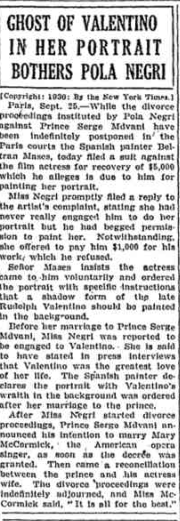
8 Sep 1926
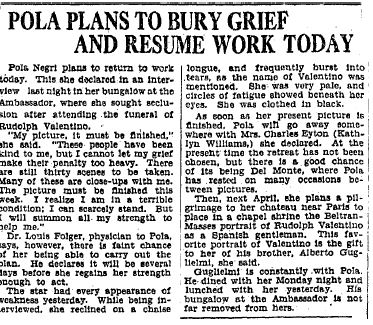
Categories: Uncategorized
Tags: Death of Rudolph Valentino, Pola Negri, Rudolph Valentino
1938 – Eggs Pola-Naise
Beulah Livingstone, an old friend of the late great Silent film star Rudolph Valentino who has just written a book about him, tells me about his love for Pola Negri. He liked to cook for her, and Miss Livingstone recalls the special dish Rudy would make for Pola, calling it humorously Eggs Pola-naise.
Ten eggs, 1 cup of fresh corn cut from cob, 1 onion, 1 can tomato soup, 1 green pepper, 1/2 clove garlic, and 1 tablespoon of butter. Heat butter, fry chopped onion, pepper and garlic until only slightly brown. Stir in tomato soup, add corn, and seasoning. Simmer for 1/2 hour. Remove from heat. Cool. Break eggs in bowl and beat only slightly. Combine with cooled sauce. Turn into buttered egg pan and scramble eggs until soft and smooth. Serve with large piece of Italian Bread. Serves 6.
Categories: Uncategorized
Tags: Beulah Livingstone, Pola Negri, Rudolph Valentino
2 Nov 1925 – Pola Entertains
Pola Negri entertained in honor of Michael Arlen with a dinner dance at the Biltmore. As predicted this was the very beginning of emerald no to say very verdant social affairs in Cinema land, where charming people have gathered the past week and worn “green hats”. Miss Negri’s affair was distinguished and comme il faut as those of this delightful hostess always are. The Arlenesque motif was emphasized more than in the green hats in which green ice cream was served. In a gown of pale green duchess satin trimmed with rhinestones and black velvet wearing emeralds and diamonds as adorning jewels, the hostess received thirty guests in an embowered suite, the prevailing flowers being bronze and yellow chrysanthemums arranged with a profusion of maidenhair fern to give again the green motif. Training the cloth of the long table were thirty yards of ribbon made from saucy-faced pansies pale yellow roses and maidenhair. Green candles marked the table at intervals in jade and alabaster candlesticks. Dining and dancing were the order of the evening and among those who participated in the festivity in addition to the hosts and honor guest was Rudolph Valentino, Mr & Mrs. Charles Eyton, Mr. & Mrs. Frank Elliot, Mr & Mrs. Manuel Reachi, Mr. & Mrs. St Clair, MAJ Fullerton Weaver, Sid Grauman, M. Cimini, Mme Cimini, Ralph Block. Following the day of Miss Negri’s party, Mr. and Mrs. Frank Borzage were host and hostess at the usual Sunday morning bridle-path party. But this time the affair was in honor of the lion of Cinemaland, whose roar is assiduously sought. At least, until another lion comes this way. After a long cantor through Griffith Park bridle paths an outdoor buffet breakfast was served in the park. Glimpsed along the autumn paths in addition to Mr. Arlen and the hosts were Bebe Daniels, Mrs. Phyllis Daniels, Rudolph Valentino, Mr. and Mrs. Harold Lloyd, Ben White, Marie Mosquini, Mrs. Joseph Sanders, Ed Kane, Mr. and Mrs., William Howard, William Collier, Irving Thalberg, Mrs. H.G. Rogers, Kathleen Clifford, M.P. Illich, Ray Owens. Following the return canter the entire party gathered at the Borzage home where they were joined by Julia Faye, Mr. and Mrs. Dave Butler, Roy Stewart, Mr. Borzage’s brother William who contributed to the incidental musical entertainment featured throughout the day. Luncheon was served buffet.
Categories: Uncategorized
Tags: Pola Negri, Rudolph Valentino
1 Nov 1925 Rudolph and Pola to Wed
Pola Negri and Rudolph Valentino. Yes, really darlings. Last time, it was Pola and Rod La Rocque, following the denied story of the alluring Pola’s engagement to William Haines. To be sure, Pola and Rudolph are not engaged; that is unconditionally. Perhaps not at all. But if glances tell any story in which Cupid has a hand, if preferences, if public appearances together mean anything, then truly Cupid is working on this line if it takes all winter.
Categories: Uncategorized
Tags: Pola Negri, Rod La Rocque, Rudolph Valentino
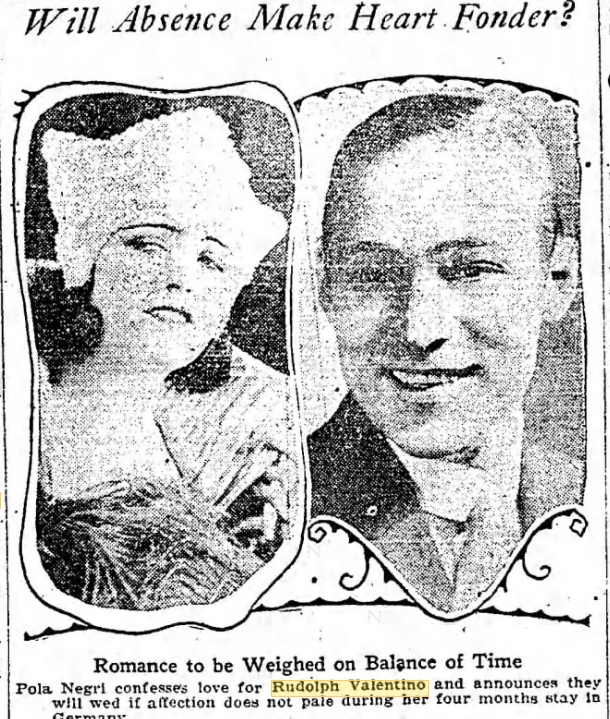
23 Aug 1934 – After 8 years, Rudy on the Silver Screen
This year and it is with pardonable pride that Movie Classic Magazine presents this exclusive scoop story upon the occasion of the commemoration of the 8th anniversary of Rudolph Valentino’s death. How can his memory be honored more fittingly than by the announcement that you may see him on the screen again? There has never been a autobiography of a motion picture personality before. Can it be that Rudy sensed his destiny as an immortal? Could he have felt that his admirers would remain faithful All these years? Did he recognize the demands of his public to see him after death and therefore provided an undying memorial? These are questions to which you and I will never know The answers. We can only guess. Amateur photography was one of Rudy’s hobbies. As a large number of star’s today are devotees of the amateur or 16mm camera, so did he experiment With standard-size moving pictures. In a particularly gay mood, it was his pleasure to send for a studio cameraman to film little impromptu plays that he enacted for his own guests amusements. This private film was later screen at other parties. In rummaging through some of Rudy’s effects his brother uncovered reels and reels of it. The reason this film was not discovered sooner that the cans containing it were thought to be merely discarded screen tests. It must be remembered that Alberto saw very little of Rudolph in the latter span of his life. The brothers were separated by half the world one in Italy the other in Hollywood. From time to time, there had been talk of a long-lost private Valentino film. Pola Negri once told me of it. Regretting its loss. Now it has been found. I have seen several reels in a projection room. Even in uncut un-chronological form, the film is tremendously impressive. Imagine if you can, a smiling, laughing Rudolph Valentino, a care-free vital fellow at play a tender lover. It is a far more revealing portrait of the actual person than was ever discovered. In a compromising situation by his wife and Rudy. His wife takes Alberto away by the ear and Rudy proceeds to spank Pola. There are many informal pictures posed in the swimming pool. Once Pola is seated astride a rubber sea horse waving at the camera, when Rudy suddenly dives to upset her for a ducking. Several other times there are evidences of his fondness for practical joking. With Natacha Rambova he is more sedate, the nearest approach to a playful mood being a romp with his dogs on the lawn of his Whitley Heights home. Jean Acker his first wife, appears only one time and never with Rudy. The identity of some of the other ladies who play with Rudy in this, his greatest film may never be known except to themselves. Others, of course, are well remembered actresses of the day Agnes Ayres, Nita Naldi, Alice Terry. The wedding of Mae Murray to fake prince David M’Divani consumes nearly a reel. The reception held at Valentino’s home is peopled with famous guests. Contrasting With such intimate scenes is the large amount of scenic footage taken with Rudy as the cameraman. His devotion to beauty and appreciation of it could have no more convincing proof than the pictures of his beloved Italy. He achieved startling and breath-taking pictures of imposing cathedrals and quaint little churches. He realized fully the art of the motion picture camera and made use of it with the masterful Hand of a true artist. The camera was an important part of his luggage when he made his last trip to his native land. He must have spent days traveling about, photographing things that caught his fancy Preserving bits of beauty in celloid that he might again enjoy them upon his return to America and work. There are several dozen views of the exquisite bay of Naples. Scenic Italy has been the subject of many Screen travelogues. But you have never seen it as Valentino photographed it the man was homesick and his nostalgia is evident by his almost reverent presentation of his beautiful homeland. Thousands of writers Have penned great epitaphs for Rudolph Valentino. Yet he unconsciously wrote a greater one for himself I loved beauty. Rudy also photographed the magnificent castle on the Hudnut estate. It is Believed that he took them after his separation from Natacha Rambova the girl he married under her screen name and continued to love until his death. Only once did Valentino take his camera with him to the studio and then solely for the purpose of filming his blooded Arabian horse in action. Is Alberto’s possession more than a reel of film taken at Rudy’s funeral in New York and Hollywood. Thousands of people can be seen lining the streets of both cities. Movie celebrities by the score came to bid a final farewell Charlie Chaplain, Mary Pickford, Douglas Fairbanks Sr, Harold Lloyd, The Talmadge’s Joseph Schenck and hosts of others attended the services It comprises an imposing climax for the screen’s first autobiography.
Categories: Uncategorized
Tags: Death of Rudolph Valentino, Pola Negri, Rudolph Valentino
Leave a comment
Aug 1926 – Passing of Valentino. Impressive scenes of funeral of famous Film Star
M/S of Rudolph Valentino’s embalmed body lying in state. M/S of procession of men (including Douglas Fairbanks) coming out of building, they are followed by pall bearers carrying Valentino’s coffin. M/S of woman in black veil getting into a car. She weeps melodramatically, a man and a woman support each of her arms as she walks. The woman is probably Pola Negri, ex-fiancee of Valentino. Several press photographers take pictures. Various high angled L/Ss of the funeral cortege driving through New York streets, crowds line the way. L/S of entrance to church, tilt down to show coffin being carried from hearse to entrance. M/S of Valentino dressed as Sheikh emerging through curtain, he talks to a woman sitting on cushions on foreground (Vilma Banky). C/U of Valentino.
Categories: Uncategorized
Tags: British Pathe, Death of Rudolph Valentino, Pola Negri, Rudolph Valentino
Leave a comment
Apr 1932 – My Strange Experiences at Valentino’s Grave
A movement is being launched in Hollywood to erect a new memorial to Rudolph Valentino. It will take the form of a sarcophagus mausoleum in which Valentino is to be entombed. According to current plans, the building will cost around $40,000. The chap who imparted this information to me did not know whether a fund existed to erect the mausoleum or whether the money would be obtained by popular subscription. A difference of opinion arose regarding the latter course of procedure. It was my contention that some difficulties would be encountered unless large individual amounts were subscribed. After all, Valentino has been dead 5 years and these are times of stringent financial difficulties. “Forty thousand is a mere drop in the bucket”, my friend informed me. “Four hundred thousand could be raised in a short time if necessary”. Quite apparently you haven’t followed the legend of Valentino. Even in death he remains the screen’s most popular male star. The idolatry accorded Garbo is the only approach to the tremendous tradition of Valentino. “Pilgrimages to his grave rival those of history. Five years? What are five years? It will take a generation to dim his shining star and at least another generation to eclipse it even partially. If the people behind the memorial ask the public to subscribe, they can have the money almost over-night. “Do you know that there are nearly a score of Valentino Associations whose memberships are pledged to keep his crypt ever beautiful with flowers? Do you know that no less than ten people daily appear at the offices of the Hollywood Cemetery to inquire specifically where they might find the Valentino burial place? These folks are the new pilgrims and their number multiplied many times by the regulars. Five years and don’t talk to me about five years. Go talk to Pete at the mausoleum. He will give you a story of the Valentino’s tradition that will, if I am not mistaken amaze you. It seemed like good advice. I found that Pete was the diminutive of Roger Peterson, a big blond Scandinavian from Minnesota. He is the attendant at the Hollywood Cemetery mausoleum where Valentino is buried. In many respects Pete belies the conception of what a cemetery attendant should be. He is not a taciturn unsmiling individual but rather a loquacious, pleasant chap as jovial as he is big. Very frankly, Pete was a revelation to me. The major part of his duties have to do with inquiries concerning Valentino. It is therefore, an authority on the film star. Visitors, genuinely interested in Valentino and they number thousands find Pete a sympathetic confidant. Unfortunately, he also has to deal with hysterical, sometimes unbalanced people who make a Roman holiday of their visits to Valentino’s crypt. His handling of each semi-psychopathic cases would do credit to a physician. Pete has kept a diary since he has been on the job at Hollywood Cemetery. Like all diary-keepers, he has not made entries every day. There are long stretches of blank pages when the diary was forgotten in the press of other duties or pleasures. Not all the dates are accurate to the exact day. Pete was careless about dates. The document, nonetheless, presents an intensely vivid picture which I have taken but few liberties in transcribing. There are several points of Pete’s story to which I have added facts. The reporting of contacts with individuals, however, is entirely his own. The first date that concerns us is;
7 Sep 1926 – Rudolph Valentino was laid to rest in the mausoleum at Hollywood Cemetery today. Crowds estimated by the newspapers to number in excess of 20,000 lined the sidewalks as his funeral cortege passed from church to cemetery. Nearly 5000 people surrounded the church while last services were held. The scenes here must have duplicated the public demonstrations in NY where Valentino died on 23 August. His church services were attended by all the great of filmdom, but only his brother Alberto and Pola Negri came to the cemetery to witness the sealing of his crypt. Miss Negri later collapsed and had to be helped from the mausoleum to her car. The tremendous amount and great beauty of Valentino’s floral offerings defy description. The cards bear loving messages from Mary Pickford, Charles Chaplin, Jack Dempsey, and Estelle Taylor, Bebe Daniels, Kathlyn Williams, Antonio Moreno, Buster Keaton, Reginald Denny, William Randolph Hearst, Marion Davies, James Rolph Jr, June Mathis, and others. Pola Negri’s blanket of flowers that read POLA, June Mathis had a wreath of roses on which was the name Julio. Julio was the name of the character in the “Four Horsemen of the Apocalypse”. It was in this role, written by June Mathis that Rudolph Valentino won undying fame. The crypt in which he now lies belonged to Miss Mathis. In the tier below lies her mother and step-father. The space next to Valentino lies Miss Mathis.
08 Sep 1926 – The public, denied admittance yesterday, are thronging in today to view Valentino’s burial place. Hundreds of people have passed down the corridors of the mausoleum to pay last respects to their screen idol. The crowd as an average had been well behaved, but a few hysterical women have prostrated themselves, crying aloud their love for “Rudy”. Such demonstrations are embarrassing to the cemetery authorities but it is difficult to know how to combat them.
09 Sep 1926 – More people and more demonstrations.
10 Sep 1926 – Still more people and a particularly violent fit of hysteria. It is a shame that sincere affection for a public figure such as Valentino must be besmirched by exhibitionists.
11 Sep 1926 – The souvenir hunters have been at work. They have torn buds and ribbons from the floral offerings until little remains of the magnificent wreaths. It will be well to keep constant watch for vandalism ghoulishness may be a better word.
Specific stories of certain of thousands of people who daily thronged the mausoleum are lacking in the early chapters of this account. Pete did not “take his pen in hand” to report contacts with individuals until a later date. Perhaps the more vastness of the multitudes who came to pay homage precluded “human interest” reporting. The daily total of thousands was reduced to hundreds as time wore on, but the hundreds remained faithful. Valentino Associations were formed in various sections of the country. The next item to beg inclusion here has to do with the auction sale of Valentino’s Estate. It began 14 Dec 1926, with the sale of some five thousand items of his personal possessions. These items ran from small trinkets to expensive pieces of furniture, paintings, and tapestry. The auctioneers valued his personal belongings at $25,000 they brought in $125,000. It was the trinkets and intrinsically valueless properties that sold for many times their worth. Single handkerchiefs brought bids of as much as $25.00. A pair of salt and pepper shakers were purchased by a man for $12.50. He was the manager of a hardware store that sold identical pepper and salt shakers for 75 cents. But the merchandise he sold so cheaply had not once belonged to Valentino. The auction sale of course, stimulated additional interest in Valentino’s burial place. The crowds that visited the mausoleum again increased, but in a few weeks they had returned to normal. The cemetery officials grew to expect hundred or more people daily. The number varied but little until the first anniversary of Valentino’s death. Then the crowds were swelled again. Joseph Scheneck, present of United Artists Studio was chairman of the first memorial committee. Rudolph Valentino had died at noon and exactly at noon, one year later, work ceased at all studios. The afternoon was devoted to memorial services at the Church of the Good Shepard, attended by everyone of consequence in Hollywood. That was 23 Aug 1927. A month later, came a weird occurrence.
30 Sep 1927 – A woman came to the mausoleum today with the wildest delusion yet. She claimed she was about to become a mother and Valentino was the father of her child. This thirteen months after his death. The woman asked for permission to have a cot placed before Rudy’s crypt where she might stay until her baby is born. She went up to the cemetery office, and somehow or the other they got rid of her.
10 Dec 1927 – Souvenir hunters are at work again. Noticed today they have been chipping away at the small statue on the pedestal in Valentino’s corridor. I don’t mind them taking flowers but why must they spoil a beautiful piece of statuary?
03 Feb 1928 – There is a whole hand gone from that statue now and a new other parts broken. I had better not catch anyone chipping it, but I can’t stay around all day. I have other work to do.
08 Mar 1928 – I heard a crash this morning. It was the marble statue. Someone must have knocked it down trying to chip off a souvenir. By the time I got there, not a soul was in sight, but the statue did not fall down by itself. I had put it away in the shed. It’s too bad, but I suppose I should be thankful that there is one less thing to watch.
01 Jun 1928 – The people you have to keep your eyes on are the ones that come in laughing and joking. I don’t believe this is the place for wise-cracking and I am beginning to be suspicious of those who do it. The ones who show proper respect for the dead are usually above suspicion. When they tiptoe quietly down the corridors, scarcely speaking above a whisper, I know they are all right. It’s the kidders that need watching. Probably one of them broke the marble statue.
03 Jun 1928 – I am sure I’m right about jokers. A fellow came in today and told me a joke. A few minutes later, I caught him trying to get away with a small potted plant. If people want souvenirs why don’t they ask me? I would be glad to let them have a flower when I know it means so much to them. Cut flowers have to be thrown away so soon anyway. There was a girl in yesterday who asked for a rose from Valentino’s crypt. She was from Chicago and was going back in a few days. She said her boss had visited the mausoleum last year and had brought back a rose. He gave a rose petal to every girl at the office the gift had been so greatly prized by the girls that this young lady had been made to promise she would attempt to get another rose. Of course, I have her several roses and a few beads from the wreaths a Valentino admirer had sent from the old country. When we found that people were destroying the wreaths Alberto Valentino gave them to me for safe keeping. He told me to give some of the beads to the folds that really loved Rodolph. There are thousands of small beads on each wreath, plenty to go around. If anyone is decent enough to ask for a souvenir, they are welcome. But I’m not going to have things stolen if I can help it.
23 Aug 1928 – It is the second anniversary of Valentino’s death. Memorial services are being held again and beautiful memorial services are being held again. You might believe that after two years the memory of this great star would have dimmed. I can’t see that it has. Of course, most of the curiosity seekers have forgotten, but his real admirers have remained faithful. There must have been between four and five hundred people here today.
24 Aug 1928 – I don’t know what I’m going to do with all of these flowers. George Ullman, Valentino’s former manager sent over a lot more today. He gets letters and telegrams from all over the world containing remittances for floral tributes. His secretary sees that everyone is represented by some blossoms. This she does with great care, as she holds it a high honor to serve the ones who loved Valentino. She personally selects the floral arrangements and spends hours helping me arrange them. That is, she arranges them and I help if I can. We had our usual group of hysterical women yesterday and today. I am becoming accustomed to women screaming and crying for their “Rudy”. But when men do it sort of gets me. There was a little foreigner in today, a Frenchman. He burst into tears and kissed the cold marble of Valentino’s crypt then turning he practically ran from the building.
15 Oct 1928 – I met Mrs. Coppola today. She is the mother of the baby named for Rudolph Valentino. Of course, being Italian, the name is spelled Rodolfo. The baby died at birth, 29 Sep and is in a crypt on the top tier of the Valentino corridor. The mother came today and stayed several hours reading her bible and praying. I wish I could do something to comfort her in her grief.
21 Nov 1928 – Mrs. Coppola happier today than I have ever seen her. I asked her why and she told me a strange story of Valentino coming to her last night talking to her. She said his spirit came to her house and knocked on the door. When she let him in, he told her that her baby was happy and not to grieve so much.
16 Jan 1929 – I have not written anything in my diary for some time. Mrs. Coppola and I have become great friends. She calls me “Mr. Pete”. She comes regularly at least five times a week and always brings flowers from her own garden. These she divides equally between her baby and Valentino. I found out today that she never saw the Valentino crypt on the screen. When he died, she sold her home in San Diego, and moved to Hollywood, taking a house within walking distance of the cemetery. She used to come over often, even before her baby died, but she came over so early in the morning or late at night that I missed seeing her. She tells me that she seen Valentino’s spirit occasionally in her dreams and frequently hears him walking about the house at night. She has met Valentino’s brother and sister who come often and once in a while they all pray together.
There is another woman who comes regularly once a week. She is always dressed in black and always brings flowers. Valentino’s crypt will never lack floral tributes as long as his relatives and Mrs. Coppola, the lady in black and the various Valentino organizations keep his memory alive. There is a group in London that has the cemetery florist deliver a basket of flowers every Saturday.
07 Mar 1929 – The lady in black is no longer a person of mystery. She told me a lot about herself today. She is very poor, which explains why she always wears the same black dress every week. A black and white hat and a long cape, reaching to her ankles, complete her costume. Her husband left her several years ago with a small child to support. She earns all she can by doing housework of the hardest sort. Valentino represents the only romance in her life. She went to the studio once to see him work, but was too bashful to ask for an introduction. She says, however, that he glanced her way and smiled while looking directly into her eyes. That moment she will treasure forever. A few weeks later, he left for New York, where he died. She failed in her endeavor to meet him while he lived and now she spends what time she can by his side in death. The flowers she brings she feels are a pitiful offering as compared to the gorgeous wreaths she sees by his crypt. She seems furtively to slip her few blossoms among the others as though she is ashamed of the house-grown tribute. I know of none more sincere.
3 Apr 1929 – My lady in black came today. She kissed the marble in front of Rudy’s crypt, as she always does, and her face was still pressed to the cold surface when Valentino’s brother came in. She must have recognized Valentino’s brother from his pictures, for she seemed paralyzed by embarrassment. She simply cowed in a corner as if to hide from him. I know she would like to meet Alberto, so I made a point of introducing them. When I told him how she came regularly to bring flowers, he thanked her graciously. I have never seen anyone so pleased.
8 Jun 1929 – My lady in black did not come this week or last. I miss seeing her and hope she is not ill. She cannot afford to be sick form what she told me.
23 Aug 1929 – Third anniversary of Valentino’s death. Again, the flowers are being received in tremendous quantities. Perhaps a few less than last year. All the regulars came except the lady in black, I am worried about her. Wish I knew where she lives. (Note I never heard from her again).
4 Oct 1929 – There must be a convention of spiritualists around here some somewhere. I have met more people who have talked of having seen Valentino’s spirit recently than I have since I have been with the mausoleum. They tell very convincing stories. I wonder what it is like to have the power to peer into the mystic realm of the dead. On an average, I like these folks who talk of spirit form. They are generally very quiet and well-mannered. Some are rather weirdly dressed, but there’s probably for effect.
16 Dec 1929 – We had a real spiritualistic manifestation today. A woman came in and introduced herself as a medium. She said she had spoken with Valentino upon numerous occasions, but he always disappeared before she could ask him everything she wished answered. She had, therefore, travelled from somewhere in New England that she might hold a séance by his crypt. Perhaps she wasn’t asking my permission, but I told her to go ahead. I really don’t care what people do just so they aren’t noisy and don’t steal or break anything. This woman started to go into a trance when something happened. IA series of knocks were actually heard from above the crypt. The medium ran around in circles, crying “Hear Hear’ He knocks. Rudy knocks. She behaved like an insane person. Others, attracted by her cries came running down the corridor. Sure enough, there was a tap, tap, tap to be heard from above. We investigated and found a large yellow-hammer had gotten into the attic of the mausoleum. How that bird had been able to get in remains a mystery to this day. But he was flying around crazily and the beating of his wings caused the tapping noise. The bird and the spiritualist left the cemetery about the same time. I don’t know which was the most crest fallen but neither returned.
21 Jan 1930 – Some people don’t realize when they are well off. A young lady came in today, who had quarreled with her husband over some silly trifle. The argument started when she informed him that Rudy would not have treated her as he was treating her. He replied that, if she did not like it, she could go live with Rudy. So she took his advice and left home. She spent all day crying by the Valentino crypt.
22 Jan 1930 – The same girl has been around all day again. She says she is going to get a job in the movies.
23 Jan 1930 – The girl did not show up today.
24 Jan 1930 – She did this morning when I came in, I found her asleep on the cold marble alongside Valentino’s crypt. She came around last night and finding the mausoleum closed, she climbed through the window. Apparently, she was attempting to follow her husband’s advice about living with Rudy. She was warned that if she tried the stunt again she would be liable to legal prosecution for unlawful entry. This isn’t the first time somebody has tried to spend the night in the mausoleum and it won’t be the last. Before closing up, we always look for people who might be hiding.
31 Jan 1930 – Heard today, that the girl who climbed into the mausoleum window had returned to her husband. He came to get her and take her back to the mid-west.
2 May 1930 – For more than a week, a very pretty young lady has been manufacturing her own souvenirs. Like the other girl who collected rose petals, she is from Chicago. These people from Chicago, seem to do allot of travelling. This particular young lady, has been bringing a large bunch of yellow roses on her daily visits. She puts them in a receptacle by the crypt and clips off the dying buds from previous contributions. These flowers she intends to take home as souvenirs from Valentino’s crypt. She put them there who has a better right to take them away.
14 Jul 1930 – I heard one of the strangest stories of my experience today. A middle-aged woman came in with an enormous bunch of lowers and made her way directly to the Valentino corridor. She seemed to know where she was going and I followed to offer her what assistance I could with her flowers. As she neared Valentino’s crypt I heard her cry “At last, Rudy, at last I have come. Your spirit has led me on, ever on, to view your final resting place. Rest, dear heart, rest” there was a lot more in the same vein. While she rested, she told me her story of how Valentino’s spirit had come to her as she lay ill on her hospital bed in a Southern city. Valentino whispered that she would get well immediately, but the must make a pilgrimage to his tomb before she could find happiness. The vision disappeared and she fell into a deep restful sleep. When she awoke she felt strong enough to leave the hospital. They discharged her two days later. As she needed funds for the trip to California, she sought an office position and obtained one as a secretary to a business executive. It was practically a case of love at first sight, and when the executive was called to Europe on business he proposed they take a trip for a honeymoon. The only cause of a rift is their first months of happiness is the vision of Valentino. Her husband scoffed at the vision calling it a hallucination of the sick room. But she was unable to dismiss it so easily. When they returned from Europe, she insisted on following the advice of her vision. Her insistence forced a separation and in a small car she set out for California narrowly escaping death in three separate accidents. Arriving in Hollywood she drove straight to the cemetery. She summed up her story by saying “Here I am at the end of my pilgrimage, exhausted but happy in the of my success. My task is done, I have kept faith. My plans for the future are not made but if I can find work, I hope to remain in California.
21 Jul 1930 – It has been a week since the lady with the vision came. She appeared again this afternoon with more flowers. She told me that she had obtained work in a studio and planned to settle here. She was assured she would find happiness promised to her by Valentino’s spirit.
31 Jul 1930 – A man has been haunting the mausoleum for the last two days. I wonder who he is.
2 Aug 1930 – The mystery man has been identified. He met his wife this morning who was none other than the vision lady. They talked for some time in a secluded corner and apparently patched up all their differences. He waited for his wife outside while she knelt by Valentino’s crypt to say a last good-bye. She kissed the marble, whispering “Farewell Rudy, dear heart, farewell”. She did not stay long. Smiling she followed her husband into the sunlight.
23 Aug 1930 – Fourth anniversary of Valentino’s death and a repetition of all others. Flowers a little less profuse, but no other change.
3 Sep 1930 – Among today’s visitors was a delightful little lady who informed me proudly she was 80 years of age and a great-grandmother. She wanted to buy the crypt directly over Valentino but when I told her he might be moved later on, as he was merely occupying a section of the June Mathis groups she decided not to buy. “He was so sweet” she said. I loved him like one of my own children. If I cannot be near him always here I will wait awhile until they decide where he is to be moved. Then perhaps it can be arranged. This at 80 years of age. Peter’s diary ends here inasmuch as it concerns Valentino. But he informs me that the fifth anniversary in fact, was observed with greater interest than any since the first. I withdraw all my contentions regarding the advisability of launching a $40,000 Valentino Memorial at this time. The public, if invited, would undoubtedly subscribe $4,000.000, so dear is the memory of Valentino in their hearts.
Categories: Uncategorized
Tags: June Mathis, Pola Negri, Roger Petersoen, Rudolph Valentino, Valentino Memorial Service
1 Comment
1927 – Pola Negri Article
A palatable dish with all the ingredients of good drama, well served,
constitutes the piece de resistance at present on the Metropolitan menu. In
fact it is hardly possible that Pola Negri of “The Woman on Trial” would not
whet the jaded appetite of the most sophisticated of the devotees of the
silver screen. And jaded indeed does the appetite of the average spectator at
the average motion picture become; picture succeeds picture, plot follows plot
with an abysmal shallowness of invention, and a dispiriting similarity of
spirit. It almost seems as if the chief advance of the art were in the
decoration of the theatre, rather than the quality of the picture. “The Woman
on Trial” differs very little in plot and invention from innumerable other
pictures the reviewer could enumerate if he had a memory for names. Enough,
that it plays in Paris with scenes from the Place de la Concorde and the Latin
Quarter. It seems unnecessary to examine the plot further. In spirit, to use
that nebulous word, it differs, however, from the other fruit on the family
tree. That new spirit is due without any doubt to the presence of Pola Negri.
She is not pretty the bathing beauty sense, yet it is perhaps her face which
gives the tone to the whole picture. There is in it a look of passion and
tragedy without which “The Woman on Trial” might be interchanged with any
other similar picture and no one would care much, even if he noticed the
difference,. But there is a difference, and it is just the difference between
the good and the poor. As for the rest of the Metropolitan’s “Greater Entertainment,” the divertissement, so to speak, it remains rather hazily in the mind; in fact it succeeded excellently in diverting the attention from what was taking place on the stage. There guesses what it was.
1928 – Three Sinners” Gives Polish Import Chance to Bare Back
Pola Negri, one of Hollywood’s choicest importations, is the reason for going to the Metropolitan this week, if one is not of that ever increasing Publix contingent which just loves to put Gene Rodemich on a pedestal and applaude his numerous gyrations. However, to give Gene credit, he does surround himself with a some-what more entertaining group than usual to celebrate his “Hall and Farewell” performances. Now that he is leaving Boston, for a while at least, the reviewers will have to give more attention to the feature film at the Babylonish picture palace. Pola Negri’s glittering photodrama “Three Sinners” is one of those pictures which thrill backwoods audiences and cause girls with limited wardrobes to leave home for Hollywood. The features of the hectic and soul-stirring tragedy are Pola’s bare back and-her silver wig. She handles both capably, so capably in fact that Dresden, Vienna, and Paris combined have nothing in the way of feminity to rival her. She portrays dramatically–a la bare back and silver wig–a woman whose ruined life was brought about through her husband’s indifference. A railroad wreck, gambling dens in full blast, interiors of choice Parisian restaurants, and sorrowful close-ups of Pola drenching her little girl with a shower of joyful tears at the end, make the picture very enjoyable for students leading suppressed lives and rebelling against the monotonous humdrum of Cambridge.
11 Mar 1941 – Valentino Romance Recalled
Rudolph Valentino’s romance with Pola Negri was recalled in a $13,042 suit filed by the Bank of America against Rudolph’s brother Alberto Valentino, now a studio employee. The action involves a note for $8000.00 signed by Miss Negri and the late film star on which only $581.74 has been paid off. The bank obtained a judgement of $9,660.00 in 1936 and is renewing its claim at the end of five years, with 7% interest. Unable to serve papers on the actress, who is said to be in Switzerland, the bank seeks to hold Alberto responsible for the entire amount.
22 Aug 1965 – Luther Mahoney on his friend Rudolph Valentino
Luther Mahoney, of Newport Beach is haunted by the obscurity that has befallen the entombed remains of his friend, confidant and employer of 40 years ago. Several times a year Mahoney, a jolly 72-year-old Irishman, visits that friend’s final resting place–an obscure, borrowed crypt In Hollywood Memorial Park Cemetery. “It’s terrible,” says Mahoney. “He deserves something better than that. I think if the public knew he was in a borrowed crypt they might get up a fund and put him into something proper.” That friend was Rudolph Valentino, the dark-haired screen lover with flashing brown eyes who starred in scores of silent films during the twenties. Tomorrow is the 39th anniversary of Valentino’s death, memorial services are expected to be conducted at his crypt. Every year dozens of men, women and children gather at the crypt for the services. But Mahoney won’t be there. “It would be awkward,” he says, “allot of curiosity seekers just asking me questions. I visit the crypt whenever I’m in Hollywood and always make it a point to be there on his birthday. But I never go to the memorial services, I’d rather go when there’s nobody around. I just say a prayer and leave.” Mahoney, who worked as a handyman and personal aide for the actor two years before he died in 1926, is trying to promote a fund to build a memorial tomb for Valentino. Shortly after Valentino’s death, there was talk of building a marble tomb for the actor, but nothing ever came of it. “I’d be happy if I could help to get him a nice place to rest,” says Mahoney. “My idea is to build a tomb with black Belgian marble inside with his solid bronze casket on display. It could then be viewed by the public. Ever since he died and they stuck him in a borrowed crypt it has disturbed me.” He says Valentino’s casket was originally placed in a crypt owned by June Mathis, the screenwriter Mahoney says gave Valentino his first big break In the Valentino represented romance to a world seeking relief from pressures. Above, as “The Sheik,” he rose to the heights of motion picture renown. Friend and former employee of Valentino, Luther Mahoney poses with a picture of film star who tried on an Indian headdress “just for kicks.” When June Mathis died, Mahoney says, Valentino’s body was moved into another borrowed crypt, which belonged to her husband. He later sold it to Valentino’s estate, according to Mahoney. “The unfortunate way they treated his body still haunts me,” he admits. “I’d like to do something about it before I die.” When Valentino died in New York City on Aug. 23, 1926, there was pandemonium. Outside the funeral home in New York where Valentino’s body was taken, thousands of emotional women fans rioted and broke windows. More than a dozen persons were injured. Women wept openly and fainted in the streets as they waited to file past the actor’s open casket in the mortuary. An estimated 150,000 persons viewed the body. During the funeral service at Church of St. Malacy in New York, the crowd outside surged out of control and scores more were injured. Pola Negri, the Polish actress who announced before Valentino’s death that she was engaged to marry him, and Jean Acker, the actor’s first wife, who said she reconciled with him before his death, followed his casket into the church. Then, as eulogies poured in from throughout the country, Valentino’s body, borne in a flower-covered casket, was returned to Hollywood aboard a special railroad car. “Romance is the only thing worth big headlines, and Rudolph Valentino spelled romance,” editorialized one newspaper. In Hollywood, preparations were completed for one of the most lavish funerals in the history of the film capital. There was standing room only in the Church of the Good Shepherd in Beverly Hills where Requiem High Mass was said for Valentino on Sept. 7. His flower-covered casket rested on a velvet catafalque of royal purple. On each side of the casket stood six lighted tapers. Grand opera star Richard Bonelli sang “Ave Maria.” Grief stricken and under the care of doctors, frail Miss Negri was wracked with sobs during the service. She was among more than 500 persons who jammed into the church to pay their final respects. Outside stood thousands of onlookers, and thousands more lined the route to the cemetery. Mahoney confides that he arranged for Valentino’s chauffeur, a former Royal Air Force pilot, to fly ahead of the funeral procession dropping roses. “At the cemetery he flew very low over the mausoleum dropping roses as they took the casket out of the hearse,” Mahoney recalls. “It was quite a sight.” In the months following Valentino’s death, thousands of women mourned him. And 35 women claimed he had fathered illegitimate children by them. However, all claims came after his death. There were no children from Valentino’s two marriages. VALENTINO’S best known mourner was the woman in black, who- dressed in black dress, black stockings, black hat, black shoes and black veil–appeared for years at his crypt with a bouquet of roses on the anniversary of his death. She hasn’t been seen at the crypt in recent years. Rodolfo Gugliemi Valentino was born In Italy, the son of a farmer, on May 6, 1895. A graduate of Italy’s Royal Academy of Agriculture, he came to the United States at the age of 18 with hopes of becoming a landscape gardener. However, he was unable to hold down a landscaping job, according to his biographers, and for several months scratched out a living washing dishes. Later, he took a job as a vaudeville dancer and migrated to the West Coast with a musical comedy company. That was 1919. Two years later he starred in what was to become his most popular film, “The Sheik.” Mahoney says he met Valentino by chance in 1922 while a policeman in New York City. “I was sent to the Ritz Hotel one night to ride as a bodyguard for Mr. Valentino–I never called him anything but Mr. Valentino although I was older–because I think he had received a threat. We talked quite a bit that night and he told me if I was ever in Hollywood to look him up.” TWO YEARS later Mahoney did. He went to work for a movie studio and eventually was assigned to Valentino’s staff. “I wasn’t his bodyguard. I just handled personal things. I had charge of the house and the domestic help and everything that belonged to him. I never worked for a nicer kinder caring man than him.
Categories: Uncategorized
Tags: Jean Acker, June Mathis, Luther Mahoney, Pola Negri, Rudolph Valentino
Leave a comment
4 Jan 1925 Movie Starts placed in the One Hundred Percent Class
Fans and Exhibitors Agree that Gloria Swanson, Thomas Meighan and Rudolph Valentino are the biggest drawing cards in the industry and lead the “Regular Program Stars” in popularity. A “program star” is one who produces pictures at intervals of three or four months. The public in liking Thomas Meighan and Rudolph Valentino in the same breath, show two distinctly different sides. Thomas Meighan represents the red-blooded, two-fisted he man sort of person. The men like him because he lacks any sign of being effeminate or foppish. And the women like him because – oh, well, he’s just the kind of big, strong man women like. Valentino on the other hand, represents the great lover, the perfect escort. He dresses faultlessly, he dances divinely and makes love to perfection. He is the sort of man dreamt about by women with five children and a husband with the manners of a stevedore. He represents perfection of culture and refinement and it’s no wonder that women with a round of household duties think he’s simply grand. And flappers too, get their idea of the perfect man from the hair oil advertisements. The men don’t like Valentino so much. That is, they don’t “just adore” him. But they have to admit he’s a good actor and is there when it comes to the haberdashery. Gloria Swanson is popular with women because she represents what most women would like to be; she is the embodiment of al seductive, irresistible womanhood. She wears magnificent clothes and plays the wicked vamp. And has not almost every woman a secret desire to be exactly this? When they see Gloria beautifully gowned, faultlessly groomed, making one attractive man after another fall victim to her charms, does not Fanny Fox from Farmingdale see herself in Gloria’s place, the fascinating woman of the world, greatly desired, greatly loved? And of course the men like Gloria. She is so beautiful and so fascinating and seems to possess all the characteristics that men are attracted to – not necessarily the characteristics they look for in a wife and housekeeper, but, you know, the things that make them forget about what a sordid business life is. It was a movie magazine that first took up seriously the problem of finding out what actors and actresses were the most successful form a box office point of view. So they asked exhibitors to rate the various stars according to their ability to draw crowds. This result was rather a shock to movie fans, and many of them wrote in expressing resentment that their particular favourite was not in the ranks. So the magazine invited the fans to send in their own ratings on a chart and curiously enough the ratings were practically the same in most cases. But there were many others that fans indignantly demanded to be put at the top of the list. Many fans considered Pola Negri, Bebe Daniels, and Nita Naldi all had many strong defenders. In some other cases, the fans ratings were found to be considerably lower than the exhibitors. As we thought the fans were the enthusiastic ones, while the exhibitors were the cold, calculating ones that judge only from box office receipts. But it seems that there is a decided difference in the point of view, which makes the exhibitors seem more lenient. No player was rated at zero by an exhibitor because he judged the drawing power knowing nothing of the ones who stayed away. The fan, on the other hand, dragged down averages by giving zero to the other players whose presence in a picture would keep them away. Blanche Sweet was the only one on the fans list who received no zeros. Out of the hundred ratings compiled Barbara La Marr receiving many rating of 95 percent, but she also received many zeros.
Categories: Uncategorized
Tags: Bebe Daniels, Gloria Swanson, Nita Naldi, Pola Negri, Rudolph Valentino, Thomas Meighan
Leave a comment
10 Feb 1927 – Valentino Utopia Plan May Be Aired in Court
Shortly before his departure for NY on the trip that ended with his death, Valentino and Ullman are said to have signed an agreement with the Beverly Ridge Company for the purchase of 110 acres of hills, stretching from Falcon Lair, the Valentino home to the Chaplin and Pickford-Fairbanks estates. The property was to be cut up into home sites of five and ten acres each and sold to members of the film colony. Pola Negri was among those who had agreed to build on the land, according to the report. It was the plan of Valentino to erect a stone wall enclosing the entire tract, with gates keepers lodges at the three entrances. Behind these walls, the residents of Valentinotown were to live shielded from the gaze of curious tourists. The property was valued at approximately a million dollars, the Hanson Finance Company holding a mortgage for $700,000. Valentino and Ullman when they signed the contract calling for the payment of $140,000 within sixty days also issued a note for $20,000 payable in thirty days. The note fell due as the actor lay on his deathbed. Then the contract expired, Ullman failing to make good the $140,000. As a result of this, the Hanson Finance Company foreclosed on the property, throwing the Beverly Ridge Company into bankruptcy, according to attorney Andrews. Beyer as receiver has made several demands on Ullman for the amount of the note and the contract. On the advise of Attorney Gilbert, these have been ignored, resulting in the notice by Andrews of court action.
27 Nov 1926 – Pola Scores Valentino’s Ex-Wife for Spirit Talk
Pola Negri, whose engagement to Rudolph Valentino was announced shortly before the actor’s death, today declared the making public of messages said to have been received from the astral plane by the actor’s ex-wife Winifred Hudnut, was “shocking, profane, and commercial”. The messages, Miss Hudnut declared, were received by her from Valentino through the mediumship of George Wehner, with whom she arrived in New York Thursday from Europe. The messages did not mention Miss Negri.
Farewell Great Lover
The other day, I saw in the theater section of my favorite newspaper a headline “THE SHEIK RIDES AGAIN” over a story about the recent revival of interest in the late Rudolph Valentino. The story reminded me of my embarrassing embroilment in the riots which followed the movie idol’s sudden death in 1926. In fact, I was arrested at Valentino’s wake, after a brisk morning battle with the NY Mounted Police. Finally collared and jailed, I was dragged into court to face charges of 1 knew not what misdemeanors and felonies. It is a true story; yet it occurs to me that its details may seem to verge on the implausible. The death of the handsome young movie star was surely a sad event. And his wake—when his body lay in state in Campbell’s Funeral Home, so that his admirers might file by and pay their last respects to their hero—should have been a solemn occasion. Why then the riots and the clanging ambulances and the mounted police charging in at the gallop? Why should I, a reasonably respectable and peaceable young man, with no special interest in the late sheik of the silent screen, have become so entangled in his obsequies? And why should the mourners have ceased their keening to cheer my defiance of law and order? Obviously, if I am to emerge from this recital with my reputation to veracity intact, some explanation is in order. Note that my mishaps occurred during what Westbrook Pegler has termed the Era of Wonderful Nonsense. In the mid-‘2O’s Coolidge Prosperity was well under way. Another world war was inconceivable; serious depressions, according to eminent authorities, were a thing of the past. The public, having no major crises to worry about, concentrated its attention on what Frederick Lewis Allen called “a series of tremendous trifles” Millions worked up a head of emotional steam about whether Floyd Collins would escape from the cave where he was trapped, whether Gertrude Ederle would swim the English Channel, whether there would be acquittal or conviction in the gaudy Hall-Mills murder case. It was a time of contagious mass excitements. Crowds flocked to the Scopes trial in Tennessee to hear William Jennings Bryan and Clarence Darrow debate whether men were descended from monkeys. Others thronged to watch couples in a dance marathon totter toward exhaustion, or to see how long Shipwreck Kelly could perch atop his flagpole. Among these excitements, and longer lasting than most, was the Valentino craze. The nation’s more susceptible womenfolk, from flappers to grandmothers, were under the spell of the young Italian-American star who had brought a new torridity to cinematic amour. The mania began with the first showing of a silent film called The Sheik in 1921. Valentino played the lead: a romantic Arab chieftain, passionate, masterful, and irresistible. He snatched Agnes Ayres from her steed. “Stop struggling you little fool,” flashed the subtitle. Hot stuff. Overnight he became a star. Millions of women began to idolize him. The adoration increased with each succeeding film of the great lover. With the appearance of The Son of The Sheik in the summer of 1926, the Valentino worship became feverish. On the morning of August sixteenth came the shocking news, on the front page of even the staid New York Times, that the handsome thirty-one-year-old silent film star had been rushed to a hospital in New York for critical surgery—appendix and ulcers. In the next few days the bulletins were reassuring. Then, front page again: PERITONITIS FEARED, CONDITION ALARMING. On Monday, August twenty-third. huge headlines: VALENTINO DEAD THOUSANDS OUTSIDE HOSPITAL WEEP AND PRAY. The stories from Hollywood said that Pola Negri who recently had announced her engagement to Valentino, was prostrated by grief, with two physicians trying to control her hysteria. Valentino’s management said the body would lie in state for several days so that mourners could have another look at their hero. This announcement set off a saturnalia of sentimentality that lasted for two weeks, quieting down only after poor Valentino was at last laid to rest in an elaborate Hollywood Mausoleum. Many of the strange, typical celebrities of the day got into the act with lavish manifestations of grief. Among them were Mrs. Frances (Peaches) Browning, whose marital adventures with “Daddy” Browning had provided a field day for the artists of the Daily Graphic. Also, Mrs. Richard R. Whittemore, still in mourning for her husband, the bandit hanged for murder after a sensational trial. Strangest of all was a small, earnest looking man who introducing himself as Dr. Sterling Wyman, Miss Ncgri’s New York physician, bustled into the headlines as impresario of the complex funeral arrangements. He was gracious and accessible to the press. He discoursed learnedly on the details of Valentino’s fatal illness. The authoritative identified him as “the author of Wyman on Medico-Legal Jurisprudence.” A few days later he was exposed as a notorious impostor and fraud, with a long record of arrests and convictions, and fancy aliases such as Ethan Allen Weinberg and Royal St. Cyr. His proudest coup had been engineered in 1921 when, posing as an officer of the U.S. Navy, he had escorted the Princess Fatima of Afghanistan to Washington and introduced her to President Harding. (He drew eighteen months for that one.) 1 have sketched in this unlikely but authentic background of events with the hope that today’s readers, thus inured to the improbable doings of the 192O’s, will give credence to my own peculiar part in the proceedings. In that summer of 1926 I had paid only casual attention to the Valentino headlines. I was not one of his fans. Besides, I was preoccupied with my own concerns, which had reached a turning point. For nearly four years I had been practicing corporation law in Wall Street, with a pleasantly rising income but growing dissatisfaction. I suffered from a yearning to write, and the drafting of 200-page corporate mortgages was not my idea of vibrant prose. Early that spring I had met Grace Cutler. With a rare flash of good sense I fell in love with her immediately and permanently. She was a young newspaper reporter, doing modestly paid night assignments for the Brooklyn Daily Eagle. The only way I could pursue my courting was to accompany Grace on her assignments. This was a new and fascinating world to me. Why couldn’t I, too, be a reporter? Grace approved of the idea. After we were married on May twenty first, I became more cautious. Now I had a husband’s responsibilities. A cub reporter in those days got only twenty or twenty-five dollars a week to start. Had I not better delay my plunge into journalism until we had saved up SIO.OOO or so from my legal earnings? My bride was brave and wiser than I. She argued that if I really wanted to make the change, the sooner the better. We were young and could stand a spell of living on a shoestring. Each year, we put it off the decision would be harder, with new excuses for prudent delay. By the end of July she had so bucked up my courage that I applied for a job with the New York Herald Tribune. The city editor, after warning me of my folly agreed to give me a try as a reporter at twenty-four dollars a week, beginning at the end of August. Thus, when the news of Valentino’s death hit the headlines on Monday, August 23. 1926, I was serving my last week with the law firm of Chadbourne, Hunt, Jackson and Brown. It was still my custom to accompany Grace on her evening assignments, not only for pleasure but to learn something more of my new trade. On that Tuesday evening, Grace and I met for dinner in a small Italian restaurant in Greenwich Village. We had scaloppini, washed down with what was called “red ink.” This was supposed to be a wine of the Chianti family, but the kinship was not close. Cheered by the wine, I looked forward to an entertaining and instructive evening. “Well, Grace,” I said, “what’s the journalism lesson for tonight?” “I’m afraid it’s pretty gruesome,” she said. They’ve got poor Valentino laid out for public view in the Gold Room at Campbell’s Funeral Home—Broadway and 66th. They’ve rigged him up in full evening dress in a fancy silver casket. My city editor says the fans are putting on a regular mob scene outside, scuffling to get in. The pressure of the crowd pushed in one of Campbell’s big plate-glass windows. Three cops, a photographer and some of the women were cut so badly by the glass that they had to be taken to the hospital. It sounds kind of ghastly—I don’t want to drag you into this.” It also sounded kind of dangerous, I said. A girl could get hurt in a mob like that. This was the very time she needed a man’s strength and judgment. “I will protect you,” I said. On our way to the subway 1 remembered that the Aliens and the Fowlers were coming to our apartment for dinner the next evening. “They like rum swizzles. I reminded Grace. “Let’s drop by Henry’s joint and buy a couple of pints of his fine, five-day-old Bleecker Street rum.” We did, and I tucked a pint bottle of the potent stuff into each of my hip pockets. While we walked on toward the subway it began to rain, and I was glad I had brought my umbrella. We took the Inter-borough Line to Broadway and 72nd Street. As we came up from the subway, we saw a dense column of people, mostly women, shuffling southward along the cast side of Broadway toward the funeral parlor six blocks away. Police kept them in line. From the other side of the street an even larger crowd, straining against (he police lines, was struggling to dash across and break into the column which was approaching the Mecca of mourning. Every now and then a group of frantic women would elude the foot patrolmen and make a wild rush, only to be turned back by mounted police. With Grace holding aloft her reporter’s police card as a passport, we made our way southward down the cleared space. The rain had stopped, but the paving gleamed wet under the arc lights. It was 8:30 P.M. As we neared Campbell’s, the thwarted crowds on the west side of Broadway grew more turbulent. The cops were having a hard time. Here and there the street was littered with women’s shoes, trampled hats, and bits of torn clothing— evidence of forays which had failed. Now a veteran sergeant of foot police intercepted us. “Where you think you’re going?” he demanded. Grace showed him her reporter’s card. He softened. “The Brooklyn Eagle, huh? I was born and raised in Flatbush. Whole family used to read the Eagle. What can I do for you?” “The editors want me to go into the Gold Room where the casket is,” Grace said apologetically. “You know—get the atmosphere.” “It’s awful in there, miss,” said the sergeant gloomily. “Women screeching and fainting. No place for a nice young lady like you. But—well, seeing you’re from the Eagle, I guess I can slip you in. How about this guy—er—this gent’man with you. He a reporter?” “Not yet.” Grace said. “He’s my husband.” Then he can’t go in—sorry—not unless he goes back about ten blocks and stands in line three or four hours. Then you might not find him again all night, not in this mob. Tell you what, mister,” he said, turning to me. “You stand on the northeast corner over there, in that space we’ve cleared by the lamppost. You got my permission. Stay right there until your wife gets back.” 1 took my place as directed, and the sergeant escorted Grace toward the maelstrom around the entrance. That was the last I saw of the kindly sergeant. Alone on the corner 1 was in an exposed position, a sort of no-man’s land. On one side, ten feet away, trudged the south-bound column, silent now except for a subdued moaning as it approached its grim goal. Across the street the mob was bigger and noisier than ever. The weeping and wailing were mingled with shrill imprecations directed at the mounted cops. Hysterical women, foiled in every rush by the hard-working horsemen, regarded them as personal enemies. “Cowards!” they screamed. “Cossacks!” For ten minutes or so 1 stood on my corner, leaning on my umbrella and trying to look inconspicuous. Then the mounted patrolman guarding my sector, cantering back after helping repel another feminine charge a half block to the south, spotted me. He reined in his horse and glared. “Hey, you!” he shouted. “How’d you sneak over there? Get back across the street.” “I’m waiting here for my wife,” I yelled back, standing firm. The ridiculous excuse seemed to exasperate him. He touched the flank of his horse and rode straight at me. I dodged instinctively and dashed out into the street. The cop wheeled his horse and followed. I flourished my umbrella, feinted to the left, dodged to the right, and made an end run back to my corner. The cop rode at me again. “I got permission to stand here!” I yelled. “From the sergeant.” I’m not sure he heard me above the tumult. If he did, he paid no heed. Again I dodged, ran, feinted, ducked. As a former track man I was still fast on my feet, and the horse was more handicapped than I by the wet, slippery asphalt. As 1 once more sprinted safely back to my post, I heard a louder roar from the crowd. They were cheering me. There were cries of “‘Ray! . . . Attaboy! . . . That’s showing ’em. Mister!” They were all for me; I was the first person successfully to defy the hated “Cossacks.” There is something stimulating in the cheers of the multitude, however irrational. I caught my second wind and went on with the game. My triumph did not last long. As I dodged and weaved, 1 heard the ominous clop-clop of hoofs converging from north and south—reinforcements coming up. For perhaps another ten seconds 1 managed to out maneuver them all. Then just as I darted back to my corner, I felt the tap of a night stick across my brow. It didn’t hurt me, but it splintered the right lens of my horn-rimmed glasses and threw me off stride. A hand reached down and grabbed my coat collar, tearing the fabric halfway down the back. My original pursuer, whom I shall call Patrolman John Jackson of Troop B, vaulted down from his saddle and handed the reins of his foam-lathered charger to one of the fellow troopers who had helped in the roundup. He seized my arm. “You’re under arrest,” he growled. As he led me away, the crowd booed. At this moment Grace reappeared, justifiably concerned. “Oh, dear, are you hurt?” she cried. “Not a bit,” I reassured her. “Just rumpled. I feel fine.” Actually 1 did not feel fine at all. With the excitement of the chase over, I realized 1 was in a bad spot. 1 remembered now those two infernal pints of rum in my hip pockets. They would be discovered when I was frisked at the West 68th Street Police station. “Possession and transportation of intoxicating liquors ” The New York police were usually lenient toward liquor violations, but I had heard that if they were angry enough they would sometimes throw the book at a defendant. And the hand gripping my arm was trembling with rage. Fortunately the paddy wagon had not been summoned. Maybe on the walk to the station house I could talk my way out or out—or part way out—of the hole I was in. I began by politely asking the officer his name, which I jotted down. Then I handed him my legal card, showing me as an associate of the imposing firm of Chadbourne, Hunt, Jackson and Brown. Covertly mopping my brow, I began: “Mr. Jackson,” I said gravely, “I’m afraid you’ve got yourself in real trouble” “Trouble!” he snorted. “How about you? Disorderly conduct, resisting arrest, fugitive from justice, dangerous weapon—the spike of your umbrella might have put my horse’s eye out.” “Nobody hurt your horse,” I retorted. “I’m the one who’s been injured. I am a member of the bar in good standing. I was present on proper business, escorting my wife, who is an accredited newspaper reporter. A sergeant, your superior officer, gave me specific permission to stand on that corner until my wife returned. I told you that, but you tried to ride me down. Then you and your mounted pals took out after me, cornered me, tore my coat, clubbed me, and smashed my glasses. It’s a blessing I still have my eyesight. All this—and the terrible humiliation of public arrest—before thousands of people.” “I never heard you about the sergeant,” Jackson said in a low voice. “So you say now. You know what false arrest means? It means the arrest, without proper inquiry, of a citizen who you for damages and probably the Police Department besides. This was false arrest with bells on, and the damages, from what I know of juries, will be heavy.” As I held forth further in this vein I almost convinced myself that the arrest had been a travesty of justice, a blot on the proud escutcheon of New York’s Finest. Orating thus. I felt Jackson’s grip slackening. I looked at him as he strode beside me, his eyes fixed on the ground. He was a sandy-haired, well-built, nice looking man. But now he seemed dead tired, bewildered, and uneasy. He was sweating. I felt a twinge of sympathy. Maybe I was carrying my bombast too far. Grace, trotting along beside us, had also, noticed Jackson’s dejection. Speaking purely out of kindness, she struck what turned out to be the right note. “Now. Beverly,” she said, “Officer Jackson was only trying to do his duty. With all that mob of women screeching at him, anybody could make a mistake.” “That’s right, ma’am,” said Jackson eagerly. “It was enough to drive a man nuts. I was bucking those crazy women from nine o’clock this morning—twelve hours without a letup. It was the worst day I ever had on the force. Those women were clear out of their heads. All ages, schoolgirls to real old tough biddies about seventy,” “I saw some men there too,” said Grace, defending her sex. “All the less excuse for them,” said Jackson, “unless maybe their wives drug ’em there.” “That’s why my husband was there,” Grace said. “I got him into this. He came along to protect me.” “Protect you, huh?” Jackson started to grin. Then his face clouded as he remembered the serious situation. “Oh, my! If I’d only of known. Why did I have to stick my fool nose into this?” Sensing the friendlier atmosphere, I hastened to help it along. “Listen. Mr. Jackson,” I said. “I was just hot under the collar when I talked about suing you. I wouldn’t do that. You were doing the best you could under tough conditions. Forget it.” “You really mean that, Mr. Smith” Jackson asked. “That’s what 1 call decent. I didn’t mean any harm. You didn’t mean any harm.” He paused for a minute in thought. “Honest, I’d tum you lose now if I could. I turned in my horse. If I show up empty-handed at the station, there will be hell to pay. I got to take you in. But I’ll go easy on you, and you go easy on me, and we’ll both come through O.K. Don’t you and the Missus worry.” All three of us had been more tense than we realized. Now, with surging relief, we became as chummy as old friends. I complimented Jackson on his horsemanship. He told Grace her husband was the slipperiest eel he ever tried to catch, then improved the doubtful compliment by saying 1 was “a regular Red Grange for broken-field running.” “Red Grange with an umbrella,” Grace said. She and Jackson laughed. I didn’t join in because just then the green lamps of the police station came into sight. The incriminating pints grew heavy in my pockets. Time was running out. I decided to entrust my Fate to our new Friend. “Mr. Jackson,” I said. “I’ve got a little problem. We’re expecting guests, so I stopped off in the Village and bought a couple of little pints of rum to take home, I’ve got them in my hip pockets now. When they search me Patrolman Jackson stopped, frowned and pondered. “Well, now,” he said judicially, “1 don’t see anything so bad in taking a little alcoholic beverage home. For consumption strictly on the premises of your own domicile. Personally, that is. But some bluenose sour-puss—we got a Few of that kind on the Force—is liable to get technical on you. That could be bad. Tell you what. Right now—I’m not looking, see—if you was to slip those two pints to the little lady here, she can put them in that big handbag of hers no sooner said than done. At the police station I was booked and put through the routine. Patrolman Jackson hemmed and hawed and said he guessed there had been some disorderly conduct, but it was kind of complicated and maybe there was some sort of misunderstanding and the desk officer cut him short. “Never mind that now, Jackson,” he said. “Captain Hammill called up about this case ten minutes ago, from the scene of the disturbance. Says you should take your prisoner down to Night Court.” Uneasy again, Jackson, Grace and I caught a taxi to Night Court on West 54th Street. Grace waited in the courtroom for my case to be called. I was turned over to attendants who locked me in a room among a lot of other prisoners. They were the dregs of the city’s night life: pickpockets, panhandlers, canned heat derelicts, petty thieves. In this depressing atmosphere my apprehensions returned. Were Jackson’s superiors preparing to make a Fuss about the case? Would they sway Jackson’s had said, adding that he had had a trying day, and that the screaming of the mourners had evidently kept him from hearing my shouts about “permission.” “How did your coat get torn, sir?” asked the magistrate. (I was cheered by the “sir.”) “Just an incident of the general rioting. You’re Honor,” I said. He thought for a moment, evidently puzzled but amused. “An unusual case,” he said. “I don’t quite see how it reached this court. Apparently there was an honest misunderstanding. Charges dismissed, with no reflection on Mr. Smith or Patrolman Jackson.” Jackson, Grace and 1 left the courtroom and strolled down 54th Street, walking on air. “Some day!” exclaimed Jackson. “Now I better get home to the Family, but first, Mr. Smith, you got to let me pay for the broken glasses and the tailor repairs for your coat.” Grace and I joined in assuring him this was impossible; we would just charge it off to experience. On this cordial note, and with warm handshakes all around, we parted. Grace and I took the subway to Brooklyn and went into the Eagle; she still had her story to write. After a general lead about the riotous wake, she concocted an ingenious story. It told of a henpecked young husband—anonymous—who had been dragged into the rumpus by his foolish wife, a rabid Valentino Fan. Determined to see the body, she parked her spouse on a corner and fought her way into Campbell’s. On her return she found her husband being led away by the police. And so forth. Grace wrote the story discreetly. There was no mention of the Demon Rum, and there was a special tribute to the skill and patience of the mounted officer who had Jackson, Grace and 1 left the courtroom and strolled down 54th Street, walking on air. “Some day!” exclaimed Jackson. “Now I better get home to the family, but first, Mr. Smith, you got to let me pay for the broken glasses and the tailor repairs for your coat.” Grace and I joined in assuring him this was impossible; we would just charge it off to experience. On this cordial note, and with warm handshakes all around, we parted. Grace and I took the subway to Brooklyn and went into the Eagle; she still had her story to write. After a general lead about the riotous wake, she concocted an ingenious story. It told of a henpecked young husband—anonymous— who had been dragged into the rumpus by his Foolish wife, a rabid Valentino Fan. Determined to see the body, she parked her spouse on a corner and Fought her way into Campbell’s. On her return she found her husband being led away by the police. And so forth. Grace wrote the story discreetly. There was no mention of the Demon Rum, and there was a special tribute to the skill and patience of the mounted officer who had made the arrest. Evidently the editors Found it amusing: they gave it a big two column play under a fine photograph of the police struggling with the mob. The next day Grace got a call from thc city editor of the New York Daily News. He had been delighted with her story (which was exclusive) and offered her a job at twice her pay on the Eagle. She took it. And so we lived happily ever after.
14 Sep 1926 – Eagle’s Newsbeat Reporter Explained to Radio Fans By Reporter
An account of how “The Brooklyn Eagle” scored a beat on all the other metropolitan papers was the subject of the weekly current events talk last night by Marjorie Dorman over Radio Station WOR. Miss Dorman took her radio audience behind the scenes of a modern newsroom as she explained in detail how she had ferreted the story in detail of Dr. Sterling Wyman, the most chivalrous of imposters. Miss Dorman had personally covered all the details of the funeral of Rudolph Valentino. The story which came to her attention stated that Dr. Sterling C. Wyman, Brooklyn declared that Pola Negri was never affianced to Valentino. Her suspicions were aroused because out of all the details familiar to her when she covered the Valentino Funeral she could recall a Brooklyn Physician by that name or called in to give evidence. She told how from there on the whole story of the grandiose fraud by “Wyman of Many Aliases” was exposed
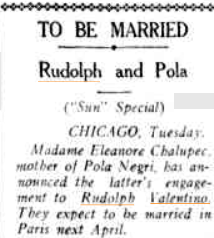
6 Mar 1926 – Valentino-Negri Match Not a business arrangement
The “Times” says that Pola Negri, the film star, has announced that she will marry Rudolph Valentino, after four months’ separation test, if their love remains the same. Pola Negrl declined to call the arrangement an ordinary engagement, because it “sounds like a business arrangement.”
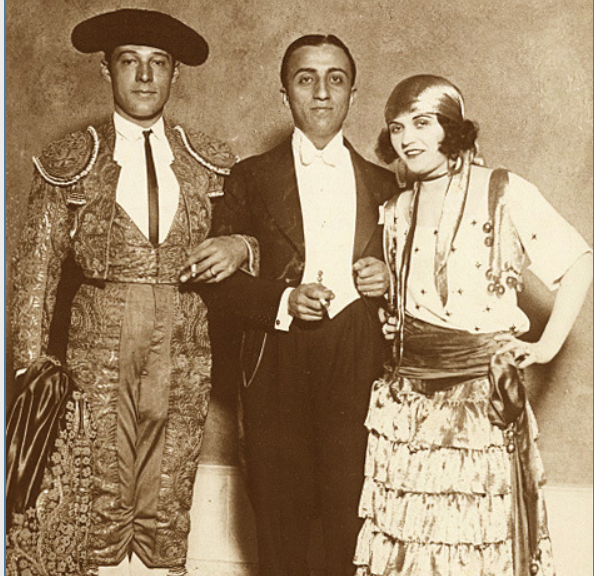
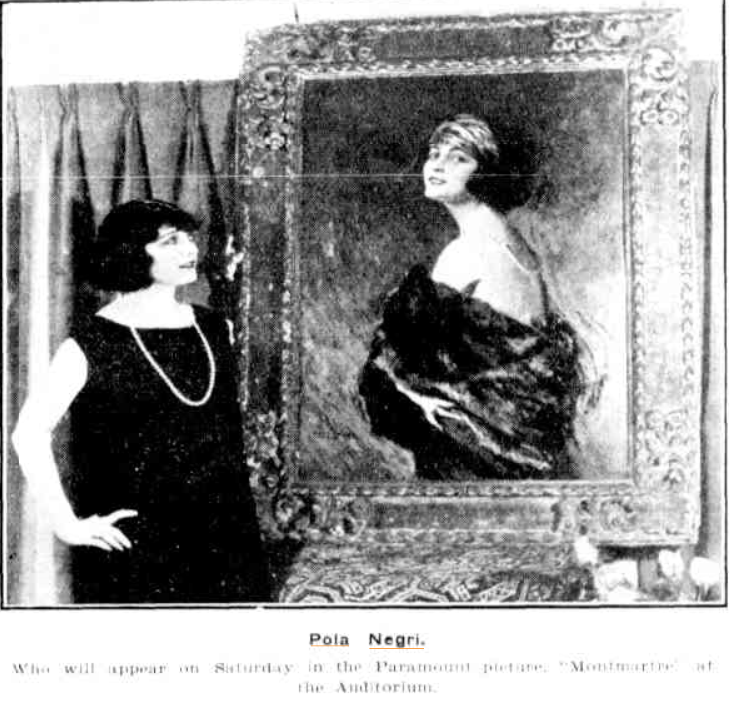
Aug 2014 – Valentino’s Hollywood

So I always wanted to spend time in Los Angeles or Valentino’s Hollywood. In times past, I drove through, I stopped off to see relatives, but I never got to see those tourist places that I always wanted to see. So, I took the trip of a lifetime and simply went. I wanted to be a traditional tourist, I wanted to attend the Rudolph Valentino Memorial Service, I wanted to meet several people who I had been corresponding with via Facebook, I wanted to walk where he did, I wanted to see where he lived, and I needed to spend some time researching for a book I intend to write one day. So in five days, I was able to accomplish that and more. I drove, I walked, I got lost, I picked up souvenirs, and I wrote post cards home. One of the things I did was visit Hollywood Forever Cemetery and had a private tour with Kari Bible who is passionate about what she does and shares her wealth of knowledge about Hollywood and the stars buried there. I took a tour of Hollywood courtesy of TMZ and I was not impressed. I walked on Hollywood Blvd, Sunset Blvd, Griffith Park, Griffith Observatory, I ate at Musso & Franks Restaurant, I toured the Hollywood Heritage Museum and the people there are truly nice and take time to tell you about what is in the Museum.
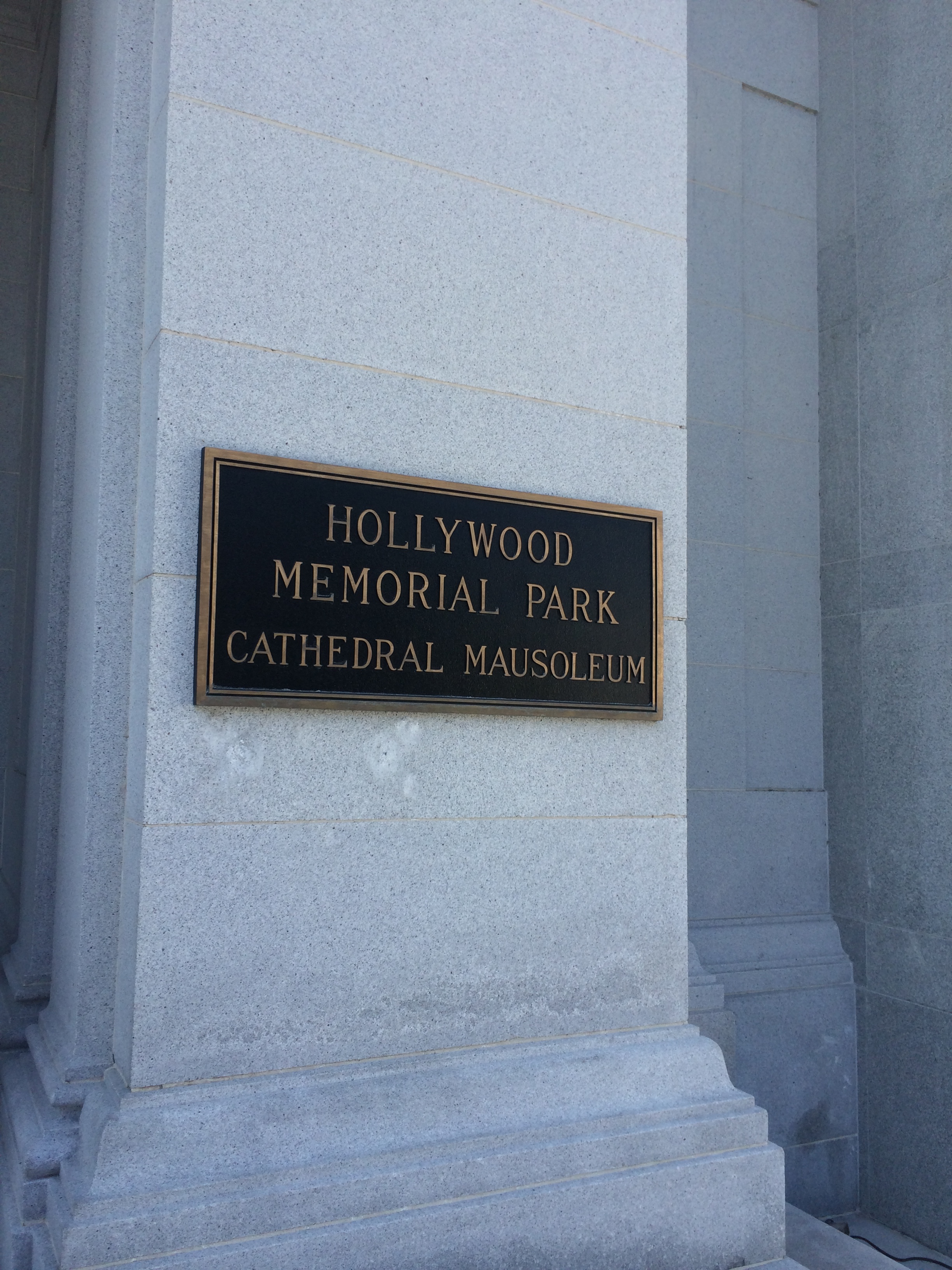


Then I went to the Valentino Memorial Service and I got to see Rudolph Valentino’s grave, I spent a little time there, I met some wonderful people at the service, and my final day I spent Valentino sightseeing. My gracious tour guide took me to see where Valentino Productions was located we even went inside the opened door and walked quietly upstairs taking in all of the original features still there. I was shown where Rudy asked Jean Acker to marry him and also seen the church which was the site of the first Valentino Memorial Service. Then there was Natacha and Rudy’s spot on Sunset Blvd, Pola Negri’s house and George Ullman’s house in Beverly Hills, we even drove through Whitley Heights and I even seen the foundation of Rudy’s former home. The best part was going to see Falcon Lair. How can I describe the place where he called home just to pull up and see that black gate, those white columns and the name Falcon Lair was indescribable in how I felt. I got out and of course took photos and videos and was pointed out what was original and what was torn down. To see that wonderful man’s home torn down like that was simply sad. That is Hollywood history that is gone forever except what is on a photograph or a post card is incomprehensible. My tour guide talked to me and I gained more insight into this person who I never personally knew but in my heart I did. Although it’s only been a few days since I left I look over the videos and the photographs I took and am simply grateful that I went. Because now, I will go back year after year and know there are more memories to create, acquaintances to renew, and more knowledge to gain. I want to acknowledge two people who made me feel right at home. My tour guide Tracy Terhune and the gracious Stella Grace.



Categories: Uncategorized
Tags: George Ullman, Jean Acker, Natacha Rambova, Pola Negri, Rudolph Valentio, Stella Grace, Tracy Terhune
1 Comment
8 Jul 1926 – Pola and Rudy Vie on Screen
Pola Negri and Rudolph Valentino maybe subjects for cupids attention
and they may be married in Europe next year, as Pola’s mother recently
announced. But box-office rivalry goes on just the same! This fact is
strikingly borne out by the appearance of Rudy and Pola on the screen
this week at different theaters. Valentino opens today in a special
premiere showing the “The Son of the Sheik” at the Million Dollar
Theater. This film is a sequel to “The Sheik” and marks his return to
the burning sands and equally burning love scenes that proved so
successful in the earlier picture. Valentino will have as his guests at
the second performance this evening a large party of motion picture
stars. “Good And Naughty” is the new alluring title of Miss Negri’s new
vehicle, which will be seen at the Metropolitan beginning tomorrow. The
polish star plays a role wherein love is the inspiration that leads the
heroine to throw off her dowdiness and reveal her true loveliness.

 All About Rudolph Valentino
You must be logged in to post a comment.