
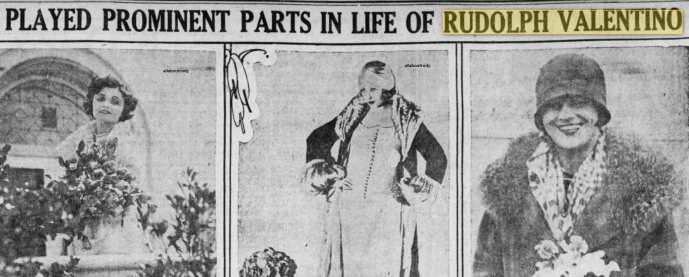
Posts Tagged With: Natacha Rambova
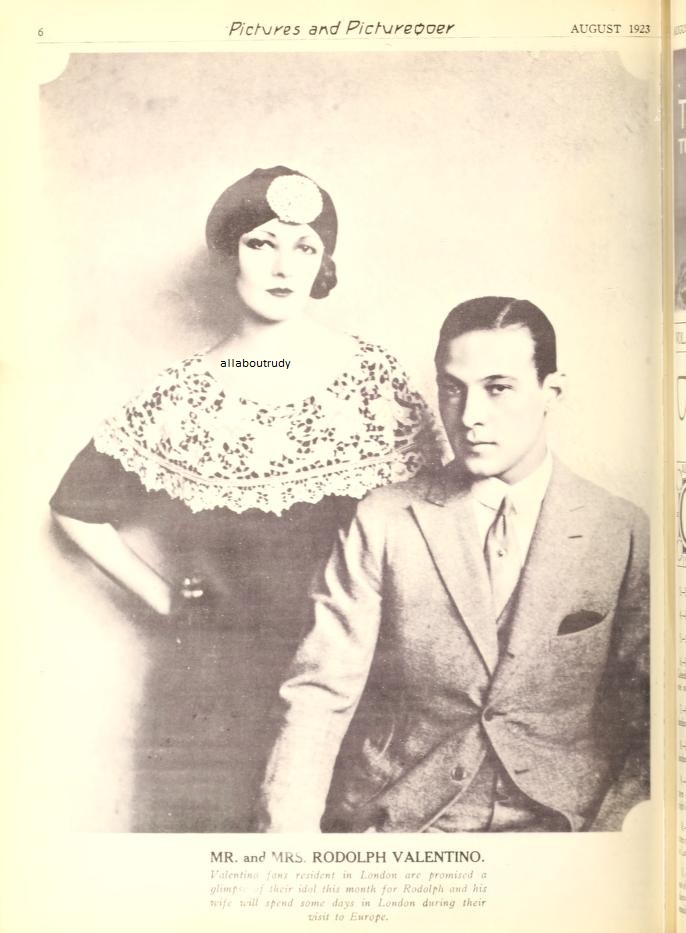
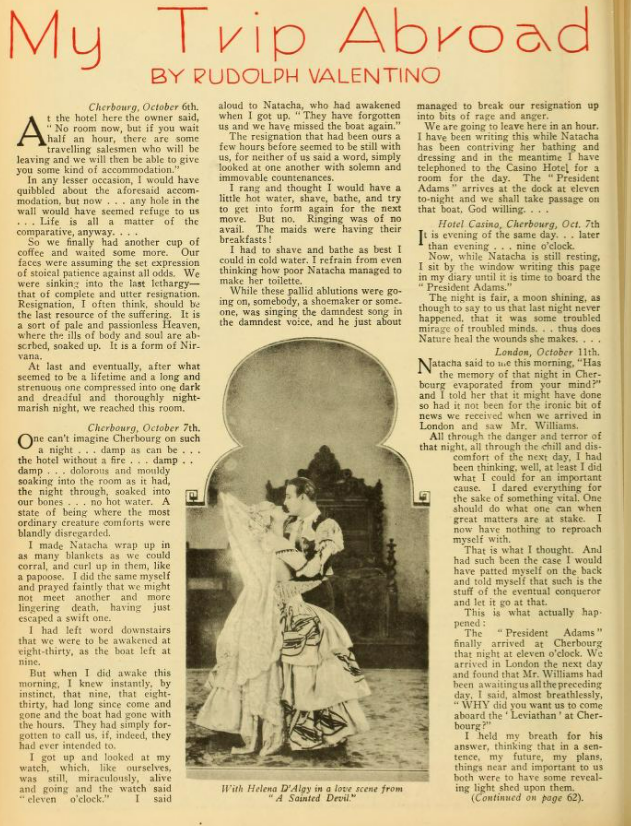
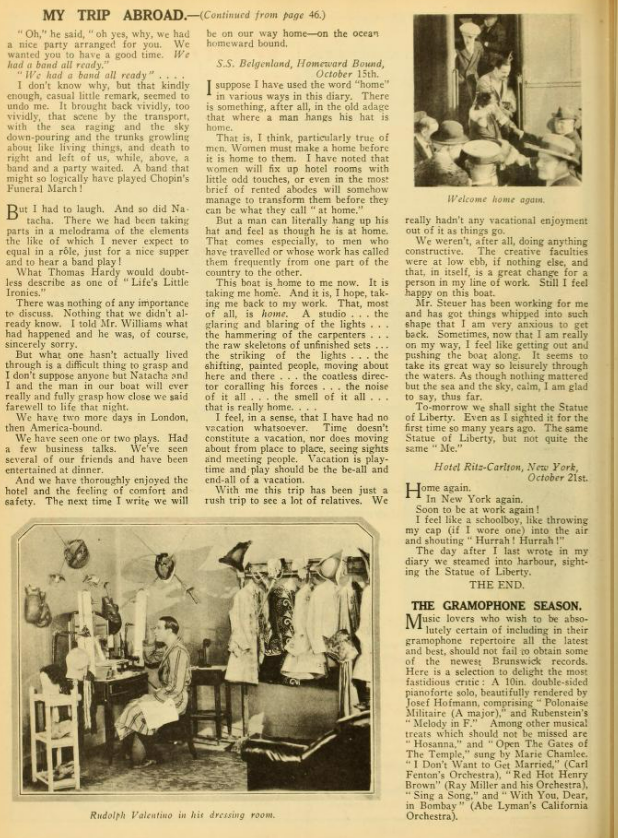
Categories: Uncategorized
Tags: Alberto Valentino, Jean Valentino, Natacha Rambova, Rudolph Valentino
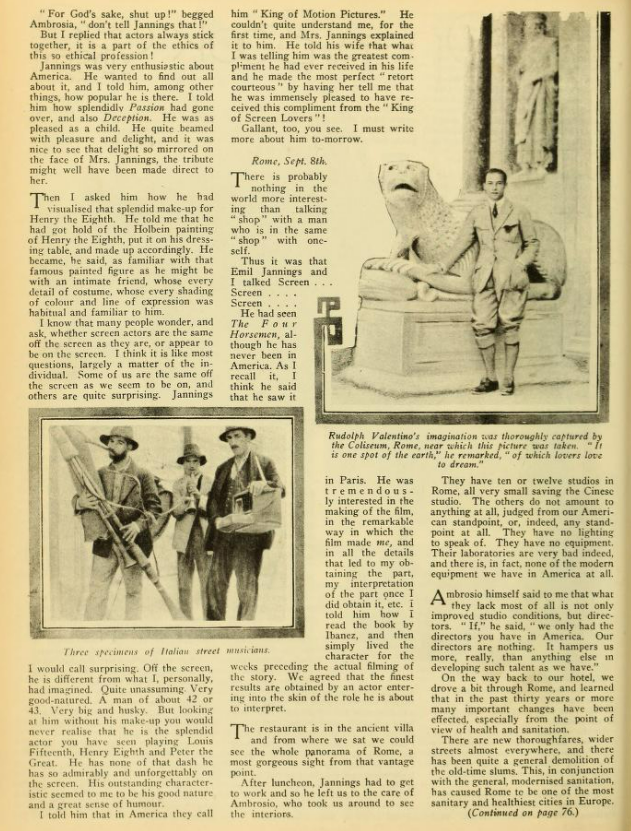
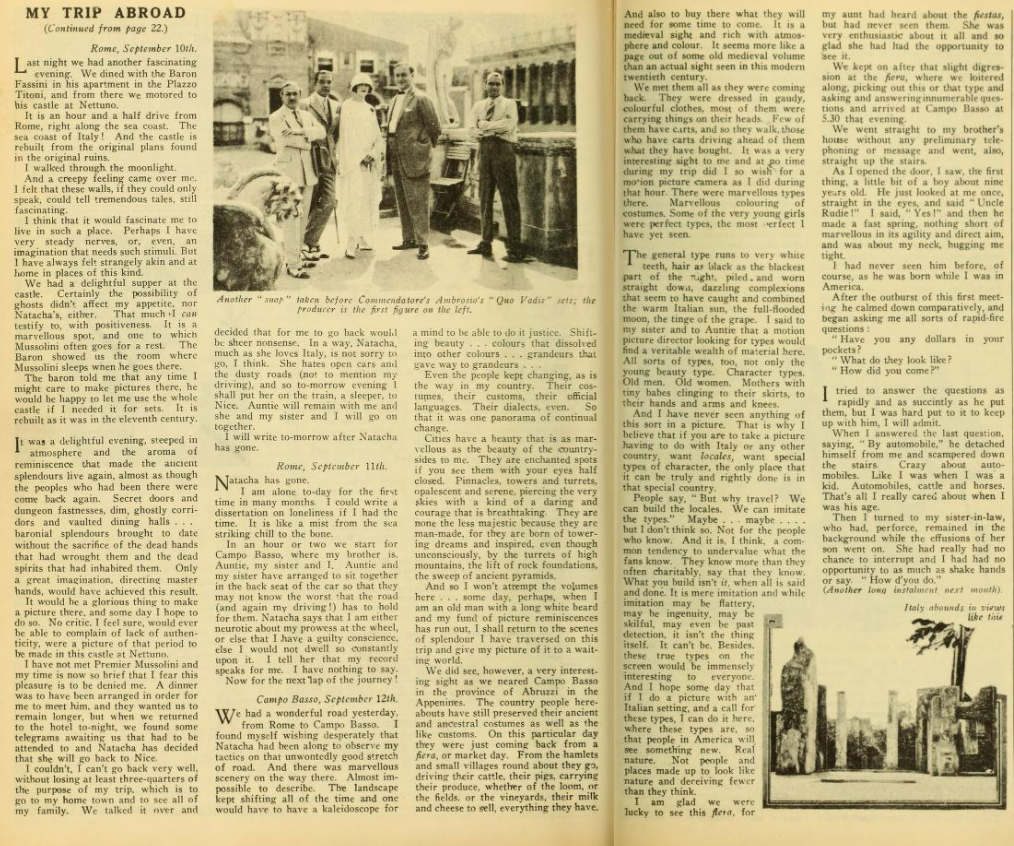
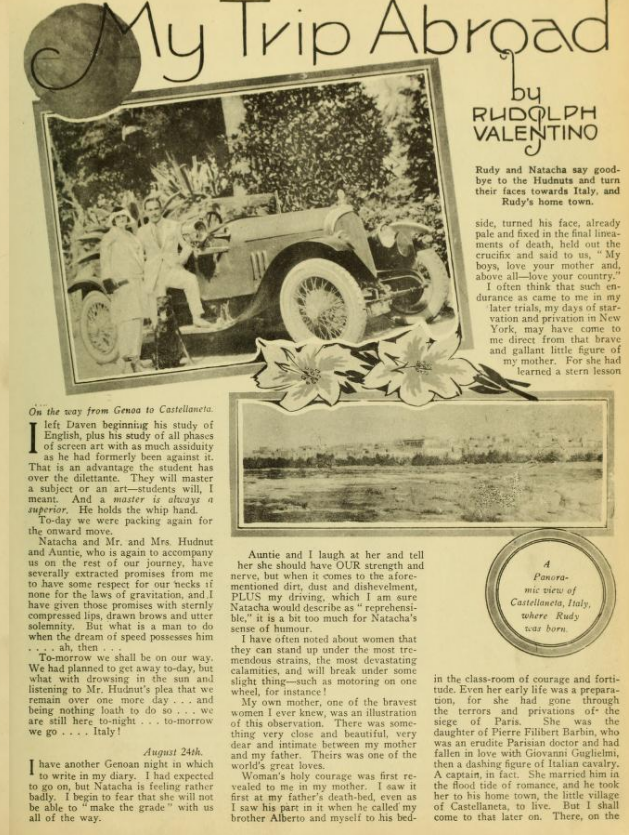
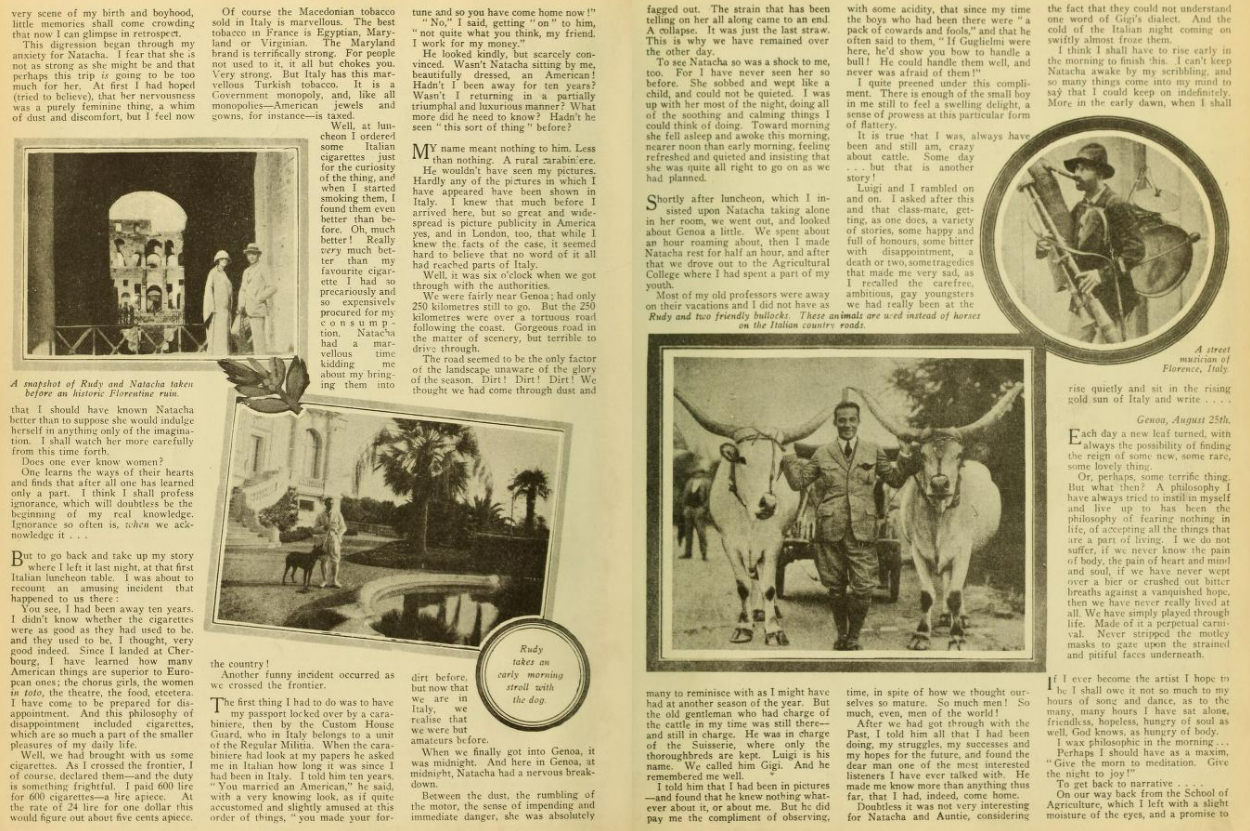
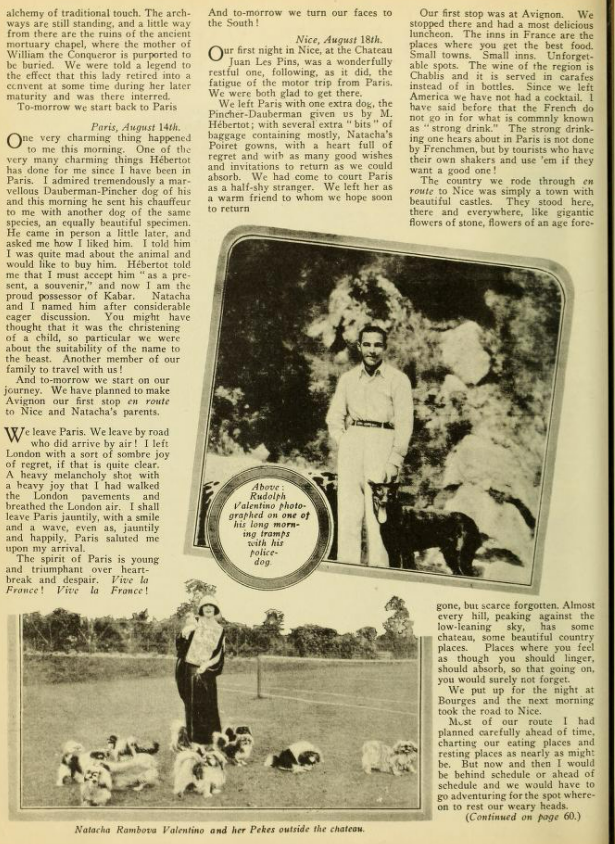
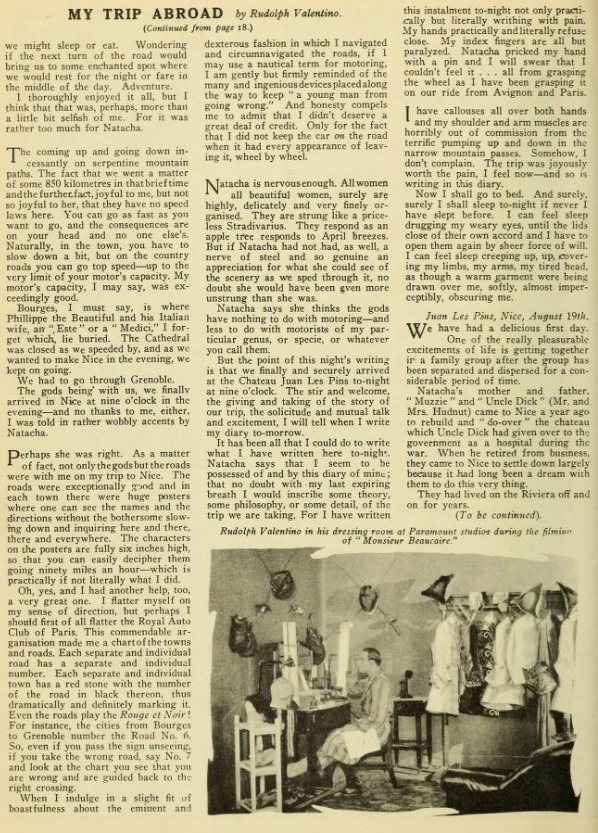
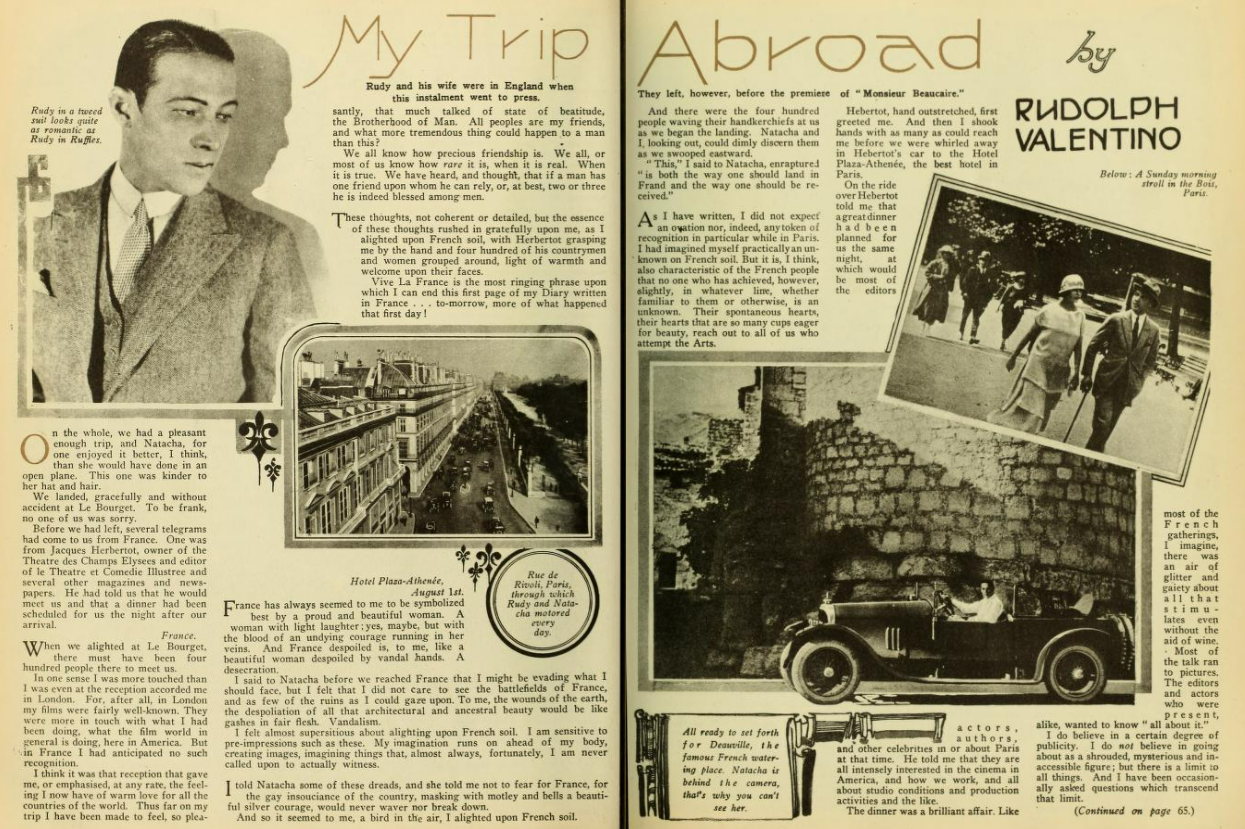
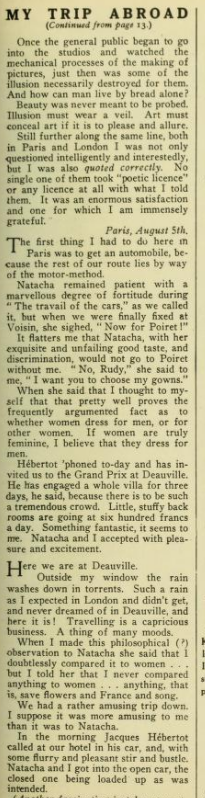
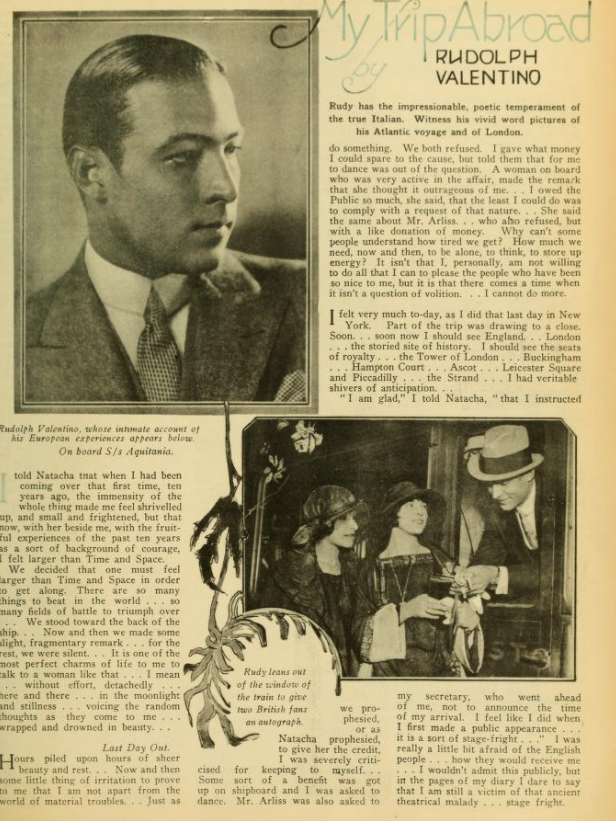
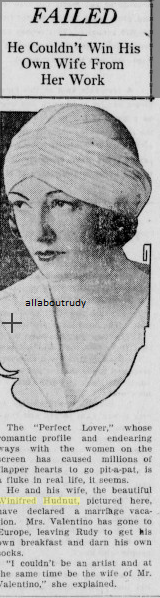
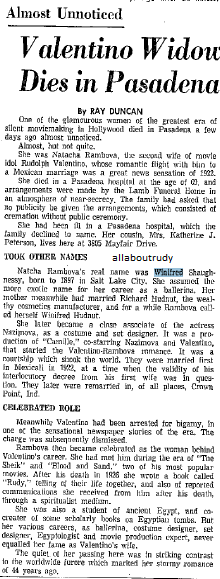
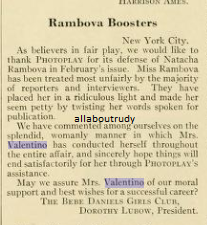
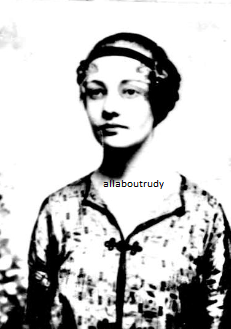
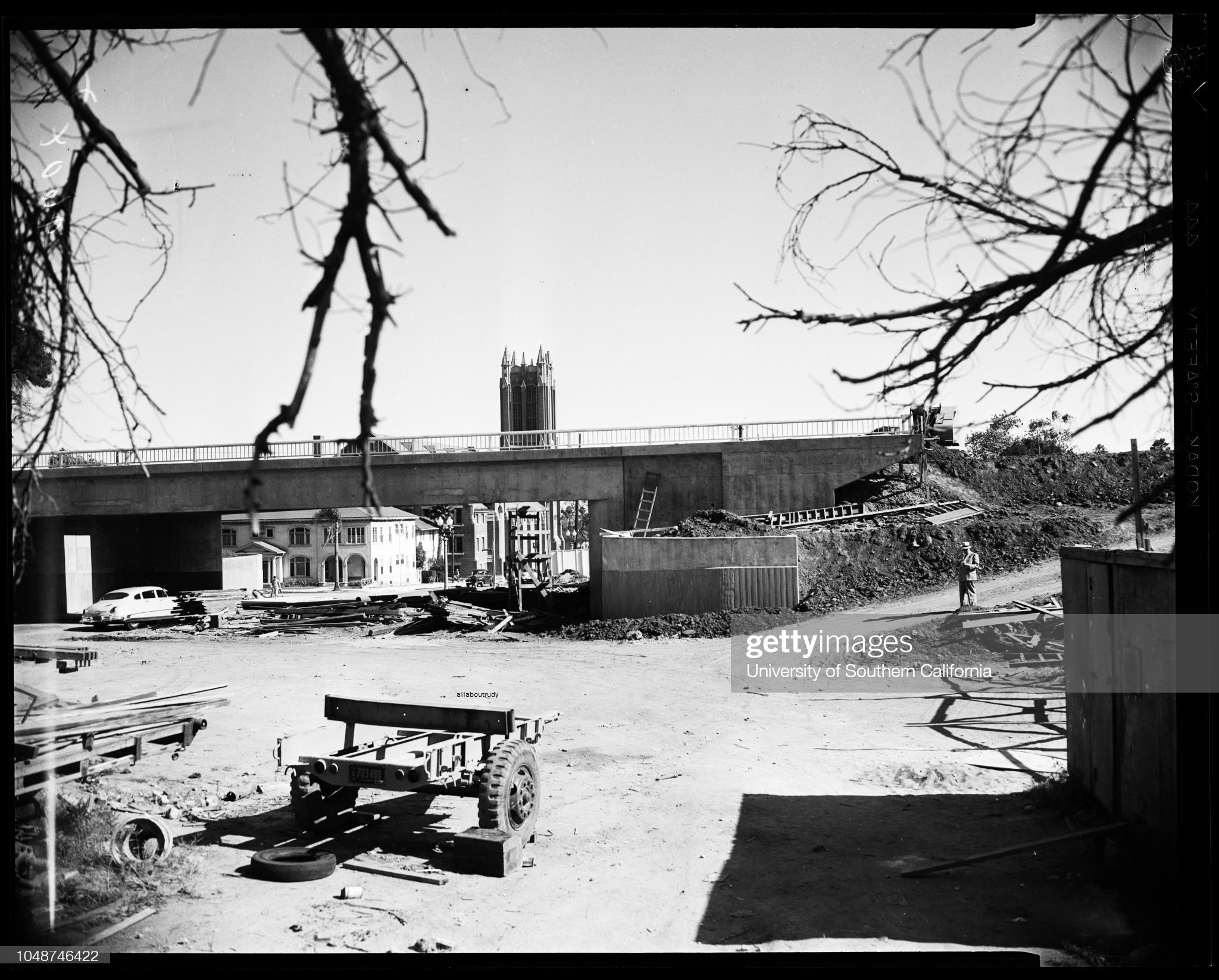
10 Jun 1952 – Whitley Heights Home Torn Down
Categories: Uncategorized
Tags: Natacha Rambova, Rudolph Valentino
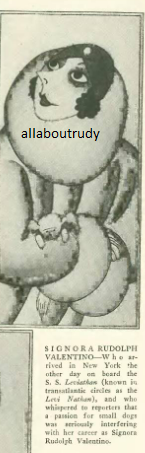
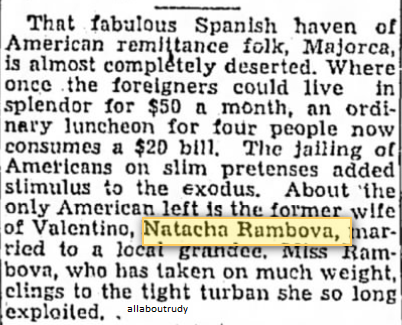
28 May 1923 – Mineralava Beauty Contest Annoucement, Montana

Categories: Uncategorized
Tags: Mineralava Beauty Contest, Mrs. Rudolph Valentino, Natacha Rambova, Rudolph Valentino
26 May 1929 – Mystics Rule Hollywood

The lines are forming at the right before the séance chambers of Hollywood soothsayers. Hollywood elite do not advertise going to the occult in order to see what the fates have in store. Norma Talmadge introduced noted psychic Dareos to the film colony. foretold of Chaplin’s numerous marital troubles and promised Mae Murray she would have a baby by husband noted fake Prince M’Divani. Soothsaying has always thrived in Hollywood and now its faring better than ever before. Dareos makes such a good living that he is now both well fed and well-dressed living in a large home in Ocean Park. Some players will not sign new movie contracts without consulting their favourite palmist, card reader or spirit guide. Astute producers will not begin new pictures unless their trusted astrologist tells them when the stars are favorably disposed. From ping-pong to mysterious seances, crystal gazing, numerology, phrenology and palmistry, the film colony goes into its anxious attempts to peer into the uncertain tomorrow. Louise Fazenda introduced numerology as a fad and for several years was all the rage. Phrenology was a favourite of Wally Reid, Eugene O’Brien, and Tom Mix and seances had its time. The beautiful Laurel Canyon home of the late Rudolph Valentino was a setting for many a search into the hereafter. June Mathis and her mother, Rudolph Valentino, Natacha Rambova all devoutly believed in their seances. They usually met alone since communicating with the other world was not just a passing fancy with them as it was with the rest of Hollywood. Indeed, since Valentino’s death Natacha often declares to the news reporters she is in close touch with Rudy in the spiritual realm. The Ouija Board came to town and many movie people sat for hours over it. However, movie stars that seek advice from these so-called mystics, soothsayers, or psychics who may or not be correct. On the other side of the coin, these psychics are living just as good as the people who pay them.
Categories: Uncategorized
Tags: June Mathis, Natacha Rambova, Rudolph Valentino, Tom Mix, Wally Reid
23 May 1923 – Mineralava Tour Award Selection
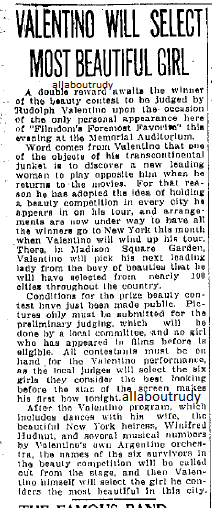
Categories: Uncategorized
Tags: Mineralava Dance Tour, Natacha Rambova, Rudolph Valentino
22 May 1923 – Mineralava Beauty Contestant Appearance, San Angelo, Texas
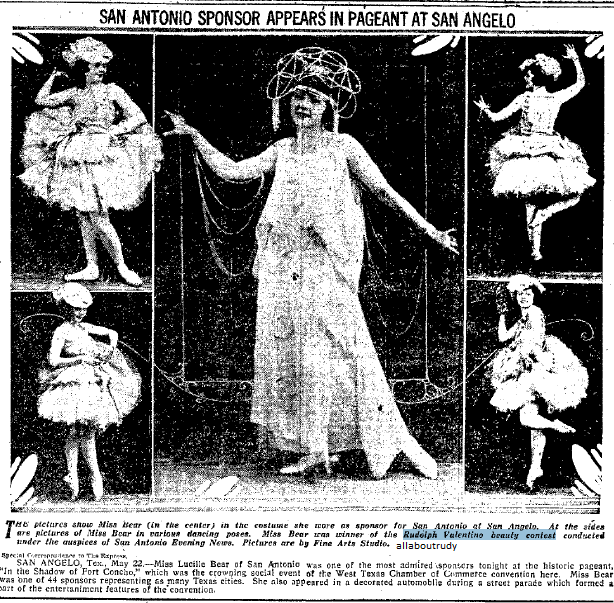
Categories: Uncategorized
Tags: Lucille Bear, Mineralava Beauty Contest, Natacha Rambova, Rudolph Valentino

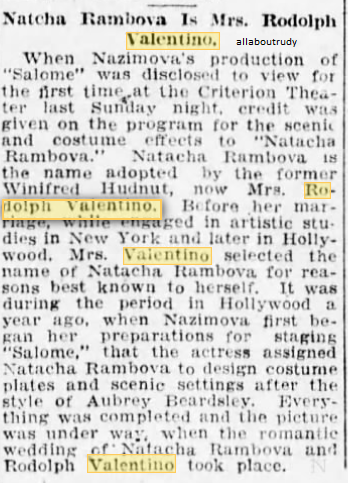
10 May 1923 – Broke Star wouldn’t donate
According to a Waterbury newspaper, no star of the screen ever received the panning and knocks that were handed out last week, following the appearance of Rodolph Valentino, and, in fact before he had left town after his engagement with his Mineralava Dance Tour. The kicks at the Sheik are due to his refusal to contribute to a fund being raised by Waterbury post of the American Legion, saying that he was “up against it financially” and declined to contribute or sign a pledge card and was reported as not being in the position to do so and with refusing to give the sum of $1. It was understood that he received $1,000 for his engagement—appearing less than a half hour in his dancing act with his wife. AA very patriotic person indeed that is more concerned with what is in his pocket than his fellow man.
Categories: Uncategorized
Tags: Mineralava Dance Tour, Natacha Rambova, Rudolph Valentino
9 May 1923 – Mineralava Beauty Contest Announcement
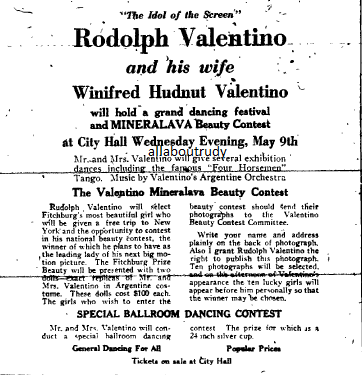
Categories: Uncategorized
Tags: Mineralava Beauty Contest, Natacha Rambova, Rudolph Valentino
1 May 1923 – Mineralava Beauty Contest News Update

Categories: Uncategorized
Tags: Jack Curley, Mineralava Beauty Contest, Mrs. Rudolph Valentino, Natacha Rambova, Rudolph Valentino
May 1923 – 100 Years Ago, Mineralava Tour Stop Seattle, WA
During his 1923 Seattle visit, Rudolph Valentino was in the midst of a dispute with his studio, Lasky-Paramount. Battles over power and control were being waged behind-the-scenes, but publicly the actor claimed to be protesting the cheap program films to which he had been assigned, as well as the practice of block booking. In an era when popular movie stars routinely appeared in three or four new film releases a year, Valentino resisted the studio’s demand that he works. (Block booking was an early distribution practice whereby a studio would tie the releases of major stars to less ambitious efforts. Exhibitors wishing to screen “marquee” pictures had to sign exclusive agreements that forced them to also show the studio’s third-rate potboilers. Exhibitors strongly protested this arrangement.) For failure to work, Lasky-Paramount eventually suspended Rudolph Valentino, and went as far as to obtain a court injunction preventing the actor from appearing onscreen until after his Paramount contract expired on February 7, 1923. The studio felt they had called Valentino’s bluff, since he and second wife, Natacha Rambova (formerly Winifred Kimball Shaughnessy) were heavily in debt. But the pair countered by mounting a personal appearance tour organized by George Ullman (later Valentino’s business manager), and sponsored by Minerlava, a beauty clay company. For 17 weeks, the couple gave dance exhibitions across the United States for a reported $7,000 per week, keeping Rudolph Valentino in the public eye and based on their commercial pitches for Minerlava, providing the company with valuable exposure. The tour began in the spring of 1923 in Wichita, Kansas, where public schools closed on the day of his appearance. Despite the excitement that Rudolph Valentino brought to almost every stop on his itinerary, the star’s arrival in Seattle was relatively low-key. The Valentino’s were expected at 9:40 in the evening on May 30, 1923, traveling from Spokane in the star’s private rail car. From the train station, they were to be whisked to the Hippodrome at 5th Avenue and University Street, where Valentino was slated to help judge a combination dance contest/beauty pageant at 10:00 p.m. According to publicity for the event, the pageant served as a national search to help find the star’s next leading lady (a role which eventually went to veteran Paramount actress Bebe Daniels). Unfortunately, their train arrived much later than expected, and the Valentino’s entered the Hippodrome well after the dancing competition. The actor then sat with other judges behind a curtain for the remainder of the beauty pageant, which concealed him from the audience, most of whom had come solely for the opportunity to see the motion picture star in person. When all was said and done, Rudolph Valentino personally selected Katherine Cuddy, a local stenographer, as the beauty contest winner, turning down the half-hearted challenge of Seattle Mayor and fellow judge Edwin J. Brown (1864-1941) on behalf of another contestant. It is hoped that Brown’s candidate did not know that the mayor was championing her cause, for the next day it was widely reported that Valentino rejected her for having bad teeth. (Ironically, Brown — who was a prominent Seattle dentist as well as a doctor, lawyer, and politician — did not notice this defect.). The Valentino’s followed the beauty judging with an electrifying demonstration of their famous Argentine tango, recreating the dance scene from The Four Horsemen of the Apocalypse. Both were dressed for the part; as one account put it: “It is in Rodolph’s [sic] blood to wear black velvet pantaloons and stamp his black patent leather boots and click castanets. His manner was quite Argentine; his hair quite brilliantine” (Dean). Natasha Rambova was also clad in black velvet, offset with a red Carmen-like shawl. “[She] is very brave to put on a ten-dollar pair of black silk stockings so close to her partner’s three-inch silver spurs,” noted Times reporter Dora Dean. Dean managed to sneak backstage after the exhibition and take a spot in Rudolph Valentino’s dressing room, where she found the actor quite blunt about all the attention his appearances had been garnering. The moment he arrived at the Hippodrome, for instance, a large crowd of girls — “starving for romance,” the actor noted with some disdain — surged toward the stage. Adoration of this sort wore on Valentino, for it overshadowed his attempts to be taken seriously as a performer. “`From persons who saw the Four Horsemen I have received intelligent letters of appreciation,’ [Valentino] said. `I like them better than the adoring notes from little girls who want me for their sheik.’ “`But what are you going to do, when all those darling girls want to see you ride [in] the desert and gnash your teeth?’ he was asked. “`Ah, they should stay at home with their husbands,’ said the slick-haired actor” (Dean). Wanda Von Kettler, writing for the Star, also managed to get herself into Rudolph Valentino’s dressing room at the Hippodrome. It must have been a crowded place: Mayor Brown and Washington’s Lieutenant Governor William Jennings “Wee” Coyle (1888-1977) also fought for space amongst a crowd of reporters and fans. According to Kettler: “Beside Rodolph [sic] sat Mrs. Valentino, his tall and slender, brown-eyed wife, in her Argentine dancing costume … “He surveyed his guests. Then told them that he wasn’t a `sheik.’ “`Of course,’ he declared, with a somewhat resigned laugh, `I’ve gotten considerable publicity because of the name. But I don’t know if it’s been the right kind of publicity. The very sentimental girls think I’m all right. They like me. But what about the intelligent women — and the men? Don’t they think I’m a mollycoddle? They do. When I go back in pictures, after the fight with the movie concern is over, I’m going to prove that I’m not the type they think I am. “Valentino plans to write a book. He confided so to some of us Wednesday night. “`It’s going to be a book on the tango,’ he declared. `I’m going to teach all America to dance that dance. Everybody seems to like it, so why not help them learn it.’ “‘Dancing,’ he added, `is the greatest stimulant of the day, and is more and more being recognized as such. Since the event of prohibition, it has increased 50 per cent.’ “Valentino doesn’t `mind’ the letters he receives from admiring ladies. “`I’m very glad to know,’ he explained Wednesday night, `that I’m being appreciated. I like to hear the opinion of the public, whether it’s for or against me. But I know the ladies aren’t `in love’ with me. They’re in love with an `ideal’ and they sometimes write to me as a result.’ “As for Mrs. Valentino – being a sheik’s wife doesn’t bother her at all. When asked about her stand on the matter, she laughed and replied, `I want him to be popular. The more popular he is, the better I like it’” (Kettler). Following the Hippodrome appearance, the Valentino’s traveled northward for scheduled engagements in Vancouver, British Columbia. They returned to Seattle on June 1, 1923, for a visit to Children’s Orthopedic Hospital, where they were guests of honor at the institution’s Pound Party. An annual charity event, the benefit took its name directly from its open request: In lieu of donations, the Hospital accepted a pound of anything — food, clothing, etc. — which could be used to help those in need. The Valentino’s were the hit of the function, which a spokesman later declared the most successful in the history of Children’s Orthopedic. In total, the event netted a record amount of food and clothing and almost $400 in donations, $10 of which came from the actor himself. Credit for the success was given solely to Rudolph Valentino’s appearance, which garnered much more public interest than past charity drives. It also attracted hundreds of fans to the front lawn of the Hospital, mostly young women hoping to catch a glimpse of the actor as he came and went from the gathering. Thankfully, the throng outside conducted itself in an orderly fashion and the party went off without a hitch. After partaking in an afternoon tea and reception, the Valentino’s went from bed to bed throughout the Hospital, visiting nearly every child and showing a sincere concern for their wellbeing. “A few of the sheik’s queries concerning child culture demonstrated a decided lack of knowledge on the subject but a willingness to learn,” the post-Intelligencer got several nurses to admit afterward. “He was quite exercised over the lack of teeth in the mouth of one baby, age eight days” (Seattle Post-Intelligencer, June 2, 1923). After the Pound Party concluded, the Valentino’s slipped quietly out of the city, making their way first to Tacoma, then back down the coast toward Hollywood.
Categories: Uncategorized
Tags: Mineralava Dance Tour, Natacha Rambova, Rudolph Valentino
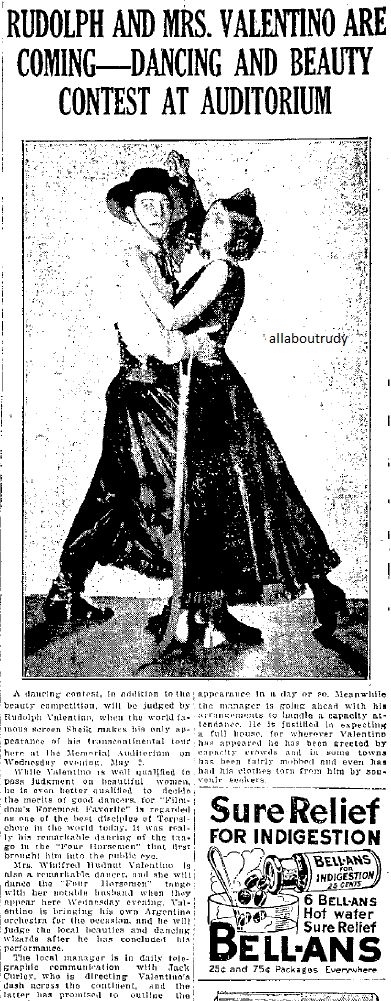
29 Apr 1923 – Valentino Coming to MA Mineralava Beauty Contest
Categories: Uncategorized
Tags: Mineralava Beauty Contest, Natacha Rambova, Rudolph Valentino
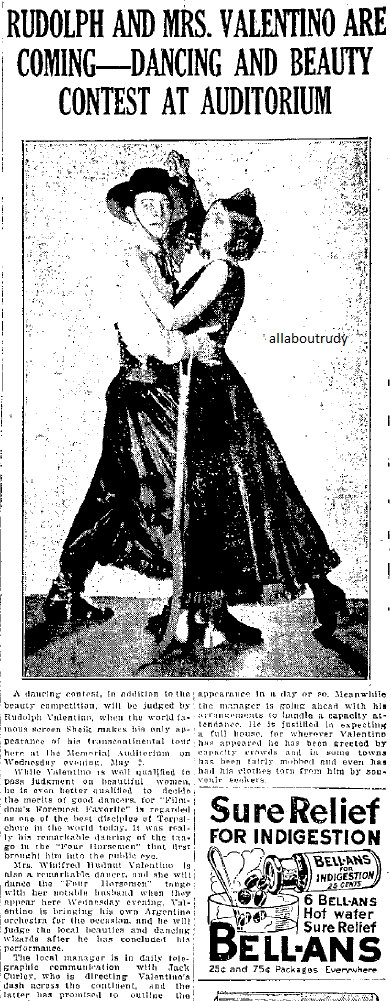
28 Apr 1923 – Mineralava Beauty Contest Announcement, Hartford, Conneticut

Categories: Uncategorized
Tags: Mineralava Beauty Contest, Natacha Rambova, Rudolph Valentino, Winifred Hudnut
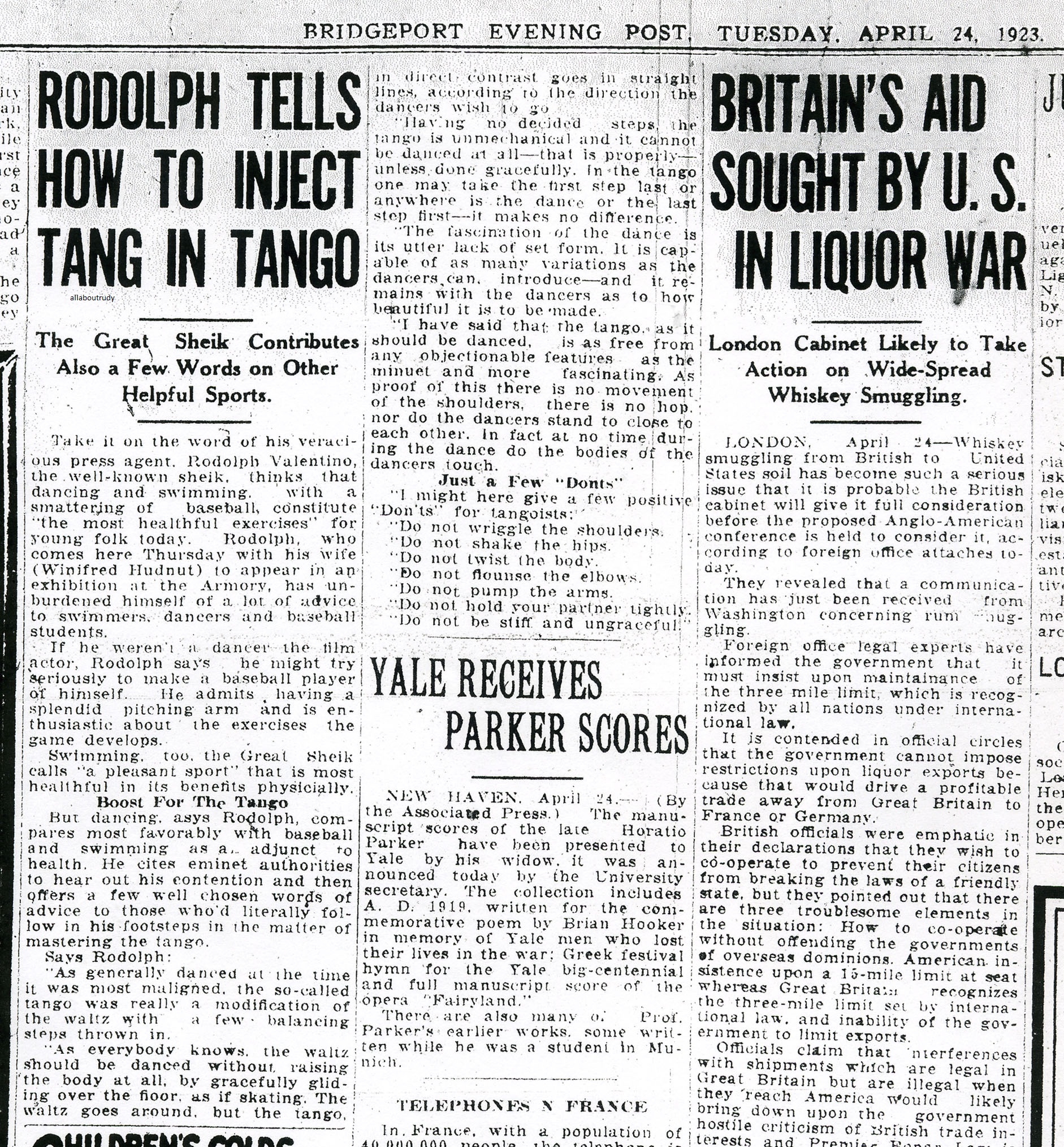
24 Apr 1923 – Mineralava Beauty Contest News, Valentino Instructs Tango Dance in Bridgeport, Ct
Categories: Uncategorized
Tags: Mineralava Beauty Contest, Natacha Rambova, Rudolph Valentino, Winifred Hudnut
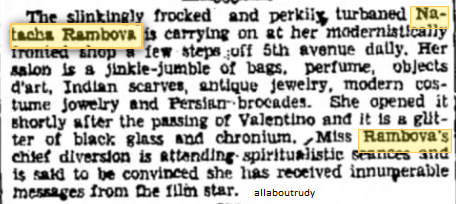
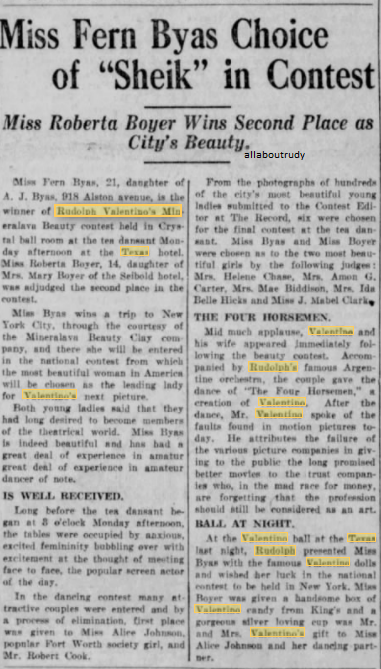
13 Apr 1923 – Mineralava Beauty Contest Winner Announced, Ft Worth, Texas
Categories: Uncategorized
Tags: Fern Byas, Mineralava Beauty Contest, Natacha Rambova, Rudolph Valentino
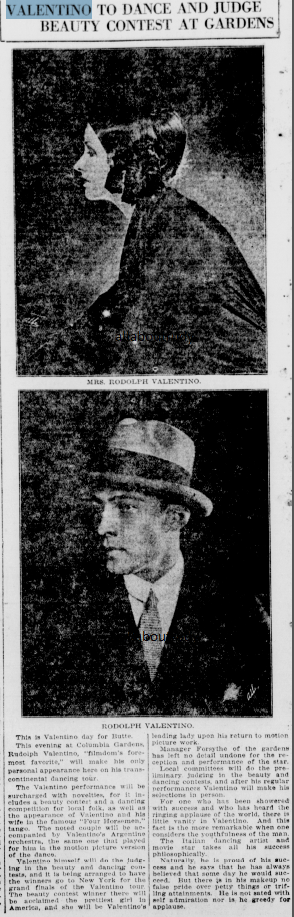
1923 – Butte MT Mineralava Beauty Contest Announcement
Categories: Uncategorized
Tags: Mineralava Beauty Contest, Natacha Rambova, Rudolph Valentino
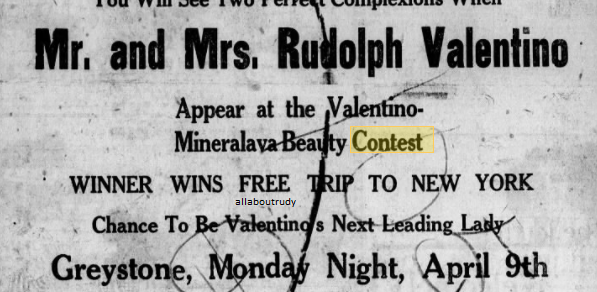
9 April 1923 – Mineralava Beauty Contest Announcement, Ohio
Categories: Uncategorized
Tags: Mineralava Beauty Contest, Natacha Rambova, Rudolph Valentino
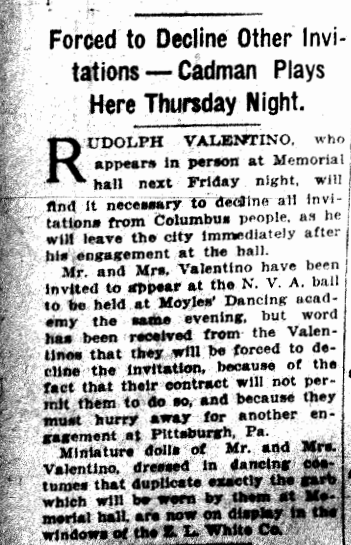
8 April 1923 – Mineralava Beauty Contest Update, Columbus, Ohio
Categories: Uncategorized
Tags: Mineralava Beauty Contest, Moyles Dance Academy Columbus, Natacha Rambova, Rudolph Valentino
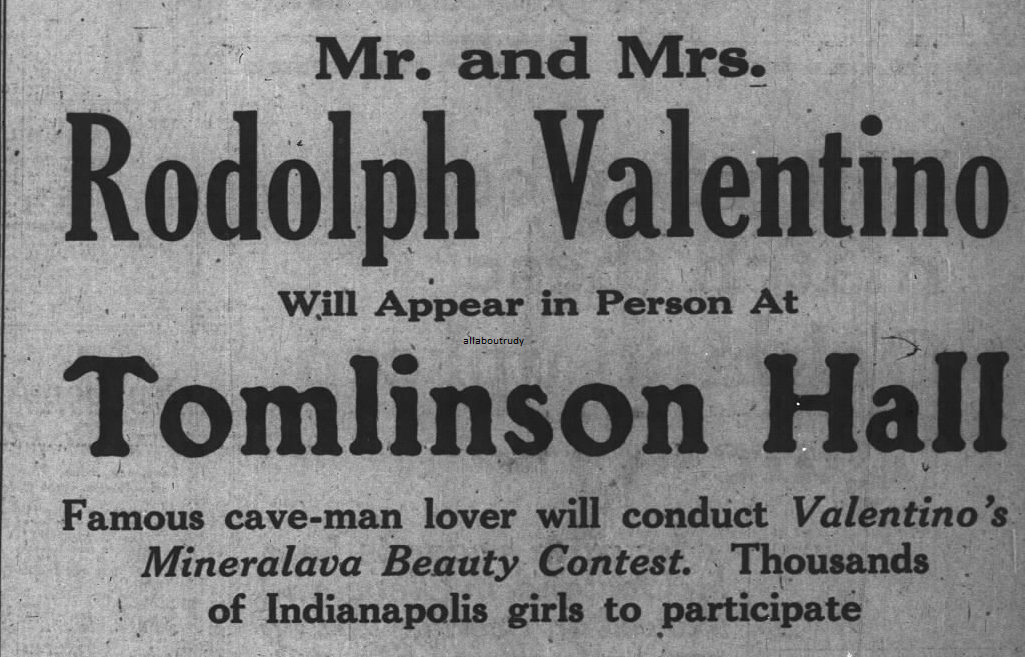
4 Apr 1923 – Mineralava Beauty Contest Announcement, Indianapolis, Indiana
Categories: Uncategorized
Tags: Natacha Rambova, Rudolph Valentino
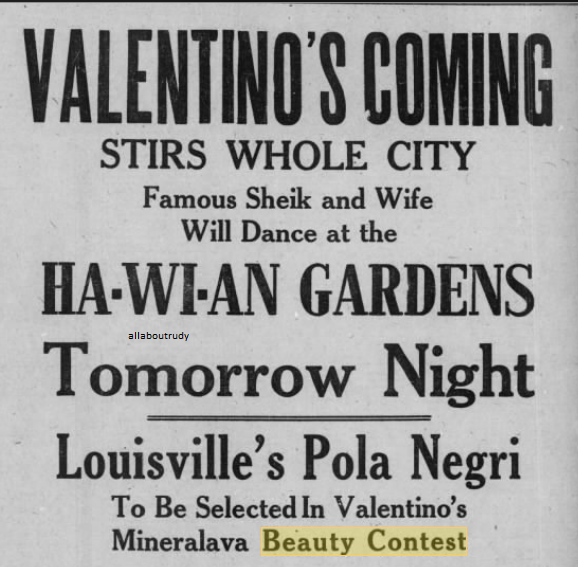
3 Apr 1923 – Mineralava Beauty Contest Announcement, Louisville, Kentucky
Categories: Uncategorized
Tags: Mineralava Beauty Contest, Natacha Rambova, Pola Negri, Rudolph Valentino
Apr 1923 – Valentino Embraced Akron
Those dark eyes burned with passion. Women melted beneath the smoldering gaze. The Sheik was the silver screen’s great lover, a hot-blooded rogue who raided desert caravans and captured tender hearts. In the flickering light of silent-movie theaters, young girls stared and swooned. Matinee idol RudolphValentino didn’t understand the fuss. “Did you ever see a smooth-shaven sheik?” he asked an Akron audience. “I will never play a sheik again until I can play the role of a real Arab. “The Hollywood heartthrob made a high-profile visit to Akron during a self-imposed exile from the movie business in 1923. Locked in a salary dispute with Paramount, Valentino and his second wife, Natacha Rambova, the most envied woman on earth, began an 88-city dancing tour. The couple earned $7,000 a week to present tango exhibitions as a promotion for the Mineralava Beauty Clay Co. With only a three-day notice, Valentino scheduled two shows on April 8, 1923, at the Akron Armory. Concerts at 2 and 8 p.m. Sunday featured Joe Sheehan’s Orchestra, the Royal Quartet, Sophie Tucker’s Jazz Band and Valentino’s nine-piece band. Dance Exhibition Tickets sold for $1, $1.50, and $2 at the Portage Hotel, Dales Jewelry and South Main Gardens. In addition, Mineralava sponsored a contest to find the most beautiful girl in Akron. The winner would have a chance to appear in Valentino’s next picture. Young women gathered at Union Depot to witness the arrival of a private railroad car carrying Valentino and Rambova, as fans lined College Avenue his car halted on a sidetrack. Inside, Valentino wore red-and-yellow pajamas and autographed photos at a desk. Rambova wore orange-and-black pajamas and sealed envelopes. It wasn’t every day that Akron got to see a sex symbol in pajamas. The couple lowered the shades, got dressed and invited local journalists, apparently all female, into the car for a chat. “Seen at a range of two feet, the idol of flapperdom is just an ordinary young man, rather good-looking and unexpectedly serious,” Akron Press reporter Ruth Rees noted. An unnamed “girl reporter” for the Akron Evening Times described the actor’s personal appearance as “the highest degree of physical perfection” and “all and even more than my conception of him demanded.” Speaking with an Italian accent, Valentino told the writers that his ambition was to make movies that men would want to see. He seemed uneasy with fame, and a little melancholy. “I want to play in good pictures,” he said. “I can’t generalize about what I want to do more than that because I want to play in a variety of roles. I want to play in pictures that men will like There are only two pictures which I have made that I am at all happy about. They are The Four Horsemen and Blood and Sand.” That comment seemed to stun the journalists. What about The Sheik, his most famous role? “My God, no,” he said. “The Sheik is his sore spot,” Rambova said. “Mentioning ‘sheik’ to him is just like waving a red flag.” “Why, I didn’t even look like a sheik in it,” Valentino fumed. “I was a drawing-room hero.” Despite the exploits of his screen character, the great lover confided to his Akron listeners that the feminine mind was a complete mystery to him. “Any man who says he understands women is either a fool or a liar,” he said. “He only thinks he knows.” The Valentino’s boarded a waiting taxi and traveled to the armory on South High Street. More than 1,500 people attended each show. Newspaper reviews were mixed and divided along gender lines. The women were more forgiving. Valentino’s band performed two songs before Valentino and Rambova, dressed in South American garb, re-created the tango from The Four Horsemen of the Apocalypse. Their dance, which lasted four minutes, “was graceful and pleasing,” the Evening Times noted Valentino presented a trophy to West High School sophomore Genevieve Street, 16, who won Mineralava’s contest as Akron’s most beautiful girl. Valentino ended his Akron show with a short talk on why he had decided to stop acting. “I wanted better pictures,” he said. “Seventy-five percent of the pictures produced by the industry by its cut-and-dry factory methods are a brazen insult to the American intelligence.” He referred to most of his films as travesties and apologized for betraying the public trust. He criticized producers for taking advantage of actors. The Valentino segment of the program lasted only 15 minutes. “After each performance, the crowd sat in a stupor for minutes wondering whether Valentino meant it or was just kidding them when he bid them a ‘fond and affectionate good night,’ ” the Beacon Journal reported. As it turned out, the girls along College Avenue got to see more of the actor than the paying customers. Valentino and Rambova returned to their railroad car and rolled out of town enroute to Rochester, N.Y. It was the last time the great lover ever set foot in Akron. Following the tour, Valentino made up with Hollywood and resumed acting. Monsieur Beaucaire (1924) and The Eagle (1925) were successful movies. “I do not owe my screen success to any company or publicity campaign, but to the American public,” he had told Akron.
Categories: Uncategorized
Tags: Mineralava Dance Tour, Natacha Rambova, Rudoph Valentino
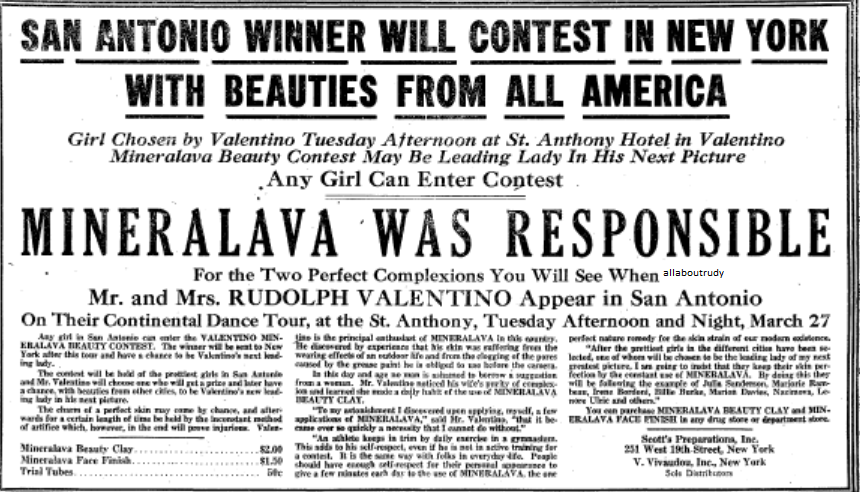
27 Mar 1923 – Mineralava Beauty Contest Announcement San Antonio, Texas
Categories: Uncategorized
Tags: Mineralava Beauty Contest, Mineralava Dance Tour, Natacha Rambova, Rudolph Valentino
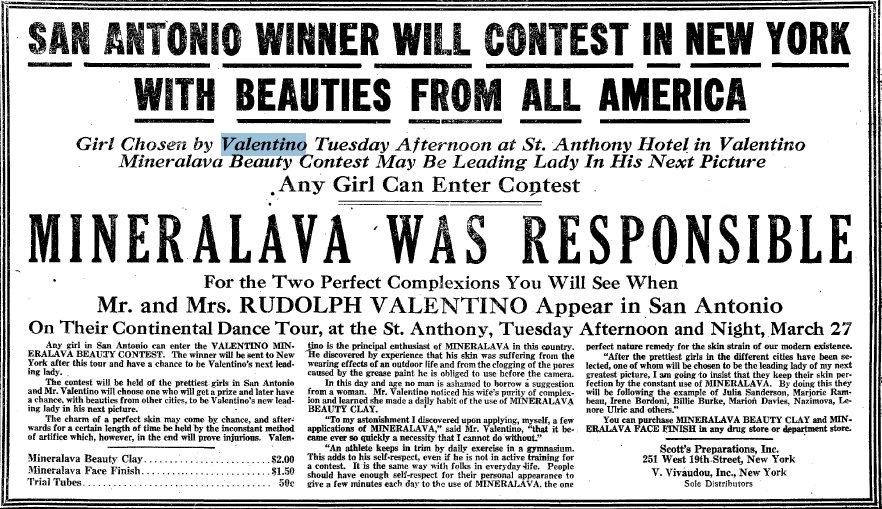
26 Mar 1923 – Mineralava Beauty Contest Annoucement, San Antonio, Texas
Categories: Uncategorized
Tags: Mineralava Beauty Contest, Natacha Rambova, Rudolph Valentino, St Anthony Hotel
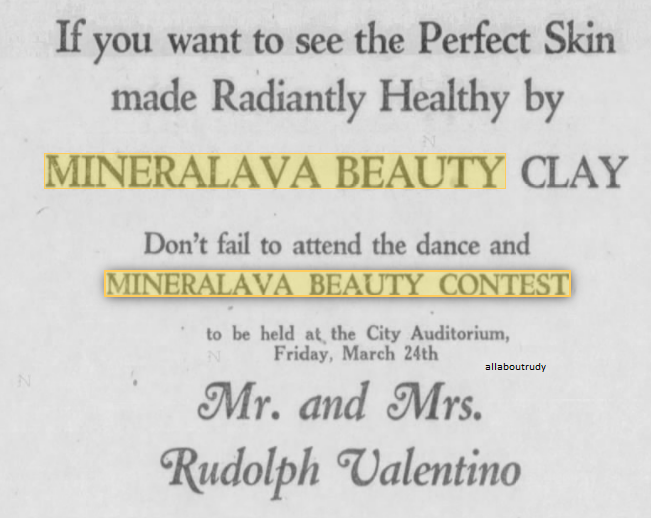
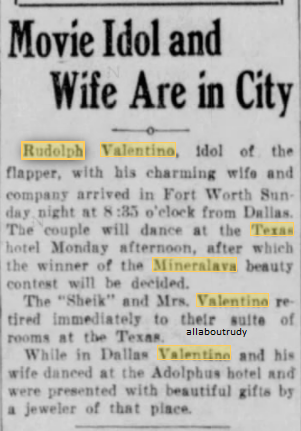
24 Mar 1923 – Mineralava Beauty Contest Announcement, Oklahoma
Categories: Uncategorized
Tags: Mineralava Beauty Contest, Mineralava Dance Tour, Natacha Rambova, Rudolph Valentino
Categories: Uncategorized
Tags: Mineralava Dance Tour, Mrs. Rudolph Valentino, Natacha Rambova, Rudolph Valentino
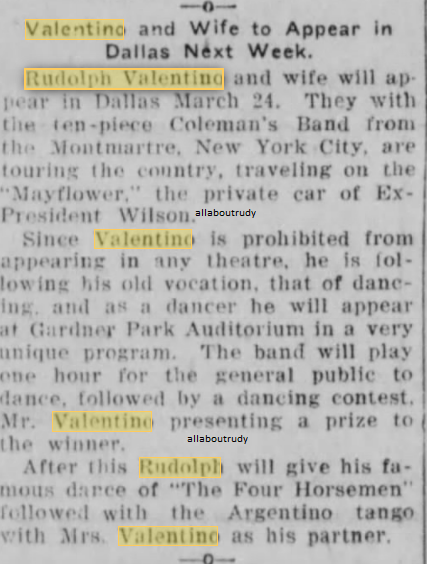
18 Mar 1923 – Mineralava Beauty Contest Announcement, Dallas Texas
Categories: Uncategorized
Tags: Mineralava Beauty Contest, Natacha Rambova, Rudolph Valentino
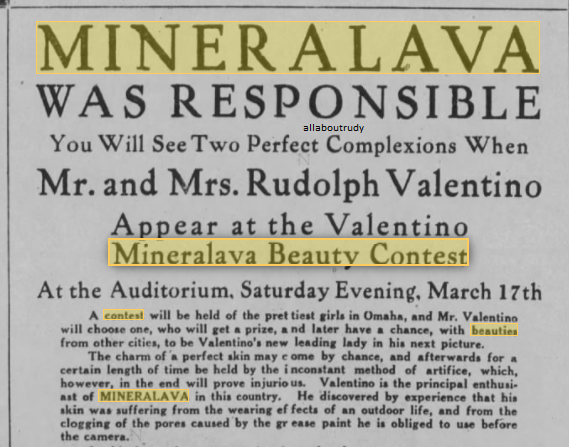
17 Mar 1923 – Mineralava Beauty Contest Announcement Nebraska
Categories: Uncategorized
Tags: Mineralava Beauty Contest, Natacha Rambova, Rudolph Valentino
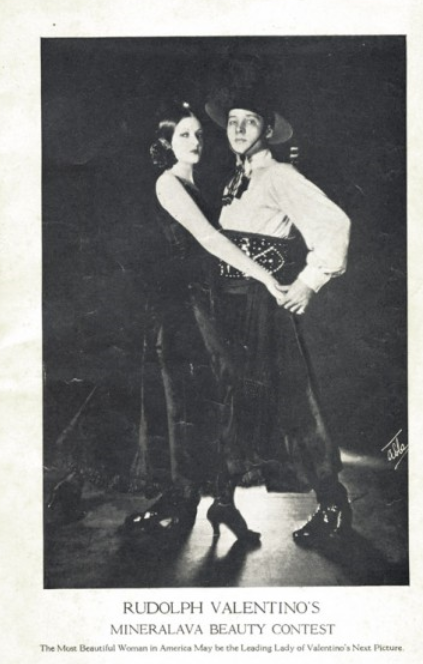
Mar 1923 – Mineralava Beauty Contest Publicity Picture
Categories: Uncategorized
Tags: Mineralava Beauty Contest, Natacha Rambova, Rudolph Valentino
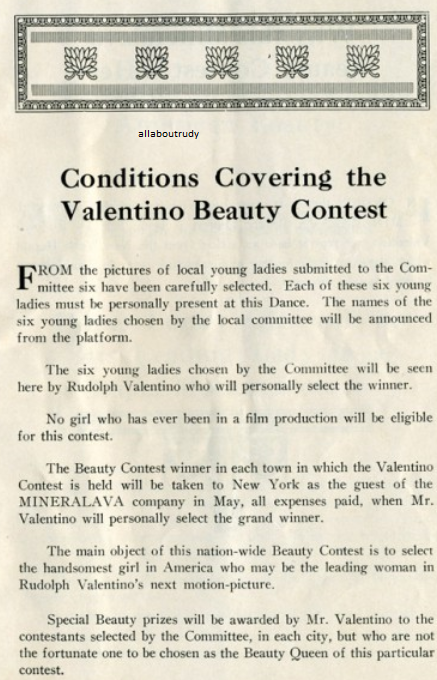
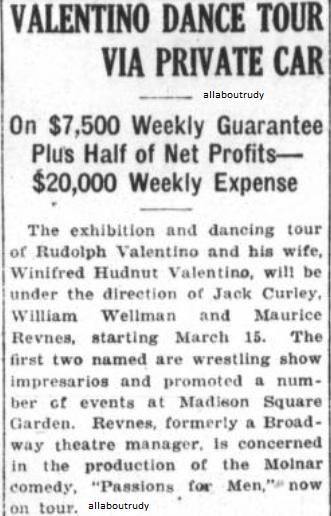
Mar 1923 – Mineralava Beauty Contest Announcement
Categories: Uncategorized
Tags: Mineralava Dance Tour, Natacha Rambova, Rudolph Valentino
18 Feb 2023 – 27th ADG Awards, Los Angeles, CA
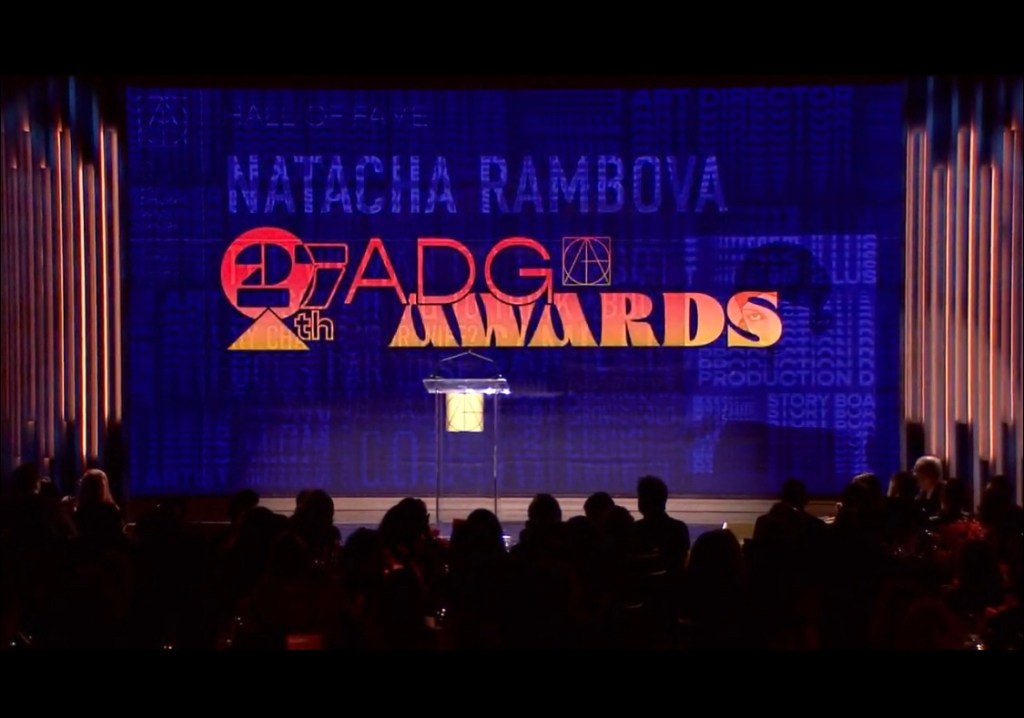
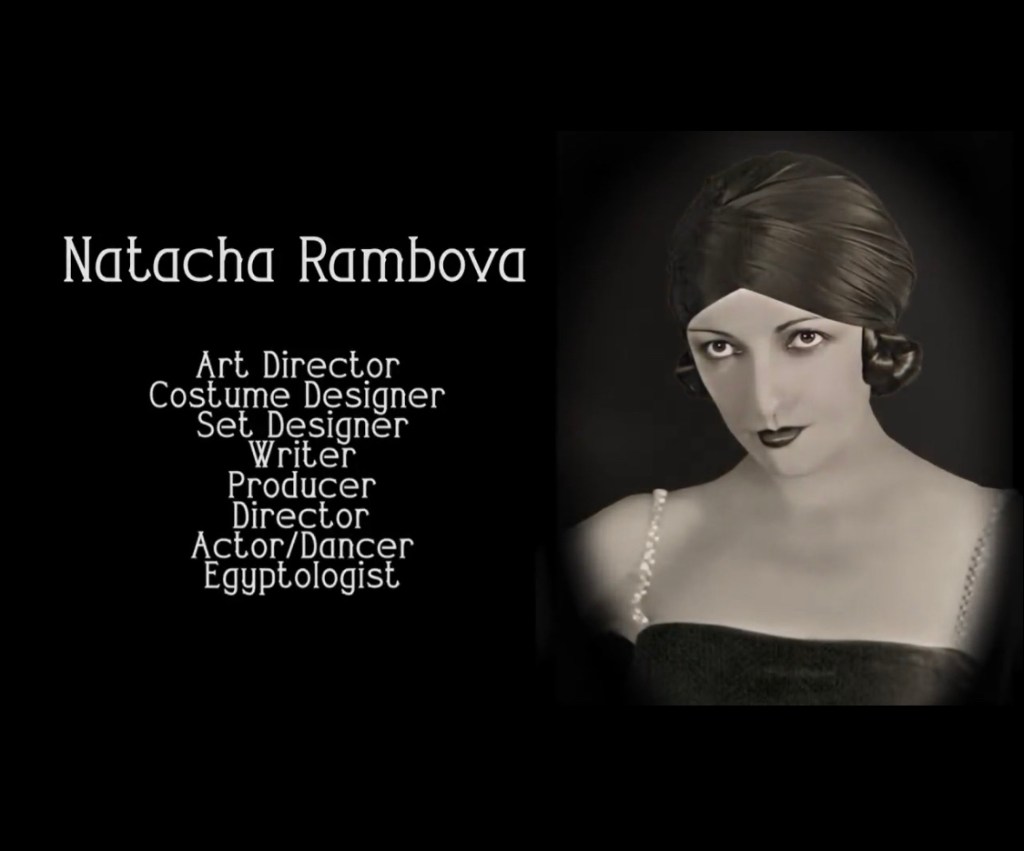
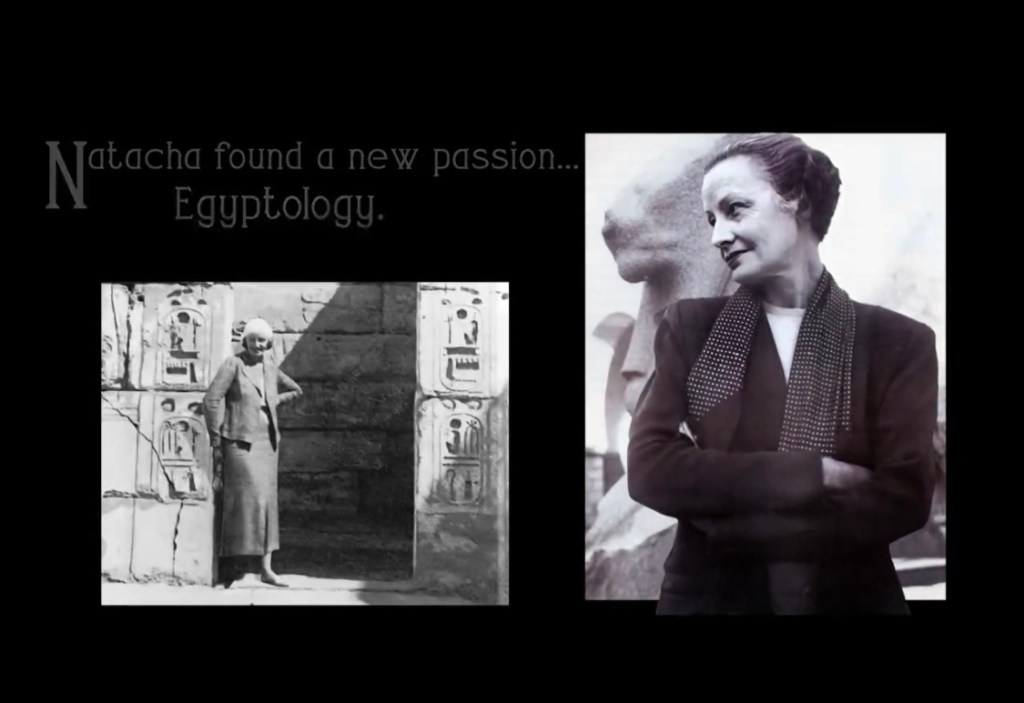
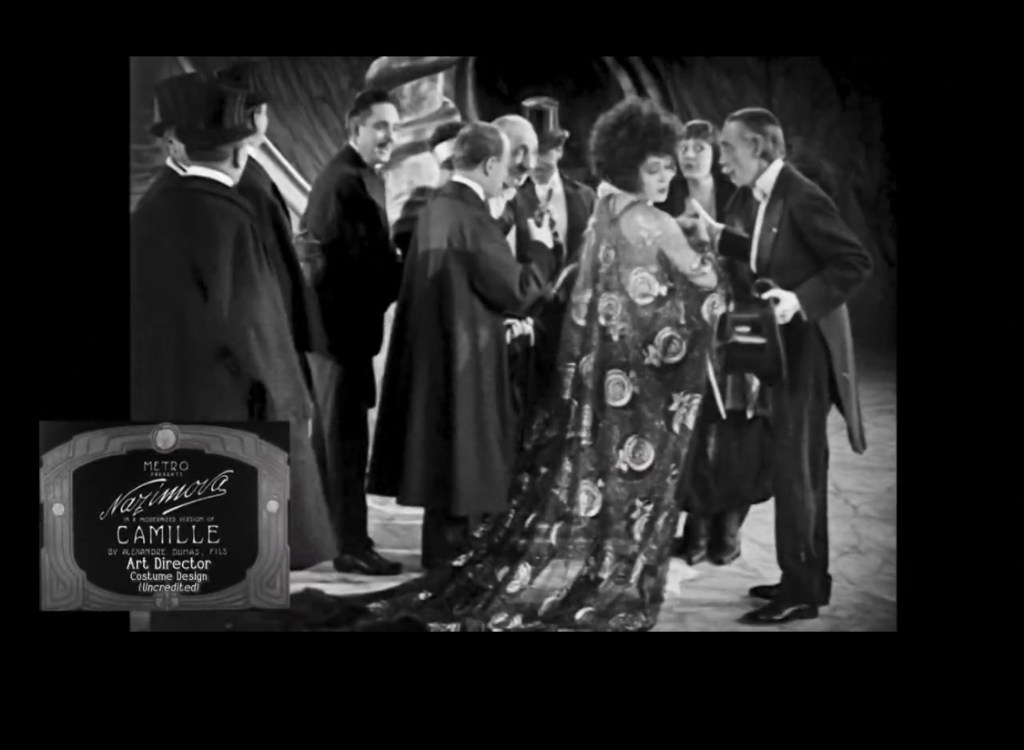
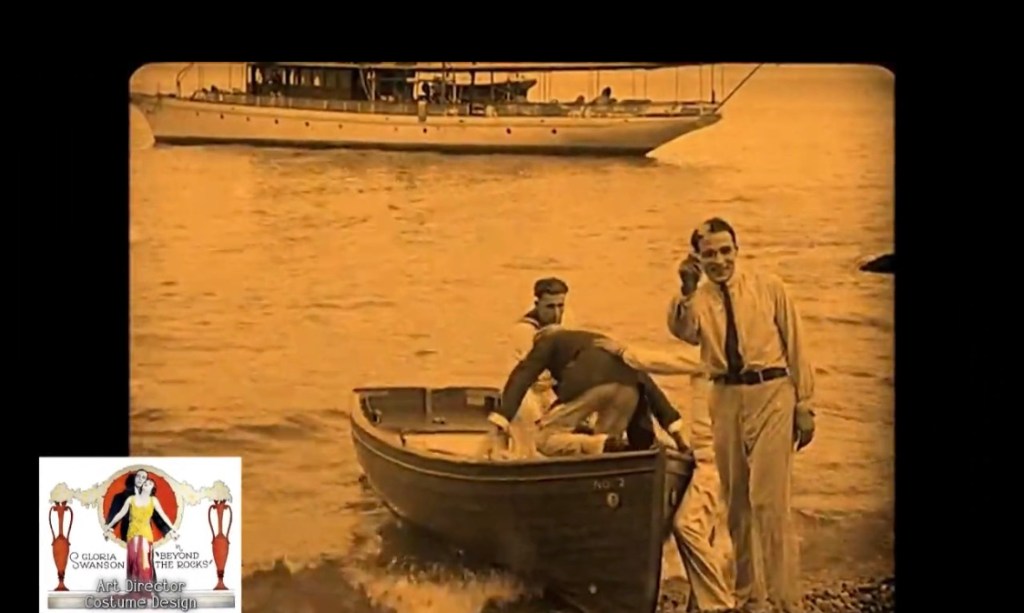
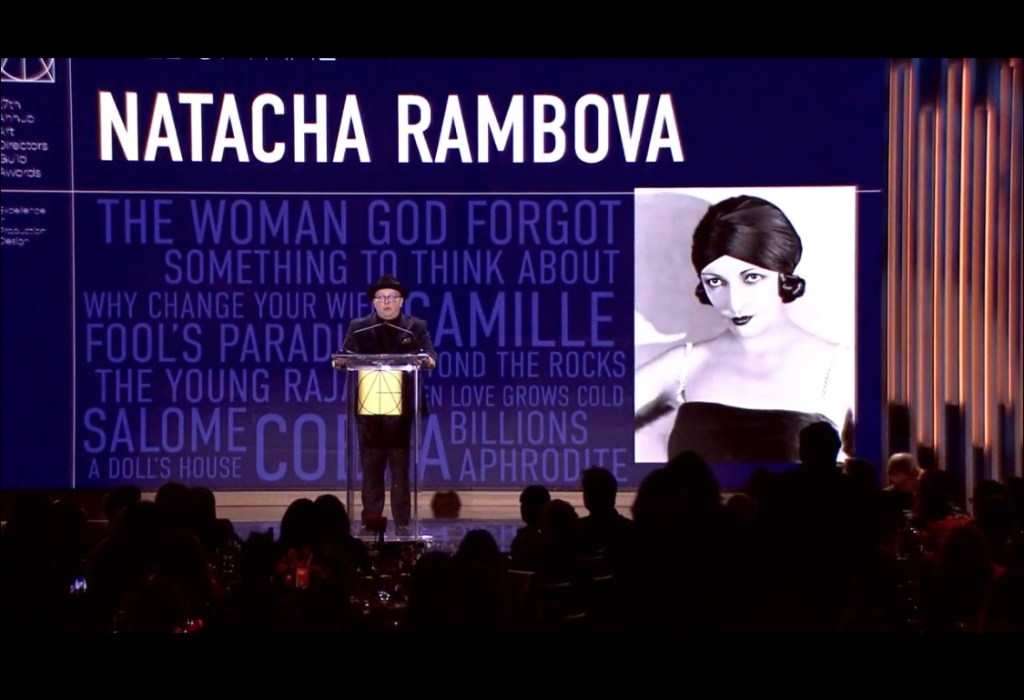
On 18 Feb, I virtually attended the 27th annual ADG Awards, Los Angeles, CA. The highlight of the evenings award event was the induction of artistic production designer Natacha Rambova into the ADG Hall of Fame. It’s not everyday, one sees an image or career highlights of a prominent artistic professional of the silent film era on the modern screen. I wonder how many in the audience, know of who she is or understand the importance of her contribution to the movie industry. The President of the ADG talked about the importance of Art Designers and were the heart of the movie making process. He indicated by inducting Natacha into the Hall of Fame her legacy of work will be celebrated and continue to inspire for years to come. When it came time, there was a montage of her life’s work on the screen and there was NO applause from the audience. That’s right, no one in the audience understood or had a clue of who she was or what was the silent film era. Why are audience members there who work in the industry who have no of the early history. It’s this authors opinion, Natacha Rambova finally received the official recognition she deserved. However, I was disappointed by the apparent lack of empathy by audience members towards acknowledging Natacha.

Categories: Uncategorized
Tags: 27th ADG Awards, Hall of Fame inductee, Natacha Rambova


Jan 2023 – Mineralava Dance/Beauty Tour 100 Years Old
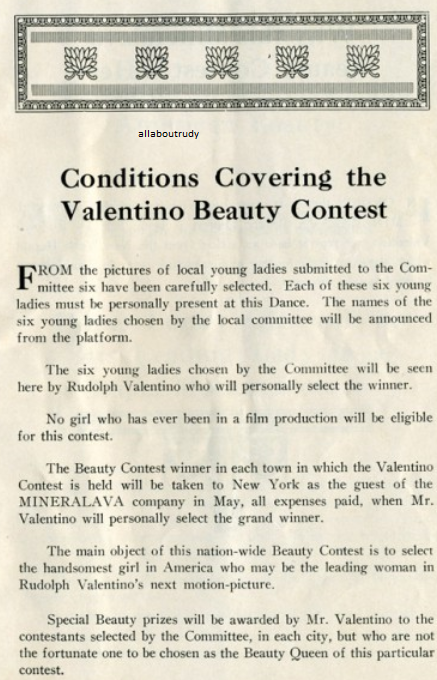
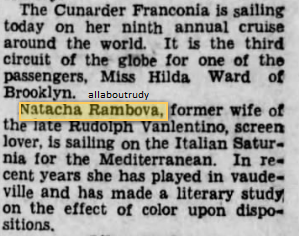
In 1923, it was 100 years ago, Rudolph Valentino and Natacha Rambova made history with their Mineralava Dance Tour/Beauty Contest. This event was sponsored by Mineralava who was owned by Richard Hudnut, Natacha Rambova’s step-father. During this year, there will be many related articles on Mineralava Dance Tour giving the viewer an opportunity to see what this was all about.
I hope you enjoy this upcoming celebration of all things Mineralava Dance Tour and wish all viewers a Happy New Year.
Categories: Uncategorized
Tags: Natacha Rambova, Rudolph Valentino
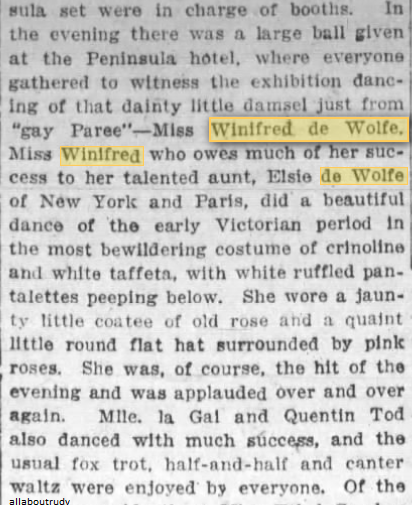
15 Nov 1914 – Winifred de Wolfe Dance Recital
Categories: Uncategorized
Tags: Elsie De Wolfe, Natacha Rambova, Winifred De Wolfe
1966 – Jetta Goudal vs. Natacha Rambova
Jetta Goudal had been cast as the female lead opposite Rudolph Valentino in The Sainted Devil. In a highly charged, tabloid filling confrontation, Valentino’s wife, Natacha Rambova, demanded that Jetta be dismissed from the film. There are conflicting versions of the clash of the divas. Some alleged they fought over Goudal’s proposed wardrobe for the film and others suggest that Valentino and Goudal were attracted to each other and Rambova was jealous. From the beginning of the filming of “The Sainted Devil” it was clear that something was bound to happen between two such strong personalities. The part Jetta was to play required elaborate costuming and with her exotic taste was nothing short of fantastic when exerted upon the process of conceiving her gowns for the film. Two eminent costume designers found them so difficult that they refused to accept the more spectacular designs. Natacha swiftly settled the matter and booted Miss Goudal. In her own memoir, Natacha Rambova insists she was falsely accused “of sacrificing Rudy for my own selfish ambitions—I wished ‘to become a power in the industry.’ Fortunately, my conscience is entirely free from this despicable accusation.
In 1966, New York Times obituary of Miss Rambova, Jetta Goudal brings up again the incident and insisted it was Rambova’s jealousy of her beauty that caused her being dismissed from the film. However, Natacha Rambova alluded that the quarrel began when she criticized Jetta Goudal’s movie wardrobe. ‘Also, the obituary alleges Jetta was reported to of committed suicide after she was dismissed from the movie. It is not clear whether Jetta’s emotional distress was a reaction to losing the man, losing the fight, or losing the film role. Rudolph Valentino and Natacha Rambova were divorced a year later. Rambova insisted that gossip had caused the divorce
Categories: Uncategorized
Tags: "The Sainted Devil", Jetta Goudal, Natacha Rambova, Rudolph Valentino
14 Oct 1939 – Rambova Refuses to leave Peke
Love me Love my dog says Natacha Rambova one-time wife of Rudolph Valentino. So the United States linear Manhattan sailed away today without either. All because ships officers insisted firmly that Miss Rambova could not have her Peke in a cabin with her. The Peke would never live to set foot on home soil, she told them tearfully, if they were separated. They turned a deaf ear.
Categories: Uncategorized
Tags: Natacha Rambova, Rudolph Valentino


12 Sep 1926 – Actor Bares Tragic Crash of Home Life
I have been reluctant to write on this subject, but so many interviews, purporting to come from me, have been printed that I think it maybe best to put myself on record over my own signature. I shall have to disappoint the reader who expects something sensational. I did not beat Natacha Rambova my former wife. She did not throw flat irons at me. Sorry but we did not do those things and no did I object to her having a career her own career. Nor did I demand that she bear children. I wanted her to have what she wanted, in so far as I could get it for her. In other words, I wanted her to be happy, and tried as any man would, to make her so. There was never any issue about her staying at home and keeping my house. No woman that anyone knows stays at home and keeps house anymore. Los Angeles wives have their own cars, as a rule, and go and come as they please. Fortunately, I was able to free my former wife from housework and from all forms of drudgery. If she wanted to keep house I would have “fired” the servants and let her “express” herself in that way. If she wanted children, I would have engaged nurses and urged her to “express” herself in that way. She did not want to do these things and frankly I did not give them any thought. Dissatisfaction in marriage as in other family life is apt to be cumulative. There is no sudden erratic or dramatic offense which determines one to “leave home” to be rid of the presence and influence of relatives and out of the environment at all cost. There is often a steady decline in mutuality of interest, in sympathy, in esteem. The child which leaves the home does so because of a long series of misunderstandings, or thwarted plans, which leads him to believe that he can best accomplish the thing he feels it in him to do if he is away from those who blindly or selfishly or arbitrarily “love” him. He suffers a loss of material things the safeguards and comforts of home goes hungry, or maybe or is undernourished over a period of years to enjoy a mental and spiritual freedom which seems to more than compensate for the lack of what his family considers “the real things”. So, it is apt to be with a young man who is too closely circumscribed by an ambitious girl. At first, she stimulates him to “bigger and better” things. She is indeed generous and helpful. He is touched and flattered by her consecration to his aims, her devotion to his interests. Eagerly they plan his career. He welcomes her counsel, and following it, finds it sound. Sound, because in the first flush of life, while she is much enamored of him, she is thinking with her heart, rather than her head, and intuitively arrives at correct conclusions. She has “guidance’s” and powers of divination which calculating women can never exercise for the man she seeks to promote for gain and self-aggrandizement only. They marry. She gives up her career, if she has one, to better and more completely aid him in his. Almost imperceptibly but slowly and surely her attitude changes. It gradually dawns on him that, while she has given up her career, she has not given up a career. She has started on a new one, which is to “manage” and make a success of him. Now, you will say, a man should be deeply grateful for that. Yes, and no. Wait a minute. In the friendship and courting period’s, she considered him, weighed and advised him with relation to his profession or art he was trying to master, with relation to the public or patrons he was trying to serve, to please, to win, to hold. She was anxious for him to do the finest and best thing it was in him to do; and at the same time, please or conciliate those with whom he had to deal promoters and make those little concessions to pride and vanity and even pocketbook, which would make for lasting success in the long run. She was disinterested, and able to see him at long range, and his true relation to others. With marriage and the needles and pins routing of everyday living servants, household budgets, clothes, his friends, her friends, his family, her family and the like she inevitably began to consider him, and then, also, with relation to herself and her relation to him. Would they interfere, would they presume to give advice or make plans without first consulting her? In other words, would they usurp her position as friend, guide, and philosopher, would they jeopardize her place and power? Then there enters the ever-present question of money much money. Keeping up an establishment, entertaining, and all that, seems so necessary; and if one does not make money, more and more money, one falls behind the procession and of course, once having got in the procession, there is nothing for it, it seems, but to stay in. There is the couple ahead, which would turn and stare, and the couple behind, which might titter, and the couples on either side who might exchange knowing looks, as if a pair fell out and walked along quietly by the side of the road. Acquaintances must be appraised according to their places in the procession. People must be cultivated or discarded in direct proportion as they might help or hinder one in “getting on” socially, professionally, or financially. Those lovable and improvident soul’s writers, artists, musicians who follow their own rather than publics tastes must not be “picked up”. They “aren’t” anybody, don’t know anyone of importance and are often a little “seedy” in appearance, and run down at the heel. The most charitable in the procession regard them as a lot of harmless nuts. The others are careful not to regard them at all. Were they alive, and living in Hollywood, Byron and Wilde would be very much in demand at smart affairs? The Browning’s would be sought after by an exceedingly small clique. Keats, Shelly and Burns would scarcely get a bid to dinner, no matter how badly they might need one, nor how much bright and beautiful conversation they might bring to a table. Now, I am being a Latin, am not what you Americans call “practical” by later. No Latin is, or can be, practical 24 hours a day. We maybe as mercenary, or more mercenary, than you in the barter of our wares, or talents; but we spend ourselves and our money in different ways. This is an experience which I believe I have in common with the American husband that after a few years of married life he finds only those of his friends of whom his wife approves, remaining; only those of his or her relatives of whom she approves, visiting; and all of her friends, whether or not they like him, or he them, invited to the house on each and every occasion. Well that happens when a man discovers he is being “managed” in every department of life life, those in which he may need direction, as well as those in which for the sake of his own development, he should be allowed volition and selection? The result is that all “management” becomes irksome to him. He suddenly becomes as assertive as he has been “easy”. He finds that he can hire a competent counselor and business advisor, and “live his own life” so to speak. What does the wife do when her husband’s career is taken away from her? She can go back to her own career, or take up a new one, or wash her hands of careers, and be just a wife; for after all a business manager has not tender womanly breast a tired actor may lay his head of an evening. If her love is greater than her pride, she will surrender gracefully, and make the adjustments which will enable them to start all over again on a new basis. If her pride is paramount, she will probably slap him across the face with a bill of divorcement. The world knows what happened in my case, and that is the answer. I have no regrets, no remorse. I enjoyed being married to Natacha and did my utmost to make her happy. Whatever she may say or think now, she too got a lot out of our life together both in material things and good times. She cannot tax me with the old “you have taken the best years of my life etc.”. The best years of her life are yet before her. She is as ambitious as ever she was, as high-spirited, as bright and keen. She can still achieve anything within her logical range. I bear her no ill-will and wish her the best of success. Neither am I broken-hearted. Nor am I out of a home. I have a secretary, and I have a few dependable servants, so I am week taken care of. This summer I brought with me from Europe my brother and his wife. They supervise my household, and I may entertain whom I like, when I please; and have that “monarch of all I survey” feeling which is so nourishing to the male ego. Perhaps this account of my second wreck on the reefs of matrimony will give the lie to the line which has been tacked onto me. That I am “a great lover” both on and off the screen. I suppose it is intended for a compliment, but I do not relish it. I wish above everything to be known as a great artist and am working earnestly and steadily to that end. I hope eventually to be given a picture which will demand something more than a physical performance, and I want to be ready when the times comes. After all, a man gets tired of being talked about and written about as though he were a processional “handsome” man. For this reason, I need to concentrate on my work and plan for my future as never before. And what may happen is on the lap of God. However, I must admit that I am not insensible to the charms of the fair sex.
Categories: Uncategorized
Tags: Natacha Rambova, Rudolph Valentino
2 Sep 1922 – Idol of Fans
In an exclusive interview with a representative with the NY Times yesterday Valentino announced he will not return to Hollywood pending the outcome of his litigation with Famous Players-Laskey. Papers in the action will be filed early next week and yesterday the company retained Guggenheim, Untermyer and Marshall in an attempt to force Valentino to continue the program outlined in his long-term contract. All day yesterday, the idol of thousands of film enthusiasts sat in a rear room of the office of his counsel, Arthur Butler Graham, at 23 West, 43rd Street in preparation of Valentino. It is understood that Sim Untermyer will be arraigned by Graham in the courts. To prevent Valentino with another production Guggenheim, Untermyer appealed to Hays, High Chief of the affidavit stating the actor’s case will be forwarded today by Valentino’s counsel. Although the fact is generally known Valentino far less compensation the players of equal import pictures. His salary is to be $1200 a week. Valentino contends Paramount netted more than $1,000.00 in “The Sheik” his first star vehicle, and that “Blood and Sand” his current picture will nearly double that amount he says, is not commensurate with these profits and furthermore, he insists Famous Players-Lasky abrogated its part of the contract by failure to provide the publicity agreed upon. After Valentinos marked success in “Four Horsemen of the Apocalypse” Metros dramatization of the Ibanez novel he was called to NY by Famous Players-Lasky and offered a contract at a sum that to the theater gods and goddesses is nominal. He refused at first, but when the company agreed to augment the salary with extra publicity he signed for a period of several years. Sleek of hair as always and with a ring of beaten silver on earth has his little fingers Valentino smoked innumerable cigarettes as he discussed his case yesterday for the first time since his arrival in NY. For days, he has been incognito refusing interviews and remaining in complete obscurity. “I will not return to Hollywood at the present time: he said. The reports that I will desert America and return to Italy are ridiculous. I have made great success in America and shall remain here. “If I return to Italy it will be only for the purpose of visiting my parents whom I have not seen in 10 years. I have no plans for contracts with other companies. I do not intend to make any until this matter has been settled satisfactorily. I would like to have it understood that I will stand by any contract I make, as long as the other party does likewise. He refused to discuss his private affairs and ignored mention of the name of “Miss Hudnut”, whom he married to in Mexico before the interlocutory degree from Jean Acker had become final. But from another and no less authoritative source the Times learned the Valentinos will not live under the same roof until Jean Acker has passed legally of Rudolph’s life forever. Along Broadway in the motion picture offices, Valentino is known as the “gold mine of the screen” according to his counsel. When his case is called Graham expects to introduce as witnesses the editors of film magazines, who will testify that 70 to 80% of the “fan letters” about screen players received by these publications concern Valentino. Since her marriage to Valentino and return to New York, Miss Hudnut has evaded reporters. She remained for several months at the Hudnut summer camp Foxlear, at North Creek, NY and at one time was said to have booked passage to Europe which for some unexplained reason was cancelled. No she has moved into the Biltmore Suite of her foster parents. She will not return this season to the employ of Nazimova, whose art director she was. Although the Valentinos are living apart, there has been no break in their happy relations. It was admitted yesterday they have been together frequently and will continue to see one another at intervals until the California law permits them to take up their life together.
Categories: Uncategorized
Tags: Natacha Rambova, Rudolph Valentino, Winifred Hudnut
16 Aug 1931 – West East Portraits
In the 25th story art studio in the Roerich Museum, New York City on the night before he sailed on the Mauretania bound for Paris and India, Svetoslav Roerich put the final touches to the last portrait he had completed during the Spring and Summer. Svetoslav Roerich work as a portrait painter is known to the hundreds of visitors to the Roerich Museum through an extraordinary and moving piece of realism the portrait of Miss Natacha Rambova, his fiancé. The artist hosted a private showing of the painting titled “A Young Woman Composer” better known as Natacha Rambova former wife of departed Silent Film Star Rudolph Valentino. Miss Rambova originally from Salt Lake City but lived in the New England area is a brunette with a singularly handsome little head and she has draped herself in an old Japanese robe of silvery grey, the background being some stuff in a Japanese design of the same general tone as the robe. Miss Rambova makes a more brilliant figure, seated in three quarter length in a rich, pale golden robe with a black border. She wears a golden turban of the true Indian mode and around her neck is a band of golden ornament that would be barbaric if it were not so sophisticated. The lovely face gleams amidst all these golden tones with an intelligence and a charm that almost dims these auriferous surfaces.
Categories: Uncategorized
Tags: Natacha Rambova, Svetoslav Roerich
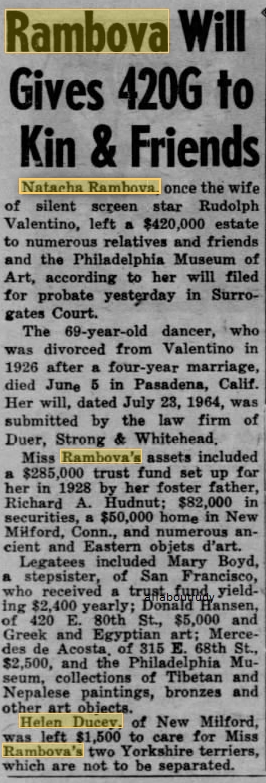
29 June 1917 – Theodore Kostloff in CA
Theodore Kosloff. a graduate dancer from Petrograd and Moscow imperial ballet schools, formerly a member of Serge de Daighlleff’s famous Ballet Russq and latterly at the head of a miniature Ballet Kusse which came to Los Angelos last winter on the Orpheum circuit, has become so enamored of California and the movies that he has Joined the local colony of artists. He is working in conjunction with Cecil de Mille at the Lasky studios at Hollywood. Vera Fredowa, Natacha Rambova, Alexandre Ivanoff and other dancers of the Russian group seen here last winter also have taken quarters in this city on St. Paul street.
Categories: Uncategorized
Tags: Natacha Rambova, Theodore Kosloff

Categories: Uncategorized
Tags: Death of Rudolph Valentino, George Lewis, Mrs. Rudolph Valentino, Natacha Rambova, What Price Beauty
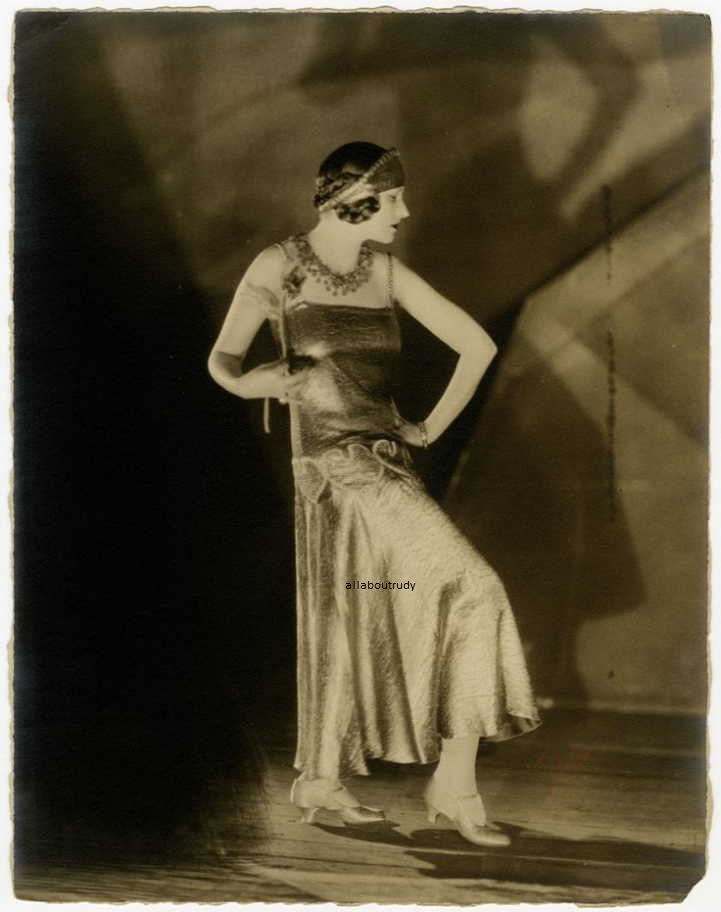
 All About Rudolph Valentino
You must be logged in to post a comment.