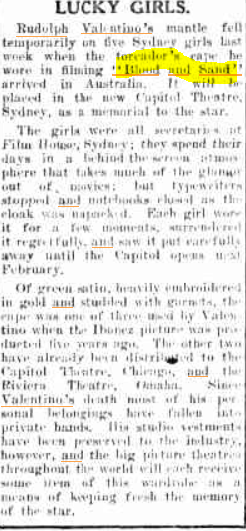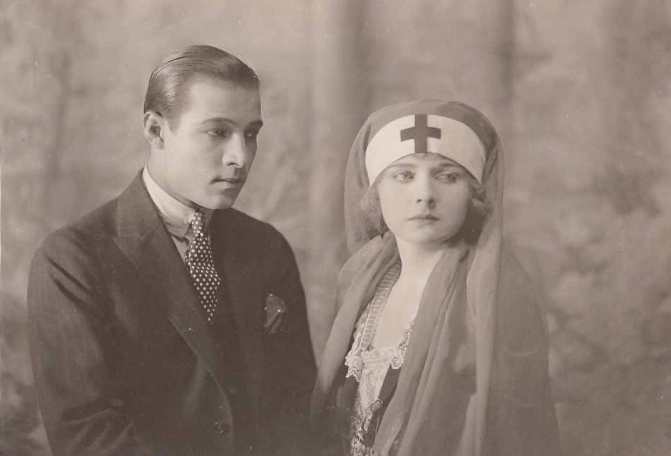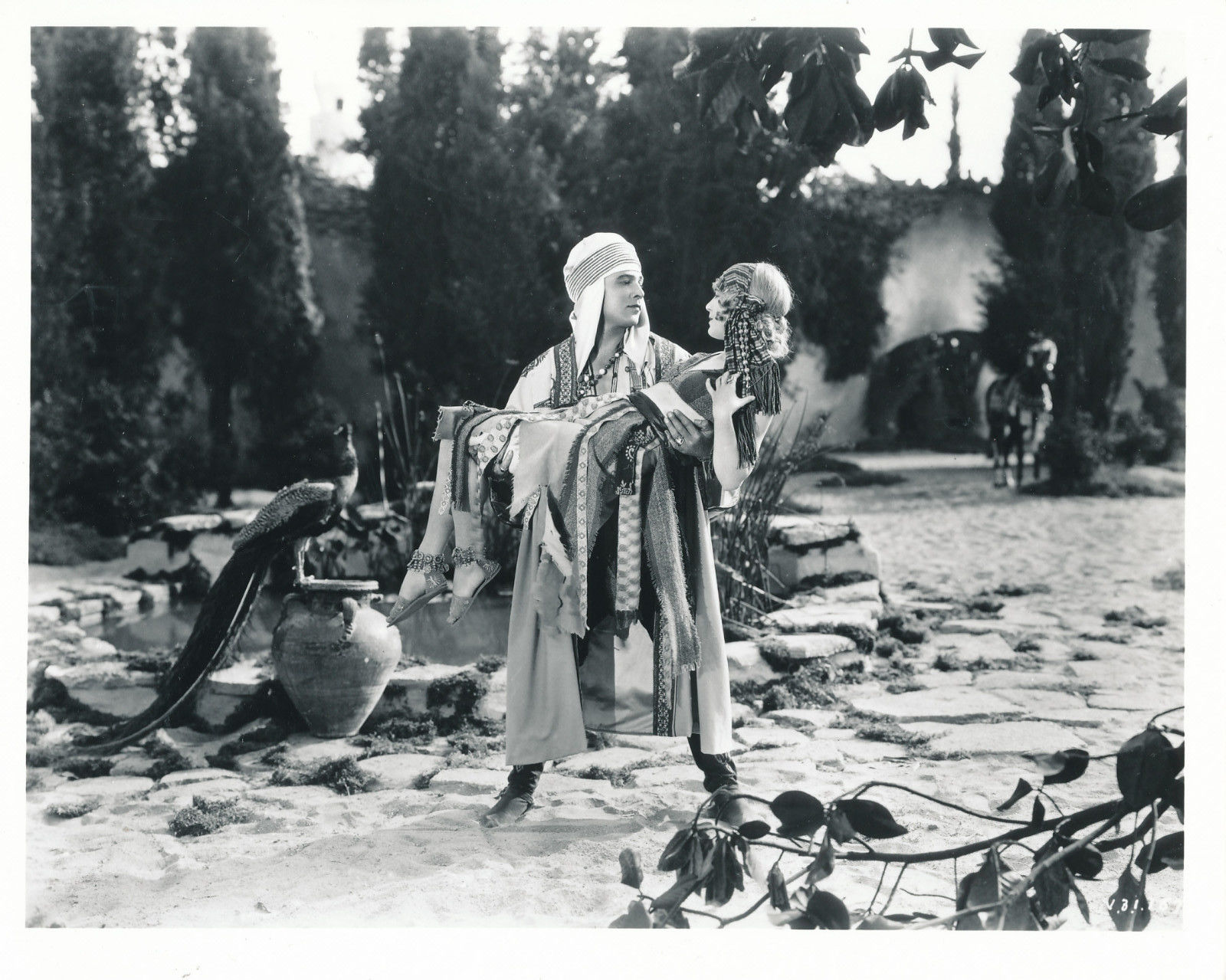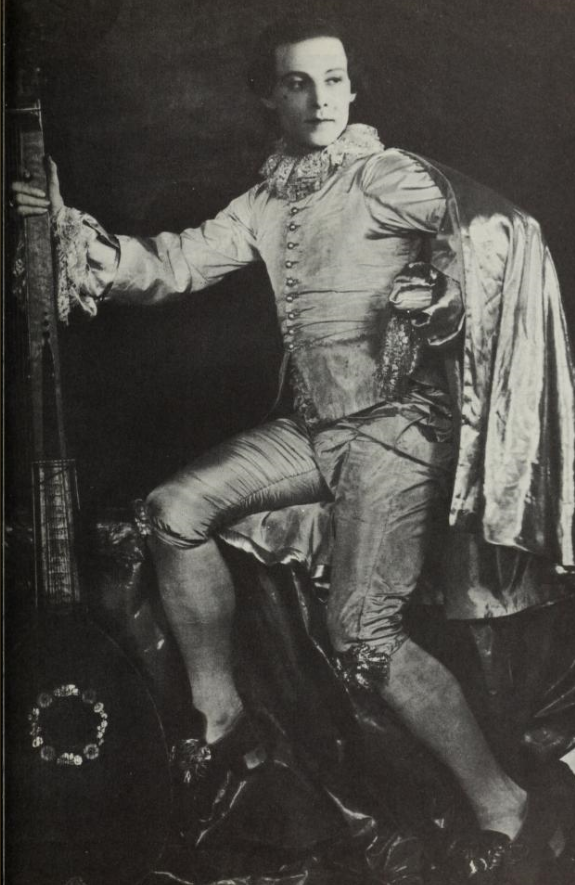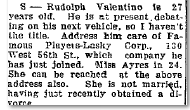
Posts Tagged With: Rudolph Valentino

12 Jul 1936 – Jean Valentino in Hollywood

When you enter the reception room at the MGM the chap who takes your name is just as likely as not to be Jean Valentino, nephew of the late Rudolph Valentino. He’s been working there quietly, since March of last year, and is, they do say the sole support of his father Alberto and mother. Jean is dark like his uncle but doesn’t resemble him. He’s in his yearly 20’s and has no acting ambitions. He tinkers radios in his spare time and would like to be a sound engineer. One of these days, probably he’ll be sending his own name in.

Categories: Uncategorized | Tags: , | Leave a comment

24 Aug 1926 – In Memoriam

Stars shining for their hours star we make immortal by our tributary feet. The teeming skies that new knew a god so strangely sweet. As this bright memory that fills our hears and brims our eyes with tears as bright. As the sharp pain that circled round the world that death-like night. Skies filled with stars- one throbbing, empty place. Gold as the love we bear dark as desire. Shriving from tender mists out of our hearts famine and fire.

Categories: Uncategorized | Tags: | Leave a comment

Capture

Categories: Uncategorized | Tags: | Leave a comment

“Mr Valentino was greatly cheered during his last days by the thousands of messages sent him by his friends and motion picture admirers, and while he was too weak to read all of them, it was a great comfort to him to know that so many friends were interested and sympathetic”.. George Ullman, on the passing of his friend and associate.

Categories: Uncategorized | Tags: , | Leave a comment

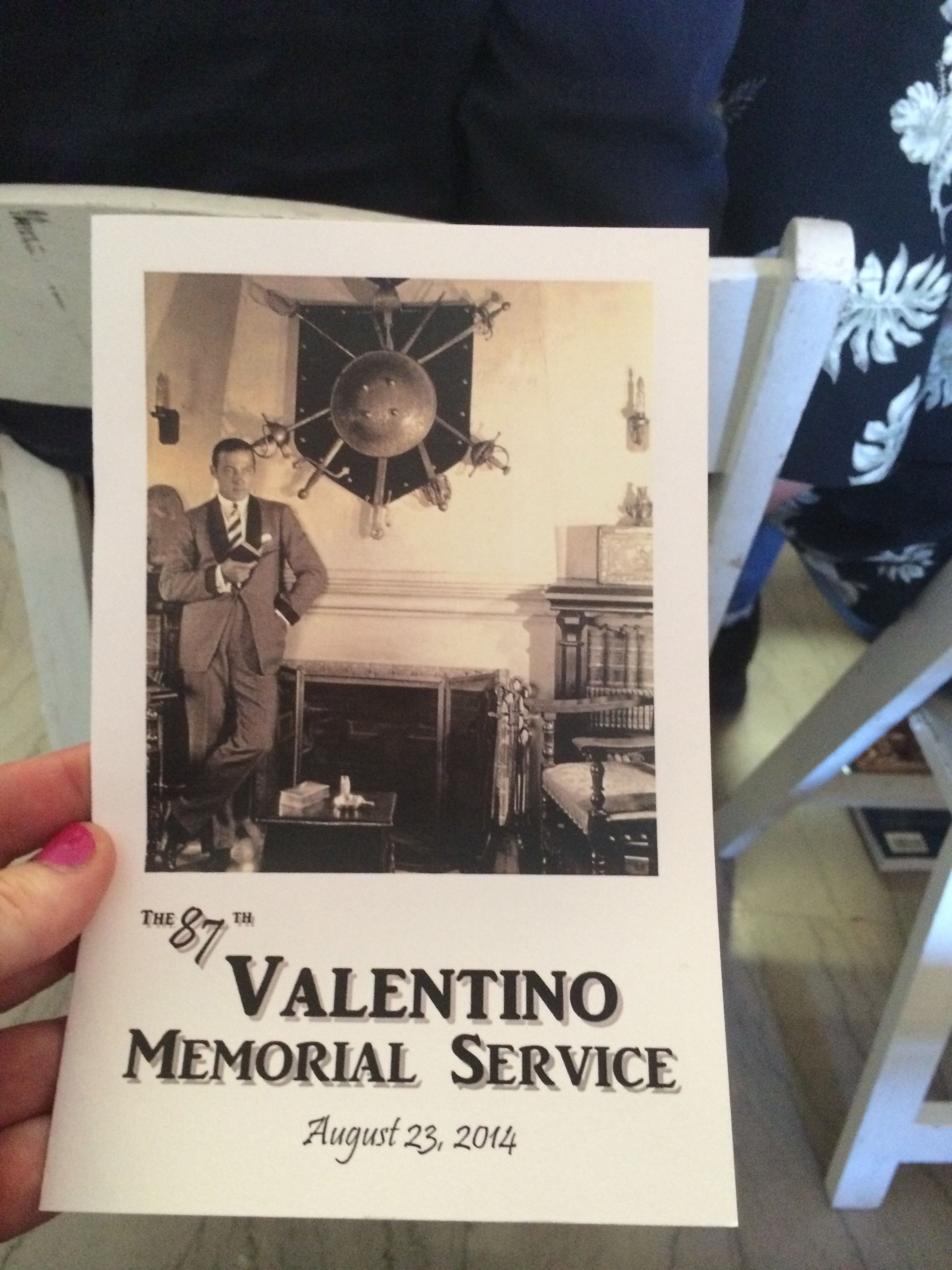
23 Aug 2014 – 87th Annual Rudolph Valentino Memorial Service Review

242

This year marks the first time I attended the annual service that celebrates the life of Silent Film Star Rudolph Valentino. I was amazed at the amount of like-minded people whose sole purpose was to visit and pay their respect to a remarkable man whose life was cut short but lives forever on film. The location is always the same which is Hollywood Forever Cemetery in the Cathedral Mausoleum where he is interred and the date and time are always the same 23 Aug at 1210 hours.  Every year there is a different theme. The layout is very respectful and dignified. The year’s program had a moving video of Valentino’s birth place followed by one of the guest speakers sharing his experiences of traveling to Rudy’s birthplace. There was a wonderful reading out of Rudy’s Book Day Dreams, a memorial tribute video and the wonderful Wegter Family who sung two songs that were specially written for this memorial service. There was another moving video of Falcon Lair: A Last look followed by Mr. Christopher Riordan another featured guest speaker who shared his memories and historical facts on Falcon Lair. The service ended with Ms. Stella Grace leading the audience in the 23rd Psalm.

252264265

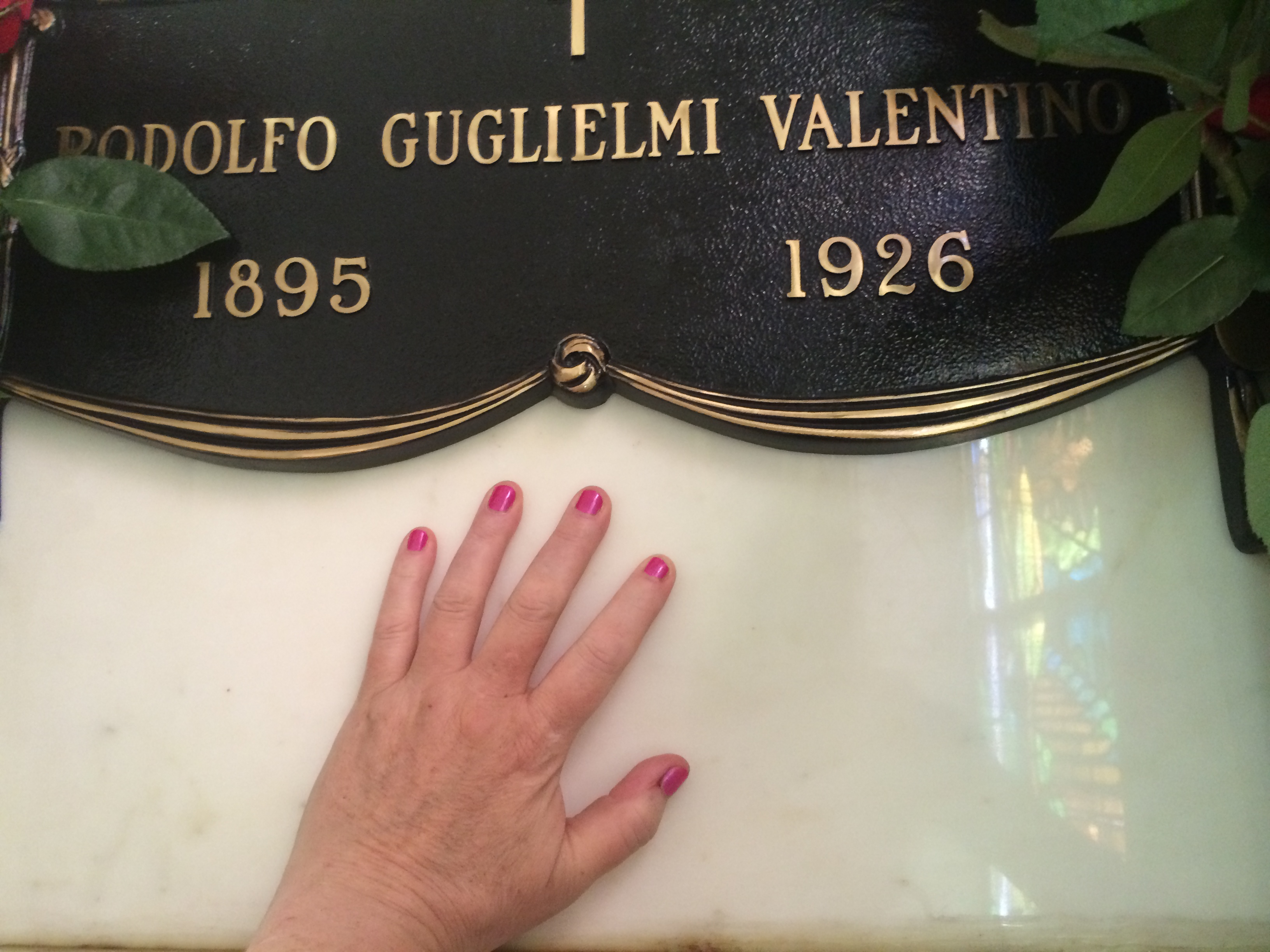
Afterwards everyone had an opportunity to speak with one another and take pictures of the wonderful display that was set up towards the front of the service. I was honored to of met so many people that I had always wanted to meet the gracious and remarkable Mr. Terhune, Ms. Grace, and of course my personal hero Mr. Riordan. Finally, I slipped away to pay my respect to my other personal hero Rudolph Valentino. This was the experience of a lifetime and one that I will never forget. Of course, I do plan on attending next year. For those that have not gone I encourage you to do so.


269

Categories: Uncategorized | Tags: | Leave a comment

cropped-capture1.png

Categories: Uncategorized | Tags: | Leave a comment

“The camera was a magic lantern when Rudolph Valentino walked before it, giving him a double life full of light and terrible shadows.” –Adela Rogers St John

Categories: Uncategorized | Tags: | Leave a comment

19 Jul 1923 – Ritz-Carlton Pictures Dinner

In his speech the other night at the dinner given by the Ritz-Carlton Pictures, Inc Rudolph Valentino said that he objected to a particular clause in his contract which set forth that if “his manner or bearing’ was not in accord with the desires of the Famous Players Laskey Corp he could be laid off for 6 months. He declared that it was apparently for the producing concern to determine at any time whether his “manner of bearing” was not according to the clause in the contract. He also said that he had refused to work for the concern even after an offer of $750,000. Although J. D. Williams is optimistic regarding Valentino’s contract with Famous Players the latter firm, from hints dropped by some of the officials, is not disposed to release the actor from his contract, unless he is successful in court.

Categories: Uncategorized | Tags: | Leave a comment

Aug 1926 Rudolph Valentino’s Trip Home

The Santa Fe railroad magnanimously had announced from Chicago that officials were ordered to honor the bottom half of a round-trip ticket Valentino had bought when he came to New York, provided burial was in the West.

Categories: Uncategorized | Tags: | Leave a comment

tomorrow

Categories: Uncategorized | Tags: | Leave a comment

111

Categories: Uncategorized | Tags: | Leave a comment

“I don’t want to leave you Murray. You and I are in tune. You do things to my heart.” — Rudolph Valentino on Mae Murray

Categories: Uncategorized | Tags: , | Leave a comment

May 1923 – What’s the Matter with the Movies?

by RUDOLPH VALENTINO

There is nothing the matter with the movies that cannot be
remedied. This is indeed fortunate–for the movie has earned
an important place in the life of the American public. No one
will deny that motion pictures have been helpful, instructive
and entertaining. No one doubts that they can be a great
influence for good–or evil. And everyone knows they are too
big to be ignored. They have assumed such importance as to
incur a proportionate responsibility. And yet those entrusted
with their development choose to close their eyes to the writing
on the wall. The principal trouble with the motion picture today is that
it is an industry, not an art. It has been too highly
commercialized for its own good. Of course, the business man
is necessary to the motion picture, but not to the exclusion of
the artist.
It is right and good that Fords and locomotives and adding
machines and safety razors and lead pencils shall be
standardized and turned out according to hard and fast
specifications–and that quantity production shall cut down
overhead. It is also good business that the distributing
station be standardized and handle the usual full line of
equipment at standard prices.
But those methods are bad medicine for motion pictures.
The film made to the dollar-ruled specification, turned out on
a quantity production basis, added to the cut-and-dried program
and then released throughout the trust-controlled theatres is,
without doubt, a specimen of efficient industrial production–
but as an artistic entertainment it is a sad failure.
No one doubts that pictures can be produced under this
highly efficient business method much cheaper and faster than
by the old “hit-or-miss” artistic way–and that these pictures
can net their producers and distributors a much larger return
per dollar invested than those handicapped by artistic
requirements.
But, after all, what are you spending your money in your
local moving-picture theatre for? To see artistic, fascinating
pictures or to build fortunes for those in control of the
industry? There the heart of the problem is exposed–the
average motion picture is made to fatten purses, not to
entertain the public.
Commercial motion pictures have their rightful usage, as
have also less artistic films of entertainment, just the same
as commercial art has its proper place, and commercial music
and jazz, and advertising and cheap vaudeville and burlesque.
But how would you like to discover the powers that be
insisting that you must take your art and your music and your
literature “according to our program.” Suppose you went to the
Grand Opera and heard a little factory-produced opera, then a
little jazz and then a half hour of song “plugging” flavored
with ten minutes of Galli-Curci or Chaliapin singing a nursery
rhyme. Or suppose when you purchased a set of Shakespeare you
found every other page devoted to advertising or publicity
writing or that your evening to Ethel Barrymore was four-fifths
taken up by an act of cheap melodrama, a little burlesque, a bit
from the minstral and an acrobatic squad. Suppose that when you
attempted to buy pictures for your home you discovered they
could only be shown in connection with commercial drawings.
Yet you get just about such a hodgepodge when you attend a
motion picture theatre running trust-controlled programs. And
with the trust growing stronger every day the independant
exhibitor is being driven farther and farther into the corner.
All of which is very fine for efficiency and profit, but very
bad for art and entertainment.
In my opinion 75 per cent of the pictures shown today are a
brazen insult to the public’s intelligence. The other 25 per
cent are produced by such masters as D. W. Griffith, Douglas
Fairbanks, Mary Pickford, Charlie Chaplin, the Talmadge
interests–and a few other independent stars and producers who
realize that the making of pictures is an art, not an industry.
Such splendid features as “Broken Blossoms,” “Way Down East,”
“Tolerable [sic] David,” “Little Lord Fauntleroy,” “Robin Hood,”
“The Kid,” “When Knighthood was in Flower,” along with a few
other productions which rank among these, have invariably been
received in such a way as to prove that the American public
wants and appreciates artistic productions. The next thing to
do is demand them. The public always gets what it _demands_.
All of these pictures were produced by independent companies
who loathe to follow the factory cut-and-dried methods perfected
by the picture trusts.
The various stars and directors who have fought and dared
to produce films of real merit are keeping faith with you in
spite of the handicaps they face. They are courageously
battling the interests that are monopolizing not only the
production but the exhibition of motion pictures. They deserve
your unqualified support. The only hope for the future of the
moving picture lies with them. Support them and you will enjoy
pictures made by conscientious producers, from real stories,
pictures in which the artists have an opportunity to give you
the best they have.
Under the present system the actor is treated like a factory
hand–is driven helter-skelter through a picture by a director
who is afraid of the slave-driving studio manager who, in turn
is spurred to increased production by producers. And these
producers have but a single motive–profit.
Such producers established themselves by imitating, in a
superficial and insincere way, the artistic productions of D. W.
Griffith, Mary Pickford and others by cashing in on their
creative genius.
Then they were merely parasites. Now they are infinitely
worse. Instead of merely imitating, they are attempting to
crush the conscientious producer. And their method of crushing
is efficient–as is every other business scheme they have
worked out.
The blade with which they are trying to knife the producer
of aritistic pictures cuts two ways. First it hamstrings him
and then it cuts off his lines of distribution. Process No. 1
is to discredit the stars that work with him and at the same
time reduce to a minimum the value of the production on which
he is working.
The most efficient way to discredit stars is to make them
common–to belittle their work; to prevent them from expressing
their own interpretation of art; to compel them to perform
poorly.
Name over to yourself a dozen of your favorite stars. When
you think of moving picture stars you think of them. Now
suppose that eight of that dozen were hired by powerful
syndicates and put to work on cheap pictures. Suppose that the
pictures they made were weak and their work was unconvincing.
Suppose each of them made four pictures, or even six or ten
pictures, to every picture one of the other four made. In other
words, suppose that of every ten pictures featuring your
favorite stars nine were weak and and the stars’ work most
disappointing. Wouldn’t you begin to feel that, after all, it
was not the star but the picture that counted?
And the method of discrediting real artistic feature
pictures is as simple. D. W. Griffith produces a marvelous
spectacle–the work of countless months of time and the genius
of true artists. It impresses you mightily. You must see the
next spectacle of that kind when it is released.
So the “industrial” producers figure. Before D. W. Griffith
can produce another masterpiece they flood the theatres with
dozens of cheap imitations, each heralded as the peer of
Griffith’s best work. So grossly are they misrepresented, so
flagrantly are they mis-advertised and so miserably do they
fall below your expectations that you naturally “swear off”
spectacles for the rest of your life.
“Who suffers?” The conscientious producer. No matter how
good it may be, his next production is almost guaranteed a
failure, now.
Meanwhile the imitator flits to the next artistic production
and proceeds to copy it, cheaply. In doing so he shackles a
star to a weak part and then rushes him through the picture,
thus killing two birds with one stone. For the public feels it
has been hoodwinked by stars and features.
As real stars and real productions are all the independent
producer with the conscience has to offer, he suffers once again.
Do you wonder then, that a moving-picture actor whose hope
for the future lies in his work of today repudiates an unfair
contract rather than be a party to the ruination of good
pictures?
That is why I have refused to work for picture butchers at
$7,000 a week on cut-and-dried program features, and have
offered to return to work for twelve hundred and fifty dollars
a week if a competent, conscientious director directs my work
in worth-while features.
The trusts method of curtailing the independent producer’s
distribution is also very efficient. This is accomplished
through its distributing mediums. Again we find its methods
twofold. They sell complete programs, a trick by which the
small exhibitor must show a whole year of their pictures in
order to get any at all–and then he must take the whole program,
just as it is turned out of the mills. The other method is to
secure interest or ownership in theatres and permit them to show
only trust pictures.
So it is not always the fault of the exhibitor who runs the
theatre you patronize if the ordinary program pictures you see
day in and day out are not up to your expectations. He is not
to blame any more than is the artist who appears in the picture
you take exception to. The poor exhibitor, in order to secure
a few good pictures with real box-office value, is forced to
sign the trust’s entire output for the year. And so he must
contract to rent eighty-two or more pictures, though he knows
full well that some will be so impossible he will have to
refrain from showing them and simply pocket his loss.
That is what is the matter with the movies–and that is why
the American public spent only one half as much on pictures last
year as they did the year before. And that is why they will
spend even less next year, if something is not done to remedy
the situation.
The American public wants good pictures and is entitled to
them. The conscientious producers want to produce good pictures
and should be supported in doing it. The real artist-actor
wants to give you the best there is in him. In order to do this
he must be allowed to act in high-grade pictures and take
sufficient time to make them.
Art is the only weapon with which the conscientious producer
and the artist, or star, can fight the commercialism of the
trust producers. Naturally the trust wants to discredit art and
lower the public’s idea of what the standard of pictures should
be. The lower the standards, the cheaper the pictures can be
made; the lower the overhead, the more the profit.
Now you can understand why Rudolph Valentino is not making
pictures. The merciless cutting of “Blood and Sand” threw me
into grave doubts. My experience in “The Young Rajah” verified
my fears. I realized that I was not going to be permitted to
act in real pictures or give the necessary time and study to my
work.
Art? What did that mean to the commercial producers. They
wanted film–thousands of feet of film. And they wanted it
quickly. The quicker the film was made the less the overhead,
and the sooner the release.
So we hurried through. Night after night we worked–
sometimes until daylight. We actually finished the picture
August 10, at three in the morning. Apparently those producers
were convinced that midnight oil is conducive to genius.
I’m not going to hurry through any more pictures, and I’m
not going to be cast to parts that are unworthy of a novice or
a worn-out ham. Other movie actors have taken this stand. Some
have fallen by the way. Some have emerged victorious–Mary
Pickford, Douglas Fairbanks, Charlie Chaplin, the Talmadge girls,
and now comes Harold Lloyd.
Forget Valentino and his little squabble–but keep your eyes
on the independent producers and on these stars. Compare their
productions with those of trust-controlled producers. Remember
that your money is the deciding vote whether the independent
producer prospers and gives you real pictures or whether the
trust monopolizes the whole industry and feeds you what profits
it best. You are to be the judge. I know what your verdict
will be.
I have been asked why the producers so mercilessly hacked
“Blood and Sand.” When the film was completed it went to the
business office. It was measured. It was too long–the most
heinous offense known to the trust–a full six hundred feet too
long. Its extra length meant a little less profit. So to the
butchering rooms it went.
Of course certain parts of it could be re-acted and
condensed and thus keep the continuity clear. But that meant
more time, more money and less profit.
So clip, clip, clip. And the very heart of the film was
cut out. How much that saved, I do not know, but it saved money.
What if the public was a little confused and disappointed here
and there? The picture would get by. Everybody knew it was
good. Why quibble about a scene or two? As a matter of fact
the picture was a lot stronger than it needed to be. And making
pictures too good was simply piling up trouble for the future.
It was spoiling the public. The better you give them the better
they want. The thing to do was to standardize picture quality.
Then they wouldn’t always be demanding the world and all for
the price of one admission.
With that philosophy in mind they made “The Young Rajah”–
and I quit.
Maybe I’m temperamental because I refuse to caper through
rot on the strength of what reputaion I may have earned. But
this I know–the “Rajah” picture was the first step down. After
that the descent would have been steady–and not so slow, either.
Maybe it is unbusinesslike to repudiate a contract that
involves you in producing films in which you cannot possibly
give the public what it is paying for, and in a process of
cheapening that would mark one as a puppet rather than as an
actor. If it is, then I’m unbusinesslike.
It just happens that I have ideals–and hopes. I am sorry
I ever acted in “The Young Rajah.” I will never act in another
picture like it.
The public wants art in pictures and I believe I can put it
there. Doug and Mary and Charlie and D. W. have done it and
I’m going to try.

Categories: Uncategorized | Tags: | Leave a comment

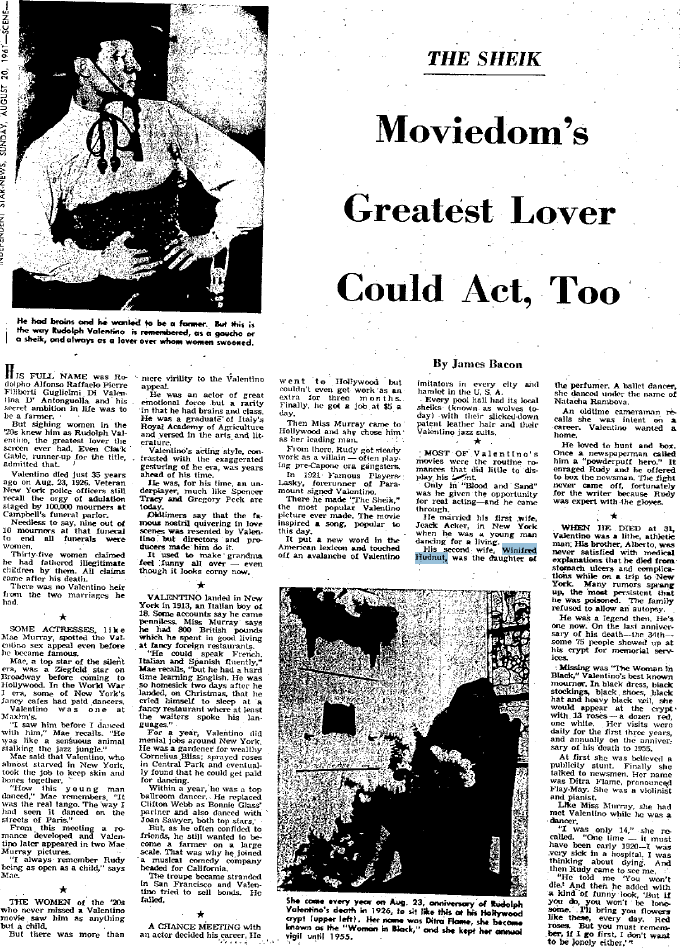
After 35 Years Rudolph Valentino Remains a Legend

His full name was Rodolpho Alfonso Raffaelo Pierre Filberti Guglielmi de Valentina D’Antonguolia and his most secret ambition in life was to be a farmer. But sighing women in the 20’s knew him as Rudolph Valentino, the greatest lover the screen ever had. Even Clark Gable was a runner up for the title admitted that. Valentino died just 35 years ago on 23 Aug 1926. A veteran NY police officer still recalls the orgy of adulation stated by 100,000 mourners at Campbells Funeral Home. Needless to say, 9 out of 10 mourners at that funeral were all female. Thirty five women claimed he had fathered their children but all claims came in after his death. There was no Valentino heir from the two marriages he had. Some actresses like Mae Murray spotted the Valentino sex appeal even before he became famous. Mae was a top star of the silent era, was a Ziegfeld star on Broadway before coming to Hollywood. In the WW1 era some of the NY fancy night clubs had paid dancers and Valentino was one of them at Maxims. “I saw him before I danced with him” Mae recalls. He was like a sensual animal stalking the jazz jungle. Mae said that Valentino who almost starved in NY took the job to keep faith and bone together. “How this young man danced”, Mae remembers “It was the real tango” they way I had seen it danced on the streets of Paris. From this meeting a romance developed and Valentino later appeared in two Mae Murray Pictures. “I always remember Rudy being as open as a child” says Mae. but the women of the 20’s who never missed a Valentino movie say him as anything but a child. But there was more than mere virility to the Valentino appeal. He was an actor of great emotional force but a rarity was he had brains and class. Old timers say that famous nostril quivering in love scenes was invented by Valentino but directors and producers made him do it. It used to make grandma feel funny all over even though it looks corny today. Valentino landed in NY in 1913 an Italian boy of 18. Some accounts say he came here penniliness. Miss Murray says he had 800 GBP on him which he spent on good living until it ran out within a year. Within that time he was ballroom dancing in places where Clifton Webb as Bonnie Glasses former dance partner danced. But as he often confided in friends he still wanted to become a farmer on a large scale. He joined a company that traveled to San Francisco and Valentino tried to sell bonds and he failed. A chance meeting with an actor decided his fate. He went to Hollywood but he could not get work. Finally after 3 months he got a extra job at $5.00 a day. Then Miss Murray seen him and chose him to be her leading man. In 1921, Famous Players-Lasky foreruner of Paramount Pictures signed Valentino. In 1926, a life cut short has been forever mourned. The Lady In Black is missing the woman who was Valentinos best known mourner. In black shoes, black hat, and a heavy black veil she would visit his crypt and sit there. Often appearing with one white rose and a dozen red ones. Her visits were daily for the first three years and annually on the anniversary of his death in 1926.

Categories: Uncategorized | Tags: | Leave a comment

Categories: Uncategorized | Tags: , | Leave a comment

5 Aug 1977 – Valentino Revival

It seems possible since the “dream lover” of the roaring twenties Rudolph Valentino is being revived in books, movies, magazine articles and exhibits. Even a few Valentino products have appeared in the marketplace. Women adored Valentino, but men were not too fond of him as he became a legendary star of the silent movies, and one of the first to endorse products, which almost all stars do today. The Valentino craze not only filled movie houses with adoring women but also stocked store shelves with brand-named products such as olive oil, cigars, candy and beauty supply tins. After he made his most famous film, “The Sheik” it became his nickname and it also became a part of the language. A “sheik” was a woman’s man. Several major magazines are reported planning articles on Valentino. The revival of the movie lover contains the staff for setting trends, styles, and fashions. Already a few products have appeared. Some major department stores have sold large beach towels showing Valentino in one of his love scenes. The love scenes from the romantic movies appear ready made for the manufacturers of bed linens and covers. There might have been more Valentino Pictures today if it wasn’t for a fight the actor had with Adolph Zukor, then president of Paramount Pictures. Valentino wanted a raise from his $350 a week. Many stars were making thousands of dollars a week. As a result, Zukor prevented Valentino, at the height of his career, from making films for two years. Meanwhile, Valentino endorsed products and made dancing tours with his second wife. His second wife was cosmetic heiress Winifred Hudnut whose stage name was Natacha Rambova. She became rather demanding of him in public. And she gave him a “slave bracelet” which men didn’t wear in those days. But he was still wearing it when he died, months after their divorce. Despite Valentino’s domestic problems his work as an actor is just as effective today. In the Valentino Era, men wore pegged pants. Spats, stick-pins, four-in-hand ties, collar clasps and suits of several cuts all of which would be a bit of a contrast to the looser more casual clothes of today. The slicked down hair look, though, could be another thing and a great contrast to the long hair of recent years. If it becomes fashionable it could cause a barber boom.

Categories: Uncategorized | Tags: , | Leave a comment

2 Aug 1925 – Valentino is Heard by High School Students

Recent dispatches from Los Angeles tell of Rudolph Valentino having addressed 5000 Hollywood High School students at a gathering in Memorial Auditorium where he talked to them on the ethics of scholastic sports. The address was loudly applauded by the boys as well as the girls. The celebrated screen star also introduced to the students Federico Beltram-Masses noted Spanish painter who declared the greeting of the students had touched him more deeply than any other he had received in this country. Valentino translated the words of Beltram-Masses as the great artist English is not fluent. Beltram-Masses appeared with a deep gash on his forehead revealing him and Rudolph had been in an automobile accident which might have been serious as they were returning from San Francisco. The car struck a gulley and careened. The star was shaken severely but little hurt.

Categories: Uncategorized | Tags: , | 1 Comment

Categories: Uncategorized | Tags: | Leave a comment

28 Dec 1924 – Mineralava Tour Stop Chicago Contest Winner Escapes Paupers Grave

On 27 Dec 1924, Angelita Cuccinello recently picked by Rudolph Valentino from among 10,000 contestants as Chicago’s Prettiest Girl was killed by a skidding truck. Her body laid unclaimed in the morgue for three days. She was saved from burial in Potters Field last night when Mrs. McGarity, blind wife of a lake captain paid a debit of gratitude by providing a fine coffin.

Categories: Uncategorized | Tags: | Leave a comment

“I will say that the love made me do what I have done was prompted by the noblest intention that a man could have. I loved deeply. But in loving I have erred.”..Rudolph Valentino on marrying Natacha Rambova early.

Categories: Uncategorized | Tags: | Leave a comment

18 July 1925 – Hollywood is Talking

All Hollywood is talking over the fact that Natacha Rambova has decided to stop running her husband’s affairs and produce pictures of her own. Mr. Rudolph Valentino from now on will be his own manager. Miss Rambova has hired Alan Hale as her director and her first picture will be called “What Price Beauty” staring Nita Naldi and Pierre Gendron, a newcomer. Miss Rambova will design the sets and costumes.

Categories: Uncategorized | Tags: , | Leave a comment

“The best way t…

“The best way to forget your troubles is to be constantly on the go. Keep on the crest of the wave all the time and never give yourself the time to think when things are bothering you.” Mae Murray, 1926, Former co-star of Rudolph Valentino

Categories: Uncategorized | Tags: , | Leave a comment

13 MAY 1922- Purchase of one of the handsomest homes in Hollywood by Rudolph Valentino

Rudolph Valentino, confirms the Impression that his engagement to Miss Natacha Rambova, which has just been announced, is to result in their early marriage. They will, however, defer their honeymoon until summer when they will enjoy a motor tour of Europe and pay a visit to the War’s family in Italy, whom he has not seen for a number of years.  The bride-to-be. who is a daughter of Richard Hudnut. New York manufacturing chemist got her professional name when she became a premiere dancer with Theodore Kostloff

Categories: Uncategorized | Tags: , | Leave a comment

Lady Diane “Why…

Lady Diane “Why–why have you brought me here?” Ahmed “Mon Dieu, are you not woman enough to know?” From the movie The Sheik

Categories: Uncategorized | Tags: | Leave a comment

My Friendship with Rudolph Valentino

I had met many well-known personalities during those weeks in New York City and among them was Rudolph Valentino. He was a magnificently built man and his disposition was as delightful as his physique. Just to see his expressive hand lying on the back of a chair was art. Valentino and I happened to be in the same group one afternoon. He came over and sat by me and we seemed to be friends immediately. No wonder women were crazy about him. They were when I first met him, although he had not became famous as an actor then. But he had already done his chores and worked for recognition the hard way. I knew all this, somehow, without being told. Rudy and I had a unique understanding. We were attracted to each other from that first afternoon. Call it sex if you will, but more correctly call it a dancing friendship, which is why our bond lasted, lived long and strong. Rudy was drawn to me that first meeting and he was waiting for me after a Ziegfeld Folly Rehearsal that night. We went dancing – danced hours and hours. I’ll never forget that night another night of dancing rhythm. I was in all white and Rudy, tall and dark was in black we provided a striking contrast. When we walked onto the dance floor it seemed that everyone stopped to look at us. How Rudy loved to tango! He had a sense of timing quite unlike any other man I’ve ever danced with. It was late when we started home that night, and in the cab he put his arm around me. There was something sweet and tender, almost child-like about Valentino. I responded to this. I felt that he wanted to make love to me. I hoped he would have the intelligent grace to wish me luck and just be my friend. I wanted to keep his dancing friendship. Rudy was sought after. Women adored him became fools over him. I didn’t go that far. I have never been the clinging kind; Valentino seemed to find this attractive because he said that I did things to his heart. He became my shadow. I found him sitting in the theater during rehearsals watching and waiting for me. One evening he walked with me in the park. It might have looked strange to many of our friends had they seen us walking in Central Park at two in the morning holding hands, saying nothing, happy together. Now I was about to make “Delicious Little Devil” and word came to me that Rudolph was in serious trouble and needed help. Jack de Saulles had learned that Rudy would be his wife’s witness in her divorce from him. So, Jack to discredit Rudy’s testimony and through his influence, position and money, had been able to have Rudy held on a false charge. But Rudy was able to prove within a few days he was innocent of that charge and was freed. I knew the anguish in Rudy’s heart. I knew that he realized that he could do nothing to help the woman he loved, and that Jack was determined not to let her have her way in the divorce which meant taking the child with her to Chile. Rudy was now unable to get work in Cabarets. Jack had seen to that. In my picture Rudy took the part of the playboy son of an Irish contractor. The part brought him to the attention of the entire movie industry. He was very good. So good in fact that he was soon as we all know, launched on the brilliant career that began with his part in the Four Horsemen.

Categories: Uncategorized | Tags: , | 1 Comment

1926 – Marion Benda

Marion Benda 1926

Categories: Uncategorized | Tags: , | Leave a comment

27 Oct 1923 Rudolph Valentino may come to Australia

Rudolph Valentino may come to Australia. It is Rudolph Valentino’s ambition to start a company of his own, and it is his intention to have Mr. J.D. Williams in with him. He says that after he has selected a play, he may go to any place in the world to produce it, for he believes that a motion picture should be taken in real surroundings, not in a faked setting. “so my next film,” he states, “maybe produced anywhere in the world – maybe in Australia, which country, I admit, fascinates me,” I has long been his wish to go to Australia.

Categories: Uncategorized | Tags: | Leave a comment

Categories: Uncategorized | Tags: , | Leave a comment

Categories: Uncategorized | Tags: , | Leave a comment

“Gossip – never…

“Gossip – never related in the same way. When you eat hash you do not always recognize the different kinds of meat in it, do you? So it is with Twice Told Tales”..Rudolph Valentino

Categories: Uncategorized | Tags: | Leave a comment

Capture

Categories: Uncategorized | Tags: , | Leave a comment

3 Oct 1926 – Valentino’s Victories

Rudolph Valentino’s death has created a remarkable demand for all films in which he was featured, and in this respect he is unique. Old pictures of his have been revived later productions are having a new popularity. Virtually “discovered” as regards the prominent part of his success in 1920 by June Mathis and featured in the celebrated Rex Ingram/Mathis picture of the war, Valentino’s career as regards its major portion was only six years in duration. During that time he spent nearly two years away from the screen. His romantic appeal and fame have been world-wide and apparently are even despite his death.

Categories: Uncategorized | Tags: | Leave a comment

8 Jul 1926 – Pola and Rudy Vie on Screen

Pola Negri and Rudolph Valentino maybe subjects for cupids attention
and they may be married in Europe next year, as Pola’s mother recently
announced. But box-office rivalry goes on just the same! This fact is
strikingly borne out by the appearance of Rudy and Pola on the screen
this week at different theaters. Valentino opens today in a special
premiere showing the “The Son of the Sheik” at the Million Dollar
Theater. This film is a sequel to “The Sheik” and marks his return to
the burning sands and equally burning love scenes that proved so
successful in the earlier picture. Valentino will have as his guests at
the second performance this evening a large party of motion picture
stars. “Good And Naughty” is the new alluring title of Miss Negri’s new
vehicle, which will be seen at the Metropolitan beginning tomorrow. The
polish star plays a role wherein love is the inspiration that leads the
heroine to throw off her dowdiness and reveal her true loveliness.

Categories: Uncategorized | Tags: , | Leave a comment

$_57

Categories: Uncategorized | Tags: | Leave a comment

30 Nov 1924 – Valentino and Close-Ups

No one of the stars want to be stars anymore. They all want to be producers and it doesn’t seem to bother them in the least whether they submerge their personalities to some extent, so long as the resulting feature is enticing to the public. Now it appears that Rudolph Valentino is also wanting to become a producer through his independent efforts. Valentino said that his purpose above all, under his new contract, would be to make pictures that will be outstanding as pictures. All the details of actual production will come under the supervision of his wife Natacha Rambova and he is making the choice of the members of the cast and is going to get the very best talent available. Furthermore, he plans to develop new talent, or at the least new phase of the personalities of established favorites. Notably he is using Nita Naldi heretofore the vamp as a heroine. Valentino’s experience with “Monsieur Beaucaire” is a case in point. “When they first showed my wife this picture at the studio, it was overburdened with close-ups of myself,” he said. “My wife insisted on the removal of dozens of them. “Somebody concerned in the cutting and directing, remarked to her that he hardly thought this course would be satisfactory to me, but she quickly informed him that despite any beliefs to the contrary, unnecessary close-ups were not my idea of starring.” Which should settle for a time at least, these rumors that Valentino is intent on acquiring as much footage as possible when he is appearing in a picture

Categories: Uncategorized | Tags: , , | Leave a comment

12 Se[ 25

Categories: Uncategorized | Tags: | Leave a comment

4 Oct 1926 – Actor’s Relatives Demand that Brother be Co-Executor

Relatives of the late Rudolph Valentino will refrain from contest of his will provided Alberto Guglielmi, the late actor’s brother is named co-executor of the estate with George Ullman, attorneys for Guglielmi and his sister announced in court tonight when the will came up for probate. Ullman, who was Valentino’s business manager, is named executor and trustee by the will. The hearing was continued for a week. The will leaves virtually all the estate to Mr. Ullman, as trustee for Guglielmi, his sister Maria and Mrs. Teresa Werner, the aunt of Valentino’s second wife, Natacha Rambova. It provides for final distribution to be made in accordance with the oral instructions Valentino gave Mr. Ullman.

Categories: Uncategorized | Tags: | Leave a comment

“He couldn’t kn…

“He couldn’t knock your hat off.” –Jack Dempsey, on sparring with Rudolph Valentino

Categories: Uncategorized | Tags: , | Leave a comment

Capture11

Categories: Uncategorized | Tags: | Leave a comment

12 Dec 1926 – Hundreds throng to Valentino Auction

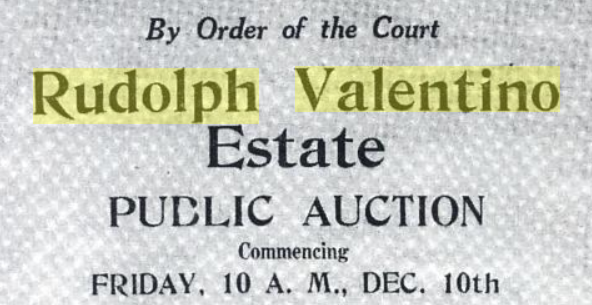
The name of Rudolph Valentino is still one to conjure with. On the first day, that his mountainside home, “Falcon Lair” was thrown open to the public, the caretaker counted 500 persons going through the house. It had been opened to the public to display the personal effects of the dead star preliminary to the auction in which the house was sold yesterday for $145,000. The collections of art objects, thirty five oil paintings, antique furniture and books; in fact, the complete furnishings and belongings of Valentino’s home, go on the auction block. Only the clothing of the actor, some 65 suits is held out. These garments are being retained by friends for sentimental reasons. In spite of the location of the house, which is at 2 Bella Drive, high up a steep mountain road on one of the smaller mountain crests above Hollywood and Beverly Hills and far from any casual motorist, streams of people file in from morning till the house is closed in the evening. Included with the house in the auction were eight and one and half acres of gardens above it and six and three fourths acres of unimproved area. The old home at 6776 Wedgewood Place in Whitley Heights and the four lots next to it, which formed the home of Rudy when he was married to Natacha Rambova, remain to be sold. There has been some talk of preserving one of his collections of antique objects as a memorial to be placed in a local museum.

Categories: Uncategorized | Tags: | Leave a comment

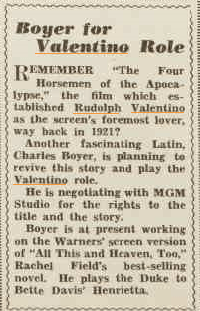
15 Jun 1940 – Charles Boyer Up for Valentino Role

Categories: Uncategorized | Tags: | Leave a comment

1927 – Valentino Book Written By A Frenchman

Valentino Book Written by a Frenchman 1927

Categories: Uncategorized | Tags: | Leave a comment

Categories: Uncategorized | Tags: | Leave a comment

The_Delicious_Little_Devil_FilmPoster_jpeg

Categories: Uncategorized | Tags: , | Leave a comment

untitled111113497350_114128785428

Categories: Uncategorized | Tags: , | Leave a comment

1919 The Delicious Little Devil

Rudolph Valentino shot to stardom in 1921 with the release of The Four Horsemen of the Apocalypse, The Conquering Power and The Sheik. He had already appeared in over twenty films, mostly in smaller roles (often as a villain) and with varied spellings of his name in the credits. He made seven pictures in 1919 alone. Of these, all but three were lost. Delicious Little Devil is one of the three existing Valentino efforts from 1919. He does play a romantic role in the film but is fourth billed — as Rudolpho De Valentina.

The name above the title in Delicious Little Devil is Mae Murray. The former Ziegfeld Girl had known Valentino in their New York days and lobbied for him to have the part in Delicious Little Devil. It helped that Murray’s husband, Robert Z. Leonard, was the director of the film. Or at least it seemed to help at first; later on, by Murray’s account, there was tension between Valentino and Leonard. She attributed the problem to jealousy, recalling how she and Valentino often danced between takes. In fairness, Leonard did cast Valentino opposite Mae again, in Big Little Person (1919) – but this time his role was an unsympathetic, two-timing fianc.

Robert Z. Leonard had himself been a silent actor, appearing in over 100 films before turning director for The Master Key (1914). He met Murray on 1916’s The Plow Girl. A few years, and several films later in 1918, they married. Leonard would direct Murray in twenty plus movies and they would form their own production company called Tiffany Productions. In 1924, Leonard directed Murray in Mademoiselle Midnight (1924) for MGM. This film kicked off a thirty-year association between Leonard and the studio. Unfortunately the Leonard-Murray relationship wasn’t so long-lived. The couple divorced in 1925 after seven years of marriage.

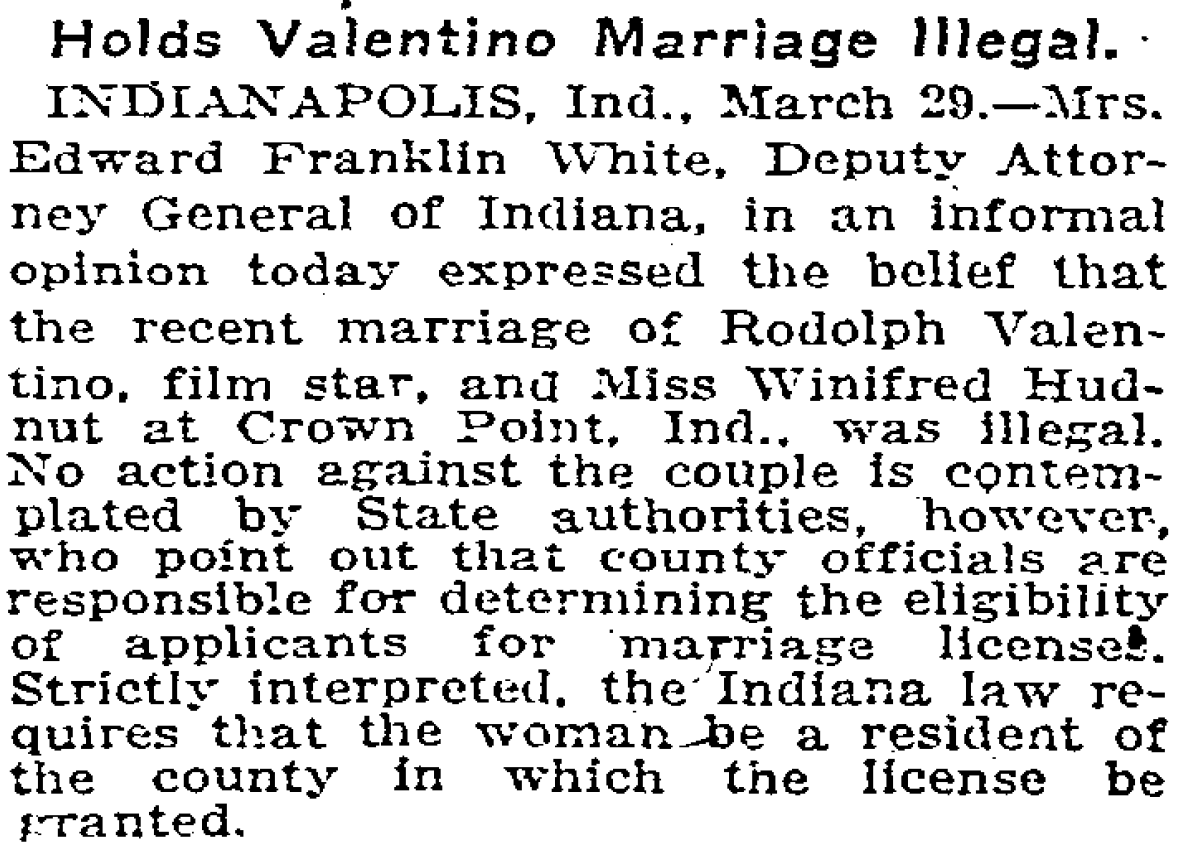
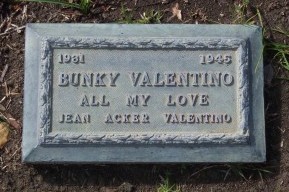
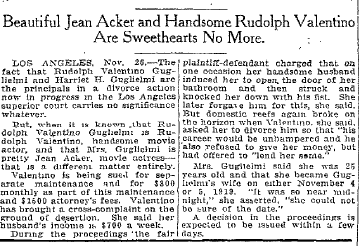
Another, even shorter union occurred in 1919 after Delicious Little Devil’s release. That was the year Valentino married actress Jean Acker in one of the shortest celebrity marriages on record. The couple wed on November 5 after a two-month courtship but the marriage only lasted a reported six hours. As the story goes, Acker and Valentino quarreled and she locked him out of their hotel room on their wedding night. They separated but the divorce wasn’t finalized until March 1923. In the meantime, Valentino met and eloped with former ballerina turned set designer Natacha Rambova in May 1922. He was charged with bigamy when it was discovered that he was not yet divorced. And Acker sued for the right to call herself his wife – literally. Acker was credited in the 1923 film The Woman in Chains as “Mrs. Rudolph Valentino.” Valentino remarried Rambova in 1923 after his divorce was granted. And he and Acker eventually reconciled, becoming friends before his 1926 death.

As for Delicious Little Devil, Valentino’s fourth billing would eventually come into dispute. Later, after he’d become famous, the studio wanted to reissue Delicious Little Devil and several other early Valentino pictures. The idea was to ride the wave of Valentino’s popularity by playing up his smaller roles in these films – to perhaps even add some new titles and to change the order of billing. But Mae Murray protested and demanded to retain her star billing. She was unfazed by Valentino’s newfound success and assured in her own stardom, remarking, “once you become a star, you are always a star.”

Director: Robert Z. Leonard
Screenplay: John B. Clymer, Harvey F. Thew
Cinematography: Allen G. Siegler
Cast: Mae Murray (Mary McGuire), Harry Rattenbury (Patrick McGuire), Richard Cummings (Uncle Barnley), Rudolph Valentino (as Rudolpho Valentina, Jimmy Calhoun), Ivor McFadden (Percy), Bertram Grassby (Duke de Sauterne).

Source:
TCM

Categories: Uncategorized | Tags: , | Leave a comment

1923 – The Kaleidoscope of Love “Synonyms and Antonyms” Pg123

daydreams_01
Rudolph Valentino describes its birth, rise, fall, and disintegration of love.
A-Adoration, Anticipation, Affinity, Arguments
B-Beauty, Bliss, Bitterness, Bondage
C-Caresses, Circumstances, Confidence, Charm
D-Desire, Delusion, Dreams, Divorce
E-Ecstasy, Engagement, Ego, End
F-Fascination, Forgetfulness, Flatter, Faith
G-Gossip, Gratitude, Gifts, Goodbye
H-Happiness, Honor, Heartache, Hell
I-Intuition, Irony, Idolatry, Integrity
J-Jealousy, Joy, Justice, June
K-Kisses, Keepsakes, Knowledge, Kismet
L-Lips, Loneliness, Logic, Longing
M-Marriage, Morality, Money, Man
N-No, Nearest, Novelty. Never
O-Opposition, Own, Offering, Opulence
P-Passion, Promise, Pride, Proposal
Q-Quality, Quest, Queries, Quarrels
R-Romance, Reveries, Realization, Remembrance
S-Sympathy, Sacrifice, Shame, Settlement
T-Thoughts, Truth, Temper, Tears
U-Unkindness, Understanding, Uncertainty, Unfaithfulness
V-Virtue, Vanity, Vows, Vengeance
W- Wisdom, Wishes, Wedlock, Woman
X-The unknown love
Y-Youth, Yearning, Yes, Yawn
Z=Zenith, Zest, Zeal, Zero

Categories: Uncategorized | Tags: | Leave a comment

“There will sim…

“There will simply have to be some sort of adjustment and frankly I haven’t the least idea how we can arrange matters so that we can live together without constant irritation cropping up. My husband wants me to give up work and devote myself to the home. If I did that, what should I do with all my idle hours? We have servants who are much more capable of running the house than I am. I have always worked all my life I have had the urge to create. I cannot give this up it is part of myself.” –Natacha Rambova on her separation from Rudolph Valentino

Categories: Uncategorized | Tags: , | Leave a comment

Jun 1921 – Rex Ingram Recognition

Rex Ingram, Silent Film Director, was in New Haven, CT on his old Art School, the University of Yale, who conferred on him a Bachelor of Fine Arts Degree in recognition, for his merits for the art of the cinema and especially for directing “The Four Horsemen of the Apocalypse”. It was the first time, a University recognized motion picture as an art –the first time in the world!

Categories: Uncategorized | Tags: , | Leave a comment

30 Oct 1940 – Valentino’s Nephew Sues for Royalties

Jean Valentino whose right name is Jean Guglielmi nephew and sole heir of the late Rudolph Valentino, Silent Film Actor is trying to collect through the law courts $20,000 which he claims is due him as royalties on reissues of “Son of the Sheik” and “The Eagle” which were distributed a couple of years ago.

Categories: Uncategorized | Tags: , | Leave a comment

Rudy's fav

Categories: Uncategorized | Tags: , | Leave a comment

1926 – This weeks News in Hollywood

Monday – Pola says “Yes” and Rudy says “No”
Tuesday – Rudy says “Yes” and Pola says “No”
Wednesday- Pola says “I go to Europe”
Thursday – Pola says “I do not go to Europe”
Friday – Pola has dinner with Rudy
Saturday – Rudy has dinner with Pola
Sunday – A holiday

Categories: Uncategorized | Tags: | 1 Comment

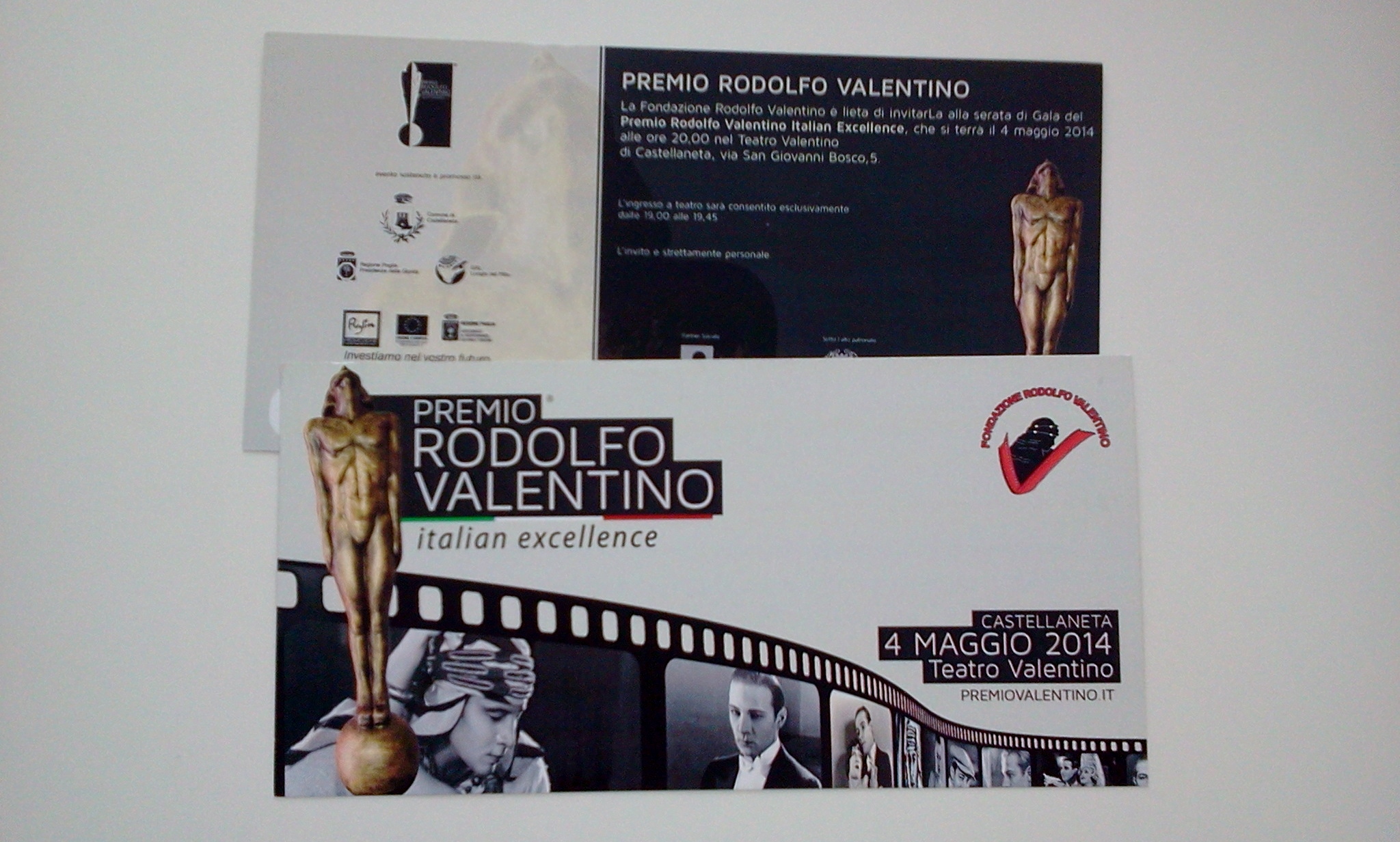
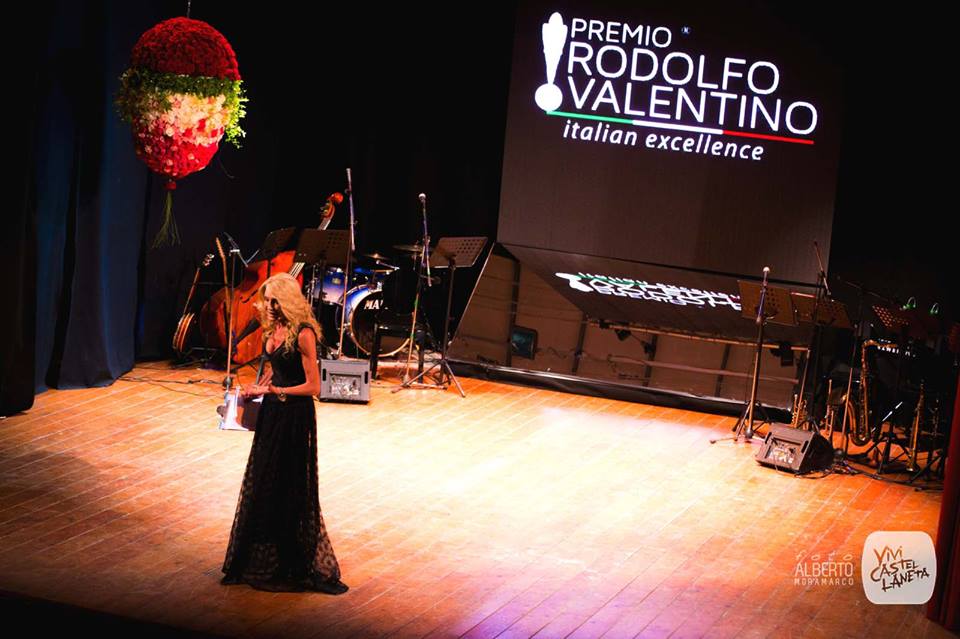
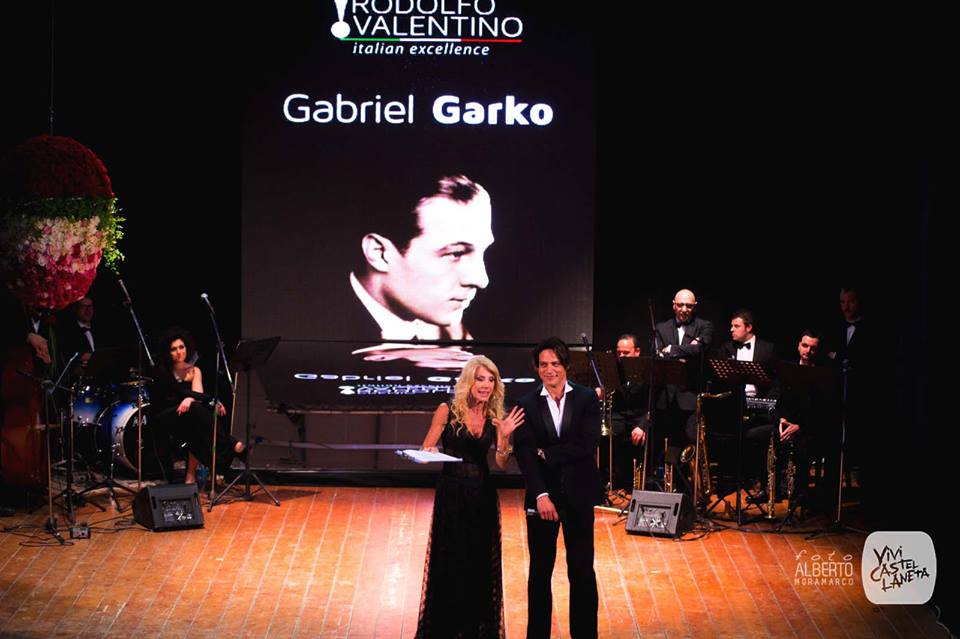
May 2014 – Premio Rodolfo Valentino Italian Excellence Awards Report

Mr. Simon Constable, recently attended the Premio Rodolfo Valentino Italian Excellence Awards, Castellaneta, Italy. He has graciously reported on attending the awards ceremony as well as supply photos of this prestigious event for this blog. I would like to personally thank him on his generosity in sharing his observations for this blogs readers.

Image2 (2)
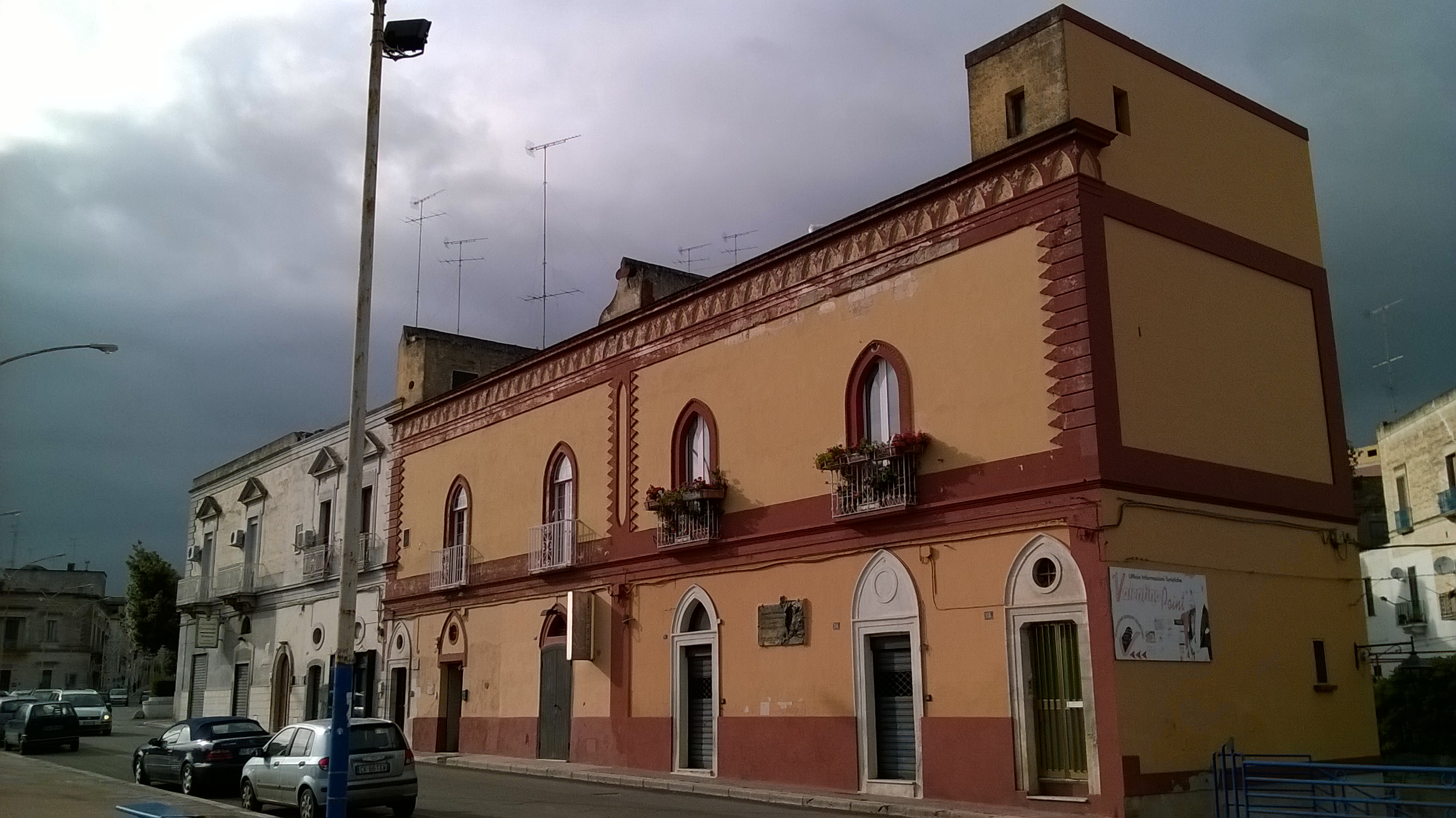
The rain that fell on my first full day in Castellaneta was, according to the managers of my accommodation, unusual for the time of year — and I believed them. This was Italy, in early May, what was going on? Why was it so wet? Being British I was, of course, unfazed; besides, it would take more than a gentle pitter-patter to prevent me investigating Rudy’s birthplace. With my main purpose on the 4th – attending the Premio Rudolfo Valentino Italian Excellence Awards – hours away, I aimed (under an umbrella, and with my travel companion) for Valentino’s childhood home. Unsurprisingly, after viewing it from all possible angles, I was overcome with emotion. Here was where the story began. Where he was born, took initial steps, and spent those early formative years. And there was I, was more than a century later, gazing at it, damp but happy. After a walk to the top of Via Roma, snapping and filming as I went; a cappuccino at Bar Valentino; a tasty snack elsewhere; and a wander ‘round the oldest part of town, it was time for the ceremony: at Teatro Valentino, at 7:30 p.m. I was expectant.
Image3
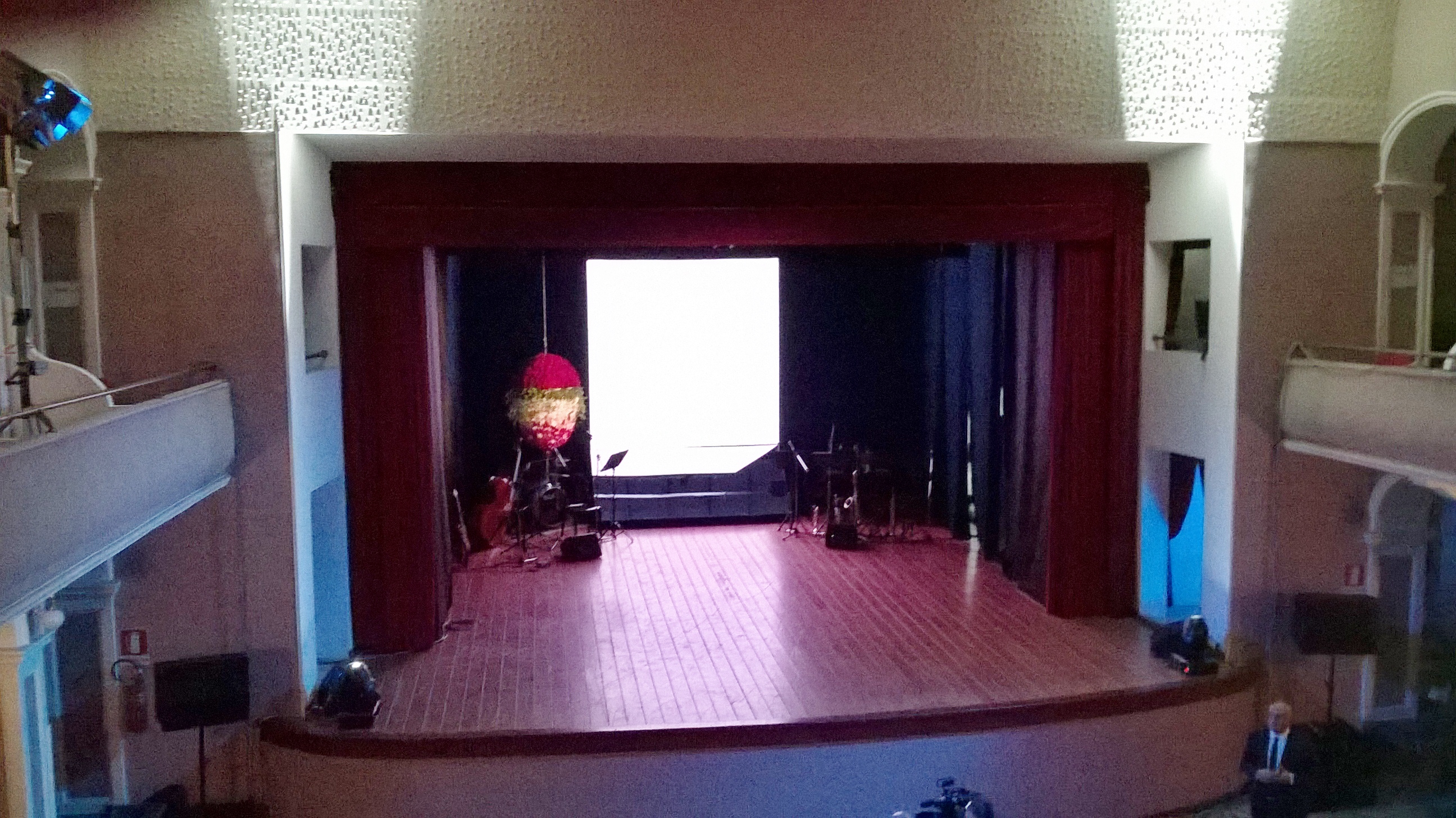
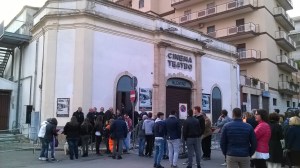
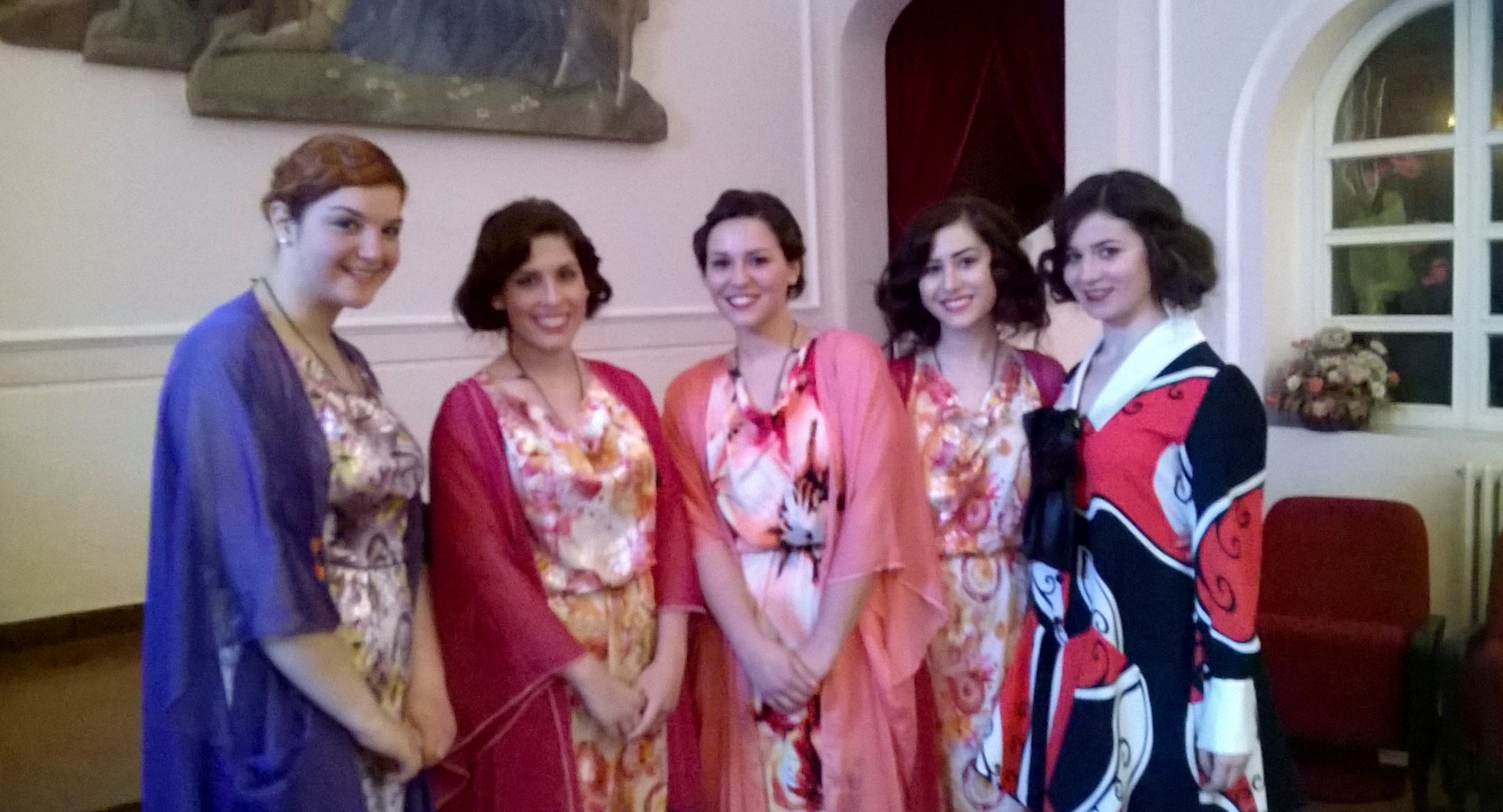
By now traffic flow had been restricted with barricades, the local law and medics were in attendance, and a large crowd of spectators had gathered. The air truly buzzed with anticipation. As I understand it, the purpose of the awards is to, in Rudy’s name, recognize and celebrate Italian excellence. Meaning that, annually, the creativity of Valentino’s countrymen will be showcased and rewarded in Castellaneta. I have to say that it is an inspired idea and, obviously, LONG overdue. As we all know, long before The Oscars, Rudolph Valentino was a man who very much felt that achievement in his field should be rewarded. And he was obviously extremely proud of his national heritage and Italian culture in general. A little early (7:15 p.m.), we made our way to the barrier, and I explained that we were on the list, and that our tickets were waiting inside. The theatre that bears his name is a charming one. Like Rudy himself, it isn’t big, but it packs-a-punch. The interior is, like him, elegant. It embodies him somehow — if that’s possible. After collecting our tickets I paused to photograph the charming usherettes, and then we headed up the left-hand stairs to the gallery.
Image5
How early we were was apparent once we were upstairs, as there were perhaps only 50 or so people inside, including technicians. Italians being Italian things are more relaxed and leisurely. So, with little else to do, we stood at the gallery rail, chatting (for about an hour) as the venue filled-up. An enjoyable sixty minutes of people watching.
Image4Image6
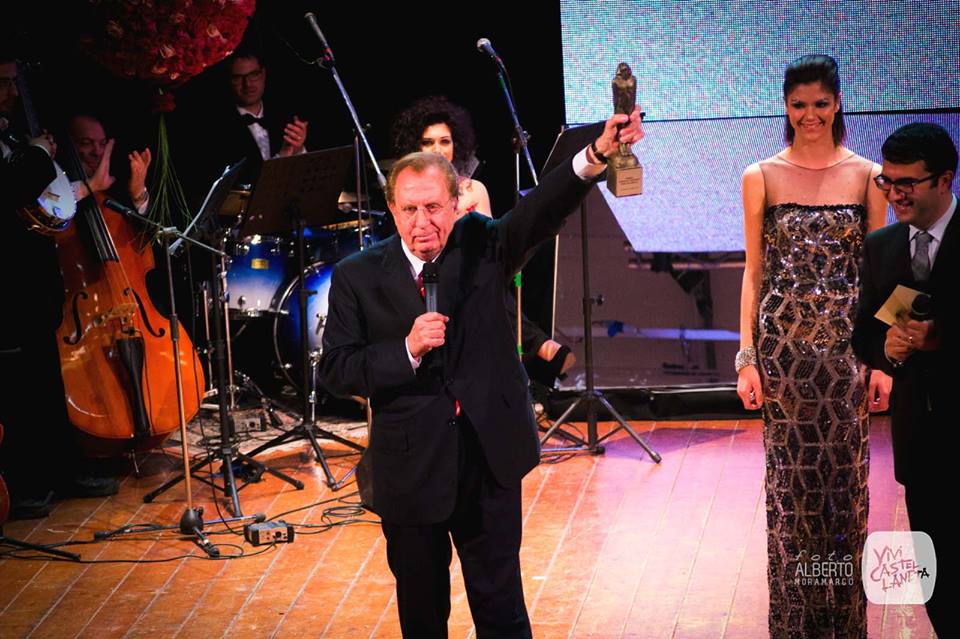
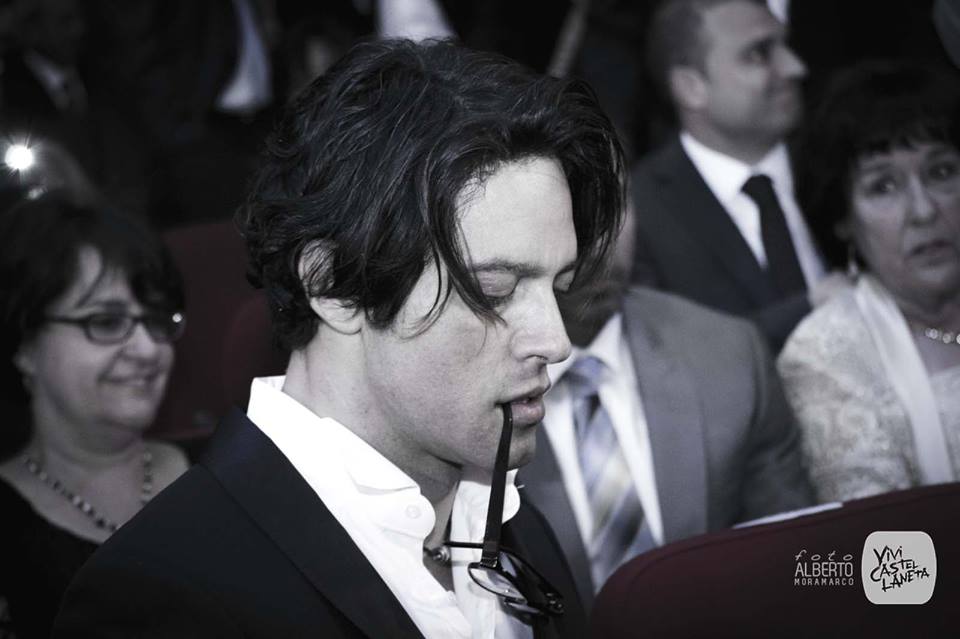
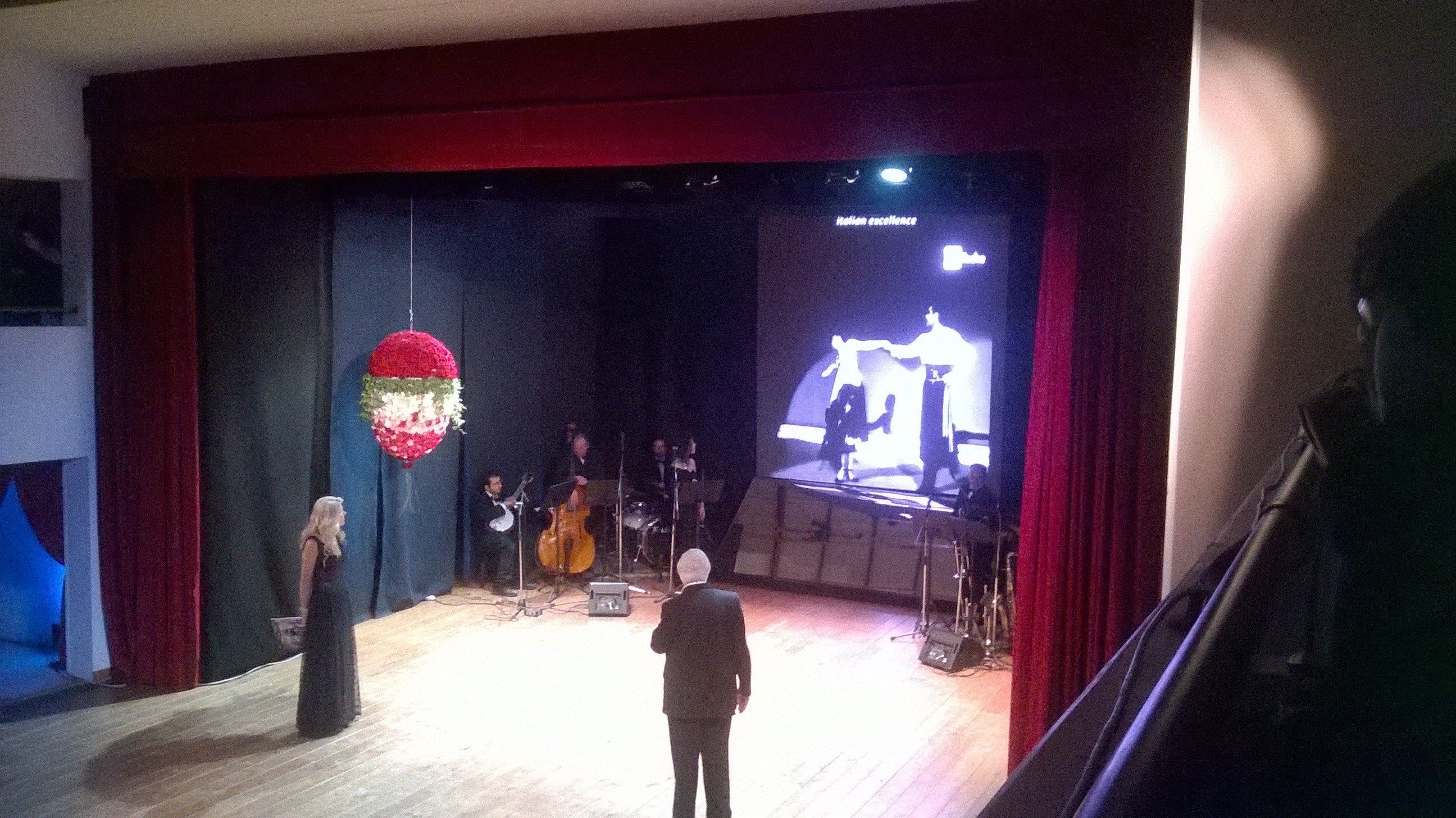
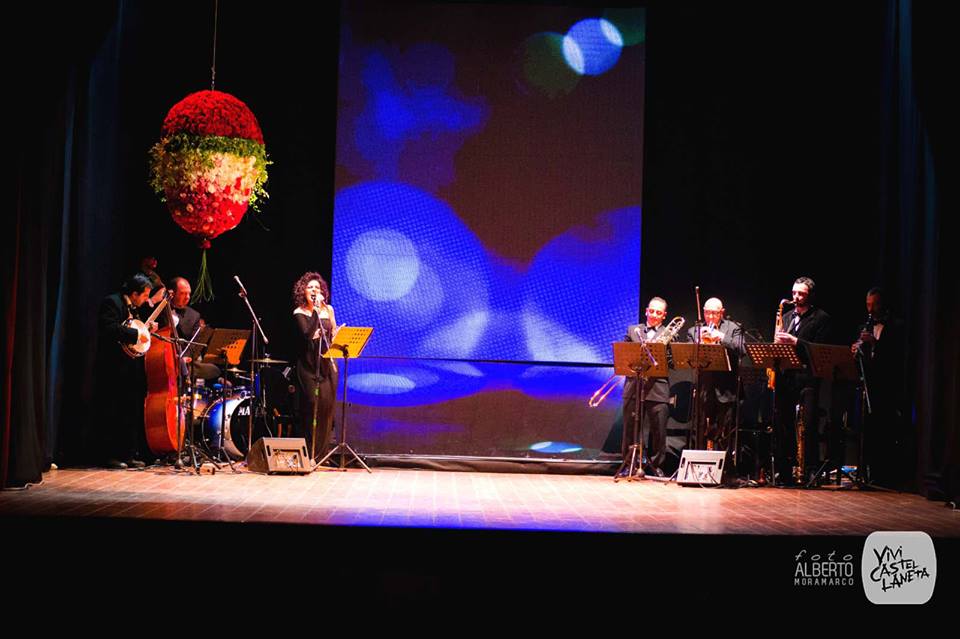
At around 8:30 p.m., an announcement, by its tone, suggested that the start of the proceedings was imminent and so we took our seats. (It was at this late point that Gabriel Garko appeared, something the Ladies present found pleasing.) Sure enough, at about 8:45 p.m. the evening commenced, with a large image of Rudy slowly appearing square by square, on the screen, at the back of the stage, and a voice-over in Italian telling his story. This was then followed by a wonderful dance routine, by an extremely talented troupe, to a song that seemed to be titled: “Oh, Oh, Rudy,” but actually, after an online check, appears to have been “Hello, Rudy” from “Ciao, Rudy” (1966). The presenter, Gabriella Carlucci, then walked on stage to welcome us all properly and to host the evening. (Dressed dramatically in black lace she didn’t drop-the-ball once for the next four hours.) What followed was a series of early awards to excellent Italians punctuated by Jazz music and dancing. First-up was Elisabetta Bedori, a local fashion designer, who received a beautiful Newcomer award and a bouquet. Then, Michele Gaudiomonte, (another designer) joined Gabriella, and he was followed in-turn by Michele Mirabella, famous Actor and Presenter, for the first Rudolph Valentino Award of the night. (He spoke for some time and got many laughs.)
IMAGE9
At around this time the Great Grand niece of Rudy joined Gabriella Carlucci, which was a lovely surprise and very appropriate. She said something in Italian and apologized for not being able to speak the language. She then spoke about her Great Uncle and how she felt it was a great thing that the awards were being held in Castellaneta. His legacy, she said, was the realism with which he acted. An award for Beppe Fiorello followed. He sang a little of “Volare” but I never heard him mention Rudy or Rudolph Valentino, strangely; which was a shame. Then we had a rendition / version of “Cabaret,” from the musical, by a singer and live band. On reflection I suppose it was appropriate, as Valentino DID go to Germany at about that time: though Chris. Isherwood was more late Twenties / early Thirties, actually. If my memory serves me correctly we then had a wonderful Tango dance by Sebastian Arce and Mariana Montes. And I mean WONDERFUL — especially considering that Montes was clearly pregnant. They strolled-on, and, until they strolled-off again, they were totally transfixing.
IMAGE10IMAGE7IMAGE8
The award to Pippo Baudo, the television personality, was of great interest because he talked not just about Valentino, but also of Marcello Mastroianni, and introduced a rare TV clip of his portrayal of Valentino in “Ciao, Rudy.” I have to say, this was one of the highlights of the event for me as I had never seen it, and Mastroianni, dressed and dancing as Julio, was very spectacular and convincing. It was a fantastic and thrilling moment.
IMAGE11
MORE awards followed (Maison Gattinoni, Massimo Ghini, Maria Pia Ammirati), there was more Jazz, more talking, then more dancing and yet more awards. Paolo Maria Scalondro spoke. And then it was, finally, at a very late point, time for Gabriel Garko to walk under the lights. Charismatic, tall, handsome – if slightly tired looking – and rather rock-and-roll with his eye make-up, he spoke at length, and sent the females – and some males, too, I’m certain – wild.
IMAGE13IMAGE14
And then, so suddenly, it was all over. Having to rush, as I did (due to an early start on Monday), we left after Mr. Garko received HIS statuette; ahead of the crush and into the night air, and to our waiting car. What a day. What an experience. I was privileged indeed to see Rudolph Valentino given the respect he is due and in his hometown of Castellaneta. The tributes had fallen upon him like the many raindrops earlier, they wetted and soaked him, gave him life again and left his image glistening, shining and sparkling. He dries-out now until the next time, when he is showered and praised for his achievements once more. I hope, again, to be there — even if I have to get drenched!
Simon Constable (May, 2014)

Categories: Uncategorized | Tags: , | 1 Comment

2014 Rudolph Valentino Excellence Awards

2014 Rudolph Valentino Excellence Awards

Reporter Simon Constable recently attended the 2014 Rudolph Valentino Excellence Awards

Categories: Uncategorized | Tags: , | Leave a comment

Did you Know?

Rudolph Valentino is 5 feet and 11 inches in height and weights 155 lbs.

Categories: Uncategorized | Tags: | Leave a comment

May 1925 – Valentino to Build New Home

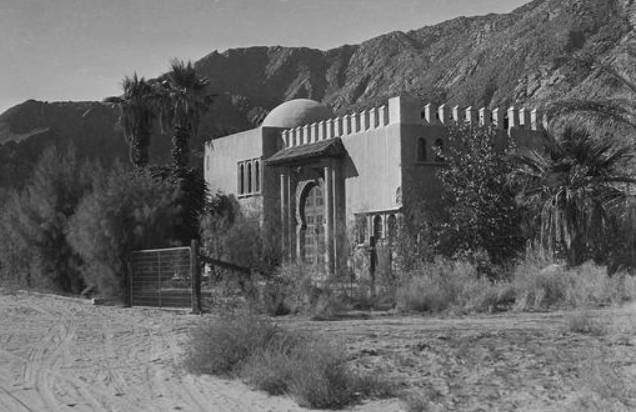
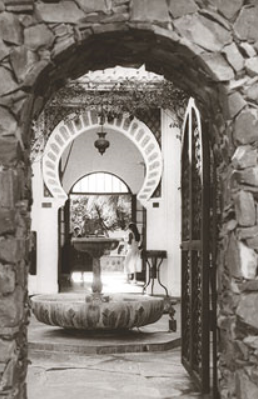
Rudolph Valentino is building himself a desert home in Palm Springs on the edge of the California desert just three and one-half hours from Los Angeles. He says he hopes thus to get away from the noise of the city. Everywhere he goes, he claims, he is recognized and his tired of being the center of attraction. There is a stock farm for the breeding of Arabian thoroughbreds near Palm Springs and this place has a real interest for the sheik.

Categories: Uncategorized | Tags: | Leave a comment

Jean Acker 1921

Categories: Uncategorized | Tags: , | Leave a comment

3 Aug 1921, Rudolph Valentino Court Continues

When Judge Walton Wood learned that Jean Acker, who is suing her husband Rudolph Valentino for separate maintenance is earning $200.00 a week, he excused Valentino from paying her any further alimony until October 17th at which date the case is to be continued. And if you give them the arm they will cry for the moon.

Categories: Uncategorized | Tags: , | Leave a comment

9 Jul 1921 – Rudolph Valentino Court Results

Rudolph Valentino was recently ordered by the Court of Los Angeles to pay his wife Jean Acker, $100.00 a week pending trial of her suit for separate maintenance.
Categories: Uncategorized | Tags: , | Leave a comment

3 Jul 1921 – Rudolph Valentino in Court

Rudolph Valentino was summoned into court at Los Angeles and charged with an arrearage of $800.00 in alimony due his wife. He promised to pay up at the rate of $50.00 a week.
Categories: Uncategorized | Tags: , | Leave a comment

rv-fairmont

Categories: Uncategorized | Tags: | Leave a comment

21 Dec 1924 The Secrets of Valentino’s Life

In honor of the birthday of Rudolph Valentino, I will be publishing an article from 1924 about the secrets of Valentino’s life.

It is all very well, but there is just something special about Rudolph Valentino. Oh no, dear messieurs he is not effeminate, not a particle. Thus do you console yourselves upon an error, condone your envy and misjudge the ladies. None go quick as my sex to resent effeminacy in the male. Not thus can our enthusiastic admiration be aroused. There is no gainsaying that the gentleman has a compelling fascination for me, and should I say it in largely because of his agreeably self-confident masculinity, just as men adore agreeably self-confident femininity. My visit, coincided with the removal of the famous beard, and I met him direct from the hands of his barber. Alas I did not obtain a precious lock thereof. He oozed relief, that pesky beard, grown for the leading role of “The Red Power” had ruined his European vacation. Even a Valentino shudders to be seen in the unlovely early stages of chinful growth. He had the thing for four solid months. His wife had actually grown to like it. But today, Valentino was himself again. A very easy man to talk to is Valentino and to listen to. “Who really found you I asked?” “I have heard so many claimants.” “For seven long years, working hard, playing small parts in sometime atrocious pictures. I labored to be found,” he smiled. “But it was June Mathis who opened the door of opportunity for me. It was she who saw me for the part in the “Four Horsemen”. Ah yes, June Mathis. With Valentino speaking so gratefully of her I wanted to know how it happened that June Mathis had left his employ. Because you know directly he entered independent production he had hastened to attach June to his staff to write the scenario of his first picture. So he frowned unhappily. “I cannot tell you how sorry I was not to be able to accept her script. But it just would not do, and we were wasting too much time. So we just had to postpone that production. I shall make these modern picture Cobra sternly finely resisting Nita Naldi’s wiles. And we shall see him in ordinary modern clothes minus the allurement of the costume pictures. It is good to hear this man talking about his pictures. I too, had heard that Mrs. Valentino provided all the managing ability of the firm. But I don’t believe that now. You see, he met Natacha Rambova when he was earning only an uncertain and precarious $175.00 a week and she was getting $5000 a picture as an art director. Were he employing her now at that figure instead of being married to her he would be a foolish man not to give her full sway in her special department. And he has the shrewd business sense to do that now. “I made Monsieur Beaucaire without interference he said. And was allowed my own way in everything under my contract with Famous Players. But I did not cut the picture myself my wife did that. “She made an exquisite job of it.” I declared. And he accepted the compliment for both of them just as any producer would. “What sort of little boy were you”? “A very troublesome little boy, who occasioned his mother much sorrow, he admitted.” You would never, never, guess what kind of sorrow. His besetting sin, if you please, was falling in love with grown-up ladies as old as his own mamma. “You don’t mean that they fell in love with you that young, do you”? “No indeed, the ladies do not fall in love with me, he insisted modestly.” “That mountain of fan love letters, I reminded him.” Oh they are in love with the characters I play not with me the man.” That is why I do not like personal appearances. In Italy I felt I was in the soup or must fall out of the window, but I made it better by wearing my costume of the play, he explained. “he really managed to look thoroughly modest as he said this “Come tell me, what is your pet egotism’? I asked. “Oh, I have one. Very surely he admitted, laughing gaily, and affectionately stroking that recently revealed chin “and it is that my seven years of hard work and poor pay before June Mathis opened the door for me have been rewarded, that I have proved my ability that I can make good pictures, that I can act, and that I have some good artistic and business judgment are, I am not ashamed to show you my egotism he concluded. Well, maybe he was fascinating me, but he was wearing regular clothes and he says he isn’t fascinating in that way, but anyway I found myself agreeing with him. I think that is a pretty reasonable sort of egotism for him to indulge when he can do it as gracefully as he does. He sighed artfully at this point “Isn’t it dreadful to see those fine old trees being cut down in the street outside he said? Just to make a street wider and they take fifty years to grow to such beauty. Well I just felt as if I wanted to pet and comfort him about it. I asked him for an autograph and this is what he wrote on my picture. “Hoping to be kindly remembered.” Rudolph Valentino. Now wasn’t that modestly, artful and discreet and graceful bearing in mind that I am a newspaper woman.

Categories: Uncategorized | Tags: , | 1 Comment

“Just a packet …

“Just a packet of letters tied with a bit of blue. Just a packet of letters that once were read by you. To one who proved unworthy of the love inscribed within. The tiny packet of letters, a witness of my sin.”– Rudolph Valentino, 1924

Categories: Uncategorized | Tags: | Leave a comment

2014 – Interview with Mr. Tracy Terhune

untitled

The blog is all about Rudolph Valentino his life, his family, those who were affected by him and those countless of people who loved him for his craft. Through research and reading there is still a lot of information out there that is still unknown. In this blog, I hope you the reader enjoy through discovery the new and interesting things about Rudolph Valentino.

As a noted book collector on Rudolph Valentino one of my favorite authors is Mr. Tracy Terhune, Producer, Collector, Valentino Memorial Committee Member, and Author I recently reached out to him and he kindly granted me a short interview for which I humbly thank him.

You are a noted Valentino collector, author and authority. What is your favorite item out of your collection and why?Since day one of collecting on Rudolph Valentino I have enjoyed collecting personal items that had a direct connection to him. He had such lavish exquisite taste in his cars and homes and furnishings within the home. I have several favorites but I will say that the ring he wore in The Eagle is my favorite. It was actually worn by him in three films (Sainted Devil, Cobra & The Eagle) However in The Eagle the ring played a minor part of the plot of the story. It was owned by Margaret Strong of the Strong Museum in New York. In the early 1980’s the Franklin Mint created a limited edition semi replica made out of black onyx and silver. Last year the Strong Museum which specializes in dolls decided to put it up for auction to fund their acquisition account. I am glad to say that I won the auction for it in Beverly Hills.

Rudolph Valentino had many films. Could you please tell us what is your favorite Rudolph Valentino film and why?
My favorite is Son of the Sheik. It’s his best in my opinion. But I also enjoy The Eagle, Beyond The Rocks, Camille and Moran of the Lady Letty. The Four Horseman is also another favorite.

Tracy you are very active in the planning process with the yearly Valentino Memorial. Every year it is a monumental success and a true tribute to Rudolph Valentino. What inspires you to continue? What will be in store for this year’s Valentino Memorial Service?
I am very proud of my involvement with the Valentino Memorial. It’s the oldest continuing annual event in Hollywood History. It has taken place every year since 1927, the first anniversary of his passing. This year will mark its 87th occurrence. The thing that inspires me to continue is to keep this charming yet quirky at times service going in a dignified and respectful manor. Yet, at the same time we want it to be fun and enjoyable. We always strive for the right mix. I have never had anyone who actually attended one of the Valentino Memorials ever complain that we did something in poor taste or disrespectful to Rudy. I am pleased that in recent years two members of the Valentino family accepted the offer to be our guest speaker. They openly expressed gratitude and their praise for the Valentino Memorial Service. That meant a lot to me on a personal level.

Tracey why are you such a fan of Rudolph Valentino?The reason I am a fan is that he deserves to be remembered. The fact he had great sadness over him and was so mis-used throughout his life. By studio chiefs, by his wives, business managers. The fact that he became a star in 1921 and by 1926 he was gone. Truly like a comet blazing across the cinema screen. All at 31. That’s why I like the slogan first used at the 1928 Valentino Memorial – “We Never Forget”

Tracey will you be writing any future books on Rudolph Valentino? Or any other projects you would like to share?
I have a couple of projects in the works, but mainly my goal this year is to get my website back up and running again. Its’ been down for a couple years and I’d like to get that done. I have also talked very briefly with Kevin Brownlow’s company about releasing The Eagle on Blu ray. The original camera negative survives and the print from it is razor sharp. It’s almost a crime that it sits unreleased due to the funding it would cost for a high resolution scan and the Carl Davis score.

I hope you enjoyed this interview folks. I am hoping to feature future interviews in this blog of other noted Valentino authors.

Categories: Uncategorized | Tags: , | Leave a comment

$_57

Categories: Uncategorized | Tags: | Leave a comment

“I do not care …

“I do not care for money made easily. It is not lasting I know. I do not care for friends made easily. They are not lasting I know. I do not care for anything that comes easily. It is never lasts I know. But I fell in love with you easily. But not lastingly you know.”–Rudolph Valentino , 14 Jan 1924

Categories: Uncategorized | Tags: | 1 Comment

8 Aug 1936 – No Word from Rudolph Valentino Widow

8 Aug 1936 - No Word from Rudolph Valentino Widow

Categories: Uncategorized | Tags: , | Leave a comment

11 June 1927 – Jean Acker Hospitalized

Categories: Uncategorized | Tags: , | Leave a comment

Dec 1923

Dec 1923

Categories: Uncategorized | Tags: | Leave a comment

Categories: Uncategorized | Tags: | Leave a comment