
June Mathis who adapted “The Four Horsemen” for the screen, was formerly a well-known ingenue with many popular comedies and musical plays on Broadway. Before that time she was a popular actress in the stock companies of the East. She joined the scenario forces of the Metro Company three years ago and at once achieved great success in her work. When “The Four Horsemen” was produced, many marveled that this had been adapted by the peppery little ingenue. “The Four Horsemen” repeated one of her friends, “Why what do you know about horses? she was asked. “You forget,” Miss Mathis replied, “that I had long experience with stock companies”..
Uncategorized
7 Jul 1926 – Valentino Injured during “Son of Sheik Premiere”
During this evenings limited run of the “Son of Sheik Premiere” at the Million Dollar Theater, Los Angeles a large vase falls on the head of the star of the film.
11 Mar 1925 – Rudy going to U.A.
Following a series of conferences between Mary Pickford, Norma Talmadge, Charles Chaplin, Douglas Fairbanks and others it was announced through the offices of the United Artists Corporation that Rudolph Valentino had signed a long-term contract with United Artists for release of his future productions. Hence, Mr. Valentino is now connected with what was originally known as the “Big Four”. In the telegram from Hollywood to United Artists Offices at 729 Seventh Ave, it was also set forth that the new star would make three productions this year, the first to be released by United Artists “The Hooded Falcon” a Moorish drama. Mr Valentino appeared in “Cobra”, which was finished a few weeks ago. It was produced by J.D. Williams. At the offices of United Artists it was not known who would be the actual producer of Mr. Valentino’s forthcoming productions. His last three productions will be distributed by Famous Players. United Artists soon will be releasing pictures made by Charlie Chaplin, Mary Pickford, Douglas Fairbanks and Norma Talmadge. D.W. Griffith is now making his last production for this concern, after which he becomes a director for Famous Players-Lasky Corporation.
24 Feb 1932 – Did you know?
Pasadena CA – Students of English history, drama, art and costume design will find in the production of “When Knighthood Was in Flower” items of great interest and educational value, in addition to the splendid evening of entertainment afforded by this play which brings back the rich period of romance and adventure of King Henry VIII of England and Mary Tudor, his rebellious daughter. The production is to open at the Pasadena Community Playhouse March third, and closes the twelfth. Under the direction of Miss Wilma Leithead, gifted artist and authority on costume design, all of the magnificent array of costumes are being carefully made after a research in which a large number of authentic sources were consulted. Students will see the exact raiment of the time.
It may be interesting to note that a gorgeous collection of pearls, which once belonged to Rudolph Valentino, is being used in the costumes.
4 Jan 1925 – Joe Jackson
Joe Jackson better known perhaps as the man, who talked Rudolph Valentino into shaving off his once famous beard, writes the News Reel a letter which we think is new enough and funny enough to print. Writes Mr. Jackson: “If I had to work as hard as Valentino works, I’d quit right away quick. He gets up at 5’oclock in the morning and is in the studio at 6, and then rides horseback for an hour or so. (This is in preparation for “The Scarlet Power,” which he will make, following Cobra, and in which he will have to fight on horseback with broadswords). After his ride, he works out with his trainer. He’s at the studio every night till about 7:30. It’s an easy life! “If he doesn’t get a great picture in Cobra it won’t be because he isn’t putting everything into it. Incidentally, it’s been kinda cold out here in sunny California for the last week, but don’t mention this to anybody, for the Chamber of Commerce would ex-communicate me for telling”. “Incidentally again, Cobra isn’t a snake picture. When I wrote to that Prince of good fellows Rupert Hughes and asked him to serve on the committee with Valentino in taking the poll for the First Annual Award of the Valentino Medal for Screen Acting, he replied: Dear Joe, You may use my name in any way that will not damage your cause. You can hardly damage the name. Affectionately, Rupert Hughes”.
“Feeling and not acting is what lifts a love scene from commonplace to the realms of realism and romance”. – Rudolph Valentino, 1923
Categories: Uncategorized
Leave a comment
1916 – Winifred de Wolfe (Natacha Rambova)
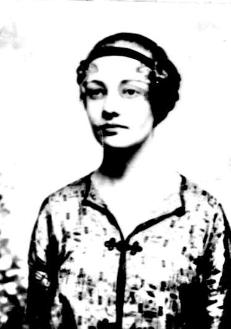
This is a copy of a 1916 passport photo of Winifred de Wolfe (Natacha Rambova).
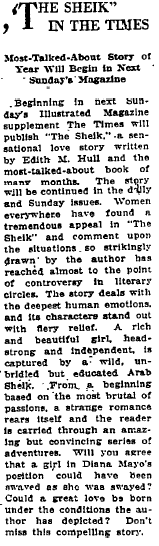
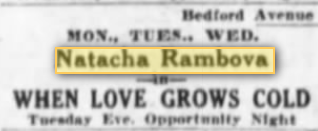
26 Aug 1922 – An Interview in Verse with Rodolf Valentino
“A barbered woman’s man”-yes, this is how I’ve rated Valentino in my mind “Too sleek, too handsome and too satisfied with flapper adulation to take rank with a real artist, or to be a man of brains or with a sound ability. So many men dislike him. It may be because the women rave about his looks. Call him “the perfect lover” and such things, though we men find confession difficult. Foster antagonism in the rank and file who lack pronounced good looks or subtle charm and bungle at our wooing.
He can act, oh, I’ve admitted that, reluctantly, and with a measure of conceited pride because I picked him as a winner when he played just heavies. In one Holubar Production that’s forgotten these two years this Valentino made a striking thing out of a thankless part and I’m still puffed over my prophecy that he would rank with the big stars of filmdom and be cast not as the villain, but in hero roles. Who else recalls the play a shoddy work named “Once to Every Woman”? Then there came his gradual rise to stardom. Ibanez’s “Four Horsemen” amply justified my faith and in “Camille” despite Nazimova’s monopoly of footage and absurd twisting of the plot to force her own close-ups into the pictures tag, Rodolph’s “Armand” was the compelling, memorable part.
“The Sheik” came next. In human kindness lets all forget that stale absurdity that desert chieftain played with strut and fret of some vain college freshman showing off. A further slump: no actor in the world could make acceptable the foolish male lead in “Beyond the Rocks” Elinor Glyn’s Boob-bait, derided even by the boobs. A long list of offenses, but amends has handsomely been made in “Blood and Stand”. With his mixed record coursing in any thoughts I went with odd expectancy to meet this Valentino. Manikin or man, creative artist, or a handsome fool with mere screen value in his mobile face, who wins or falls according to the plot and cleverness of his director which was I to meet? And then I saw the man I’d traveled to the Lasky lot to find. Decked in fantastic costume and rich jewels and made up like a Rajah of the east. He stood beside the door of a huge stage. Watching the prop men busy at their tasks; earrings of pearls as large as half-grown plums, anklets of pearls, a headdress richly set with rough-cut stones, and gems of many kinds embroidered on a scanty silver cloth which half concealed his torso and his loins, body and arms and legs and back and face were stained a walnut brown. His eyes were black with kohl, and vivid rouge was on his lips.
“The final scenes; were just about to shoot” he quietly explained. The low-pitched voice was pleasant to my ear. I found his grasp when shook hands was firm and masculine. He chose his words in an attractive way and spoke them with precision and that clip which foreigners of culture often use when trying to conquer accent. Was I wrong about this man? In some way he had made my prejudice seem foolish almost cheap. For he was obviously not the type of sleek lounge lizard I had thought to meet. No flapper’s hero, tea-hound kind of chap. “Oh, Blood and Sand you liked it”? With a flash of pride that lacked conceit or vanity. He showed his pleasure when I praised his work rated the film to head the little list of real achievements among shadow plays he sobered quickly. “What about the end”? Isn’t the note just right? The man must die; conceive, then, that for weeks I had to fight against a happy ending! Tragedy, some folks here said would cost the firm much cash. So we must have the wounded matador promise his wife he will not fight again then vision endless years of happiness and clam security. They even took the footage for that ending, and there is talk of tacking on that awful happy stuff for small town showings. Isn’t that a crime?
Mindful of ancient hokum’s, and of how “Dream Street” was ruined by DW Griffith with a tag showing a baby rolling on the floor before his doting parents, I inquired “did they, perhaps, propose to show you tamed; slayer of bulls, lover of stately dames, rocking a cradle”? Or some final shot of a village street and you and your young wife pushing a baby carriage down the walk? “Not quite that bad he smiled, “thought you and I have often seen such endings. I can’t think the public likes that rot. No ancient art is more severely handicapped by rules and trite conventions than the cinema. In less than twenty years there has been built a Chinese wall of foolish precedents and set beliefs. Because some certain play five years ago, made money by the barrel therefore, all other plays are twisted now made to conform to this plan or to that. You saw the Sheik? He shuddered then, and shrugged expressive shoulders. “What an awful thing”. Now my idea of that young Arab’s part was not to rant around. A travesty of temperament is what they made me do. It could have been worthwhile, though for I felt it should be played with deep restraint reserve and when the big scenes came that desert son. Instead of showing Latin tendencies and giving his emotions a clear sweep should have been stoical withdrawn his soul behind his eyes. I would have played the part as though at every crisis he retired within himself just as an Arab goes into his tent and drops the flap shuts out the public gaze from private, sacred things.
With easy grace and smooth, unstudied walk he left me then to face the camera. “No barbered woman’s man” I told myself. “Has thoughts like these. I had him sized up wrong. Upstage? Conceited? Spoiled by his success? I loitered until lunch time, and I smiled at my mistaken estimate and vowed to make amends in print. Consider this despite his great success, his mounting fame, his income a doubling that of many kings his head’s so little turned that all that day on the great lot where hundreds greet the man, from prop-boys to directors not a soul said “Mr. Valentino”. It means much that to the folks he works with day by day this star is known as Rudy nothing more.
Categories: Uncategorized
Tags: Ferdinand Joseph Graf, Natacha Rambova, Rudolph Valentino
Leave a comment
24 Mar 1928 – Male Movie Stars more fussy about hair
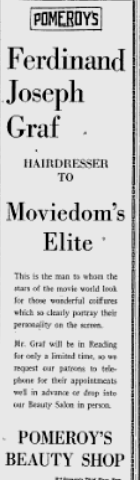
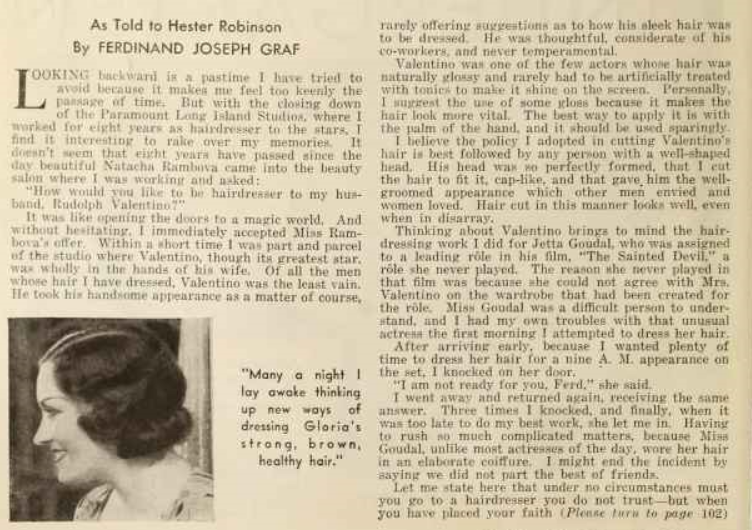
A woman is fundamentally the same, whether she is a movie star or a Park Ave society bud the happiest moment in her life is when her hair turns out just right. But that does not mean that women have a corner in the personal vanity market. NO woman in the world could be more fussy about their hair than a male movie star. These are the deductions of an expert, Ferdinand Joseph Graf, for three years, the official hairdresser to moviedom who is now at Arnold Constables. Mr. Grafs first job with Famous Players was to prepare the wigs for Valentino in “Monsieur Beaucaire”. Natacha Rambova the stars wife, brought him out to the studio from the 5th Ave beauty parlor she patronized for that purpose. He liked the work so well and the stars apparently liked him so he well became the official hairdresser at the studio for three years.
Categories: Uncategorized
Tags: Ferdinand Joseph Graf, Natacha Rambova, Rudolph Valentino
Leave a comment
29 Jul 1929 Jean Valentino Here
Jean Guglielmo Valentino a nephew of the late Rudolph Valentino arrived yesterday on the Consulich Liner Vulcania on his way to Hollywood to visit the scenes of his famous Uncles success. He is 14 years old and has no stage or screen ambitions, he said. The boy speaks good English and went through an hours ordeal with the customs inspectors like a master. His travelling companion on the Vulcania was Tito Schipa, the tenor, who waited on the pier while an inspector went through Jeans many pieces of luggage. On his customs declaration which he made out before the ship docked, he listed several trinkets and expensive boxes of bon-bons which he is taking to relatives. Jean Valentino said he was interested in chemistry and electrical engineering. He plans returning to Italy to continue his studies in the fall.
The best way to forget your troubles is to be constantly on the go. Keep on the crest of the wave all the time and never give yourself the time to think when things are bothering you..- Mae Murray, 1926
2014 – All About Rudolph Valentino
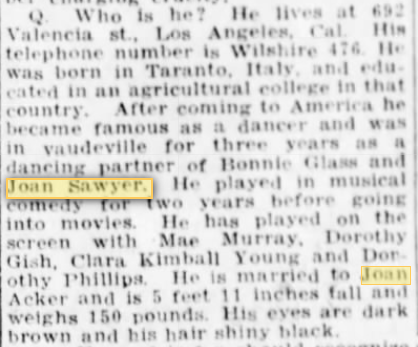
It is obvious who the answer is in the above clipping. This blog is a labor of love for me. It is wonderful to know that there are readers out there that enjoy the items posted here. As a researcher, who conducts research to find articles or items of interest on Rudolph Valentino it is interesting there is still so much more that is undiscovered about him which I will bring to you all in the coming year.
Happy New Year everyone.
9 Jan 1932 – Natacha Rambova Sailing
Natacha Rambova ex-wife of the late film star Rudolph Valentino is sailing on the Italian Saturnia for the Mediterranean. IN recent years, she has played in vaudeville and has made a literary study, on the effect of color upon dispositions.
1925 – Ghosts of Christmas Past
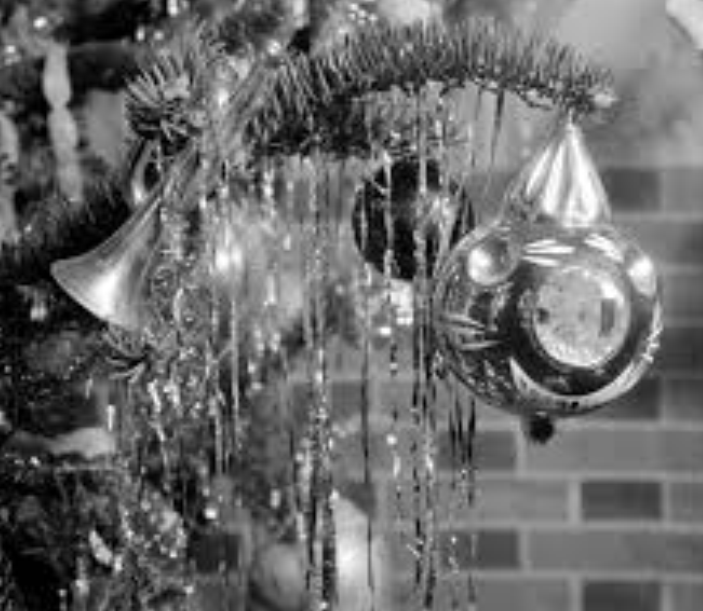
The Christmas holidays in the 1920’s were all about fun, friends, and family with none of the commercialism that exists today. Rudolph Valentino may have had his share of memorable Christmas’s but his last one on this earth was not spent with the one he truly wanted to be with and that was his wife Natacha Rambova who was in the process of divorcing him.
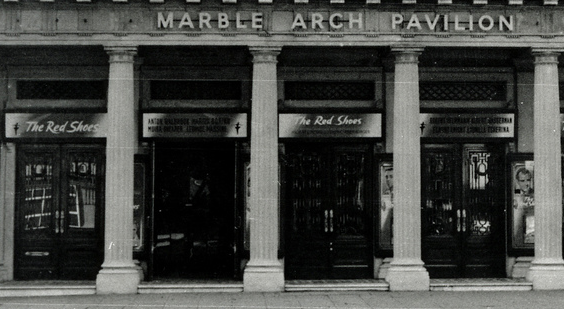

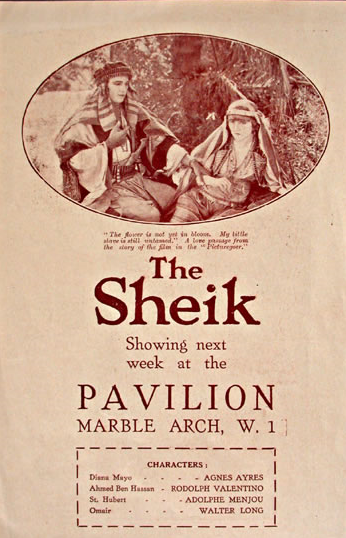
23 November 1925, Rudolph Valentino arrived in London to promote and attend the premiere of his movie “The Eagle” at the Marble Arch Pavilion. During his time in the city he stayed at the Hyde Park Hotel. Rudy’s last Christmas on earth was spent with the people that mattered most to him and that was with his sister Maria, Brother Alberto and his family. This was the first time in many years that the family was together. Brother Alberto was able to view firsthand the adoring crowds where people stopped traffic just for a glimpse of his famous brother. Although time spent together was special for the Guglielmi family Rudy sat down and as a family their futures were discussed. Dec 31st, Rudy traveled to Monte Carlo and spent New Year’s Eve with Mae Murray and good friend Manual Reachi, husband of former co-star Agnes Ayres. Rudolph Valentino celebrated the holidays as only he knew how. As the clock struck midnight and 1926 arrived Rudolph Valentino was still dealing with the ghosts of his Christmas past.
“Why sing of Joy if Joy is to be unheard. Why sing of Faith if Faith is to be barred. For all that is good is Forever alive, and all that is bad is dead before it is born”.
Categories: Uncategorized
Tags: Alberto Valentino, Mae Murray, Natacha Rambova, Rudolph Valentino
Leave a comment

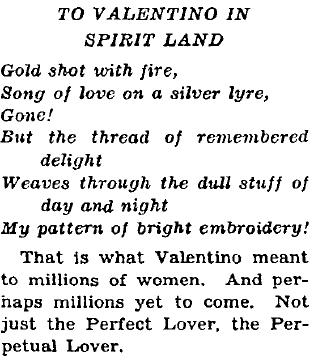
“In my country, young girls are so carefully guarded that a man is not free to speak to them of love except through the eyes, the expression of the face or some other form of subtle pantomime”..Rudolph Valentino
19 Dec 1925 – Valentino’s Christmas Plans
Rudolph Valentino was asked by our reporter what was his plans for Christmas. Mr. Valentino replied “I am leaving for Paris tomorrow evening and from Berlin expect to go to London to spend Christmas with relatives”.
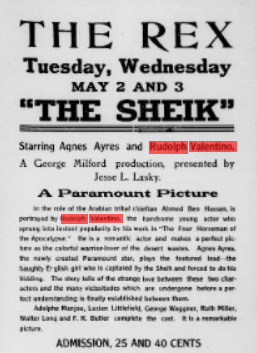
13 Dec 1924 – Christmas Gifts
Wooly mufflers according to Rudolph Valentino make very nice Christmas presents for a gent and a small diamond pendent makes a very nice Christmas gift for a lady.
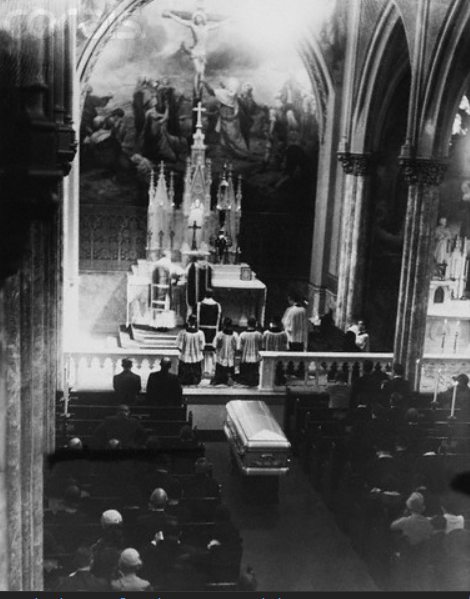
“Once a gentleman always a gentleman, even though a husband. When a woman says she wants a career, it means that she wants independence. I think a man should be the master. Both can’t be independent. One must be master. It is alright to have the fifty fifty basis, but the woman must find out that she hasn’t any lap dog, or slave drive either. It must be a matter of give and take, but a woman will always respect a man more if she knows he is a man.” –Rudolph Valentino, 8 Nov 1925
2 Aug 1926 – Rudolph Valentino Receives Key to Atlantic City
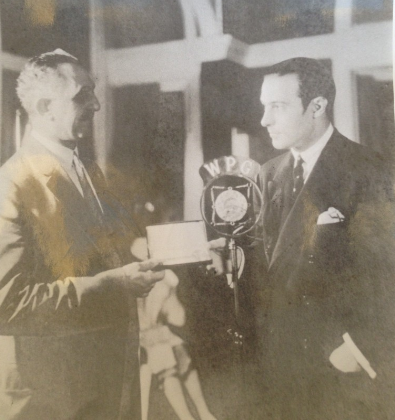
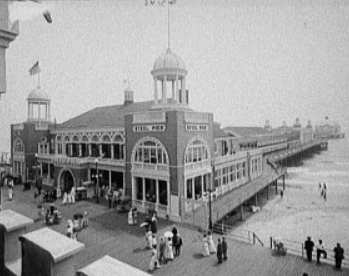
Rudolph Valentino received the Key to Atlantic City by then acting Mayor Anthony Ruffu. Rudolph Valentino was appearing at the Steel Pier.
Source: wpg.1450.com
6 Mar 1926 – Valentino-Negri Match Not a business arrangement
The “Times” says that Pola Negri, the film star, has announced that she will marry Rudolph Valentino, after four months’ separation test, if their love remains the same. Pola Negrl declined to call the arrangement an ordinary engagement, because it “sounds like a business arrangement.”
“People come and go in our lives. Its very important to spend time with those around you that matter the most”..–Rudolph Valentino
1 Mar 1926 – Natacha to abandon Role
Natacha Rambova is about to abandon the dramatic sketch, “The Purple Vial”
in which she has been appearing, and instead makes her debut as a dancer in
an elaborate act which will almost certainly turn out to be a divertissement at the Palace this spring.
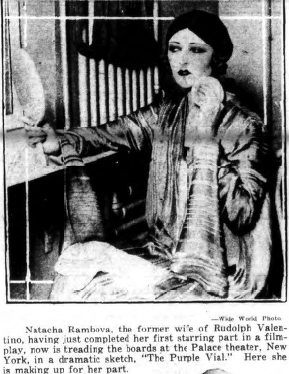
8 Feb 1926 – Natacha Rambova on Broadway
Lewis and Gordon announce the Broadway premiere in a speaking role of Natacha Rambova (Mrs. Rudolph Valentino) in “The Purple Vial” at the Palace Theater, Monday afternoon, Feb. 8. Miss Rambova will play an exciting dramatic role In a one-act play by Andrew De Lorde. It is expected that many film celebrities will attend the initial performance.
1925 – Valentinos ticket
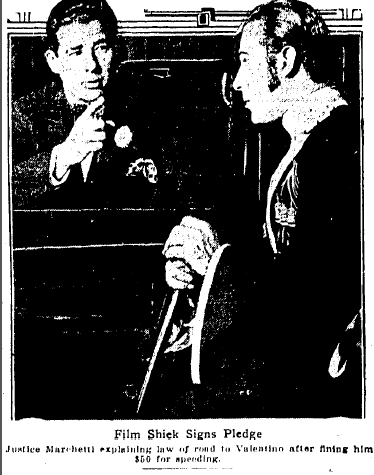
Rudolph Valentino, screen actor who has been caught speeding before may have a jail sentence meted out when he answers a charge of speeding before Justice Marchettl next Tuesday. Valentino is charged with driving 38 miles an hour along Santa Monica Boulevard, a 20 mile limit zone. Justice Marchettl has recently declared war upon speeders and has meted out many Jail sentences.
1 Sep 1925 – Norm Kerry Owes Chicago Tailor
Edward Schmidt, a local tailor, has brought suit against Norman Kerry, screen actor and friend to Rudolph Valentino for $366.36. He charges that Kerry owes him this money for four years for clothes he made for him and refuses to pay it.
“You can measure cloth by the foot but can’t measure art that way”. -Rudolph Valentino, 1923 Illustrated World Article
“She gave this reason as to why Valentino married her: “I honestly believe that Rudolph would have married then any woman with an automobile.”-Jean Acker, former wife of Rudolph Valentino
—————————————————————————–
“On her second encounter with Valentino at a party: “The first question he asked was, `Do you care to dance?` I decided to sit it out with him under a California moon.”-Jean Acker, Former Wife of Rudolph Valentino
18 Sep 1927 – Alberto Valentino
When it comes to a matter of experience Alberto Valentino has much more right to the role of the man of the world Rudolph Valentino. In fact Alberto has seen an active and a successful life. He no doubt regards his present objective as a new adventure, and any trail that may lead to fame or fortune is a game worth Alberto’s candle. He has been a successful journalist, writing with influence for papers in Taranto, Rome and Milan. In the World War he served in the army with such distinction he was appointed crown minster by King Victor Emmanuele. He was admitted to the bar at the age of 21 and for 12 years coupled with his journalistic activities. He carries an honorary degree in law from the University of Bologne. Alberto was the brother Rudolph referred to whimsically as the “the pride of the family” for it was Alberto who was passing his grades when Rudolph was being dismissed from military school and being sent to America by an exasperated family. But if Alberto led the life of a man he was to pay for his success from his physiognomy. When he went to Hollywood a year ago to adjust his brothers affair there were deep lines in his face though his eyes and Latin fire, there were little pouches beneath them telling of nights spent over briefs and proofs in the pursuit of professional distinctions. In adjusting his brothers affairs, the sensible Alberto came to the speedy conclusion his brothers greatest heritage was his name. The word “Valentino” spelled romance to millions. The success of Rudolph was more than the popularity of the actor, for it was one of the player’s perplexities that his public often preferred his bad pictures to the good ones. Valentino was simply Valentino and his acclamation could be explained by that blind hero worship the public occasionally falls into. Alberto told his thoughts to June Mathis, who had been the discoverer of his brothers talent. She proposed Alberto continue the name as a tradition of the motion picture. Alberto saw the point but he shrugged. He was older and he had lost his looks. Thereupon Miss Mathis advised a visit to a surgeon and the modeling of a new face upon an older head. The elder brother pondered. Eventually he complied. In addition, to the lines of his face, it was discovered he had a far too prominent nose to be used to advantage on the screen. This nose according to Miss Mathis, was the principal obstacle he had to overcome. With a bust of Rudolph for a model, the same surgeon who gave Jack Dempsey his famous nose molded the appendage of Alberto into a softer and more classic outline. He also removed a part of his chin. Alberto had the determined chin of a fighter, which was too domineering to grace the face of a “great lover’/ In the event I do not succeed, he says my son will endeavor to follow in his uncle’s footsteps. The boy is 13 years old and looks like Rudolph. His name is Ojovanni and he is now in school in Turin. We decided his screen name will be Jean Valentino. I have high hopes for his success. Alberto says Rudolph did not favor his entering motion pictures either as an actor or in a business connection. He felt Alberto’s professional success was too well established for him to risk everything on a theatrical adventure. However, Alberto had a secret yearning for the stage in his early youth. The nearest he ever has come to an expression of it was as a dramatic critic in Rome and Milan and as the author of several short plays. So in his 35th year Alberto Valentino is setting out on as strange an errand as ever occupied a man; the recapture of past youth and beauty and the rekindling of a dead flame with them.
Categories: Uncategorized
Tags: Alberto Valentino, Jean Valentino, June Mathis, Rudolph Valentino
Leave a comment
“I prefer to retain the memory of the sweet boy I married, and surely if there is one person who has worked hard enough to be worthy of success and that is Rudolph Valentino. I admire his courageous fight to fame. Despite the fact, we past the parting of the ways, I can look back and see there is much in my husband that I admire”..–Jean Acker, 3 Sep 22
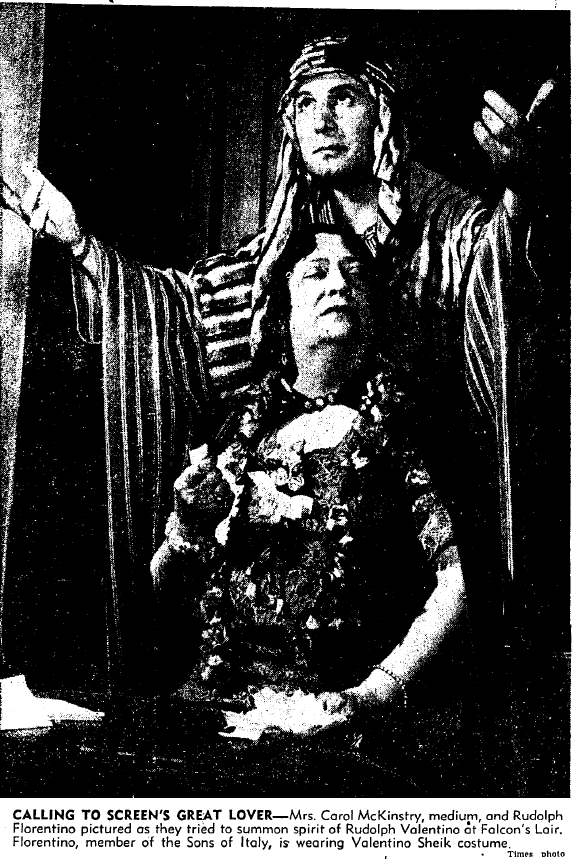
1952 – Valentino Speaks Foreword in Return of Rudolph Valentino
A lot of books were written about Rudolph Valentino of course there are a few that are considered “out there”. One of them is called Return of Rudolph Valentino written by Carol McKinstry. I am currently reading the book so the foreward was abit fascinating to me so I thought I would include some verbiage:
Some of you already know that I possessed psychic literary ability, executed for your approval, thought and entertainment in the book of poems titled “Day Dreams” bearing my name as author and published by Macfadden Publishers in the year 1923. Hence that I should take up my pen again from this side of eternity should not surprise you. Soon after the beginning of my career in pictures I became intrigued with the desire to write a scenario for the screen an original script with a vivid, colorful desert background and reincarnation the theme of the story. But something always came up to interfere with my plans for so doing. I know now why I was thwarted and conjectured the plot now I wrote with absolute knowledge whereof I speak. And so I died in the flesh to complete from Spirit a far more finished production of my erstwhile hearts desire. Others may philosophize in dry and tedious argument to win a point in truth; I too, may resort to such, in part, where there is need to clarify a statement. But my main object is to show you thorough dramatization the knowledge I have gleamed as to how the law of the universe acts in shaping a path for our continual progression and evolution throughout eternity. Pray for me; enshrine me in your memory, but do not hold me in a bondage of sensual delusions that engulf me in shadows of distasteful memories and create a formidable barrier to the freedom and progress of my soul..
13 Jul 1922 – Rudolph Valentino Commentary, Syndey AU
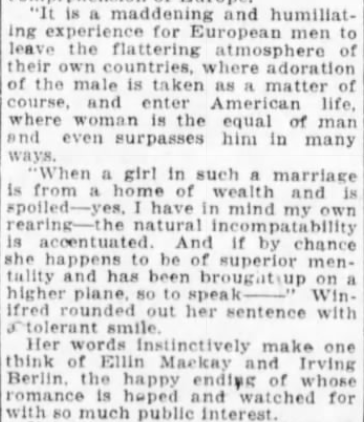
I hate the Sheik, I think he’s a ‘he-vamp.’ and I hate the way he rolls his eyes, l know Sydney girls have got Rudolphitis and I know that my young wife sees the Sheik in everything – the grilling steak holds his image the wringer holds his spirit. But I hate him. I hate a man who rolls his eyes snd behaves like a Spanish senorita. I cannot understand the army of girls who have fallen to his cheap charms. Girls who see romance in the Sheik would see romance in the butchers boy. They represent decadent flapperitis in its most advanced stage. Give me a man like ‘B.J’ Hart, who represents manhood in its greatest sense. Why is It that the fair, frail flappers of Sydney have gone on about a man who rolls bis eyes and makes prisoner of a poor, pure pretty girl alone and defenceless. Do they approve of his lax morality? Is it an indication of degeneration! Do the girls of todays countenance a man who defies decency to compromise an Innocent woman?
“I am not afraid of the dead, or of ghosts. I am not afraid of anything pertaining to the life beyond. And its not because I don’t believe in it. It’s because I do”. — Rudolph Valentino

“I don’t regard the public’s admiration of my husband as anything personal. If you get what I mean. Girls are fascinated by Rudolph Valentino the actor not by Rudolph Valentino the man”..Natacha Rambova Movie Weekly Magazine, 11 Aug 1923
Jun 1929 – My Private Diary Rudolph Valentino
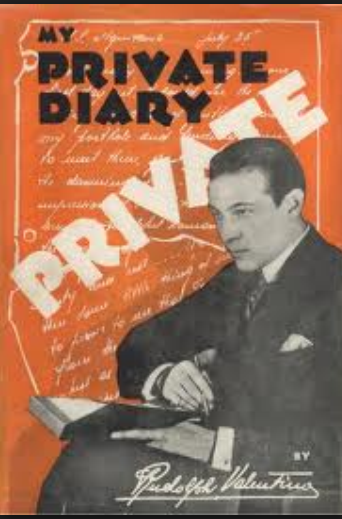
In 1929, the Occult Publishing Company, Chicago published a book titled “My Private Diary – Rudolph Valentino” with the backing of the Chicago Valentino Memorial Club. Initially this was serialized in articles titled “My Trip Abroad” featured in Movie Weekly magazine before it was published in book form. This book details Rudolph Valentino and Natacha Rambova’s travels back to Europe in 1923. Rudolph Valentino while touring through Europe kept a diary which he faithfully recorded his thoughts. Rudolph Valentino lived the American dream and he wanted to go back to show those that had doubts about him that he truly made it. He writes “My Dream is coming true! From day to day, night to night, here and there, I am going to write down my impressions. I am going to put down on paper the things I think, the things I do, the people I meet, all of the sensations, pleasurable and profitable that are mine. I shall never go home, I said to myself, until I can go home somebody”…
Rudolph Valentino did go home again and again. This book was one that I thoroughly enjoyed reading. It gave me further insight to his thoughts and feelings. Time after time it still proves that he still has fans that still are that.
There is one line in this book which caught my attention and that was in the introduction by Michael Romano “and this thou perceives to make thy love more strong. To love that well which thou must leave ‘ere long”…
2015 Rudolph Valentino Calender
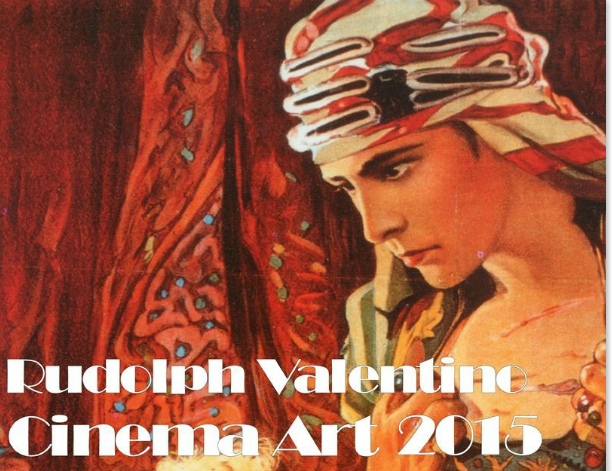
With each New Year there is something always to look forward to and that is the annual Rudolph Valentino Calendar created by one of my favorite authors Ms. Donna Hill. 2015’s calendar celebrates Rudolph Valentino’s cinema career through “lobby art” that was utilized to promote films in movie theaters. The website to go is:
http://www.lulu.com/shop/donna-hill/rudolph-valentino-2015/calendar/product-21841231.html
1923 My Day Dreams and Rudolph Valentino
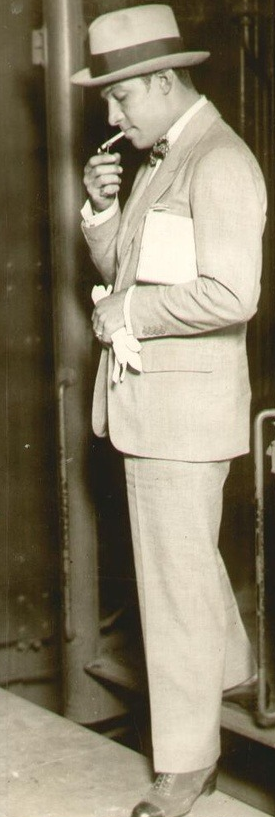 In 1923, through Rudolph’s close friend and business manager George Ullman, he wrote a book of poetry called “Day Dreams”. Rudolph Valentino did not claim to write this book. Although he did note through mediums and inspired by the people whose initials appear under each title is how this precious book came to be. In the books preface he writes “Just dreams Day Dreams a bit of romance, a bit of sentimentalism, a bit of philosophy, not studied but acquired by constant observation of the greatest of all masters Nature! I took to dreams to forget the tediousness of worldly strife and the boredom of jurisprudence’s pedantic etiquette.” This book has special meaning to me.
Rudolph Valentino through his gift of authorship and his presence on the screen gave the world what it badly needed was a dose of old fashion romance. Romance that escape from reality where a woman has a place that she can escape to. Day dreams where a dream can be what she wants it to be one of romance, fun, and frivolity. There is a quote Rudolph Valentino said about himself and daydreams. “Women are not in love with me but with the picture of me on the screen. I am merely the canvas upon which the women paint their dreams.” In every magazine article, in every movie was a love story to eagerly see. Where the man gets the girl and they all live happily ever after. In his last movie, “The Son of the Sheik” I remember one line which makes me smile “Why fear me dearest? Love such as mine can do no harm”.
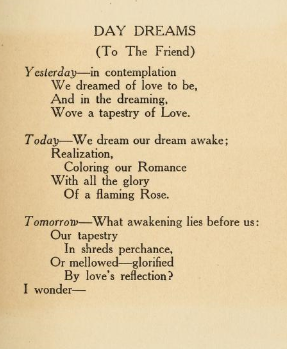
After all these years, in my dreams I can make you mine. In reality, you yearned for love. In my dreams, I gave you love, and made all of your inner desires come true. I thought I would include a poem from Rudolph Valentino’s book “Day Dreams” which true symbolizes how I feel.
Day Dreams (To The Friend)
Yesterday – in contemplation
We dreamed of love to be,
And in the dreaming, Wove
a tapestry of Love.
Today – We dream our dream
Awake: Realization
Coloring our Romance with all
the glory of a flaming rose.
Tomorrow – What awakening lies
before us: Our tapestry in shreds
perchance. Or mellowed – glorified
By loves reflection? I wonder –
19 Dec 1926 – The Lair of the Falcon
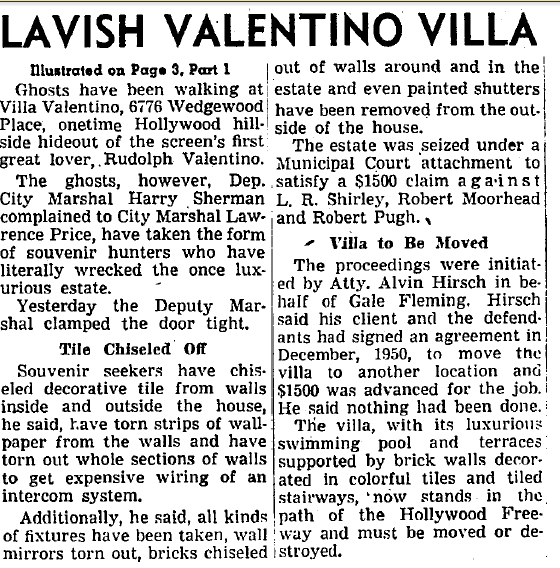
Pressed close to the mountainside lay the home of Rudolph Valentino. Well had he named it Falcon’s Lair, for a wild falcon might have nested there and found security. The long winding road led up to the white rough-plastered house with its gates of Italian Grill work and its fountain where the laughing waters sang of love. Far below, lay the city of Los Angeles, and in the nearby hills the homes of the favourites of the films were visible. At the foot of the hill, lay the place that was dear to the hear of the young actor, the stable where his beautiful horses were stalled; four noble animals, two jet black and two of silvered gray, Firefly and Yacqui, Haround and Ramadan. Something was missing, something they waited for. The hand of their master was gone and they knew it, sensed it in their wise animal way. A dog barked at the sound of strange feet and all the road echoed his protest. Up where the open door proclaimed to the world a house without a master the people flocked. They came to see the home of the idol of the screen, Rudolph Valentino lover of lovers. Old men sighed as they looked at the guns upon the walls. Young men saw the glory of armor in all its ancient beauty; fine pierced helmets of the long ago; breast plates and spear and a glove made for a warriors hand. Everywhere the masculinity of the dead star was expressed by armor and the things that are made for warriors. It seemed to fill the house with a low murmur, as if men of old had been urged back to knightly revel with the dead boy who longed for such compassioning. Lamps stood here and there about the house, and upon the parchment shades a scroll of music met the eye. The rooms, so closely intimate, were rich with an imperial beauty; for all the wood was master-carved by men long ago. Soft velvets pressed close by years of contact were laid upon the hearth old iron was used to give age as well as beauty. Upon a block of black marble a sculptured hand gleamed white and ghostly, the hand of the dead boy who came up the ladder of fame so quickly, a strong hand with a long sweep from forefinger to thumb, an artists hand with sensitive fingers, sensitive even in the cold alabaster; fine and strong and of generous lines is this sculptured hand of Valentino by Prince Troubetskoy. There is pathos in its empty palm, for death came as swiftly as fame and folded the strong hands into repose. From the long windows came the great call to the eye of the master: behold the earth how marvelous and how fair. Music and books were in the room with its beams of oak present close to the low ceiling; but even here swords lay upon the piano swords crusted with jewels and whispering of war and love, and a hand sure and strong. Upon the wall beside the door stood the full-length painting of the men who had called to those sands, and upon his painted picture a gleam of the drying sun shed a tender light. In the dark eyes was a tenderness, and upon the full lips a little smile as if to say “You are welcome” Living and dead he called them, this mean who has gone into the shadows. Thousands of people pressed the floors of his house. They gazed fascinated at the place where he lived his life. Three rooms upon the top floor and three below. The house was small, yet it held so many treasures and old desk with lovely ivory inserts and little figures standing out in rich, warm tints, each one a gem of carving. The Black Falcon companion picture to Rudolph Valentino seemed to dominate the house, the brooding eyes, the strong, firm mouth and the well-knit figure were a challenge to the imagination. What manner of man was this; and why his name Black Falcon? Books ah yes the books that spoke of the man and his tastes better than all the other things in this house of 1000 wonders. There they stood, those wonderful books “Wooings and Weddings in many lands”. “Perfume of the Rainbow”, “Costumes of the Courts of Rome”, “Modern Dancing and Dancers”, “Ancient Costumes of Great Britain and Ireland”, and some little books, not costly that were labeled “Italian English Dictionary”. Rows upon rows of beautiful books. The eyes in the painting seemed to rest tenderly upon the volumes there in the cases beside the open fire. Many dreams had the dead actor dreamed there in his mountain home. Many starry nights had he dreamed there of great parts in great plays that would bring men and women in throngs to pleasure in his art. He dreamed his dreams but never had his vision assembled so great a throng as this: men and women, old and young, rich and poor, good and bad, climbing the mountain road, panting and weary to gaze upon his home, and upon his face, there in its frame of gold. Silently the great crowds passed through the little house, with its garden sundial telling off the hours and little whispers filled the air. “I loved to see him” said an old lady “he was a gallant boy”. Men looked at the guns upon the wall and sighed again. Young and beautiful girls looked down at the case of little rings and studs longing to possess some token of the lover who rode away from the people too soon. His art called to the women who loved romance. He captured for those some illusion they felt would keep. And men who loved to read of knightly deeds of daring and gay amors shut out their petty cares and lived with him upon the screen. His magnetic force drew them to him and his dynamic force drove him on. All the possessions of the man bespoke of his desire for something that is slipping away, a knighthood of other days, a questing that calls to men to unsheathe a blade for weal or woe. Cars, and still more cars, climb the winding road, for thousands are determined to seize the opportunity to satisfy their curiosity and peep behind the scenes of the actors life. There is only a quiet grief upon their faces as they look into the dead mans place of retreat; something of the grandeur of death. The mountains creep over them and sudden them; and in this quiet hush is the greatest applause that Rudolph Valentino ever had. The dead actor lives still, and the people come silently thanking him for the gift of his art. In the stable the horse awaits the footstep he will hear no more. Soon they will lead it away. Rudolph Valentino his master, will come no more to the Falcon’s Lair.
Rudolph Valentino is through with matrimony. “As long as I have to get my living from audiences of young women–married or unmarried–I consider it my duty to steer clear of marriage. A married actor is never so romantic as an unmarried one to his feminine admirers,” he said.–22 Nov 1925, Valentino Says He Will Steer Clear of Matrimony; Denies Hatred for Wife’s Pekingese Dogs.
14 Oct 1920 – Stolen Moments

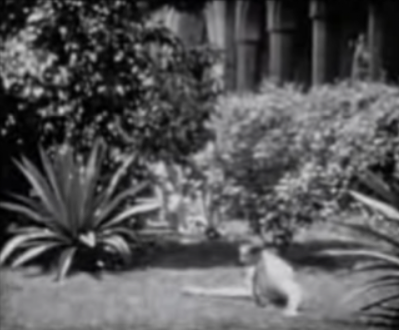
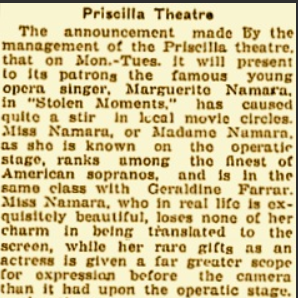
The movie “Stolen Moments” directed by James Vincent; story by H. Thompson Rich, distributed by Pioneer Film Corporation and released by American Cinema Corporation. This was the last film which Valentino played a villain.
The movies cast: Marguerite Namara (Vera Blaine); Rudolph Valentine (Jose Dalmarez); Albert Barrett (Hugh Conway); Henrietta Simpson (Hugh’s Mother); Arthur Earl (Carlos the Butler); Walter Chapin (Richard Huntley); Aileen Pringle (Inez Salles); Alex Shannon (Campos Salles, her father); Gene Gauthier (Alvarez his son).
Plot: Vera Blaine, is an orphan and the ward of rising young attorney Hugh Conway. Vera refuses a proposal from Hugh, her upright guardian because she is attracted to Jose Dalmarez, a Brazilian novelist visiting New York. Dalmarez gives Vera a photo of himself and Vera gives him a book of poetry that contains a romantic inscription inside the cover. However, Dalmarez has to return to Brazil for business and invites Vera to go with him. She takes this as a proposal of marriage and comes to his house with her mother’s wedding ring saying how romantic it would be to be married to him with her mother’s ring. He informs her that it was just an invitation to travel and she is horrified and flees the house. In the meantime, Dalmarez returns to Brazil. While there Dalmarez woos a local beauty named Inez who is the daughter of a local government official. Dalmarez and the government official’s son get into a fist fight when he observes Dalmarez kissing his sister. Years later, Dalmarez returns to the U.S. to consult a lawyer about criminal law for research on a book he is writing. Dalmarez is invited to dinner at the lawyers home who unbeknownst to Dalmarez is a friend to both Vera and her new husband Hugh Conway. Neither are aware of the past association of Vera and Dalmarez. When Dalmarez is alone with Vera he threatens to disclose her past unless she visits him. She does, and begs for the return of the book she had given him but he refuses. Dalmarez tries to kiss Vera they struggle, and she finds a heavy instrument striking him accidently killing him. Later on in the evening, a burglar enters the home and steals money and is initially blamed for the murder. The police let the burglar go because they believe the killer is a woman due to scratches on Dalmarezs face. A hairpin and a glove are found near the body. Vera returns the next night for the book and upon entering the house is discovered by Richard, who is investigating the murder case. Later that evening Campos returns through a window to obtain letters sent by his sister to Dalmarez, and is shot in a scuffle with Richard. Before dying Richard confesses to the murder of Dalmarez. Vera and her husband find happiness with the past safely behind them.
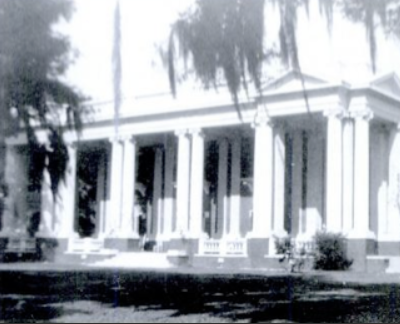
The movie was shot in several locations. The Brazil scenes were filmed at Flagler College, St Augustine, Florida. The rest of the movie was filmed at the Greenwich Plantation, and Bonaventure Cemetery, Savannah, Georgia. In 1923, Greenwich Plantation, Savannah, Georgia burned down. The only things that still exist that were in the movie are the fountain, statuary, and the reflecting pond. The Greenwich Plantation was located on the Wilmington River, with its manicured lawns, formal gardens and elegant white marble fountain was considered the most magnificent estate in the entire south. So those who are true fans of Rudolph Valentino that are ever in the Savanah or the St Augustine area there are still some places to visit that he was these many years before.
“Once a gentleman always a gentleman, even though a husband. When a woman says she wants a career, it means that she wants independence. I think a man should be the master. Both can’t be independent. One must be master. It is alright to have the fifty fifty basis, but the woman must find out that she hasn’t any lap dog, or slave drive either. It must be a matter of give and take, but a woman will always respect a man more if she knows he is a man”. – Rudolph Valentino, 8 Nov 1925
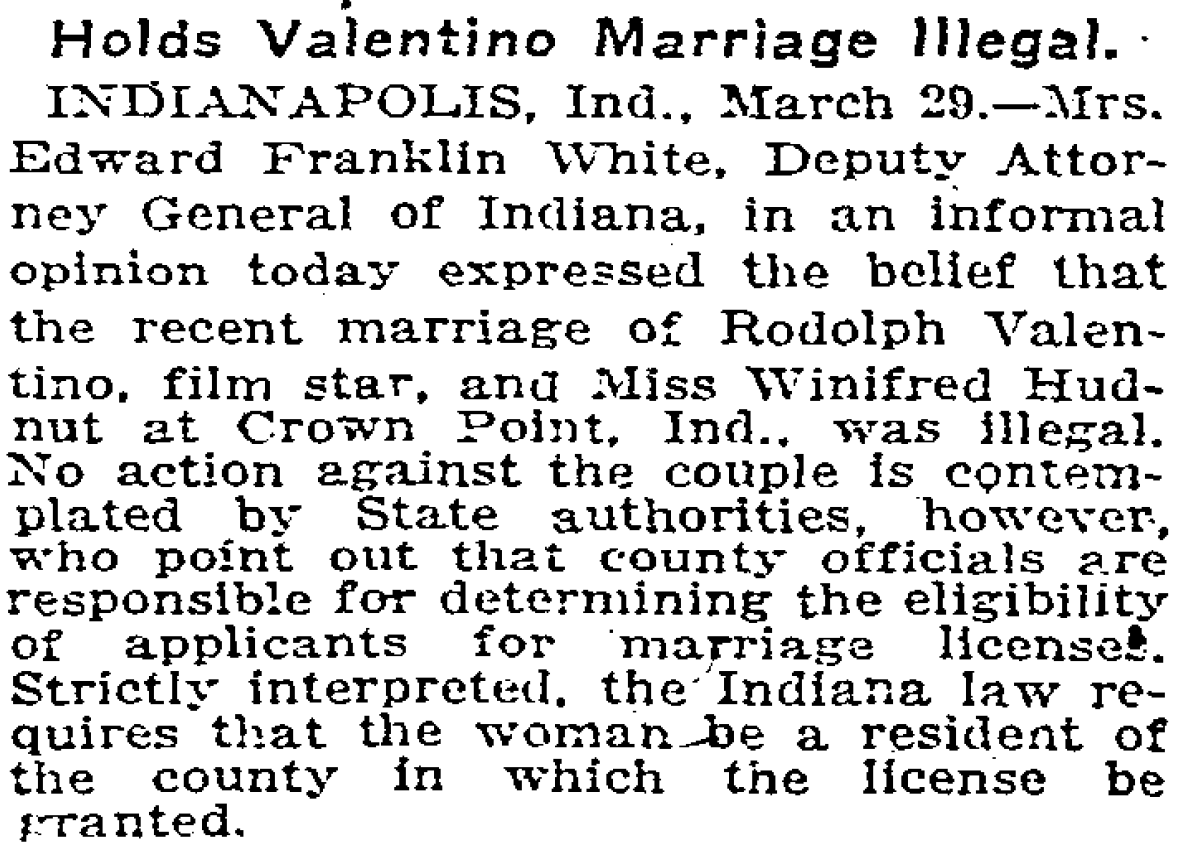
1925 – George Wehner Friend of Natacha Rambova
George Wehner is an unknown to most individuals who do not know a lot about Rudolph Valentino and Natacha Rambova. This article focuses on George how he was introduced to Natacha and the role of good friend he played in her life.
Starting in 1921, after the death of his father George Wehner did a minor stint in vaudeville that occupied most of 1922. Wehner spent much of the rest of the decade focused on promoting his reputation as a medium; those efforts culminating in the publication of his autobiography in 1929. Perhaps Wehner’s most advantageous connection became the Richard Hudnut family. Wehner had been introduced to the designer, Natacha Rambova, in 1925 by her mother (Hudnut’s third wife) and he had begun leading regular weekly séances for them and their friends. He was invited to travel with Rambova and her entourage to Europe in 1926. This trip provided Wehner with numerous opportunities to further his psychic career, but he reached the apex of his fame when he foretold the death of Rambova’s estranged husband, Rudolph Valentino, after the film star was hospitalized. He went on to console the grieving Rambova in a series of séances following Valentino’s death, in which he enabled Rambova to communicate with the spirit of the late actor. These incidents were widely publicized by Rambova in serial installments in the New York Graphic, which also were published in book form. It was Rambova who introduced Wehner to noted occult writer, Talbot Mundy, and his wife, Dawn Allen, in 1927. Mundy took an extreme interest in Wehner’s work, encouraging the publication of, and providing the introduction to, Wehner’s volume of memoirs in 1929. Wehner’s increasingly erratic behavior, however, soon would alienate Mundy, who later repudiated his belief in Wehner’s authenticity as a medium. By the early 1930s, Wehner appears to have abandoned “spiritual mediumship” as a profession and turned to writing fiction, as well as painting, as a career alternative. He exhibited his watercolors at galleries in New York City during the mid-1930s, alongside the work of close friends, Margrete Overbeck (who, as a high school student, had designed the official Denver city flag) and Katherine Winterburn. Wehner also began to compose music quite prolifically, turning out orchestral pieces, ballet scores and other works for the stage. Among his performed compositions from this period were songs used in concerts by Ernestine Schumann-Heink and Maria Maximovitch; ballets for Katya Sergava and Alexis Rotov; and symphonic pieces put on by the WNYC Concert Orchestra and the New York City Symphony Orchestra in 1940 and 1941. Throughout the 1940s, Wehner maintained a feverish work pace. He also began to regularly attend the Cantonese Theatre of New York. Classical Chinese theater and music would have a profound influence on his later works for the stage, such as the opera, The Mark of Kings (1961). Wehner began to work on an epic novel, The Bridge of Fire, which apparently never was published. His financial situation was eased considerably in his later years when Winterburn left the composer a bequest of money after her death. In 1949, Wehner purchased a former rooming house at 69 Cranberry Street in Brooklyn Heights, where he would live and work for the next twenty years. Wehner’s musical output became even more prodigious. During the last two decades of his life, he composed the music and wrote the librettos for fourteen operas. Several of these works, including The Amiable Beast, So Sings the Bell, and The Wild Swan were presented by the Heights Opera Company, under the direction of George O’Farrell, in concerts at parks throughout New York during the summer of 1961. In 1964, the same company produced Into the Silence at the New York World’s Fair, in addition to a Central Park performance. The following year, the Amato Opera Theater staged the American premiere of Three Days After. Wehner also created new ballet scores later in life. The Cockfight (1959), with a scenario by Romana Kryzanowska, was performed at a workshop that featured her son, Paul Mejia, then a student at the School of American Ballet. Wehner continued to compose nearly up until the time of his death. He had begun work on a new opera, inspired by Hiroshige’s The Fifty-Three Stages of the Tokaido, and had completed the first act before being taken seriously ill. Wehner passed away at Long Island College Hospital in Brooklyn on January 12, 1970.
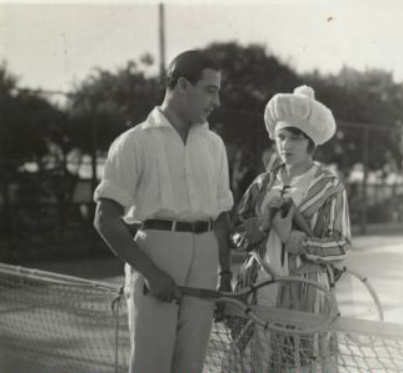
1929 – Rambova and spiritualist George Wehner, conduct séances for society figures throughout America.
They go to Salt Lake City: “There they held a séance in the Mormon Tabernacle while a cousin, Edward P. Kimball, gave them a private recital on the world-famous organ. The powerful strains of music echoing throughout the chamber enabled Wehner to receive messages from the Mormon religion’s founder, Joseph Smith, and from Brigham Young, the Mormon pioneer patriarch, as well as such relatives as Heber C. Kimball…. Afterwards, when these spirits faded away, Wehner claimed to see a most remarkable vision: ‘I saw the whole interior of the Tabernacle shimmering in a glorious blaze of golden light, in the midst of which appeared in the air above the organ, the figure of a young man in blue robes holding a long trumpet of gold. From my clairvoyant description of this radiant being my friends recognized the spirit as that of the Angel Moroni…who led his people across the plains and deserts to ultimate safey…as a beacon light of faith and love.’
 All About Rudolph Valentino
You must be logged in to post a comment.