
Uncategorized
29 Sep 2025 – Silent Movie Day
On this day, celebrates a film era that is slowly being depreciated.

Silent film era marked the beginning of cinematic art influencing multi- generations. Many of today’s youth do not appreciate beauty and expressionism brought to the big screen. To quote Norma Desmond “we didn’t need words we were faces on the screen”..💓❤️🔥🩷❤️☮️
Take time to watch a silent film or support a silent film restoration project.
Categories: Uncategorized
Tags: National Silent Movie Day, Norma Desmond
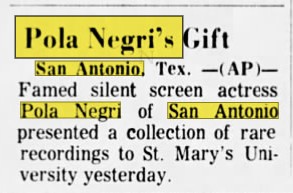
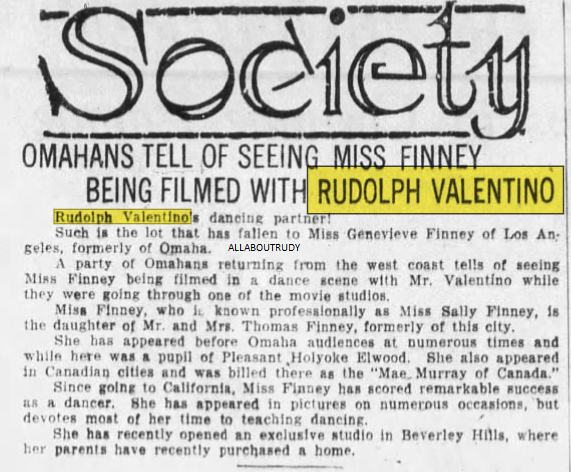
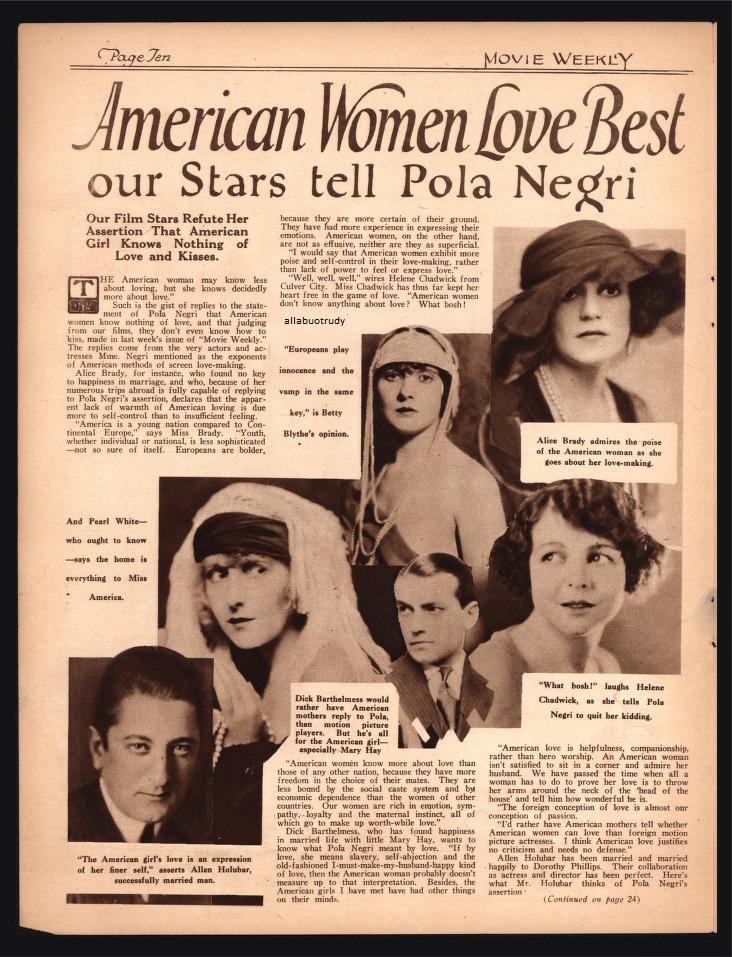
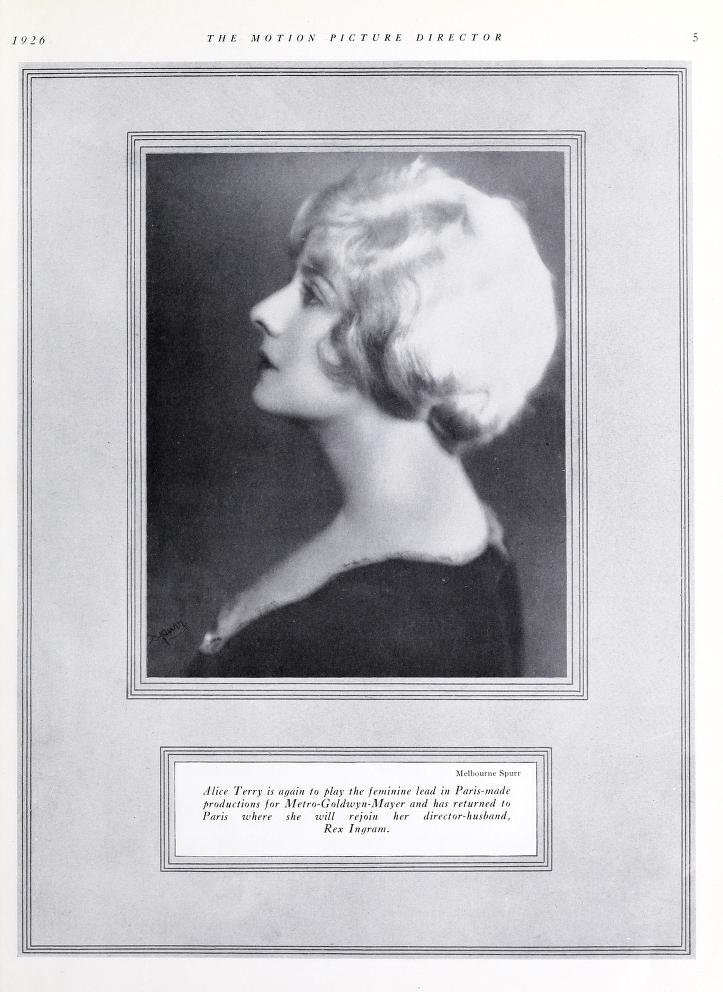
9 Sep 1951 – A Ukulele and a Memory
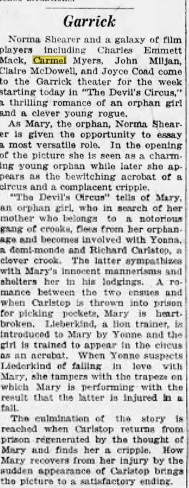
A vamp of the former silent movie days, who acted with Rudolph Valentino and also unleashed her feminine wiles in that mighty pictorial epic “Ben Hur” is now working as a television glamour girl. Because Carmel Myers has aged in appearance far less rapidly than the years have passed, she is able to compete in the charm sweepstakes on an equal basis with young newcomers, thus bolstering the vitality move men initiated by Gloria Swanson. One prop and one routine are the mainstay routines in Miss Myers television show a ukulele she has used since she was 13 years old. It was her ukulele that led her into television. At a party in New York, she was strumming and singing, and a friend told her she should be on television. Miss Myers took the suggestion seriously and looked up Robert Kintner President of ABC. He turned her over to the program department and they put her on the air. Movie fans who are acquainted with Miss Myers have noticed her hair colour is a radiant blond and she admits her natural hair colour is brunette. She further explains she looks much better with a lighter hair color in a television studio. Last week’s episode she recalled Charleston Contests held at the famed Coconut Grove a place talent scouts would gather. One night a scout told a young dance to report to a certain movie studio and the next day she did arrive, but nothing happened with her career until later after she did a name change to Joan Crawford. Miss Myers recalls working with Rudolph Valentino during one movie scene filmed in Santa Monica. He was supposed to rescue her but, in her version, she is the one to rescue him out of the water.
Categories: Uncategorized
Tags: Carmel Myers, Gloria Swanson, Rudolph Valentino
8 Sep 1925 – HORSE INJURES VALENTINO.
Rudolph Valentino, silent-film actor, was scratched and bruised at Lankershim, near here, today when he was dragged some distance by a galloping horse. The scene which Valentino was making for the screen required him to halt a running horse. He grabbed the animal by the bridle, but the horse, entering the spirit of the act, kept going, bumping the actor along the road. Valentino must appear in Justice Court here Friday and stand trial on a speeding charge. Such was the response of Justice Joseph Marchetti yesterday to Valentino’s plea that he moves his court temporarily to his studio. Valentino had declared that if he should have to leave the studio and go to court the wheels of production would stop and much money would be lost while the cameras waited for his reappearance.
Categories: Uncategorized
Tags: LA Justice Judge Joseph Marchetti, Rudolph Valentino
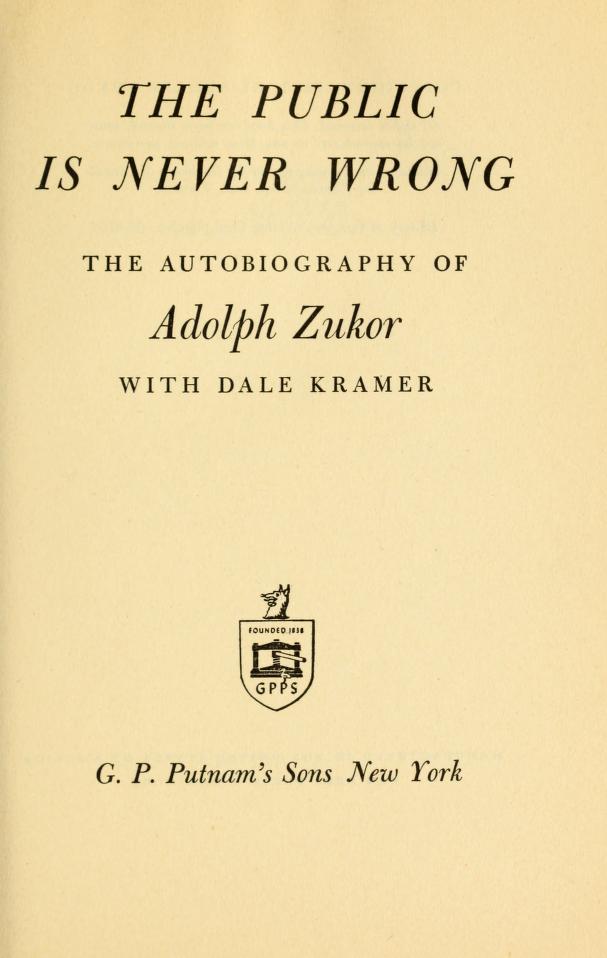
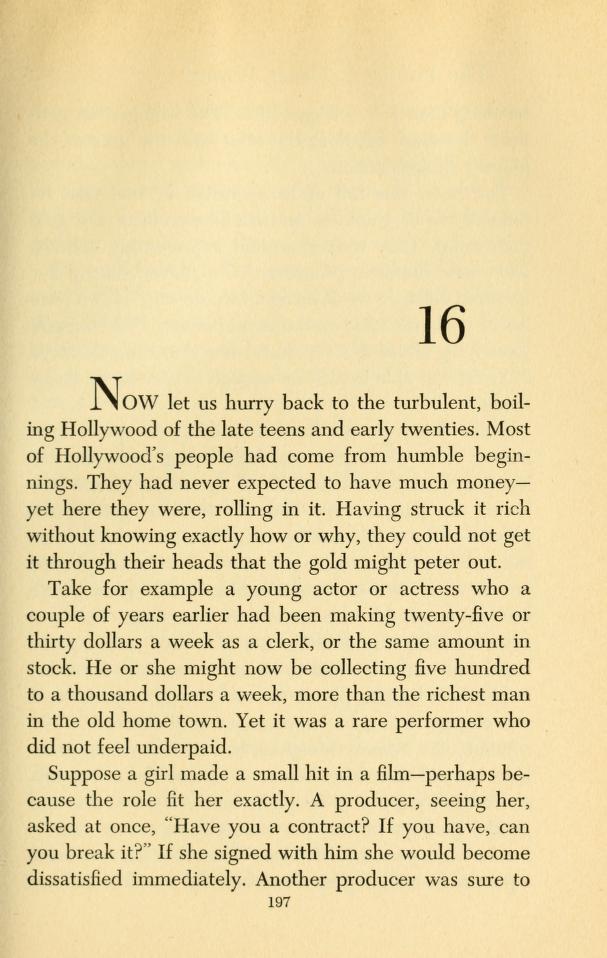
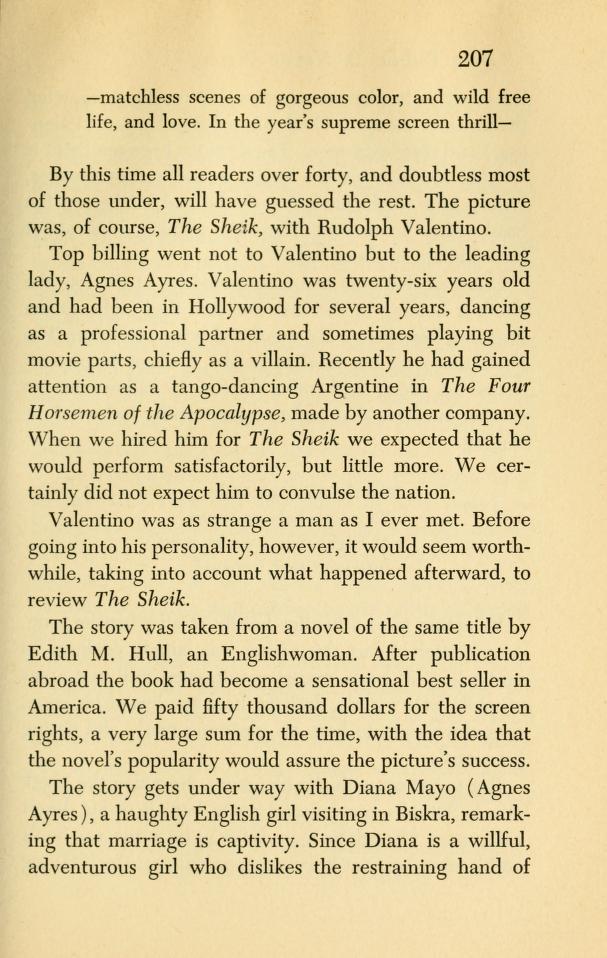
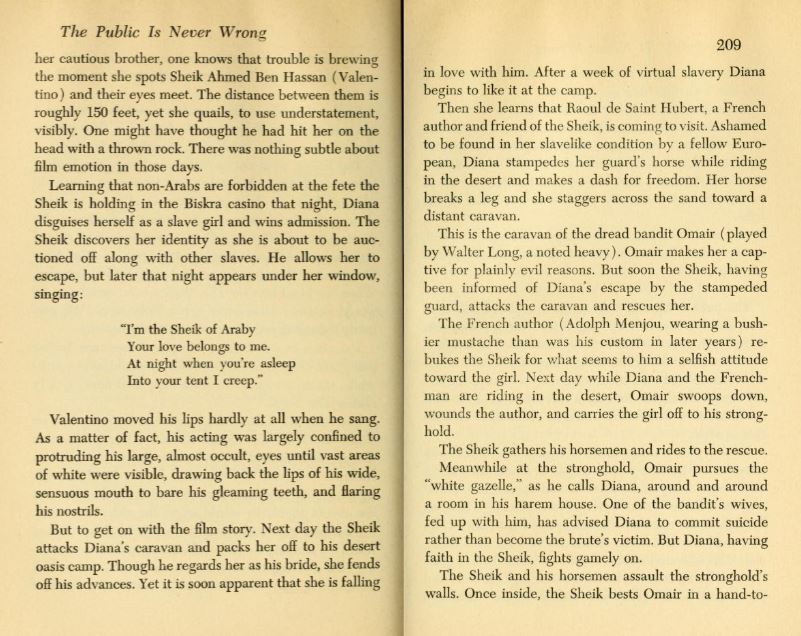
1953 – Director Adolph Zukor on Valentino

Categories: Uncategorized
Tags: Adolph Zukor, Natacha Rambova, Rudolph Valentino
2 Sep 1922 – Idol of Fans
In an exclusive interview with a representative with the NY Times yesterday Valentino announced he will not return to Hollywood pending the outcome of his litigation with Famous Players-Laskey. Papers in the legal action will be filed early next week and yesterday the company retained Guggenheim, Untermyer and Marshall in an attempt to force Valentino to continue the program outlined in his long-term contract. All day yesterday, the idol of thousands of film enthusiasts sat in a rear room of the office of his counsel, Arthur Butler Graham, at 23 West, 43rd Street, New York City in preparation of Valentino. It is understood that Sim Untermyer will be arraigned by Graham in the courts. To prevent Valentino with another production Guggenheim, Untermyer appealed to Hays, High Chief of the affidavit stating the actor’s case will be forwarded today by Valentino’s counsel. Although the fact is generally known Valentino far less compensation the players of equal import pictures. His salary is to be $1200 a week. Valentino contends Paramount netted more than $1,000.00 in “The Sheik” his first star vehicle, and that “Blood and Sand” his current picture will nearly double that amount he says, is not commensurate with these profits and furthermore, he insists Famous Players-Lasky abrogated its part of the contract by failure to provide the publicity agreed upon. After Valentinos marked success in “Four Horsemen of the Apocalypse” Metros dramatization of the Ibanez novel he was called to NY by Famous Players-Lasky and offered a contract at a sum that to the theater gods and goddesses is nominal. He refused at first, but when the company agreed to augment the salary with extra publicity he signed for a period of several years. Sleek of hair as always and with a ring of beaten silver on earth has his little fingers Valentino smoked innumerable cigarettes as he discussed his case yesterday for the first time since his arrival in NY. For days, he has been incognito refusing interviews and remaining in complete obscurity. “I will not return to Hollywood at the present time: he said. The reports that I will desert America and return to Italy are ridiculous. I have made great success in America and shall remain here. “If I return to Italy it will be only for the purpose of visiting my parents whom I have not seen in 10 years. I have no plans for contracts with other companies. I do not intend to make any until this matter has been legally settled satisfactorily. I would like to have it understood, that I will stand by any contract I make, as long as the other party does likewise. He refused to discuss his private affairs and ignored mention of the name of “Miss Hudnut”, whom he married to in Mexico before the interlocutory degree from Jean Acker had become final. But from another and no less authoritative source the Times learned the Valentinos will not live under the same roof until Jean Acker has passed legally of Rudolph’s life forever. Along Broadway in the motion picture offices, Valentino is known as the “gold mine of the screen” according to his counsel. When his case is called Graham expects to introduce as witnesses the editors of film magazines, who will testify that 70 to 80% of the “fan letters” about screen players received by these publications concern Valentino. Since her marriage to Valentino and return to New York, Miss Hudnut has evaded reporters. She remained for several months at the Hudnut summer camp Foxlear, at North Creek, NY and at one time was said to have booked passage to Europe which for some unexplained reason was cancelled. No she has moved into the Biltmore Suite of her foster parents. She will not return this season to the employ of Nazimova, whose art director she was. Although the Valentinos are living apart, there has been no break in their happy relations. It was admitted yesterday they have been together frequently and will continue to see one another at intervals until the California law permits them to take up their life together.
Categories: Uncategorized
Tags: Rudolph Valentino
31 Aug 1916 – DeWolfe Divorce
Mrs. Winfred DeWolfe, interior designer, mother of debutante and dancer Miss Winifred De Wolfe, who created a sensation by disappearing from New York six months ago, yesterday filed suit for a divorce from Edgar De Wolfe, former manager of the Granada Hotel, charging neglect and cruelty. DeWolfe, brother to Elsie DeWolfe, actress left this city for New York in 1914 and wrote to his wife, according to her complaint, that he did not intend to return. Mrs. De Wolfe declares he did not support her from the time of their marriage in January 1907. Mrs. DeWolfe alleges her husband during their married life caused her to suffer ‘great bodily and mental injury: but she does not state in what manner other than he began living beyond his means shortly after the marriage and squandered all her money. Mrs. DeWolfe who has a large clientele among society folk of the pennisula (San Francisco) says in her complaint that she has been swamped with bills contracted by her husband.
Categories: Uncategorized
Tags: Edgar De Wolfe, Winifred De Wolfe
1926 – Frank E. Campbell Funeral Home, NYC, NY
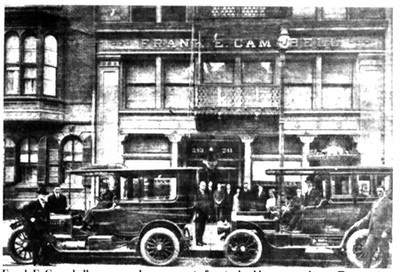
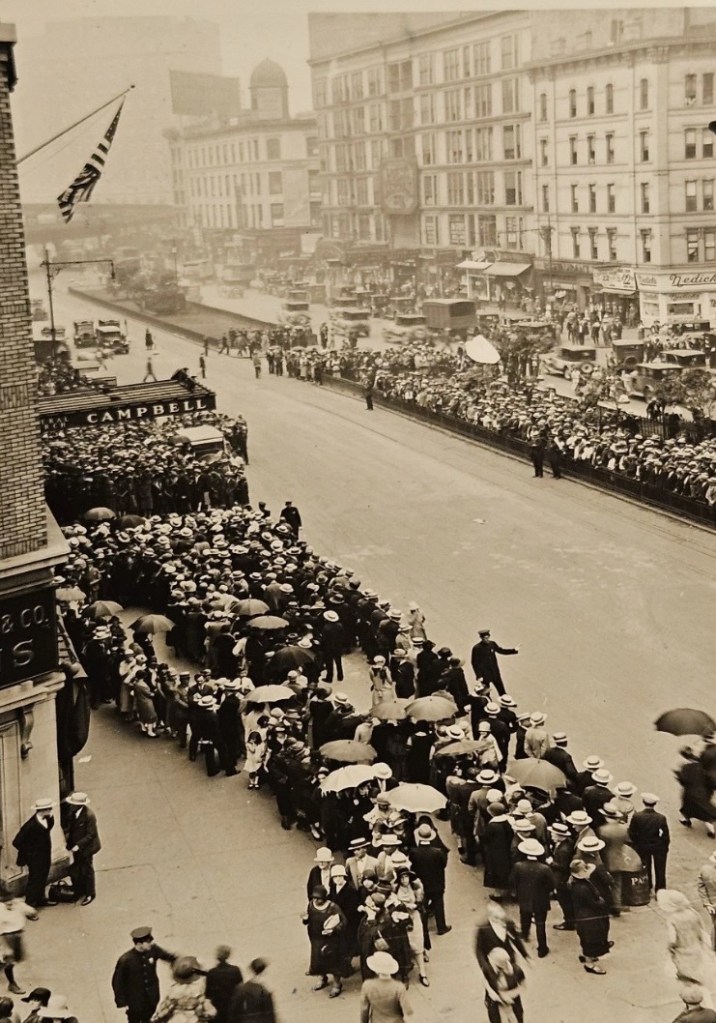
Quietly (and how!), Frank E. Campbell, ”The Funeral Chapel Inc.,” the city’s undertaker to the stars, is celebrating its 90th anniversary this year. It is a hushed affair. There will be, according to an official, ”no formal celebration, no formal acknowledgement” outside the building at 81st and Madison – and not much within. That is the place where, at the end, one could find Rudolph Valentino, Elizabeth Arden, George Balanchine, Bernard Baruch, James Cagney, Terence Cardinal Cooke, to alphabetically name-drop but a few.
”To create a service so sublimely beautiful, in an atmosphere of such complete harmony as to alleviate the sorrow of parting, is to render a service to mankind,” Frank E. Campbell himself said an exceedingly long time ago. Mr. Campbell got his start at age 12, in 1884, at a funeral home in Camp Point, Ill., helping to make caskets. By 1893 he was earning $10 a week in New York at the Stephen Merritt Undertaking and Cremation Company.
By 1898 he was in business for himself on West 23d Street. The rest is the stuff of mortuary legend. According to an in-house history of the concern, it was the founder’s business genius to recognize a need peculiar to New York and fill it. The custom at the time was to have funerals at home. That may have played well elsewhere in the land, but the majority of New Yorkers lived in apartments or residential hotels. This made for a cramped, to say nothing of crabby, funeral. Mr. Campbell ”combined the facility of viewing with the atmosphere of the church” and set the industry on its ear. Most funeral parlors of the period were simply basic storefronts. Mr. Campbell’s place was a showcase of mellow light, decorative furniture, potted palms, and art. By the time he buried Enrico Caruso, in 1921, the parlor had been moved to Broadway and 66th Street. By the time he buried Rudolph Valentino, after a riot at the bier, in 1926, his reputation was writ in stone, after a fashion. The parlor outstripped the competition for celebrity trade. By the time the business moved to 81st and Madison in 1938, Mr. Campbell was dead and buried four years (solid bronze sarcophagus placed in the family mausoleum in North Bergen, N.J.). His widow, Amelia Klutz Campbell, ran the business until she died in 1948 (cremation, ashes in the mausoleum) and it was sold off. There have been three owners since, but the name has remained, because of the reputation. Long after his death, Frank E. Campbell was quoted widely, particularly after Jessica Mitford’s savagely witty 1963 expose, ”The American Way of Death,” helped shore up a national assault on undertakers by clergymen. Writing about these critics in The New York Times, Homer Bigart said: ”They demand a curb on what they call the neo-pagan corpse worship of the modern funeral. Never keen on embalming, cosmetology, fancy coffins and other frills of funerary art, they want a return to simple, inexpensive, and austere rites.” Eventually the din died down, and funerals got neither cheaper nor less elaborate – they are still the third biggest-ticket purchase for most Americans, after homes and cars – but not before one president of Frank E. Campbell told the press: ”These dames that write these books – they do not want to hear anything good. If you kill sentiment, you are a dead pigeon. The world runs on sentiment.”
Today the business is owned by a Houston outfit, Service Corporation International, the largest funeral parlor operator in the country, whose chairman has characterized it as ”the True Value Hardware of the funeral service industry.” The chain, according to Eugene Schultz, assistant regional manager of the funeral division, considers Campbell the jewel in its crown. Having said that, Mr. Schultz offered a tour of the facility, volunteering that the 90th anniversary has been duly marked with a $500,000 restoration. Mr. Schultz walked somberly, at a loss for anecdotes, saying the famous dead are brought here because of quality and service and the knowledge that ”we will do everything possible to carry out any family request.” Asked if he could recall any extraordinary requests, he said, ”Not offhand.” The five-story funeral home was cool, with air-conditioners humming on each floor, quiet, and lovely, even though the elevator was exceptionally narrow, given its depth.
Categories: Uncategorized
Tags: Death of Rudolph Valentino, Frank E Campbelle Funeral Home, Frank E. Campbell
Aug 2025 – 98th Annual Valentino Memorial Service Review
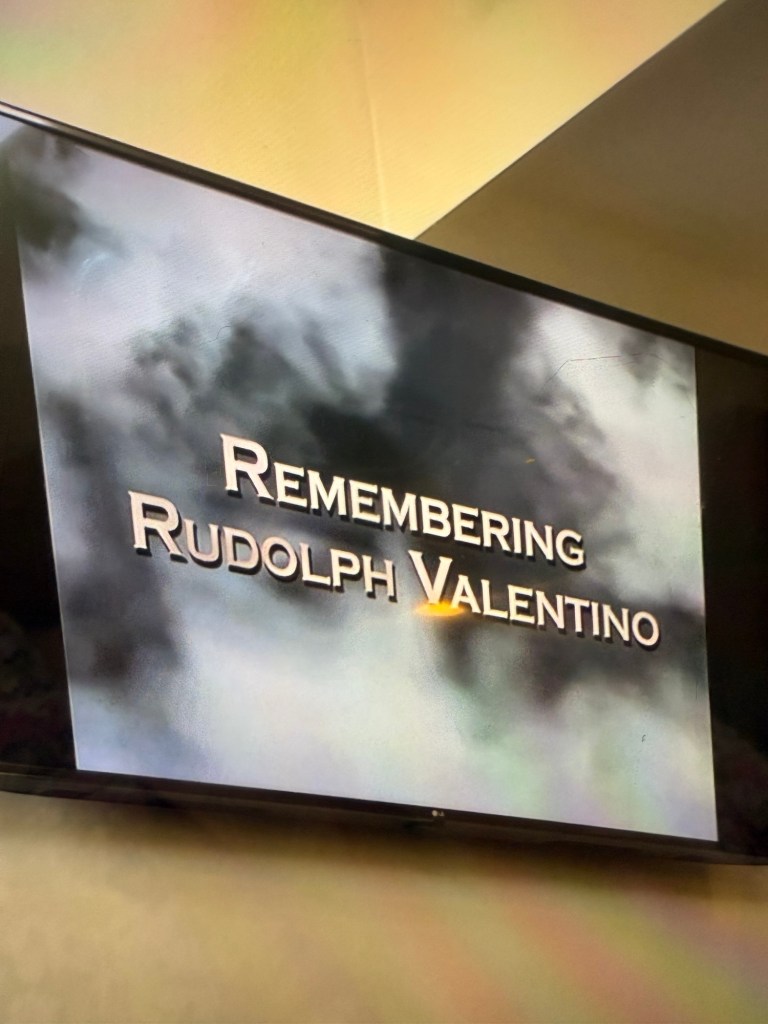
On every 23 August, 1210 hours, the Valentino Community comes together as one, in order to pay their solemn respects, in tribute to a great silent film actor, who still garners admirers and attention, in the 21st Century.
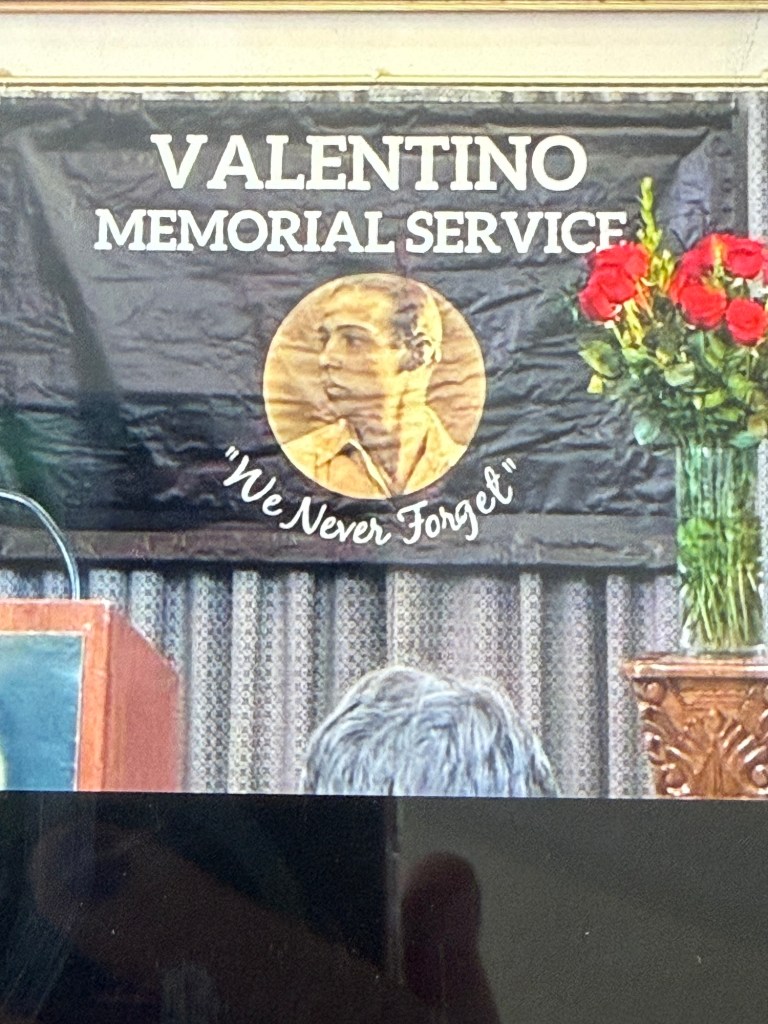
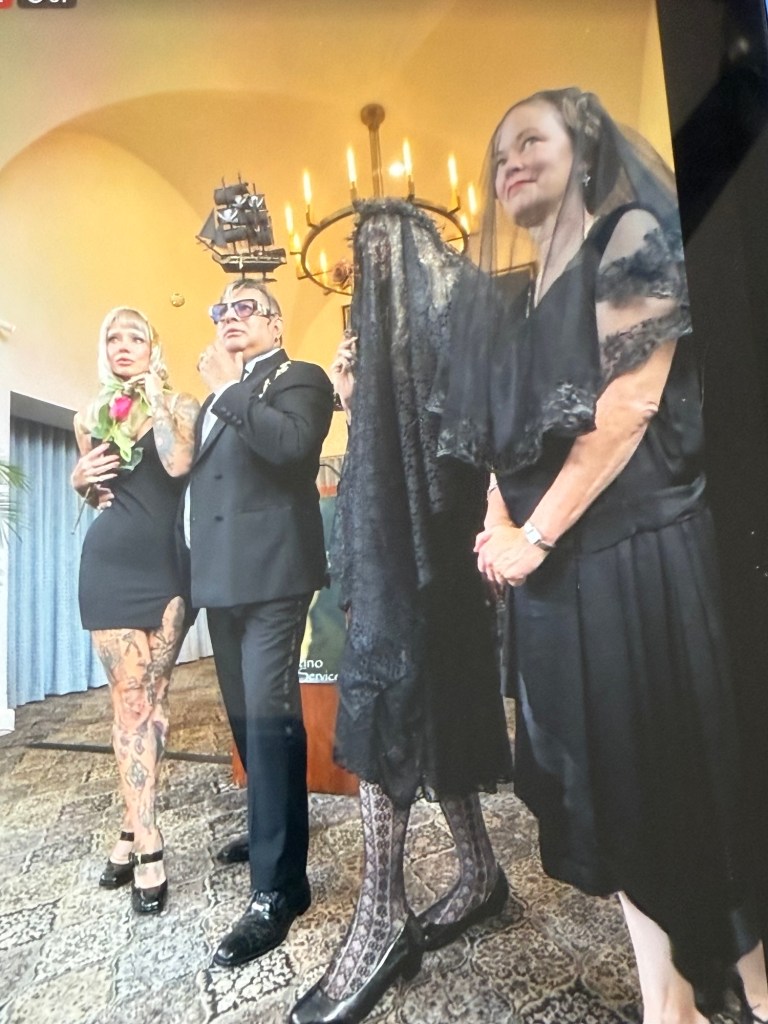
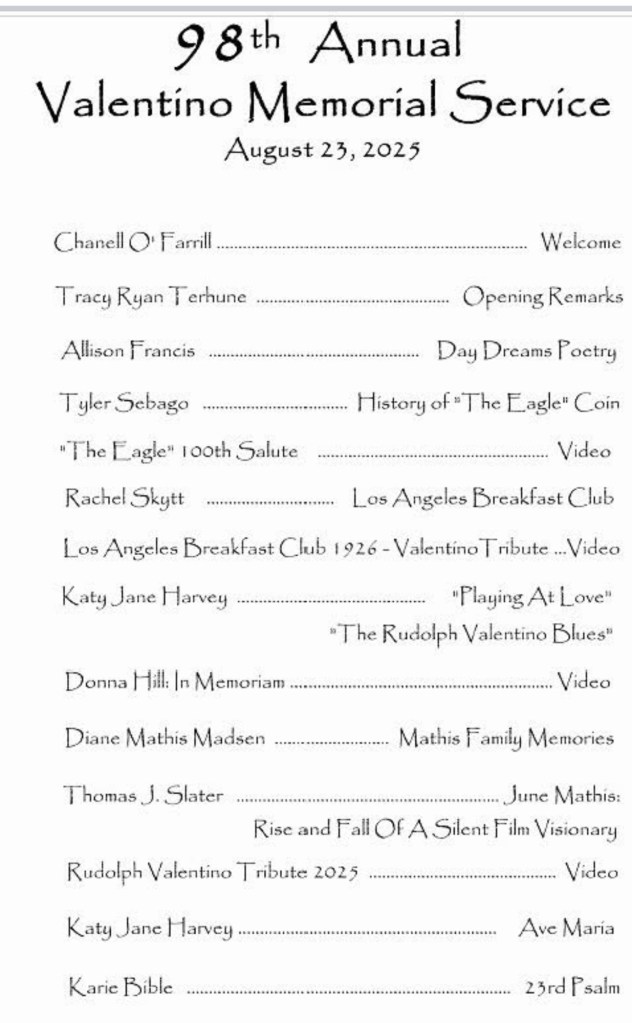
This year’s tribute program, was even more impressive than in years past. From the audio and visual tributes to the speakers, music selections, singing, to most of all a memorable salute to our beloved Donna Hill, everything was done reverently and beautifully.
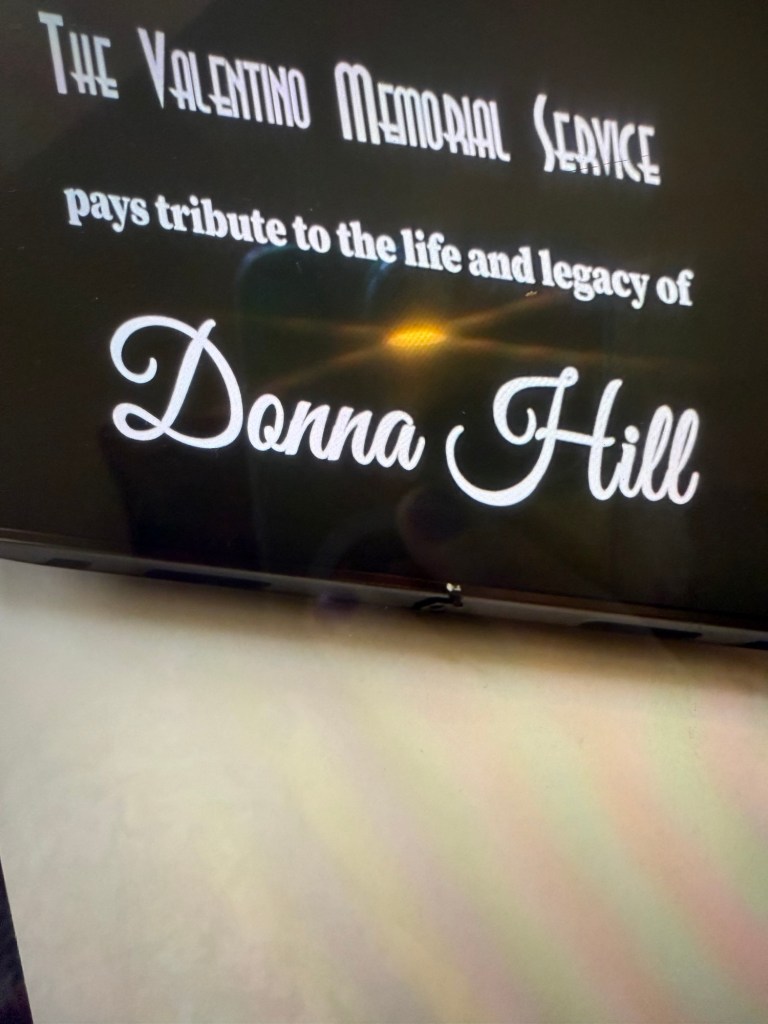
There was something poignant about knowing how much of a compassionate person Donna Hill was. While I did not personally know her. Everyone within the Valentino community, felt as though she was a friend, someone they could go to for questions about Valentino. Her legacy will be remembered for years to come.
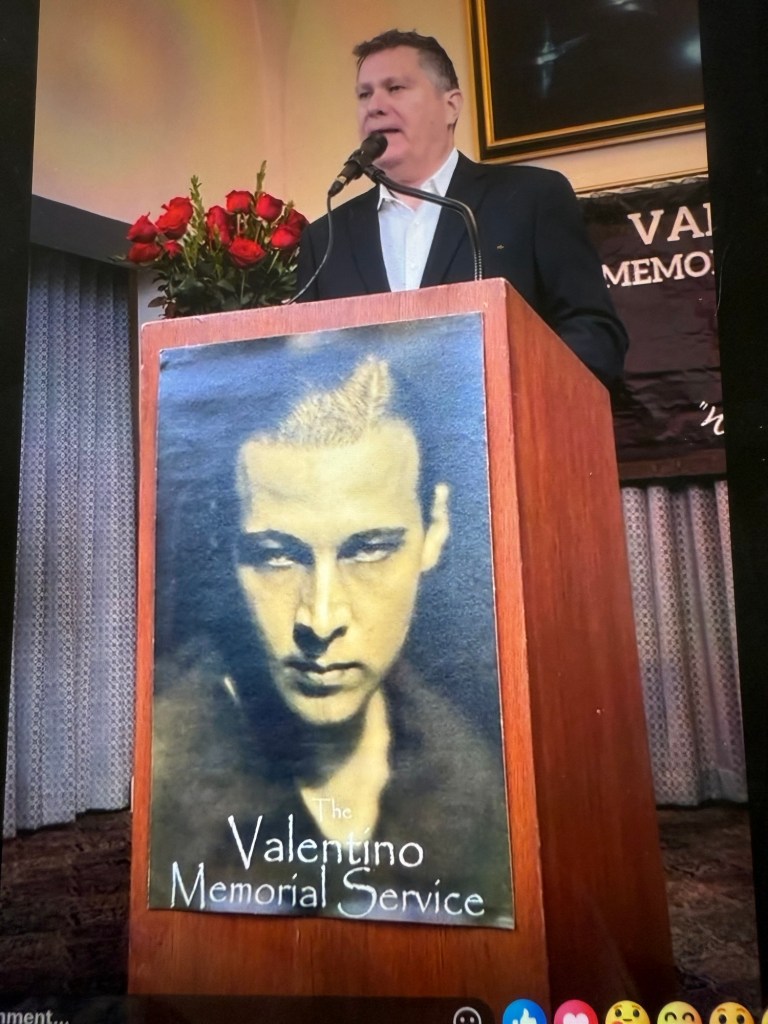
The music selection and the vocal talent of Ms. Katy Jane Harvey was once again, superb. I thoroughly enjoyed listening to my favourite “Ave Maria”.🎶🎤🎧🎼
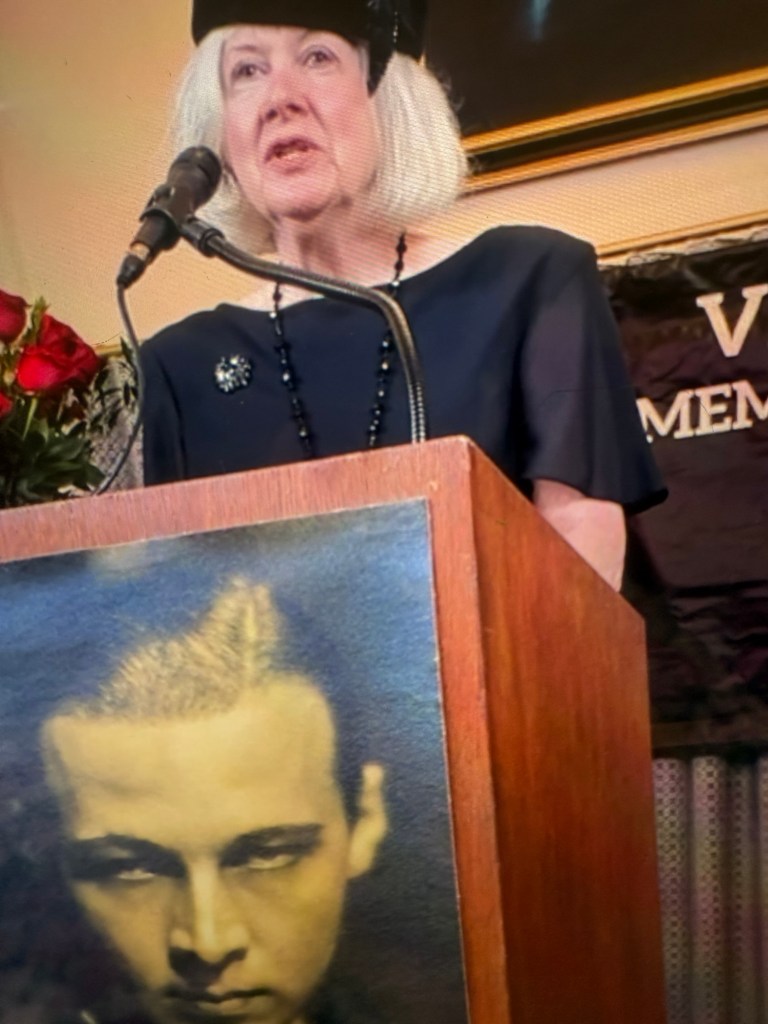
It’s always sad when the Memorial Service ends🥲. But next year, I will be there physically to embrace the memories and see familiar faces once again.
One more thing, a big thank😇you to Tracy Terhune and Zachary Jaydon.✌️
Until next year. 😍🎥🎞️🪦
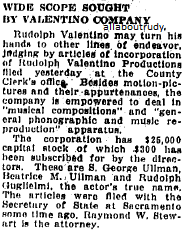
13 Aug 1925 – Rudolph Valentino Productions 7200 Santa Monica Blvd, Hollywood, CA
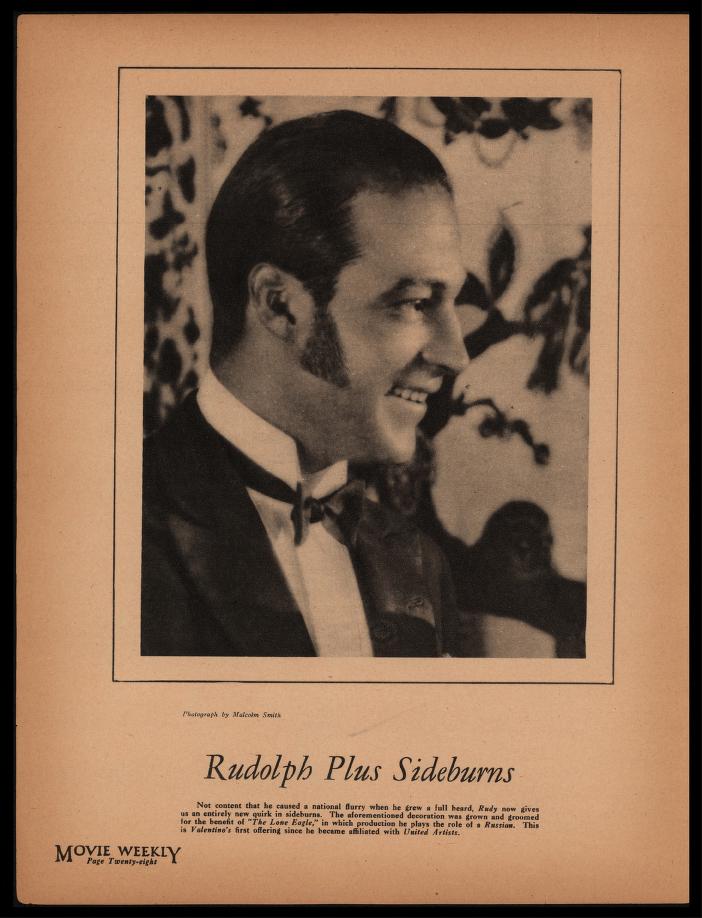
On 13 Aug 1925, Rudolph Valentino filed articles of incorporation at the Los Angeles County Clerk Office to form Rudolph Valentino Production, INC. of Los Angeles. At the time of filing, this was not considered national news since Valentino as company director signed article papers as Rudolph Guglielmi versus his on-screen name. Rudolph Valentino formed his own production company to give him creative control over any future motion pictures made. Besides motion pictures, personal appearances, musical compositions, general phonographic, music reproduction apparatus were added. The corporation has $25,000 of capital stock and out of this money $300 has been subscribed for by the directors.
Rudolph Valentino Productions was located at 7200 Santa Monica Blvd, Hollywood, CA. This address was where you could write to Rudolph Valentino. At one time, this location was home to Pickford-Fairbanks Studio, King Vidor Productions, United Artists, Norma Talmadge Productions. Two of his pictures were made under his production company and George Ullman was listed as both secretary and treasurer. In 1930, it showed they made $500,00 for the Valentino estate. In 1933, his production company was sued by the federal government for back taxes for years 1926, 1927, 1928. The amount totaling was $67, 500.
Categories: Uncategorized
Tags: Rudolph Valentino
Categories: Uncategorized
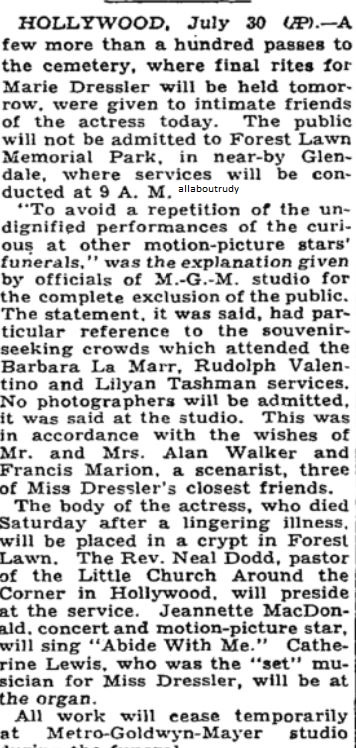
Tags: Barbara LaMarr, Francis Marion, Jeannette McDonald, Marie Dressler, Rudolph Valentino
2025 – Annual Valentino Memorial Service
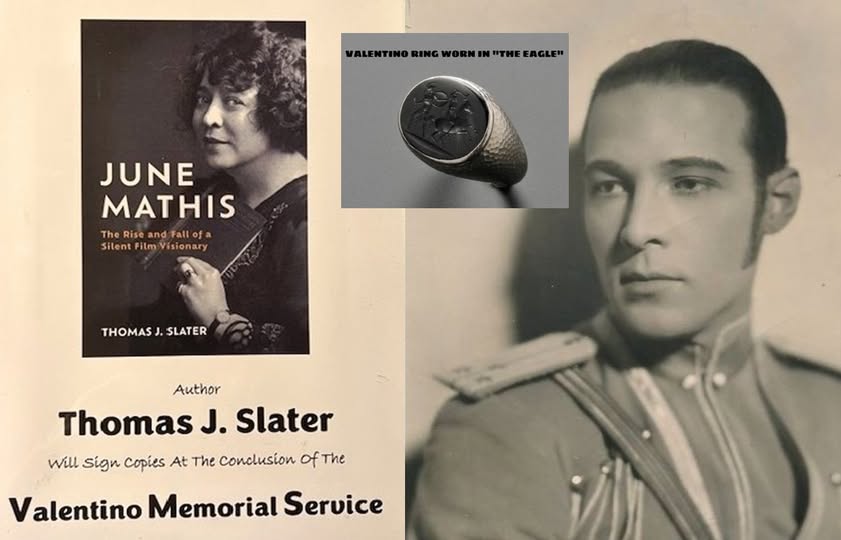
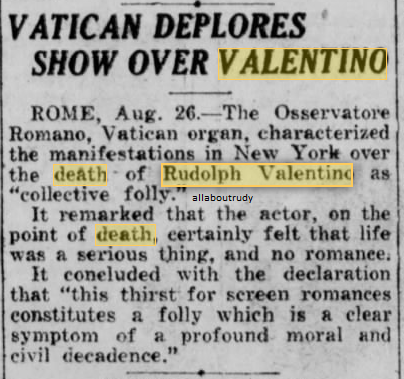
Next month, marks the saddest event on the Valentino Calendar, anniversary of the death of Silent Film Actor Rudolph Valentino. This annual event is held on 23 August 1210 p.m. Hollywood Forever Cemetery, LA, CA. This year author Tom Slater is speaking on his brand-new June Mathis book. At the conclusion of the memorial, he will hold a book signing. Rachel Skytt from the Los Angeles Breakfast Club will speak. The Breakfast Club was founded in 1925 and this marks their 100th anniversary. Rudy was a member, and when he died the Breakfast Club held one of the very first memorial services for Rudy, held just four days after his passing. Also, the 100th anniversary of the Valentino film “The Eagle” and a special remembrance of everyone’s beloved author Donna Hill. If you cannot make it the event will be broadcast live on Facebook Group “We Never Forget”. Also, I would love to hear from you – How will you spend 23 August?
Categories: Uncategorized
Tags: Annual Valentino Memorial Service, Death of Rudolph Valentino, Donna Hill, Tracy R Terhune
Categories: Uncategorized
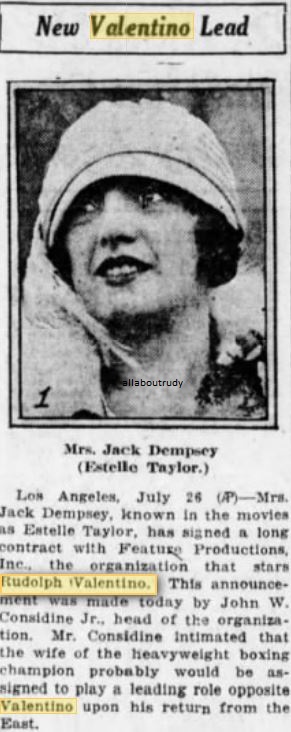
Tags: Estelle Taylor, Feature Productions INC, Jack Dempsey, Rudolph Valentino
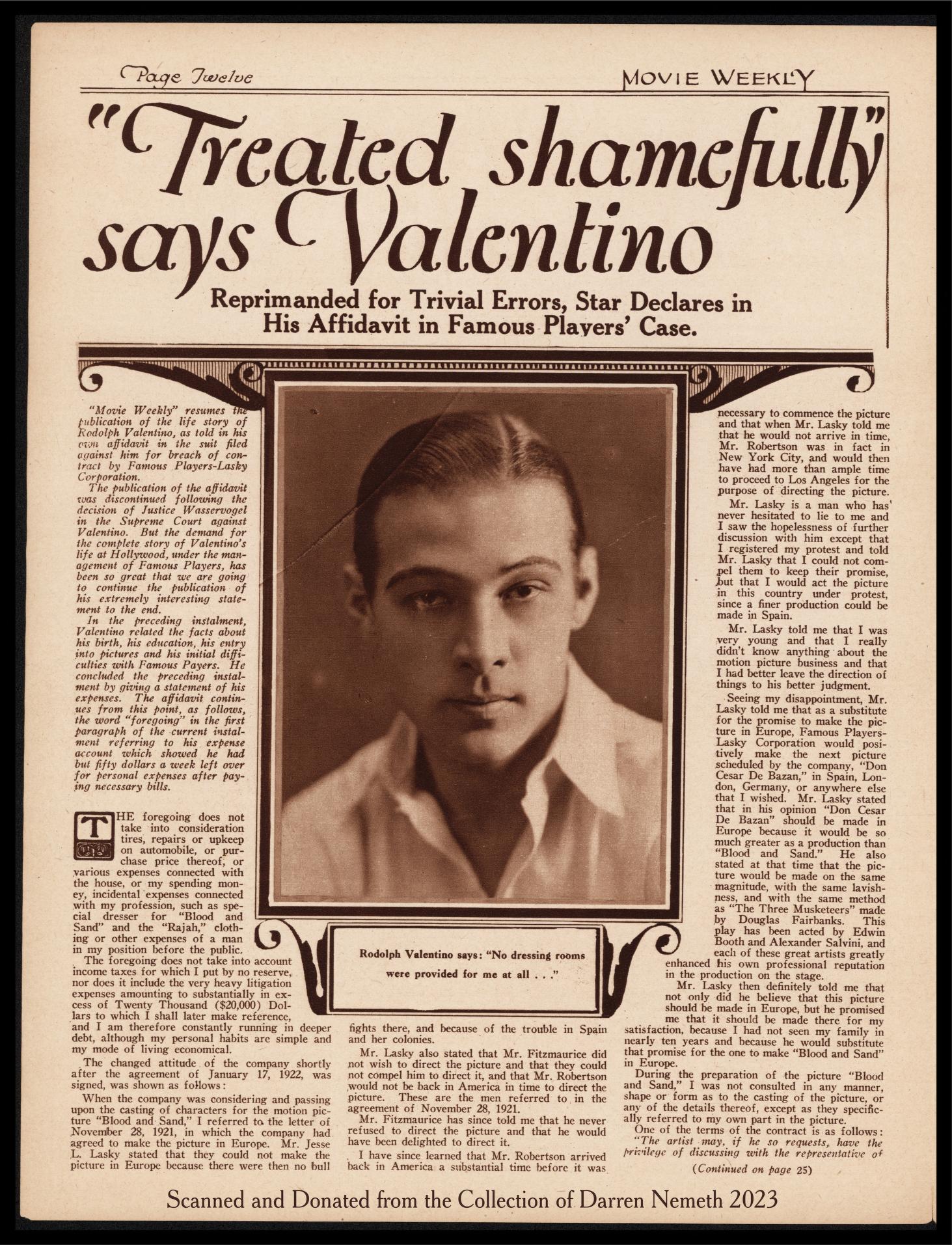
1920s – Frances Marion Interview
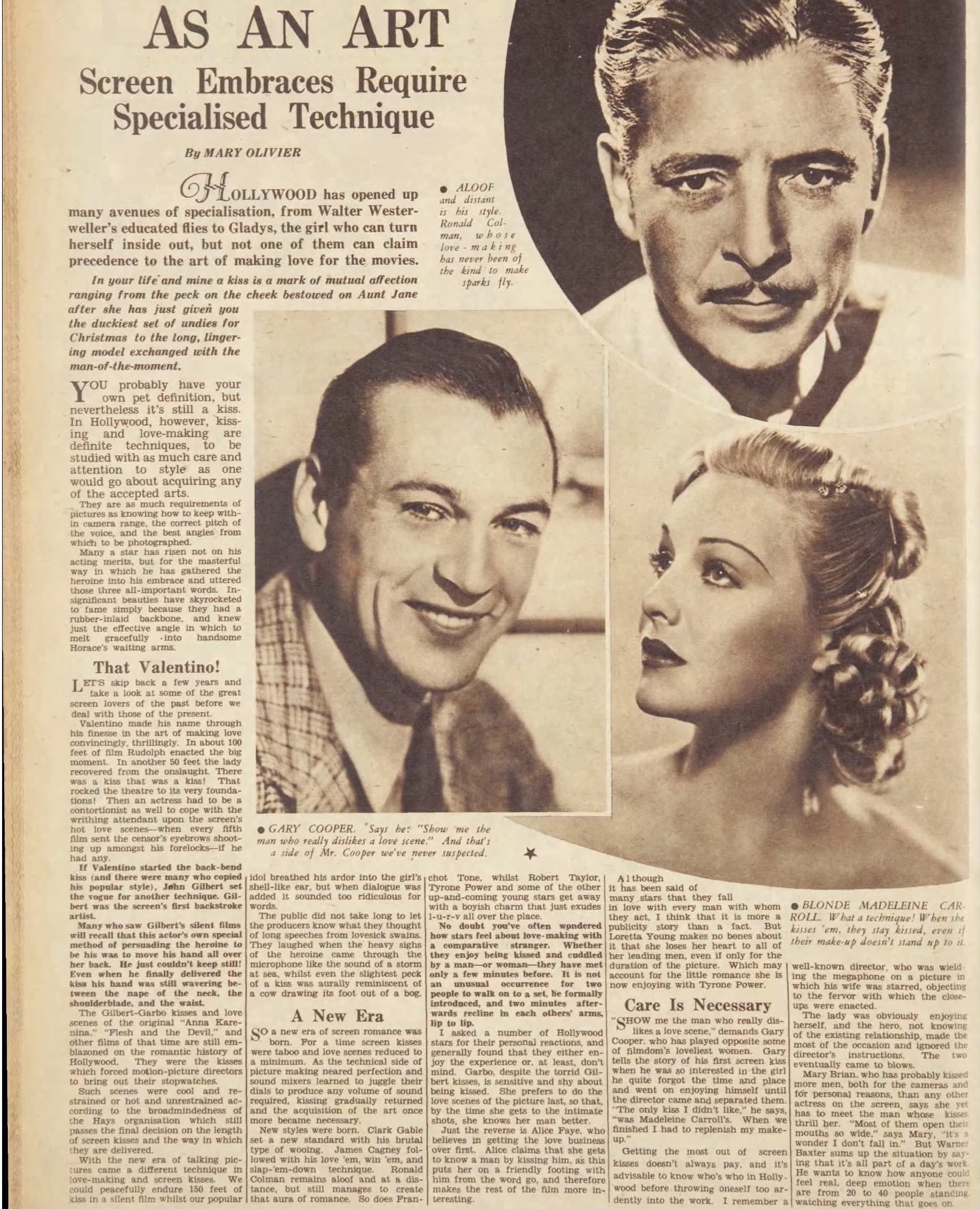
Here is the first exclusive article about Frances Marion and Rudolph Valentino
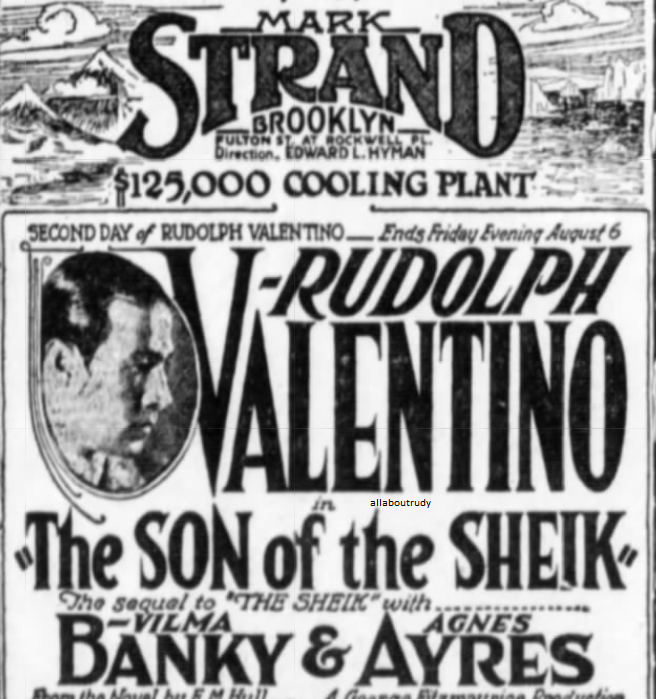
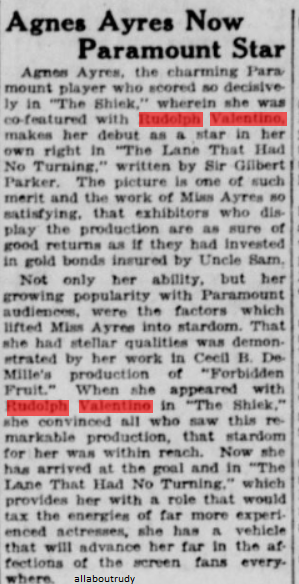
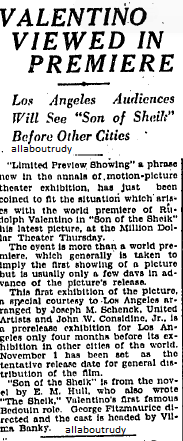
Born in 1888, Frances Marion like June Mathis is an Academy Award winning screen writer considered one of the most successful in the movie industry. Frances was noticed by Mary Pickford and became her official screen writer. Frances was briefly married to silent film Western star Fred Thomson and they had two children. Frances and her movie star husband like many others in the industry moved out of the area into the suburbs yet close enough to Metro Studio. Large estates began to proliferate around the Benedict Canyon area and Jack Gilberts new home was opposite Frances Marion and Rudolph Valentino. One night, Frances went outside to check on her nieces who were supposedly taking a late-night swim, but instead found them congregated around the telescope that was to be used for stargazing and instead was directed at the Gilbert home. The nieces were taking in every detail of the “uninhibited parties on his terrace”. The newest yet closest neighbor was more to their liking and that was Rudolph Valentino. Valentino often consulted with his neighbor on where to build a stable for his Arabian horses and once again the hillside sustained blasting to create flattened tiers. Rudy built his Falcon Lair by substantially adding on to the small house that was already on the land. Frances Marion first met Valentino through June Mathis, Metro Screen Writer who created a sensation by casting Valentino in “The Four Horsemen”. In contrast to the impression made by publicity about his fur lined bathrobes, his neighbors found him to be shy and modest, they became friends riding the hills together and joining him for homemade pasta. Frank Case noted author confirmed Frances Marion’s impressions of Valentino’s low self esteem after his daughter Margaret worked with Rudy on a Vanity Fair Magazine article and brought him to the Algonquin for lunch. The hotel dining room was more than use to having celebrities dine and the regulars prided themselves on ignoring them, yet “the buzz of excitement that ran through the room at the sight of Valentino, you could hear it vibrate from one of those ordinarily unimpressionable groups to the next”. When Margaret introduced Valentino to her father, Valentino quietly said “I am grateful to be here. I have often wanted to come, but I was told it was difficult to get a table unless you were a known”. After their initial shock, the Cases realized Valentino’s comments were without a hint of sarcasm; it was a genuinely modest statement from a truly modest man. In spite of the obvious excitement he created in public, Valentino could never bring himself to believe he was worthy of the attention. In less than five years, Valentino had been through a variety of studios, two marriages, bigamy charges, hits, and movie flops, but still his drawing power grew. Rudy and his second wife, Natacha Rambova separated after the financing for their increasingly lavish independent productions were pulled and Rudy was deeply in debt by the time his home Falcon Lair was completed. Valentino signed on with United Artists for $10,000 a week and a portion of the profits. He committed to make three films a year. Joe Schenck offered Frances Marion $30,000 to write a first script, and aside from the money she welcomed the opportunity to work with director George Fitzmaurice and the challenge of writing a part of substance for Rudy. He told her, he was tired of playing “mawkish leads” and would appreciate an offbeat role. He agreed with Frances and George on a romantic historical setting and she read through Gabriele D’Annunzio novels and plays to see what was appropriate and available for adaptation. The were setting on “The Flame of Love’ a vivid cruel revelation of D’Annunzio’s love affair with Eleonora Duse, Italy’s finest actress when Joe Schenck suddenly informed them the story search was over. Edith Maude Hull wrote a sequel to her popular novel “The Sheik” entitled enough “The Son of the Sheik” and the studio bought the rights sight unseen. Joe admitted and Frances agreed that “tripe” was a refined word but he told her he didn’t care if she adapted the material or wrote an original tale as long as the title was “The Son of the Sheik” dropping the plural to put the total focus on Valentino. Still, she found freedom frustrating and spent two weeks struggling to find new ways for a captive maiden to fend off a fate worse than death while creating opportunities for the very fate to occur. Frances decided to write an all0out farce of the original Sheik but when she gave the scenario to George Fitzmaurice, he brought her back to reality. “It is one of the most hilarious satires I’ve ever read, and I’d love to make it, but our hands are tied Vilma Banky has been signed to play the lead opposite Rudy. Frances respected Vilma’s acting talents and wanted to help Rudy so with George Fitzmaurice encouragement she begrudgingly rewrote the scenario in a more serious vein, trying to find a balance between drama and comedy. She remained far from pleased with her treatment and privately referred to the film as “The Son of a So and So” but turned it over, trusting George’s taste and judgement to make it work. Rudy quietly accepted the role, disappointed to be playing what they all considered to be a repeat performance and he spoke of making a “graceful exit” from films in a year or two. I am no fool, he told Fred and Frances, I knew from the beginning it could last forever. With the kind of stuff, I have been doing I am surprised my popularity has lasted this long. Frances thought he was too tired to fight and when she asked how he was feeling he mentioned having “severe headaches” and talked of taking a long vacation after filming. They tentatively planned a trip to Napa for the fall for Rudy to look for a new home in the wine country where he could rest and put his knowledge and love of all thing’s agriculture to good use. On 9 Jul 1926, “The Son of the Sheik” premiered in Los Angeles and Frances had to acknowledge the film turned out better than she dared hope. Once again, Rudy captivated women in the audience, even though Adela Rogers claimed his mesmerizing stare was direct result of myopia. “He didn’t want to sweep you into a mad embrace, he just wanted to know who you were”. A few days later, Rudy turned 31 left for New York, and everyone noticed he looked physically exhausted. Rudy’s moves were front page news and when they both heard reports of his hospitalization, they were shocked. When they next read the papers “The Sheik is Dead”. Frances was repulsed by the sideshow that followed his death. She was angered by studio bosses she knew had exploited him as well as the women who dressed in mourning and whose pictures appeared in every newspaper alongside details of fictionalized romances. She gave caustic credit to Pola Negri for being the best actress of the lot when it came to fake romances. Over 100,000 mourners walked past his casket in New York City and there were homages at every stop made by the train that brought his body back to Hollywood. The turnout for his California funeral was on a massive scale and the streets were blocked off and schools were closed. While Pola Negri made pronouncements of creating marble monuments to Rudy, he was laid to rest in a mausoleum at Hollywood Cemetery, provided by fellow screen writer June Mathis. United Artists publicity translated into economic windfalls for the studio as fans poured in when “The Son of the Sheik” was rushed into general release. Valentino’s death made everyone pause to reflect on the quality of their own lives.
Categories: Uncategorized
Tags: Frances Marion, Rudolph Valentino
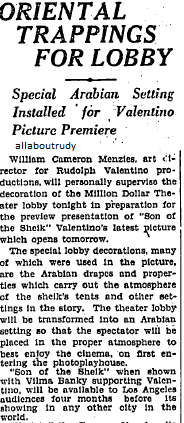
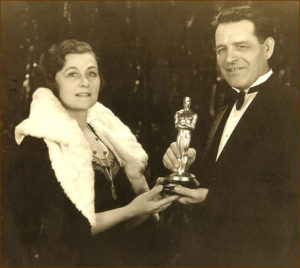
8 June 1966 – Natacha Rambova leaves $367,000
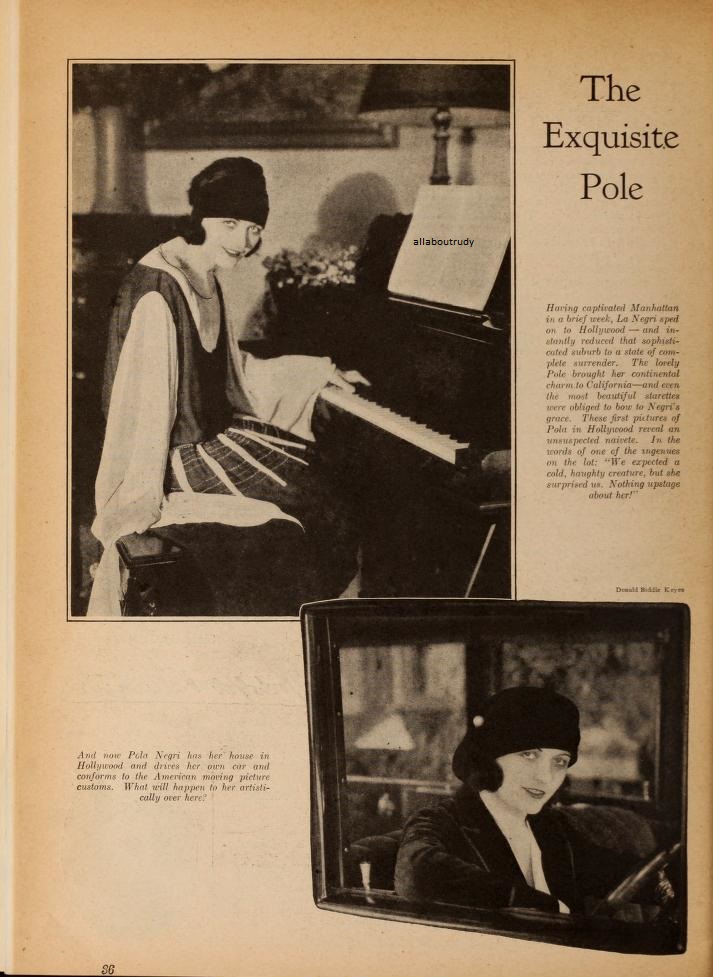
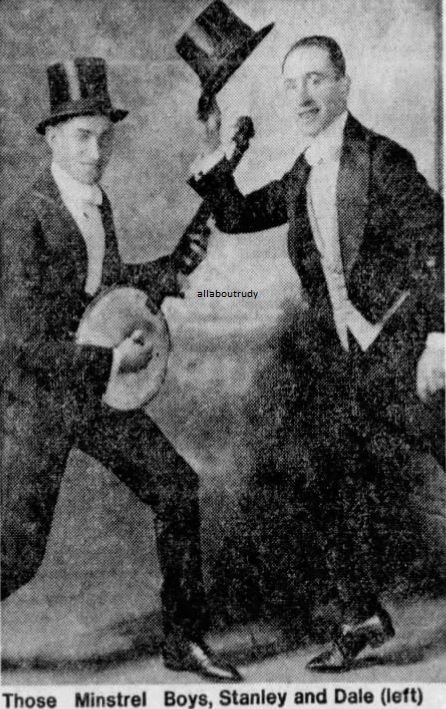
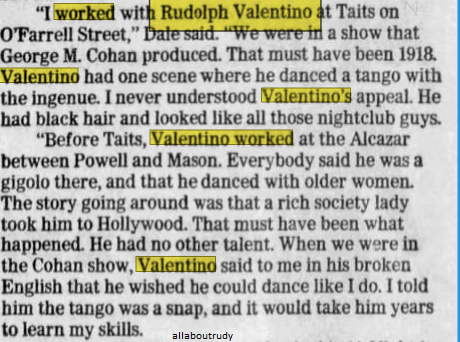
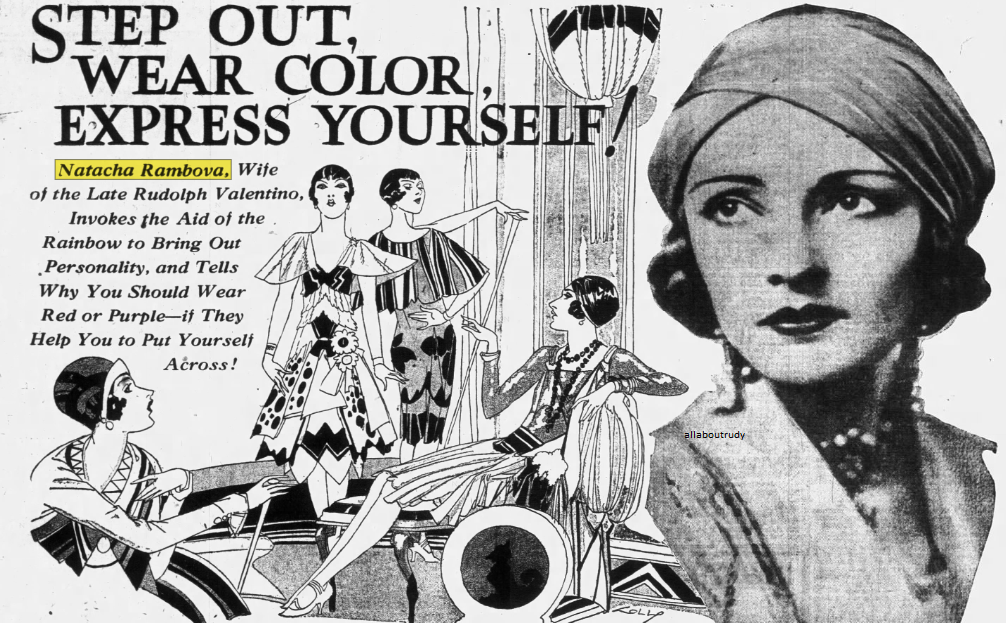
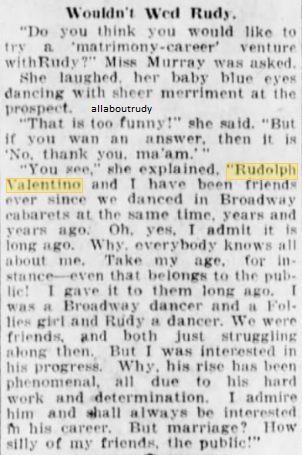
Natacha Rambova, former wife of Silent Film Star Rudolph Valentino died on 5 June 1966 in Pasadena, California. Today, her will went into probate in New York and her estate was valued at $367,000. Miss Rambova lived in New Milford Conneticut in her later years. However, her immediate family moved her out to California due to ill health. She was the adopted daughter of perfume mogul Richard Hudnut to whom her mother was married to. The will lists 25 specific bequests, left a $200 monthly lifetime pension to her half-sister Mrs. Mary Boyd, San Francisco and the balance of the estate went to 11 other relatives. One personal bequest left her entire library and collection of Tibetian and Nepalese Paintings and Bronzes to the Philadelphia Museum of Art.
Categories: Uncategorized
Tags: Natacha Rambova, Rudolph Valentino

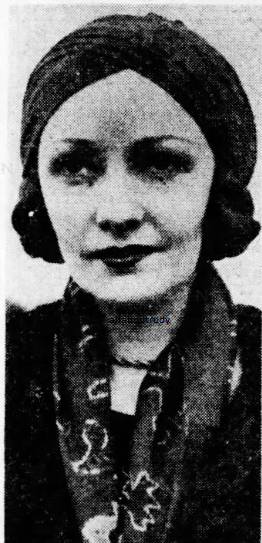
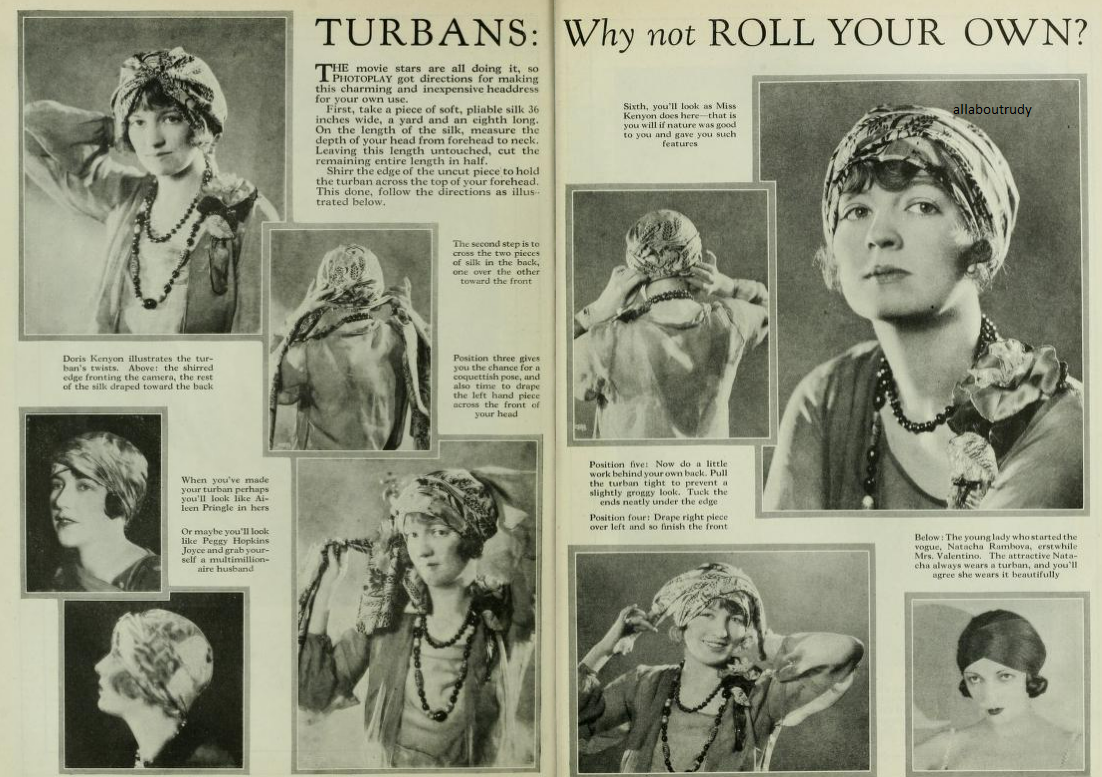
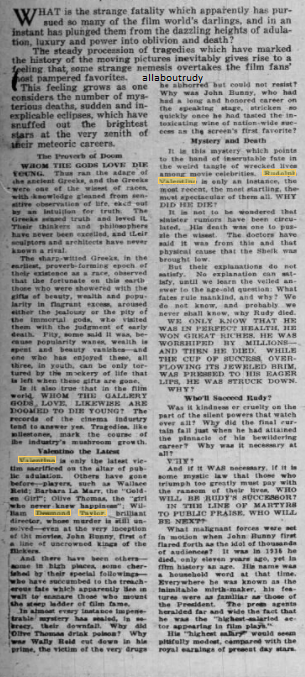

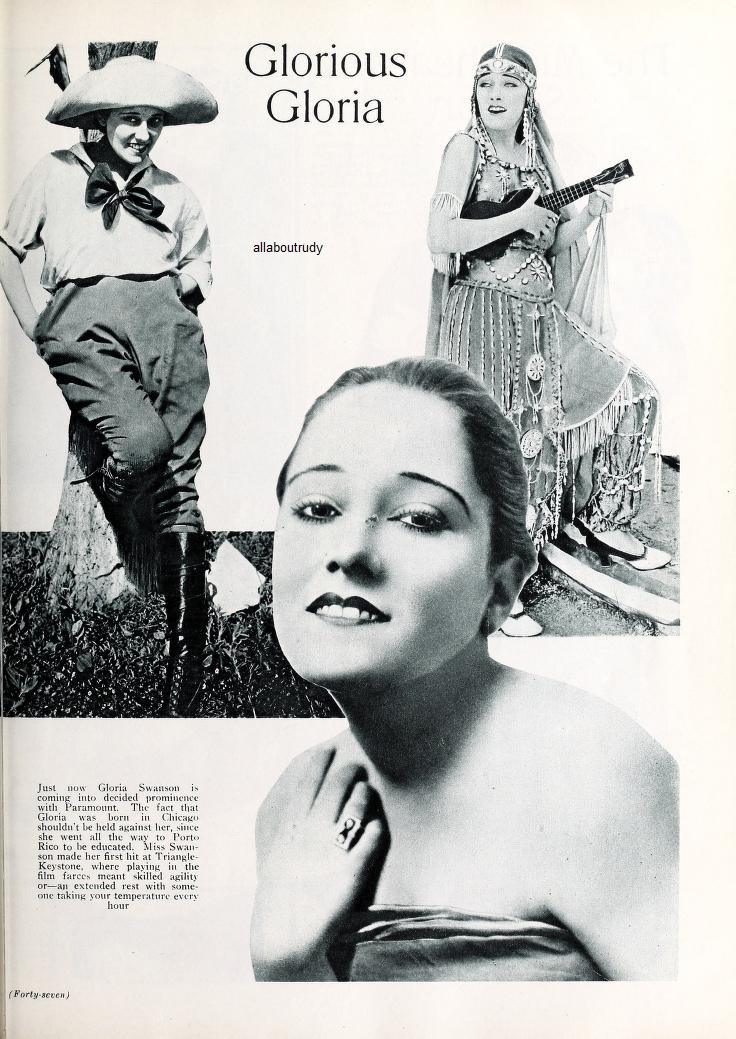
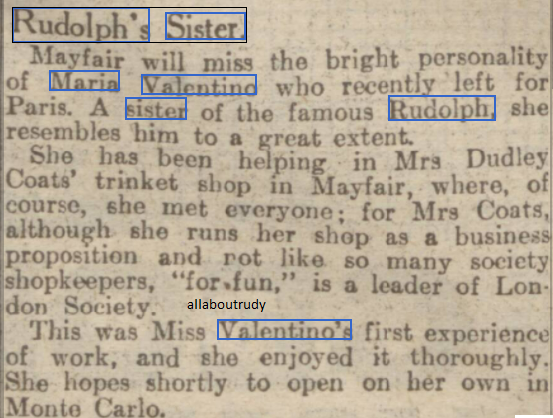
“For praise is often destructive; while criticisms and truths are often helpful”
Rudolph Valentino to Katherine Elverson
Categories: Uncategorized
Tags: Rudolph Valentino
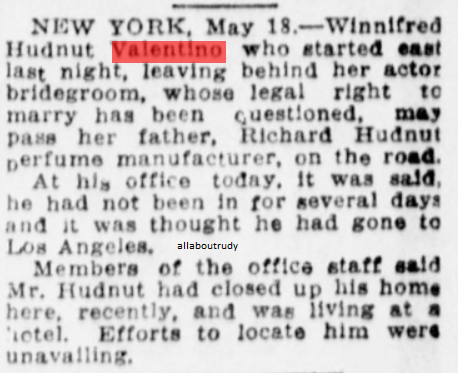
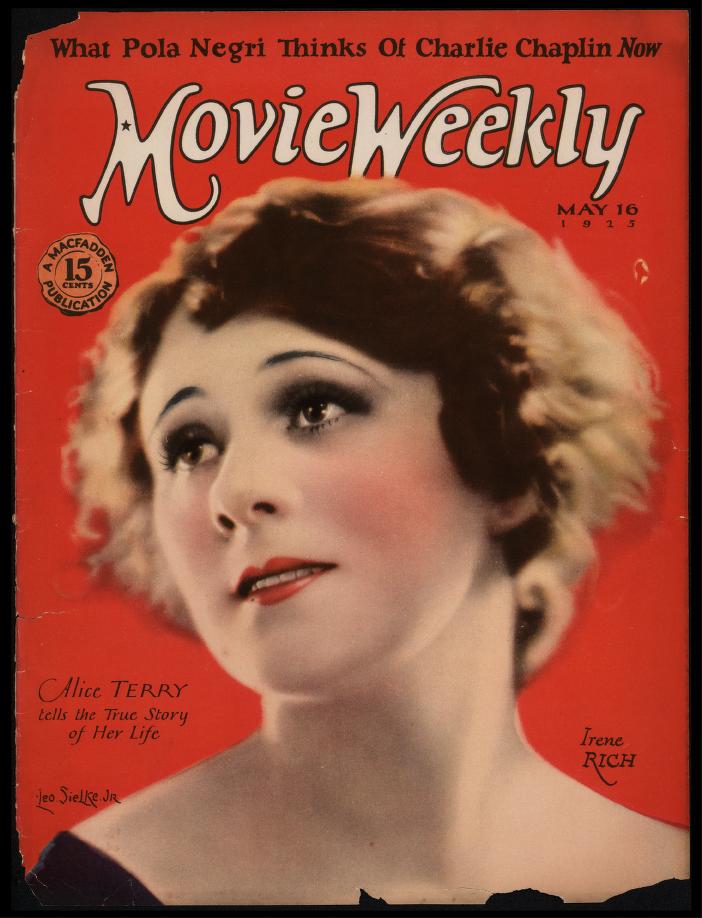
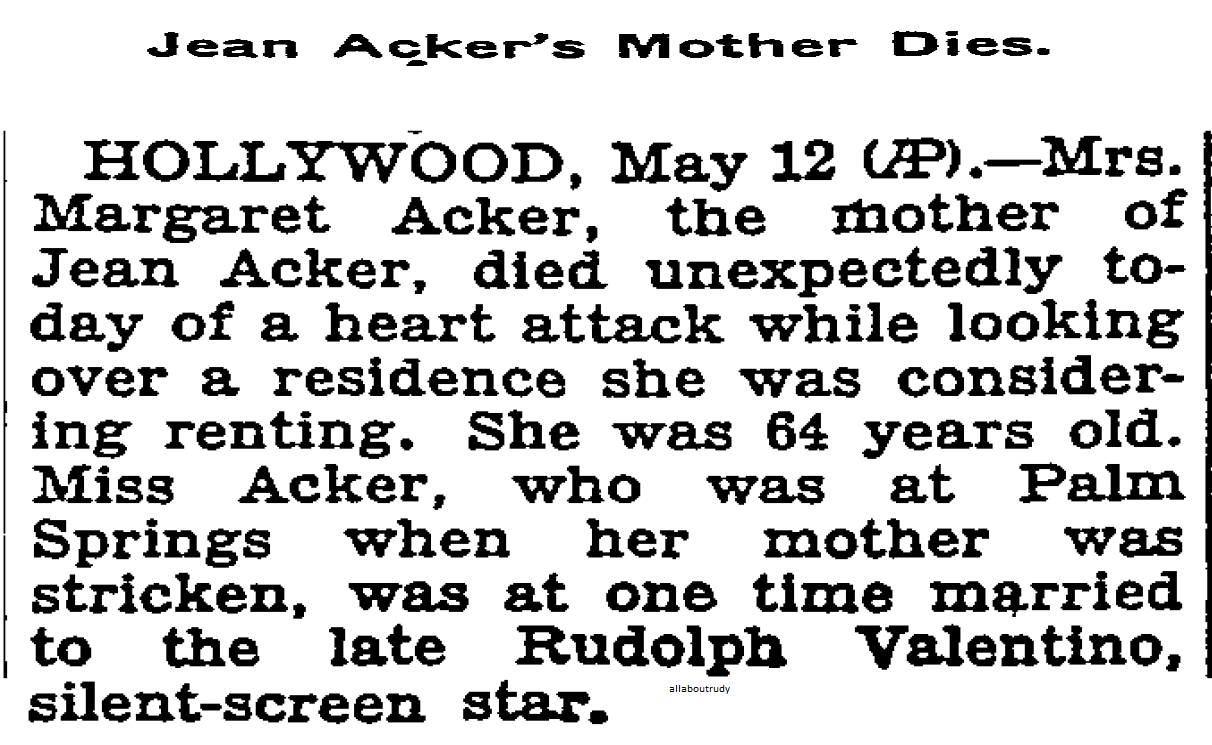
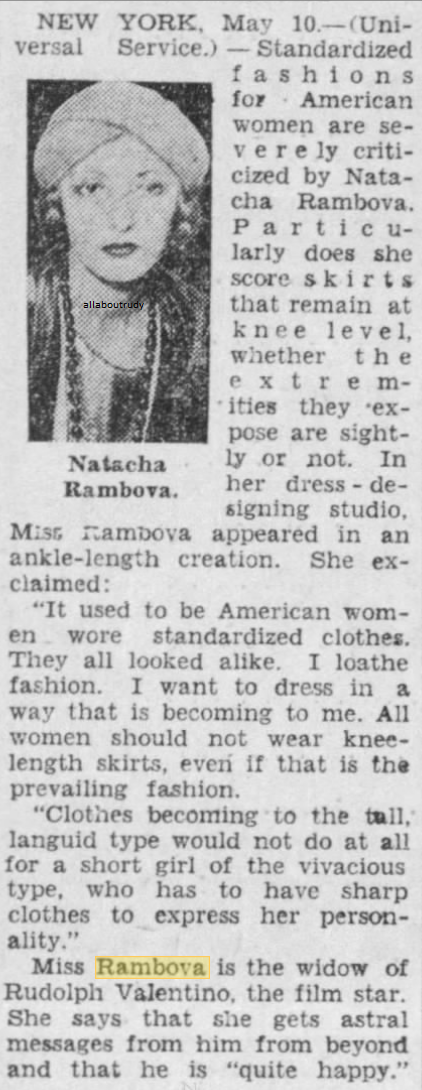
8 May 2025 – “A Reality 20th Century Fairytale from the Silent Era, The Sheik & Son of the Sheik”

First, I would like to thank “Hometowns to Hollywood” for allowing the following contribution to their “Once Upon a Time Blogathon: Fairy Tales, Legends, & Myths”.
Historically, books served as a main source of entertainment. They’ve helped distinguish between fact and fiction. Many began their literary journey with childhood fairy tales. A fairy tale is a narrative that depicts a series of dramatic events, culminating in a conclusion where all characters live happily ever after. These tales inherently possess a contradictory nature, blending moral lessons with social truths. Through these narratives, individuals can glean valuable life lessons from a blend of fiction and reality. As history progressed, a transition occurred, books eventually became alive on a moving picture screen and for filmmakers this concept presented a challenge to bring a story to life.
The silent film era began with the introduction of films without sound. According to the Chaplain Film Festival (2025), silent films are visual stories that convey melodramatic plots with themes such as romance, betrayal, good versus evil. The viewer has the freedom to interpret the movie’s outcome.
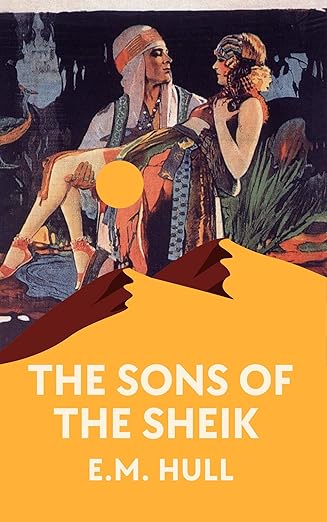
A perfect example is English writer E.M. Hull who wrote a series of desert romance novels, two (2) of which were adapted for the moving picture screen. Both “Sheik” & ”Son of the Sheik” featured actor Rudolph Valentino as a wealthy sheik rescuing a damsel in distress, inviting audience members to identify with the heroine. Cinemagoers frequently returned to theaters to watch a charismatic young actor. For some, the dream became a poignant reality, while for many others, it remained a mere fairytale.
Reference
Chaplain Film Festival (2025). Key Characteristics of Silent Films. Retrieved from: Silent Era – Definition & Detailed Explanation – Film History Glossary Terms – chaplinfilmfestival.com
Categories: Uncategorized
Tags: "The Sheik", EM Hull, Hometowns to Hollywood, Rudolph Valentino, Son of the Sheik

May 1921 – Valentino and the Public Dance Craze
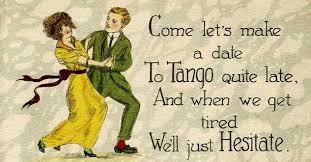
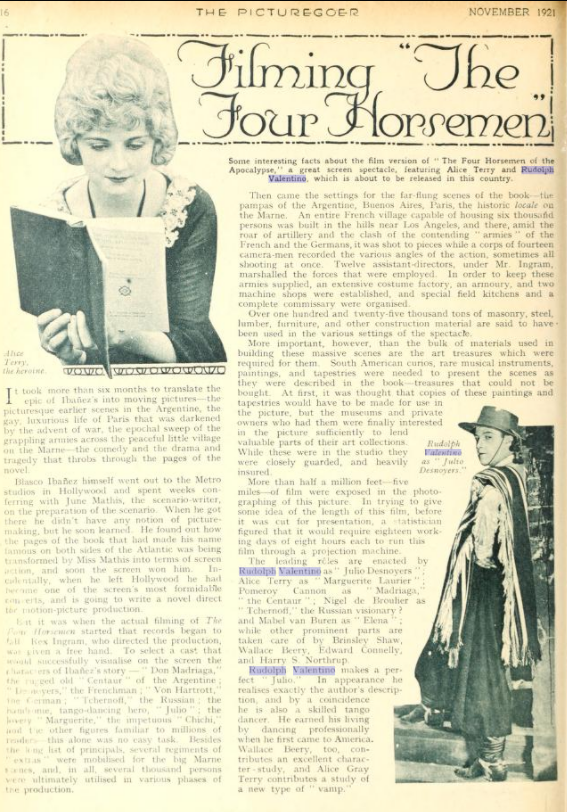
There was something about the new dances that were being introduced to the public. It was these very dances that made this country’s melting pot sizzle. In New York City, there were famous places employing male dancers who catered to women and their preoccupation with pleasure of being in a man’s arms and enjoying an afternoon of lighthearted flirting. There was something of a paradigm shift and a change in standards of acceptable public behavior for woman. For the times they lived in it was quite liberating for women calling all the shots. One newspaper editorial talked about woman swooning in the embraces of the male dancers and their dutiful husbands were working hard. So why couldn’t men move from behind the counter or desk and take their rightful place on the dance floor and make anywhere from $30.00 to $100.00 a week? The movie industry wanted to capitalize on the dance craze, and this was about to occur on a grand scale. In 1921, “The Four Horsemen of the Apocalypse”, an epic melodrama became the biggest box office hit of the 1920’s.
Transformations of the Picturesque The world was dancing Paris had succumbed to the mad rhythm of the Argentine tango. – The Four Horsemen of the Apocalypse (1921)
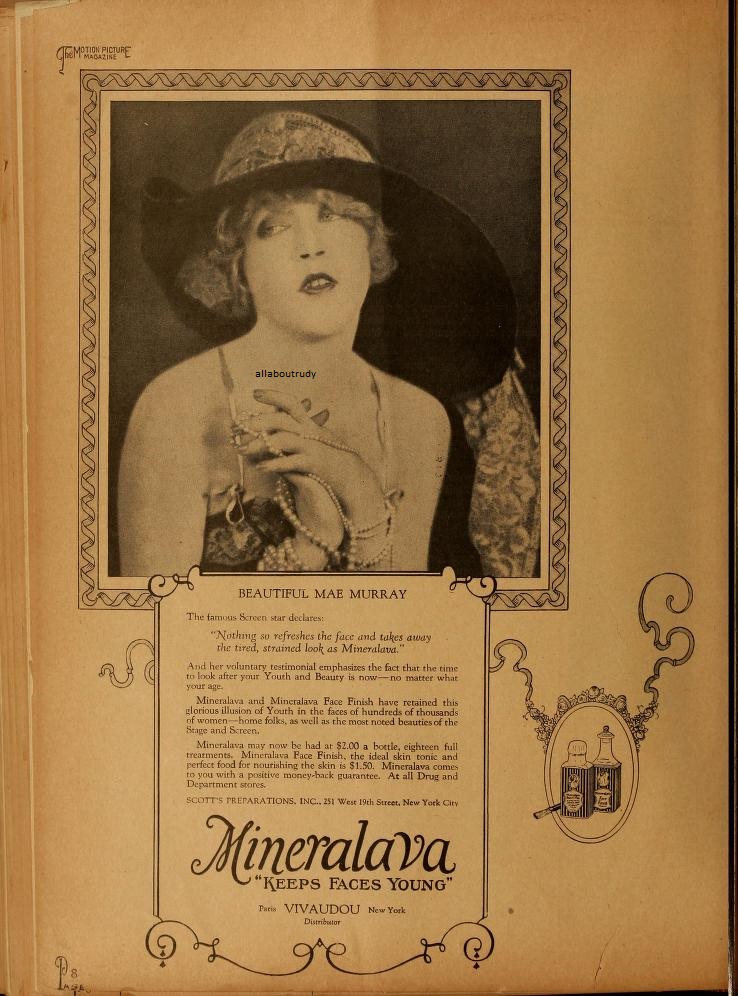
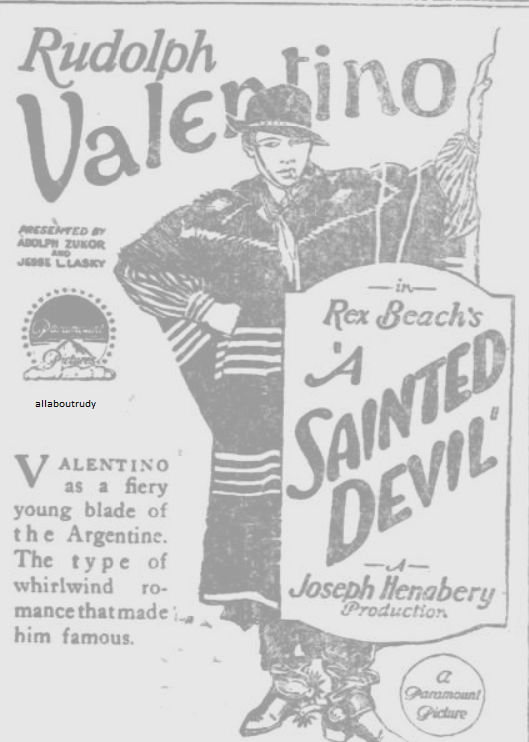
The movies leading star, Rudolph Valentino became a household name. To women the world over he became “a romantic symbol of the modern age”. Famous Players- Lasky realized the silent movie idol’s appeal to women and immediately capitalized on the frantic publicity. Valentino was a former paid dance companion and exhibition dancer. “The Four Horsemen of the Apocalypse” has different dance scenes that capitalize on the social repercussions when two people dance suggestively. The New York World Newspaper’s movie review wrote that Valentino was well chosen for his leading role. The part calls for an adept dancer of the Argentine tango and he was the type needed for the part. The film was a complex family centered narrative with amazing special effects. The box office advertising you cannot have known how the tango can be danced until you see “The Four Horseman of the Apocalypse”. When Valentino appears in his first movie scene dressed in a gaucho outfit puffing on a cigarette while he stares suggestively at a female dance in a Buenos Aires Dance Hall, this stirs the imaginations of woman movie goers. Then Valentino glides with his partner across the dance floor in the sensuous moves of the tango but the effect is amazing. Julio his male beauty and sex appeal showing his dance partner he is the master of her body in the tango’s controversial hot hip contact. A master of seduction he moves on to his next conquest Marguerite Laurier, an attractive married woman. Their affair starts in a Parisian tango palace and on the dance floor he impresses her with his charm and grace. Then on to his art studio, Julio crushes his lover in a romantic embrace and his hands are all over her body in places one would not normally see on a movie screen. Alas all good things must come to an end and the affair is discovered and Julio must atone for his sexual transgressions. The start of WWI, Julio realizes his love for Marguerite, but he has a greater responsibility and a noble cause to his country. Julio dies on a muddy battlefield and both his family and lover mourn his loss. After this movie release, magazine articles were publishing articles about dancing with Valentino is an ultimate fantasy. For example, Movie Picture World Magazine article “When Valentino Taught Me to Dance” author Mary Winship gives a first-person account. She said “his arm supported me like a brace, I swum myself back, closed my eyes, breathed in the music and followed his movies. The music stopped, Valentino applauded and was so sweet. In 1922, Motion Picture Magazine, published an article “The Perfect Lover”, described Valentino as suave, debonair, with a glistening courtesy alien and disarming. After this article was published, he advised readers to “first dismiss the idea of me being sleek and elegant”. In the same year, another studio magazine Screenland talks about the problems with Valentino’s former profession. Valentino could make a good living as a dancer though he does not like it as a profession. His real qualifications as a landscaper are where he should earn his living. There is doubt whether he could earn a living outside of a studio or a dance hall. Valentino was woman made as a professional dancer since he partnered with already established female dancers. June Mathis described by fan magazines as a maker of young men was besieged by other young Valentino like men who constantly obtrude themselves into her home, imploring to be made with conscientiously amorous eyes. The role of dance in determining Valentino’s popularity was most forcefully illustrated when Valentino walked out on his contract with Famous Players-Lasky. In 1923, Valentino and his second wife Natacha Rambova, a trained ballet dancer, embarked on a successful dance exhibition tour under the sponsorship of Mineralava Beauty Company. In 1924 magazine poll, Valentino being named the fourth most popular dancer in the United States. Valentino’s legal problems with Famous Players Laskey were eventually resolved and he was able to go back to work. In 1925, two movies, “Cobra” and “Eagle” premiered, and Valentino’s moves are dance-like with refinement and grace. Both were not a box office success, but it still cemented his status as fan favorite. In January 1926, Valentino was interviewed for Collier’s Magazine. In the interview dance is portrayed as the last resort of an immigrant’s honest attempts to make a living. The star recounts falling back on his dance talents after he has pursued other jobs such as ‘”polishing brass, sweeping out stores, anything that will put a roof over my head and food in my stomach.” He is quoted as saying of his film career: “I wanted to make a lot of money, and so I let them play me up as a lounge lizard, a soft, handsome devil whose only aim in lite was to sit around and be admired by women. But at the same time, all I am a farmer at heart. In October 1926, The Dance Magazine, satirically declared Hollywood was the heaven of opportunity “where good dancers go when they die.”. Valentino’s sudden death of peritonitis five weeks before the magazine’s appearance demonstrated a deep if no doubt unintended irony in that statement. Death would not end the debate over Valentino’s symbolic place within the perceived crisis in American sexual and gender relation. Valentino, like dance, had become symbolic of social changes, taking place in the system governing American sexual relations in a post Victorian country. Valentino had confronted the country with other uncertainties as well. While some of these gender-based uncertainties converged with those offered by other matinee idols, such as John Barrymore, Valentino presented a higher order of problematics that circulated around the convergence of female fantasy with the dangerous, transformative possibilities of dance and with the highly restrictive norms
Categories: Uncategorized
Tags: "The Four Horsemen", Natacha Rambova, Rudolph Valentino, The Tango

 All About Rudolph Valentino
You must be logged in to post a comment.