Posts Tagged With: Death of Rudolph Valentino
1926 – Commentary
|
Categories: Uncategorized
Tags: Death of Rudolph Valentino
11 May 1957 – Valentino Memorial North Hollywood Church
A church dedicated to the memory of the late Silent Film superstar Rudolph Valentino has been opened here. The opening service of the “Valentino Memorial Church of Psychic Fellowship” was conducted on a recent Sunday evening. The program ncluded piano selections from music used in Valetnino’s last movie “The Son of the Sheik”.
Categories: Uncategorized
Tags: Death of Rudolph Valentino
10 Jul 1935 – From Tasmania Not forgotten
|
Categories: Uncategorized
Tags: Death of Rudolph Valentino
2 De 1026 – Publicity Buzzards
And now they are hearing from the ghosts of Harry Houdini and Rudolph Valentino! The world and his wife tried to get a reflected publicity by herding around Valentino’s bier while he was still above ground. Now they won’t let him or Houdini rest in peace but must
Categories: Uncategorized
Tags: Death of Rudolph Valentino, Houdini
1 Dec 1926 – Voice from Beyond Fake
Dr. Crandon well known spiritualist says spirit messages from Houdini the magician and Valentino the actor are fakes. “A person must be dead four or five years before he can communicate with us. We learn this from spirits with whom we have been in touch”. Physicists wonder where those spirits are when they talk. It they are on one of the distant stars, light with travels 186,000 miles a second would take a million years to get here; and sound, as we know travels more slowly than light, 331 meters a second against 186.000 miles a second. If Houdini and Valentino, on some distant star, began talking loud enough for their voices to reach us, their words wouldn’t reach the earth in time to be heard by our descendants 500,000,000 years from now.
Categories: Uncategorized
Tags: Death of Rudolph Valentino, Houdini
1926 – RV Death Triggers Suicides
|
Categories: Uncategorized
Tags: Death of Rudolph Valentino
24 Oct 1926 – Rudolph Valentino Protects his name
|
Categories: Uncategorized
Tags: Death of Rudolph Valentino, Peggy Scott

![thumbnail[1].png](https://allaboutrudy.org/wp-content/uploads/2019/09/thumbnail1-1.png?w=690)

1926 – Suicides due to Valentino Death
|
Categories: Uncategorized
Tags: Death of Rudolph Valentino
8 Sep 1926 – Late Valentino Commentary
|
Categories: Uncategorized
Tags: Death of Rudolph Valentino
1926 – Memories
|
Categories: Uncategorized
Tags: Death of Rudolph Valentino
4 Sep 1933 – What Rudolph Valentino Items are Worth
A Rudolph Valentino autograph recently was sold for $75.00. A mechanics weekly salary will buy Rudolph Valentino’s $18,000 Isotta Town Car, now dusting on a used automobile lot. Nina Wilcox Putnam has a Voisin formerly owned by Valentino.
Categories: Uncategorized
Tags: Death of Rudolph Valentino
1 Sep 1930 – Two Valentino’s
|
Categories: Uncategorized
Tags: Death of Rudolph Valentino
27 Aug 1926 – Readers Complain
Several readers have complained because the newspapers devoted more space to the death of Rudolph Valentino. An editor is not a historian who seeks to put happenings into their proper perspective. If the great preoccupation of the public with Valentino is a thing to evaporate in a short time, that is more reason why it becomes news today. It is well to remember also that the story of Valentino’s death is not concerned alone with the individual in question but with the reaction of the public to this event. When thousands stand in the rain for hours seeking a chance to pass the dead man’s bier, that is news beyond any question. It does not matter that many of the people in line were morbid curiosity seekers. The precise extend of morbidity is also a proper subject of journalistic concern. I rather think that some reports have been too severe in judging the motives of the crowd. I saw long lines at a distance in the dripping rain, and it is my belief that if it had been possible for a reporter to investigate the hearts of all who waiting there he would have found in many who trudged the slow march through the doors a profound emotion. Valentino had become that priceless thing – a symbol. It was not so much a motion picture actor who lay dead as Pan of Apollo whom they are to bury from Campbell’s funeral parlor. He was to the thousands the romance which they never knew. He was Prince Charming and came from the other side of the moon. And if a symbol of romance in the lives of many millions fades, that is a not undignified matter of newspaper interest. It is a long sleep to which Valentino has gone, and soon the thousands will have another symbol to take his place. It seems to me a little cruel to deny a dead actor his last full measure of press clippings.
Categories: Uncategorized
Tags: Death of Rudolph Valentino
92nd Annual Rudolph Valentino Memorial Service
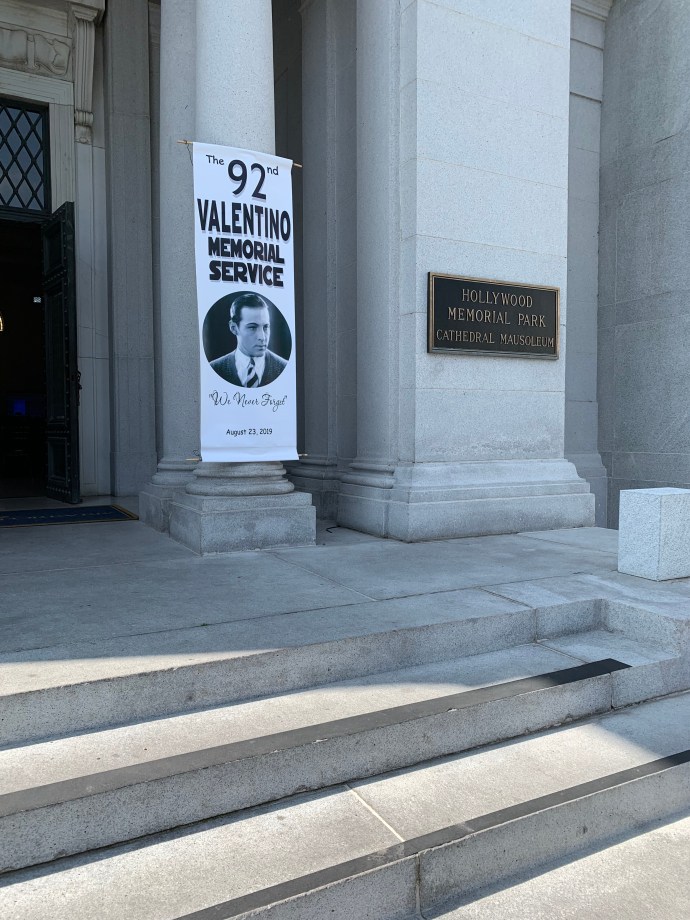
This year’s memorial service a tribute to a great silent film star that brings the Valentino Community under one roof both physically and virtually.
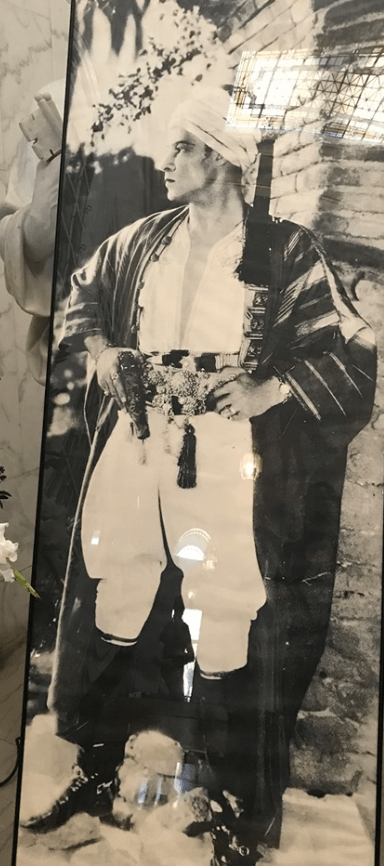
The 92nd Valentino Memorial Service featured a salute to the 100th Anniversary of “Eyes of Youth”. and remembering Jean Acker. From the music selections, to the readers, and guest speakers the audienced was moved and in awe by it all. The time past quickly and it seemed to come and go. My trip was making new memories and enjoying moments with special friends. Another year gone by and as always I am eagerly awaiting the 93rd. Special thank you to Tracy Terhune, Karie Bible, Donald Gardner, and everyone else who tirelessly labored to provide an event worthy.
Categories: Uncategorized
Tags: Death of Rudolph Valentino, Tracy Terhune, Valentino Memorial Service
1926 – America in Mourning
|
Categories: Uncategorized
Tags: Death of Rudolph Valentino
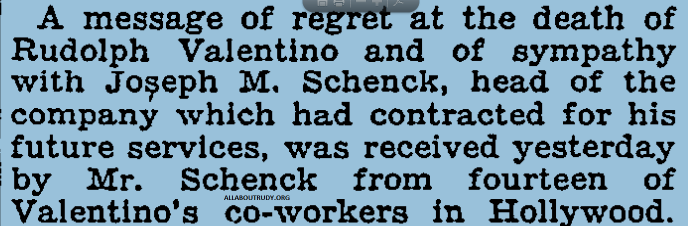
17 Aug 1927 – Hysteria and Home Truths — An Interesting Comparison— Of Extreme English and American Opinion
England Opinion: In a golden casket one London woman is preserving as her greatest treasure – a shirt of the late Rudolph Valentino. Other erratic female specimens have erected shrines in their boudoirs, others again grow flowers under his portrait. There is no limit to their sentimental extravagance. It is therefore of interest to read two opinions, one English and one American, on the all important topic of Rudy. At Shepherd’s Bush Pavilion, London, the last week of July, many British women thronged to the Pavilion as a tribute to the memory of their departed idol. Many of them carried banners. The demonstration was arranged by the Valentino Memorial Guild and the service was subsidized by the International Memorial Fund, a fund that in the first feminine frenzy after the ex-waiters death was collected among susceptible women from all different parts of Britain. Pictures of the star’s home life at Hollywood were screened and wept over, extracts from his poems were read, and a bronze plaque was erected to his memory. And for several hours hundreds of infatuated women wept and slobbered and lamented. As time goes on, the Guild will, unless it decides to squander the money in some other way, reissue the Valentino films and a children’s hospital which will be in memory of Rudy.
American Opinion: Rudolph Valentino,’ said an American Writer just before the stat’s death, ‘is one of those half breed Italians, of whom both halves are bad. He came to a stony-broke waiter. For a time the. Heavens were just and he stayed a waiter. ‘Then he tried dancing. All his brains were in his feet and his pockets soon began to fill. ‘Full pockets meant high spots for Valentino, booze and women, both pretty bad, and thus excellent company for an imported an entity whom no One but the jail governors should have keen glad to welcome. ‘In a weak moment someone let him in the movies some giggling flapper saw Mm and decided this greasy, ill-washed continental butt was thrilling. She told her friends and convinced them to think so too. ‘When they tried him in a Sheik stuff the flapper thrilled again. ‘In no tithe TBIS WOP WAITER became better known than the president. With the morals of a sewer rat and the scarred face of a Cairo boatman Valentino vamped himself a place in the best movie society and began to love and leave th6 women & bit higher up the social ladder. ‘American women who shudder at the scum that slinks off the immigrant ships into Ellis Island gaped in thrilled awe at the dago’s » bear-hugging and thought the greatest joy in life would be to have their spinal cord crack in elegant embraces that wouldn’t, be permitted in a rough-run ?wrest- ling joint. ‘Generally the men of Hollywood bated him. His debts of which were never paid because he had a lot of debts and no honor this text Men hated him because a half-baked satyr is never popular. He was a poor sport, a miserable mugger of detent women and he should never have been allowed to wander into any civilized country.
Categories: Uncategorized
Tags: Death of Rudolph Valentino
22 Aug 1983 – Harmony Treasure Stolen
Tommorrow is the 57th anniversary of film idol Rudolph Valentino’s death a doubly sad day for the town of Harmony, population 28 located hear San Simeon. For years, an unusual monument to Valentino there was accompanied by a sign that read “In the early 1900’s and in the company of W.R. Hearst and Pola Negri, Rudolph Valentino had a call of nature”. Guilda Williams, who lived here, was kind enough to let him use her bathroom. When the little house was remodeled, the potty was converted into an outdoor planter that disappeared earlier this year. “We heard it had been found by police in Clovis” said Jim Lawrence, who owns the town. But when I called the ID didn’t seem to match up.
Categories: Uncategorized
Tags: Death of Rudolph Valentino, Harmony, Stolen Toilet Valentino Used
21 May 1928- MOURNED BY GIRLS MASS FOR VALENTINO
Three hundred women and girls, In deep mourning, attended a special Man at St. Orrvals Church to-day. In memory of Rudolph Valentino. Scores of girls waited outside the Late Rudolph Valentino church. The Mass was arranged by a mysterious woman, reputed to be im mensely wealthy, who Is frequently seen al Uie church. She does not reveal her name, but often goes to the church to request a Mass for the repose of the soul of Valentino
Categories: Uncategorized
Tags: Death of Rudolph Valentino
1922-1929 – The friendship and love between Kabar and Rudolph Valentino
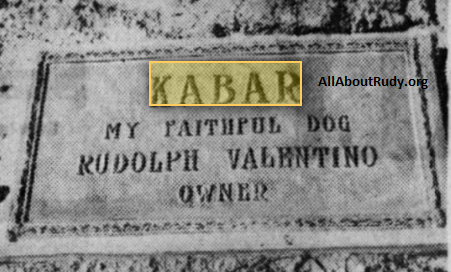
Each year, during the months of August and September, the Valentino community comes together mourning the life of Rudolph Valentino. When Rudolph Valentino died everyone was grieving for him. While back at Falcon Lair, Rudolph Valentino’s personal home where all of his horses and dogs lived were daily waiting the return of their beloved owner and friend. Who gave any thought or consideration to the horses and dogs left behind. The answer to these questions is no one gave thought or consideration or reassurance of their feelings of grief or they would be okay and taken care of not to be sold but remain in a familiar place remembered where they were loved and treasured. The animals mourned the loss but one felt that more than the rest Kabar a Doberman Pincher, Valentino’s favorite and constant companion. Kabar was born in Alsace, France on 20 June 1922, given to Valentino during a trip to Europe. Kabar was only a few months old, when he was sent to the French estate of the Hudnut family to be specially trained there. Over time, he was seen constantly at Valentino’s side to even sleeping in his chamber at night. Natacha Rambova often accused Valentino of favoring Kabar and hating on her Pekinese dogs. Not so said Valentino”shes the one I hate”. On 23 Aug 1926, when his best friend died Kabar instinctively knew something was wrong and started howling so loudly that all of the other pets picked up the signal and started howling as well and could not be appeased. Beatrice Lillie was so frightened of what she was hearing that she ran her car off the mountain road and fainted when on her way home from a party nearby at John Gilbert’s house. When Alberto Valentino arrived back at the estate the dog’s grief somewhat subsided but he was constantly sick since Valentino’s death. On 3 Feb 1929, Kabar passed away from a broken heart. Senator Vest of Missouri immortalized Kabar in one of his speeches. The death of Kabar, brought up the question what to do with his remains. Because this was newsworthy he was the first famous pet to be buried in a pet cemetery. Alberto Valentino buried Kabar with a marker that read “Kabar My Faithful Dog” Valentino. To this day, the Valentino community talks about the love and friendship between Kabar and his best friend.
Categories: Uncategorized
Tags: Death of Rudolph Valentino, Kabar
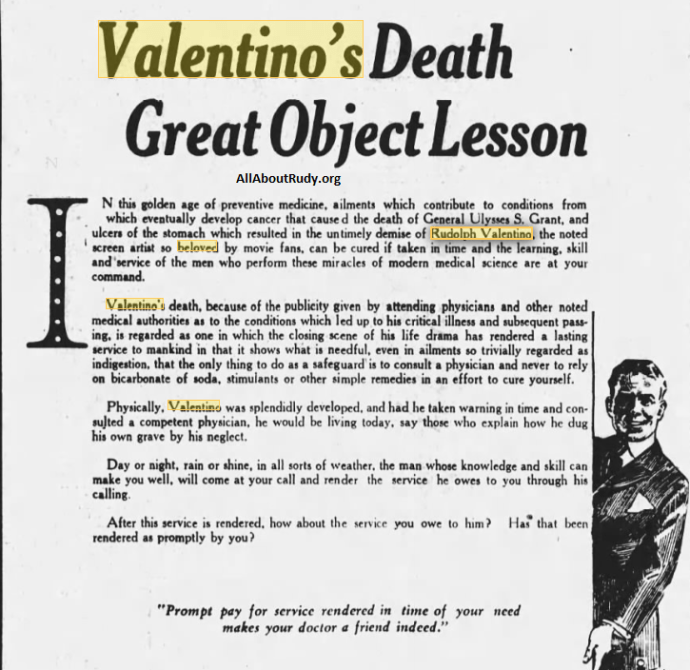
23 Aug 2019 – 92nd Annual Valentino Memorial Service
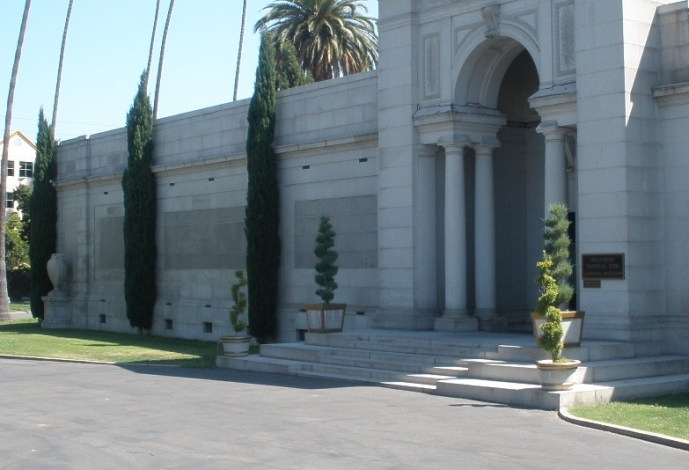
In less than 12 days, generations of fans of the great silent film legend Rudolph Valentino will come from parts all over to the Cathedral Mausoleum, Hollywood Forever Cemetery to celebrate and mourn the life of a talent that lives on in our minds, hearts and celluloid.
 The memorial service comes to serve us all as a reminder to pause and remember that he has never been forgotten. The purpose of this blog has always been to give the viewer a glimpse into a yester-year. A bygone era of photos, newspaper headlines, articles that give us something new and different to savor and perhaps bring us all a little closer as a community should. But its important to know there are dedicated and humble people who work behind the scenes each year to ensure the Annual Rudolph Valentino Memorial Service is done in a fitting and respectful manner in tribute to one we all come together and celebrate and mourn the passing of a wonderful silent star whose light will never dim. To Mr. Tracy Terhune, Ms. Stella Grace and others, I wanted to take a moment to thank you for the hard work all that you have done and continue to do. On 23 Aug, 1315 PST, Los Angeles California, Hollywood Forever Cemetery 92nd Memorial Service physically and virtually the Valentino Community will once again come together.
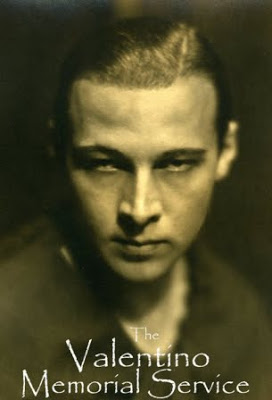
The 92nd Valentino Memorial Service
5 Jul 1938 – Beulah Livingstone
According to Beulah Livingstone, who writes publicity for a company sponsoring the revival of “Son of the Sheik” the name of Rudolph Valentino will remain a magic one as long as romance flourishes on the movie screen. “It was the late Valentino”, declares Miss Livingstone “who set the hears of the nation thumping wildly with his forthright technique of love-making, and his rugged he-man characterizations set another precedent in screen acting. Those who remember and love him for his screen contributions, as well as the newer generation who have never had the opportunity to see the great idol of filmdom, will be happy to learn that his last and greatest picture has been booked for local presentation. We have known Beulah Livingstone since back in the good old silent days, when we were young and innocent and the brain-storms that flowed so profusely from her sturdy typewriter were eagerly accepted and passed on without blue penciling to our readers. But a lot of water has shot over the Chaudière since “Son of the Sheik” was produced and released to a clamoring public, and we confess that Beulah’s effusive if well-turned, phrases anent the current revival of Rudolph Valentino productions from the dimly-passed silent days leaves us as cold as one early morning last winter when the radiator on the old bus froze stiff and we bravely ventured forth to walk the two miles to our office. For the information of those who might be interested, and just to keep the record clear, we might add that the rejuvenated “Son of the Sheik” contains sound effects and a newly arranged musical score. Acting, directing, technical effects, and camera work have come a long way, however, from the days when every other girl of teen-age sent in a quarter for her idol’s photograph and mounted it on the boudoir table.
Categories: Uncategorized
Tags: Beulah Livingstone, Death of Rudolph Valentino, Rudolph Valentino
3 Aug 1944 – What Was it Like Being Rudolph Valentino
Rudolph Valentino has been gone almost 18 years and I am still being asked: What was it like being Rudolph Valentino? Every famous person more or less the victim of his own legend and none more so that Rudolph Valentino who came to be called “The Sheik” and Rudy hated that tag, especially after it became a byword for what is known as wolfing today. Valentino’s outstanding characteristic when away from the camera was shyness. He hated dancing for that reason. His career with Bonnie Glass and later Joan Sawyer, doing ballroom dances, brought him too close to his audience. He was an eternal boy but understood his capabilities. He knew he registered best in romantic roles. He was a failure when he departed from them, although he was persuaded to do so more than once. Valentino was practically a chain smoker. He drank red wines, loved good food, ate voraciously, cooked well and liked to cook. He appeared almost ordinary in golf or business clothes; was superb in anything approximating a costume such as riding clothes, fencing apparel, or lounging robes. Kept a large library of books with costume plates which he studied religiously. Remainder of his library was distinguished with rare volumes mostly in foreign languages which he understood. He hated sets of books and never bought them. Al Jolson was instrumental in bringing Valentino to Los Angeles. Norman Kerry who was a life-long friend, helped him over tough days. Rudy was hopelessly extravagant and died broke. He bought a Mercer with his first permanent salary of $125 a week spent most of it on repairs. Later cars were Voisins and Isotta Frashchini’s. He loved machinery and had a workshop in his garage. Once took his car apart and put it together again. Was a typical small boy in this respect. His most enduring business friendship was with Joseph Schenck of Fox Studios for whom he made “Son of the Sheik” and “The Eagle” two of his greatest successes. Valentino attributed much of this to his ability and judgement. Valentino danced in Gauman prologue’s before he made good in his movies. Mae Murray gave him his first chance and they were always good friends. He was deeply interested in supernatural things during his marriage to Natacha Rambova – chiefly automatic writing. Had no small superstitions. He never permitted anyone, even his wife to see him disheveled. He had no shabby, comfortable old clothes. Spent a fortune on his wardrobe which was always new. Kept himself in superb physical condition result of two disappointments. As a boy he was turned down by the Royal Naval Academy because he lacked one inch in chest expansion. Air Force turned him down in World War I because of defective vision. Physical routine included sparring with Gene Delmont and Jack Dempsey, who was a good friend. Loved horses a white Arabian Stallion Ramadan, was his favorite. A Harlequin Great Dane, Doberman Pincher, and a Celtic Wolfhound, were all with him constantly as was a black cocker spaniel given to him by the Mayor of San Francisco at the time. He was sincere about his trade as an actor. But he had problems trying to find what he felt was his greatest goal his own family.
Categories: Uncategorized
Tags: Death of Rudolph Valentino
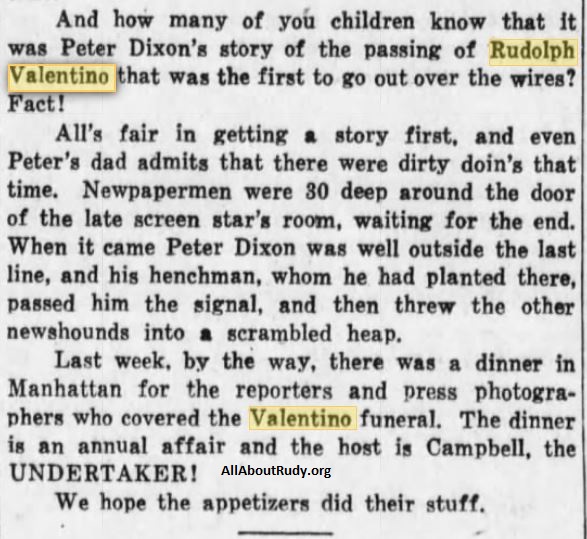
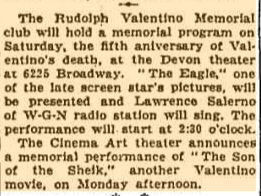
4 Jul 1938 – Jimmie Fiddler, Hollywood
In this morning’s mail arrived a letter and an enclosure which leaves me gasping. The note to me reads “I couldn’t find Mr. Rudolph Valentino’s address, so I am writing him in your care. Will you kindly forward it to Mr. Valentino. Thank you.” The enclosure reads “Dear Mr. Valentino, Congratulations! I saw your performance in The Son of the Sheik and thought you were grand. This is the first picture I ever saw in my life, and I hope to see every picture you make from now on. Keep up the good work!” I am still trying to decide whether there actually is someone ignorant of Valentino’s death or whether I am being ribbed.
Categories: Uncategorized
Tags: Death of Rudolph Valentino
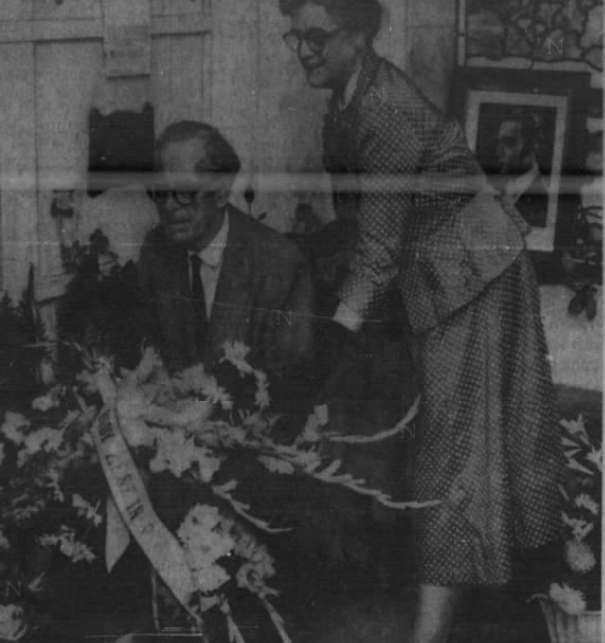

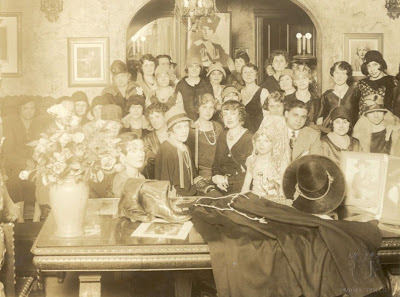
“I am glad Rudy died when he did; while the world still adored him. The death of his popularity would have been a thousand deaths to him. Rudy belonged to the age of romance. He brought it with him; it went with him.” — Natacha Rambova.
Categories: Uncategorized
Tags: Death of Rudolph Valentino, Natacha Rambova
1959-1962 – Pola Negri at the Menger Hotel, San Antonio Texas

Pola Negri’s story from rags-to-riches-to rags story reads like an E True Hollywood Story. Pola was a wealthy woman when she arrived in America in the early 1920’s. In 1927, she married a fake prince named M’Divani who stole all her money and ended up dead broke like her fellow silent actress Mae Murray. In the 1930’s -1940’s would see Pola touring Vaudeville circuits to earn money to pay for her medical bills. She would return to Germany and continue making motion pictures there. After WWII Pola came back to America and did whatever work she could to continue to survive. In 1950, she turned down Billy Wilder’s invitation to play Norma Desmond in the movie Sunset Boulevard. Pola’s saving grace was a wealthy Texan named Margaret West who was from a prominent family in San Antonio, Texas. Both Margaret and Pola became friends in the early 1930’s. Margaret who was not hurting for money did what she could for her friend while both were living in California.

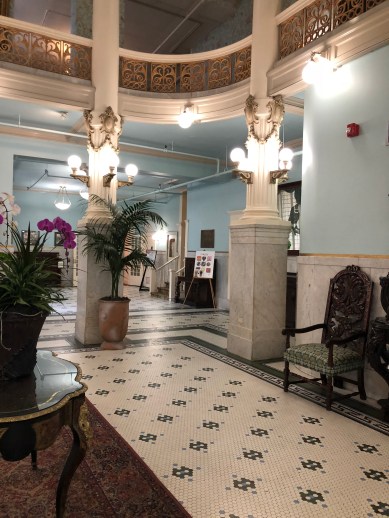
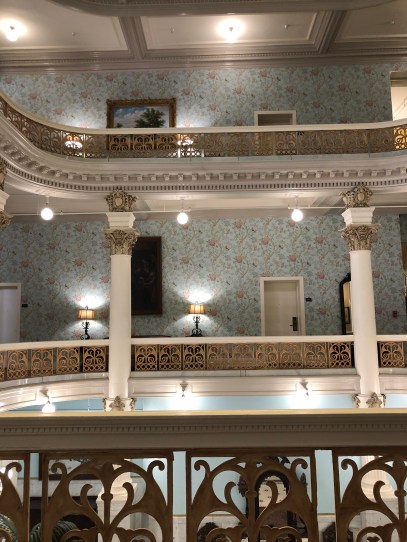
In 1959, both mutually decided to travel to Margarets hometown of San Antonio Texas. Upon their arrival they lived at the Menger Hotel, San Antonio, Texas. The Menger Hotel, is one of the state’s oldest and best-known hotels, was opened by William Menger on Alamo Square in San Antonio on January 31, 1859. They stayed there for 2 years while Margaret’s home in Olmos Park was under construction. Pola fell in love with the city. Eventually both friends traveled between her Rafter S ranch in Zavala County and her San Antonio home until her death in 1963. Margaret West left her estate to Pola who lived in the city till her death in 1987.
Categories: Uncategorized
Tags: Death of Rudolph Valentino, Pola Negri
29 Aug 1926 – Valentino Association Seeks to Incorporate
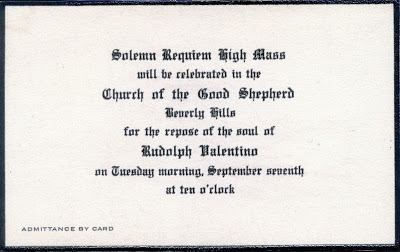
A memorial to Rudolph Valentino was projected today with the application of five Chicagoans, who were personal friends of the late film star, for articles of incorporation for the Rudolph Valentino Memorial Association. Judge Borelli, Asst State Attorney Michael Romano, Ellidge Libonati, Stephen Malato, Michael Rosinia, local attorneys, are the incorporators. The professed object of the association is to build a memorial in Chicago, but sponsors said they might also join in a nation-wide plans for a tribute. Romano is now in New York where he plans to consult with the wishes of Valentinos brother on the memorial when the latter arrives from Italy.
Categories: Uncategorized
Tags: Death of Rudolph Valentino

27 Aug 1926 – Valentino’s Old Nurse Recalls his reign of terror as a boy
Everybody is Rudolph Valentino’s friend now. But those with whom the correspondent talked admitted that everyone breathed a long sigh of relief when he left for Taranto at the age of 12. This passionate, willful, jealous boy was literally a terror to the whole village. His aged nurse Rosa, once she had overcome her diffidence at the sight of a stranger, told endless anecdotes revealing boyhood experiences and traits which went to make the character whom millions of women adored. His whole youth was a passionate revolt against the stern discipline which his father vainly tried to impose. He beat unmercifully those boys who teased him refused to acknowledge that he was “Italy’s greatest bandit”. When his father refused him pocket money he bought things on his father’s charge accounts and sold them for money with which to buy candy. He frequently filched candy, fruit and bright colored ribbons which he loved but which he would give away generously. He used to terrify small boys by pretending to drop them from the balcony of his home catching them the moment they fell. The youth adored his mother and Rosa and was fiercely jealous of them. He used to dare boys to say who was the most beautiful woman in Castellaneta and if they named any other than Rudolph’s mother he would beat them soundly. He almost drowns one boy in the village for that reason. Boy’s to whom Rosa gave candy were beaten almost continuously. The nurse still bears a scar under her chin from a heavy glass pitcher which he threw at her in a jealous rage. But he was religious. His priest said he came frequently came to confession. The priest, when questioned said he did not believe that Rudolph died in mortal sin on account of his divorce because he repented on his death bed and received the rites of the catholic church.
Categories: Uncategorized
Tags: Death of Rudolph Valentino
23 Aug 18 – 91st Rudolph Valentino Memorial Service
On 23 August every year, there is an annual memorial service held for Rudolph Valentino at Hollywood Forever Cemetery, Los Angeles, California. This year marks the 91st anniversary of his passing and once again the Valentino Memorial Committee put together a respectful tribute to a silent film legend.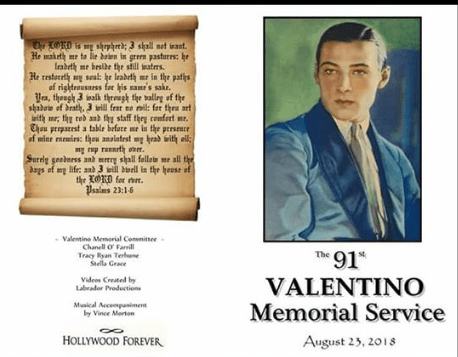
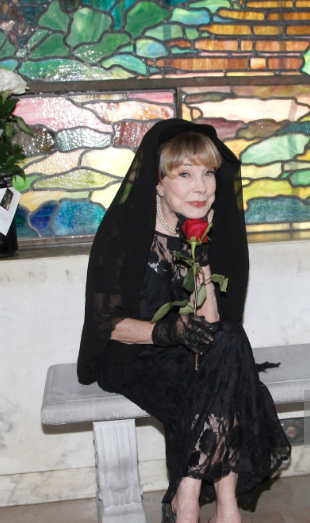
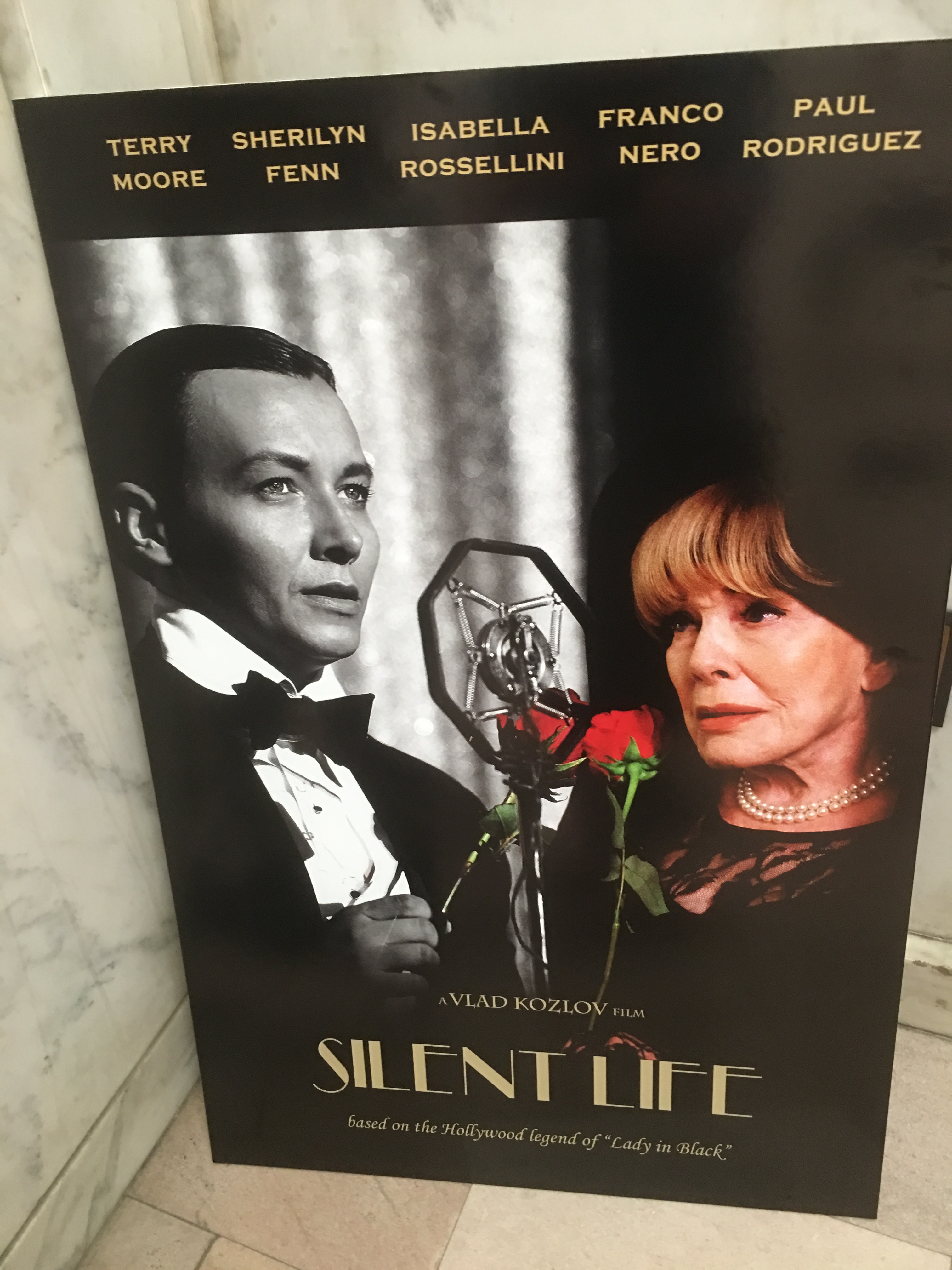
This year marks the 100th Anniversary of the release of his movie “A Society Sensation” starring Rudolph Valentino and Carmel Myers. Noted guest speakers were Ms. Brandee Cox, Academy of Motion Picture Arts & Sciences and Marc Wannamaker, Hollywood historian. Also in attendance was the cast and director of an upcoming movie about the famous “Lady in Black” titled “Silent Life”. For the second year this was lived streamed via Facebook to a world-wide audience of fans of Rudolph Valentino.
Categories: Uncategorized
Tags: Death of Rudolph Valentino, Lady in Black, Rudolph Valentino
2018 – Coming to a Theatre Near You
Categories: Uncategorized
Tags: Death of Rudolph Valentino, Silent Life Movie

25 Sep 1988 – Ah Valentino How Many Hearts Of Our You Break
With his swarthy good looks and elegant bearing, Rudolph Valentino was the greatest matinee idol of our time. During the height of the Valentino craze, one glimpse of his melancholy gaze as his lithe figure came onto the big screen brought his female admirers to the brink of hysteria, many of them fainting right in their seats. Unaware until just hours before his death that his condition was truly serious, Valentino told his doctors “I’m looking forward to going fishing with you next month”. But soon afterward at 8 a.m. he fell into a coma and four hours later he was dead. News of his death flashed across the screens of local movie theaters, causing “general consternation and occasional hysteric outbursts of brief among some of the patrons” news papers reported. Fans telephoned news paper offices, film companies to verify the news. Many still couldn’t believe the news. Ugly rumors spread Valentino was poisoned by a jilted lover. Several days later, members of Chicago’s Italian American community formed the Rudolph Valentino Memorial Association. At a service held at the Trianon Ballroom, 62nd Street and Cottage Grove Avenue, Chicago Civic Opera singer Kathryn Browne sang two of the actors favorite songs “Rock of Ages” and “Lead Kindly Light”. Only three years earlier Valentino during a personal performance danced in the very same ballroom before a large adoring crowd. The women came dressed to kill in long flowing gowns, low necked sleeveless outfits and lace dresses. The men wore their best wide-bottom trousers and patent leather dancing shoes. Amid sighs of “Ooooo Ruduuuuudolph” from smitten females, a gracious Valentino said: “I thank you. I am grateful for this reception of just an ordinary man”. The Valentino mystique lives on, though not with the same intensity that was fueled by his untimely death and led, among other things, to talk of putting a statue in his honor in Grant Park. In 1977 Rudolf Nureyev played the ill-fated star on the big screen in “Valentino” and the following year a section of Irving Boulevard in Hollywood was renamed Rudolph Valentino Street
Categories: Uncategorized
Tags: Death of Rudolph Valentino, Rudolph Valentino
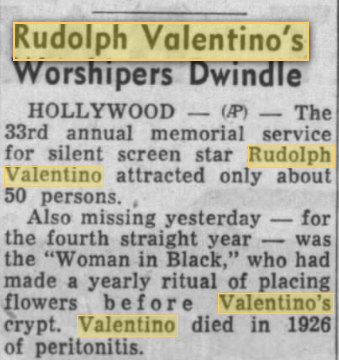
20 Aug 18 -Rudolph Valentino Memorial Service
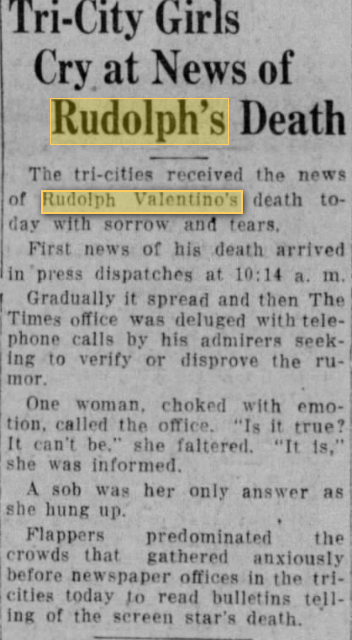
Every year, the month of August marks a sad occasion for the Valentino Community the death of a silent film actor that we all know, respect and love – Rudolph Valentino.
Generations of fans alike from all corners of the globe will come together physically and virtually to mark the passing of a true talent and legend. The memorial service comes to serve us all as a reminder to pause and remember that he has never been forgotten. The purpose of this blog has always been to give the viewer a glimpse into a yester-year. A bygone era of photos, newspaper headlines, articles that give us something new and different to savor and perhaps bring us all a little closer as a community should. But its important to know there are dedicated and humble people who work behind the scenes each year to ensure the Annual Rudolph Valentino Memorial Service is done in a fitting and respectful manner in tribute to one we all come together and celebrate and mourn the passing of a wonderful silent star whose light will never dim. To Tracy Terhune, Ms. Stella Grace and others, I wanted to take a moment to thank you for all that you have done and continue to do. On 23 Aug 18, 1315 PST, Los Angeles California, Hollywood Forever Cemetery 91st Memorial Service physically and virtually the Valentino Community will once again come together I will see you there.
Categories: Uncategorized
Tags: Death of Rudolph Valentino, Tracy Terhune, Valentino Memorial Service
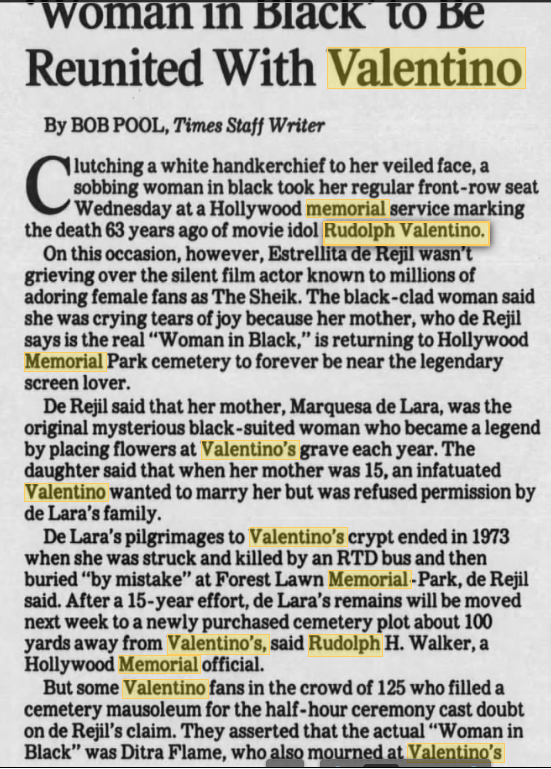
24 Aug 1989 – Another Lady in Black
Categories: Uncategorized
Tags: Death of Rudolph Valentino, Lady in Black
24 Aug 1926 – Tribute to Rudy
Executives and employees in United Artists Studio Los Angeles and at the New York home office will cease work for five minutes at noon tomorrow in tribute to the memory of Rudolph Valentino, who died Aug 23. 1926. Friends will attend a memorial mass in Hollywood, followed by ceremonies at the crypt of Valentino in Hollywood cemetery.
Categories: Uncategorized
Tags: Death of Rudolph Valentino
4 Jul 1938 – Jimmie Fiddler, Hollywood
In this morning’s mail arrived a letter and an enclosure which leaves me gasping. The note to me reads “I couldn’t find Mr. Rudolph Valentino’s address, so I am writing him in your care. Will you kindly forward it to Mr. Valentino. Thank you.” The enclosure reads “Dear Mr. Valentino, Congratulations! I saw your performance in The Son of the Sheik and thought you were grand. This is the first picture I ever saw in my life, and I hope to see every picture you make from now on. Keep up the good work!” I am still trying to decide whether there actually is someone ignorant of Valentino’s death or whether I am being ribbed.
Categories: Uncategorized
Tags: Death of Rudolph Valentino
9 Aug 1960 – After all
After his death long after his death some 30 women claimed to have given birth to his babies. The symbol lingered on. This would have disgusted Valentino, but there was another item, had he been able to hear it, that would have given him utmost satisfaction. It was at the funeral of one-time world’s heavyweight champion James J. Jeffries viewed the glamorous gloom, the overpriced coffin, the hundreds of veiled women and said “Well, he made good”…
Categories: Uncategorized
Tags: Death of Rudolph Valentino, Rudolph Valentino
4 Aug 1940 – Still Remembered
Recently fans of the late great screen-lover Rudolph Valentino crowded into St. Malachy Church, New York for the annual memorial service. The British Valentino Association was represented. Valentino would have been 45 years old today had he lived.
Categories: Uncategorized
Tags: Death of Rudolph Valentino, Rudolph Valentino
1927 – The Truth on Valentino Insurance Policy at the time of his death
The late movie star and originator of the screen “Sheik” Rudolph Valentino was insured with the Missouri State Life for $200,000.00 by his producing company, Feature Production Incorporated. It is the belief this represents the entire amount of insurance carried on his life for the benefit of his movie producers. The report which gained circulation at the time of Valentino’s death that he carried $1,000,000 of insurance was erroneous. Valentino’s application dated 9 May 1925, was written by our Los Angeles branch. In signing his application he used his full name of Rudolph Valentino Gugliemi. Valentino was 31 years of age at the time of his death on 26 Aug 1926, 1210 p.m. The company’s check for $200,000.00 was made out to Feature Productions, Inc
Categories: Uncategorized
Tags: Death of Rudolph Valentino
15 Oct 1934 – Royalties Still Paid on Films of Valentino
Heirs of Rudolph Valentino are still collecting royalties from his pictures more than eight years after his death it was revealed in court today. Two of the late actors greatest films “Son of the Sheik” and “The Eagle” are still shown in theatres throughout the world, the administrator of his estate informed Probate Judge Walton Wood. The court was asked to approve a compromise settlement of $6,093.75 with Art Cinema corporation as royalties due to the estate. The court concurred.
Categories: Uncategorized
Tags: Death of Rudolph Valentino

10 Nov 1945 – Valentino Secret Wife

Categories: Uncategorized
Tags: Death of Rudolph Valentino, Marion Benda, Rudolph Valentino
1953 – Valentino Chapter The Public is Never Wrong
Late in 1921, our advertising copywriters took off their gloves, spit on their hands and hammered out some remarkable advice to the public. By this time all readers over forty, and doubtless most of those under, will have guessed the rest. The picture was, of course, The Sheik, with Rudolph Valentino. Top billing went not to Valentino but to the leading lady, Agnes Ayres. Valentino was twenty-six years old and had been in Hollywood for several years, dancing as a professional partner and sometimes playing bit movie parts, chiefly as a villain. Recently he had gained attention as a tango-dancing Argentine in The Four Horsemen of the Apocalypse, made by another company. When we hired him for The Sheik we expected that he would perform satisfactorily, but little more. We certainly did not expect him to convulse the nation. Valentino was as strange a man as I ever met. Before going into his personality, however, it would seem worthwhile, taking into account what happened afterward, to review The Sheik. The story was taken from a novel of the same title by Edith M. Hull, an Englishwoman. After publication abroad the book became a sensational best seller in America. We paid $50,000 for the screen rights, a very large sum for the time, with the idea that the novel’s popularity would assure the picture’s success. The story gets underway with Diana Mayo (Agnes Ayres), a haughty English girl visiting in Biskra, remarking that marriage is captivity. Since Diana is a willful adventurous girl who dislikes the restraining hand of her cautious brother, one knows that trouble is brewing the moment she spots Sheik Ahmed Ben Hassan (Rudolph Valentino) and their eyes meet. The distance between them is roughly 150 feet, yet she quails, to use understatement, visibly. One might have thought he had hit her on the head with a thrown rock. There was nothing subtle about film emotion in those days. Learning that non-Arabs are forbidden at the fete the Sheik is holding in the Biskra Casino that night, Diana disguises herself as a slave girl and wins admission. The Sheik discovers her identity as she is about to be auctioned off along with other slaves. He allows her to escape, but later that night appears under her window singing “I’m the Sheik of Araby, Your love belongs to me. At night when you’re asleep into your tent I creep. Valentino moved his lips hardly at all when he sang. As a matter of fact his acting was largely confined to protruding his large, almost occult eyes until vast areas of white were visible, drawing back the lips of his wide sensuous mouth to bare his gleaming teeth, and flaring nostrils. But to get back to the film story. Next day, the Sheik attacks Diana’s caravan and packs her off to the desert oasis camp. Though he regards her as his bride, she fends off his advances. Yet it is soon apparent that she is falling in love with him. After a week of virtual slavery Diana begins to like it at the camp. Then she learns that Raoul de Saint Hubert, a French author and friend of the Sheik is coming to visit. Ashamed to be found in her slave like condition by a fellow European, Diana stampedes her guard’s horse while riding in the desert and makes a dash for freedom. Her horse breaks a leg and she staggers across the sand toward a distant caravan. This is the caravan of the dread bandit Omair (Walter Long). Omair makes her a captive for plainly evil reasons. But soon the Sheik having been informed of Diana’s escape by the stampeded guard, attaches the caravan and rescues her. The French author (Adolph Menjou) rebukes the Sheik for what seems to him a selfish attitude toward the girl. Next day while Diana and the Frenchman are riding in the desert, Omair swoops down, wounds the author, and carries the girl off to his strong-hold. The Sheik gathers his horsemen and rides to the rescue. Meanwhile at the strong-hold, Omair pursues the “white gazelle” as he calls Diana, around and around a room in his harem house. One of the bandit’s wives is fed up with him, has advised Diana to commit suicide rather than become the brute’s victim. But Diana, having faith in the Sheik, fights gamely The Sheik and his horsemen assault the strong-hold’s walls. Once inside, the Sheik bests Omair in a hand-to-hand struggle. But at the moment of victory, a huge slave hits him a terrible blow on the head. For some day’s he lies at deaths door. Now the Frenchman tells Diana the true story of the Sheik. He is no Arab at all, but of English and Spanish descent. When a baby he was abandoned in the desert. An old sheik found him, reared him, had him educated in France, and eventually left him in command of the tribe. And so the story draws to a happy ending. The Sheik recovers and the two lovers set off for civilization and marriage. The public, especially the women, mobbed the theaters, and it was not very long before the psychologists were busying themselves with explanations. The simplest, I gathered, was that a surprisingly large number of American women wanted a mounted Sheik to carry them into the desert. Doubtless, for only a short stay, as in the case of Diana, after which they would be returned to civilization in style. Adult males were inclined to regard The Sheik with some levity. But the youths began to model themselves on Valentino, especially after he had appeared in Blood and Sand for us. In the latter picture, playing a Spanish bullfighter, he affected sideburns, sleek hair, and wide bottomed trousers. Soon thousands of boys and young men had cultivated sideburns, allowing their hair to grow long, plastered it down, and were wearing bell-bottomed pants. Lads in this getup were called “sheiks”. Thus two of Valentino’s roles were combined to get a modern sheik. As audience today viewing The Sheik laughs at the melodramatic story, the exaggerated gestures, and Valentino’s wild-eyed stares and heaving panting while demonstrating his affection for Diana. Yet some of the impact of his personality remains. He created an atmosphere of otherworldliness. And with reason, for there was much of it about him. Valentino born Rodolph Guguliemi in the village of Castellaneta in southern Italy of a French mother and an Italian father. When 18 he went to Paris and a year later migrated to New York City. It is known that he worked as a dishwasher, landscape gardener, paid dancing partner or gigolo. After a couple of years, he secured occasional vaudeville work as a partner of female dancers of more reputation than his own. Improvident by nature with expensive tastes, Valentino lived from day to day as best he could. All his life he was in debt, from $1. To $100,000, according to his status. Being fully convinced that a supernatural “Power” watched over him he did not worry. Mortal men found this power of Valentino’s hard to deal with. We raised his salary far above the terms of his contract. That seemingly only whetted the power’s appetite. It became downright unreasonable after Blood and Sand, with the lads of America imitating Valentino and women organizing worshipful cults. Evidently the power had mistakenly got the notion that we had agreed to make Blood and Sand in Spain any rate the idea crept into Valentino’s head. He became dissatisfied with his dressing quarters, wishing to be surrounded, apparently in the splendor of a powerful sheik of the dessert. Valentino rarely smiled on the screen and off, and I cannot recall ever having seen him laugh. It is true he could be charming when he wished. In dealing with a lady interviewer for example, he would give her a sort of look as if aware of something quite special in her, and treat her in an aloof but nevertheless cordial manner. On the other hand, he could be extremely temperamental. Harry Reichenbach, the public relations genius who had reversed Sam Goldwyn’s buzzer system, was now working for us. One day he called at Valentino’s dressing room to discuss publicity matters. “Does he know you”? a valet inquired. “Well”, Reichenbach replied “he used to borrow two or three dollars at a time from me and always knew to whom to bring it back”. The valet went away but soon returned with a word that his master was resting. It was my custom, as it had been in the old Twenty-sixth Street Studio, to go out on the sets every morning when in Hollywood. This provided an opportunity to get better acquainted with the players and technicians. Besides putting me closer to production, I hoped that such visits would make everybody feel that the business office was more than a place where we made contracts and counted money. The fact was that we kept as close tabs on the human element as on box-office receipts. Also, I was secretly envious of those who had an intimate hand in production, and, making myself inconspicuous, often watched activities. One day, I was privileged to see a Valentino exhibition such as I had been hearing about. He was arguing with an assistant director what about I did not know, and did not inquire. His face grew pale with fury, his eyes protruded in a wilder stare than any he had managed on the screen, and his whole body commenced to quiver. He was obviously in or near, a state of hysteria. I departed as quietly as I had come. The situation grew worse instead of better, and finally Valentino departed from the studios, making it plain that he had no intention of returning. We secured an injunction preventing him from appearing on the screen for anybody else. This did not bother him very much. He went on a lucrative dancing tour and was able to borrow all the money he needed. Valentino was married but the relationship had not lasted long, although it was still in technical force. Now he was in love with a beautiful girl named Winifred O’Shaughnessy. Her mother married Richard Hudnut, cosmetics manufacturer, and Winifred sometimes used his surname. She preferred, however, to be known as Natacha Rambova, a name of her own choosing. She was art director for Alla Nazimova, the celebrated Russian actress who was one of our stars. Like Valentino, Natacha believed herself to be guided by a supernatural power. They were married before Valentino’s divorce decree was final, and he was arrested in Los Angeles for bigamy. He got out of that by convincing authorities that the marriage was never consummated, and the ceremony was repeated as soon as legal obstacles were cleared away. Natacha Rambova appeared, as Valentino’s business agent wrote later, “cold, mysterious, oriental.” She affected Oriental garb and manners. Yet she had served Alla Nazimova competently, was familiar with picture making, and we felt she would be a good influence on Valentino. At any rate she brought him back to us. Now, as it turned out, we had two powers to deal with. She was the stronger personality of the two, or else her power secured domination over his. It was our custom to give stars a good deal of contractual leeway in their material. Natacha began to insert herself into the smallest details and he backed her in everything. His new pictures, Monsieur Beaucaire and The Sainted Devil, were less successful than those which had gone before. The Valentino cults continued to blossom, but his publicity was not always good. Newspapers poked fun at the sleek hair and powered faces of the “sheiks”. The situation was not helped when it became known that Valentino wore a slave bracelet. Many people believed it to be a publicity stunt. But the fact was that Natacha Rambova had given it to him. Any suggestion that he discard it sent him into a rage. A book he published, titled Day Dreams caused raised eyebrows. Both he and his Natacha believed in automatic writing and it seems that the real author was his power, or the combined powers, working through him. An item titled “Your Kiss” is a good sample.
Your kiss A flame Of Passions fire, The sensitive Seal Of love In the desire, The Fragrance of Your Caress; Alas At times I find Exquisite bitterness in Your kiss.
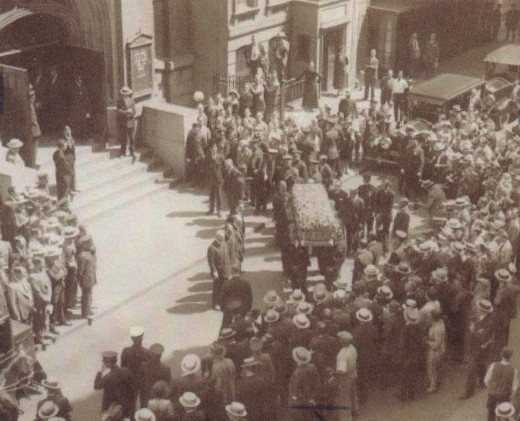
We did not care to renew Valentino’s contract, particularly since he and his wife wanted even more control over his pictures. He made arrangements with a new company, founded for the purpose, and work was begun on a film titled variously The Scarlet Power and The Hooded Falcon, dealing with the Moors in early Spain. Author of this story was Natacha Rambova. After the two had spent 80,000 traveling in Europe for background material and exotic props, the story was put aside. Another Cobra, was substituted with Natacha in full charge. It did poorly and the venture with the new company was at an end. Joseph Schenck was now handling the business affairs of United Artists, and he took a chance with Valentino being careful to draw the papers in a manner keeping decisions out of the hands of either Valentino or Natacha. Valentino accepted the terms, though reluctantly. Not long afterward the couple separated and Natacha sued for divorce. United Artists filmed The Son of the Sheik, which as it turned out, was the celebrated lover’s final picture. Valentino’s publicity became increasingly less favorable. He called his Hollywood home Falcon Lair, which opened him to some ridicule. The fun poked at the “sheiks” increased as the title of his new picture became known. He was in Chicago when the Chicago Tribune carried an editorial headed “The Pink Powder Puffs”. One of the editorial writers, it seems, had visited the men’s rest room of a popular dance emporium and there was a coin device containing face powder. Many of the young men carried their own powder puffs, and the could hold it under the machine and by inserting a coin get a sprinkle of powder. The editorial, taking this situation as its theme, viewed the younger male generation with alarm. Most of the blame was placed on “Rudy” the beautiful gardener’s boy, and sorrow was expressed that he had not been drowned long ago. IN an earlier editorial the Tribune made fun of his slave bracelet. Valentino’s “face paled, his eyes blazed, and his muscles stiffened” when he saw it according to the later account of his business manager. Seizing a pen, Valentino addressed an open letter “To the Man (?) Who Wrote the Editorial Headed “The Pink Powder Puffs” he handed it to a rival newspaper. “I call you a contemptible coward” Valentino had flung at the editorial writer, inviting him to come out from behind his anonymity for either a boxing or wrestling contest. After expressing hope that “I will have an opportunity to demonstrate to you that the wrist under the slave bracelet may snap a real fist into your sagging jaw,” he closed with “Utter Contempt”. That was in Aug 1925 Valentino came on to New York, and I was surprised to receive a telephone call from him inviting me to lunch. “It is only that I would like to see you” Valentino said “No business”. I would have agreed in any circumstance, but I was sure that he was telling the truth about not coming with a business proposition, since he was well set with United Artists. “Certainly, I answered where”? “The Colony” I had already guessed his choice since The Colony was probably New York’s most expensive restaurant. He liked the best. We set the time. Valentino and I had barely reached The Colony when it became apparent that every woman in the place having the slightest acquaintance with me felt an irresistible urge to rush to my table with greetings. Though overwhelmed, I remained in sufficient command of my senses to observe the amenities by introducing each to Valentino. He was 31 at this time, apparently in the best of physical condition, and, in this atmosphere at least was relaxed. I do not know whether his divorce decree was yet final, but Natacha Rambova was in Paris. Recently, Valentino’s name had been linked with that of Pola Negri one of our major stars. “I only wanted to tell you,” Valentino said after things had quieted down, “that I’m sorry about the trouble I made – my strike against the studio and all that. I was wrong and now I want to get it off my conscience by saying so”. I shrugged, “It’s water over the dam. In this business if we can’t disagree, sometimes violently, and then forget about it we’ll never get anywhere. You’re young. Many good years are ahead of you.” And so we dropped that line of talk. Valentino truly loved artistic things. He spoke of his ambition, when the time of his romantic roles was over, to direct pictures. I had the feeling that here was a young man to whom fame and of a rather odd sort had come too rapidly upon the heels of lean years, and he hadn’t known the best way to deal with it. “Telephone me any time”, I said as we parted, and we’ll do this again. I enjoyed myself”. And I had. A day or two later I picked up a newspaper with headlines that Valentino had been stricken with appendicitis. At first it was believed that he was in no danger. But he took a turn for the worse, Joseph Schenck and his wife Norma Talmadge came to our home to wait out the crisis. Schenck was bringing encouraging reports from the hospital, when suddenly there was a relapse. Valentino died half an hour past noon on August 23, 1925. It was a week to the minute since our meeting for lunch. I, for one, was stunned by the hysteria which followed Valentino’s death. In London, a female dancer committed suicide. In New York, a woman shot herself on a heap of Valentino’s photographs. A call came through to me from Hollywood “Pola Negri is overwrought, and she’s heading to New York for the funeral”. “Put a nurse, and a publicity man on the train,” I said, and “ask Pola to guard her statements to the press”. After Pola’s arrival, my wife and I called at her hotel to offer condolences. Though very much upset, she intended to remain in seclusion as much as possible. Valentino’s body was laid in state at Campbell’s Funeral Home at Broadway and 66th Street, with the announcement that the public would be allowed to view it. Immediately, a crowd of 36,000 mostly women gathered. Rioting described as the worst in the city’s history began as police tried to form orderly lines. Windows were smashed. A dozen mounted policemen charged into the crowd time and time again. After one retreat of the crowd, 28 women’s shows were gathered up. Women then rubbed soap on the pavement to make the horses slip. The funeral home was now barred to the public. Those who got in had nearly wrecked the place by snatching souvenirs but next day another crowd gathered when news spread Pola Negri was coming to mourn. She was spirited in through a side door. Word came out that she had collapsed at the bier, which she had and for some reason it excited the crowd. On the day of the funeral 100,000 persons, again mainly women lined the street in the neighborhood of the church in which it was being held. I was an honorary pallbearer, along with Marcus Loew, Joseph Schenck, Douglas Fairbanks, and others from the industry. Natacha Rambova was not present, being still abroad. But Valentino’s first wife Jean Acker, collapsed, and Pola Negri heavily veiled, was for many moments on the point of swooning once more. As the funeral procession left the church, the throngs fell silent except for subdued weeping of many of the women. The body was sent to Los Angeles for burial. The Valentino Cult, I am told, is still in existence. At any rate, enough women visit his grave every year to have provided the grave keeper with enough material for a book about them.
Resource
Adolph Zukor (1953). The Public is Never Wrong, Chapter 17, Putnam Publishers, New York.
Categories: Uncategorized
Tags: Adolph Zukor, Death of Rudolph Valentino, Natacha Rambova, Pola Negri, Rudolph Valentino
7 Sep 1926 – Officer leading Valentino Cortege Injured in Crash
Ill fate rode hard at the head of the Valentino funeral party yesterday. Motorcycle Officer Voy Apt was knocked unconscious when he and an automobile collided. At the White Memorial Hospital he was said to be suffering from a concussion, lacerated forehead and eyebrow, broken and dislocated right wrist, bruises on the right knee and other injuries all which make his condition serious. Apt was one of two motorcycle police officers leading the party that took the body of Rudolph Valentino off the train and to the mortuary. According to a police report, SE Funk 28 North Margarita Avenue was driving ahead of the procession near 810 Mission Road and suddenly swerved his car to turn around when Apt crashed into him. Funk was slated to appear in Police court to answer a charge of turning in the middle of a block and Apt was hurried off unconscious to Receiving Hospital where he was given first aid and then transferred to White Hospital. Apt is 29 years of age. He lives at 2731 North Normandie Avenue. Hospital attaches said he will probably recover. It does not appear they said that his skull was fractured.
Categories: Uncategorized
Tags: Death of Rudolph Valentino, Rudolph Valentino
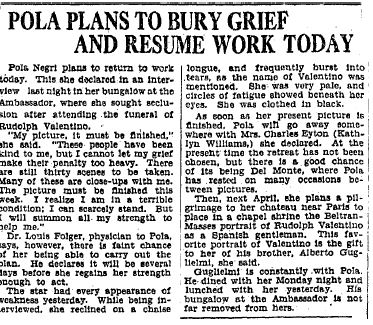
8 Sep 1926
Categories: Uncategorized
Tags: Death of Rudolph Valentino, Pola Negri, Rudolph Valentino
1928 – Cult of Valentino Formed
Publication sometime ago in European papers of a story from Hollywood to the effect that the former impresario of Rudolph Valentino was making a collection for the purpose of providing a worthy resting place for the film star’s ashes has produced what German newspapers call “a peculiar echo” in Hungary. It is related that the attention of the Budapest police was drawn recently in the fact that a young man calling himself a moving picture director was organizing Rudolph Valentino Clubs in various parts of the country, with an initiation fee of 10 pengos ($1.75) and annual dues of 25 pengos. The announced object of these clubs was in “cherish the memory and promote the spirit of Rudolph Valentino”. One of the club by-laws read: “The members are obligated to think of Valentino at least once a day. In go to see all Valentino films and to agitate for the showing of more of his films in the kino houses. Furthermore, on the anniversary of the death of the film star, 23 Aug, each member is to send an annual gift to Hollywood so that the urn containing Valentino’s ashes maybe decorated with flowers”. Despite the fact that pengos do not grow on bushes in Hungary. It is averred in the report that several hundred Valentino admirers mostly young girls have already paid their dues by the time the police began their investigation. In return for their money the members receive Valentino badges entitling them to participate in the annual memorial services to be conducted at the expense of the society. Answering questions by the police, the young organizer insisted that he had forwarded all his receipts to Hollywood and that he was doing this work purely out of admiration for the departed artist. As no charges were lodged against him by any of the club members, the young man was not held under arrest, but was told that he would be kept under observation until information regarding his statements could be obtained from Hollywood. In the meantime, further investigation is said to have revealed the fact that some Valentino Clubs were composed largely of believers in spiritualism and that seances’, with the shade of the film star as the chief attraction, had been on the order of the day, or night, for several weeks. One young girl told police that Valentino’s spirit made frequent visits to his Budapest admirers. This girl, the daughter of a rich industrialist, said that Valentino’s shade complained bitterly at the shortness of human memory and at the failure of his one-time enthusiasts to erect a suitable monument to him. She considered it her special task to carry on a campaign with the object of calming Rudolph Valentino’s uneasy spirit.
Categories: Uncategorized
Tags: Death of Rudolph Valentino, Rudolph Valentino


You must be logged in to post a comment.