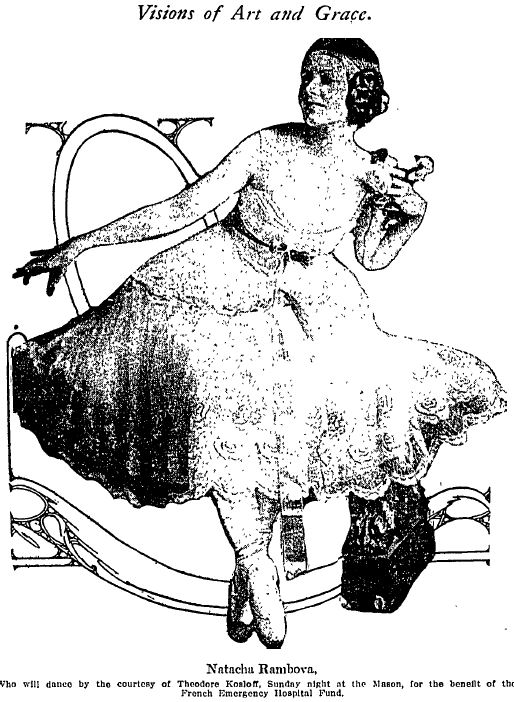
Posts Tagged With: Natacha Rambova

1922 – Bride of Mystery

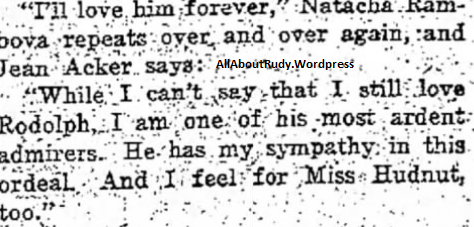
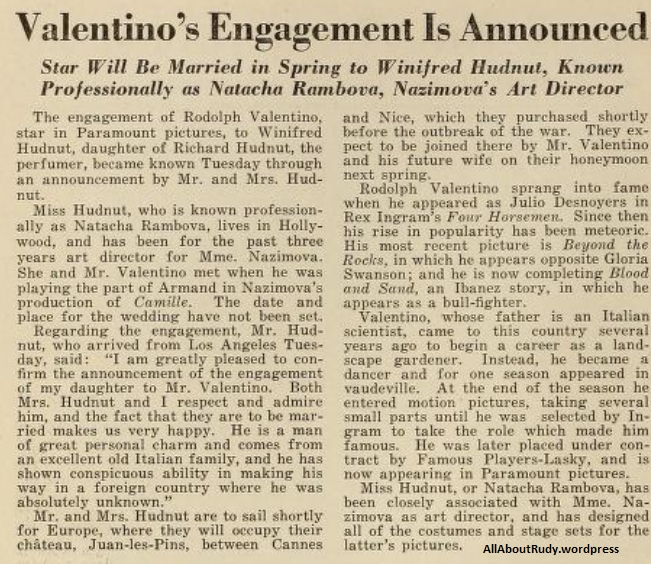
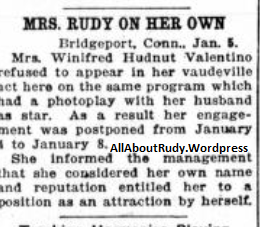
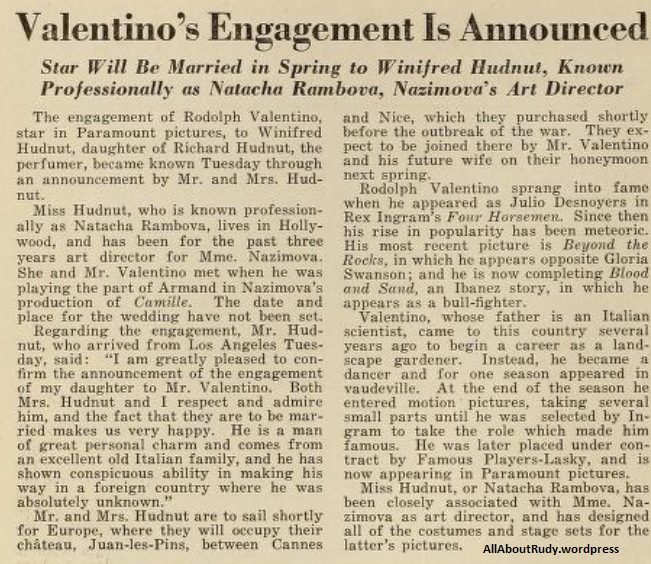
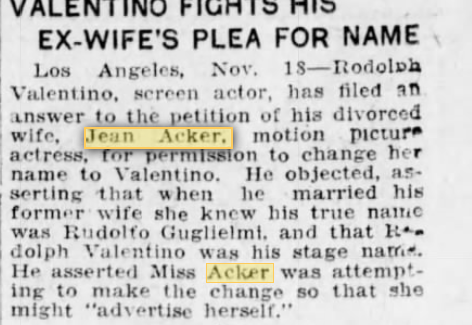
Winifred Hudnut. daughter of Richard Hudnut. the perfume magnate, was his choice. She was a girl of mystery, for it was not known generally that the Hudnut’s had a daughter. The girl had appeared in the films as Natacha Rambova, a protégé of Nazimova, in whose company Valentino had been featured. They were wed In Mexicali, Mexico, at a party, with the municipal band and a reception by the local government. Then came a crash that quite drowned the sonorous music, for it was learned that Rodolph’s divorce would not be permanent until next January and he was promptly arrested for bigamy and jailed when he returned to Los Angeles. Friends supplied bail and he was finally extricated but legally declared unwed.  He was freed only on condition that he restrain himself and live apart from his quasi-wife until the decree became permanent and this he promised. Meanwhile, Miss Hudnut’s history was investigated and It came out that she was merely an adopted daughter of the Hudnuts; that she was really Winifred De Wolfe, a relative of Elsie De Wolfe, and that she had mysteriously disappeared eight years ago, to be discovered in the company of Theodore Kosloff, the Russian dancer, under the name of Vera Fredow.  The bridegroom remained in Los Angeles, the bride hastened to New York and Jean Acker, near-wife, laughed generously, and said “My marriage was a romantic tragedy of the silver screen. Our happiness has been shattered, but I still admire Rodolph. I can’t say that I love him, but he Is a wonderful actor. He and Miss Hudnut have my sympathy and I bear them no malice. As for me I’m trying to forget.” But Valentino assorted proudly last week that Winifred Hudnut would be his forever despite the law, and he added “I’m going to Paris In March, when I have my final decree of divorce. My wife? If she is my wife will leave New York with her parents for Nice soon. When we meet again. It will be in Paris, and we will be married. “Then we will get married in every State of the Union, if necessary. After that, we will settle down in Hollywood in the home that I have provided for my bride the home that she has never occupied. Of course, my wife will continue with her art work. She has designed many of the costumes in my recent pictures. A woman has the right to a career outside of marriage but she cannot devote herself to a career and to marriage  successfully and at the same time.” And In the meantime, Hollywood Is awaiting the sound of the next marital cataclysm in its midst for there always seems to be one ready for the spark that precedes the explosion.

Categories: Uncategorized | Tags: , , , ,

Apr 1921 – A Woman of Many Talents

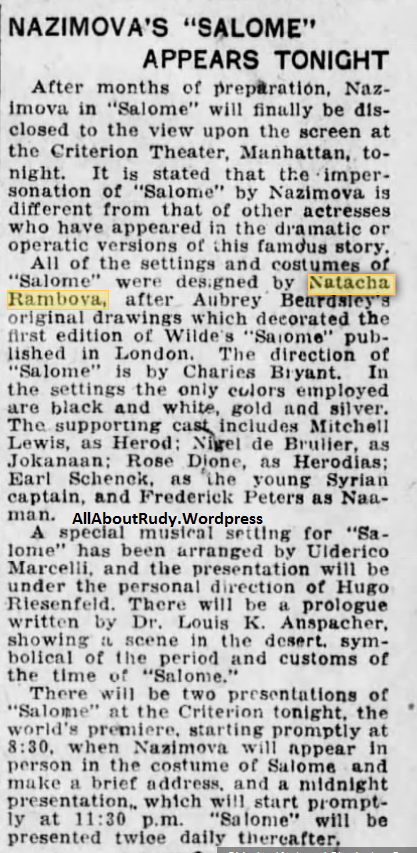
Mademosielle Natacha Rambova formerly a Russian Ballet Dancer although not a real Russian has forsaken the footlights to assist Nazimova in the designing of sets and costumes for her forthcoming productions which will include “Camille” and “Aphrodite” She was formerly with Theodore Kosloff as a dancer, designer and mistress and is employing bizarre and futuristic ideas in obtaining the effects which are necessary for Nazimova’s exotic personality.

Categories: Uncategorized | Tags: , ,

Mar 1921- Review of the Costumes of “Camille”

It will be an ultra-modern Camille with all of the picturesque movie settings and props designed by Natacha Rambova reveal the very last word in present day luxury it is said. Also, the gowns worn by the actresses and members of the supporting company are all the product of the combined ingenuity of Miss Rambova. One of the bizarre settings that were designed and will be seen is an almost circular boudoir. The bed, a unique object in the room also is circular. Another original idea was carried out in the designing of the fireplace which resembles a huge bowl.

Categories: Uncategorized | Tags: ,

19 Sep 1922 – Valentino Objects to Lying on Hard Floor

Rudolph Valentino against Famous Players-Lasky Corporation came up for hearing yesterday in the court of Justice Warner Vogel and for more than 2 hours Rudolph Valentino and his wife Natacha Rambova sat in the court room listing to Attorney Arthur Butler Graham tell of the alleged abuses heaped on the motion picture star.

Categories: Uncategorized | Tags: , ,

20 Apr 1930 – Champion of Modern Youth

Natacha Rambova is a champion of modern youth by defending them from all attacks brilliantly. At a tea the other day in Paris, as an elderly bishop talked to her, a pretty girl chose a chair nearby, sat down and crossed her knees. The bishop glared at the pretty girl, then he growled in Mme. Rambova’s ear “I wonder why girls wear such short skirts nowadays”. Natacha Rambova smiled archly and answered “for two reasons”.


Categories: Uncategorized | Tags:

1925 – Rudy and Natacha

capture

Categories: Uncategorized | Tags: ,

“Natacha Rambova is a newcomer among moving picture artists, her first commission shows that she belongs to the seekers after new methods of scenic expression”. Edward Weitzel, Moving Picture World, Oct 1921

Categories: Uncategorized | Tags: | Leave a comment

capturec33apture

Categories: Uncategorized | Tags: , | Leave a comment

1924 – 270 Park Avenue, New York City

 The year was 1913, the beginning of modernizing New York where old buildings were torn down and new construction widespread throughout the city in the form of luxurious hotels and house-like apartment buildings. At the same time, famous streets such as Park Avenue began their start when they became a high-class residential area. Famous New York Society Architects Warren & Wetmore were commissioned to design another ambitious project. The building would be u-shaped in the form of ultra-luxury mansion apartments combined with an apartment hotel located at 270 Park Avenue. As soon as the news hit the street rich and famous alike rushed over to become the newest building occupants. In 1917, construction was completed and newspapers had headlines that read “the largest apartment building of a kind” with an arcaded central courtyard featuring 3000 rooms and 100 millionaires who called this place home. New Residents had choices beginning with 6 room apartments up to 19 room apartments that come with exorbant rental prices no matter the apartment choice.  270 Park Avenue, had some of the most famous names of the day, as building residents. In 1924, silent film star Rudolph Valentino and his wife newly arrived into New York City from their recent trip to Europe where they bought props for their next joint movie titled “The Hooded Falcon”. They leased a long-term spacious apartment furnished with antiques purchased from abroad. It is not known how much the rent was for this apartment but from what I read the amount was massive  for that time period. While the Valentinos were living in the apartment preparing for their next picture they heard producer J.D. Williams bought the film rights for what would be Rudy’s next movie picture titled “Cobra”. However, at the same time Rudy experienced financial setback with “The Hooded Falcon” also there was limited movie studio space available in the city for them to film. So after many weeks, of delays and with an uncertain future for their movie Rudolph and Natacha decided to moved back to Hollywood so Rudy could film his next picture “Cobra”. Research has shown as of early 1925, Rudolph Valentino still maintained a lease on the apartment.

Categories: Uncategorized | Tags: , , , | Leave a comment

1932 – Rudy still speaks to Natacha

This morning, I came down the hill from Rudolph Valentino’s home Falcon Lair where I had slept in his bedroom, reported to be haunted, I was consumed with an intense longing to meet Natacha Rambova, the woman for whom Valentino had built this crag perched nest. I had heard and read about her meetings with Rudolph Valentino’s spirit. I wanted to hear what she would say about them, I was not at all certain but that I had felt that same spirit during the memorable night in his bedroom. I have said I am neither a believer in the return of the spirit. I say now that were I to spend many hours with Natacha Rambova, I should be a believer. I spent several with her in NYC and I believe her to be as assured of her messages from her departed former husband as you and I are assured of what we have eaten for breakfast each morning. Her faith dates back to the time when Rudolph Valentino discovered he was psychic. Until then she had paid no more attention to the occult than the average man or woman who is spending every moment to develop a career and make a living. The insight into Valentino’s powers came shortly after the death of June Mathis mother. The four were constantly together and the three Natacha, Rudolph and June suffered together a the mothers departing. A woman who had been a longtime friend of Mrs. Jenny Mathis was at the funeral. This was the first time Mr. and Mrs Valentino met her. A few weeks later they received a letter from her. Natacha laughed as she recalled this letter. “It was a wild letter. the woman was afraid we would think her a fool. She said something like this ‘I was sitting down the other day starting to write when my pencil suddenly started to go backwards. It was really embarrasses me to write this to you but when I had finished my hand writing automatically I had to hold the paper before a mirror to read it. It was a message for Rudy.’ The message was from an Italian woman who had been his nurse when he was 8 or 9 years of age. It asked if he remembered certain childhood happenings such as rumbling from the porch backwards. All this time he was reading it, Rudy kept exclaiming my heavens. When he finished reading the letter he was frightened. There were things in that message which no one in this country, not even myself, could possibly have known. I don’t want to know anything about it. I don’t want to get into this sort of thing he kept exclaiming. But curiosity overcame that reluctant feeling which most people have in contemplating messages from departed spirits. Eventually Mr. and Mrs. Valentino sent for this woman to visit them. She would take plain yellow paper (yellow is the most psychic color) and a large soft lead pencil. Understand, she had never received messages until the first one for Rudy. We would sit around and talk at random. She would join in the conversation merely holding the pencil. When the writings began she kept right on talking. She made absolutely no effort with the pencil. The first communication was from Jenny Mathis and it was advice for Rudy. As amazed as we were, we could not help but believe it. Throughout the litigation with Famous Pictures we were told four and five days ahead of time what was going to happen. It was as though we were given a warning. And if we, had only followed the advice given by the automatic writings we would have been saved much trouble. But we didn’t pay too much attention to the advice. We had seen too many people go crazy about this sort of thing we were determined to keep our common sense with it all. Then Rudy discovered that he could receive messages through the pencil. I never could. I am not mediumistic. Of course there were other happenings which proved that Rudy was psychic. His handling of animals was nothing short of remarkable. One time we had a pet lion. We took it as a very young cub and it grew as devoted to Rudy as any dog could possibly be. When it was four months old it discovered a way to unlatch the windows and slip out for an outing. The Hollywood neighbors didn’t seem to appreciate these wanderings, so we were forced to send it to the zoo. Some months later we were leaving for San Francisco and went to the zoo to say goodbye. The keeper warned us to keep away from our pet as he had turned
vicious and would not recognize us. We stopped to the cage and were met with a snarl and a growl. We went on to inspect other cages. Suddenly, I missed Rudy. I turned back to the lion’s cage. Sitting on the inside, on the floor, was my former husband. Crouched across from him was the lion. Would he spring? I stood rooted to the spot. There were several moments of suspense then the lion crawled over and placed his shaggy head in the man’s lap Rudy had conquered. Naturally there were other examples of Rudy’s ability to communicate with those on the astral plane. Jenny always told him she would be the first one to greet him when he passed from this place of existence. People wondered why Rudy called ‘Jenny’ when he was so desperately ill at the hospital. They hunted for an unknown girl. He was calling to Jenny Mathis with whom he was in constant communication. He had seen her. And he knew, during those dreadful hours of his illness, that since he had actually seen Jenny, he himself was really departing. I was in Paris. By the time, of Rudy’s death I had become seriously interested in the occult and had taken it up as a study just as you investigate any science. To me it is no more unusual for people on this plane to talk with those on the next plane. Just so you must have, unless you yourself are psychic a medium through which you can listen to those who are on the astral plane. There is nothing weird, uncanny or religious about it. It is just as much a science as the radio or telephone or aeroplane. Only in communicating with those who have passed on, you require a person as a medium. There are few really developed mediums in existence. I realized that there are many people who use what they call occult powers unscrupulously to misguide gullible people. Because there have been so many fakes, people are accustomed to pooh-pooh the idea without investigation. A medium must be a vacuum. He or she must have the power to allow the conscious call to pass from the body. He must become as negative as possible. He must be the paper upon which a thing is printed, never the one who does the printing. George Wehner of Detroit is such a man. He is the most negative of any medium I have known. He chanced to be in France when Rudy was dying. We knew everything that was happening in New York two and three days before it happened. Before he died, Rudy talked with us he was under an antistatic He was terribly depressed. He had seen Jenny and knew he was going to die. He did not to die the answers were incoherent. A few days before he actually passed on George Ullman sent a cable saying Rudy was better. A message from Mesolope an old Egyptian who used to communicate with Rudy through automatic writings reversed the decision of the doctors in New York City. We had hoped that Mesolope was wrong that there had been a mistake in the communication. This was on a Friday. Monday Morning, I awoke to find the atmosphere of my room heavy with tuberoses. Then I knew
Rudy had passed on. When the delayed cable gram arrived, I was glad Mesolope warned us. His message from beyond that Rudy was coming to them somewhat softened the cruelty of the news for us. Rudy began communicating with us at once. At first he was wretched at sea in his new life. He hadn’t wanted to
die. His own writings will some you something of his attitude. For convenience Miss Rambova read the early message from Rudolph Valentino to me from her book “Rudy” printed in Great Britain. She has, however, all of the original copies as sent by Valentino through the medium and taken down by her as delivered. We
give only a few of the number she gave to us.” “There are so many things to learn it is pretty confusing at times I have to let go, it seems of the old way of looking at things. Is the earth world, I or we, I think I had better say, looking only at the outward appearance of things and events. But here, we
are the outside of the world and the inside as well. It is strange but since I am in this new plane of life I do not feel hurried or rushed anymore. So much love I have never seen before. Everyone seems to beam with it. Caruso whom as you remember I always admired so, comes to see me frequently. I am not sure
whether he comes to me or I go to him. He does not look just as he used to either. He looks more as his music sounded, if you can imagine what I mean. You see, there does not seem to be the right kind of words to tell these things with understanding. Because I knew something about life after death before I came over, it has not taken me long to find myself. That is, to acclimate myself to these new conditions. My automatic writings which you enjoyed so much Natacha taught me a great deal. We did not pay attention to them as we should. It was so easy just to find them interesting. It is difficult to put real help and advice into our daily lives, isn’t it? I have seen many lovely houses over here. The houses are built by spirits who have learned how to mould this thought force. It is all done by the thought process. These are numerous other messages dealing directly with his experience on the astral plane. He has foretold her of coming inventions. The most recent is a sled-shaped affair upon which we will sit pull a lever and fly through the air via radio control. People often ask Miss Rambova how she knows so certainly that it is Rudolph Valentino talking to her? She answered ‘But if your husband called you on the telephone would you not recognize his voice’? In his enthusiasm he often misused certain English expressions. He uses the same semi-Italian semi-American phrases in talking now. Naturally, we could write a book on this subject. She talked to us for more than 2 hours as unaffectedly as though she were discussing the Presidential elections. We may believe or scoff, but we could not but believe that she was sincere. “And do you think that Rudolph Valentino stalks at Falcon Lair?” We had waited until the end to put that question forth. Miss Rambova replied he returns there of course. It was his home. It was only natural that he should come back, is it not? As for the dogs naturally they could see what you could not. Animals have more psychic than persona.

Categories: Uncategorized | Tags: , , | Leave a comment

capture

Categories: Uncategorized | Tags: , | Leave a comment

capture
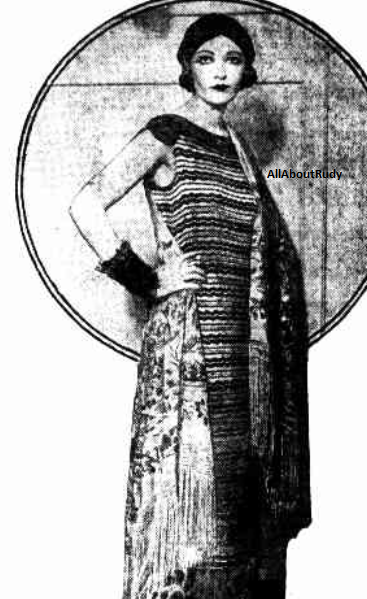
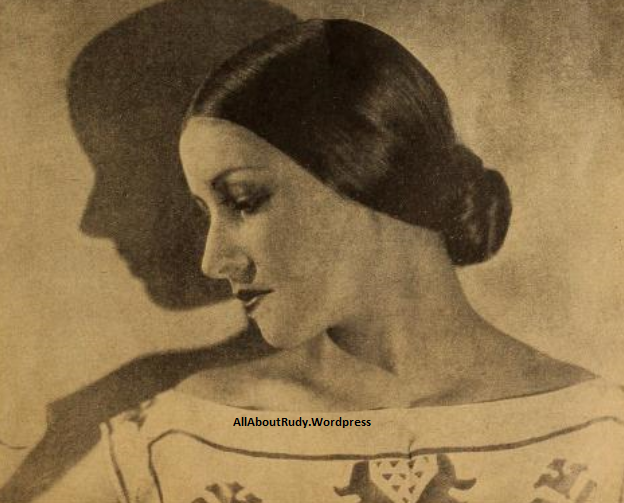
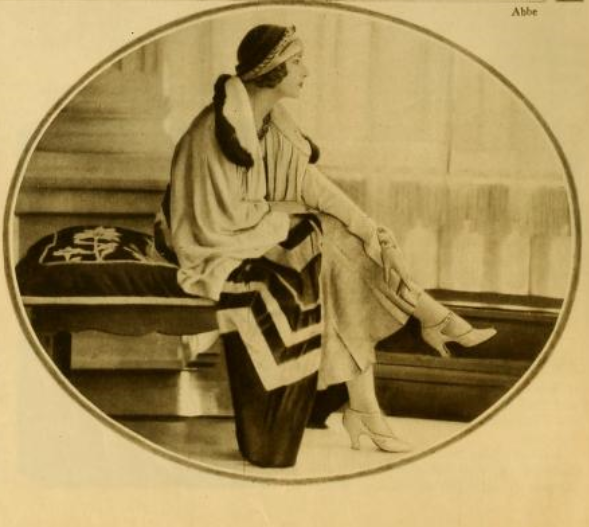
In 1924, for Motion Picture Magazine Natacha Rambova poses for famed photographer Russell Ball.

Categories: Uncategorized | Tags: , | Leave a comment

23 Aug 1934 – After 8 years, Rudy on the Silver Screen

This year and it is with pardonable pride that Movie Classic Magazine presents this exclusive scoop story upon the occasion of the commemoration of the 8th anniversary of Rudolph Valentino’s death. How can his memory be honored more fittingly than by the announcement that you may see him on the screen again? There has never been a autobiography of a motion picture personality before. Can it be that Rudy sensed his destiny as an immortal? Could he have felt that his admirers would remain faithful All these years? Did he recognize the demands of his public to see him after death and therefore provided an undying memorial? These are questions to which you and I will never know The answers. We can only guess. Amateur photography was one of Rudy’s hobbies. As a large number of star’s today are devotees of the amateur or 16mm camera, so did he experiment With standard-size moving pictures. In a particularly gay mood, it was his pleasure to send for a studio cameraman to film little impromptu plays that he enacted for his own guests amusements. This private film was later screen at other parties. In rummaging through some of Rudy’s effects his brother uncovered reels and reels of it. The reason this film was not discovered sooner that the cans containing it were thought to be merely discarded screen tests. It must be remembered that Alberto saw very little of Rudolph in the latter span of his life. The brothers were separated by half the world one in Italy the other in Hollywood. From time to time, there had been talk of a long-lost private Valentino film. Pola Negri once told me of it. Regretting its loss. Now it has been found. I have seen several reels in a projection room. Even in uncut un-chronological form, the film is tremendously impressive. Imagine if you can, a smiling, laughing Rudolph Valentino, a care-free vital fellow at play a tender lover. It is a far more revealing portrait of the actual person than was ever discovered. In a compromising situation by his wife and Rudy. His wife takes Alberto away by the ear and Rudy proceeds to spank Pola. There are many informal pictures posed in the swimming pool. Once Pola is seated astride a rubber sea horse waving at the camera, when Rudy suddenly dives to upset her for a ducking. Several other times there are evidences of his fondness for practical joking. With Natacha Rambova he is more sedate, the nearest approach to a playful mood being a romp with his dogs on the lawn of his Whitley Heights home. Jean Acker his first wife, appears only one time and never with Rudy. The identity of some of the other ladies who play with Rudy in this, his greatest film may never be known except to themselves. Others, of course, are well remembered actresses of the day Agnes Ayres, Nita Naldi, Alice Terry. The wedding of Mae Murray to fake prince David M’Divani consumes nearly a reel. The reception held at Valentino’s home is peopled with famous guests. Contrasting With such intimate scenes is the large amount of scenic footage taken with Rudy as the cameraman. His devotion to beauty and appreciation of it could have no more convincing proof than the pictures of his beloved Italy. He achieved startling and breath-taking pictures of imposing cathedrals and quaint little churches. He realized fully the art of the motion picture camera and made use of it with the masterful Hand of a true artist. The camera was an important part of his luggage when he made his last trip to his native land. He must have spent days traveling about, photographing things that caught his fancy Preserving bits of beauty in celloid that he might again enjoy them upon his return to America and work. There are several dozen views of the exquisite bay of Naples. Scenic Italy has been the subject of many Screen travelogues. But you have never seen it as Valentino photographed it the man was homesick and his nostalgia is evident by his almost reverent presentation of his beautiful homeland. Thousands of writers Have penned great epitaphs for Rudolph Valentino. Yet he unconsciously wrote a greater one for himself I loved beauty. Rudy also photographed the magnificent castle on the Hudnut estate. It is Believed that he took them after his separation from Natacha Rambova the girl he married under her screen name and continued to love until his death. Only once did Valentino take his camera with him to the studio and then solely for the purpose of filming his blooded Arabian horse in action. Is Alberto’s possession more than a reel of film taken at Rudy’s funeral in New York and Hollywood. Thousands of people can be seen lining the streets of both cities. Movie celebrities by the score came to bid a final farewell Charlie Chaplain, Mary Pickford, Douglas Fairbanks Sr, Harold Lloyd, The Talmadge’s Joseph Schenck and hosts of others attended the services It comprises an imposing climax for the screen’s first autobiography.

Categories: Uncategorized | Tags: , , , , , , , , | Leave a comment

1922 – Rodolph Valentino’s Screen Smile, Which Really Masks a Sad, Sad Heart.

EVERYBODY who goes to the movies knows Rudolph Valentino knows him, of course,as he moves about on the screen, knows his eyes, his smile and his red-blooded heroic deeds. Certainly he seems to be a very happy young man, full of chivalry, with a soul above whining about the little things which would harass a less noble character. But all this on the screen. The real truth is that Rodolph Valentino is unhappy. Very unhappy. Of course, he has been divorced from his first wife but that isn’t what is distressing him. Je has married another wife; but there is no cloud of trouble here, at least not yet. Rut still Valentino, the
heroic lover of the movies, is very, very wretched. It is because his salary is too low, his movie masters are so mean to him and so cruel to his new wife and he isn’t given any allowance to pay for postage stamps to mail his picture to the millions of dear girls who write for his photograph. Unhappy Rodolph’s pitiful story is enough to bring tears to the eyes of Adeb the Chess Automaton if it wasn’t for a more tragic twist to the misery of the unhappy screen hero he is being followed by detectives. Now who in the world would dog the tracks of Rodolph Valentino? Some love sick girl in disguise who seeks to be near him? Oh, no. A real, hard-boiled sleuth, just like the detective story detectives, and Valentino says he knows who is hiring these hounds and why. The reader has seen Valentino’s manly form and heroic deeds on the screen. Now the reader may step behind the scenes and see poor Rodolph almost sobbing tears in his dressing room. With heaving bosom The Great Lover cries aloud “I cannot endure the tyranny, the broken promises, the arrogance” of unjust masters. Down in the solemn atmosphere of New York’s Supreme Court lie the long legal documents in a law suit in which Valentino and his employers of the movie company have locked horns. And here it is in these documents that Valentino lay bare the anguish of his soul and reveals the misery which his movie smile has always hidden from the audience. Who, indeed, beholding Mr. Valentino the swaggering, fascinating toreador in his screen play, strutting toreador among his conquests who could suppose that behind that devil-may-care manner lay an aching heart and a scorched rear anatomy. Yet, says Mr. Valentino, in his sworn statement: “They transformed a part of a public general dressing room by placing a partition at one end, thereby constituting a small, impromptu dressing room composed Mrs. Valentino says they told her the girls were all crazy about Rodolph and that he was having a good time and that she might as well too”. Three of the walls open on the fourth side, and without any roof whatever, letting a burning sun shine in, and heating the chair so that I could not sit on it. “As my costumes were such that I could not wear underwear and was naked each time that I changed my costume, this condition was almost impossible. There was no floor in the studio and I was compelled to stand in the sand. There was a very small mirror, although I had requested a full length location mirror, which is usually given to the stars and leading players in order that they may properly arrange all of the details of their costumes. “An empty wooden barrel was given to me for a seat which as a few days later changed for a chair. When I first sat-down on the chair between changes of my costumes I was burned, and jumped up and did not sit down again upon it.” Nor was it enough that Mr. Valentino should be forced to sit on a red-hot chair. His troubles with dressing rooms and costumes continued. A still worse thing happened to the hero of “The Four Horsemen” hear it in Rodolph’s own words: “Whenever I was not acting on the set (the stage) and was tired or needed rest, I was compelled to ask the hospitality of some more fortunate play, who had a couch, or to put a coat on the car? t on the concrete floor of my own dressing room and use it as a pillow, or lie on the floor until I was called. By doing this with the skin-tight costume that I was wearing and not allowed to take off while resting, several rips or tears would occur, causing delay until they were repaired. “I was several times severely reprimanded by Mr. Eyton, the general manager, for matters that were trivial and were not my own fault. Among them was a reprimand for appearing with a rip in my costume that had been caused wholly by my being compelled to lie down on the floor of my room.” Horrors! Valentino has split his trousers. It will partially console Mr. Valentino’s many sympathizers to learn from his own words that he is not one to flaunt the manly beauty that has made him famous. Rather, with becoming modesty, he seeks to conceal it. But this was not always practicable “During the period of the taking of the bull fight at the
Western ranch in a scorching sun and during the windy, dusty day, I was compelled to make as many as eight complete changes during the day. There were no dressing room accommodations provided for me at all notwithstanding that I had requested that a small dressing room be built near the location, and I was compelled to make changes in my open touring car where possible, or more frequently under the embarrassing and undignified conditions of making the changes in the open. “After three days of arduous work I told the business manager of the company that it was shameful that I should be treated in that manner and compelled to walk in the scorching sun and through the dust more than one hundred yards every time I was compelled to make a change, and must make this change in full sight of everyone else. “My Toreador costume weighs with its embroidery about fifty pounds and is skin tight. For the type of work that I was doing in working with a dangerous bull I needed all the strength and rest possible.” Not all of Mr. Valentino’s complaints are of this nature, of course. He had thought, it seems, that his contract was like that of another star with regard to its main provisions, one of which may come as a revelation to many people. The clause that Valentino imagined would be in his contract provides that the actor shall make at least one picture a year in New York, and shall be given transportation for himself and his wife to New York and back. It also provides the star with an opportunity to reside six weeks or longer in New York City once each year in order that in his off hours he may see all of the places, have access to libraries and books on costuming, manners and customs, armor and other physical conditions of the various periods, he may attend art exhibitions and musical performances, mingle with the people of New York, observe contemporary habits, modes and style and freshen himself up for the following year’s work. But after Mr. Valentino had signed his contract, he was unable to find this provision in it. There was also, in the contract on which Mr. Valentino thought his contract was modelled, this provision: “The company shall at its own cost and expense furnish all photographs of the artist necessary to distribute among the public and shall attend to the artists ‘fan letters.” But this clause seems to have been omitted from Mr. Valentino contract. It was certainly very careless of Valentino to sign a contract without reading it, and reading every word of it. He will know better the next time. A movie star expects to get admiring letters from the public the more letters he gets, the bigger he is. But somebody must open and read these “fan” letters and pay the postage for mailing the star’s much coveted photograph. Mr. Valentino valued the “fan” letters and wanted his pictures sent to everybody who asked but he had an idea that the movie people ought to pay for it all. “The cost to me of furnishing photographs to distribute among the public in response to the letters that I directly receive and the cost of attending to my ‘fan’ letters is at the present time approximately $200 per week and this has been rapidly growing and is now rapidly increasing so that I have no doubt that before the expiration of the first year the said contract this cost will equal or exceed $500 per week,” Valentino asserted. “I have just received word from my secretary that in the last week the number of requests for my autographed photograph, which letters contained no money or provision for the photograph or postage, amounted to $1,385. She tells me that she cannot handle the work and that I must get an additional secretary, a second typewriter and larger office accommodations.” What is somebody else signing those treasured “autographed photographs”? Girls can it be that the photo of Rodolph you thought he sent you and that lovely written message and the dear boy’s own signature is from the hired secretary and that Rodolph never even saw your letter? Then, too, it seems that certain friends of Mr. Valentino were not permitted to visit him while he was at work, that his personal press agent was denied co-operation, and that on one film, at least, the names of two women were featured with his. What Mr. Valentino has to say in his testimony in regard to not being advertised always on all occasions as the sole star of the picture, is very interesting. It appears that there was a clause in his contract that his name should be the only one used in big type or prominently mentioned in advertising all his films. Rodolph introduced in testimony photographic copies of some advertising of one of his films, as follows: “RODOLPH VALENTINO with Lila Lee and Nita Naldi” while Mr. Valentino is full of chivalrous deeds as the public sees him on the screen, he did not consider it a chivalrous thing to share the glory of his picture with very charming women like Miss Lila Lee and Miss Nita Naldi. Chivalry and business are two different things. Commenting on why it was a serious affront and damage to him to have the names of these two young women printed on the
advertisement of, the film, he said “This matter is one of great importance in the motion picture business, the mention of others on the bill weak the effect of the sole starring of the of the production and dilutes it. If company can feature two other names it can feature a dozen of them with the name of the star and the effect is lost among the other names.” And again the Great Lover complained of another time when the names of the same two young women and an actor named Walter Long and other star were printed in the advertising much his damage. Valentino complains these words “As appears by Exhibit G, I was advertised as follows: ‘With Lila Lee, Nita Naldi, Walter Long and other stars.’ “The reaction of the public mind such forms of advertising and the diminished value of the thereof to me is shot by the article from the first page of New York newspaper of September 11, 1922, hereto annexed and marked Exhibit C. etc.” Mr. Valentino further explains he can’t share his glory with anybody in these words: “The motion picture company is also enabled by such a method to use which I am sole star to divert at attention to other growing players, to whole attention is thus diverted from me an seriously effects my commercial value and by encouraging the public to look upon such growing players as a star or near star soon launches him or her as a sole star. All stars in motion pictures with any experience in the business uniformly insist upon this exclusive fixture in the contracts.” Mr. Valentino, recently married Natacha Rambova alias Winifred Shaughnessy or Winifred Hudnut, adopted daughter of the perfumery Hudnut’s before the decree had been signed divorcing from Jean Acker, his first wife. California authorities arrested Mr. Valentino on a charge of bigamy and released him. There seems to have a sort of gentlemen’s agreement. Mr. Valentino does not exactly ‘ employers for his marital troubles, he does assert that they told him I would prefer he remained “single,” as he calls it. Furthermore, he says, they far from anxious to bail him out. Finally, it was decided that it what is a good time for Mrs. Valentino to visit adopted parents in the East while bigamy clouds were hovering over It is painful to record the following even Mr. Valentino’s employers deny it. To put it bluntly, the new Mrs. Valentino was forced to travel from California to New York in a lower berth As Mr. Valentino remarks “brutality on the part of the company sending Mrs. Valentino East in a lower berth would be more apparent, perhaps to one in the motion picture business knowing the conditions and practice thereof.” It is true that Mr. Fred Kley, assistant general manager, swears to this “It was not requested to secure a compartment drawing room. I asked Valentino particularly if he wanted a lower berth an repeated to me that he did not want a compartment or drawing room but he wanted a lower berth.” Sure but His Managers Are Mean to Him and His Pictures to His Admirers? It was not Mr. Valentino’s desire to have Mrs. Valentino “constantly annoyed by newspaper representatives who would not leave her in peace, her requests to that effect, and she was several times compelled to appeal to the train conductor for protection,” as he asserts. And now comes the melodramatic Touch his detectives are prowling about, as the reader will soon see. Valentino has followed his wife to the Adirondack camp of the Hudnuts. This was after their sudden marriage and the bigamy clouds had safely rolled by. Here is the beginning of the detective melodrama as Mr. Valentino tells it “At North Creek, I was informed by the conductor on the train, who knew me personally, that a passenger had stated that he was interested in me, as he was a newspaper representative, and wanted an interview. I was interested, and at the next station left the train, saw where the man was standing, and approached close to him to see if he wished to talk to me. He saw me but made no effort to approach or converse with me. This man was a very tall man with a long, loose gray overcoat and a closely cropped moustache. I would recognize him if I saw him “I proceeded to the Waldorf-Astoria where I occupied a room. A man called at the hotel to see an employee of the hotel, and stated that he was a detective employed by the Fly Detective Agency and he made inquiry about me. This man an answered the description of the person who followed me on the train. “The only object that my motion picture employers could have for sending a detective to Foxlair Camp was to attempt to secure or claim that they had secured Some evidence at Foxlair Camp, which Would be a crime under the New York State laws, and then by threats and persuasion to secure my continued employment by the company.” Is it any wonder then, that Rodolph Valentino should end his affidavit thus “I cannot work for this motion picture corporation. I cannot endure the tyranny, the broken promises, the arrogance or the system of production. I cannot forgive the cruelty of the company to Mrs. Valentino. I cannot look forward to a sure eclipse of what promises to be a lasting career of great success, provided that I am permitted to make productions consistent with my drawing power.” Mrs. Valentino adds her affidavit to her husband’s accusations. She tells of her distress because of the lower berth incident, and of the unsympathetic treatment which she says the motion picture company official? accorded her. “When I first arrived,” Mrs. Valentino says “and at my first interview with the president of the company, he seemed to work himself into a rage and asked me how we could have been such fools as to have done such a thing and that the company would lose millions by our action; and that Mr. Valentino was ruined and that his pictures were already being stopped in various cities; that Mr. Valentino would get ten years in prison; that so far as the company was concerned he was ruined for them, and that they were through with him. “The general manager of productions frequently told me that I was foolish to remain at home and worry and that I should go out and enjoy myself. On several occasions he said in effect “You are a great fool to sit and worry about Valentino because the girls were all crazy about him and he is having a good time out there and his love for you will not list. He is an actor. My distress and agitation were extreme. I frequently wept after retiring at night and turned out the lights with reluctance because in the dark, fears and self-reproach could not be banished.” Mrs. Valentino, too, speaks of hounding by detectives. But she, like her husband, leaves the telling of the vivid details to their faithful friend, Douglas Gerrard. Mr. Gerrard is an actor and motion picture director and he makes a very good affidavitAfter relating in some detail his education and career Mr. Gerrard makes a place for himself in history by dating his friendship for Valentino from the time five years ago when Valentino repaid a loan of twenty-five dollars. This extraordinary experience the finding of an actor who promptly repaid a loan so affected Mr. Gerrard that he swore eternal friendship for Valentino, says Mr. Gerrard, B. A. (Dublin, Trinity College.) I first met Rodolph Valentino at the end of the year 1917 when he was well-known in Los Angeles. I sympathized with Mrs. Rodolph Valentino No. 2, Who Was Treated “Cruelly” by Having to Sleep in a Lower Berth, and a Lot of Other things with Valentino because he spoke very poor English, had difficulty in obtaining employment, and I suspected that at times he was actually hungry. I took no other interest in him at the time. “One day early in 19I1, Valentino asked me to loan him twenty-five dollars, which I did out of sympathy, and, perhaps, from the motive of economy, since I knew that if he did not repay me he would not ask for more. “Shortly thereafter, Valentino obtained a position and repaid me my loan from his first week’s salary, and when some time later he attempted to borrow from me a much larger sum, I made the loan willingly. This was also promptly returned. On a number of occasions, I made loans to Valentino and I have found him to be scrupulous about making repayment as soon as he obtained employment. “Mr. Valentino always lived quietly and economically and was most earnest about his work. Later Mr. Valentino and I became close friends and although he was unknown, I took an interest in him and introduced him to friends of mine. At seven or eight big parties given by me at the Los Angeles Athletic Club, where men and women were present, he made a distinctly favorable impression by his courtesy and consideration to certain of the older ladies, mothers of young ladies present, while other young men of the party were dancing with and paying attention only to the younger feminine guests. This was not from any motive whatsoever except innate courtesy and kindness.” Mr. Gerrard then goes on to describe his friend’s character. In addition to being kind to old ladies. Mr. Valentino, according to Mr. Gerrard, was economical (despite the twenty-five dollar loan), mild tempered, conscientious about his work an<l not given to gossip. He corroborates Mr. Valentino’s affidavit as to the dressing room incidents, and tells how he and others put up the bail when his friend had been jailed for bigamy. But his most effective writing is his description of a midnight battle with detective* in the wilds of the Adirondack “On Sunday night, August. 27, 1922 at about eleven-thirty o’clock, Mr. and Mrs.
Valentino and myself were playing three handed bridge in the living room at the Foxlair Camp. Mr. Richard Hudnut was in New York City and Mrs. Hudnut had retired to her bedroom just over the living room. “The living room at Foxlair Camp is a very large room, completely surrounded by windows with an entrance from the hall at one end and an exit on to the large veranda at the other end. “Outside of the living room door leading to the veranda is a screened space. At each side of this is s screen door so that the progress of one walking around the porch need not be interrupted. The screen doors fit tightly in order to keep which Weighed Fifty Pounds, Was Skin Tight and Split Open in the Trousers One Day Be cause of the Cruelty of His Manager mosquitoes and prevent their swaying in the wind on stormy nights. “As we were playing bridge at about eleven-thirty p.m., Mrs. Valentino said in a quiet voice there is someone on the  ‘porch. I heard the screen door open.’ “I said: ‘Nonsense. I heard no one and it may be an animal.’ “Mrs. Valentino answered “I know the sound perfectly and there is no wind and it is not an
animal.’ “Mrs. Valentino then stepped to the door leading on to the porch, opened it and locked it  that she was going to close the door, as it was growing cold, and as she did she locked it. “Mr. Valentino thon went upstairs and peered out of Mrs. Hudnut’s bedroom, but could see nothing, as there was a fine, drizzling rain, no wind and the night was intensely black. “After some time Mrs. Valentino again said, I have a feeling that there is some one on the porch.’ “I procured an automatic pistol and walked out of the door at one end of the hall (the hark door of the hall) tramped noisily around the whole veranda, turned and walked noisily back. As I approached the door I saw a form a little darker than the darkness of the night. ‘After some time Mrs. Valentino again said, I have a feeling that there is someone on the porch.’ I procured an automatic pistol and walked out of the door at one end of the hall. As I approached the door I saw a form a little darker than darkness of the night at the end of the porch. I held my gun pointing at the object and would have spoken at any sign of disobedience would have shot this outline except at the moment she called out from her bedroom in a very nervous and alarmed voice, ‘There is someone walking around on the porch.’ “From the testimony of Douglas Gerrard. an intimate friend of the Valentino’s. The end of the porch? I thought that it was a cloth hanging out then, but in order not to take chances I held my gun pointing at the object and would have spoken and at any sign of disobedience would have shot this outline except at the moment Mrs. Hudnut called out from her bedroom in a very nervous and alarmed voice, ‘There is someone walking around on the porch.’ “Not wishing to disturb Mrs. Hudnut and not really thinking that the object was any more than a cloth. I went inside and told Mr. and Mrs. Valentino that there was nothing out there, but casually mentioned the cloth, when upon Mrs. Valentino stated that there was no cloth out there and that it was doubtless a figure of a man. “Mrs. Valentino was so distressed that I began to take her seriously, and I went out of the doorway at the front of the hall and walked stealthily down to the front veranda, outside of the living room, turned the corner, and as I turned I distinctly heard a stealthy movement ahead of me. Thinking it might be a muskrat or an animal of some kind I went very cautiously through the first screen door and closed it very gently. “By this time I was on my knees hidden by the wooden portion of the glass door leading into the room. From this position I still could not see anything until I stood up and peered around the corner of the second screen door, when I saw a tall man in a slouch at and a long overcoat creep cautiously parallel on the rear porch to my course down the length of the front porch. He then dropped to his knees and looked into the window of the living room. “The shock of this apparition paralyzed my faculties for a second. “We were separated only by one screen door. I quickly pushed open the screen door nearest me and shouted “What are you doing here? Stop! Hands up!’ and rushed through the door. “Instead of raising his hands the intruder turned and apparently jumped over the stonewall behind him, although I did not see him as he passed into the outer darkness. I shot and rushed after him, and not knowing the premises, ran with violence against the stone wall surrounding the veranda, the force of which caused me to bounce somewhat over the wall, whereupon a hand reached out from the other side, caught me around the back of the neck and flipped me to the ground on the other side. I fell a distance of five feet on my back, which left me breathless. “My military training had taught me that in a similar situation one must not make a sound, although I was badly hurt and semi-conscious as I fell the intruder struck me a glancing” as I laid on my back covering my mouth with one hand to prevent any sound of my breathing while holding the automatic pistol in the other hand. I then cautiously rolled over from my back and lay on my face and stealthily looked around. On all sides it was black, except in one direction, where the horizon created some light, and in I looked I heard creeping in that direction, and after trying to locate it through the tall grass, to in the direction of the sound. “The intruder then rose to his feet and started running, and I took careful aim and shot a third time. “The stranger let out a wailing prolonged ‘Ah-h.’ almost as a woman might scream, but he passed out of sight. “In the morning our investigation showed fingerprints and footmarks all about the place. The footmarks showed that the man must be a tall man because of the size of the rubbers that he wore. In the soft dirt on the top of the stonewall surrounding the veranda were the marks of a man’s fingers as if he had hung on the wall on the side away from tin house, where the wall is high, and dropped to the ground.” Now, what have Mr. Valentino’s employers to say to all this? They, too, have filed affidavits. How do they explain what Mr. Valentino considers slights, insults and abusive treatment? They don’t bother to explain most of them. Even if so much of Mr. Valentino’s charges were true, they say in effect, it would have nothing to do with the case. The president of the motion picture company remarks “The final excuse now proffered by the defendant for deserting his employment is a mass of trivialities, which he alleges have worked to his discomfort and inconvenience. “There is only one issue involved has Valentino broken or threatened to break his express negative covenant not to engage his service to others than the plaintiff?” Then he goes on to tell how, when actors, directors, camera men and stage were ready to begin the filming of “The Spanish Cavalier,” “with reserved modesty the defendant (Mr. Valentino) proclaims his services to be worth $2,000 per week and nonchalantly intimates that he will not resume his work with the plaintiff unless he is paid that amount, regardless of contract.” After denying; certain of Mr. Valentino’s charges, with which were not here concerned, the president of Valentino’s movie company continues “The opposing affidavits are remarkable for their inconsistencies and contradictions. These contradictions will be pointed out herein: “1. Defendant plead the meagerness of his salary of $1.250 per week and regards it as ‘brutal’ that a woman should be permitted to travel from California to New York in a ‘lower berth.’ and then offers much testimony ns to the simplicity and economy of his tastes, habits end mode of living. “2. Defendant boasts of his physical prowess and then complains about alleged inconveniences and discomforts. “4. Defendant extols his singular merits and submits attestations of his great genius, elaborately sets forth his merits, modestly announces that his services are worth ‘in excess of $1,OOO per week, or $2.000 per year, then concludes with the denial that his services are special, unique or extraordinary. “I am at an utter loss to understand why the defendant should become so exercised over the fact that his wife had to occupy the lower berth.” I have often considered myself fortunate in being able to obtain a lower berth. That people of culture, refinement and respectability and occupying high positions in life ride in lower berths is a matter of common knowledge. The defendant’s viewpoint is well illustrated by his notion that to purchase a lower berth for a lady constitutes ‘brutality.’

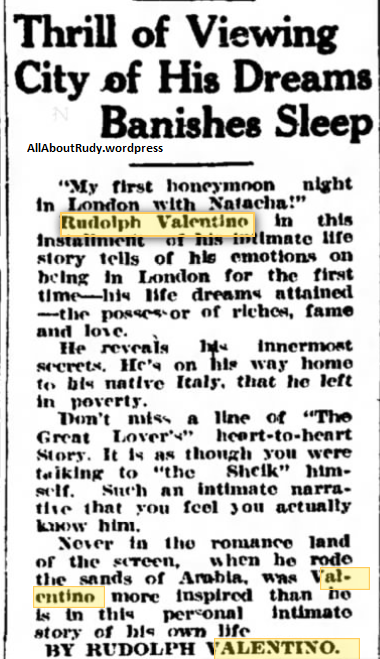
Categories: Uncategorized | Tags: , , , , , , , , | Leave a comment

1927 – Natacha not popular with fans of Rudy

It appears that marriage appeared to hampered the career of the late silent film star Rudolph Valentino. I happen to know that photographs of Rudy with Natacha were most unpopular with film fans. Thousands of angered, protesting
letters were written to Rudy whenever a lay-out of pictures That included his wife graced a magazine page. I doubt that a single movie fan, today treasures a picture in which Natacha appears at Rudy’s side. Rudy was eager to have his wife share his fame.

Categories: Uncategorized | Tags: , , | Leave a comment

7 Jun 1966 – Estate Left By Valentino Ex-Wife

Natacha Rambova, second wife of Rudolph Valentino, has left an estate estimated at $368,000, of which $78.000 has been assigned to bequests to friends, relatives and employees. The will was filed Friday in Surrogate’s Court. Miss Rambova, an adopted daughter of cosmetics manufacturer Richard Hudnut, died in Pasadena, Calif.,

Categories: Uncategorized | Tags: , , | Leave a comment

1928 – Natacha Rambova, 310 Riverside Drive, Masters Apartments Building, NYC

The year was 1928, which seen Natacha Rambova take life in a different direction by relocating back to the East Coast and make a clean break from her former life in Los Angeles. Natacha beliefs in automatic writing and Spiritualism grew and she became an expert on metaphysical teachings. During this time, Natacha also became a famous dress designer with a studio on 5th Avenue she became an established artist who immersed herself with the arts movement of the times. Natacha built a network of bohemian friends writer Talbot Mundy, his wife Dawn Allen, and spiritualist George Wehner who all were attendees at her weekly séances. In 1929, after a trip from Europe Natacha convinced all three to rent rooms at the Master Apartments Building. The skyscraper’s first three floors originally held the Roerich Museum, the Master Institute of United Arts, and the Corona Mundi International Center of Art. These three organizations were inspired by Russian artist and mystic Nicholas Roerich and his wife Helena, and were largely funded by a wealthy financier, Louis L. Horch. But it was the upper-floor penthouse which was used for private gatherings and occult explorations. It was here that Natacha’s circle of friends grew to include Manly P. Hall a famous follower of Madame Blavatsky was a regular participant of lectures and classes he gave at the museum that was attend by Natacha, Talbot Mundy and the Roerich’s. In 1928, Natacha became intimately involved and “unofficially engaged” to Svetoslav Roerich the son of Nicholas Roerich. It is interesting to note that Svetoslav looked allot like Natacha’s former husband Rudolph Valentino. This engagement did not sit well with Svetoslav’s father who decided to send his son to the Himalayas on an expedition. Natacha became very angry and threaten to sue for “alienation of affection”. Eventually Natacha moved on. After the end of World War II seen Natacha dump her belief in automatic writing and spiritualism for yoga and scholarly archeological pursuits. Natacha Rambova’s mother a Theosophist who regarded herself as a spiritualist trendsetter have Natacha’s friend Manly P. Hall a large commissioned portrait of a Russian sphinx that belonged to Madame Blavatsky and hung in her séance room at her French chateau Juan les-Pins for years.

Categories: Uncategorized | Tags: , , , , , | Leave a comment

1923 Potential Legal Problems for Valentino and New Bride?

A telegram received by Rudolph Valentino yesterday, informing him that an Assistant Attorney General of Indiana informally had expressed the belief that the marriage license obtained in Lake County by Valentino and Winifred Hudnut was illegal. A staff representative from the local newspaper succeeded last night in interviewing the couple, after a number of other newspaper men had been shooed away from Valentino’s private car that he is utilizing for traveling across country for the Mineralava Tour. We got the news by telegram on the train from Houston to New Orleans, the newspaper quoted Valentino as saying. “At first I thought it so idiotic a that I was going to ignore it but I’ve been getting angrier and angrier as I have thought more of it. They’d better watch out! They’re getting roar the dangerous mark in this persecution of my wife and me.” Valentino said he had placed the matter in the hands of his personal attorney, Arthur Butler Graham, of New York, in a long message sent before reaching New Orleans. ’They don’t want to think they can take a Charlie Chaplin or a Mary Pickford and Douglas Fairbanks show out of Valentino exclaimed wrathfully. After going into details the obtaining of the license, Valentino declared one assistant district attorney and a lawyer told him the Indiana marriage was legal. Hey they ought to know their business, oughtn’t they?” he continued. “What are we going to do about it? Nothing. We are legally married. Some notoriety seeking fool bobbing up and saying were not legally married doesn’t make any difference according to the Lake County judges.

Categories: Uncategorized | Tags: , , , | Leave a comment

1944nr

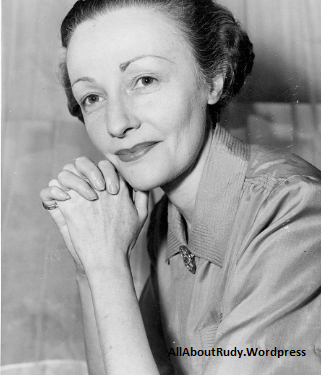
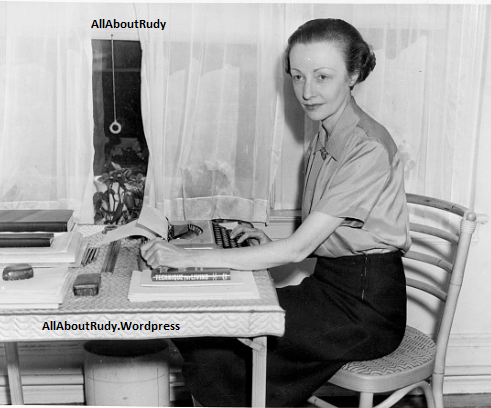
Natacha Rambova in 1944..

Categories: Uncategorized | Tags: , | Leave a comment

captu44re

Categories: Uncategorized | Tags: , | Leave a comment

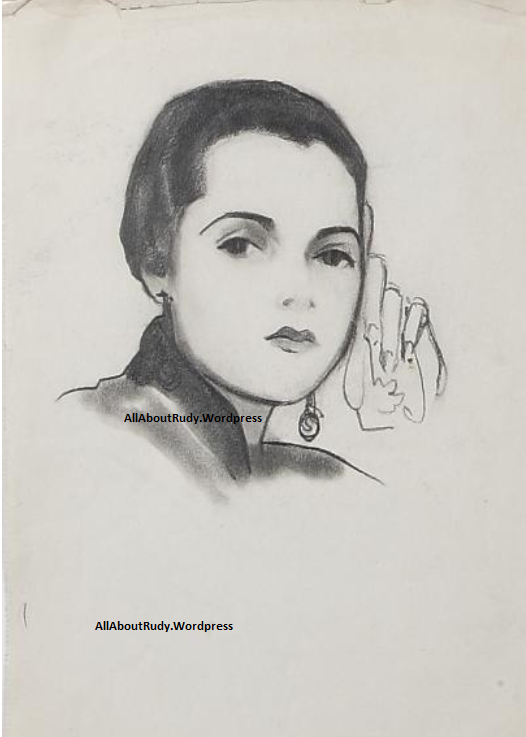
sketch of natacha.

Categories: Uncategorized | Tags: , | Leave a comment

30 Nov 1944

Categories: Uncategorized | Tags: | Leave a comment

19262

Categories: Uncategorized | Tags: , | Leave a comment

1926 Marriage Grows Cold Gossip

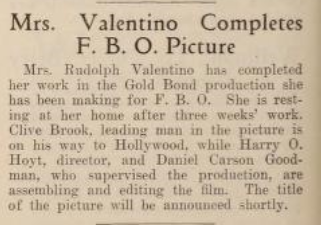
The papers leaped at the story which he gallant Rudy pulled as the cause of the separation which, by the time this appears, will have developed into a Parisian divorce decree. Natacha, he says, was not a home body. She didn’t want children. She would not cook the spaghetti. She was fond of dogs. She wanted to work. His reflected glory did not satisfy her. She wanted her own career. Bunk! Bunk served with piffle sauce. Publicity for Rudy. But old stuff. Do you remember the way Gloria Swanson set the dear old souls of Paris wild over her when she said she wanted five or six children? I believe she meant it, because I have seen her with her two children. She adores them. Her own baby, little Gloria, was not enough, and so she adopted a boy and named him Joseph Swanson, after her father. But I have never heard of Mr. Valentino hanging around an orphan asylum, and I cannot quite visualize the picture of the sheik walking the floor of a cold California night crooning the junior to sleep. It was not, in my opinion, playing the game to midst an effort for sympathy and publicity at the expense of the woman, even if it were true – which I doubt. And we must hand Mrs. Valentino credit for her attitude in the whole matter. She would not live with him and his friends, told him so, got out, leaving her belongings to him, and went on her way, avoiding any opportunity to publicise her- self at his expense. Divorce is no joking matter, but I cannot hold back a little snicker at Rudy crying on the shoulders of the public and yearning for kiddies. THERE is nothing vindictive or downright mean about Valentino. He’s a pleasant chap and a fine actor, whose delusion is that he is also a business man. Natacha has been criticized for managing his business affairs. But we have got to admit that in this case her management was much more commendable than his. To add to her troubles, the F. B. O. Company, for whom Miss Rambova made a picture because she needed the money, changed its name to “When Love Grows Cold” after it was finished, with the frank purpose of capitalizing her marital troubles. Miss Rambova protested that it would harm her and create the impression that she was the one who was profiting by deceiving the public into believing it was a screen revelation of their love wreck.

Categories: Uncategorized | Tags: , , , | Leave a comment

In 1921, if you wanted to call Natacha Rambova in Los Angeles here was her phone listing:

Natacha Rambova, Asst Metro Pics Corp R1525 Gardener.

Categories: Uncategorized | Tags: | Leave a comment

30 Sep 1936 – Handwriting Tells by Nadya Olyanova

Nadya Olyanova is not a lady for whom one puts it in writing without peril. She can even tell from your chirography and that of your girlfriend whether you two should get married. “Handwriting is the mirror which discloses weaknesses as well as one’s strengths, and to have an intelligent understanding of your prospective husband or wife is to be aware of the causes of the weakness, the motives which often lie hiddin in the inner self,” she states in “Handingwriting Tells,””Many mistakes and much unhappiness could be avoded if every couple contemplating marriage were to submit their handwritings to an expert for analysis”. Somehow it seems a dirty trick to take a lady’s letters to such a one as Nadya Olyanova. Yet our author assures us that the Natacha Rambova – Rudolph Valentino matrimonial smashup could have been foretold by a handwriting diagnostician. “Miss Rambova an only child, writing a backhand, was an introverted, seclusive person who preferred  her own society to that of other people; nor did she, as did Valentino, seek the approbation of the mob,” she explains. “Valentino, extrovert that he was, with his rightward leaning script, enjoyed mixing with people and was only as discriminating as his exalted postion in the cinema world demanded of him”. Extroverts should marry extroverts, and to stay on the safe side where marriage has possibilities of permanence and happiness means to stay on your side of the diagram

Categories: Uncategorized | Tags: , | Leave a comment

Capture.PNG

Categories: Uncategorized | Tags: | Leave a comment

Feb 1927 – Natacha Rambova has “Succumbed to Fascination of Legitimate Stage

“I have always been an exponent of the ‘bizarrerie’ in art because I feel that it is most suited to my personality,” Miss Natacha Rambova, former wife of Rudolph Valentino and now the star of the mystery play “The Triple Cross” at the New Park Theatre, told a Crimson reporter yesterday before the matinee. “In the field of art one must adapt his or her environment to the personal element. I have experimented with artistic designing, dancing, the cinema, and the stage in order to see which would be the best medium for expressing my individuality. It is an interesting quest but has no definite destination. At last, however, I can safely say that I have succumbed to the fascination of the legitimate stage. I intend to give it most of my time because it not only demands more than the screen but because it is far more developing to an actress. “But to return to the exotic in art,” remarked Miss Rambova, whose Georgian South Russian type of beauty is most exotic, “it was my first love. I followed it in my dancing and in my designing. When asked her opinion of mystery plays Miss Rambova replied that they were most strenuous for the actress. “We are continually studying the audience,” she said, “in order to get the right effect. So much depends on the little things. You must close a door with the most mysterious manner, there must be an added significance in the way you walk across the room. It is fun though to try and thrill the audience. Once the cast has them in its power we enter into the spirit of the thing and almost frighten ourselves. Again we have to rehearse one episode dozens of times to get the right effect.” Miss Rambova mentioned her forthcoming biography of Valentino. “I have been everything but an authoress,” she concluded.

Categories: Uncategorized | Tags: | Leave a comment

1923 – Mr and Mrs Rudolph Valentino appear at the Valentino Mineralava Beauty Contest in Kansas City

Any girl in Kansas City can go to the Convention Hall and enter the Valentino Mineralava Beauty Contest. A contest will be held of the prettiest girls in KC and Mr. Valentino will choose one who will get a prize and later have a chance with beauties from other cities to be Valentino’s new leading lady in his next picture. The charm of a perfect skin may come by chance and afterwards for a certain length of time be held by the inconsistent method of artifice, which however in the end will prove injurious. Valentino is the principal enthusiast of MINERALAVA in this country. He discovered by experience his skin was suffering from wearing effects of an outdoor life and from the clogging of the pores caused by grease paint he is obliged to use before the camera. In this day and age, no man is ashamed to borrow a suggestion from a woman. Mr. Valentino noticed his wife’s purity of complexion and learned she made a habit of the use of MINERALAVAs BEAUTY CLAY. “To my astonishment I discovered upon applying, myself a few applications of MINERALAVA said Mr. Valentino, that it became ever so quickly a necessity that I cannot do without”. “An athlete keeps in trim by daily exercise in a gymnasium. This adds to his self-respect, even if he is not in active training for a contest. It is the same way with folks in everyday life. People should have enough respect for their personal appearance to give a few minutes each day to the use of MINERALAVA, the one perfect nature remedy for the skin-strain of our modern existence. “After the prettiest girls in the different cities have been selected one of whom will be chosen to the be leading lady of my next picture, I am going to insist they keep their skin perfection by the constant use of MINERALAVA. by during this they will be following the example of Julia Sanderson, Majorie Rambeau, Irene Bordoni, Billie Burke, Marion Davies, Nazimova, Leonor Ulric and others. Valentino dolls to be given as beauty contest prize on display at Owl Drug CO 11th and Walnut.

CONVENTION HALL Personal Appearance RODOLPH VALENTINO in dances accompanied by his wife Winifred Hudnut alias Natacha Rambova. Holders of reserved seat tickets will have the privilege of dancing until midnight. Mr. Valentino will present a beautiful silver loving cup to the most graceful couple of dancers. Prices include tax.

Arena Balcony, Reserved $1.65
Dance Floor $1.65
Upper Balcony, Not Reserved $1.10

Categories: Uncategorized | Tags: , , , | Leave a comment

1945 – Natacha Rambova Phone Number

Her phone number in 1945 was Circle 6-6728.

Categories: Uncategorized | Tags: | Leave a comment

1926 – The Latin Lover and his Enemies

Rudolph Valentino fought a long battle against innuendo about his masculinity right up until he died. But now he seems to have won.

With the Roaring Twenties in full swing and the first talkies on the horizon, Hollywood’s booming film industry already had its share of bankable stars—Charlie Chaplin, Greta Garbo, Douglas Fairbanks, Buster Keaton. But in the summer of 1926, an Italian immigrant named Rodolfo Alfonso Rafaello Pierre Filibert Guglielmi di Valentina D’Antonguolla would join them. Known as the “Latin Lover,” Rudolph Valentino would, by summer’s end, single-handedly change the way generations of men and women thought about sex and seduction. It’s sad Valentino never live to see that autumn. And it’s sadder that he spent his final weeks engaged in an indecorous feud with an anonymous editorialist who had questioned his masculinity and blamed him for America’s “degeneration into effeminacy.”

Born in Castellaneta, Italy, in 1895, Valentino arrived at Ellis Island in 1913, at the age of 18. He lived on the streets and in Central Park until he picked up work as a taxi dancer at Maxim’s Restaurant-Caberet, becoming a “tango pirate” and spending time on the dance floor with wealthy women who were willing to pay for the company of exotic young men.

Valentino quickly befriended a Chilean heiress, which might have seemed like a good idea, but she was unhappily married to a well-connected businessman named John de Saulles. When Blanca de Saulles divorced her husband in 1915, Valentino testified that he had evidence that John de Saulles had been having multiple affairs, including one with a dance partner of Valentino’s. But his refined, European and youthful appearance at the trial had some reporters questioning his masculinity in print, and John de Saulles used his clout to have the young dancer jailed for a few days on a trumped-up vice charge. Not long after the trial, Blanca de Saulles shot her husband to death over custody of their son, and Valentino, unwilling to stick around for another round of testimony and unfavorable press, fled for the West Coast, shedding the name Rodolpho Guglielmi forever. In California, Valentino began landing bit parts in films and, as he did in New York, building a clientele of older wealthy women who would pay for dance instruction. So charming was the young Italian that he would often show up at movie auditions driving fancy cars his clients had lent him. Impulsively, he married actress Jean Acker, but a regretful (and lesbian) Acker locked him out of their hotel room on their wedding night. She quickly sued for divorce. By 1921, Valentino was starring in The Four Horsemen of the Apocalypse, which became one of the highest-grossing films of the silent era. Also that year, he was cast as Sheik Ahmed Ben Hassan in The Sheik—another wildly successful film, which would define Valentino’s image as a brooding but irresistible lover. It was an image he would despise. In 1922, a writer named Dick Dorgan opined, in Photoplay magazine, opined that , “the Sheik is a bum Arab, that he is really an Englishman whose mother was a wop or something like that.” Valentino was infuriated by the insult to his mother and tried to have Dorgan banned from the studio. He also swore he would kill the writer if he saw him. The magazine apologized and promised some favorable pieces in the future, but a few months later, it published Dorgan’s “A Song of Hate,” in which he railed against Valentino’s “Roman face,” his “patent leather hair,” and his ability to make women dizzy. The article was somewhat good-natured—a common man’s jeremiad against a guy who danced too well and was too good-looking—but Valentino resented its references to his long eyelashes and the earrings he wore in films. Valentino’s next few films performed erratically at the box office, and contract disputes with various studios forced him out of the movie business for a time. In 1922, he married Natacha Rambova, a costume designer, artistic director and occasional actress, but stood trial on bigamy charges because he hadn’t yet divorced Acker. He and Rambova had to have their marriage annulled; in March 1923 they remarried legally. To make money until he was free to sign a new studio deal (and to pay off Acker), Valentino joined a dance tour throughout the U.S. and Canada. Sponsored by Mineralava beauty products, Valentino and Rambova performed as dancers and spokespersons, and Valentino judged beauty contests. He returned to films with the title role in Monsieur Beaucaire in 1924, under a new contract with Ritz-Carlton Pictures. Although the Louis XV drama was fairly successful, Valentino had to wear heavy makeup and ruffled costumes in an overtly feminized role. The actor, ever sensitive about his masculinity, was determined to be more careful about the roles he chose. He and Rambova would divorce in 1925, leading to public speculation that Valentino was a homosexual and that he had been engaged in “lavender marriages” of convenience to hide it. There is no definitive evidence in any credible biographies written of the two that either Valentino or Rambova was gay; rather, the speculation reflected contemporary sterotypes and prejudices, and was no doubt inspired by Valentino’s personal style and refined European tastes. Simply put, the man dubbed the “Latin lover” by the studios seems to have sought long-term relationships with women.
In early 1926, Valentino joined United Artists at the urging of Chaplin and Fairbanks. Mired in debt, he was practically forced into making a sequel to The Sheik. Though women continued to swoon over him, and some men imitated his mannerisms and slick-backed hair (they became known as “Vaselinos”), many more men grew skeptical of the foreign-born actor. Fairbanks was dashing and unquestionably masculine, but Valentino, with his dandy clothes, his wristwatch and a slave bracelet? Photoplay published yet another piece, this one by Herbert Howe, that described Valentino’s his influence on leading men after his stellar tango in The Four Horsemen of the Apocalypse like this: “The movie boys haven’t been the same,” Howe wrote. “They’re all racing around wearing spit curls, bobbed hair and silk panties.… This can’t keep up. The public can stand just so many ruffles and no more.” But it was the Chicago Tribune that really set Valentino off. On July 18, 1926, the paper ran an unsigned editorial under the headline “Pink Powder Puffs” that blamed Valentino for the installation of a face-powder dispenser in a new public men’s room on the city’s North Side:

A powder vending machine! In a men’s washroom! Homo Americanus! Why didn’t someone quietly drown Rudolph Guglielmo , alias Valentino, years ago?… Do women like the type of “man” who pats pink powder on his face in a public washroom and arranges his coiffure in a public elevator?… Hollywood is the national school of masculinity. Rudy, the beautiful gardener’s boy, is the prototype of the American male. Valentino seethed at the editorial’s insinuations and ridicule. Since The Son of the Sheik was about to open, Oscar Doob, the film’s press agent, suggested that Valentino challenge the “Pink Powder Puffs” writer to a duel. Valentino sent his dare to the Chicago Herald-Examiner, the Tribune’s competitor: “To the man (?) who wrote the editorial headed ‘Pink Powder Puffs’ in Sunday’s Tribune, I call you in return, a contemptible coward and to prove which of us is a better man, challenge you to a personal test.” Noting that a duel would be illegal, Valentino said he would be happy to settle things in a boxing ring. And while Doob was immensely pleased with the publicity, he had no doubt that Valentino was “burned up” about the editorial. “It’s so unfair. They can say I’m a terrible actor if they like, but it’s cowardly and low to hold me up as a laughing stock and make fun of my personal tastes and my private life,” Valentino told a Herald Examiner reporter. “This man calls me a ‘spaghetti-gargling gardener’s helper.’… As for being a gardener’s helper, I specialized in college in landscape gardening because in Italy, that is as fine an art as architecture or painting.”The Tribune editorial writer did not come forward, but the actor traveled to New York and arranged to have boxing lessons from his friend Jack Dempsey, the heavyweight champion. Valentino was actually quite fit, and Dempsey tried to help, getting in touch with sportswriter Frank “Buck” O’Neil. “Listen, O’Neil,” Dempsey told him, “Valentino’s no sissy, believe me…. He packs a pretty mean punch.”

“Cut the crap,” O’Neil told him. “I don’t buy it, and neither does anyone else.” O’Neil then volunteered to take on Valentino in the ring, and the actor quickly agreed to fight him the following afternoon on the roof of the Ambassador Hotel. The next morning, reporters arrived at Valentino’s suite, only to see him decked out in an “orchid bathing suit and lavender lounging robe.” “I’m going back to Chicago and I’ll have satisfaction,” Valentino told them, still incensed over the “Pink Powder Puffs” editorial. Privately, reporters marveled at Valentino’s bulging biceps and wondered what the star would do if he found out the editorial writer was a woman. Valentino and O’Neil met on the roof, with reporters and photographers attending, and despite O’Neil’s promise that he would not hurt the star, he popped Valentino on the chin with a left. The actor responded by dropping his larger opponent with a left of his own. Somewhat stunned, Valentino apologized and helped the writer to his feet.“Next time Jack Dempsey tells me something, I’ll believe him,” O’Neil told reporters. “That boy has a punch like a mule’s kick. I’d sure hate to have him sore at me.”Actress Pola Negri claimed to be engaged to Valentino at the time he died. Still, the match proved nothing, and in the coming days, Valentino continued to fume about pink powder puffs. The more he mentioned the editorial to reporters, the more he invited the judgment that he must be hiding something. Valentino even met with the writer H.L. Mencken for advice, but when Mencken told him to ignore the taunts, the actor ignored him instead. Mencken would later write, “Here was a young man who was living daily the dream of millions of other young men. Here was one who was catnip to women. Here was one who had wealth and fame. And here was one who was very unhappy.”

In late July, Valentino attended the New York premiere of The Son of the Sheik. The temperature was close to one hundred degrees, but a mob of thousands formed around the theater, and as Valentino tried to make his way out of Times Square they ripped at his clothes. He escaped sufficiently intact to read about the melee in the next morning’s New York Times review of his film. More important to Valentino, however, was that the review said the film was full of “desert rough stuff and bully fights” and “leaves no doubt” about his masculinity. Referring to the “Pink Powder Puff” editorial, the reviewer warned any writer to think twice before accepting Valentino’s challenge, as “the sheik has an arm that would do credit to a pugilist and a most careless way of hurling himself off balconies and on and off horses. One leap from a balcony to a swinging chandelier is as good as anything Douglas Fairbanks ever did.”

The film was a hit, and the whispering about the star’s masculinity began to fade. As the sheik, he still appeared to be wearing eye shadow, and perhaps his lips bore a slightly darker stain of rouge, but after all, he was in show business.

Two weeks later, Valentino collapsed in his suite at the Ambassador and was taken to a hospital. After emergency surgery for a ruptured appendix, his doctors were hopeful he would recover. Then he developed pleuritis in his left lung and was in severe pain. At one point, he asked a doctor, “Am I still a pink powder puff?” Some reporters and readers were convinced that the actor’s hospitalization and the daily updates on his condition amounted to yet another publicity stunt. But on August 23, Rudolph Valentino slipped into a coma and died just hours later, surrounded by hospital staff.

On the news of his death, more than 100,000 people gathered on the streets in chaos outside the Frank Campbell Funeral Home. Flappers tore at their own clothes, clutched at their chests and collapsed in the heat. The New York Police Department tried to bring the order to the mob, and there were reports of despondent fans committing suicide. Inside the funeral home, four Black Shirt honor guards, supposedly sent by Benito Mussolini, stood nearby in stark tribute to the fallen star. (It was later learned that the men were actors, hired by the funeral home in, yes, a publicity stunt.)

The Polish actress Pola Negri, who had been having an affair with Valentino, fainted over his coffin. Upon reviving, she announced that she was to have been his third wife and quickly claimed the role of the dead star’s “widow.” For the funeral, she sent a massive floral display with thousands of blood-red roses surrounding white blooms that spelled out “POLA.” His body traveled back to the West Coast on a funeral train, and he was laid to rest in Hollywood.
The hysteria following Valentino’s death did not abate, and when The Son of the Sheik was released nationally months later, it was acclaimed as one of his best movies—a swan song of masculinity. Rumors that he actually died by the gun of a jealous husband or scorned lover kept the tabloids in business. And for decades, a veiled woman in black arrived at Valentino’s Hollywood tomb on the anniversary of his death to place twelve red roses and one white one on his grave. Once it was learned to be yet another press agent’s stunt, competing ladies in black began arriving at the tomb, knocking roses to the ground as they scuffled for position in front of newspaper photographers.

Whether the quality of Valentino’s voice would have killed his career in talkies is a subject of endless debate. Some say his accent was too thick, others who knew him well say his rich, husky baritone would only have helped him reach even greater heights of fame. But nearly a century after he arrived on these shores, his very name remains tantamount to a male seducer of women. In that sense, his work outlasted the biases of his time

Categories: Uncategorized | Tags: , , , | 1 Comment

engamgement

Categories: Uncategorized | Tags: , , | Leave a comment

1924 Natacha Rambova

natacha1924

Categories: Uncategorized | Tags: | Leave a comment

natachaagain

Categories: Uncategorized | Tags: , , | Leave a comment

13 Sep 1930 – Secrets of Real Beauty

“Beauty” says Natacha Rambova, actress-designer, and one-time wife of Rudolph Valentino “is an inward quality, the outward expression of which is a vivid face and an intelligent use of colour and originality in dress”. The American people have developed their sense of beauty tremendously, especially in the last year. There is an increasing desire on the part of more and more women to express their own individuality in their clothing.  “European women always dressed to please themselves, American women until recently, have dressed only to be liked everyone else. They were afraid to be different. Now they want something more than their own. They want to interpret their ideas of beauty in what they wear.  Natacha Rambova is one of those American women who has found in her dress and coiffure a satisfying medium in which to express her spirit. She is a tall thin person who wears a handsome turban over braided coils of red-brown hair.  A woman today she said, “does not have to classic features to be considered beautiful”. In the old days you were either beautiful or you were not. Fifty years ago, Lillian Russell was the standard of beauty. Today there are hundreds of types which are considered equally beautiful. Few stars of the screen have the classic beauty. “I wish more girls would first consider developing their personality, their inward qualities, before resorting to cosmetics and other accessories in acquiring beauty. Brilliance of expression comes from the soul and not from adroit use of powders, rouges and cream. “While cultivating the inner qualities a woman should try to find what outward things most become her spirit. She should make her dress and hair express herself. She should never to copy anyone else’s hair or costume. She should try to find out what colours are most appropriate. The old idea that brunettes should wear red and orange and blondes grey and blue is absurd. Some brunettes definitely prefer blue and should wear it. Often a frail blonde demands a vibrant red or orange because it is the reflection of her spirit. There are two types of women who can wear red attractively. The first is the active energetic person. Calmer colours aggravate her. The second is the person who inwardly seethes with activity. That person needs red to stimulate her to do things, to express her inner drive, “calm poised, placid persons  should wear blues and greens”. Business and practical people invariably choose browns and beige. The proper use of colour is an accurate inflection of inward beauty. But it is impossible to prescribe colours for anyone until she has herself found out what she is. Some women, for instance come to me who have worn blue their entire lives because they were told that colour was very becoming. Their spirits were depressed by the colour so I gave them red which they secretly craved and they blossomed. Such women sometimes need encouragement.  “I really believe that it is essential for a woman to get at the root of her individuality and dress accordingly, if she wants to be beautiful. Beauty based on an inward brilliance and attractive dress can go a very long way in furthering your success in life.  In fact, I believe it is vital for success in life.

Categories: Uncategorized | Tags: , | Leave a comment

25 Feb 1931 Miss Rambova Notes Style Change

Natacha Rambova, ex-wife of Rudolph Valentino, returned from the Riviera where she visited her mother Mrs. Richard Hudnut. Miss Rambova said a marked change in women’s fashions was evident in Paris and would appear here this year. The American woman, she declared, is freeing herself from the Parisian style reign and will now demand gowns designed for herself. She said, the Paris rule was overthrown because manufacturers copied dresses in great numbers, ruining individuality.

Categories: Uncategorized | Tags: , | Leave a comment

Dec 1925 – Natacha’s latest Endeavors

The Tec-Art is running two studios right in the heart of New York City. One on West 44th Street and the other on East 48th. Both out and out rental propositions, and the latest picture of note to be made in them was the Mrs. Rudolph Valentino Production for F.B.O.

Categories: Uncategorized | Tags: , | Leave a comment

Capture

Categories: Uncategorized | Tags: , | Leave a comment

30 Sep 1936 – Handwriting Tells by Nadya Olyanova

Nadya Olyanova is not a lady for whom one puts it in writing without peril. She can even tell from your chirography and that of your girlfriend whether you two should get married. “Handwriting is the mirror which discloses weaknesses as well as one’s strengths, and to have an intelligent understanding of your prospective husband or wife is to be aware of the causes of the weakness, the motives which often lie hiddin in the inner self,” she states in “Handingwriting Tells,””Many mistakes and much unhappiness could be avoded if every couple contemplating marriage were to submit their handwritings to an expert for analysis”. Somehow it seems a dirty trick to take a lady’s letters to such a one as Nadya olyanova. Yet our author assures us that the Natacha Rambova – Rudolph Valentino matrimonial smashup could have been foretold by a handwriting diagnostician. “Miss Rambova an only child, writing a backhand, was an introverted, seclusive person who preferred  her own society to that of other people; nor did she, as did Valentino, seek the approbation of the mob,” she explains. “Valentino, extrovert that he was, with his rightward leaning script, enjoyed mixing with people and was only as discriminating as his exalted postion in the cinema world demanded of him”. Extroverts should marry extroverts, and to stay on the safe side where marriage has possibilities of permanence and happiness means to stay on your side of the diagram

Categories: Uncategorized | Tags: , | Leave a comment

Feb 1926 – Speaking of…

Verily, Natacha Rambova seems to be the Patsy of the motion picture business of late. The papers leaped at the story which the gallant Rudy pulled as the cause of the separation which, by the time this appears, will have developed into a Parisian divorce decree. Natacha, he says, is not a home body. She didn’t want children. She would not cook the spaghetti. She was fond of dogs. She wanted to work. His reflected glory did not satisfy her. She wanted her own career. Bunk! Bunk served with piffle sauce. Great publicity for Rudy. But old stuff. Do you remember the way Gloria Swanson set the dear old souls of Paris wild overheard when she said she wanted five or six children? I believe she meant it, because I have seen her with her two children. She adores them. But I have heard of Mr. Valentino hanging around an orphan asylum, and I cannot quite visualize the picture of the sheik walking the floor of a cold California night crooning to Junior asleep. It was not, in my opinion, playing the game to make an effort for sympathy and publicity at the expense of the woman even if it were true which I doubt. And we must hand Mrs. Valentino credit for her attitude in the whole matter. She would not live with him and his friends, told him so, get out, leaving her belongings to him, and went on her way, avoiding any opportunity to publicize herself at his expense. Divorce is no joking matter, but I cannot hold back a little snicker at Rudy crying on the shoulders of the public yearning for kiddies. There is nothing vindictive or downright mean about Valentino. He’s a pleasant chap and a fine actor, whose delusion is that he is also a business man. Natacha has been criticized for managing his affairs. But we have got to admit that in this case her management was much more commendable than his. And to add to her troubles, the F.B.O Company, for whom Miss Rambova made a picture because she needed the money changed its name to “when love grows cold” after it was finished, with the frank purpose of capitalizing her marital troubles. Miss Rambova protested that it would harm her and create the impression that she was the one who was profiting by deceiving the public into believing it was a screen revelation of their love wreck.

Categories: Uncategorized | Tags: , | 1 Comment

engamgement

Categories: Uncategorized | Tags: , | Leave a comment

19apr30

Categories: Uncategorized | Tags: , , | Leave a comment

natachafinishes picture

Categories: Uncategorized | Tags: , , | Leave a comment

natacha26

Categories: Uncategorized | Tags: | Leave a comment

natacha

Categories: Uncategorized | Tags: | Leave a comment

natacha inmovie

Categories: Uncategorized | Tags: | Leave a comment

17 Dec 1925 – Marital Rumors

Rumors of a forthcoming marriage of Natacha Rambova and Dr. Daniel C. Goodman, Film Producer are
circulated by a tabloid. Goodman is the divorced husband of Alma Rubens.

Categories: Uncategorized | Tags: , , | Leave a comment

Aug 1926 Society’s Problems

It seems odd that a modern young woman like Natacha Rambova or as the parentheses have it Mrs. Rudolph Valentino, should have chosen a Laura Jean Libby plot for her debut on the screen. The story is aged. It is about a young wife who helps her husband to succeed, only to find that he has grown away from her. And then, of course, she wins him back. Called “When Love Grows Cold” this is the poorest picture of the month or of almost any month for That matter. The interiors are bad, the costumes atrocious. Miss Rambova is not well-dressed nor does she film well, in the slightest degree. Is this worth spending hard earned money watching? The answer is no.

Categories: Uncategorized | Tags: , | Leave a comment

7 Jun 1922- Rudolph Valetino Released

Rudolph Valentino, the motion picture actor, who was charged with having committed bigamy, by marrying Winifred Hudnut, the daughter of a rich American perfumer, before his final divorce decree was granted from Jean Acker, another picture artist, who was his first wife, have been set free. The evidence was found to be insufficient.

Categories: Uncategorized | Tags: , , | Leave a comment

11

Categories: Uncategorized | Tags: , , | Leave a comment

19262

Categories: Uncategorized | Tags: , | Leave a comment

8 Nov 1925 – All in the Dark

Rudolph Valentino sat in his suite in the Ritz-Carlton yesterday and admitted that he was “all in the dark” about Mrs. Valentino. They parted two months ago for a marital vacation, she steaming off to Paris and he remaining under the Kleig lights of Hollywood. Valentino came here yesterday, and he sails for the other side on Saturday. Mrs. Valentino is scheduled to arrive on Tuesday aboard the Leviathan. But if the Valentino’s patch up their differences, based chiefly on her demand for a career, the first overtures will come from her. Valentino made that clear, just as clear as he made emphatic his distaste for baggy trousers and other vivid habiliments. Valentino remarked that Oxford bags appeared to be the exclusive penchant of young college boys, said he preferred marrow trousers and a longer coat. He figured that wide trousers and short coats would make him appear shorter. However, he summarized, clothes should not be of importance in the life of any man. What plans had he for his stay in NYC before the boat took him away for two months? Well said, Valentino he will say as many good plays as possible. That will be the most frequent item on his calendar. Then, when he gets abroad he hopes to spend Christmas and New Years in Rome with his brother who may become his continental representative. And above all things, he wishes to rest and relax. When he feels sufficiently eased he may drop in to see Sabatini and Ibanez in search of good movie plots something he finds scarce these days.

Categories: Uncategorized | Tags: , , | Leave a comment

“Magic is the soil of Egypt”..Natacha Rambova, 1946

Categories: Uncategorized | Tags: | Leave a comment

On her first visit to Egypt “I felt as if I had at last returned home. The first few days, I couldn’t stop the tears from streaming from my eyes”..Natacha Rambova, 1936

Categories: Uncategorized | Tags: | Leave a comment

20 Oct 1934 – Millionaire’s Daughter Marriage to a Nobleman

Natacha Rambova, the beautiful second wife of the late Rudolph Valentino, has been secretly married to Don Alcaro Urvarz, a Spanish nobleman. The wedding took place at Palma, Majorca, The couple have bought a villa at Palma, overlooking the sea, where they intend to live. Mrs. Valentino is stated to have made a fortune in property speculation in Majorca. According to their friends, the couple were secretly married by the civil authorities in Paris some time previously. In deference to the wishes of the bridegroom’s family, a Roman Catholic religious marriage ceremony followed at the’ Church of San Francisco, in Palma. The bride is not a Roman Catholic. She agreed to the religious marriage to please Don Alcaro’s family, which ls one of the oldest Catholic Basque families In Spain. Only a few friends were present. Natacha Rambova is the adopted daughter of Mr. Richard Hudnut, the millionaire perfumer. She went through two ceremonies of marriage with Valentino. Valentino’s first wife was Jean Acker, There was a divorce In 1922. Before the time required by Californian law for divorced persons to re-marry had elapsed Valentino and Miss Rambova were married. They said that they were “so madly in love with each other that they would not wait.’ As the divorce had not by that time become operative the couple remarried in March 1923. Since the death of Valentino Miss Rambova’ had claimed that she has received spirit messages from him through a medium. “The messages I have received from Ruddy,” she once said, “are wonderful. He has given the most Interesting details of his life over there. He tells me that he is extremely happy.” Miss Rambova also claimed that Valentino had explained his will in which he left her one dollar and about £100,000 to her aunt, his brother, am his sister. “I quite understand,” she said. Natacha Rambova obtained : decree of divorce in Paris against Valentino.

Categories: Uncategorized | Tags: , , | Leave a comment

5 Oct 1922 Patron of Arts Valentino Purchases Works at Exhibit.

The Valentinos have arrived in the social world of New York. At least, that part of the social world which is linked with the artistic. Mrs. Valentino, it appears, has established–or at least reiterated– herself as an artist by promising to send some of her works to the Italian-American Art Association Exhibit at the Civic Club, according to wire advices from the East. Mr. Valentino and his wife visited the exhibition of Italian artists yesterday. Upon being presented Mrs. Valentino declared she desired to become a member of the Italian-American Art Association. Rodolph became a patron of the arts simultaneously. For after he viewed the exhibit he purchased five works.

Categories: Uncategorized | Tags: , | Leave a comment

3 May 1938 – Rudolph Valentino By His Wife Natacha Rambova

The morning of Monday, Aug. 16, 1926, while at my father’s chateau in Juan les Pins on the Riviera, I received a cable from George Ullman, sent at Rudy’s request, telling me of his sudden illness and operation. This came as a great shock to all of us for we thought him in the best of health. Although the message hinted that the illness was grave, we had no idea how grave it was. Aware, as we were, of Rudy’s splendid strength and unusual physical resistance, it did not occur to us for a moment that he might not recover. Nevertheless, the news worried me and, in the unexpected anxiety it aroused, all the petty resentment of our misunderstandings faded from my mind. Once again, he was the same old Rudy, in trouble, and he needed me. I cabled immediately that I would come to New York by the first sailing if he wanted me. “I never received an answer to that cable.” If Rudy received it at all it was while he was in a state of unconsciousness. Death came with unexpected swiftness. Even as the next two days passed we did not realize the danger. Mr. Ullman continued to notify us almost hourly of each slight change in Rudy’s condition and the news in his cables, as .they came, seemed favorable rather than discouraging. The actual presage of his death came through psychic communications. It happened that as guest at the chateau at that particular time was George Wehner, the distinguished American psychic, who had led us far along the ways of understanding of the spirit world. It had become our custom to have family sittings from time to time, with Mr. Wehner acting as medium. Wednesday evening during one of these sittings, while Mr. Wehner was in a state of deep trance, Rudy “came through.” We were first aware of his presence by mutterings of a few almost incoherent words and the repeated calling of auntie’s name and mine. This did not surprise or terrify us. Those who have investigated psychic phenomena know that it is not at all unusual for the consciousness of a person still living in the earth world to manifest itself or communicate at a distance while the body is sleeping or unconscious. On waking the person may remember these experiences in the form of a dream. Friday morning my cable from Mr. Ullman brought us news that Rudy was better—greatly improved and on the road to recovery. We were enormously cheered. That evening we were impressed to have another sitting. Almost immediately after Mr. Wehner was in trance, Black Feather, Rudy’s Indian friend who once had saved his life, “came through” to tell us that he was the chief and would not leave him. Then Jenny spoke, saying she had been constantly with Rudy since the beginning of his illness. He himself had seen her and called her name as he was taken to the ambulance. In confirmation of this X received a letter from my sister in New York the very week of Rudy’s passing, giving me details of his illness; explaining among other things, that Mr. and Mrs. Ullman had told her that Rudy kept calling the name of “Jenny” as he was being taken in the ambulance from his hotel. These communications from Jenny and Black Feather worried me. I could not reconcile them to the cheerful news of the morning’s cable for they seemed neither happy nor hopeful. And now, to cause me ever greater concern, a teacher from whom Rudy and I had received many lessons in the past, took control and talked to me gently, kindlv of personal things between Rudy and myself, and with such compassion as I had never heard him use. He spoke of Rudy’s great love for me, his life, his character and career, and explained that his term on this earth schoolroom was completed. Within the next few days he would pass to another plane of consciousness in this ever-continuing life. Early next morning I cabled Mr. Ullman for news of Rudy’s condition. The cable was not answered. What was there to say? We had been given the answer the night before, but had refused to accept it as truth, for what we do not wish to realize we try to stifle in our hearts. Monday morning I awoke to find the atmosphere of my room heavy with the perfume of tuberoses—and then I knew Rudy had passed on. When on Tuesday the delayed cables arrived announcing his death, I was grateful to the prophecy from the other world whose kindness and understanding had softened the cruelty of this news. The third day after his passing Rudy came to us for the first time, led by his mother, Gabriella. His attitude of mind, resentment at having been taken at the height of his career while his work he felt was not yet completed, made this first contact an unhappy one. He spoke not clearly but incoherently, remained with us only a moment, called auntie’s name and left suddenly. Then his mother spoke with us. She was almost distracted by his state of mind and regretted the day she had ever allowed him to leave Italy. What was the benefit of a success that had brought him to such bitterness aad anguish? Then others came to comfort us. They explained in a beautiful way that Rudy’s attitude was only natural. With all the force of world thought and grief directed upon him, nothing else was possible. We must have patience and each of us try to help him in our several ways. They, too, would help him, and this first darkness and despair would soon pass. It has, for I have communicated with Rudy very often since then and I know he is happy, still continuing on another plane the work he only began on this earth. Many will smile at what I am writing now, give it no credence, I discard it as the phantasms of my I brain. But a few years ago those same people would have smiled with I equal skepticism at the messages I the radio brings us to-day. How, I they would ask, can voices picked | out of the air be transmitted by an; unseen force over miles of empty | space? To-day no one doubts the validity of radio transmission. It is I just another scientific phenomenon to which yesterday we were blind. Each new development of science, from the steam car to the aero-plant, from the lightning rod to the telephone was at first hailed as a fraud by those who had not yet tested it. In the astounding revelations of the last quarter century, we are only beginning to comprehend the unseen forces of the universe which man has not yet utilized. Those who have not yet received test messages from the other world find it difficult to believe in communication after death. The man who has never heard a radio would be loud to declare that there is no such thing as music In the air about us. But we who have listened to it pay no attention to his beratings. We know he has never investigated it. For this reason, I am untouched by the stupid criticism of those who insist it is impossible for me to talk with Rudy, who has passed on to another plane apart from and above my own. How do I know these messages are not frauds? Can I see Rudy or touch him? But when my mother calls me by long distance phone from Chicago or from Paris, I cannot see her, but I hear her voice and I know it is she by the idiosyncrasies of her speech, by what she says and the way she says it. Fraud or impersonation would be impossible. The same is true of my messages from Rudy. If during the period I knew and lived with Rudolph Valentino I did not learn to know him better than to be duped by fraudulent messages, then I am a gullible fool! Fraud is for those who are willing to accept it. Truth is for those who seek it. Thus, I dismiss the subject for my belief is secure. Rudy was dead—yet he still lives, for life is ever-continuing. In all contemporary history there is only one young man who in his 20s was strong enough to withstand the great deluge of fame, adulation and flattery that was heaped on Rudolph Valentino.

Categories: Uncategorized | Tags: , , , , | Leave a comment

11 Apr 1923 – Valentino Doesn’t Understand Women Tells Small Akron Audience

Mr & Mrs. Valentino appeared at the armory Sunday afternoon and evening with their own band. It was a most disappointing exhibition, and audiences of both performance fell way below expectations. Mr and Mrs. Valentino danced exactly 40 minutes. He then spoke briefly on his picture work. The afternoon audience waited patiently for almost two hours because the train carrying the Valentinos was hours late. “If I ever make another Sheik picture, it will be an honest-to-God last one. “Why, I didn’t even look like a Sheik in the other one. I was a drawing room hero. “Don’t you like flappers?” someone asked. “That’s a subject I never discuss. I am not qualified as a judge of women. Any man who says he understands women is either a fool or a liar”.

Categories: Uncategorized | Tags: , , | Leave a comment

“ I am in the dark, I don’t know what she is going to do. All I can do is await the lady’s pleasure”..Rudolph Valentino on the status of his marriage 9 Nov 1925.

Categories: Uncategorized | Tags: , | Leave a comment

11 Nov 1924 – Valentino in Spain

Rudolph Valentino returned with wife Natacha Rambova from a trip to Spain. He wore a small goatee beard. Which he said would be needed in he picture he is going to do in California, the scene of which is laid in Spain in the 14th century. The play will centre on the romantic days of the Moors at Granada and their encounters with the Spanish knights who sought to drive them from their stronghold. He said he had visited Seville, Madrid, Granada, and Cordova and found them very interesting. Nita Naldi who accompanied the couple on the trip will play opposite Valentino in the new film and is to be produced by the Ritz-Carlton Film Company

Categories: Uncategorized | Tags: , , | Leave a comment

24 Mar 1928 – Male Movie Stars more fussy about hair

A woman is fundamentally the same, whether she is a movie star or a Park Ave society bud the happiest moment in her life is when her hair turns out just right. But that does not mean that women have a corner in the personal vanity market. NO woman in the world could be more fussy about their hair than a male movie star. These are the deductions of an expert, Ferdinand Joseph Graf, for three years, the official hairdresser to moviedom who is now at Arnold Constables. Mr. Grafs first job with Famous Players was to prepare the wigs for Valentino in “Monsieur Beaucaire”. Natacha Rambova the stars wife, brought him out to the studio from the 5th Ave beauty parlor she patronized for that purpose. He liked the work so well and the stars apparently liked him so he well became the official hairdresser at the studio for three years.

Categories: Uncategorized | Tags: , , | 2 Comments

1997 – Crown Point, IN

Crown Point became the marriage mill of the Midwest because couples could obtain a license and be married immediately by justices of the peace with offices nearby, by the city’s mayor, clerk-treasurer or local judges. For example, on March 14, 1923, Rodolfo Guglielmi (AKA Rudolph Valentino) and art director Winifred de Wolfe (AKA Natacha Rambova) applied for a marriage license. They had traveled to Chicago to be married when his divorce from his first wife became final, then learned that Illinois law required a year’s wait for a remarriage. They traveled to Crown Point, where he took out a marriage license listing his birth name as Rodolfo Alfonzo Rafaelo Pierre Filbert Guglielmi de Valentine D’Antonguola, and his occupation as motion picture player. “As he left the (license) office, Valentino (and his bride) crossed the street and went to the second story of the building where Howard Kemp, the justice of the peace, performed the ceremony,” recalled Wilbur Heidbreder, now 92, who worked for the Lake County Title Co. and was at the Old Courthouse at the time of Valentino’s wedding. After the ceremony, the couple strolled by a few stores and stopped in a bakery, where the heartthrob bought a doughnut for his new bride, Heidbreder recalled.

Categories: Uncategorized | Tags: , | Leave a comment

17 Jun 1925 And Wedded Bliss Thrives On

Who said anything about divorces in the film colony? It’s perfectly proper of course, to make some remarks about the subject occasionally. The facts are, of course, that while there have seemed recently to be indications of an outbreak of domestic unhappiness, there are always and every equally plentiful examples of the prevalence of the joys of home life. Only, as a rule, they do not achieve quite as much notoriety as the disturbances. Rudolph Valentino and Natacha Rambova are notably devoted. They share their artistic interests, and of late Mrs. Valentino has assumed the role of producer of her own pictures.

Categories: Uncategorized | Tags: , | Leave a comment

Capture

Categories: Uncategorized | Tags: | Leave a comment

12 Oct 1929 – A First Glance At New Books

Add to the horrors of house to house canvassing and the collection of bills and the threat of red-haired psychic woman, who calling upon her control, was seized with a superhuman strength and threw a fresh expressman down the stairs. And if you don’t believe it, there it is in print on page 111 of “A Curious Life” by George Wehner an interesting but doubtful book. Mr. Wehner in the book admits he is possessed of a familiar and so he ought to know whether a red-haired lady in possession of her favourite spirit could throw a big man down stairs like the gander descending upon the man who wouldn’t say his prayers. He says she can. Among Mr. Wehner’s spirits is Frank “who generally opens my séances by whistling very beautifully”.  Leota, rechristened Lolita by Dorothy Benjamin Caruso is a guide frequently difficult to understand. She is a wise-cracker and apparently an Indian. Alestes reveals the hidden meanings of dreams and in no such manner as that of Dr. Sigmund Freud. Dr. Freeman is the guide who helps the author go into a trance, while Rudolph Valentino is breaking his heart trying to become one of Mr. Wehner’s guides. Black Hawk on the other hand has already succeeded and can tell what is ailing people with an uncanny precision not usually associated with a dead Indian Chief  or an eight-cylindered motorcar.It is all very interesting and doubt less Mr. Wehner believes it is all very true. The reader, addicted perhaps in such material and non-occult matters as the march of Eli Yale through Georgia or the slaughter wrought by the Athletic batsmen on the Cubs pitching staff will be more likely to raise an eyebrow to ask how the author gets that way.  It might be recorded however that Valentino told Natacha Rambova he knew she would come to the séance in New York. Which suggests that Mr. Banton, the District Attorney and Mr. LaGuardia, the candidate for Mayor, and Mr. Enright who didn’t solve the Dot King and Elswell murders, might better get into consultation right away with Mr. Wehner. Perhaps Black Hawk or Alestes or Lolita or Rudolph Valentino could tell them who really did shoot Arnold Rothstein.

Categories: Uncategorized | Tags: , , | Leave a comment

mineralava1923

Categories: Uncategorized | Tags: , , | Leave a comment

dareopens marriage case

Categories: Uncategorized | Tags: , , | Leave a comment

valentino of natacha

Categories: Uncategorized | Tags: , | Leave a comment

19 Nov 1922 – The Lucky One Talks About Rudy

Whether to call myself Winifred Hudnut or Natacha Rambova or Mrs Rudolph Valentino I don’t know, says Rudolph’s wife in an interview in the December issue of Photoplay Magazine. “Natacha Rambova seems to belong most to me, the individual I think I am, but, of course, I wasn’t born that way. When I went into the Russian Ballet, thought, I had to have a Russian name. That way just after my course at art school in Paris, and I was 17, and I have been using that name ever since. I speak Russian and all that is Russian appeals to me, and moreover, that is what Rudy calls me”. Her eyes soften when she speaks of him, and yet refuses to be romantic about it. “It wasn’t love at first sight,” she says. I think it was good comradeship more than anything else. We were both very lonely, but we had known each other more than six months before we became at all interested in each other. I was working for Nazimova and Rudy was working on “The Four Horsemen” I saw him occasionally and felt a bit sorry for him, because he seemed always to be apart by himself. “You don’t know Rudy when he works. He sees nothing and things nothing and does nothing but live the character he is portraying. As the first of his work in the “Four Horsemen” was finished and the officials saw it, his name began to mean something. They began to talk about him and tell weird stories about his fascination for women and perhaps that was what piqued my interest. What I could figure out was, how anyone could be the villainous person he was reputed to be and yet be home in a tiny room every night about 9:00 pm and on the lot each morning all ready for work before anyone else had even arrived. Still, I never really talked to him until we began to work on ’Camille’. Then his work begun to interest me. There is really nothing sophisticated or seductive about Rudy whatsoever. Its like my drawings. I am perfectly willing to admit they are morbid, yet I am the most prosaic of human beings. “Now Rudy has a personality that comes out on the screen which is entirely different from the Rudy I know. Yet, I believe it is part of him as the exotic quality in my sketches is part of me. But basically he is just a little boy. Things hurt him as they would hurt a child and he is quite as emotional. Also, he is just as spontaneous and trustful, yet with all that there is a remarkable matter-of-factness about him and sincerity. He is the most sincere person I have ever known”. Natacha was trying very hard to be coldly analytical about this young lover of hers. But she wasn’t succeeding very well. Every time she spoke of him the color rose in her white cheeks delightfully. “When we did discover we were in love, she confessed, we had it all planned that we would wait a year until Rudy’s divorce was final. But I knew nothing about divorces and neither did he. They are so different everywhere and we really thought he was divorced and that he received his decree or whatever it was, and thought it was only some state law that kept us from marrying. So on 14 May 1922, we went to Palm Springs on a party. It was fearfully respectable. Everyone we knew was there and we had no thought of being married at that time. “But someone, I don’t remember who, suggested that we go over to Mexico and be married. Several couples we knew had done the samething before under similar circumstances but we had to be the ones who did it once too often. If Rudy hadn’t been Rudy they wouldn’t have jumped on us. Fame is like a giant x-ray. Once you are exposed beneath it the very beatings of your heart are sown to a gaping world. I’ll confess it is rather fun being courted by your own husband. We go out for dinner and the theater together nearly every evening and then he brings me back to my hotel and down in the lobby he bows formally over my hand and I, equally proper bid him good night and stand to watch him until he disappears out of sight on his way back to his hotel.

Categories: Uncategorized | Tags: , | Leave a comment

“I’ll confess it is rather fun being courted by your own husband.” Natacha Rambova, 19 Nov 1922

Categories: Uncategorized | Tags: | Leave a comment