
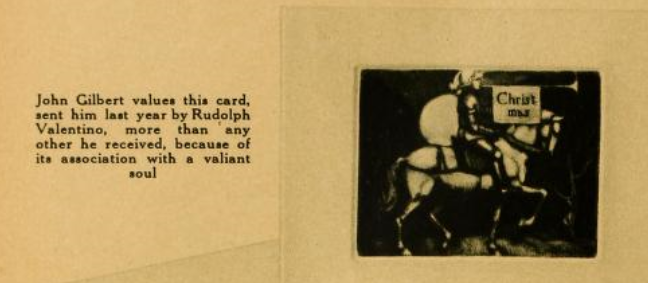
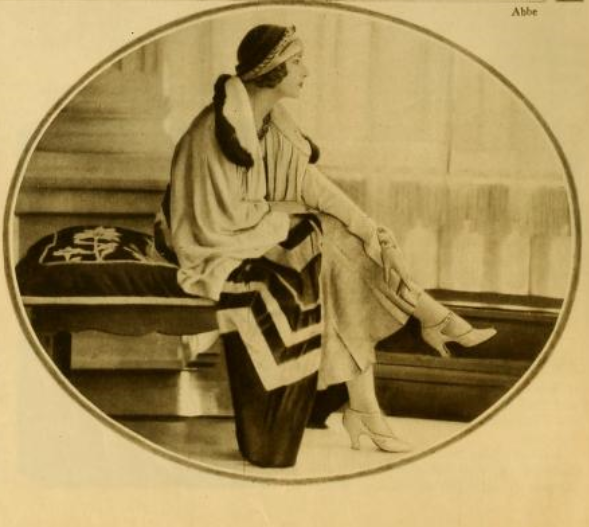
19 Dec 1929 -Chaw Mank Writing a Book
I hope that every fan that reads this will write to me. Also, every Rudy Valentino Fan. I am asking all the “Rudy” fans to send me any articles, write-ups, or poems They have written in Rudy’s honor. I am writing a book called “The Fans Own Book About Rudolph Valentino”.

17 Dec 1925 – Marital Rumors
Rumors of a forthcoming marriage of Natacha Rambova and Dr. Daniel C. Goodman, Film Producer are
circulated by a tabloid. Goodman is the divorced husband of Alma Rubens.
Categories: Uncategorized
Tags: Dr. Daniel C. Goodman, Film Producer, Natacha Rambova
Leave a comment
Aug 1926 Society’s Problems
It seems odd that a modern young woman like Natacha Rambova or as the parentheses have it Mrs. Rudolph Valentino, should have chosen a Laura Jean Libby plot for her debut on the screen. The story is aged. It is about a young wife who helps her husband to succeed, only to find that he has grown away from her. And then, of course, she wins him back. Called “When Love Grows Cold” this is the poorest picture of the month or of almost any month for That matter. The interiors are bad, the costumes atrocious. Miss Rambova is not well-dressed nor does she film well, in the slightest degree. Is this worth spending hard earned money watching? The answer is no.
9 Dec 1913 Enroute to New York
It was the morning of 9 Dec 1913, that I finally embarked on a boat of the Hamburg-American Line and I arrived in New York on 23rd Dec. Just then the city was making ready for Christmas. I think it was that as much as anything that so stabbed me with homesickness and a regret even for the small town that I had said so stifled me and, incidentally, on the way over something occurred to me that probably gave me my first sense of personal gratitude to America and to Americans. An American saved my life on board ship. I was standing high up in the bow, foolishly during a raging storm. I was supporting myself I thought by grasping one of the ropes. All at once, I felt a heavy impact on my shoulders and a moment later a wave leaped over the bow so monumental and so ferocious that it would have swept me from my moorings quicker than it takes to tell. In an instant I would have been snuffed out, extinguished in the forgetful seas. The heavy impact that I felt was the hands of an American who had seen the wave coming and had immediately recognized my predicament and had as immediately acted. This small-great thing caused the latent gratitude I felt to rise up in me and in that I was I am no different from my fellow Italians and gratitude towards those that do a kindness we never forget. So as Christmases come and go I reflect on the memory of the kindness of a stranger who saved my life which I will remember always.
7 Jun 1922- Rudolph Valetino Released
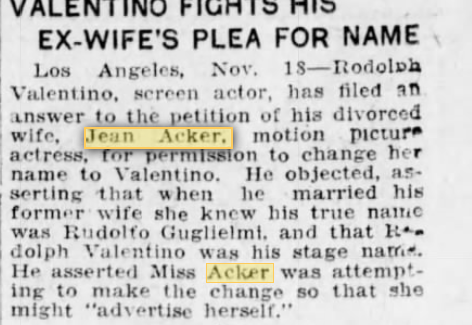
Rudolph Valentino, the motion picture actor, who was charged with having committed bigamy, by marrying Winifred Hudnut, the daughter of a rich American perfumer, before his final divorce decree was granted from Jean Acker, another picture artist, who was his first wife, have been set free. The evidence was found to be insufficient.

8 Nov 1925 – All in the Dark
Rudolph Valentino sat in his suite in the Ritz-Carlton yesterday and admitted that he was “all in the dark” about Mrs. Valentino. They parted two months ago for a marital vacation, she steaming off to Paris and he remaining under the Kleig lights of Hollywood. Valentino came here yesterday, and he sails for the other side on Saturday. Mrs. Valentino is scheduled to arrive on Tuesday aboard the Leviathan. But if the Valentino’s patch up their differences, based chiefly on her demand for a career, the first overtures will come from her. Valentino made that clear, just as clear as he made emphatic his distaste for baggy trousers and other vivid habiliments. Valentino remarked that Oxford bags appeared to be the exclusive penchant of young college boys, said he preferred marrow trousers and a longer coat. He figured that wide trousers and short coats would make him appear shorter. However, he summarized, clothes should not be of importance in the life of any man. What plans had he for his stay in NYC before the boat took him away for two months? Well said, Valentino he will say as many good plays as possible. That will be the most frequent item on his calendar. Then, when he gets abroad he hopes to spend Christmas and New Years in Rome with his brother who may become his continental representative. And above all things, he wishes to rest and relax. When he feels sufficiently eased he may drop in to see Sabatini and Ibanez in search of good movie plots something he finds scarce these days.
21 Sep 1924 – Rudolph Valentino Talks of His Poetry
After all one need hardly be surprised to learn that Rudolph Valentino ostensibly the foremost lover of the so-called Silver Sheet, has blossomed into a poet and a physical trainer. Surely, all great lovers whether move or otherwise, are imbued with the spirit of poetry latent or actual. And as for the role of physical trainer well Valentino is five feet eleven and one half inches and weighs one hundred and sixty five pounds. Furthermore, he possesses the build of an athlete, although at our interview he was noticeably pale. Indeed beneath his eyes he has a purplish tint as if to accentuate the darkness of his orbs. Appareled in a blue serge suit a pleasingly tipped soft hat and sporting a cane and a pair of kid gloves. Valentino made an excellent appearance. Valentino came out with a pamphlet on “How You Can Keep Fit” and he posed for the illustrations . The noted sheik explains how you can attain and admirable body and illustrates by including a number of exercises. My interview with Valentino took place just before he sailed for Europe on the Leviathan. Innumerable women of all ages, some pretty some not so. “I love the poetry of D’Annunzio” began Valentino, who by the way, speaks with a slightly foreign accident. “And I like very much the poetry of Tennyson and Byron. I’m not to be considered a critic, but I like good poetry, whether it is old or new. There is good and bad poetry being printed today, just as there was in the old days. Asked whether or not another volume of his “Book of Day Dreams” would appear and he replied “ I hardly think so because I am very busy now you see. I wrote those poems in my spare minutes during the day but I don’t think I’ll have any more time for day dreaming”.
“You bet my life isn’t an easy one. I worked thirty-six hours at a stretch to complete my last picture finishing at seven-thirty in the morning”..Rudolph Valentino, 1924

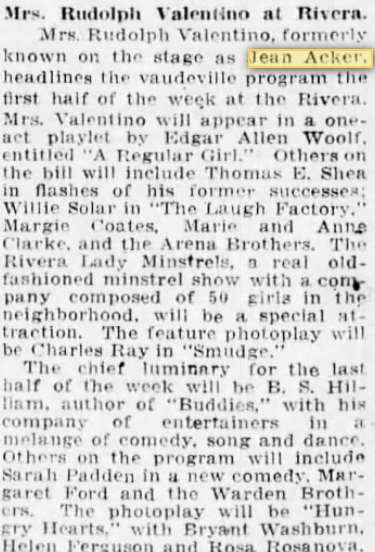
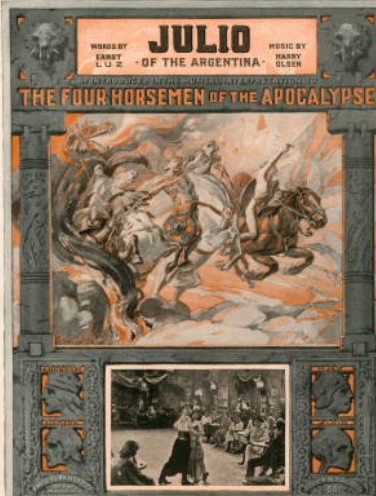
On her first visit to Egypt “I felt as if I had at last returned home. The first few days, I couldn’t stop the tears from streaming from my eyes”..Natacha Rambova, 1936
20 Oct 1934 – Millionaire’s Daughter Marriage to a Nobleman
Natacha Rambova, the beautiful second wife of the late Rudolph Valentino, has been secretly married to Don Alcaro Urvarz, a Spanish nobleman. The wedding took place at Palma, Majorca, The couple have bought a villa at Palma, overlooking the sea, where they intend to live. Mrs. Valentino is stated to have made a fortune in property speculation in Majorca. According to their friends, the couple were secretly married by the civil authorities in Paris some time previously. In deference to the wishes of the bridegroom’s family, a Roman Catholic religious marriage ceremony followed at the’ Church of San Francisco, in Palma. The bride is not a Roman Catholic. She agreed to the religious marriage to please Don Alcaro’s family, which ls one of the oldest Catholic Basque families In Spain. Only a few friends were present. Natacha Rambova is the adopted daughter of Mr. Richard Hudnut, the millionaire perfumer. She went through two ceremonies of marriage with Valentino. Valentino’s first wife was Jean Acker, There was a divorce In 1922. Before the time required by Californian law for divorced persons to re-marry had elapsed Valentino and Miss Rambova were married. They said that they were “so madly in love with each other that they would not wait.’ As the divorce had not by that time become operative the couple remarried in March 1923. Since the death of Valentino Miss Rambova’ had claimed that she has received spirit messages from him through a medium. “The messages I have received from Ruddy,” she once said, “are wonderful. He has given the most Interesting details of his life over there. He tells me that he is extremely happy.” Miss Rambova also claimed that Valentino had explained his will in which he left her one dollar and about £100,000 to her aunt, his brother, am his sister. “I quite understand,” she said. Natacha Rambova obtained : decree of divorce in Paris against Valentino.
Categories: Uncategorized
Tags: Don Alcaro Urvarz, Natacha Rambova, Rudolph Valentino
Leave a comment
27 Aug 1930 – Rudolph Valentino owed some money
A minor Hollywood sensation has been caused by the suit which Alberto Guglielmi and Maria Strada brother and sister of the late Rudolph Valentino have filed against George Ullman. They charge Ullman with mismanagement of the estate and diverting large sums of money for his own use. Ullman, in the answer he has filed to the charges, says that, far from mismanaging the estate, he found it in a debt-ridden condition and spent years ironing it out. It was Valentino who wrecked his own estate, Ullman claims, for he died leaving debits of over $60,000 into a surplus of $100,000 to be distributed among the heirs. A court hearing will take place at the end of this month, and a decision reached as is whether Ullman shall be permitted to continue as manager and executor of the estate.
Categories: Uncategorized
Tags: Alberto Valentino, George Ullman, Maria Strada, Rudolph Valentino
Leave a comment
10 Sep 1930 – Rudolph Valentino Converting films into talkies
Rudolph Valentino fans are up in arms at the proposal to convert his films into talkies. The proposal was made by M. Paul Roger a Paris acoustic expert, who plans to take “Blood and Sand” and fit the living voice to the lip movements of the dead star. He says this would create the illusion that Valentino was speaking. Admirers, however, who still number millions are determined to prevent what they describe as sacrilege and an insult to his memory. They could not endure al alien voice masquerading as part of his magnetic personality.
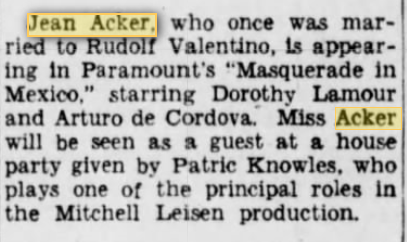
30 Jun 1923 – Jean Acker Announcement
Vaudeville Star and ex-wife of Rudolph Valentino Jean Acker has signified her intention of marrying again, this time to a Spanish Marquis whose family tree was planted about the time of the Battle of Tours. The marquis answers to the name of Luis de Bazany Sandoval and one of his ancestors was a celebrated painter.
5 Oct 1922 Patron of Arts Valentino Purchases Works at Exhibit.
The Valentinos have arrived in the social world of New York. At least, that part of the social world which is linked with the artistic. Mrs. Valentino, it appears, has established–or at least reiterated– herself as an artist by promising to send some of her works to the Italian-American Art Association Exhibit at the Civic Club, according to wire advices from the East. Mr. Valentino and his wife visited the exhibition of Italian artists yesterday. Upon being presented Mrs. Valentino declared she desired to become a member of the Italian-American Art Association. Rodolph became a patron of the arts simultaneously. For after he viewed the exhibit he purchased five works.
3 May 1938 – Rudolph Valentino By His Wife Natacha Rambova
The morning of Monday, Aug. 16, 1926, while at my father’s chateau in Juan les Pins on the Riviera, I received a cable from George Ullman, sent at Rudy’s request, telling me of his sudden illness and operation. This came as a great shock to all of us for we thought him in the best of health. Although the message hinted that the illness was grave, we had no idea how grave it was. Aware, as we were, of Rudy’s splendid strength and unusual physical resistance, it did not occur to us for a moment that he might not recover. Nevertheless, the news worried me and, in the unexpected anxiety it aroused, all the petty resentment of our misunderstandings faded from my mind. Once again, he was the same old Rudy, in trouble, and he needed me. I cabled immediately that I would come to New York by the first sailing if he wanted me. “I never received an answer to that cable.” If Rudy received it at all it was while he was in a state of unconsciousness. Death came with unexpected swiftness. Even as the next two days passed we did not realize the danger. Mr. Ullman continued to notify us almost hourly of each slight change in Rudy’s condition and the news in his cables, as .they came, seemed favorable rather than discouraging. The actual presage of his death came through psychic communications. It happened that as guest at the chateau at that particular time was George Wehner, the distinguished American psychic, who had led us far along the ways of understanding of the spirit world. It had become our custom to have family sittings from time to time, with Mr. Wehner acting as medium. Wednesday evening during one of these sittings, while Mr. Wehner was in a state of deep trance, Rudy “came through.” We were first aware of his presence by mutterings of a few almost incoherent words and the repeated calling of auntie’s name and mine. This did not surprise or terrify us. Those who have investigated psychic phenomena know that it is not at all unusual for the consciousness of a person still living in the earth world to manifest itself or communicate at a distance while the body is sleeping or unconscious. On waking the person may remember these experiences in the form of a dream. Friday morning my cable from Mr. Ullman brought us news that Rudy was better—greatly improved and on the road to recovery. We were enormously cheered. That evening we were impressed to have another sitting. Almost immediately after Mr. Wehner was in trance, Black Feather, Rudy’s Indian friend who once had saved his life, “came through” to tell us that he was the chief and would not leave him. Then Jenny spoke, saying she had been constantly with Rudy since the beginning of his illness. He himself had seen her and called her name as he was taken to the ambulance. In confirmation of this X received a letter from my sister in New York the very week of Rudy’s passing, giving me details of his illness; explaining among other things, that Mr. and Mrs. Ullman had told her that Rudy kept calling the name of “Jenny” as he was being taken in the ambulance from his hotel. These communications from Jenny and Black Feather worried me. I could not reconcile them to the cheerful news of the morning’s cable for they seemed neither happy nor hopeful. And now, to cause me ever greater concern, a teacher from whom Rudy and I had received many lessons in the past, took control and talked to me gently, kindlv of personal things between Rudy and myself, and with such compassion as I had never heard him use. He spoke of Rudy’s great love for me, his life, his character and career, and explained that his term on this earth schoolroom was completed. Within the next few days he would pass to another plane of consciousness in this ever-continuing life. Early next morning I cabled Mr. Ullman for news of Rudy’s condition. The cable was not answered. What was there to say? We had been given the answer the night before, but had refused to accept it as truth, for what we do not wish to realize we try to stifle in our hearts. Monday morning I awoke to find the atmosphere of my room heavy with the perfume of tuberoses—and then I knew Rudy had passed on. When on Tuesday the delayed cables arrived announcing his death, I was grateful to the prophecy from the other world whose kindness and understanding had softened the cruelty of this news. The third day after his passing Rudy came to us for the first time, led by his mother, Gabriella. His attitude of mind, resentment at having been taken at the height of his career while his work he felt was not yet completed, made this first contact an unhappy one. He spoke not clearly but incoherently, remained with us only a moment, called auntie’s name and left suddenly. Then his mother spoke with us. She was almost distracted by his state of mind and regretted the day she had ever allowed him to leave Italy. What was the benefit of a success that had brought him to such bitterness aad anguish? Then others came to comfort us. They explained in a beautiful way that Rudy’s attitude was only natural. With all the force of world thought and grief directed upon him, nothing else was possible. We must have patience and each of us try to help him in our several ways. They, too, would help him, and this first darkness and despair would soon pass. It has, for I have communicated with Rudy very often since then and I know he is happy, still continuing on another plane the work he only began on this earth. Many will smile at what I am writing now, give it no credence, I discard it as the phantasms of my I brain. But a few years ago those same people would have smiled with I equal skepticism at the messages I the radio brings us to-day. How, I they would ask, can voices picked | out of the air be transmitted by an; unseen force over miles of empty | space? To-day no one doubts the validity of radio transmission. It is I just another scientific phenomenon to which yesterday we were blind. Each new development of science, from the steam car to the aero-plant, from the lightning rod to the telephone was at first hailed as a fraud by those who had not yet tested it. In the astounding revelations of the last quarter century, we are only beginning to comprehend the unseen forces of the universe which man has not yet utilized. Those who have not yet received test messages from the other world find it difficult to believe in communication after death. The man who has never heard a radio would be loud to declare that there is no such thing as music In the air about us. But we who have listened to it pay no attention to his beratings. We know he has never investigated it. For this reason, I am untouched by the stupid criticism of those who insist it is impossible for me to talk with Rudy, who has passed on to another plane apart from and above my own. How do I know these messages are not frauds? Can I see Rudy or touch him? But when my mother calls me by long distance phone from Chicago or from Paris, I cannot see her, but I hear her voice and I know it is she by the idiosyncrasies of her speech, by what she says and the way she says it. Fraud or impersonation would be impossible. The same is true of my messages from Rudy. If during the period I knew and lived with Rudolph Valentino I did not learn to know him better than to be duped by fraudulent messages, then I am a gullible fool! Fraud is for those who are willing to accept it. Truth is for those who seek it. Thus, I dismiss the subject for my belief is secure. Rudy was dead—yet he still lives, for life is ever-continuing. In all contemporary history there is only one young man who in his 20s was strong enough to withstand the great deluge of fame, adulation and flattery that was heaped on Rudolph Valentino.
Categories: Uncategorized
Tags: Black Feather, George Ullman, George Wehner, Natacha Rambova, Rudolph Valentino
Leave a comment

28 Nov 1924-A Movie Poet
Rudolph Valentino, the cinema actor, is a poet. He. is publishing a collection of short poems in a volume entitled ‘Day Dreams.’ If Valentino’s verses are as ‘soulful’ as he endeavours to make his acting at times, his feminine admirers will experience further emotional thrills.
11 Apr 1923 – Valentino Doesn’t Understand Women Tells Small Akron Audience
Mr & Mrs. Valentino appeared at the armory Sunday afternoon and evening with their own band. It was a most disappointing exhibition, and audiences of both performance fell way below expectations. Mr and Mrs. Valentino danced exactly 40 minutes. He then spoke briefly on his picture work. The afternoon audience waited patiently for almost two hours because the train carrying the Valentinos was hours late. “If I ever make another Sheik picture, it will be an honest-to-God last one. “Why, I didn’t even look like a Sheik in the other one. I was a drawing room hero. “Don’t you like flappers?” someone asked. “That’s a subject I never discuss. I am not qualified as a judge of women. Any man who says he understands women is either a fool or a liar”.
Categories: Uncategorized
Tags: Mineralava Dance Tour, Natacha Rambova, Rudolph Valentino
Leave a comment
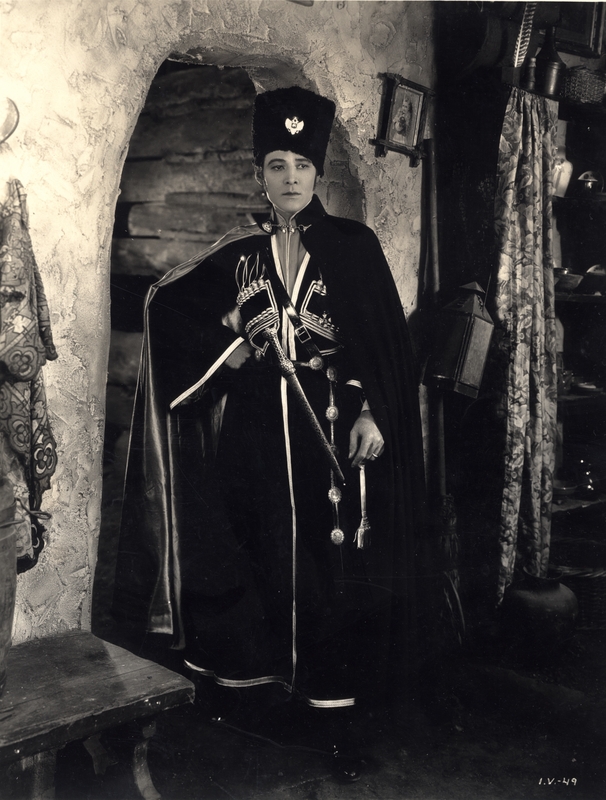
“ I am in the dark, I don’t know what she is going to do. All I can do is await the lady’s pleasure”..Rudolph Valentino on the status of his marriage 9 Nov 1925.
11 Nov 1924 – Valentino in Spain
Rudolph Valentino returned with wife Natacha Rambova from a trip to Spain. He wore a small goatee beard. Which he said would be needed in he picture he is going to do in California, the scene of which is laid in Spain in the 14th century. The play will centre on the romantic days of the Moors at Granada and their encounters with the Spanish knights who sought to drive them from their stronghold. He said he had visited Seville, Madrid, Granada, and Cordova and found them very interesting. Nita Naldi who accompanied the couple on the trip will play opposite Valentino in the new film and is to be produced by the Ritz-Carlton Film Company
These boys in Valentino pants. Don’t give poor Rudolph half a chance. Marion High School, Marion, IN, 1923
24 Mar 1928 – Male Movie Stars more fussy about hair
A woman is fundamentally the same, whether she is a movie star or a Park Ave society bud the happiest moment in her life is when her hair turns out just right. But that does not mean that women have a corner in the personal vanity market. NO woman in the world could be more fussy about their hair than a male movie star. These are the deductions of an expert, Ferdinand Joseph Graf, for three years, the official hairdresser to moviedom who is now at Arnold Constables. Mr. Grafs first job with Famous Players was to prepare the wigs for Valentino in “Monsieur Beaucaire”. Natacha Rambova the stars wife, brought him out to the studio from the 5th Ave beauty parlor she patronized for that purpose. He liked the work so well and the stars apparently liked him so he well became the official hairdresser at the studio for three years.
Screen success is due not only to mental and histrionic qualities, but to physical culture and development. Rudolph Valentino, 1923

1997 – Crown Point, IN
Crown Point became the marriage mill of the Midwest because couples could obtain a license and be married immediately by justices of the peace with offices nearby, by the city’s mayor, clerk-treasurer or local judges. For example, on March 14, 1923, Rodolfo Guglielmi (AKA Rudolph Valentino) and art director Winifred de Wolfe (AKA Natacha Rambova) applied for a marriage license. They had traveled to Chicago to be married when his divorce from his first wife became final, then learned that Illinois law required a year’s wait for a remarriage. They traveled to Crown Point, where he took out a marriage license listing his birth name as Rodolfo Alfonzo Rafaelo Pierre Filbert Guglielmi de Valentine D’Antonguola, and his occupation as motion picture player. “As he left the (license) office, Valentino (and his bride) crossed the street and went to the second story of the building where Howard Kemp, the justice of the peace, performed the ceremony,” recalled Wilbur Heidbreder, now 92, who worked for the Lake County Title Co. and was at the Old Courthouse at the time of Valentino’s wedding. After the ceremony, the couple strolled by a few stores and stopped in a bakery, where the heartthrob bought a doughnut for his new bride, Heidbreder recalled.
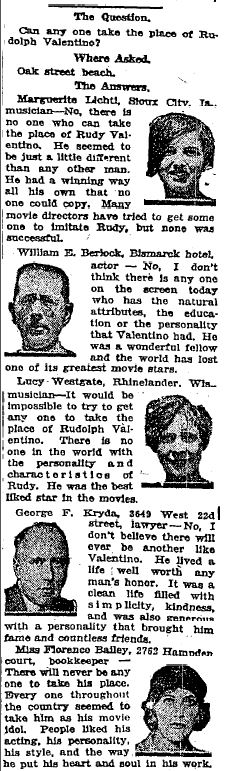
27 Dec 1921 – Matinee Girls at the Movies

Four beautiful matinee girls enthralled by “The Sheik.” Deep down in her heart each Matinee Girl is thinking: “Oh, how lovely it would be if a big handsome sheik would only steal me away!” “The matinee girl on the extreme left has about made up her mind to look into it. “Dear Answer Man,” she’ll write to her favorite movie magazine, “is Rudolph Valentino married?” She will sign it “Sultana.”

17 Jun 1925 And Wedded Bliss Thrives On
Who said anything about divorces in the film colony? It’s perfectly proper of course, to make some remarks about the subject occasionally. The facts are, of course, that while there have seemed recently to be indications of an outbreak of domestic unhappiness, there are always and every equally plentiful examples of the prevalence of the joys of home life. Only, as a rule, they do not achieve quite as much notoriety as the disturbances. Rudolph Valentino and Natacha Rambova are notably devoted. They share their artistic interests, and of late Mrs. Valentino has assumed the role of producer of her own pictures.
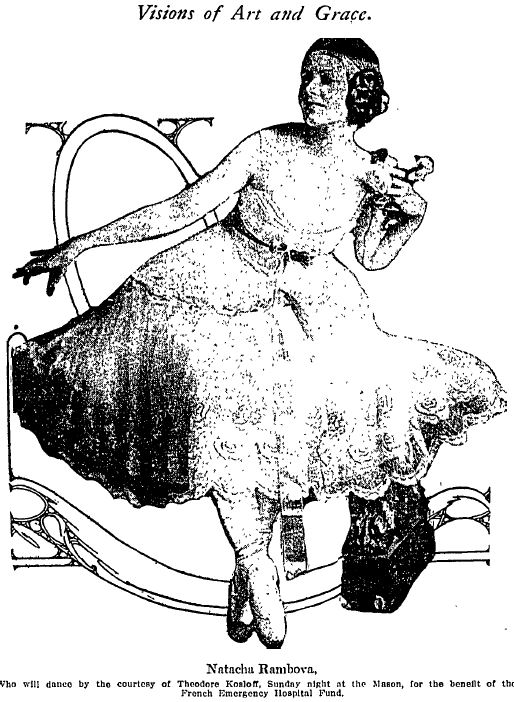
12 Oct 1929 – A First Glance At New Books
Add to the horrors of house to house canvassing and the collection of bills and the threat of red-haired psychic woman, who calling upon her control, was seized with a superhuman strength and threw a fresh expressman down the stairs. And if you don’t believe it, there it is in print on page 111 of “A Curious Life” by George Wehner an interesting but doubtful book. Mr. Wehner in the book admits he is possessed of a familiar and so he ought to know whether a red-haired lady in possession of her favourite spirit could throw a big man down stairs like the gander descending upon the man who wouldn’t say his prayers. He says she can. Among Mr. Wehner’s spirits is Frank “who generally opens my séances by whistling very beautifully”. Leota, rechristened Lolita by Dorothy Benjamin Caruso is a guide frequently difficult to understand. She is a wise-cracker and apparently an Indian. Alestes reveals the hidden meanings of dreams and in no such manner as that of Dr. Sigmund Freud. Dr. Freeman is the guide who helps the author go into a trance, while Rudolph Valentino is breaking his heart trying to become one of Mr. Wehner’s guides. Black Hawk on the other hand has already succeeded and can tell what is ailing people with an uncanny precision not usually associated with a dead Indian Chief or an eight-cylindered motorcar.It is all very interesting and doubt less Mr. Wehner believes it is all very true. The reader, addicted perhaps in such material and non-occult matters as the march of Eli Yale through Georgia or the slaughter wrought by the Athletic batsmen on the Cubs pitching staff will be more likely to raise an eyebrow to ask how the author gets that way. It might be recorded however that Valentino told Natacha Rambova he knew she would come to the séance in New York. Which suggests that Mr. Banton, the District Attorney and Mr. LaGuardia, the candidate for Mayor, and Mr. Enright who didn’t solve the Dot King and Elswell murders, might better get into consultation right away with Mr. Wehner. Perhaps Black Hawk or Alestes or Lolita or Rudolph Valentino could tell them who really did shoot Arnold Rothstein.
17 Mar 1949 – Valentino Shrine Plans for Former Home Fade
Maybe the Sheik’s omnipresence is fading. At any rate, plans for converting Falcon’s Lair, Rudolph Valentino’s home until his death in 1926, into a shrine for the lovelorn have apparently gone awry. In San Francisco, the head of a Bay City Group of five women who purchased the fabulous hilltop mansion several weeks ago admitted disillusionment over the project. Robert T. LeFevre was quoted as saying people drop into the place “but only because they gotten lost in the hills”. The only ones who have shown any interest in the shrine idea were several old ladies, three Italians and a British spiritualist. In addition to which, he went on, the idea of firing a nightly red, white and blue rocket skyward was quashed by the law. The red incidentally was to be for passion LeFevre added. Even the idea of a wishing well on the grounds for Valentino worshippers fizzled when it was found that pennies killed the goldfish.
13 Jul 1922 – Commentary
I hate the Sheik, I think he’s a ‘he-vamp.’ and I hate the way he rolls his eyes, l know Sydney girls have got Rudolphitis and I know that my young wife sees the Sheik in everything – the grilling steak holds his image the wringer holds his spirit. But I hate him. I hate a man who rolls his eyes snd behaves like a Spanish senorita. I cannot understand the army of girls who have fallen to his cheap charms. Girls who see romance in the Sheik would see romance in the butchers boy. They represent decadent flapperitis in its most advanced stage. Give me a man like ‘B.J’ Hart, who represents manhood in its greatest sense. Why is It that the fair, frail flappers of Sydney have gone on about a man who rolls bis eyes and makes prisoner of a poor, pure pretty girl alone and defenceless. Do they approve of his lax morality? Is it an indication of degeneration! Do the girls of todays countenance a man who defies decency to compromise an Innocent woman?
2015 – Interview with Robert L. Harned
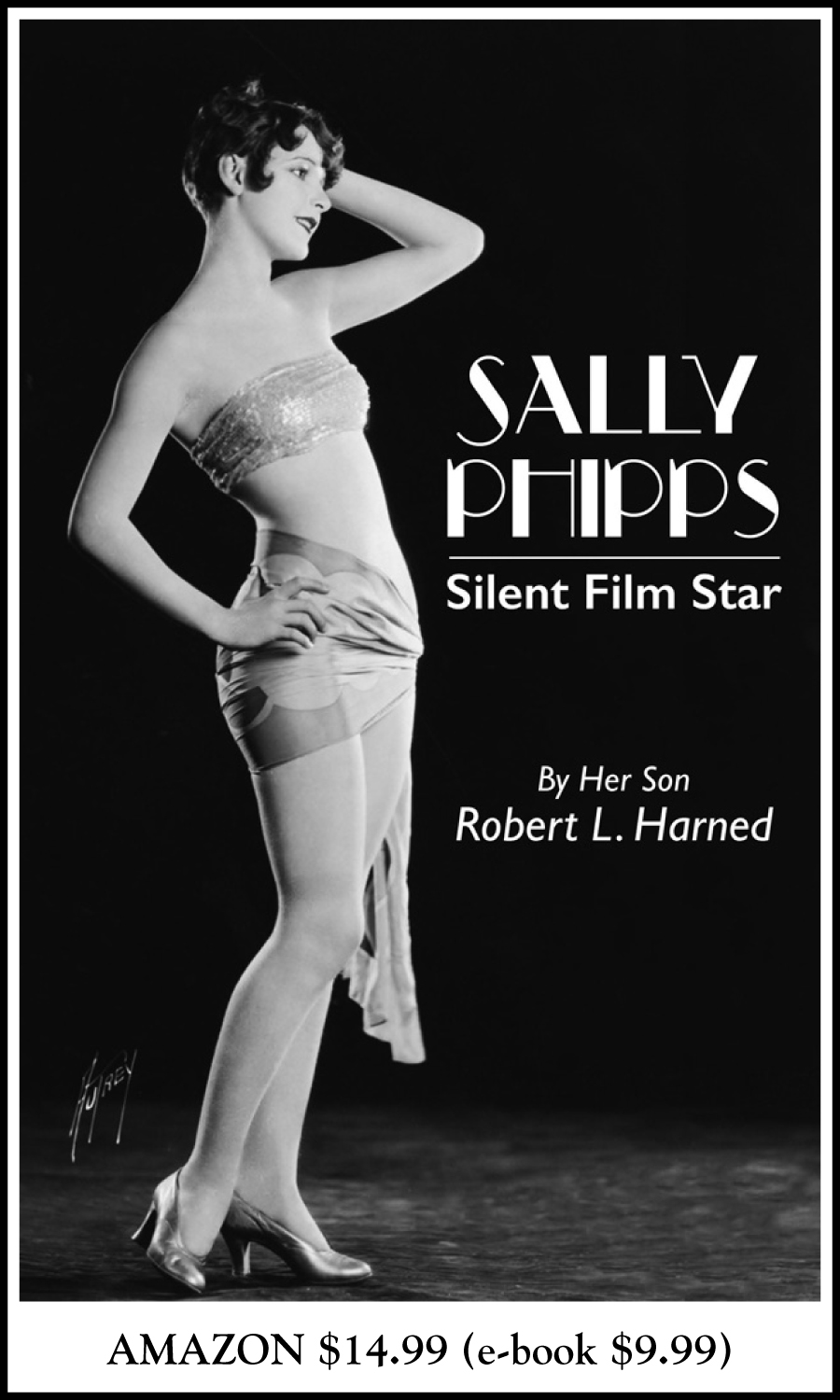
First off, I want to thank you for this opportunity to interview you for my blog. Mr. Robert L. Harned, a noted author, is going to be writing a future article for a publication yet to be determined about George Wehner who was a friend of Natacha Rambova in the mid to late 1920’s. Mr. Harned’s mother Ms. Sally Phipps was a silent film actress with Fox Pictures who personally knew George Wehner. However, Ms. Phipps never knew nor met Natacha Rambova.
1. Your mother must have led an interesting life. Could you please tell us a little about her and her connection to George Wehner?
My mother, Sally Phipps was only three years old and the veteran winner of several beautiful baby contests when she appeared as the Baby in the film “Broncho Billy And The Baby.” It was made at the Niles California Essanay Studio in late 1914. Her memories of the early years at Essanay include sitting on Charlie Chaplin’s lap and enduring a frightening stage coach accident. In her teens, she was a Fox Studio star appearing in 20 films, including a cameo in the classic “Sunrise.” There were bad times also. She was on the set of her Fox two-reel comedy “Gentlemen Prefer Scotch” in 1927 when word reached her of the tragic death of her father, a state senator. But in that same year, she was selected as one of the 13 Wampas Baby Stars, starlets that were considered destined for future success. Despite her popularity in Hollywood, she left for New York where she became the darling of gossip columnists, particularly Walter Winchell. She appeared in two Broadway shows, made a Vitaphone comedy short, and married and divorced one of the Gimbel department store moguls before she darted off for India and around the world travel. Back in New York, there was another marriage, two children, and later a stay in Hawaii. Earl Wilson wrote about her in 1938 when she was working for the Federal Theatre Project during the WPA period — headlining his column “Wampas Ex-Baby Lives On WPA $23 – And Likes It.” She received the Rosemary (for remembrance) Award shortly before her death in 1978. Her images — especially her pinup photographs — have become highly collectible. Although Sally may never have met Natacha Rambova, she claims to have rented an apartment previously owned by her, a fact corroborated in several contemporary newspaper articles. The unit was in an apartment building at 320 East 57th Street, near Sutton Place. Sally rented the apartment for a period during her September-May stint, playing the ingénue in the Kaufman and Hart comedy hit “Once In A Lifetime” during the 1930-1931 Broadway season. Sally Phipps was always attracted to the occult world and through it developed several close friends. One of these was George Wehner, whom she first met in 1933. They stayed friends throughout the 1930s, with an interruption in the fall of 1939 when Sally left for a one-year stay in India. After she arrived back in New York City in February 1941, Sally phoned Wehner to tell him she was in town. A man answered the phone — Alfred Marion Harned, my future father. He took Sally’s message, since Wehner was not at home. Several months previously, Wehner had hired Harned, a local New York City orchestrator, composer, copyist, and instrumentalist, to write out the orchestral parts for his new Piano Concerto No. 1 – for 27 different instruments of a symphony orchestra. Harned had consented to take up residence in Wehner’s house during the multiple month process, so that he and Wehner could work together intensively without interruption. Several days after Sally’s leaving the phone message and then having been welcomed back by Wehner, she was invited to a séance at his house where she met Harned in person. Within six months, Sally and Harned were married. They left New York in June, eloped to Mexico, and were wed there in August. As a final note, the Piano Concerto No. 1 did get premiered in August 1941 at the Sculpture Court of the Brooklyn Museum, performed by the New York City Symphony Orchestra, with soloist Greta Lederer.
2. As a son of a famous actress you must have enjoyed hearing about your mother’s life. Do you have a favorite story?
Sally loved talking about working on the film “Sunrise,” when she was only 15½. Director F.W. Murnau’s “Sunrise” (Fox — 1927), starring Janet Gaynor and George O’Brien, is one of the great feature films of the silent era and also a multiple Academy Award winner. Sally was particularly impressed with how Fox film studio built a replica of a large modern city on its back lot, with tall buildings, streets, running streetcars, and even an amusement park. Sally was cast in a minor part in two small but poignant scenes in the amusement park sequence. Sally, with her partner, Barry Norton, dances cheek-to-cheek across the screen, into a gradual close-up. The couple is first admiringly observed by Janet Gaynor, and a little later, during a pig chasing sequence, is discovered by George O’Brien in a kissing clinch. While watching the film, Sally loved pointing herself out to me in those scenes.
3. You recently wrote a book about your mother. Could you tell us about the book and where could it be purchased?
My book is a detailed biography of my mother’s personal and professional life from her birth in Oakland, California through to her death and burial in New York City. It took me four years to complete the work. The book includes 150 pictures, a filmography, a bibliography, and an index. It can be purchased in print edition ($14.99) or as an e-book ($9.99) from Amazon, Barnes & Noble, and CreateSpace. Below is the Amazon link:
4. This blog as you know is about Rudolph Valentino. Are you a fan?
I am definitely a fan, for many reasons. Besides Valentino’s obvious good looks and his ability to wear his costumes well, he has many other wonderful cinematic qualities. He has athletic grace and agility. Needless to say, he dances superbly, several times in his films. I love watching how he uses his hands so expressively. He is also a very good actor, particular when it is necessary for him to show his sensitive side. Take for example his tender scenes with his mother in “Blood And Sand.” In “Camille,” he subtly underplays throughout the film. In addition, for many of his films, you get the wonderful boon of Natacha Rambova sets and costumes.
5. Are there any future projects you are working on?
You have already mentioned that I will be writing an article about George Wehner in the near future.
Recently, I began writing for a new magazine, “Silent Film Quarterly.” Its first issue came out in the fall of 2015. I will have an article published in its second issue (winter 2015-2016), called “Sally Phipps Began Her Film Career At Essanay.” The article covers her work in late 1914 through early 1915 as a three-year old actress at Essanay, a Bay Area film studio. I have also submitted another article for the magazine’s third issue. This summer, I began a new book about my grandfather, Albert Edward Bogdon, my mother’s father. He was an amazing character. He was the son of poor Russian/Lithuanian immigrants and grew up in the Pittsburgh area. He began work as a magician in his adolescence and continued in this field until he joined the Navy after the U.S. entered World War I. He later earned a law degree, moved to Denver, got elected State Senator for the Denver area, but was then cut down by an assassin’s bullet at age 36 in June 1927. My grandfather Bogdon is only one of the many colorful characters in my family, many of which have already been touched upon in the already-published book about my mother, “Sally Phipps: Silent Film Star.” Their stories will keep me busy writing for many years.
Categories: Uncategorized
Tags: George Wehner, Robert L. Harned, Rudolph Valentino, Sally Phipps
Leave a comment
18 Jun 1942 – Guess who wants to?
Miquelito Valdes wants to buy the late Rudy Valentino’s home, Falcons Lair and turn it into a night club, calling it “The Sheik”. He’s offered the present owner $125,000. Wonder what would happen to that secret shrine in the garden?
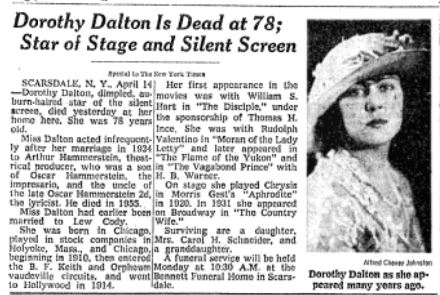
“I love children. And I would like, some day, to have a large family of them. People speak of romance… well, but the heart of romance lies, a lovely, tremendous bud, in the heart of a child, in the hearts of all the children of the world. Children are romance. they are the beginning and they are the end. They are romance, before the white wings are clipped, before ever they have trailed in the dry dust of disillusion”– Rudolph Valentino, His Private Diary
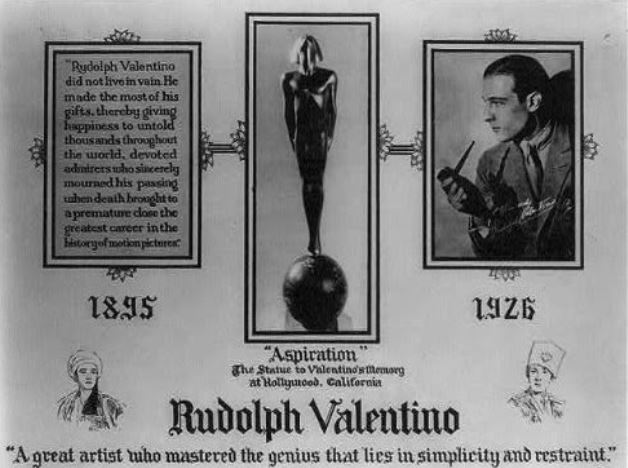
24 Nov 1924 – Rudolph Valentino Picture
Rudolph Valentino’s second starring vehicle under his new contract with Famous Players is “A Sainted Devil”. Rudy is seen as he was before he grew the famous Titian Van Dyke, and with him are Nita Naldi, Dagmar Godowsky and Helen D’Algy as pretty a trio of screen sirens any photoplay can boast.
26 Nov 1925- Rudolph Valentino A Rex Beach Story
Rudolph Valentino’s new picture, “A Sainted Devil” from the story Ropes End by Rex Beach. Nita Naldi, Louis Lagrange, George Siegmann are a few of the prominent names which appear in the supporting cast of this production. It is a story laid in the Argentine, and tells of the country-wide search of a young Spaniard of wealthy parents for his convent-bred wife who was stolen from him on their wedding night by bandits. “A Sainted Devil” is declared to be the greatest Valentino production up to the present.
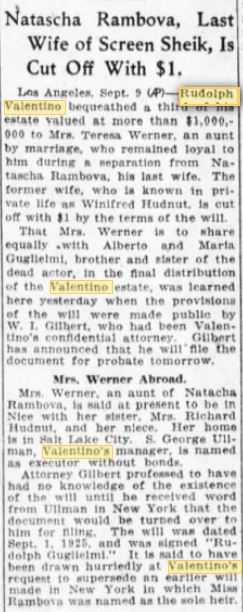
Categories: Uncategorized
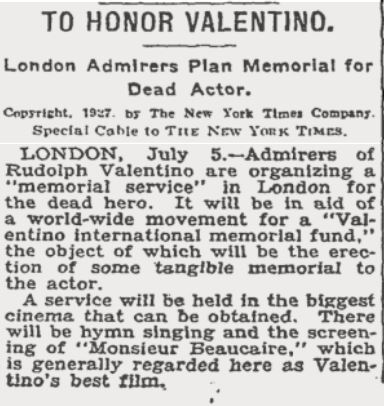
Tags: Rudolph Valentino, Theresa Werner, Valentino Memorial Service
Leave a comment
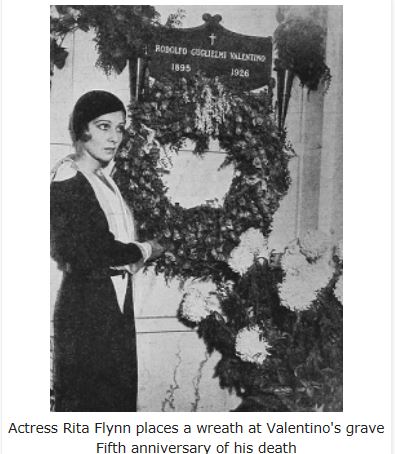
27 Nov 1926 – Pola Scores Valentino’s Ex-Wife for Spirit Talk
Pola Negri, whose engagement to Rudolph Valentino was announced shortly before the actor’s death, today declared the making public of messages said to have been received from the astral plane by the actor’s ex-wife Winifred Hudnut, was “shocking, profane, and commercial”. The messages, Miss Hudnut declared, were received by her from Valentino through the mediumship of George Wehner, with whom she arrived in New York Thursday from Europe. The messages did not mention Miss Negri.
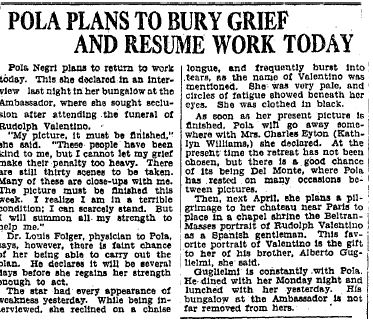
22 Sep 1926 The Envy of All
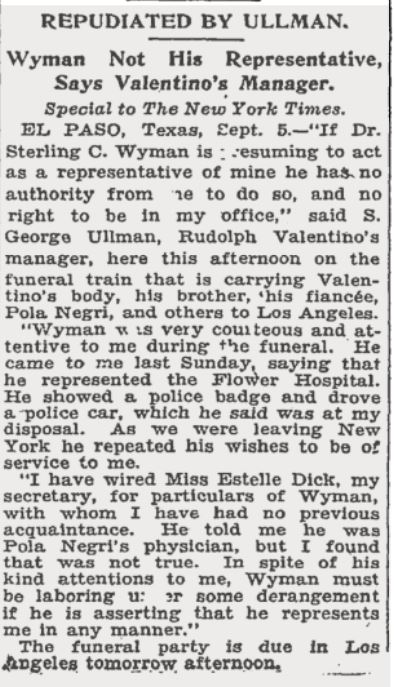
Brooklyn Eagle Reporter Grace Cutler had a hand in uncovering the pointless fraud perpetrated as an incident of the hysterical funeral of Rudolph Valentino, silent film star idol of decades ago. She had been there at the funeral herself and saw the strangely worshipful crowds that passed the movie hero’s beir, wrote all the details. When thereafter a statement was given out to the newspapers which they solemnly accepted at face value by Dr. Sterling C. Wyman, the late Valentino’s “supposed” physician she became suspicious. She recalled no Brooklyn doctor in connection with the funeral. She ran down Dr. Wyman in person and presently drew from him the pertinent facts that he was an imposter going by the names of Wyman, Weinberg and others. Already he had duped President Harding with a meeting between him and Princess Fatimah, Afghanistan. In the Valentino conscious era, the story she wrote was a “clean” report that was the envy of every star reporter the dominant sex envied.
“I cannot express my grief over the loss of Valentino. He was a friend.” – Marcus Lowe, President of Lowe’s Inc./MGM
Farewell Great Lover
The other day, I saw in the theater section of my favorite newspaper a headline “THE SHEIK RIDES AGAIN” over a story about the recent revival of interest in the late Rudolph Valentino. The story reminded me of my embarrassing embroilment in the riots which followed the movie idol’s sudden death in 1926. In fact, I was arrested at Valentino’s wake, after a brisk morning battle with the NY Mounted Police. Finally collared and jailed, I was dragged into court to face charges of 1 knew not what misdemeanors and felonies. It is a true story; yet it occurs to me that its details may seem to verge on the implausible. The death of the handsome young movie star was surely a sad event. And his wake—when his body lay in state in Campbell’s Funeral Home, so that his admirers might file by and pay their last respects to their hero—should have been a solemn occasion. Why then the riots and the clanging ambulances and the mounted police charging in at the gallop? Why should I, a reasonably respectable and peaceable young man, with no special interest in the late sheik of the silent screen, have become so entangled in his obsequies? And why should the mourners have ceased their keening to cheer my defiance of law and order? Obviously, if I am to emerge from this recital with my reputation to veracity intact, some explanation is in order. Note that my mishaps occurred during what Westbrook Pegler has termed the Era of Wonderful Nonsense. In the mid-‘2O’s Coolidge Prosperity was well under way. Another world war was inconceivable; serious depressions, according to eminent authorities, were a thing of the past. The public, having no major crises to worry about, concentrated its attention on what Frederick Lewis Allen called “a series of tremendous trifles” Millions worked up a head of emotional steam about whether Floyd Collins would escape from the cave where he was trapped, whether Gertrude Ederle would swim the English Channel, whether there would be acquittal or conviction in the gaudy Hall-Mills murder case. It was a time of contagious mass excitements. Crowds flocked to the Scopes trial in Tennessee to hear William Jennings Bryan and Clarence Darrow debate whether men were descended from monkeys. Others thronged to watch couples in a dance marathon totter toward exhaustion, or to see how long Shipwreck Kelly could perch atop his flagpole. Among these excitements, and longer lasting than most, was the Valentino craze. The nation’s more susceptible womenfolk, from flappers to grandmothers, were under the spell of the young Italian-American star who had brought a new torridity to cinematic amour. The mania began with the first showing of a silent film called The Sheik in 1921. Valentino played the lead: a romantic Arab chieftain, passionate, masterful, and irresistible. He snatched Agnes Ayres from her steed. “Stop struggling you little fool,” flashed the subtitle. Hot stuff. Overnight he became a star. Millions of women began to idolize him. The adoration increased with each succeeding film of the great lover. With the appearance of The Son of The Sheik in the summer of 1926, the Valentino worship became feverish. On the morning of August sixteenth came the shocking news, on the front page of even the staid New York Times, that the handsome thirty-one-year-old silent film star had been rushed to a hospital in New York for critical surgery—appendix and ulcers. In the next few days the bulletins were reassuring. Then, front page again: PERITONITIS FEARED, CONDITION ALARMING. On Monday, August twenty-third. huge headlines: VALENTINO DEAD THOUSANDS OUTSIDE HOSPITAL WEEP AND PRAY. The stories from Hollywood said that Pola Negri who recently had announced her engagement to Valentino, was prostrated by grief, with two physicians trying to control her hysteria. Valentino’s management said the body would lie in state for several days so that mourners could have another look at their hero. This announcement set off a saturnalia of sentimentality that lasted for two weeks, quieting down only after poor Valentino was at last laid to rest in an elaborate Hollywood Mausoleum. Many of the strange, typical celebrities of the day got into the act with lavish manifestations of grief. Among them were Mrs. Frances (Peaches) Browning, whose marital adventures with “Daddy” Browning had provided a field day for the artists of the Daily Graphic. Also, Mrs. Richard R. Whittemore, still in mourning for her husband, the bandit hanged for murder after a sensational trial. Strangest of all was a small, earnest looking man who introducing himself as Dr. Sterling Wyman, Miss Ncgri’s New York physician, bustled into the headlines as impresario of the complex funeral arrangements. He was gracious and accessible to the press. He discoursed learnedly on the details of Valentino’s fatal illness. The authoritative identified him as “the author of Wyman on Medico-Legal Jurisprudence.” A few days later he was exposed as a notorious impostor and fraud, with a long record of arrests and convictions, and fancy aliases such as Ethan Allen Weinberg and Royal St. Cyr. His proudest coup had been engineered in 1921 when, posing as an officer of the U.S. Navy, he had escorted the Princess Fatima of Afghanistan to Washington and introduced her to President Harding. (He drew eighteen months for that one.) 1 have sketched in this unlikely but authentic background of events with the hope that today’s readers, thus inured to the improbable doings of the 192O’s, will give credence to my own peculiar part in the proceedings. In that summer of 1926 I had paid only casual attention to the Valentino headlines. I was not one of his fans. Besides, I was preoccupied with my own concerns, which had reached a turning point. For nearly four years I had been practicing corporation law in Wall Street, with a pleasantly rising income but growing dissatisfaction. I suffered from a yearning to write, and the drafting of 200-page corporate mortgages was not my idea of vibrant prose. Early that spring I had met Grace Cutler. With a rare flash of good sense I fell in love with her immediately and permanently. She was a young newspaper reporter, doing modestly paid night assignments for the Brooklyn Daily Eagle. The only way I could pursue my courting was to accompany Grace on her assignments. This was a new and fascinating world to me. Why couldn’t I, too, be a reporter? Grace approved of the idea. After we were married on May twenty first, I became more cautious. Now I had a husband’s responsibilities. A cub reporter in those days got only twenty or twenty-five dollars a week to start. Had I not better delay my plunge into journalism until we had saved up SIO.OOO or so from my legal earnings? My bride was brave and wiser than I. She argued that if I really wanted to make the change, the sooner the better. We were young and could stand a spell of living on a shoestring. Each year, we put it off the decision would be harder, with new excuses for prudent delay. By the end of July she had so bucked up my courage that I applied for a job with the New York Herald Tribune. The city editor, after warning me of my folly agreed to give me a try as a reporter at twenty-four dollars a week, beginning at the end of August. Thus, when the news of Valentino’s death hit the headlines on Monday, August 23. 1926, I was serving my last week with the law firm of Chadbourne, Hunt, Jackson and Brown. It was still my custom to accompany Grace on her evening assignments, not only for pleasure but to learn something more of my new trade. On that Tuesday evening, Grace and I met for dinner in a small Italian restaurant in Greenwich Village. We had scaloppini, washed down with what was called “red ink.” This was supposed to be a wine of the Chianti family, but the kinship was not close. Cheered by the wine, I looked forward to an entertaining and instructive evening. “Well, Grace,” I said, “what’s the journalism lesson for tonight?” “I’m afraid it’s pretty gruesome,” she said. They’ve got poor Valentino laid out for public view in the Gold Room at Campbell’s Funeral Home—Broadway and 66th. They’ve rigged him up in full evening dress in a fancy silver casket. My city editor says the fans are putting on a regular mob scene outside, scuffling to get in. The pressure of the crowd pushed in one of Campbell’s big plate-glass windows. Three cops, a photographer and some of the women were cut so badly by the glass that they had to be taken to the hospital. It sounds kind of ghastly—I don’t want to drag you into this.” It also sounded kind of dangerous, I said. A girl could get hurt in a mob like that. This was the very time she needed a man’s strength and judgment. “I will protect you,” I said. On our way to the subway 1 remembered that the Aliens and the Fowlers were coming to our apartment for dinner the next evening. “They like rum swizzles. I reminded Grace. “Let’s drop by Henry’s joint and buy a couple of pints of his fine, five-day-old Bleecker Street rum.” We did, and I tucked a pint bottle of the potent stuff into each of my hip pockets. While we walked on toward the subway it began to rain, and I was glad I had brought my umbrella. We took the Inter-borough Line to Broadway and 72nd Street. As we came up from the subway, we saw a dense column of people, mostly women, shuffling southward along the cast side of Broadway toward the funeral parlor six blocks away. Police kept them in line. From the other side of the street an even larger crowd, straining against (he police lines, was struggling to dash across and break into the column which was approaching the Mecca of mourning. Every now and then a group of frantic women would elude the foot patrolmen and make a wild rush, only to be turned back by mounted police. With Grace holding aloft her reporter’s police card as a passport, we made our way southward down the cleared space. The rain had stopped, but the paving gleamed wet under the arc lights. It was 8:30 P.M. As we neared Campbell’s, the thwarted crowds on the west side of Broadway grew more turbulent. The cops were having a hard time. Here and there the street was littered with women’s shoes, trampled hats, and bits of torn clothing— evidence of forays which had failed. Now a veteran sergeant of foot police intercepted us. “Where you think you’re going?” he demanded. Grace showed him her reporter’s card. He softened. “The Brooklyn Eagle, huh? I was born and raised in Flatbush. Whole family used to read the Eagle. What can I do for you?” “The editors want me to go into the Gold Room where the casket is,” Grace said apologetically. “You know—get the atmosphere.” “It’s awful in there, miss,” said the sergeant gloomily. “Women screeching and fainting. No place for a nice young lady like you. But—well, seeing you’re from the Eagle, I guess I can slip you in. How about this guy—er—this gent’man with you. He a reporter?” “Not yet.” Grace said. “He’s my husband.” Then he can’t go in—sorry—not unless he goes back about ten blocks and stands in line three or four hours. Then you might not find him again all night, not in this mob. Tell you what, mister,” he said, turning to me. “You stand on the northeast corner over there, in that space we’ve cleared by the lamppost. You got my permission. Stay right there until your wife gets back.” 1 took my place as directed, and the sergeant escorted Grace toward the maelstrom around the entrance. That was the last I saw of the kindly sergeant. Alone on the corner 1 was in an exposed position, a sort of no-man’s land. On one side, ten feet away, trudged the south-bound column, silent now except for a subdued moaning as it approached its grim goal. Across the street the mob was bigger and noisier than ever. The weeping and wailing were mingled with shrill imprecations directed at the mounted cops. Hysterical women, foiled in every rush by the hard-working horsemen, regarded them as personal enemies. “Cowards!” they screamed. “Cossacks!” For ten minutes or so 1 stood on my corner, leaning on my umbrella and trying to look inconspicuous. Then the mounted patrolman guarding my sector, cantering back after helping repel another feminine charge a half block to the south, spotted me. He reined in his horse and glared. “Hey, you!” he shouted. “How’d you sneak over there? Get back across the street.” “I’m waiting here for my wife,” I yelled back, standing firm. The ridiculous excuse seemed to exasperate him. He touched the flank of his horse and rode straight at me. I dodged instinctively and dashed out into the street. The cop wheeled his horse and followed. I flourished my umbrella, feinted to the left, dodged to the right, and made an end run back to my corner. The cop rode at me again. “I got permission to stand here!” I yelled. “From the sergeant.” I’m not sure he heard me above the tumult. If he did, he paid no heed. Again I dodged, ran, feinted, ducked. As a former track man I was still fast on my feet, and the horse was more handicapped than I by the wet, slippery asphalt. As 1 once more sprinted safely back to my post, I heard a louder roar from the crowd. They were cheering me. There were cries of “‘Ray! . . . Attaboy! . . . That’s showing ’em. Mister!” They were all for me; I was the first person successfully to defy the hated “Cossacks.” There is something stimulating in the cheers of the multitude, however irrational. I caught my second wind and went on with the game. My triumph did not last long. As I dodged and weaved, 1 heard the ominous clop-clop of hoofs converging from north and south—reinforcements coming up. For perhaps another ten seconds 1 managed to out maneuver them all. Then just as I darted back to my corner, I felt the tap of a night stick across my brow. It didn’t hurt me, but it splintered the right lens of my horn-rimmed glasses and threw me off stride. A hand reached down and grabbed my coat collar, tearing the fabric halfway down the back. My original pursuer, whom I shall call Patrolman John Jackson of Troop B, vaulted down from his saddle and handed the reins of his foam-lathered charger to one of the fellow troopers who had helped in the roundup. He seized my arm. “You’re under arrest,” he growled. As he led me away, the crowd booed. At this moment Grace reappeared, justifiably concerned. “Oh, dear, are you hurt?” she cried. “Not a bit,” I reassured her. “Just rumpled. I feel fine.” Actually 1 did not feel fine at all. With the excitement of the chase over, I realized 1 was in a bad spot. 1 remembered now those two infernal pints of rum in my hip pockets. They would be discovered when I was frisked at the West 68th Street Police station. “Possession and transportation of intoxicating liquors ” The New York police were usually lenient toward liquor violations, but I had heard that if they were angry enough they would sometimes throw the book at a defendant. And the hand gripping my arm was trembling with rage. Fortunately the paddy wagon had not been summoned. Maybe on the walk to the station house I could talk my way out or out—or part way out—of the hole I was in. I began by politely asking the officer his name, which I jotted down. Then I handed him my legal card, showing me as an associate of the imposing firm of Chadbourne, Hunt, Jackson and Brown. Covertly mopping my brow, I began: “Mr. Jackson,” I said gravely, “I’m afraid you’ve got yourself in real trouble” “Trouble!” he snorted. “How about you? Disorderly conduct, resisting arrest, fugitive from justice, dangerous weapon—the spike of your umbrella might have put my horse’s eye out.” “Nobody hurt your horse,” I retorted. “I’m the one who’s been injured. I am a member of the bar in good standing. I was present on proper business, escorting my wife, who is an accredited newspaper reporter. A sergeant, your superior officer, gave me specific permission to stand on that corner until my wife returned. I told you that, but you tried to ride me down. Then you and your mounted pals took out after me, cornered me, tore my coat, clubbed me, and smashed my glasses. It’s a blessing I still have my eyesight. All this—and the terrible humiliation of public arrest—before thousands of people.” “I never heard you about the sergeant,” Jackson said in a low voice. “So you say now. You know what false arrest means? It means the arrest, without proper inquiry, of a citizen who you for damages and probably the Police Department besides. This was false arrest with bells on, and the damages, from what I know of juries, will be heavy.” As I held forth further in this vein I almost convinced myself that the arrest had been a travesty of justice, a blot on the proud escutcheon of New York’s Finest. Orating thus. I felt Jackson’s grip slackening. I looked at him as he strode beside me, his eyes fixed on the ground. He was a sandy-haired, well-built, nice looking man. But now he seemed dead tired, bewildered, and uneasy. He was sweating. I felt a twinge of sympathy. Maybe I was carrying my bombast too far. Grace, trotting along beside us, had also, noticed Jackson’s dejection. Speaking purely out of kindness, she struck what turned out to be the right note. “Now. Beverly,” she said, “Officer Jackson was only trying to do his duty. With all that mob of women screeching at him, anybody could make a mistake.” “That’s right, ma’am,” said Jackson eagerly. “It was enough to drive a man nuts. I was bucking those crazy women from nine o’clock this morning—twelve hours without a letup. It was the worst day I ever had on the force. Those women were clear out of their heads. All ages, schoolgirls to real old tough biddies about seventy,” “I saw some men there too,” said Grace, defending her sex. “All the less excuse for them,” said Jackson, “unless maybe their wives drug ’em there.” “That’s why my husband was there,” Grace said. “I got him into this. He came along to protect me.” “Protect you, huh?” Jackson started to grin. Then his face clouded as he remembered the serious situation. “Oh, my! If I’d only of known. Why did I have to stick my fool nose into this?” Sensing the friendlier atmosphere, I hastened to help it along. “Listen. Mr. Jackson,” I said. “I was just hot under the collar when I talked about suing you. I wouldn’t do that. You were doing the best you could under tough conditions. Forget it.” “You really mean that, Mr. Smith” Jackson asked. “That’s what 1 call decent. I didn’t mean any harm. You didn’t mean any harm.” He paused for a minute in thought. “Honest, I’d tum you lose now if I could. I turned in my horse. If I show up empty-handed at the station, there will be hell to pay. I got to take you in. But I’ll go easy on you, and you go easy on me, and we’ll both come through O.K. Don’t you and the Missus worry.” All three of us had been more tense than we realized. Now, with surging relief, we became as chummy as old friends. I complimented Jackson on his horsemanship. He told Grace her husband was the slipperiest eel he ever tried to catch, then improved the doubtful compliment by saying 1 was “a regular Red Grange for broken-field running.” “Red Grange with an umbrella,” Grace said. She and Jackson laughed. I didn’t join in because just then the green lamps of the police station came into sight. The incriminating pints grew heavy in my pockets. Time was running out. I decided to entrust my Fate to our new Friend. “Mr. Jackson,” I said. “I’ve got a little problem. We’re expecting guests, so I stopped off in the Village and bought a couple of little pints of rum to take home, I’ve got them in my hip pockets now. When they search me Patrolman Jackson stopped, frowned and pondered. “Well, now,” he said judicially, “1 don’t see anything so bad in taking a little alcoholic beverage home. For consumption strictly on the premises of your own domicile. Personally, that is. But some bluenose sour-puss—we got a Few of that kind on the Force—is liable to get technical on you. That could be bad. Tell you what. Right now—I’m not looking, see—if you was to slip those two pints to the little lady here, she can put them in that big handbag of hers no sooner said than done. At the police station I was booked and put through the routine. Patrolman Jackson hemmed and hawed and said he guessed there had been some disorderly conduct, but it was kind of complicated and maybe there was some sort of misunderstanding and the desk officer cut him short. “Never mind that now, Jackson,” he said. “Captain Hammill called up about this case ten minutes ago, from the scene of the disturbance. Says you should take your prisoner down to Night Court.” Uneasy again, Jackson, Grace and I caught a taxi to Night Court on West 54th Street. Grace waited in the courtroom for my case to be called. I was turned over to attendants who locked me in a room among a lot of other prisoners. They were the dregs of the city’s night life: pickpockets, panhandlers, canned heat derelicts, petty thieves. In this depressing atmosphere my apprehensions returned. Were Jackson’s superiors preparing to make a Fuss about the case? Would they sway Jackson’s had said, adding that he had had a trying day, and that the screaming of the mourners had evidently kept him from hearing my shouts about “permission.” “How did your coat get torn, sir?” asked the magistrate. (I was cheered by the “sir.”) “Just an incident of the general rioting. You’re Honor,” I said. He thought for a moment, evidently puzzled but amused. “An unusual case,” he said. “I don’t quite see how it reached this court. Apparently there was an honest misunderstanding. Charges dismissed, with no reflection on Mr. Smith or Patrolman Jackson.” Jackson, Grace and 1 left the courtroom and strolled down 54th Street, walking on air. “Some day!” exclaimed Jackson. “Now I better get home to the Family, but first, Mr. Smith, you got to let me pay for the broken glasses and the tailor repairs for your coat.” Grace and I joined in assuring him this was impossible; we would just charge it off to experience. On this cordial note, and with warm handshakes all around, we parted. Grace and I took the subway to Brooklyn and went into the Eagle; she still had her story to write. After a general lead about the riotous wake, she concocted an ingenious story. It told of a henpecked young husband—anonymous—who had been dragged into the rumpus by his foolish wife, a rabid Valentino Fan. Determined to see the body, she parked her spouse on a corner and fought her way into Campbell’s. On her return she found her husband being led away by the police. And so forth. Grace wrote the story discreetly. There was no mention of the Demon Rum, and there was a special tribute to the skill and patience of the mounted officer who had Jackson, Grace and 1 left the courtroom and strolled down 54th Street, walking on air. “Some day!” exclaimed Jackson. “Now I better get home to the family, but first, Mr. Smith, you got to let me pay for the broken glasses and the tailor repairs for your coat.” Grace and I joined in assuring him this was impossible; we would just charge it off to experience. On this cordial note, and with warm handshakes all around, we parted. Grace and I took the subway to Brooklyn and went into the Eagle; she still had her story to write. After a general lead about the riotous wake, she concocted an ingenious story. It told of a henpecked young husband—anonymous— who had been dragged into the rumpus by his Foolish wife, a rabid Valentino Fan. Determined to see the body, she parked her spouse on a corner and Fought her way into Campbell’s. On her return she found her husband being led away by the police. And so forth. Grace wrote the story discreetly. There was no mention of the Demon Rum, and there was a special tribute to the skill and patience of the mounted officer who had made the arrest. Evidently the editors Found it amusing: they gave it a big two column play under a fine photograph of the police struggling with the mob. The next day Grace got a call from thc city editor of the New York Daily News. He had been delighted with her story (which was exclusive) and offered her a job at twice her pay on the Eagle. She took it. And so we lived happily ever after.
14 Sep 1926 – Eagle’s Newsbeat Reporter Explained to Radio Fans By Reporter
An account of how “The Brooklyn Eagle” scored a beat on all the other metropolitan papers was the subject of the weekly current events talk last night by Marjorie Dorman over Radio Station WOR. Miss Dorman took her radio audience behind the scenes of a modern newsroom as she explained in detail how she had ferreted the story in detail of Dr. Sterling Wyman, the most chivalrous of imposters. Miss Dorman had personally covered all the details of the funeral of Rudolph Valentino. The story which came to her attention stated that Dr. Sterling C. Wyman, Brooklyn declared that Pola Negri was never affianced to Valentino. Her suspicions were aroused because out of all the details familiar to her when she covered the Valentino Funeral she could recall a Brooklyn Physician by that name or called in to give evidence. She told how from there on the whole story of the grandiose fraud by “Wyman of Many Aliases” was exposed
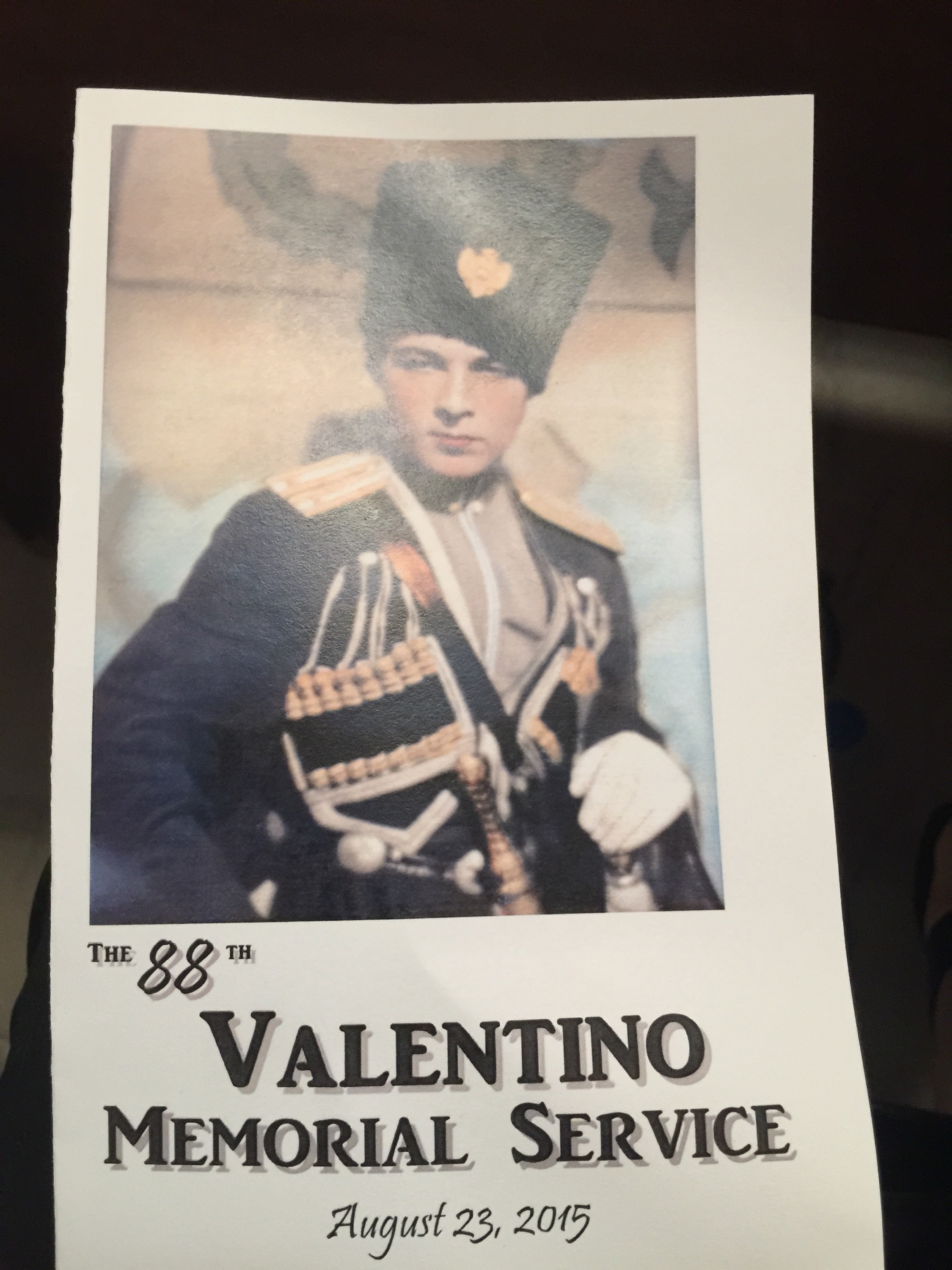
23 Aug 2015- 88th Annual Valentino Memorial Service Review
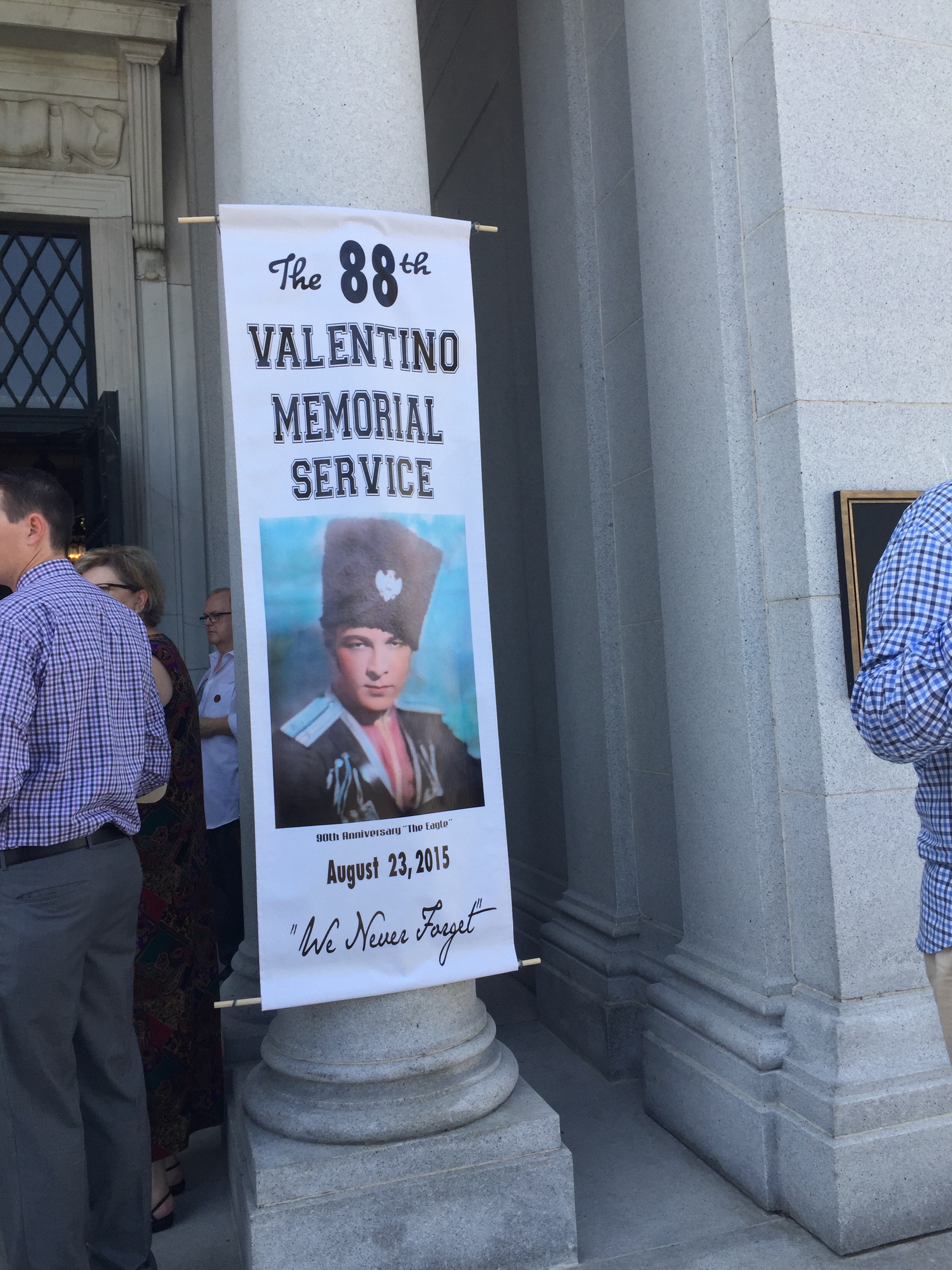
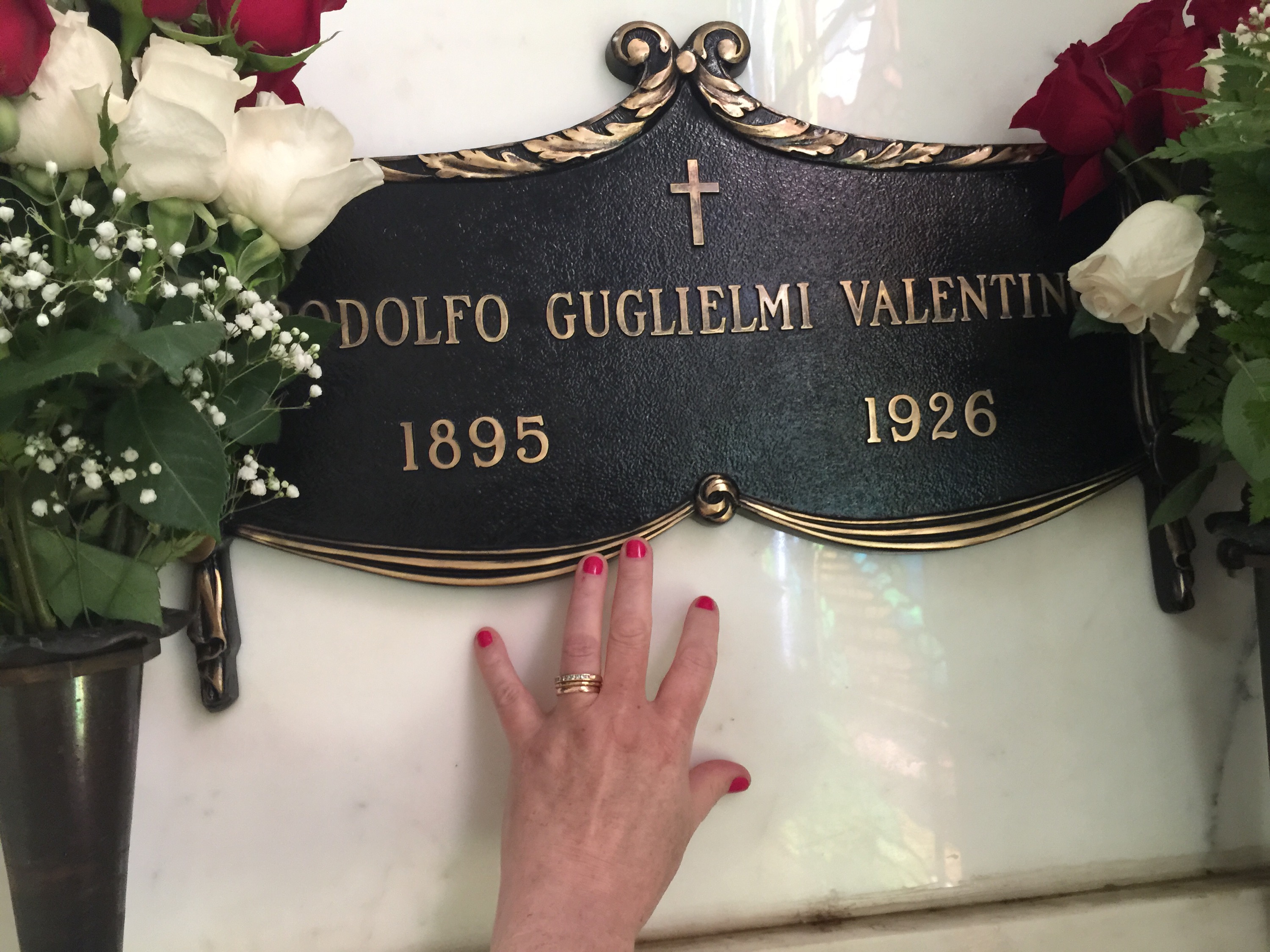
23 Aug 15, Hollywood Forever Cemetery, was the location for the annual memorial service that I attended for a second year. What a difference from last year to this year, I felt it was a meeting of old friends and with Mr. Tracy Terhune’s genius in putting together another memorable tribute.
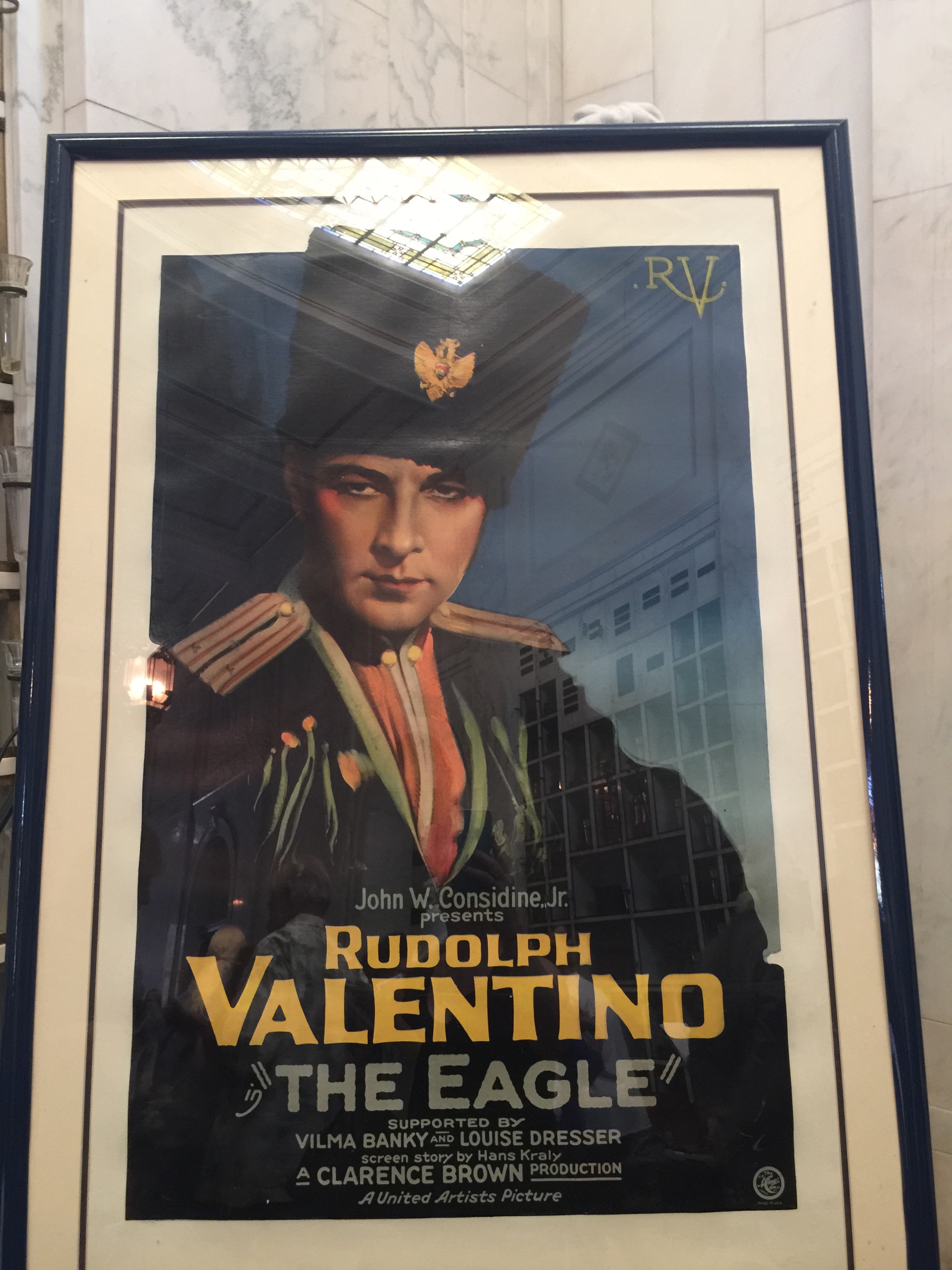
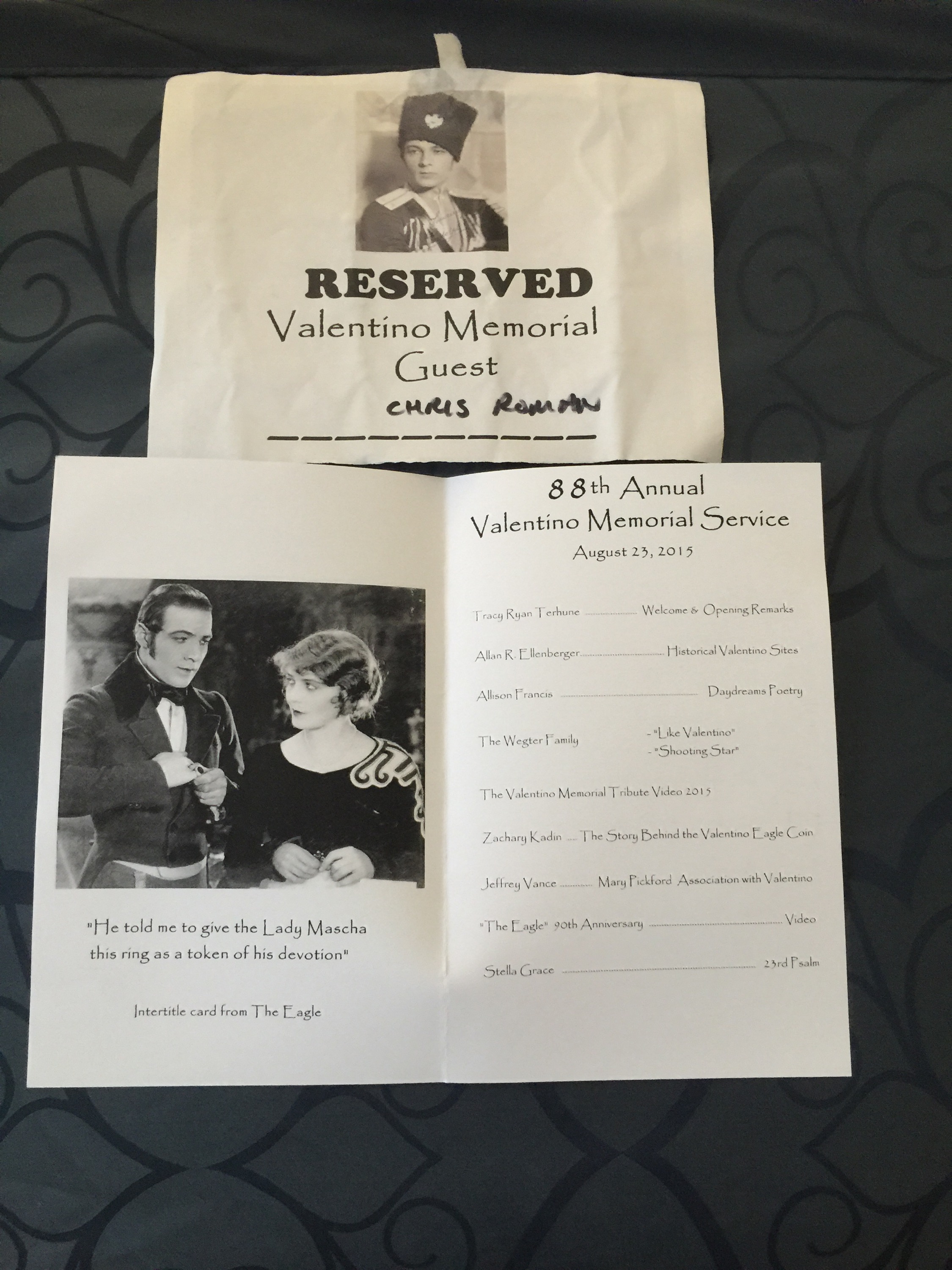
This years tribute was the 90th anniversary of Rudolph Valentinos movie “The Eagle”. The montage and the clips from the movie were very moving. The featured singers the talented “The Wegter Family” were once again a true delight to listen to. Mr. Ellenberger spoke of Historical Valentino Sites was very interesting. However, hearing Mr. Zachary Kadin talk about the story behind the Valentino Eagle Coin was new and insightful.
I wanted to take a moment to give a personal thank you to Mr. Tracy Terhune for his continued kindness, Mr Christopher Riordan for being gracious to a fan of his, to Ms. Sylvia Valentino-Huber for taking time for a photo with me and especially to everyone else I had the pleasure of meeting for the first time. I will see you all again next year at the 89th.
Categories: Uncategorized
Tags: Rudolph Valentino, Tracy Terhune, Valentino Memorial Service
Leave a comment
2015 Valentino Memorial Service
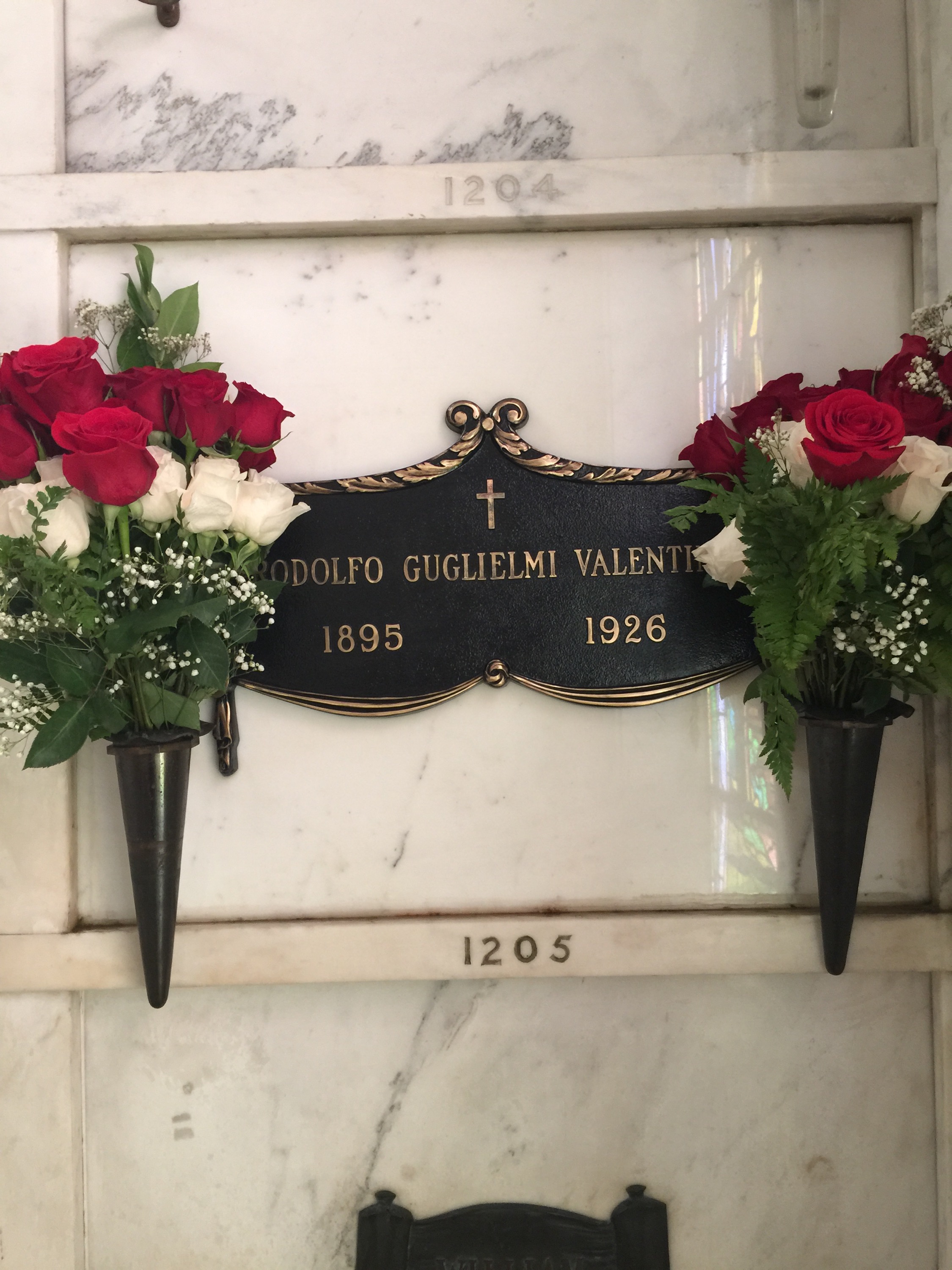
It’s time for the 88th Annual memorial service… I’m here attending for the second year and I am quite excited to attend…
Categories: Uncategorized
Leave a comment
30 Aug 1926 – Valentino Commentary
It was with boiling indignation that I read the letter of “Disgusted”. It was full of disrespect to the late Rudolph Valentino, yet your correspondent stated, “Far be it from me to say anything disrespectful of one who has passed through the great divide.” We women know what was at the bottom of the letter – pure jealousy. then he states that the flapper must save some excitement. Let me tell him that if his life has been as clean as was that of Valentino then he has something to be proud of.
Marie Crossett, Adelaide.
18 Oct 1926 – Weinberg Imposter Sued on Forgery Charge
Posed as a personal friend at Valentino funeral is now mixed up in a civil suit involving a charge of forgery. Weinberg could not be located this morning. His wife answered the telephone, stated that she did not know where he was, and that he had told her nothing about his latest escapade. Weinberg, who passes as “Dr. Sterling C. Wyman” and lives at 556 Crown Street, Brooklyn, was served with a restraining order as he entered his home Thursday night. The papers restrain him from assigning to anyone a $10,000 mortgage on the beautiful $50,000 home of Mrs. Pierre Roos at New Rochelle. Mrs. Roos through her attorneys, Butchers, Tanner & Foster, asserts that she never signed Weinberg’s mortgage. She signed an application for a mortgage, according to her attorneys. But an actual mortgage bearing her signature was recorded at 9:00 a.m. on 23 July. Last at the Westchester County Clerk’s office, according to the attorneys. Two hours later a mortgage of $20,000 on the same property was recorded by Butcher, Tanner & Foster with the same clerk. The restraining order that was served on Weinberg on Thursday was granted by Justice Morschauser of the Worchester Supreme Court on Wednesday last. The injunction hearing is scheduled for 22 Oct in the Westchester Supreme Court.
2015 Valentino Still Appreciated
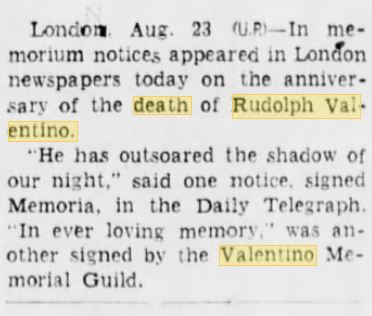
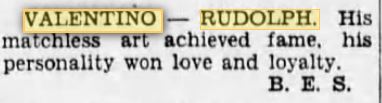
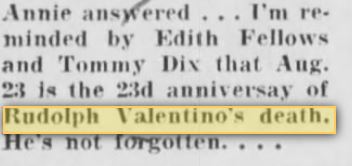
This year as the anniversary of the death of Rudolph Valentino approaches I am reminded that he is still adored by fans the world over. In these modern times, there is a true appreciation of his acting as an art form. During his lifetime Rudy dealt with many battles to show the world that he took his profession seriously. In 1923, he said “feeling and not acting is what lifts a love scene from commonplace to the realms of realism and romance”.
Categories: Uncategorized
Tags: Rudolph Valentino, Stephen Weinberg, Valentino Funeral
Leave a comment
 All About Rudolph Valentino
You must be logged in to post a comment.