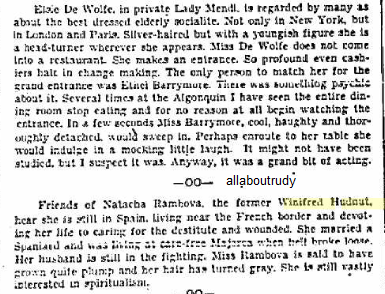
New fashion trends on the rise thanks to a certain charming Natacha Rambova and fashion designer Paul Poiret. Deauville is envious because the novel cosmetic turns fair night bathers into mermaids. Now there are two sides as to who discovered this latest delight Le Touquet or Juan Les Pines. Miss Rambova and her mother Mrs. Hudnut are at their chateau for the summer. The formula was obtained by Paul Poiret from an Indian Fakir, presented a small quantity of the enchanting ointment to a few of his clients spending the summer at various resorts thus started the ball rolling. According to Poiret, Natacha Rambova is the ideal woman to dress, is reported to have gone even further, and by using a more diluted mixture, succeeded in applying it to her hair with a startling effect. While Cannes and Monte Carlo are having this year their first really fashionable summer season, they have already become serious opposition to the northern resorts. The Riviera, in fact, is the only place outside of Italy where night bathing is possible, and where, therefore, the phosphorescent makeup has taken at once an immense vogue. Deauville tried it in the Pompeiian baths, but even the tepid water in the tank felt old. Le Touquet, where the more sporting element predominates, is still attempting it, but none of these places can compare with the inviting warmth of the lazy Mediterranean. Paul Poiret will launch the new luminous fingernails and hair trend at Palm Beach.
16 Aug 1926 – Natacha and Poiret a Fashionable Find
16 Aug 1979 – Natacha Rambova Collection
14 Aug 1926 – Valentino Last Party

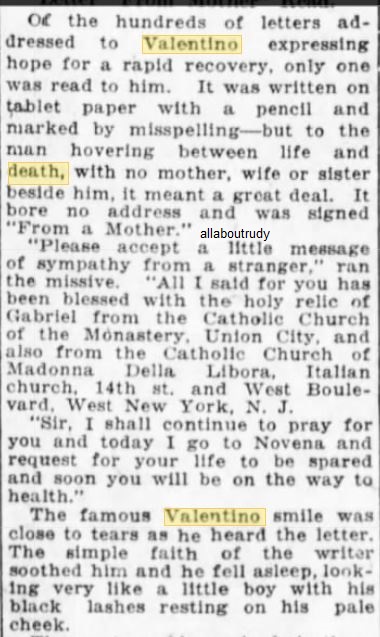
Built in 1907, 925 Park Avenue was the scene of the last party Rudolph Valentino would ever attend. The evening of 14 Aug 1926, Rudolph Valentino went to see George White’s “Scandals” at the Apollo Theater, W.42nd St and with him was Barclay Warburton a young stockbroker. After the performance, both went backstage to visit Harry Richman. Somebody asked Valentino, Warburton, and Richman to join a party that was in progress at actress Lenore Ulric uptown apartment. Supposedly Valentino begged off attending saying he had indigestion. Warburton suggested Valentino and a few others accompany him to his apartment at 925 Park Ave. At the party, were Richman, Francis Williams, and according to newspaper account “a dark-haired dashing young matron” escorted by Valentino and another young woman from the Scandals cast. That young woman may have been Marion Benda. Later she claimed she was in the Warburton party. Warburton served a late super and the party was still going strong at 2:00 a.m. Sunday 15 Aug 1926 when Valentino collapsed. The actor was taken in Warburton’s car to his hotel and a local physician Dr. Paul Durham was called and after a night of pain, Valentino was taken to Polyclinic Hospital, W. 50th Street, New York City where he would later die from medical complications.
1924 – Horgan Using Rudolph Valentino Photo

1924 – Stephen Henry Horgan & Rudolph Valentino
 On 2 Feb 1854, Stephen Henry Horgan, was born in Norfolk, Virginia went on to live a long life and distinguished career. In 1880, Horgan a photographer invented a process of reproducing the tones of a photograph by means of dotted or checkered spots. During the 1920’s, Stephen Henry Horgan, worked as a recording secretary, American Institute of Graphic Arts and during this time AIGA had great success in sending pictures over the wire. Horgan an inventor had an idea of transforming black and white pictures into color over the wire. In July 1924, Horgan made history, he took a portrait of Rudolph Valentino in costume as Monsieur Beaucaire used a process with three plate developed and inked in three separate colors blue, yellow, red and printed one on top of the other. The result was a color version sent by American Telephone & Telegraph Company wire from Chicago to New York. For his remarkable achievement in the field of photography, Horgan received the AIGA medal which is presented to individuals in recognition of their exceptional achievement. Horgan was a pioneer in the field of photomechanical reproduction and was connected in various capacities with many printing, publishing, and engraving concerns. In 1934, Horgan a widower of 14 years, married his long-time secretary, Della Van Houten, 74 years old at St Anne’s Catholic Church, Nyack, New York. On 30 Aug 1941, Horgan died at age 87 and is buried in Nyack, New York.


1922 – Rudolph Valentino Wins Recognition Letter to the Editor
Dear Editor,
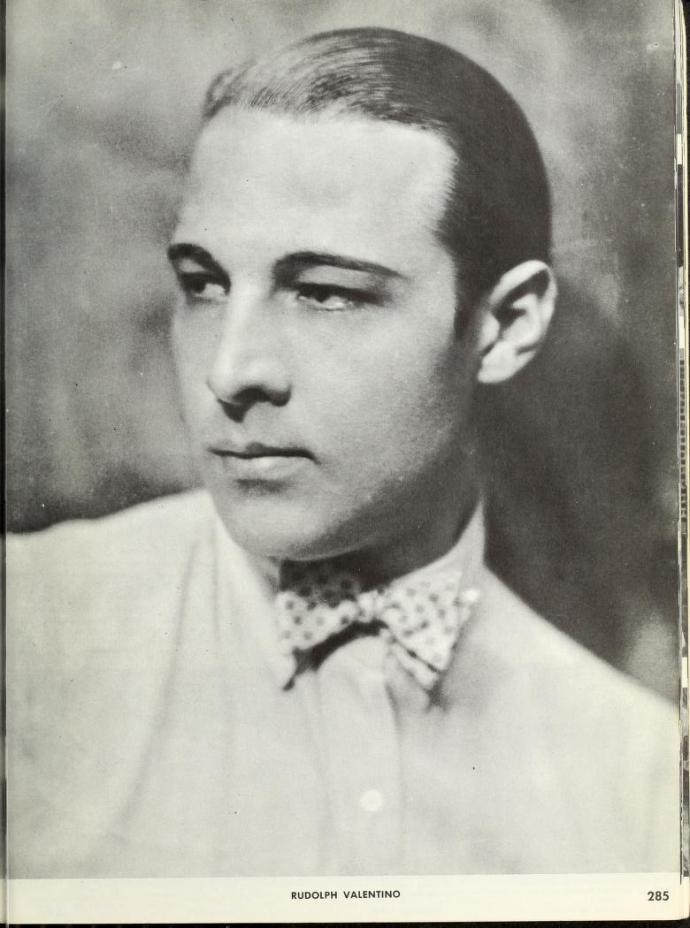
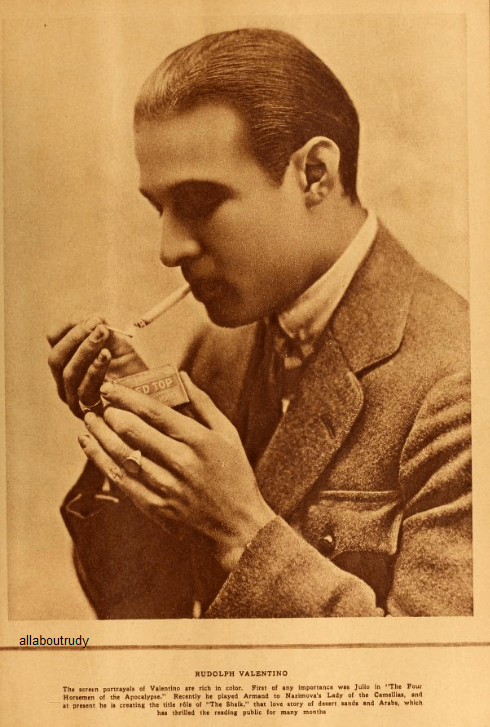
I’ve been an avid reader of your magazine for some years and have found everything it has contained of great interest as well as a help to movie fans. I know how very nice it is to read about your favorite and in my case it is Mr. Rudolph Valentino and the paragraphs below will tell you why:
I first had the opportunity of seeing Mr. Valentino in “Passions Playground” and in this movie he had a small role that he played very well. Also, seen two other motion pictures and he left me as being a very capable actor and when I heard he was going to play the screen version of “The Four Horsemen” I was very happy indeed and he would make this role and picture and success. I now understand he is playing Armond in Camille and I know he will take his place among the leading men of the silver screen. Valentino is a very diplomatic Italian youth and I hope very soon that he will become more popular, Everyone I know seems to like him, and I hope he will gain a good many more admires in the future.
Sincerely yours,
Lillia N. New York City, NY
“I regret not having played in stock. I would have received a fine training there. I am sure”….Rudolph Valentino
02 Aug 1925 – Only in NY Darlings
At the Biltmore Hotel, Mr. & Mrs. Rudolph Valentino entertained a table of guests in honor of the Spanish painter Federico Beltran-Masses. The table guests included Mr. & Mrs. Charles Chaplain, Marion Davies, Elinor Glyn and others. Charlie Chaplain seemed to do a great deal of dancing and seemed to favor Marion Davies as a partner versus his wife Lita Grey. Mrs. Valentino wore the ever present turban which has given rise to speculation amongst the Hollywood wags as to whether she sleeps in one. This time it was of white satin. A peach satin gown with straps covered in pearls girdled at the hips with large pearl hearts, below which the skirt flared to a wide pearl encircled hem. Her heavy long brown hair was word in braided bosses over her ears. Ah only in NYC Darlings.

Studios have tried and failed to find a successor to Rudolph Valentino.
“Success doesn’t consist of doing good work only. Above all, you must keep your feet on the ground”…Rudolph Valentino, 1924

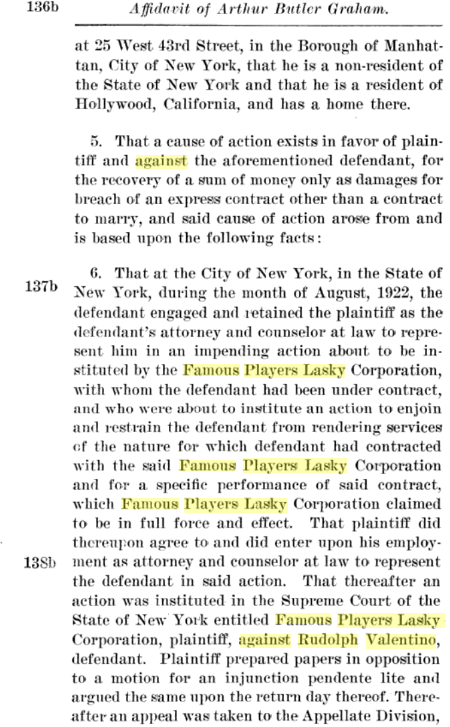
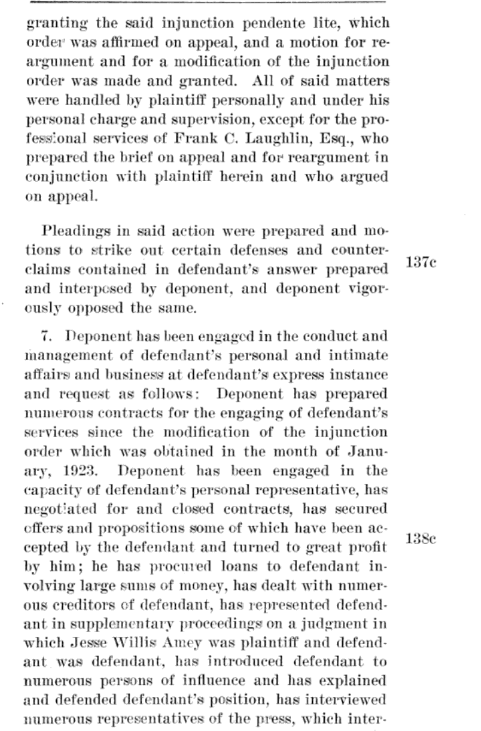
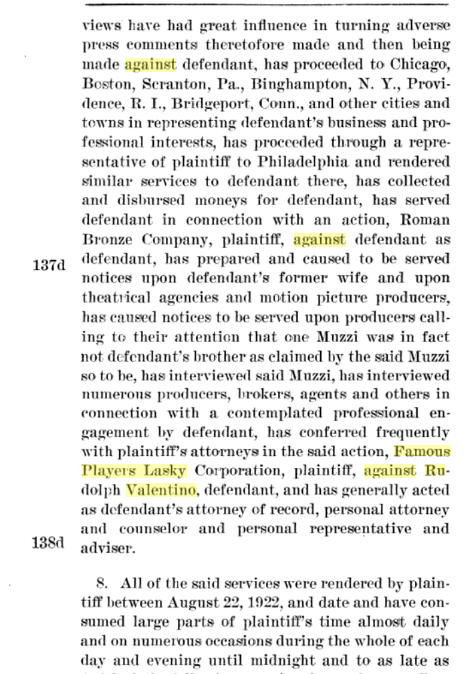
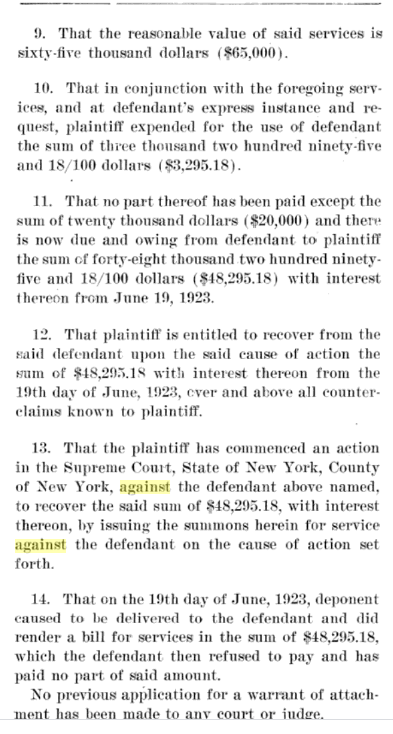
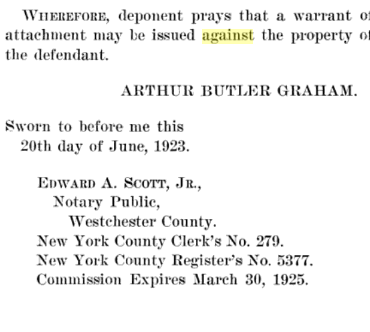
20 Jun 1923 – Arthur Butler Graham vs. Rudolph Valentino
On 20 June 1923 , Arthur Butler Graham, Rudolph Valentino’s personal attorney who represented him during his lawsuit against Famous Players-Lasky. Sued his client in a New York Supreme Court in the amount of $48, 295 for legal services performed.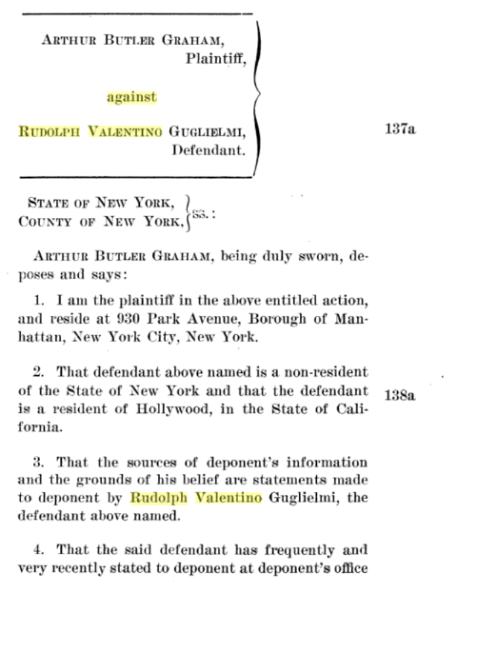
Mar 1920 – Gloria Swanson Maybelline Star

24 Jul 1950 – Film Director Dies
|
Jul 1922 – A Hardy Soul Mate
Rudolph Valentino recently told a reporter that he wanted a soul mate. His former wife Jean Acker, suing for separation and claiming that Rudy knocked her down, used her perfume and performed other acts of violence, came forth with the declaration that she was his soul mate only he didn’t realize it. After embarassing himself with all sorts of allegations in the court-room, she declared she adored him! Just a woman’s sweet way, I suppose. Well by the time the judge has granted a separation of divorce or other nominal severance, but take from Jean their souls go marching on.


19 Jul 1921 – Film Folks Make Plea in Church for Tolerance


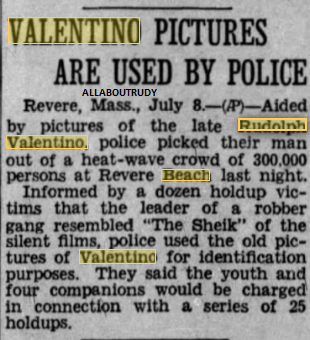

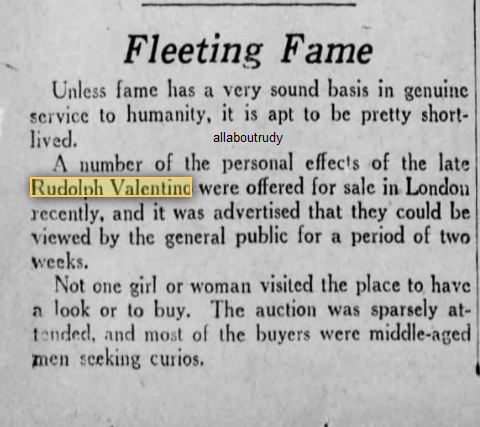


1925 – Caballero Jerezano

In 1925, Federico Beltrán-Masses painted Rudolph Valentino as a “Caballero Jerezano” a gentleman from Jerez in the Spanish region of Andalusia. In 1926, the portrait received numerous press mentions exhibited at the Stendhal Art Galleries at Los Angeles’s Ambassador Hotel. The painting became apart of Valentino’s massive art collection and displayed with pride at his residence Falcon Lair. At his estate sale, this painting was purchased by a Rambova relative. In 1951, his former mother-in law donated this painting to the Utah Museum of Fine Arts.


30 June 1926 – Engagement Announced
|

29 Jun 1917 – Theo’s in Town
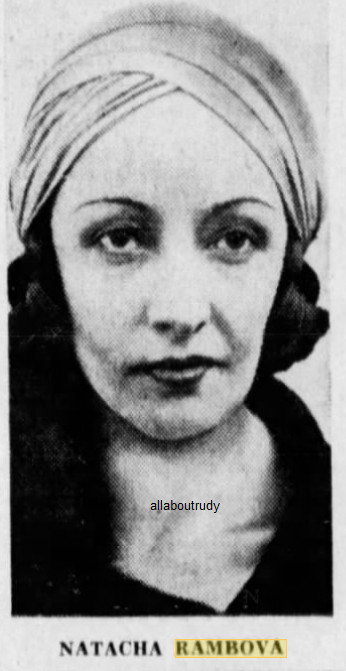
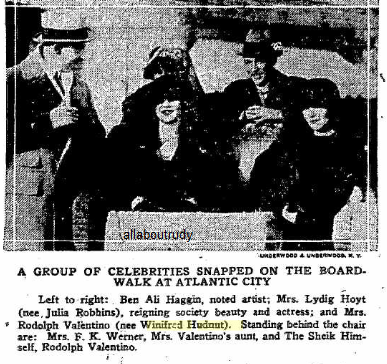
1922-1923 1055 California Street San Francisco

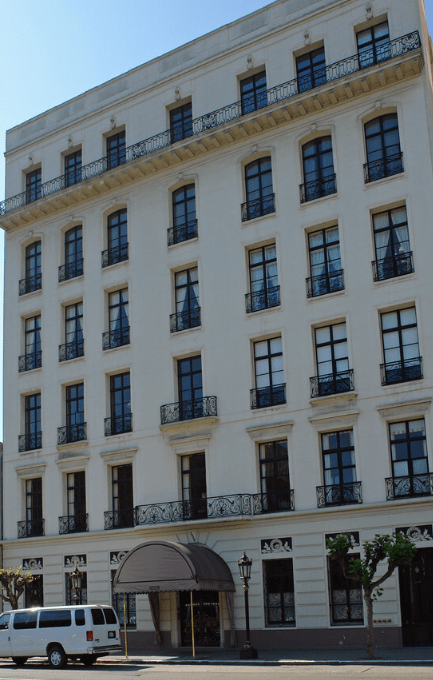
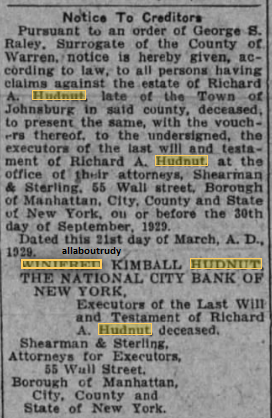
Mr. and Mrs Richard Hudnut resided in this luxurious apartment building for one year and it was during this time their daughter married Rudolph Valentino. While living in San Francisco the Hudnuts integrated themselves into local high society. Richard was a member of the SF Golf and Country Club and Mrs Hudnut held society teas and attended the Golden Gate Theater.
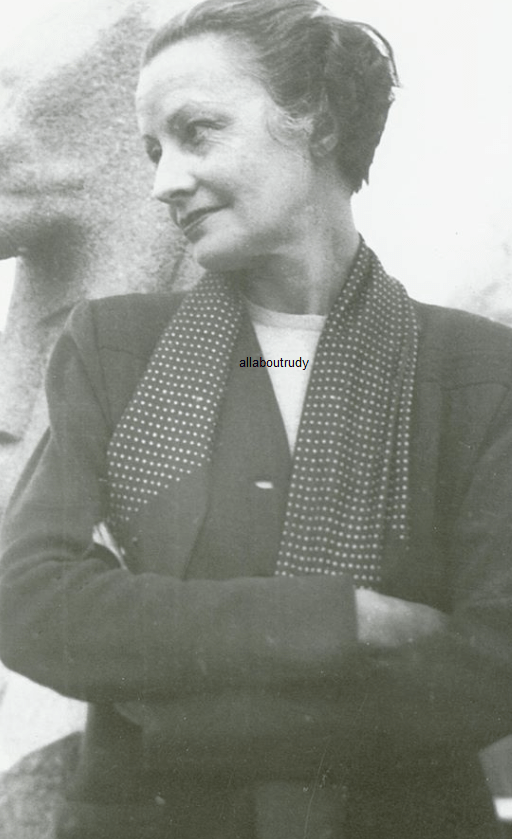
“The first few days I was there I couldn’t stop the tears streaming from my eyes. It was not sadness, but some emotional impact from the past–a returning to a place once loved after too long a time.” — Natacha Rambova
Apr 1925 – Passport Application
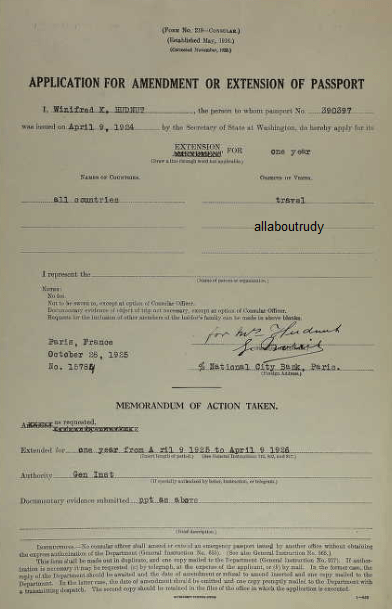
Natacha Rambova was in Monaco to visit the American Embassy to file for an extension of her passport. It was during this time she was establishing residency in order to file for divorce from Rudolph Valentino
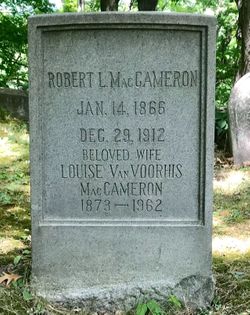
Robert Mac Cameron, Early Twenty Century Portrait Painter
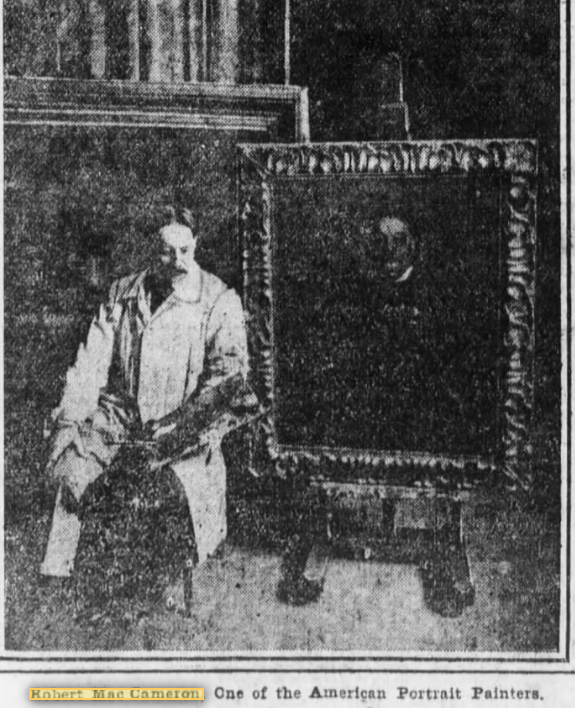
Born on 14 January 1866, Robert Mac Cameron, was the son of Thomas McConnell who was a newspaper publisher and a elected official in Winneconne, Wisconsin. Also, his grandmother was a first cousin to Robert E. Lee. A noted artist he changed his name in order to make his own name and way. In early twenty century, most painters of the day, would move to New York, London or Paris to find inspiration and fame in their art. Mac Cameron had studios in all three locations. In 1908, he received a medal for his work titled “A Group of Friends” and won prizes for his exhibition for “Waiting for the Doctor”. However, it was his greatest fame as a portrait painter whose work today hangs in famous art museums all around the world. In 1912, Mac Cameron painted society beauty Winifred de Wolfe whose painting was considered the embodiment of a certain type of fragile girlish charm and the portrait won accolades.
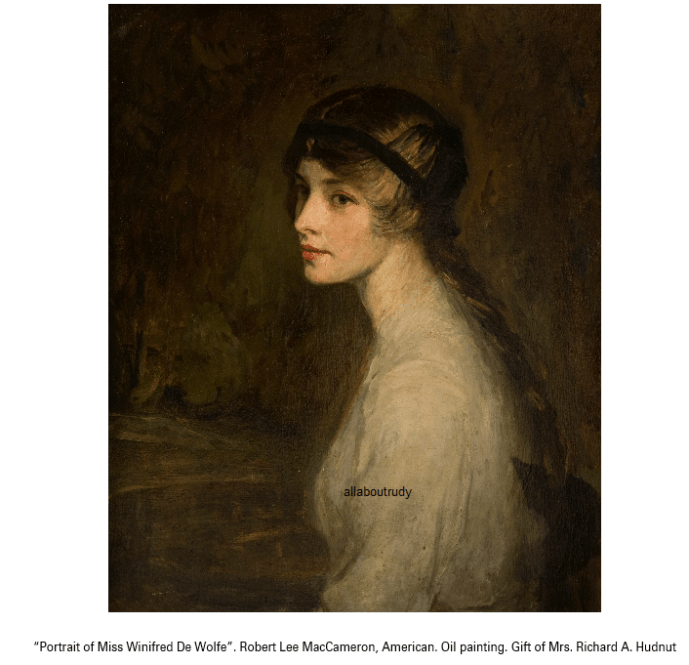 Also, he was a great friend of Robert Winthrop Chanler, whose grandmother was Mrs. William Astor. On 29 Dec 1912, he died in New York City of heart disease surrounded by his wife and children. At the time of his death, it was reported his estate retained the painting. However, I recently discoved the above painting by Robert Lee MacCameron was gifted to the Utah Museum of Fine Arts by her mother. The painting hung in the museum for years until a recent renovation and its currently in storage.
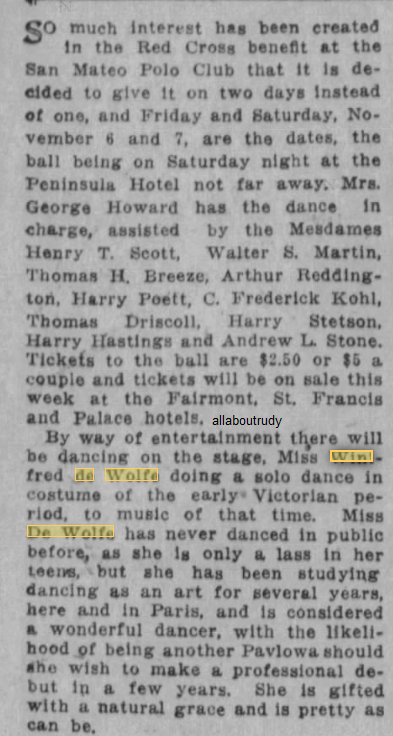
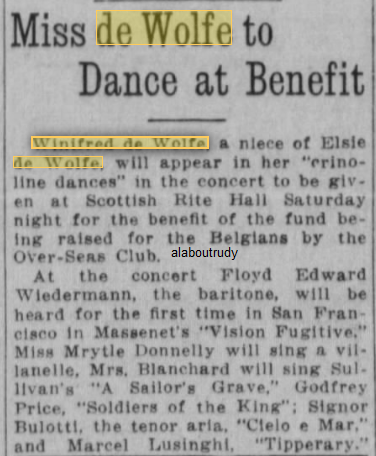
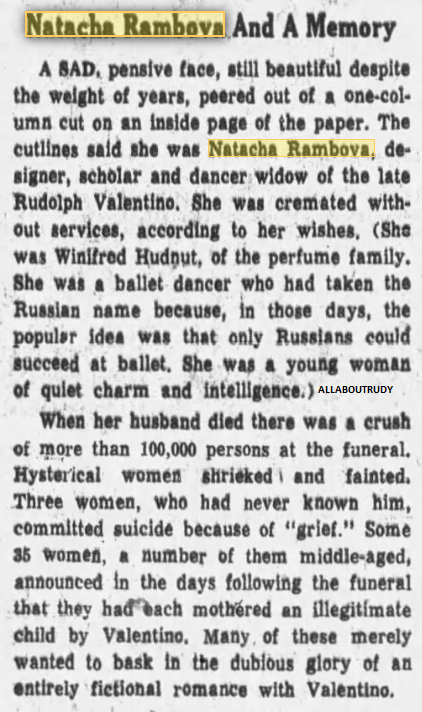
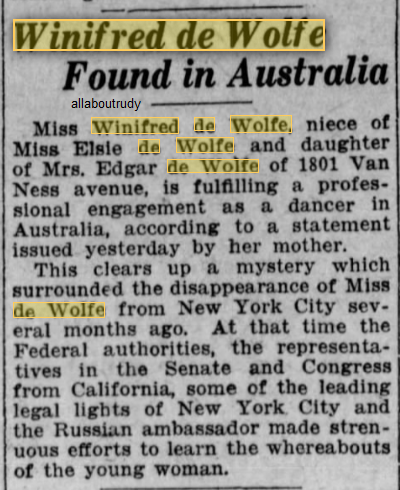
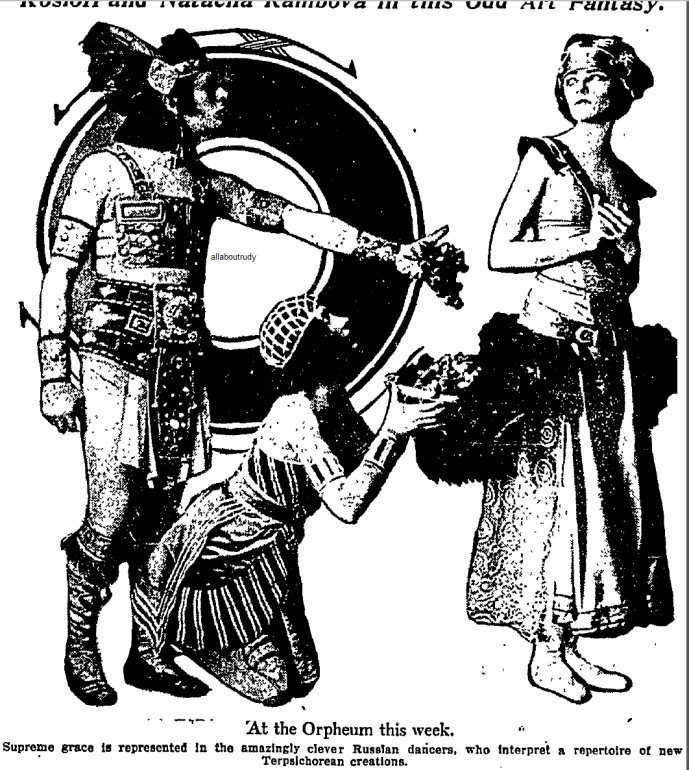
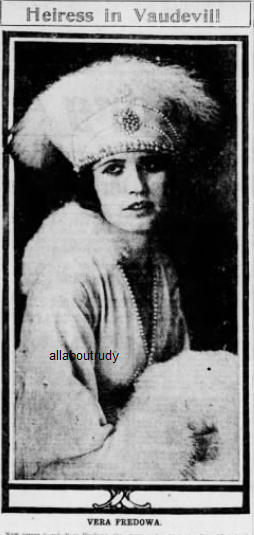
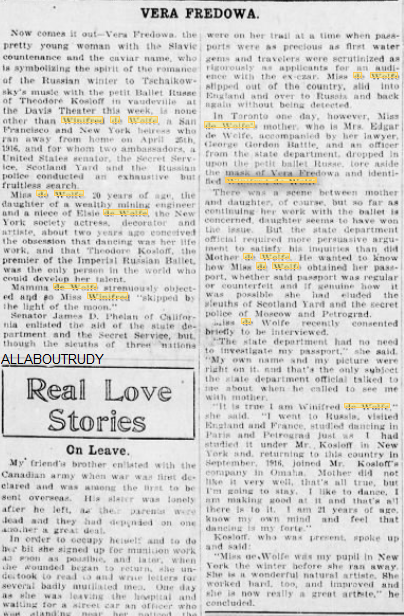
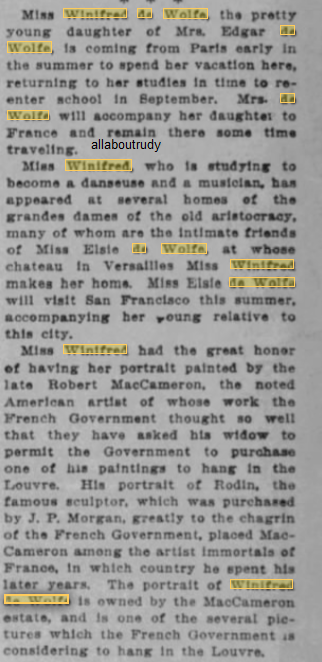
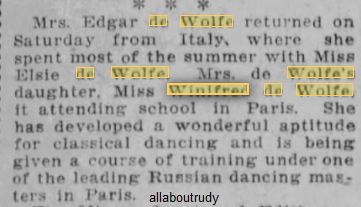
1913 – Winifred de Wolfe/Natacha Rambova
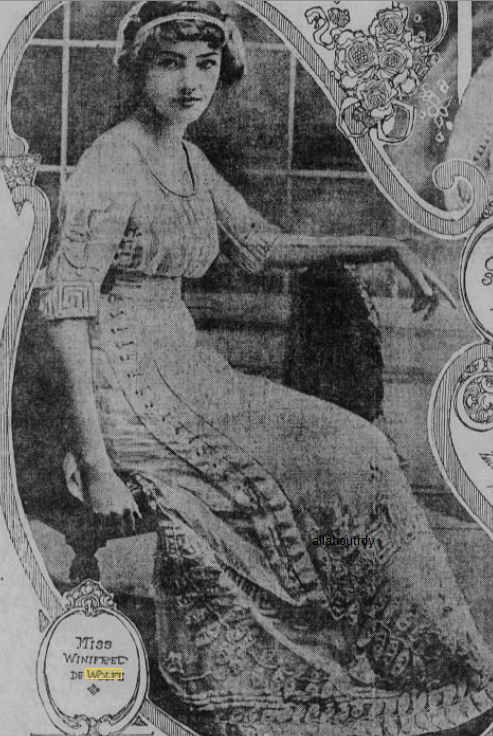
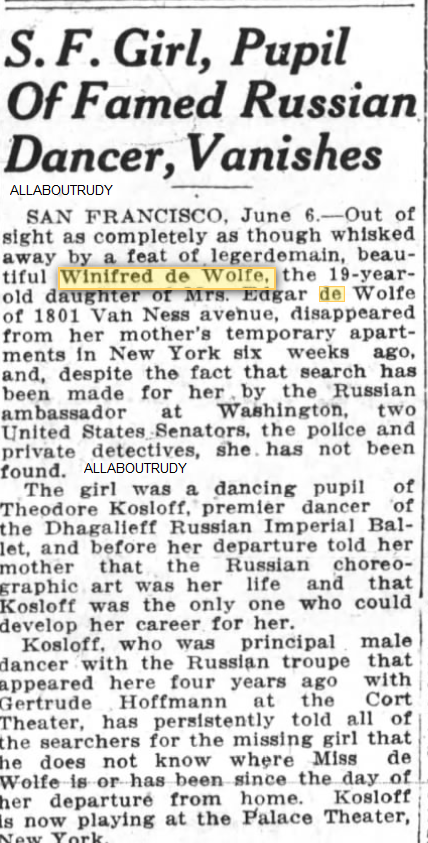
13 June 1916 – Disappearance of Winifred De Wolfe
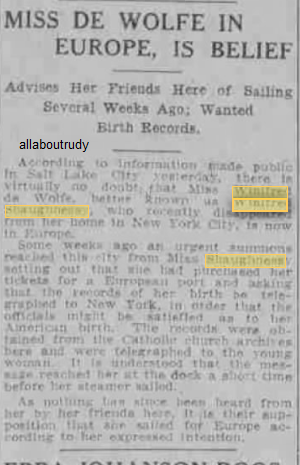
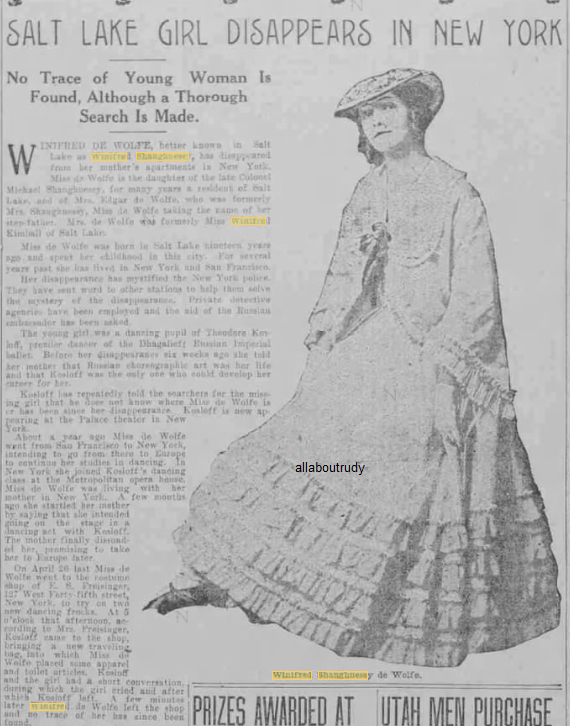
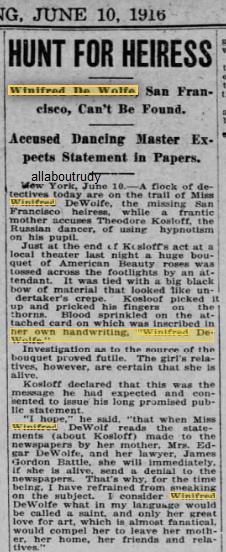
The strange disappearance of Winifred de Wolfe is greatly worrying her friends and relatives here where she was born and spent a great deal of her childhood. Though leaving Salt Lake City when a youngster, there are many of the old friends of her parents who have seen her in San Francisco where she resided for years. She is a beauty in every sense of the word, flowerlike in her loveliness, and has the brains air and breeding which distinguished her parents. Her father was the late Colonel Shaughnessy and her mother Winifred Kimball Shaugnessy a vivacious beauty who spent most of her time here until she married de Wolfe a San Francisco Hotel man.
1865 Leatherhead Court, Surrey
Leatherhead Court, Surrey was a British boarding school for upper class children. For 9 years, this was considered home, and the foundation of the woman Natacha would become.
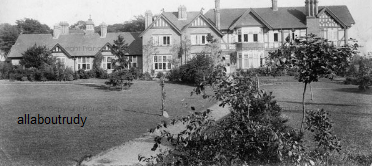
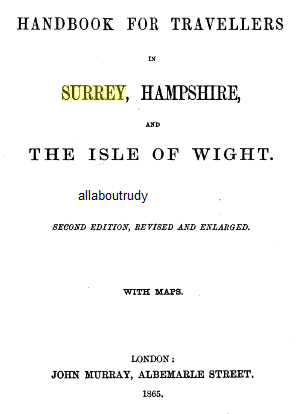
Described in a 1865 traveler’s handbook, Leatherhead must at one time of been a place of considerably more importance that at present, since the Sheriff’s County Court was anciently held here, and was only removed to Guilford at he end of Henry III’s reign. Now a large village of 4 streets, from the back of one of which extensive gardens slope downwards to the Mole, here no longer “sullen” and stealing onward toward the rich meadows of Stoke and Cobham. The river where Leatherhead Court students would often be found at art or nature appreciation lessons. This river is crossed by a bridge of 14 arches; close to which is “The Running Horse” a small inn, said to be the hostel in which Elynour Rummyng as celebrated by Skelton, Henry VIII’s poet laureate, in verses more curious than edifying. The local church were many of the students, teachers and staff would partake of Sunday services stands upon high ground of the Mickelham Road, was granted to the priory of Leeds in Kent about the middle of the 14th century, from which time it principally dates. The piers of the nave may, however, be earlier. The stain glass window of the E. Window was collected at Rouen by the Rev.James Dallaway, victor of Leatherhead for many years; during which he published his History of West Sussex undertaken at the expense of the Duke of Norfolk. There are no monuments of interest in the church. The inscription on that of Robert Gardiner (d.1571(, in the S. aisle was written by Thomas Churchyard “court poet” to Queen Elizabeth I. Leatherhead is in the midst of much picturesque and varied scenery.
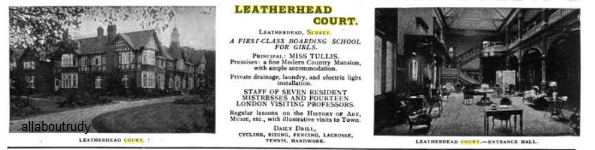
1910 -1911- Leatherhead Court
For 9 years, Winifred Shaughnessy attended Leatherhead Court, a select girls school and below is information about the school that was her home during her formative years.
—————————————————————————————————————————————-
LEATHERHEAD COURT, LEATHERHEAD SURREY.
A RESIDENTIAL SCHOOL FOR GIRLS.
PRINICIPAL – MISS TULLIS.
The school is situated one –and-three-quarter miles from Leatherhead Station, one-and-a-half from that of Cobham, and nearly twenty from London. The Front of the House faces a little west of south, is 110 feet in length, and contains the chief reception-rooms and several of the school bedrooms. The Central Hall stands behind the chief reception rooms, is 66 feet by 27, and is open to the roof. It is used as a school reading room, for musical evenings, etc. It is heated by radiators and an open fire, and lighted, like the entire house, by electricity. Eleven of the school bedrooms open from the gallery. A weekly pianoforte recital is given in the Central Hall and occasional School Concerts, and the furnishings include a Lipp concert grand pianoforte of the highest grade. Also a Welte-Steinway pianoforte. The West extends back 162 feet and contains two Girls’ Sitting Rooms, Workshop, and four classrooms, all with School bedrooms over. One of the Sitting Rooms is used as a School Library and contains over 1,000 books for reading and reference. Besides over 1,000 ordinary reading and reference books the Library and the Central Hall contain a large number standard works on architecture, sculpture, painting and music etc. Some hundreds of photographs and lantern slides are used to illustrate the same subjects. The eastern side extends 187 feet, and contains, in addition to ordinary house ccommodation, the schoolroom, 50 feet by 20, and the studio, specially built and facing north, 25 feet by 20. The corner room with the bay window is the dinning room.
The hours of the meals on ordinary days are:
Breakfast 7.50
Milk 11.00
Lunch 12.15
Tea 3.15
Dinner 7.00
French is always spoken at two of the tables, and German at a third.
On the half-holidays the hours are:
Breakfast 7.50
Milk and Bun 11.00
Dinner 1.00
Tea 4.30
Supper 7.30
In warm summer weather the hour for tea on ordinary days is altered to suit the changed school-hours, and, whenever possible, the meal is taken to the garden. The Schoolroom, 50 feet by 20, is used for drill and dancing lessons, class singing, lectures and assemblies. Also for weekly and occasional dances, lantern lectures, and entertainments. The end of the room has a fixed platform, which can be enlarged when necessary, fitted with head and foot lights, and a sheet for a very fine electric lantern is ready for use. The Studio is 25 feet by 20, and was specially planned for its purpose. It is lighted by a large window facing north. There four Classrooms, all well lighted, warmed, ventilated, and furnished with single desks, etc. The Workshop contains the benches, etc., needed for carving, metal work, and other handwork. The Bedrooms are divided by curtains, so that each girl has a private cubicle containing bed, washstand, etc. A few single bedrooms are also available. The Bungalow (a Sanatorium) faces south and has a lofty and pleasant invalid’s room with bathroom adjoining, a convalescent’s room and a veranda, as well as accommodation for a nurse and a maid. The chief courtyard is a quadrangle, and is used for drill and as an outdoor gymnasium when the weather is suitable. One of the rooms overlooking the courtyard is fitted as a school kitchen for cooking lessons. Lacrosse is played during the winter and spring terms, and tennis in the summer. During the summer term the lacrosse field is divided into seven full-sized tennis courts. Each girl who desires it can have a small garden.
1965-1966 3805 Mayfair Drive, Pasadena, CA

This is the last house Natacha Rambova called home. In her later years, Natacha Rambova, was living in New Milford, CT with two Yorkies and her faithful associate Helen Ducey. When Natacha’s health started to fail, she agreed to move in with her cousin Ann Wollen and her mother Katherine Peterson. Both were her nearest living relatives and they took care of her and made legal decisions until the end. The address was 3805 Mayfair Drive, Pasadena, California. Built in 1950, this home was a modest single-family home, 1822 square feet with 4 bedrooms and 2 bathrooms. This home last sold for $313,000 in April 1995.
1920-1953 Natacha Rambova in Phone Directory
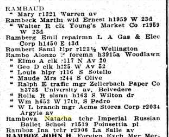
1920 Natacha Rambova L.A. Phone Directory
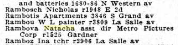
1921 Natacha Rambova L.A. Phone Directory
1944 Natacha Rambova Manhattan City Directory
1945 Natacha Rambova Manhattan City Directory

1953 Natacha Rambova Manhattan City Directory
1920 – 14th Census of the U.S.
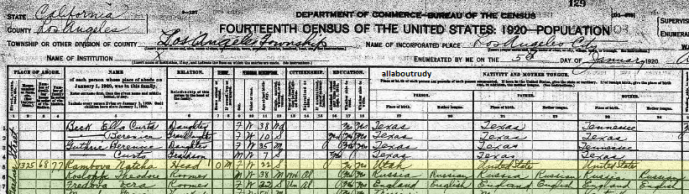
In 1920, the 14th Census of the U.S. was conducted and it shows Natacha was living with Theodore Kostloff and Vera Fredova.
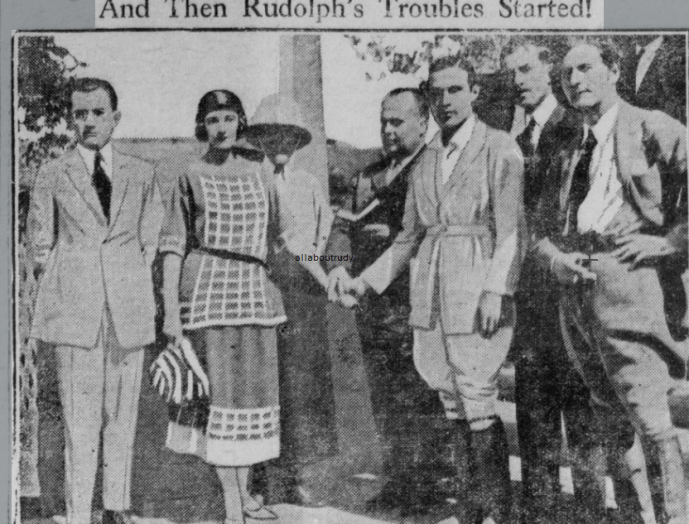
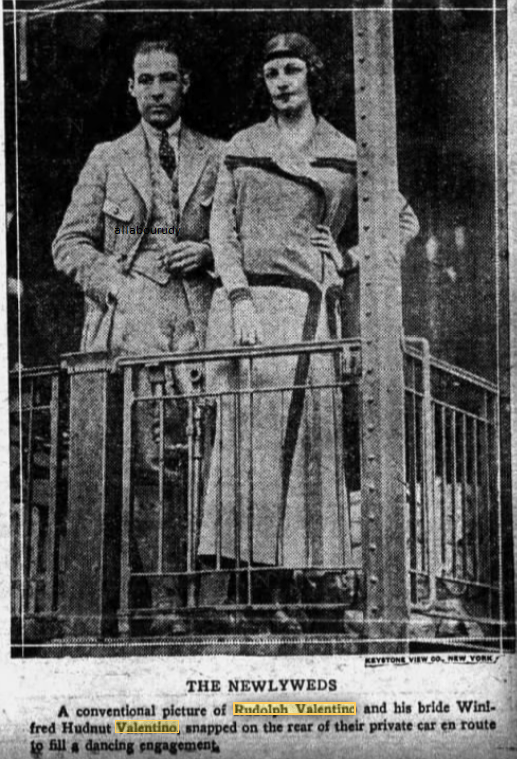
30 May 1923 – Screen Heartthrob Rudolph Valentino makes personal appearance in Seattle Mineralava Tour
On May 30, 1923, film star Rudolph Valentino (1895-1926), in the midst of a personal appearance tour that took him to all parts of the country, arrives for his only known visit to Seattle. The actor gives a dance exhibition, thrilling local audiences with a glimpse of his famous Argentine tango, and lends his movie star persona to Children’s Orthopedic Hospital on behalf of their annual fundraising effort. Trouble in Paradise During his 1923 Seattle visit, Rudolph Valentino was in the midst of a dispute with his studio, Lasky-Paramount. Battles over power and control were being waged behind-the-scenes, but publicly the actor claimed to be protesting the cheap program films to which he had been assigned, as well as the practice of block booking. In an era when popular movie stars routinely appeared in three or four new film releases a year, Valentino resisted the studio’s demand that he work. (Block booking was an early distribution practice whereby a studio would tie the releases of major stars to less ambitious efforts. Exhibitors wishing to screen “marquee” pictures had to sign exclusive agreements that forced them to also show the studio’s third-rate potboilers. Exhibitors strongly protested this arrangement.) For failure to work, Lasky-Paramount eventually suspended Rudolph Valentino, and went as far as to obtain a court injunction preventing the actor from appearing onscreen until after his Paramount contract expired on February 7, 1924. The studio felt they had called Valentino’s bluff, since he and second wife, Natacha Rambova (formerly Winifred Kimball Shaughnessy) were heavily in debt. But the pair countered by mounting a personal appearance tour organized by George Ullman (later Valentino’s business manager), and sponsored by Minerlava, a beauty clay company. For 17 weeks, the couple gave dance exhibitions across the United States for a reported $7,000 per week, keeping Rudolph Valentino in the public eye and, based on their commercial pitches for Minerlava, providing the company with valuable exposure. The tour began in the spring of 1923 in Wichita, Kansas, where public schools closed on the day of his appearance. “The Sheik” Comes to Seattle Despite the excitement that Rudolph Valentino brought to almost every stop on his itinerary, the star’s arrival in Seattle was relatively low-key. The Valentinos were expected at 9:40 in the evening on May 30, 1923, traveling from Spokane in the star’s private rail car. From the train station, they were to be whisked to the Hippodrome at 5th Avenue and University Street, where Valentino was slated to help judge a combination dance contest/beauty pageant at 10:00 p.m. According to publicity for the event, the pageant served as a national search to help find the star’s next leading lady (a role which eventually went to veteran Paramount actress Bebe Daniels). Unfortunately, their train arrived much later than expected, and the Valentinos entered the Hippodrome well after the dancing competition. The actor then sat with other judges behind a curtain for the remainder of the beauty pageant, which concealed him from the audience, most of whom had come solely for the opportunity to see the motion picture star in person. When all was said and done, Rudolph Valentino personally selected Katherine Cuddy, a local stenographer, as the beauty contest winner, turning down the half-hearted challenge of Seattle Mayor and fellow judge Edwin J. Brown (1864-1941) on behalf of another contestant. It is hoped that Brown’s candidate did not know that the Mayor was championing her cause, for the next day it was widely reported that Valentino rejected her for having bad teeth. (Ironically, Brown — who was a prominent Seattle dentist as well as a doctor, lawyer, and politician — did not notice this defect.) The Valentinos followed the beauty judging with an electrifying demonstration of their famous Argentine tango, recreating the dance scene from The Four Horsemen of the Apocalypse. Both were dressed for the part; as one account put it: “It is in Rodolph’s [sic] blood to wear black velvet pantaloons and stamp his black patent leather boots and click castanets. His manner was quite Argentine; his hair quite brilliantine” (Dean). Natasha Rambova was also clad in black velvet, offset with a red Carmen-like shawl. “[She] is very brave to put on a ten-dollar pair of black silk stockings so close to her partner’s three-inch silver spurs,” noted Times reporter Dora Dean. The Private Valentino Dean managed to sneak backstage after the exhibition and take a spot in Rudolph Valentino’s dressing room, where she found the actor quite blunt about all the attention his appearances had been garnering. The moment he arrived at the Hippodrome, for instance, a large crowd of girls — “starving for romance,” the actor noted with some disdain — surged toward the stage. Adoration of this sort wore on Valentino, for it overshadowed his attempts to be taken seriously as a performer. “`From persons who saw the Four Horsemen I have received intelligent letters of appreciation,’ [Valentino] said. `I like them better
than the adoring notes from little girls who want me for their sheik.’ “`But what are you going to do, when all those darling girls want to see you ride [in] the desert and gnash your teeth?’ he was asked. “`Ah, they should stay at home with their husbands,’ said the slick-haired actor” (Dean). Wanda Von Kettler, writing for the Star, also managed to get herself into Rudolph Valentino’s dressing room at the Hippodrome. It must have been a crowded place: Mayor Brown and Washington’s Lieutenant Governor William Jennings “Wee” Coyle (1888-1977) also fought for space amongst a crowd of reporters and fans. According to Kettler: “Beside Rodolph [sic] sat Mrs. Valentino, his tall and slender brown-eyed wife, in her Argentine dancing costume … “He surveyed his guests. Then told them that he wasn’t a `sheik.’ “`Of course,’ he declared, with a somewhat resigned laugh, `I’ve gotten considerable publicity because of the name. But I don’t know if it’s been the right kind of publicity. The very sentimental girls think I’m all right. They like me. But what about the intelligent women — and the men? Don’t they think I’m a mollycoddle? They do. When I go back in pictures, after the fight with the movie concern is over, I’m going to prove that I’m not the type they think I am …’ “Valentino plans to write a book. He confided so to some of us Wednesday night. “`It’s going to be a book on the tango,’ he declared. `I’m going to teach all America to dance that dance. Everybody seems to like it, so why not help them learn it.’ “‘Dancing,’ he added, `is the greatest stimulant of the day, and is more and more being recognized as such. Since the event of prohibition it has increased 50 per cent.’ “Valentino doesn’t mind’ the letters he receives from admiring ladies. “`I’m very glad to know,’ he explained Wednesday night, `that I’m being appreciated. I like to hear the opinion of the public, whether it’s for or against me. But I know the ladies aren’t `in love’ with me. They’re in love with an `ideal’ and they sometimes write to me as a result.’ “As for Mrs. Valentino – being a sheik’s wife doesn’t bother her at all. When asked about her stand on the matter, she laughed and replied, `I want him to be popular. The more popular he is, the better I like it’” (Kettler). The Pound Party Following the Hippodrome appearance, the Valentinos traveled northward for scheduled engagements in Vancouver, British Columbia. They returned to Seattle on June 1, 1923, for a visit to Children’s Orthopedic Hospital, where they were guests of honor at the institution’s Pound Party. An annual charity event, the benefit took its name directly from its open request: In lieu of donations, the Hospital accepted a pound of anything — food, clothing, etc. — which could be used to help those in need. The Valentinos were the hit of the function, which a spokesman later declared the most successful in the history of Children’s Orthopedic. In total, the event netted a record amount of food and clothing and almost $400 in donations, $10 of which came from the actor himself. Credit for the success was given solely to Rudolph Valentino’s appearance, which garnered much more public interest than past charity drives. It also attracted hundreds of fans to the front lawn of the Hospital, mostly young women hoping to catch a glimpse of the actor as he came and went from the gathering. Thankfully, the throng outside conducted itself in an orderly fashion and the party went off without a hitch. After partaking in an afternoon tea and reception, the Valentinos went from bed to bed throughout the Hospital, visiting nearly every child and showing a sincere concern for their well being. “A few of the sheik’s queries concerning child culture demonstrated a decided lack of knowledge on the subject but a willingness to learn,” the Post-Intelligencer got several nurses to admit afterward. “He was quite exercised over the lack of teeth in the mouth of one baby, age eight days”. After the Pound Party concluded, the Valentinos slipped quietly out of the city, making their way first to Tacoma, then back down the coast toward Hollywood. The last word on Rudolph Valentino’s 1923 Seattle appearance fell to the Star, which produced a column entitled “Letters from Chief Seattle” after the city’s Indian namesake: “Dear Rudy: “I have met many movie stars, and most of them were painfully conceited. I am glad to see that egotism plays but little part in your character. It is more or less evident that you have been grossly caricatured by envious persons. Come back to Seattle soon and stay longer. CHIEF SEATTLE” (“Letters to Chief Seattle”). From Man to Myth Some six weeks after his Seattle visit, the actor came to an agreement with Lasky-Paramount, which allowed him to return for an additional two films at $7,500 per week. More importantly, the agreement gave the Valentinos complete creative control over both projects. But the triumph was short-lived. After finishing his Lasky-Paramount contract, Rudolph Valentino jumped to United Artists, where studio executives were adamant that Natasha Rambova — who exercized tremendous influence on her husband’s career — not interfere with their pictures. Valentino agreed to this stipulation, but it led to conflict within the marriage and helped bring about its demise. Still, the United Artists period was a successful one for the actor professionally. He made two of his better films with the studio, The Eagle (1925) and The Son of the Sheik (1926), a semi-sequel to his 1921 monster hit.
29 May 1923 – Mrs Rudolph Valentino A Woman in Chains
|


You must be logged in to post a comment.