
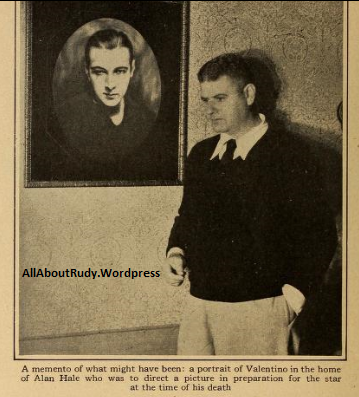
Sometimes Edward Montaigne, head scenario writer at Universal Studios admits the astonishing ideas that are presented to him. One time there was a spiritualist lady who is in constant communication with Rudolph Valentino. In the spirit world, she writes, Rudy has met Edith Cavell who insists that he must make one more picture on earth. For a consideration she will sell Valentino’s services to Universal to write and direct a movie.
Categories: Uncategorized
Tags: Alan Hale Sr, Death of Rudolph Valentino, Rudolph Valentino
Leave a comment
The death of Rudolph Valentino is one of the greatest tragedies that has occurred in the history of the motion-picture industry. As an actor he achieved fame & distinction; as a friend he commanded love and admiration. We of the film industry, through his death, lose a very dear friend, a man of great charm and kindliness – Aug 1926 Charlie Chaplain
Categories: Uncategorized
Tags: Charlie Chaplain, Death of Rudolph Valentino, Rudolph Valentino
Leave a comment
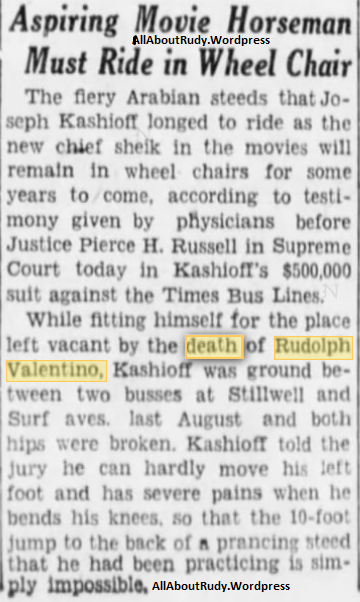
24 Aug 1926 – Death of Rudolph Valentino Hero of American girls | Emotional scenes in New York
An Exchange telegram from New York says Mr. Rudolph Valentino died yesterday. Death followed an unavailing blood transfusion. An X-ray examination has revealed that pleurisy affected the walls of the heart. No monarch or war hero ever aroused more sympathetic public interest anywhere than Valentino during the illness which ended fatally to-day. From the day last week when he was taken to a nursing home all sources of public information were sought for news of his condition, and when the word “relapse” spread in New York yesterday crowds gathered about the nursing home and practically besieged the telephone companies and newspapers. Women by hundreds brought flowers and prayed on the steps of the building where the patient was lying. Because America is the chief motion picture manufacturer and Valentino was the most romantic star of this new form of entertainment, he was to American flappers generally almost what the Prince of Wales is to the English. Recently, when the Chicago “Tribune” charged Valentino with effeminizing American manhood by his influence, and Valentino challenged the editor to a duel with boxing gloves, a wave of indignation in his favour rushed from millions of American women.
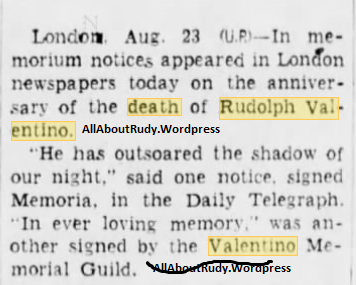
23 Aug 26 – 89th Annual Valentino Memorial Service
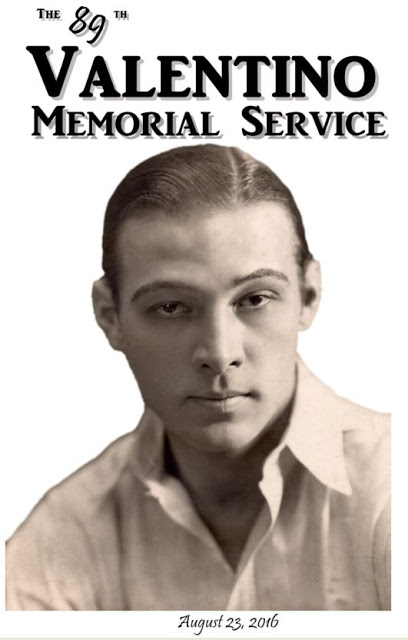
My bags were packed and ready to attend tomorrow’s 89th Annual Memorial Service. However, faced with a health issue it was in my best interest not to fly but stay and recover left me feeling sad. I planned all year to come back to Los Angeles and attend this year’s memorial service, take time and visit Rudolph’s grave, and friends. So I have a “special correspondent” who will attend the Memorial Service and give me his report. If you are in the L.A. area PLEASE take the time and attend tomorrow’s 89th Annual Valentino Memorial Service.
Categories: Uncategorized
Tags: Rudolph Valentino, Tracy Terhune, Valentino Memorial Service
Leave a comment
30 Aug 1926 – Cashing in on Death of Valentino
Desirous of meeting the public’s insistent demand for Valentino Pictures, while United Artists reported and appreciable increase of bookings on “The Eagle” which preceded “The Son of the Sheik” the late star’s last picture. In many sections of New York, exhibitors who have deemed it good showmanship to make these bookings are telling the world about it in no uncertain terms through the mediums of special marquee banners. The usual theater mailing lists are being worked plentifully in an effort to cash in on Valentino’s death.
Categories: Uncategorized
Tags: "The Eagle", Death of Rudolph Valentino, Rudolph Valentino
Leave a comment
“A great tragedy says Sam Goldwyn. It will be felt wherever he is known”..
Categories: Uncategorized
Tags: Death of Rudolph Valentino, Rudolph Valentino, Sam Goldwyn
Leave a comment
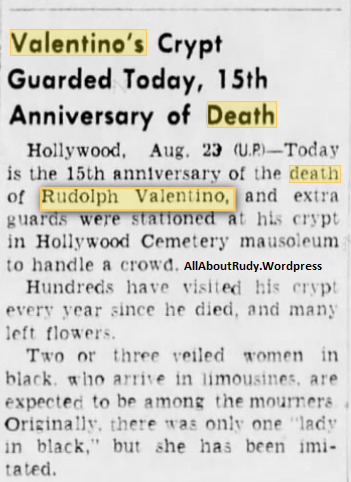
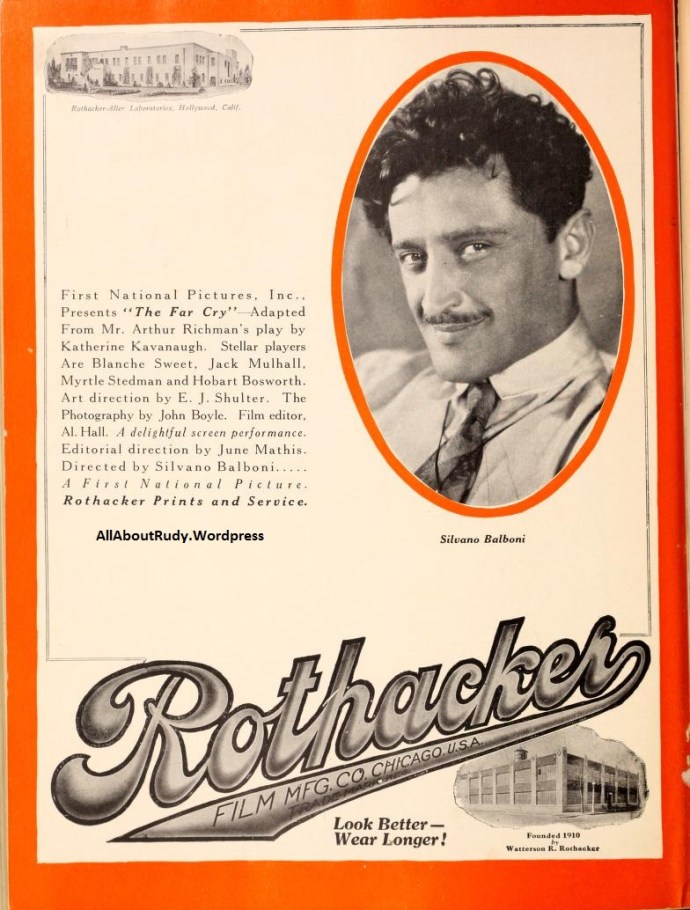
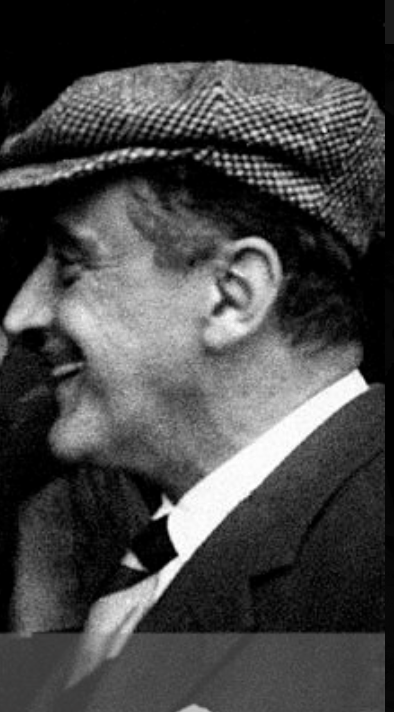
“Rudolph Valentino was an artist whose place will be impossible to fill, just as it will be impossible to fill the empty place in our hearts, caused by his death. I am deeply grieved.” Silvano Balboni, husband of June Mathis
Categories: Uncategorized
Tags: Death of Rudolph Valentino, June Mathis, Rudolph Valentino, Silvano Balboni
Leave a comment
Sep 1926 – Did you Know?
And how many of you children know that it was Peter Dixons story of the passing of Silent Film Star Rudolph Valentino that was the first to go over the wire? All’s fair in getting a store out first, and even Peter’s father admits that there was dirty doing’s at the time. Newspapermen were 30 feet deep around the door of the late star’s hospital room, waiting for the end. When it came Peter Dixon was well outside the last line, and his henchmen whom he planted their passed him the signal and threw the other news hounds into a scrambled heap. Last week, by the way, there was a dinner in Manhattan for the reporters and press photographers who covered Valentino’s funeral. The dinner is an annual affair and the host is Campbell’s Funeral Home the undertaker. We hope the advertisers did their stuff.

Romance! It is inherent in all persons, that desire and lacking in almost all lives..Rudolph Valentino
Nov 1926 – Changes at United Artists
The death of Rudolph Valentino has disarranged the production schedule of the United Artists, making it necessary for Mary Pickford and Douglas Fairbanks to abandon their contemplated Oriental Tour. Neither knows, however, what the next production will be.
Categories: Uncategorized
Tags: Death of Rudolph Valentino, Douglas Fairbanks, Mary Pickford, Rudolph Valentino
Leave a comment
1954 – They Remembered Rudolph
New York was in no sense the boundary of the irrepressible grief for Rudolph Valentino wherever the train that carried his body stopped on its long journey west more ‘unseen friends’ gathered, heads bared, cheeks sometimes wet with tears and among them some knelt to pray. In the towns and hamlets of many other countries this grief had innumerable counterparts. No one had expected so young a man to die and Valentino had meant so much to an international following. In the first shock of losing a loved one, the heart and its senses combine. Human sorrow found its more sensational expressions in New York, London, Paris, Berlin but in lesser places sorrow was as heartfelt, though evidence of it was not so spectacular. Untouched by the world outside, grief grew intensely personal and expressible only in poetry. So numerous where the poetic tributes to Rudolph Valentino that a volume of specialized verse could easily be assembled. No less a poet that the late Humbert Wolfe contributed to the London Observer a poem in remembrance of a dear friend. The Chicago Tribune the newspaper which had fired frequent broadsides at his national esteem wrote after his death “The death of Rudolph Valentino is a deep personal loss to most of us. We loved him because he was a weaver of dreams. Because he brought colour, romance, thrill into our daily lives. He embroidered drab moments, he smiled into our eyes and for a little while we too became story-book people and everyday worries were things that were very far away”.
In distance hamlets, stony-walled, where ends
Civilization in a sea bird’s cry, You made rough
Lovers, horny-handed friends, and ruddy cheeks
Are wet because you die. How many a reaper
With a muffled pain lashes her harvest where a
Red sun sets, into that heart you brought a dream
Of Spain, a scent of flowers, a sound of castanets.
And shapeless women working for mean pay
Remember, jogging on the laden carts O perfect
Lover, how you cast away money and roses and
Those bleeding hearts. Safe in the cottage shrine
Tonight you stand, some sun-baked yokel weeding
On his knees thinks of a duel for a lady’s hand, and
Hears a tango under orange trees. Rest people’s
Hero. Time can never take your gallant image from
The common breast; a chorus girl cries out her heart
Must break and it maybe you fed her need. So rest
This anonymous poem was discovered in a private collection of Valentino mementos.
Aug 1926 – Passing of Valentino. Impressive scenes of funeral of famous Film Star
M/S of Rudolph Valentino’s embalmed body lying in state. M/S of procession of men (including Douglas Fairbanks) coming out of building, they are followed by pall bearers carrying Valentino’s coffin. M/S of woman in black veil getting into a car. She weeps melodramatically, a man and a woman support each of her arms as she walks. The woman is probably Pola Negri, ex-fiancee of Valentino. Several press photographers take pictures. Various high angled L/Ss of the funeral cortege driving through New York streets, crowds line the way. L/S of entrance to church, tilt down to show coffin being carried from hearse to entrance. M/S of Valentino dressed as Sheikh emerging through curtain, he talks to a woman sitting on cushions on foreground (Vilma Banky). C/U of Valentino.
Categories: Uncategorized
Tags: British Pathe, Death of Rudolph Valentino, Pola Negri, Rudolph Valentino
Leave a comment

Categories: Uncategorized
Tags: Death of Rudolph Valentino, Lady in Black, Rudolph Valentino
Leave a comment
Aug 2016 – How the Death of Rudolph Valentino Affected Me
I started this blog because of a mutual admiration for a silent film star who lived a brief life long before I was born. Rudolph Valentino he was a dancer, an actor, a producer who I am fascinated by. One evening, 15 years ago, I watched one of his movies “The Sheik” on TCM and I absolutely felt mesmerized about him and by him I never felt that way about an actor before. There was something about him I couldn’t figure out what it was or why but all I know is that I became a fan. Through my journey of discovery has led me to know a bit more now than I knew then. I have met some wonderful people who have passed on their knowledge about him which I am forever grateful.
In Aug 2012, which is the anniversary month of his death. I decided to watch the newsreels of his funeral service. I seen the people crying and frantically wanting to take that last look of his body before being moved to its final resting place at Hollywood Forever Cemetery, Los Angeles, CA but I didn’t “understand” why? On 23 Aug 2012, was when I seen my first Valentino Memorial Service on YouTube. A moving tribute to a man who still shines in the hearts and memories of his extremely large fan base. Finally, I when the service was over with it all clicked and I “understood” why in 1926, and every year thereafter, everyone was crying and felt as though their hearts were broken by the death of a man who they never personally knew but felt they did. You see his death affected me on a personal level because I felt as though I lost someone dear to me to although I never personally knew or met him. In Aug 2014, I made it my mission to visit Los Angeles and my first stop was to visit Hollywood Forever and to visit his grave.. Although I have never been to Hollywood Forever I seem to know exactly where his final resting place was located. I was lucky there was no one around which gave me the opportunity of a lifetime to spend time in silent contemplation and I talked to him. I told him how much he meant to me and that I met some wonderful people because of him. That I wish the world knew more of his talent, that I was sorry that he did not have the love life or the children that he wanted that people loved him today and that he was appreciated for the talent that he had and was. During my brief stay I made a point of going everyday to visit him and my last day in L.A. I told him I would be back and I kept my promise and came back in 2015 and I will in a few weeks time to see him again keeping my word to pay my respects to Rudolph Valentino who has like other fans before me and fans after me a piece of my heart.
Categories: Uncategorized
Tags: Hollywood Forever Cemetery, Rudolph Valentino, Valentino Memorial Service
1 Comment
Apr 1932 – My Strange Experiences at Valentino’s Grave
A movement is being launched in Hollywood to erect a new memorial to Rudolph Valentino. It will take the form of a sarcophagus mausoleum in which Valentino is to be entombed. According to current plans, the building will cost around $40,000. The chap who imparted this information to me did not know whether a fund existed to erect the mausoleum or whether the money would be obtained by popular subscription. A difference of opinion arose regarding the latter course of procedure. It was my contention that some difficulties would be encountered unless large individual amounts were subscribed. After all, Valentino has been dead 5 years and these are times of stringent financial difficulties. “Forty thousand is a mere drop in the bucket”, my friend informed me. “Four hundred thousand could be raised in a short time if necessary”. Quite apparently you haven’t followed the legend of Valentino. Even in death he remains the screen’s most popular male star. The idolatry accorded Garbo is the only approach to the tremendous tradition of Valentino. “Pilgrimages to his grave rival those of history. Five years? What are five years? It will take a generation to dim his shining star and at least another generation to eclipse it even partially. If the people behind the memorial ask the public to subscribe, they can have the money almost over-night. “Do you know that there are nearly a score of Valentino Associations whose memberships are pledged to keep his crypt ever beautiful with flowers? Do you know that no less than ten people daily appear at the offices of the Hollywood Cemetery to inquire specifically where they might find the Valentino burial place? These folks are the new pilgrims and their number multiplied many times by the regulars. Five years and don’t talk to me about five years. Go talk to Pete at the mausoleum. He will give you a story of the Valentino’s tradition that will, if I am not mistaken amaze you. It seemed like good advice. I found that Pete was the diminutive of Roger Peterson, a big blond Scandinavian from Minnesota. He is the attendant at the Hollywood Cemetery mausoleum where Valentino is buried. In many respects Pete belies the conception of what a cemetery attendant should be. He is not a taciturn unsmiling individual but rather a loquacious, pleasant chap as jovial as he is big. Very frankly, Pete was a revelation to me. The major part of his duties have to do with inquiries concerning Valentino. It is therefore, an authority on the film star. Visitors, genuinely interested in Valentino and they number thousands find Pete a sympathetic confidant. Unfortunately, he also has to deal with hysterical, sometimes unbalanced people who make a Roman holiday of their visits to Valentino’s crypt. His handling of each semi-psychopathic cases would do credit to a physician. Pete has kept a diary since he has been on the job at Hollywood Cemetery. Like all diary-keepers, he has not made entries every day. There are long stretches of blank pages when the diary was forgotten in the press of other duties or pleasures. Not all the dates are accurate to the exact day. Pete was careless about dates. The document, nonetheless, presents an intensely vivid picture which I have taken but few liberties in transcribing. There are several points of Pete’s story to which I have added facts. The reporting of contacts with individuals, however, is entirely his own. The first date that concerns us is;
7 Sep 1926 – Rudolph Valentino was laid to rest in the mausoleum at Hollywood Cemetery today. Crowds estimated by the newspapers to number in excess of 20,000 lined the sidewalks as his funeral cortege passed from church to cemetery. Nearly 5000 people surrounded the church while last services were held. The scenes here must have duplicated the public demonstrations in NY where Valentino died on 23 August. His church services were attended by all the great of filmdom, but only his brother Alberto and Pola Negri came to the cemetery to witness the sealing of his crypt. Miss Negri later collapsed and had to be helped from the mausoleum to her car. The tremendous amount and great beauty of Valentino’s floral offerings defy description. The cards bear loving messages from Mary Pickford, Charles Chaplin, Jack Dempsey, and Estelle Taylor, Bebe Daniels, Kathlyn Williams, Antonio Moreno, Buster Keaton, Reginald Denny, William Randolph Hearst, Marion Davies, James Rolph Jr, June Mathis, and others. Pola Negri’s blanket of flowers that read POLA, June Mathis had a wreath of roses on which was the name Julio. Julio was the name of the character in the “Four Horsemen of the Apocalypse”. It was in this role, written by June Mathis that Rudolph Valentino won undying fame. The crypt in which he now lies belonged to Miss Mathis. In the tier below lies her mother and step-father. The space next to Valentino lies Miss Mathis.
08 Sep 1926 – The public, denied admittance yesterday, are thronging in today to view Valentino’s burial place. Hundreds of people have passed down the corridors of the mausoleum to pay last respects to their screen idol. The crowd as an average had been well behaved, but a few hysterical women have prostrated themselves, crying aloud their love for “Rudy”. Such demonstrations are embarrassing to the cemetery authorities but it is difficult to know how to combat them.
09 Sep 1926 – More people and more demonstrations.
10 Sep 1926 – Still more people and a particularly violent fit of hysteria. It is a shame that sincere affection for a public figure such as Valentino must be besmirched by exhibitionists.
11 Sep 1926 – The souvenir hunters have been at work. They have torn buds and ribbons from the floral offerings until little remains of the magnificent wreaths. It will be well to keep constant watch for vandalism ghoulishness may be a better word.
Specific stories of certain of thousands of people who daily thronged the mausoleum are lacking in the early chapters of this account. Pete did not “take his pen in hand” to report contacts with individuals until a later date. Perhaps the more vastness of the multitudes who came to pay homage precluded “human interest” reporting. The daily total of thousands was reduced to hundreds as time wore on, but the hundreds remained faithful. Valentino Associations were formed in various sections of the country. The next item to beg inclusion here has to do with the auction sale of Valentino’s Estate. It began 14 Dec 1926, with the sale of some five thousand items of his personal possessions. These items ran from small trinkets to expensive pieces of furniture, paintings, and tapestry. The auctioneers valued his personal belongings at $25,000 they brought in $125,000. It was the trinkets and intrinsically valueless properties that sold for many times their worth. Single handkerchiefs brought bids of as much as $25.00. A pair of salt and pepper shakers were purchased by a man for $12.50. He was the manager of a hardware store that sold identical pepper and salt shakers for 75 cents. But the merchandise he sold so cheaply had not once belonged to Valentino. The auction sale of course, stimulated additional interest in Valentino’s burial place. The crowds that visited the mausoleum again increased, but in a few weeks they had returned to normal. The cemetery officials grew to expect hundred or more people daily. The number varied but little until the first anniversary of Valentino’s death. Then the crowds were swelled again. Joseph Scheneck, present of United Artists Studio was chairman of the first memorial committee. Rudolph Valentino had died at noon and exactly at noon, one year later, work ceased at all studios. The afternoon was devoted to memorial services at the Church of the Good Shepard, attended by everyone of consequence in Hollywood. That was 23 Aug 1927. A month later, came a weird occurrence.
30 Sep 1927 – A woman came to the mausoleum today with the wildest delusion yet. She claimed she was about to become a mother and Valentino was the father of her child. This thirteen months after his death. The woman asked for permission to have a cot placed before Rudy’s crypt where she might stay until her baby is born. She went up to the cemetery office, and somehow or the other they got rid of her.
10 Dec 1927 – Souvenir hunters are at work again. Noticed today they have been chipping away at the small statue on the pedestal in Valentino’s corridor. I don’t mind them taking flowers but why must they spoil a beautiful piece of statuary?
03 Feb 1928 – There is a whole hand gone from that statue now and a new other parts broken. I had better not catch anyone chipping it, but I can’t stay around all day. I have other work to do.
08 Mar 1928 – I heard a crash this morning. It was the marble statue. Someone must have knocked it down trying to chip off a souvenir. By the time I got there, not a soul was in sight, but the statue did not fall down by itself. I had put it away in the shed. It’s too bad, but I suppose I should be thankful that there is one less thing to watch.
01 Jun 1928 – The people you have to keep your eyes on are the ones that come in laughing and joking. I don’t believe this is the place for wise-cracking and I am beginning to be suspicious of those who do it. The ones who show proper respect for the dead are usually above suspicion. When they tiptoe quietly down the corridors, scarcely speaking above a whisper, I know they are all right. It’s the kidders that need watching. Probably one of them broke the marble statue.
03 Jun 1928 – I am sure I’m right about jokers. A fellow came in today and told me a joke. A few minutes later, I caught him trying to get away with a small potted plant. If people want souvenirs why don’t they ask me? I would be glad to let them have a flower when I know it means so much to them. Cut flowers have to be thrown away so soon anyway. There was a girl in yesterday who asked for a rose from Valentino’s crypt. She was from Chicago and was going back in a few days. She said her boss had visited the mausoleum last year and had brought back a rose. He gave a rose petal to every girl at the office the gift had been so greatly prized by the girls that this young lady had been made to promise she would attempt to get another rose. Of course, I have her several roses and a few beads from the wreaths a Valentino admirer had sent from the old country. When we found that people were destroying the wreaths Alberto Valentino gave them to me for safe keeping. He told me to give some of the beads to the folds that really loved Rodolph. There are thousands of small beads on each wreath, plenty to go around. If anyone is decent enough to ask for a souvenir, they are welcome. But I’m not going to have things stolen if I can help it.
23 Aug 1928 – It is the second anniversary of Valentino’s death. Memorial services are being held again and beautiful memorial services are being held again. You might believe that after two years the memory of this great star would have dimmed. I can’t see that it has. Of course, most of the curiosity seekers have forgotten, but his real admirers have remained faithful. There must have been between four and five hundred people here today.
24 Aug 1928 – I don’t know what I’m going to do with all of these flowers. George Ullman, Valentino’s former manager sent over a lot more today. He gets letters and telegrams from all over the world containing remittances for floral tributes. His secretary sees that everyone is represented by some blossoms. This she does with great care, as she holds it a high honor to serve the ones who loved Valentino. She personally selects the floral arrangements and spends hours helping me arrange them. That is, she arranges them and I help if I can. We had our usual group of hysterical women yesterday and today. I am becoming accustomed to women screaming and crying for their “Rudy”. But when men do it sort of gets me. There was a little foreigner in today, a Frenchman. He burst into tears and kissed the cold marble of Valentino’s crypt then turning he practically ran from the building.
15 Oct 1928 – I met Mrs. Coppola today. She is the mother of the baby named for Rudolph Valentino. Of course, being Italian, the name is spelled Rodolfo. The baby died at birth, 29 Sep and is in a crypt on the top tier of the Valentino corridor. The mother came today and stayed several hours reading her bible and praying. I wish I could do something to comfort her in her grief.
21 Nov 1928 – Mrs. Coppola happier today than I have ever seen her. I asked her why and she told me a strange story of Valentino coming to her last night talking to her. She said his spirit came to her house and knocked on the door. When she let him in, he told her that her baby was happy and not to grieve so much.
16 Jan 1929 – I have not written anything in my diary for some time. Mrs. Coppola and I have become great friends. She calls me “Mr. Pete”. She comes regularly at least five times a week and always brings flowers from her own garden. These she divides equally between her baby and Valentino. I found out today that she never saw the Valentino crypt on the screen. When he died, she sold her home in San Diego, and moved to Hollywood, taking a house within walking distance of the cemetery. She used to come over often, even before her baby died, but she came over so early in the morning or late at night that I missed seeing her. She tells me that she seen Valentino’s spirit occasionally in her dreams and frequently hears him walking about the house at night. She has met Valentino’s brother and sister who come often and once in a while they all pray together.
There is another woman who comes regularly once a week. She is always dressed in black and always brings flowers. Valentino’s crypt will never lack floral tributes as long as his relatives and Mrs. Coppola, the lady in black and the various Valentino organizations keep his memory alive. There is a group in London that has the cemetery florist deliver a basket of flowers every Saturday.
07 Mar 1929 – The lady in black is no longer a person of mystery. She told me a lot about herself today. She is very poor, which explains why she always wears the same black dress every week. A black and white hat and a long cape, reaching to her ankles, complete her costume. Her husband left her several years ago with a small child to support. She earns all she can by doing housework of the hardest sort. Valentino represents the only romance in her life. She went to the studio once to see him work, but was too bashful to ask for an introduction. She says, however, that he glanced her way and smiled while looking directly into her eyes. That moment she will treasure forever. A few weeks later, he left for New York, where he died. She failed in her endeavor to meet him while he lived and now she spends what time she can by his side in death. The flowers she brings she feels are a pitiful offering as compared to the gorgeous wreaths she sees by his crypt. She seems furtively to slip her few blossoms among the others as though she is ashamed of the house-grown tribute. I know of none more sincere.
3 Apr 1929 – My lady in black came today. She kissed the marble in front of Rudy’s crypt, as she always does, and her face was still pressed to the cold surface when Valentino’s brother came in. She must have recognized Valentino’s brother from his pictures, for she seemed paralyzed by embarrassment. She simply cowed in a corner as if to hide from him. I know she would like to meet Alberto, so I made a point of introducing them. When I told him how she came regularly to bring flowers, he thanked her graciously. I have never seen anyone so pleased.
8 Jun 1929 – My lady in black did not come this week or last. I miss seeing her and hope she is not ill. She cannot afford to be sick form what she told me.
23 Aug 1929 – Third anniversary of Valentino’s death. Again, the flowers are being received in tremendous quantities. Perhaps a few less than last year. All the regulars came except the lady in black, I am worried about her. Wish I knew where she lives. (Note I never heard from her again).
4 Oct 1929 – There must be a convention of spiritualists around here some somewhere. I have met more people who have talked of having seen Valentino’s spirit recently than I have since I have been with the mausoleum. They tell very convincing stories. I wonder what it is like to have the power to peer into the mystic realm of the dead. On an average, I like these folks who talk of spirit form. They are generally very quiet and well-mannered. Some are rather weirdly dressed, but there’s probably for effect.
16 Dec 1929 – We had a real spiritualistic manifestation today. A woman came in and introduced herself as a medium. She said she had spoken with Valentino upon numerous occasions, but he always disappeared before she could ask him everything she wished answered. She had, therefore, travelled from somewhere in New England that she might hold a séance by his crypt. Perhaps she wasn’t asking my permission, but I told her to go ahead. I really don’t care what people do just so they aren’t noisy and don’t steal or break anything. This woman started to go into a trance when something happened. IA series of knocks were actually heard from above the crypt. The medium ran around in circles, crying “Hear Hear’ He knocks. Rudy knocks. She behaved like an insane person. Others, attracted by her cries came running down the corridor. Sure enough, there was a tap, tap, tap to be heard from above. We investigated and found a large yellow-hammer had gotten into the attic of the mausoleum. How that bird had been able to get in remains a mystery to this day. But he was flying around crazily and the beating of his wings caused the tapping noise. The bird and the spiritualist left the cemetery about the same time. I don’t know which was the most crest fallen but neither returned.
21 Jan 1930 – Some people don’t realize when they are well off. A young lady came in today, who had quarreled with her husband over some silly trifle. The argument started when she informed him that Rudy would not have treated her as he was treating her. He replied that, if she did not like it, she could go live with Rudy. So she took his advice and left home. She spent all day crying by the Valentino crypt.
22 Jan 1930 – The same girl has been around all day again. She says she is going to get a job in the movies.
23 Jan 1930 – The girl did not show up today.
24 Jan 1930 – She did this morning when I came in, I found her asleep on the cold marble alongside Valentino’s crypt. She came around last night and finding the mausoleum closed, she climbed through the window. Apparently, she was attempting to follow her husband’s advice about living with Rudy. She was warned that if she tried the stunt again she would be liable to legal prosecution for unlawful entry. This isn’t the first time somebody has tried to spend the night in the mausoleum and it won’t be the last. Before closing up, we always look for people who might be hiding.
31 Jan 1930 – Heard today, that the girl who climbed into the mausoleum window had returned to her husband. He came to get her and take her back to the mid-west.
2 May 1930 – For more than a week, a very pretty young lady has been manufacturing her own souvenirs. Like the other girl who collected rose petals, she is from Chicago. These people from Chicago, seem to do allot of travelling. This particular young lady, has been bringing a large bunch of yellow roses on her daily visits. She puts them in a receptacle by the crypt and clips off the dying buds from previous contributions. These flowers she intends to take home as souvenirs from Valentino’s crypt. She put them there who has a better right to take them away.
14 Jul 1930 – I heard one of the strangest stories of my experience today. A middle-aged woman came in with an enormous bunch of lowers and made her way directly to the Valentino corridor. She seemed to know where she was going and I followed to offer her what assistance I could with her flowers. As she neared Valentino’s crypt I heard her cry “At last, Rudy, at last I have come. Your spirit has led me on, ever on, to view your final resting place. Rest, dear heart, rest” there was a lot more in the same vein. While she rested, she told me her story of how Valentino’s spirit had come to her as she lay ill on her hospital bed in a Southern city. Valentino whispered that she would get well immediately, but the must make a pilgrimage to his tomb before she could find happiness. The vision disappeared and she fell into a deep restful sleep. When she awoke she felt strong enough to leave the hospital. They discharged her two days later. As she needed funds for the trip to California, she sought an office position and obtained one as a secretary to a business executive. It was practically a case of love at first sight, and when the executive was called to Europe on business he proposed they take a trip for a honeymoon. The only cause of a rift is their first months of happiness is the vision of Valentino. Her husband scoffed at the vision calling it a hallucination of the sick room. But she was unable to dismiss it so easily. When they returned from Europe, she insisted on following the advice of her vision. Her insistence forced a separation and in a small car she set out for California narrowly escaping death in three separate accidents. Arriving in Hollywood she drove straight to the cemetery. She summed up her story by saying “Here I am at the end of my pilgrimage, exhausted but happy in the of my success. My task is done, I have kept faith. My plans for the future are not made but if I can find work, I hope to remain in California.
21 Jul 1930 – It has been a week since the lady with the vision came. She appeared again this afternoon with more flowers. She told me that she had obtained work in a studio and planned to settle here. She was assured she would find happiness promised to her by Valentino’s spirit.
31 Jul 1930 – A man has been haunting the mausoleum for the last two days. I wonder who he is.
2 Aug 1930 – The mystery man has been identified. He met his wife this morning who was none other than the vision lady. They talked for some time in a secluded corner and apparently patched up all their differences. He waited for his wife outside while she knelt by Valentino’s crypt to say a last good-bye. She kissed the marble, whispering “Farewell Rudy, dear heart, farewell”. She did not stay long. Smiling she followed her husband into the sunlight.
23 Aug 1930 – Fourth anniversary of Valentino’s death and a repetition of all others. Flowers a little less profuse, but no other change.
3 Sep 1930 – Among today’s visitors was a delightful little lady who informed me proudly she was 80 years of age and a great-grandmother. She wanted to buy the crypt directly over Valentino but when I told her he might be moved later on, as he was merely occupying a section of the June Mathis groups she decided not to buy. “He was so sweet” she said. I loved him like one of my own children. If I cannot be near him always here I will wait awhile until they decide where he is to be moved. Then perhaps it can be arranged. This at 80 years of age. Peter’s diary ends here inasmuch as it concerns Valentino. But he informs me that the fifth anniversary in fact, was observed with greater interest than any since the first. I withdraw all my contentions regarding the advisability of launching a $40,000 Valentino Memorial at this time. The public, if invited, would undoubtedly subscribe $4,000.000, so dear is the memory of Valentino in their hearts.
Categories: Uncategorized
Tags: June Mathis, Pola Negri, Roger Petersoen, Rudolph Valentino, Valentino Memorial Service
1 Comment
21 May 1934 Mae Murray Slaps Lawyer
Mae Murray, silent film actress, caused a minor sensation in Justice Aaron Steuer’s part of Manhattan Supreme Court this afternoon when she struck an attorney opposing her in the trial of her $300,000 suit against Tiffany Productions INC. The action had been dismissed and Justice Steur had just left the bench when the lawyer, Bertram Mayers, whispered to her: “Now you’ve got justice”. Tears streaming down her face Miss Murray slapped Mayers on the jaw and screamed “God will attend to you. You’ll get yours”. Her attorney, Harry Sitomer, sprang between them and quieted her as the crowd in the courtroom was dispersed. “I did not get justice. I never got justice in my life” the tearful actress told reporters. “I advise all my brothers and sisters in the profession to beware of percentage contracts and be content with salaries”. In dismissing the action, Justice Steur held that she failed to prove the Motion Picture Company had defrauded her. Miss Murray testified that in 1920 she contracted to make her eight pictures in return for 25 % of the earnings. In 1924, after the pictures had been completed, she said the company gave her $12,500 and induced her to sign a release. It was not until 1930, she added, that she learned the pictures had netted $2,000,000. Herbert Crowenweath, President of Tiffany Productions, testified that the first two pictures, “Fascination and Peacock Alley” made money but that no profit was realized on the other pictures.
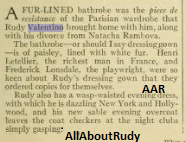
23 Aug 2016 89th Annual Valentino Memorial Service, Los Angeles
Every year on 23 Aug at 12:00 p.m. Hollywood Forever Cemetery, Los Angeles, CA is the annual Rudolph Valentino Memorial Service. I have been privileged to attend that last two events and I will be back in Los Angeles next month reporting for the 89th Annual Valentino Memorial Service. Mr. Tracy Terhune does a spectacular job in putting together a memorial service that is tasteful and reverent to the memory of a Silent Film actor that is beloved by thousands today.
This event is free and I hope to see everyone there.
Categories: Uncategorized
Tags: Rudolph Valentino, Tracy Terhune, Valentino Memorial Service
Leave a comment
What the average man calls death; I believe to be merely the beginning of life itself. We simply live beyond the shell. We emerge from out of its narrow confines like a chrysalis. Why call it death? Or, if we give it the name death, why surround it with dark fears and sick imaginings? I am not afraid of the unknown –Rudolph Valentino
Categories: Uncategorized
Leave a comment
1926 Marriage Grows Cold Gossip
The papers leaped at the story which he gallant Rudy pulled as the cause of the separation which, by the time this appears, will have developed into a Parisian divorce decree. Natacha, he says, was not a home body. She didn’t want children. She would not cook the spaghetti. She was fond of dogs. She wanted to work. His reflected glory did not satisfy her. She wanted her own career. Bunk! Bunk served with piffle sauce. Publicity for Rudy. But old stuff. Do you remember the way Gloria Swanson set the dear old souls of Paris wild over her when she said she wanted five or six children? I believe she meant it, because I have seen her with her two children. She adores them. Her own baby, little Gloria, was not enough, and so she adopted a boy and named him Joseph Swanson, after her father. But I have never heard of Mr. Valentino hanging around an orphan asylum, and I cannot quite visualize the picture of the sheik walking the floor of a cold California night crooning the junior to sleep. It was not, in my opinion, playing the game to midst an effort for sympathy and publicity at the expense of the woman, even if it were true – which I doubt. And we must hand Mrs. Valentino credit for her attitude in the whole matter. She would not live with him and his friends, told him so, got out, leaving her belongings to him, and went on her way, avoiding any opportunity to publicise her- self at his expense. Divorce is no joking matter, but I cannot hold back a little snicker at Rudy crying on the shoulders of the public and yearning for kiddies. THERE is nothing vindictive or downright mean about Valentino. He’s a pleasant chap and a fine actor, whose delusion is that he is also a business man. Natacha has been criticized for managing his business affairs. But we have got to admit that in this case her management was much more commendable than his. To add to her troubles, the F. B. O. Company, for whom Miss Rambova made a picture because she needed the money, changed its name to “When Love Grows Cold” after it was finished, with the frank purpose of capitalizing her marital troubles. Miss Rambova protested that it would harm her and create the impression that she was the one who was profiting by deceiving the public into believing it was a screen revelation of their love wreck.
Categories: Uncategorized
Tags: Gloria Swanson, Mrs. Valentino, Natacha Rambova, Rudolph Valentino
Leave a comment
11 Jun 1938 The Sheik Showing At the Local Strand
“The Sheik” a 1925 Rudolph Valentino romance, was revived yesterday at the Brooklyn Strand Theater as the first attraction on a double bill. This reviewer wasn’t movie-conscious in 1925. We can’t say how the average audience in those days received Mr. Valentino – whether they wept hot tears over the fate of the hard-put heroine at the hands of the threatening sheik, or whether they chuckled quietly at the ridiculous antics taking place on the screen. They didn’t have the opportunity to know now valuable good direction could be in bringing realism to the portrayals of the actors. But anyone who had previously watched a legitimate stage production, or who had looked about him in his everyday life, should have realized the gross exaggerations of Valentino’s passion and Agnes Ayres overwhelming self-pity. Whatever their reactions might have been, today you will either accept “The Sheik” with a smile and the appropriate hoots and boos and thereby have an enjoyable time or you will be thoroughly bored to tears. Adolphe Menjou, considerably thinner plays a featured role and even he expresses his emotions with quick, stiff actions and alarming shiftiness of eye, although he indicates through it all that he is actually a better lover than Valentino himself. To the somewhat fuzzy photography and soundless mouthing’s of the actors, a piano sound track has been synchronized. It replaces the pit pianist and carries through the atmosphere of the old-time flickers that will be an amusing revelation to the uninitiated and a nostalgic occasion for those who have mastered with the screen.
1923 – Benefit Tickets on Sale Now
General Admission $1.00 tickets are on sale at Armory or American Society for Devastated France 4 West 40th Street or Irving Bank Columbia Trust 276 Park Ave. For the past six weeks Rudolph Valentino with his famous Argentine “Four Horsemen” orchestra has been touring the United States and Canada in his luxurious private car “Colonial”. In addition, to giving his special exhibition dances and his famous “Four Horsemen” Tango with Mrs. Valentino he is conducting in each city the Mineralava Beauty Contest seeking to find the most beautiful girl in America, lie hopes to have as the leading lady in his next and greatest picture. His appearance on Saturday evening at the Seventy-First Regiment Armory will be a notable affair, conducted, for the benefit of the fund for Devastated France and the Maternity Center Association of which Miss Anne Morgan is the Chairman. After giving a number of exhibition dances Mr. Valentino will with the committee, Howard Chandler Christy, Harrison Fisher and Walter Russell, select the most beautiful girl in New York. Every young lady should enter this Beauty Contest and take advantage of this wonderful opportunity. Send your photograph with your name and address to the Valentino Editor, New York Morning Telegraph, so that it will reach that newspaper no later than Saturday morning of this week. Fifty of the most likely candidates will be selected, a telegram will be immediately sent to them to appear at the Seventy-First Regiment Armory, Saturday evening at eight o’clock. A large part of the evening is to be given over general dancing and there will be continuous music by Valentino’s own Argentine Orchestra and the Seventy First Regiment Band.
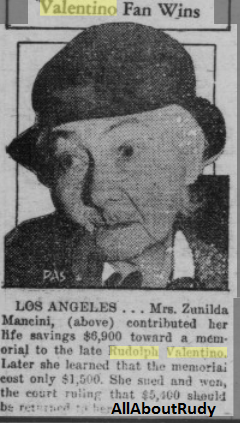
In 1921, if you wanted to call Natacha Rambova in Los Angeles here was her phone listing:
Natacha Rambova, Asst Metro Pics Corp R1525 Gardener.
26 Nov 1925- Rudolph Valentino Returns
Rudolph Valentino, the famous cinema actor who just arrived from America, was the centre of an extraordinary scenes at a West End Cinema theatre, where he personally attended the occasion of the screening of one of his films. He was surrounded by a seething crowd, mostly women. The police forced them back and the doors had to be locked after the performance. Valentino rather than face the crowd which remained in the street, had to escape over the roof of the theatre.
1926 High Prices Brought By Valentino Effects
Gold Cloth Owned by Star Sells for $2,965 After Spirited Bidding Los Angeles, Dec. 14, UP).- Spirited bidding by hundreds of persons who thronged the hall of arts today seeking possession of personal effects of the late film-star, Rudolph Valentino, was in sharp contrast to the lack of enthusiasm displayed last week when the two estates of the screen lover were put up for auction sale. A golden cloth cassimere shawl sold for $2,966, considerably more than IU original cost; $2,200 worth of stock in the Hollywood Music Box Revue brought $500; an Italian drawer chest, $810, and an Italian piano, $2,100. But three motion picture players wore recognized in the crowd – Eleanor Boardman, Raymond Griffith, and Adolph Menjou. Menjou bid in a Goethe cabinet for $390. ■Pola Negri was not present, nor did she, buy anything far as could be determined, have a representative at the sale.
Categories: Uncategorized
Tags: Adolph Menjou, Death of Rudolph Valentino, Rudolph Valentino
Leave a comment
Dec 1923 – Bringing Dead Pictures to Life
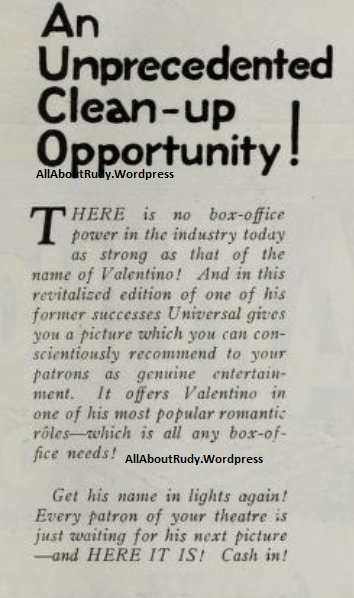
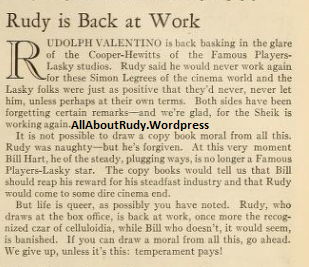
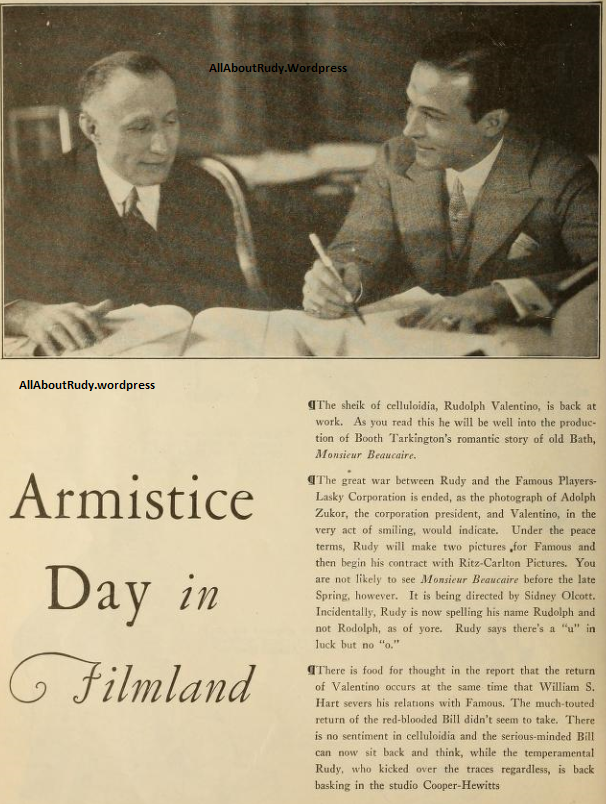
 Bringing dead pictures to life is the task of the “film doctor”. From a mess of old films, thrown into the discard because they are too poor for the big exchanges to use, he patches rehashes and builds up a strange conglomeration that is re-titled and sometimes freshened with a few new scenes. Then it is peddled to the little theaters and ignorant patrons are hoaxed into paying money to see it. I made the acquaintance of a film doctor not long ago. He told me the dark secrets of the cutting rooms. From this man, I learned that companies are formed for the sole purpose of “warming over pictures”. Their buyers comb film libraries can after can of old film some of it made and exhibited as far back as 1914. They buy all stuff that can be revised and doctored. Then it is given a new name and sent again on its rounds of theaters. “Here is how we do it” the film doctor told me. “We find an old feature film. The buyer is especially watchful for scenes of players who have made big reputations like Valentino’s on which we can cash in. Sometimes, of course, the exhibitor sees the value of the old film. In some cases, big producers have reclaimed their own film at little expense and thrust it upon the market.

“There is nothing complicated about reviving a dead production”. It costs only a few dollars, once we get the right film. New titles with unique border designs are printed and inserted and prints are made from the old nitrate negative. Sometimes, to paid it out, we add stock scenes, with new situations and incidents. Of course, we cannot re-take the star. These fresh scenes are starless ones. But we splice it all together and you’d be surprised how neat some of the jobs turn out. “Of course, anyone who has any knowledge of pictures can at once see that it is old stuff. The sets are rickety, the lighting poor, and the actors are often crudely directed and costumed. These things all depend on how many years ago it was made. Every year shows a sharp advance in the quality of pictures, you know. There is one way that the wise exhibitor can always tell a warm-over print. They are almost invariably rainy. A rainy print is one that is made from a negative that is scratched and streaked from passing many times through a printing machine. This causes fine white lines that dance vertically up and down the screen. This is our biggest handicap in selling revised pictures.” After my talk with the film doctor, I began to realize that the issuing of old prints, disguised as new ones, is one of the cheapest greediest phases of the movie industry. If producers must revive old productions, let them frankly take their old stories and reproduce them in a modern way, under modern conditions. But let them be advertised as revivals. WH Hays biggest job is to re-establish the confidence of people in motion pictures. The men who make the movies can assist him by leaving their old films in their files in their film libraries, where they belong. As an example of what I mean, let me quote from an advertisement in the 24 Jun 1922 edition of the trade journals for exhibitors. This advertisement bore the seal of a prominent producing and distributing organization. It goes to say: “A colossal array of BOX-OFFICE names. Imagine what you can do with such names as Griffith, Reid, Gish, and Calanne. Imagine what you get with the talents of these great artists merged into one big box-office attraction. Imagine Mr. Showman, how you can exploit these names… This big producing and distributing company has probably purchased the negative of this old film and in their laboratories made it over. The picture-wise public whose intelligence has increased with the progress of the industry”..Some time ago, one of the prominent producing units of the industry one who has made good pictures and one of the few to remain after the sifting of the past few years rehashed a screen play which they named Rogues Romance. It might have been a good number as to that I cannot say but when they decided to wish it on the public again they advertised Earle Williams and Rudolph Valentino. Now, surely, at the time when this film was produced Valentino could not have had a part that would have justified his being featured. If he did, why didn’t they feature his name first. No, they featured Valentino’s name on the revival of the piece to cash in on his present-day reputation. The playgoer goes to the theater advertising this feature expecting to see Valentino in a big role. No doubt, Mr. Playgoer wonders when Valentino joined forces with this particular neighbor. “I didn’t know Valentino was with so and so”. I thought he was with Paramount? Then after, he has seen the performance he soon understands, and curses because he was fool enough to be swindled.
Categories: Uncategorized
Tags: Mrs. Rudolph Valentino, Natasha Rambova, Rudolph Valentino
Leave a comment

16 Jun 1939 Rudolph Valentino Ring is Forfeited In Smuggling Case
A 15 carat Canary Diamond Ring valued at $3500.00 and said to of been designed
for the late actor Rudolph Valentino was forfeited today to the U.S.
Government and consigned by Judge Wayne Borah to the Smithsonian Museum,
Washington DC. It had been smuggled into the U.S. Thomas Chan, 40 years old,
Minneapolis Art Dealer who brought the ring into the country pleaded guilty in
federal court here to smuggling. He was fined $2000.00 and sentence to two
years in prison. He paid the fine and his sentence was suspended.
30 Sep 1936 – Handwriting Tells by Nadya Olyanova
Nadya Olyanova is not a lady for whom one puts it in writing without peril. She can even tell from your chirography and that of your girlfriend whether you two should get married. “Handwriting is the mirror which discloses weaknesses as well as one’s strengths, and to have an intelligent understanding of your prospective husband or wife is to be aware of the causes of the weakness, the motives which often lie hiddin in the inner self,” she states in “Handingwriting Tells,””Many mistakes and much unhappiness could be avoded if every couple contemplating marriage were to submit their handwritings to an expert for analysis”. Somehow it seems a dirty trick to take a lady’s letters to such a one as Nadya Olyanova. Yet our author assures us that the Natacha Rambova – Rudolph Valentino matrimonial smashup could have been foretold by a handwriting diagnostician. “Miss Rambova an only child, writing a backhand, was an introverted, seclusive person who preferred her own society to that of other people; nor did she, as did Valentino, seek the approbation of the mob,” she explains. “Valentino, extrovert that he was, with his rightward leaning script, enjoyed mixing with people and was only as discriminating as his exalted postion in the cinema world demanded of him”. Extroverts should marry extroverts, and to stay on the safe side where marriage has possibilities of permanence and happiness means to stay on your side of the diagram
4 Feb 1922 Four Horsemen at the Capitol
With the coming of the “Four Horsemen of the Apocalypse” to the Capitol next week, Rex Ingram will have two pictures running simultaneiously on Broadway. In creating this stupendous production, this young director has made oneo the great classics of the screen. The picure, adapted by June Mathis from the novel of Vincente Ibanez, is not a war play, except as the war serves as a background for the story teeming with dramatic passion. The director has succeeded in concentrating the great struggle in a series of unforgettable pictures that flash out the quintessence of life. Through it all is the deeply human, deeply moving spectable of intensely real people in their baffled attemptes to readjust themselves to the demands of the war days. In the cast of 50 principles and 2500 extras are included a score of well-known screen stars. They are Rudolph Valentino, Alice Terry, Pomeroy Cannon, Joseph Swickard, Brinsley Shaw, Alan Hale, Bridgetta Clark, Mabel Van
Buren, John Sainpolis, Nigel de Brulier, Virginia Warwick, Derek Ghent, Stuart Holmes and Edward Connelly. SL Rothafel and his staff are at work on the details of a presentation in keeping with the production.
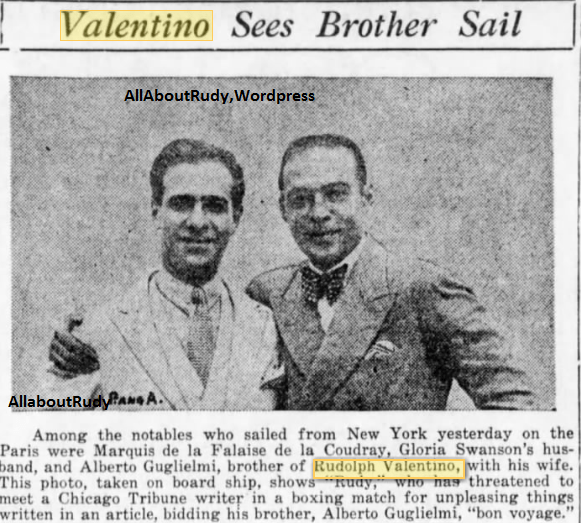
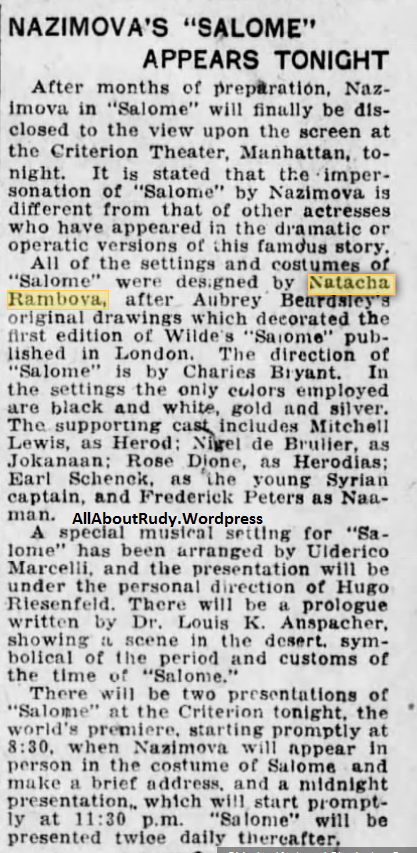
3 Jan 1928 – Rudolph Valentino Was he Poisoned?
Was Rudolph Valentino poisoned by a jealous woman whose advances he rejected? According to messages from the “Seccolo,” of Milan, private detectives in New York are working on a clue which may lead to a solution of the numerous rumors surrounding the death of the famous film star. According to one report, a detective and his wife were the witnesses in a Broadway night club of an incident which, it is alleged may afford an explanation of Valentino’s illness and death. Valentino, it is stated, was approached by a woman who was apparently in love with him. Valentino turned his back on her and entered into conversation with another woman. With anger the spurned woman is said to have made a sign to two men. A lady detective says she overheard one of them say, “The Indian method is infallible. One can mix diamond dust with a drink, and it will cause death by internal perforation. Doctors will say death was due to an incurable malady or attributed to appendicitis.
1927 – Pola Negri Article
A palatable dish with all the ingredients of good drama, well served,
constitutes the piece de resistance at present on the Metropolitan menu. In
fact it is hardly possible that Pola Negri of “The Woman on Trial” would not
whet the jaded appetite of the most sophisticated of the devotees of the
silver screen. And jaded indeed does the appetite of the average spectator at
the average motion picture become; picture succeeds picture, plot follows plot
with an abysmal shallowness of invention, and a dispiriting similarity of
spirit. It almost seems as if the chief advance of the art were in the
decoration of the theatre, rather than the quality of the picture. “The Woman
on Trial” differs very little in plot and invention from innumerable other
pictures the reviewer could enumerate if he had a memory for names. Enough,
that it plays in Paris with scenes from the Place de la Concorde and the Latin
Quarter. It seems unnecessary to examine the plot further. In spirit, to use
that nebulous word, it differs, however, from the other fruit on the family
tree. That new spirit is due without any doubt to the presence of Pola Negri.
She is not pretty the bathing beauty sense, yet it is perhaps her face which
gives the tone to the whole picture. There is in it a look of passion and
tragedy without which “The Woman on Trial” might be interchanged with any
other similar picture and no one would care much, even if he noticed the
difference,. But there is a difference, and it is just the difference between
the good and the poor. As for the rest of the Metropolitan’s “Greater Entertainment,” the divertissement, so to speak, it remains rather hazily in the mind; in fact it succeeded excellently in diverting the attention from what was taking place on the stage. There guesses what it was.
Feb 1927 – Natacha Rambova has “Succumbed to Fascination of Legitimate Stage
“I have always been an exponent of the ‘bizarrerie’ in art because I feel that it is most suited to my personality,” Miss Natacha Rambova, former wife of Rudolph Valentino and now the star of the mystery play “The Triple Cross” at the New Park Theatre, told a Crimson reporter yesterday before the matinee. “In the field of art one must adapt his or her environment to the personal element. I have experimented with artistic designing, dancing, the cinema, and the stage in order to see which would be the best medium for expressing my individuality. It is an interesting quest but has no definite destination. At last, however, I can safely say that I have succumbed to the fascination of the legitimate stage. I intend to give it most of my time because it not only demands more than the screen but because it is far more developing to an actress. “But to return to the exotic in art,” remarked Miss Rambova, whose Georgian South Russian type of beauty is most exotic, “it was my first love. I followed it in my dancing and in my designing. When asked her opinion of mystery plays Miss Rambova replied that they were most strenuous for the actress. “We are continually studying the audience,” she said, “in order to get the right effect. So much depends on the little things. You must close a door with the most mysterious manner, there must be an added significance in the way you walk across the room. It is fun though to try and thrill the audience. Once the cast has them in its power we enter into the spirit of the thing and almost frighten ourselves. Again we have to rehearse one episode dozens of times to get the right effect.” Miss Rambova mentioned her forthcoming biography of Valentino. “I have been everything but an authoress,” she concluded.
Mills & Boon and the Sheikh Subgenre
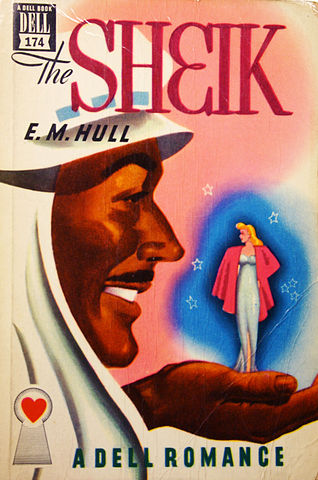
Mills & Boon was founded in 1908 by Gerald Mills and Charles Boon. Although they initially did not focus on romance novels, over the years the Mills & Boon imprint has become synonymous with romantic fiction: the Oxford English Dictionary defines Mills & Boon as a ‘trademark used to denote an idealized romantic situation of the kind associated with the fiction published by Mills & Boon Limited: the Mills and Boon tall, dark stranger’. After a merger with Harlequin in 1971, the company has enjoyed unbounded success: according to the company, a Mills and Boon book is sold in the UK every 3 seconds and it is estimated that romantic fiction accounts for 20 per cent of the fiction books retailed in the UK – that is one in every 5 fiction books sold. The company claims a huge global readership, selling 200 million books worldwide each year, distributing in 109 different countries. To put this in context, all seven of J. K. Rowling’s Harry Potter titles, including three companion books are estimated to have sold 450 million copies. If Mills & Boon continue to publish at the same rate (and evidence suggests that their sales remain buoyant even in a global recession) Mills & Boon could sell this many novels in just over two years.
Although not published by Mills & Boon, E. M. Hull’s The Sheik (1919) has been widely accepted as the first formula ‘sheikh’ romance. I define sheikh romance as a love story set in the deserts of the Middle East or North Africa, with a sheikh or sultan hero and almost always a western (which is usually British, North American or Australian) heroine. A typical sheikh romance might begin with the forced marriage of hero and heroine following her abduction to his desert kingdom: an experience interspersed with midnight horse-riding in the desert, camping in a Bedouin tent, getting rescued from a sandstorm, bathing and being luxuriantly massaged in the sheikh’s jewelled palace, and enjoying a host of other Orientalised luxuries. The success of Hull’s The Sheik spawned many more sheikh novels, including the first Mills & Boon sheikh romance, Louise Gerard’s A Sultan’s Slave (1921). Mills & Boon followed this up with Desert Quest by Elizabeth Milton in 1930, Maureen Heeley’s The Desert of Lies and Flame of the Desert in 1932 and 1934 respectively and Circles in the Sand (1935) by Majorie Moore. Sheikh romances seem to decline in popularity during the 1940s, at least in terms of Mills & Boon publication, but return in the 1950s and 1960s. At least three original sheikh titles were published by Mills & Boon in the fifties, six in the sixties, growing to 12 in the seventies, 17 in the eighties and 24 in the nineties. However in the 2000s the growth in popularity was exponential, with over 100 original titles published by Mills & Boon from 2000-2009. Even taking into account the increase in the number of novels published, this is a substantial increase, suggesting a significant contemporary market for these sheikh romances. Although sheikh titles appear in many different series, the majority of recently published sheikh titles in the UK have been part of Mills & Boon’s flagship ‘Modern Romance’ series which began in July 2000. From the beginning of the ‘Modern Romance’ series until December 2009, Mills & Boon published 57 original sheikh titles in the ‘Modern Romance’ series [1] and these are the texts I focus on in this paper.
1928 – Three Sinners” Gives Polish Import Chance to Bare Back
Pola Negri, one of Hollywood’s choicest importations, is the reason for going to the Metropolitan this week, if one is not of that ever increasing Publix contingent which just loves to put Gene Rodemich on a pedestal and applaude his numerous gyrations. However, to give Gene credit, he does surround himself with a some-what more entertaining group than usual to celebrate his “Hall and Farewell” performances. Now that he is leaving Boston, for a while at least, the reviewers will have to give more attention to the feature film at the Babylonish picture palace. Pola Negri’s glittering photodrama “Three Sinners” is one of those pictures which thrill backwoods audiences and cause girls with limited wardrobes to leave home for Hollywood. The features of the hectic and soul-stirring tragedy are Pola’s bare back and-her silver wig. She handles both capably, so capably in fact that Dresden, Vienna, and Paris combined have nothing in the way of feminity to rival her. She portrays dramatically–a la bare back and silver wig–a woman whose ruined life was brought about through her husband’s indifference. A railroad wreck, gambling dens in full blast, interiors of choice Parisian restaurants, and sorrowful close-ups of Pola drenching her little girl with a shower of joyful tears at the end, make the picture very enjoyable for students leading suppressed lives and rebelling against the monotonous humdrum of Cambridge.
20 Apr 1984 – Death of Paul Ivano
Paul Ivano, a cinematographer whose credits ranged from Rudolph Valentino films through some of television’s most popular series, has died. He was 83 years old. Mr. Ivano, who helped film the acclaimed chariot race in the silent-film version of ”Ben Hur,” died April 9 in the Motion Picture and Television Hospital, it was announced Thursday. He began as a photographer with the United States Army in his native France in 1918. Two years later he was named director for ”The Four Horsemen of the Apocalypse,” the first of five films he made starring Valentino. Over the years, he frequently worked with Alla Nazimova, the silent-screen star, and with the directors King Vidor and Frank Borzage.
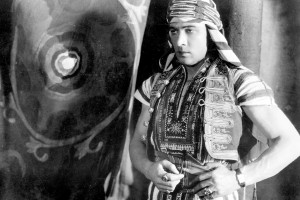
One of the enduring mysteries of Long Island’s brief run as a capital of silent movie production is where exactly the 1921 blockbuster “The Sheik” was filmed. Was it, as local lore suggests, among the wind-swept Walking Dunes of Montauk, or along a five-mile stretch of beach near Amagansett, where a town historian, then 8, remembers playing with palm fronds left behind by the production company? Or, as some of you are already asking, do we really care? We do, if only because one of us spent a holiday weekend trying to find the answer. So head with me to Queens, where today’s Kaufman Astoria Studios serves film crews working on everything from “Sesame Street” to “Nurse Jackie.” Built in 1920, the building originally headquartered a conglomerate called Famous Players-Lasky, a merger of companies owned by film pioneers Adolph Zukor and Jesse Lasky and the flotsam of six other firms, including the George M. Cohan Film Corp. At the time, New York was still America’s film capital, having transformed Edison’s 1890s invention of the moving picture camera into the industry that today is known simply as “Hollywood.” But while studios in the boroughs and ’burbs were still cranking out hundreds of silent shorts, the shift was already on to Southern California, where filmmakers, Lasky among them, could count on 300 days of sunshine a year. Hollywood was also where a young Italian immigrant named Rodolfo Guglielmi had settled after middling success as a New York City taxi dancer and tango instructor. Rudolph Valentino, as he called himself, landed bit parts in several films, almost always as a swarthy gangster or other villain. His breakthrough role came in 1920, when Metro Pictures cast him as the lead in the epic war drama “The Four Horsemen of the Apocalypse.” The film became one of the first silents to gross seven figures – even topping Charlie Chaplin’s “The Kid” – and popularized both Valentino and the gaucho pants in which he appeared. A sudden star, Valentino demanded better pay and more control over the parts he played, but Metro refused the raise and cast him in a B-grade flick titled “Uncharted Seas,” then a pair of flops, “Camille” and “The Conquering Power.” In a fit of pique, Valentino quit Metro and signed on with Famous Players, lured by Lasky’s offer of a $50 raise and promises of bigger money to come. Valentino’s first film for the new studio was an adaptation of “The Sheik,” a popular bodice-ripper by British novelist Edith Maude Hull. Released in October 1921, “The Sheik” was panned by critics as pure camp – “Valentino depicts lust by widening his eyes and baring his teeth,” one said – but it was a runaway hit with American women fresh from the suffrage victory of the previous year. Film historians say it appealed perfectly “both to women’s fantasies of autonomy and their desire to be swept up in love’s protective embrace.” Largely avoided by male moviegoers, “The Sheik” still smashed attendance records at the Rivoli and Rialto chains in New York, drawing 125,000 in less than four weeks and quickly grossing more than $1 million. It also spawned a craze for all things Arab, including fashion, architecture and home décor. And at least one spoof, a Mack Sennett short called “The Shriek of Araby,” in which a cross-eyed Ben Turpin whisks away a baffled damsel on the back of a white dray horse. Valentino, of course, ended up as the James Dean of his time, dying of peritonitis in 1926 at the age of 31, after just four more films. Final words, to his brother: “I’m afraid we won’t go fishing together.” What, then, of the sands of eastern Long Island? Simple suburban legend, apparently.
1923 – Mr and Mrs Rudolph Valentino appear at the Valentino Mineralava Beauty Contest in Kansas City
Any girl in Kansas City can go to the Convention Hall and enter the Valentino Mineralava Beauty Contest. A contest will be held of the prettiest girls in KC and Mr. Valentino will choose one who will get a prize and later have a chance with beauties from other cities to be Valentino’s new leading lady in his next picture. The charm of a perfect skin may come by chance and afterwards for a certain length of time be held by the inconsistent method of artifice, which however in the end will prove injurious. Valentino is the principal enthusiast of MINERALAVA in this country. He discovered by experience his skin was suffering from wearing effects of an outdoor life and from the clogging of the pores caused by grease paint he is obliged to use before the camera. In this day and age, no man is ashamed to borrow a suggestion from a woman. Mr. Valentino noticed his wife’s purity of complexion and learned she made a habit of the use of MINERALAVAs BEAUTY CLAY. “To my astonishment I discovered upon applying, myself a few applications of MINERALAVA said Mr. Valentino, that it became ever so quickly a necessity that I cannot do without”. “An athlete keeps in trim by daily exercise in a gymnasium. This adds to his self-respect, even if he is not in active training for a contest. It is the same way with folks in everyday life. People should have enough respect for their personal appearance to give a few minutes each day to the use of MINERALAVA, the one perfect nature remedy for the skin-strain of our modern existence. “After the prettiest girls in the different cities have been selected one of whom will be chosen to the be leading lady of my next picture, I am going to insist they keep their skin perfection by the constant use of MINERALAVA. by during this they will be following the example of Julia Sanderson, Majorie Rambeau, Irene Bordoni, Billie Burke, Marion Davies, Nazimova, Leonor Ulric and others. Valentino dolls to be given as beauty contest prize on display at Owl Drug CO 11th and Walnut.
CONVENTION HALL Personal Appearance RODOLPH VALENTINO in dances accompanied by his wife Winifred Hudnut alias Natacha Rambova. Holders of reserved seat tickets will have the privilege of dancing until midnight. Mr. Valentino will present a beautiful silver loving cup to the most graceful couple of dancers. Prices include tax.
Arena Balcony, Reserved $1.65
Dance Floor $1.65
Upper Balcony, Not Reserved $1.10
Categories: Uncategorized
Tags: Mineralava Beauty Contest, Natacha Rambova, Rudolph Valentino, Winifred Hudnut
Leave a comment
The Making of a Great Lover
In 1918, little known author Edith Winstanley Hull penned her first novel called The Sheik – an equivalent to Fifty Shades of Grey for the era, it was a racy tale about female sexuality and dared to be bold in a time when women still wore ankle long tunics. Playwright Jo Denver rediscovers the author and captures the time in the theatre’s new play The Making of a Great Lover. Co-directed by Michelle Connelly, the period production depicts Edith’s life as the wife of a small town English pig breeder who returns from WWI to find the woman he left behind has changed – it also follows the rise of Italian actor Rudolph Valentino as the great lover. “It’s a real exciting show; it’s full of intrigue and lots of fun. It’s also a bit sexy in places too,” says Michelle. “Edith sat down when her husband was away at war when she was left alone in her big home, breeding pigs with her young daughter Cecil, and she decided that she would empower women. So she wrote an amazing book, The Sheik, which eventually rocketed Rudolph Valentino to stardom in the movie adaptation. “The book written at that time probably caused more of a stir than the Fifty Shades of Grey series has now.” Michelle says Edith changed the way that women thought about sex. “She opened up a dialogue that’s been going on ever since I guess, about women’s passion and the right of women to take control of the bedroom and to let their men know what they liked.” When Rudolph Valentino starred in the silent movie also called The Sheik, it became a worldwide sensation. “That’s where Rudolph Valentino got his moniker The Great Lover,” says Michelle. Fascinated by people like Edith and Rudolph, playwright Jo Denver revelled in putting the two together on stage in The Making of a Great lover. “The way that Jo put it together is very innovative. There’s wasn’t much biographical information about the family. But when Jo was finalising the play and calling for auditions, one of the decedents of Edith, who happens to live in Tully in North Queensland, contacted the Lind Theatre and was put in touch with her, so the decedents came along to our opening night and were able to fill in some of the gaps,” says Michelle. With close to capacity shows every night, Michelle says the artistic talents of others have helped to make the play shimmer. “Professional photographer Darren Smith has been very very kind to lend his time and his incredible talent to put the gorgeous images together and it’s been a great marrying of the minds because Anne Grant and Ngaire Tombs are two incredible seamstresses and costume designers – so those two worked tirelessly on ensuring that every single piece of costume you see in the show was absolutely true to the period. And then Darren was able to come in and look at the characters in their full costumes and create beautiful, quite sumptuous photos of the show in action,” says Michelle. “It’s been critical to the great audiences we’ve been seeing since we started, and there’s no doubt that the images have really helped to frame people’s expectations and let them know that what they’re coming to see is unique.” You can see The Making of a Great Lover at the Lind Theatre, Nambour on the Sunshine Coast.
Aug 1926 – Questions Rudolph Valentino has answered while in the Hospital
Q.-What feelings have been inspired by the hundreds of telegrams, letters, and phone calls that have reached you, not only from friends, but from girls and young women you have never met?
A.- I feel grateful, so grateful, and feel my inability to reply all the kindness extended to me. They have helped me mentally to overcome my sickness.
Q.-What was your mental reaction to serious illness? Were you afraid of death?
A.-All I wanted was relief-anything to get rid of the terrible pain. Death would have been better than to have stood it longer.
Q.-What was your favorite screen character among the parts you played? Did you visualize any of them in your illness?
A.-The part I like best was my role in Blood and Sand. If I had died, I would have liked to be remembered as an actor by that role-I think it my greatest.
Q.-When you are able to eat full meals again, what do you want most?
A.-Food? Ugh! The thought of food is nauseating, obnoxious to me. Don’t mention it.
Q.-How are you going to pass the time when you go away to Maine to recuperate?
A.-I am going to do like the prize fighter-get in condition as soon as possible.
Q.-For whom was your first thought when you realized you were seriously ill?
A.-For my brother Alberto and my sister Maria-for them were my first thoughts.
Q.-Did the fact that your illness was prophesied by an unknown woman who called at your rooms here increase your interest in psychic phenomena?
A.-Perhaps. My interest in such matters has always been that of the average well-read person. I hope now to learn more about the subject one day.
1921 – 68 Die in Rialto Theater Fire.
The year brought death once again to a fire conscious city. On the evening of November 21, 1921, a standing room audience was viewing Rudolph Valentino in “The Sheik” at the Rialto Theater, 86 College Street. Suddenly the two-story brick and wood building was the scene of panic. Prior to the flickering movie, the audience, including 200 Yale students, had witnessed a stage show in which an incense burner was used, apparently to create “atmosphere,” for the Valentino movie. A blaze erupted back stage, then shot out onto the stage. Memory of the catastrophe was still fresh, and the year was not out when fire hit a two-story wood building at 882 Whalley Avenue, just five months after the Westville Fire District came into the city. Two days later, on December 1, 1921, at 9:27 p.m., a spark reportedly ignited rubber cement at the Seamless Rubber Company, Hallock Street, resulting in a loss of $145.
1945 – Natacha Rambova Phone Number
Her phone number in 1945 was Circle 6-6728.
1926 – The Latin Lover and his Enemies
Rudolph Valentino fought a long battle against innuendo about his masculinity right up until he died. But now he seems to have won.
With the Roaring Twenties in full swing and the first talkies on the horizon, Hollywood’s booming film industry already had its share of bankable stars—Charlie Chaplin, Greta Garbo, Douglas Fairbanks, Buster Keaton. But in the summer of 1926, an Italian immigrant named Rodolfo Alfonso Rafaello Pierre Filibert Guglielmi di Valentina D’Antonguolla would join them. Known as the “Latin Lover,” Rudolph Valentino would, by summer’s end, single-handedly change the way generations of men and women thought about sex and seduction. It’s sad Valentino never live to see that autumn. And it’s sadder that he spent his final weeks engaged in an indecorous feud with an anonymous editorialist who had questioned his masculinity and blamed him for America’s “degeneration into effeminacy.”
Born in Castellaneta, Italy, in 1895, Valentino arrived at Ellis Island in 1913, at the age of 18. He lived on the streets and in Central Park until he picked up work as a taxi dancer at Maxim’s Restaurant-Caberet, becoming a “tango pirate” and spending time on the dance floor with wealthy women who were willing to pay for the company of exotic young men.
Valentino quickly befriended a Chilean heiress, which might have seemed like a good idea, but she was unhappily married to a well-connected businessman named John de Saulles. When Blanca de Saulles divorced her husband in 1915, Valentino testified that he had evidence that John de Saulles had been having multiple affairs, including one with a dance partner of Valentino’s. But his refined, European and youthful appearance at the trial had some reporters questioning his masculinity in print, and John de Saulles used his clout to have the young dancer jailed for a few days on a trumped-up vice charge. Not long after the trial, Blanca de Saulles shot her husband to death over custody of their son, and Valentino, unwilling to stick around for another round of testimony and unfavorable press, fled for the West Coast, shedding the name Rodolpho Guglielmi forever. In California, Valentino began landing bit parts in films and, as he did in New York, building a clientele of older wealthy women who would pay for dance instruction. So charming was the young Italian that he would often show up at movie auditions driving fancy cars his clients had lent him. Impulsively, he married actress Jean Acker, but a regretful (and lesbian) Acker locked him out of their hotel room on their wedding night. She quickly sued for divorce. By 1921, Valentino was starring in The Four Horsemen of the Apocalypse, which became one of the highest-grossing films of the silent era. Also that year, he was cast as Sheik Ahmed Ben Hassan in The Sheik—another wildly successful film, which would define Valentino’s image as a brooding but irresistible lover. It was an image he would despise. In 1922, a writer named Dick Dorgan opined, in Photoplay magazine, opined that , “the Sheik is a bum Arab, that he is really an Englishman whose mother was a wop or something like that.” Valentino was infuriated by the insult to his mother and tried to have Dorgan banned from the studio. He also swore he would kill the writer if he saw him. The magazine apologized and promised some favorable pieces in the future, but a few months later, it published Dorgan’s “A Song of Hate,” in which he railed against Valentino’s “Roman face,” his “patent leather hair,” and his ability to make women dizzy. The article was somewhat good-natured—a common man’s jeremiad against a guy who danced too well and was too good-looking—but Valentino resented its references to his long eyelashes and the earrings he wore in films. Valentino’s next few films performed erratically at the box office, and contract disputes with various studios forced him out of the movie business for a time. In 1922, he married Natacha Rambova, a costume designer, artistic director and occasional actress, but stood trial on bigamy charges because he hadn’t yet divorced Acker. He and Rambova had to have their marriage annulled; in March 1923 they remarried legally. To make money until he was free to sign a new studio deal (and to pay off Acker), Valentino joined a dance tour throughout the U.S. and Canada. Sponsored by Mineralava beauty products, Valentino and Rambova performed as dancers and spokespersons, and Valentino judged beauty contests. He returned to films with the title role in Monsieur Beaucaire in 1924, under a new contract with Ritz-Carlton Pictures. Although the Louis XV drama was fairly successful, Valentino had to wear heavy makeup and ruffled costumes in an overtly feminized role. The actor, ever sensitive about his masculinity, was determined to be more careful about the roles he chose. He and Rambova would divorce in 1925, leading to public speculation that Valentino was a homosexual and that he had been engaged in “lavender marriages” of convenience to hide it. There is no definitive evidence in any credible biographies written of the two that either Valentino or Rambova was gay; rather, the speculation reflected contemporary sterotypes and prejudices, and was no doubt inspired by Valentino’s personal style and refined European tastes. Simply put, the man dubbed the “Latin lover” by the studios seems to have sought long-term relationships with women.
In early 1926, Valentino joined United Artists at the urging of Chaplin and Fairbanks. Mired in debt, he was practically forced into making a sequel to The Sheik. Though women continued to swoon over him, and some men imitated his mannerisms and slick-backed hair (they became known as “Vaselinos”), many more men grew skeptical of the foreign-born actor. Fairbanks was dashing and unquestionably masculine, but Valentino, with his dandy clothes, his wristwatch and a slave bracelet? Photoplay published yet another piece, this one by Herbert Howe, that described Valentino’s his influence on leading men after his stellar tango in The Four Horsemen of the Apocalypse like this: “The movie boys haven’t been the same,” Howe wrote. “They’re all racing around wearing spit curls, bobbed hair and silk panties.… This can’t keep up. The public can stand just so many ruffles and no more.” But it was the Chicago Tribune that really set Valentino off. On July 18, 1926, the paper ran an unsigned editorial under the headline “Pink Powder Puffs” that blamed Valentino for the installation of a face-powder dispenser in a new public men’s room on the city’s North Side:
A powder vending machine! In a men’s washroom! Homo Americanus! Why didn’t someone quietly drown Rudolph Guglielmo , alias Valentino, years ago?… Do women like the type of “man” who pats pink powder on his face in a public washroom and arranges his coiffure in a public elevator?… Hollywood is the national school of masculinity. Rudy, the beautiful gardener’s boy, is the prototype of the American male. Valentino seethed at the editorial’s insinuations and ridicule. Since The Son of the Sheik was about to open, Oscar Doob, the film’s press agent, suggested that Valentino challenge the “Pink Powder Puffs” writer to a duel. Valentino sent his dare to the Chicago Herald-Examiner, the Tribune’s competitor: “To the man (?) who wrote the editorial headed ‘Pink Powder Puffs’ in Sunday’s Tribune, I call you in return, a contemptible coward and to prove which of us is a better man, challenge you to a personal test.” Noting that a duel would be illegal, Valentino said he would be happy to settle things in a boxing ring. And while Doob was immensely pleased with the publicity, he had no doubt that Valentino was “burned up” about the editorial. “It’s so unfair. They can say I’m a terrible actor if they like, but it’s cowardly and low to hold me up as a laughing stock and make fun of my personal tastes and my private life,” Valentino told a Herald Examiner reporter. “This man calls me a ‘spaghetti-gargling gardener’s helper.’… As for being a gardener’s helper, I specialized in college in landscape gardening because in Italy, that is as fine an art as architecture or painting.”The Tribune editorial writer did not come forward, but the actor traveled to New York and arranged to have boxing lessons from his friend Jack Dempsey, the heavyweight champion. Valentino was actually quite fit, and Dempsey tried to help, getting in touch with sportswriter Frank “Buck” O’Neil. “Listen, O’Neil,” Dempsey told him, “Valentino’s no sissy, believe me…. He packs a pretty mean punch.”
“Cut the crap,” O’Neil told him. “I don’t buy it, and neither does anyone else.” O’Neil then volunteered to take on Valentino in the ring, and the actor quickly agreed to fight him the following afternoon on the roof of the Ambassador Hotel. The next morning, reporters arrived at Valentino’s suite, only to see him decked out in an “orchid bathing suit and lavender lounging robe.” “I’m going back to Chicago and I’ll have satisfaction,” Valentino told them, still incensed over the “Pink Powder Puffs” editorial. Privately, reporters marveled at Valentino’s bulging biceps and wondered what the star would do if he found out the editorial writer was a woman. Valentino and O’Neil met on the roof, with reporters and photographers attending, and despite O’Neil’s promise that he would not hurt the star, he popped Valentino on the chin with a left. The actor responded by dropping his larger opponent with a left of his own. Somewhat stunned, Valentino apologized and helped the writer to his feet.“Next time Jack Dempsey tells me something, I’ll believe him,” O’Neil told reporters. “That boy has a punch like a mule’s kick. I’d sure hate to have him sore at me.”Actress Pola Negri claimed to be engaged to Valentino at the time he died. Still, the match proved nothing, and in the coming days, Valentino continued to fume about pink powder puffs. The more he mentioned the editorial to reporters, the more he invited the judgment that he must be hiding something. Valentino even met with the writer H.L. Mencken for advice, but when Mencken told him to ignore the taunts, the actor ignored him instead. Mencken would later write, “Here was a young man who was living daily the dream of millions of other young men. Here was one who was catnip to women. Here was one who had wealth and fame. And here was one who was very unhappy.”
In late July, Valentino attended the New York premiere of The Son of the Sheik. The temperature was close to one hundred degrees, but a mob of thousands formed around the theater, and as Valentino tried to make his way out of Times Square they ripped at his clothes. He escaped sufficiently intact to read about the melee in the next morning’s New York Times review of his film. More important to Valentino, however, was that the review said the film was full of “desert rough stuff and bully fights” and “leaves no doubt” about his masculinity. Referring to the “Pink Powder Puff” editorial, the reviewer warned any writer to think twice before accepting Valentino’s challenge, as “the sheik has an arm that would do credit to a pugilist and a most careless way of hurling himself off balconies and on and off horses. One leap from a balcony to a swinging chandelier is as good as anything Douglas Fairbanks ever did.”
The film was a hit, and the whispering about the star’s masculinity began to fade. As the sheik, he still appeared to be wearing eye shadow, and perhaps his lips bore a slightly darker stain of rouge, but after all, he was in show business.
Two weeks later, Valentino collapsed in his suite at the Ambassador and was taken to a hospital. After emergency surgery for a ruptured appendix, his doctors were hopeful he would recover. Then he developed pleuritis in his left lung and was in severe pain. At one point, he asked a doctor, “Am I still a pink powder puff?” Some reporters and readers were convinced that the actor’s hospitalization and the daily updates on his condition amounted to yet another publicity stunt. But on August 23, Rudolph Valentino slipped into a coma and died just hours later, surrounded by hospital staff.
On the news of his death, more than 100,000 people gathered on the streets in chaos outside the Frank Campbell Funeral Home. Flappers tore at their own clothes, clutched at their chests and collapsed in the heat. The New York Police Department tried to bring the order to the mob, and there were reports of despondent fans committing suicide. Inside the funeral home, four Black Shirt honor guards, supposedly sent by Benito Mussolini, stood nearby in stark tribute to the fallen star. (It was later learned that the men were actors, hired by the funeral home in, yes, a publicity stunt.)
The Polish actress Pola Negri, who had been having an affair with Valentino, fainted over his coffin. Upon reviving, she announced that she was to have been his third wife and quickly claimed the role of the dead star’s “widow.” For the funeral, she sent a massive floral display with thousands of blood-red roses surrounding white blooms that spelled out “POLA.” His body traveled back to the West Coast on a funeral train, and he was laid to rest in Hollywood.
The hysteria following Valentino’s death did not abate, and when The Son of the Sheik was released nationally months later, it was acclaimed as one of his best movies—a swan song of masculinity. Rumors that he actually died by the gun of a jealous husband or scorned lover kept the tabloids in business. And for decades, a veiled woman in black arrived at Valentino’s Hollywood tomb on the anniversary of his death to place twelve red roses and one white one on his grave. Once it was learned to be yet another press agent’s stunt, competing ladies in black began arriving at the tomb, knocking roses to the ground as they scuffled for position in front of newspaper photographers.
Whether the quality of Valentino’s voice would have killed his career in talkies is a subject of endless debate. Some say his accent was too thick, others who knew him well say his rich, husky baritone would only have helped him reach even greater heights of fame. But nearly a century after he arrived on these shores, his very name remains tantamount to a male seducer of women. In that sense, his work outlasted the biases of his time
Categories: Uncategorized
Tags: Blanca de Saulles, Mineralava, Natacha Rambova, Rudolph Valentino
1 Comment
Palm Court, Alexandria Hotel Los Angeles

Built in 1906, the eight-story Hotel Alexandria was designed by noted Los Angeles architect, John Parkinson. In 1911, Parkinson and Bergstom were hired to design an addition that would double the capacity. The Palm Court was part of the 1911 addition. The Palm Court, also known at other times as the Franco-Italian Dining Room,the Grand Ballroom and the Continental Room, is a ballroom at the Hotel Alexandria in Downtown Los Angeles, California. In its heyday from 1911 to 1922, it was the scene of speeches by U.S. Presidents William Howard Taft and Woodrow Wilson and Gen. John J. Pershing. It is also the room where Paul Whiteman, later known as the “Jazz King”, got his start as a bandleader in 1919, where Rudolph Valentino danced with movie starlets, and where Hollywood held its most significant balls during the early days of the motion picture business. Known for its history and its stained-glass Tiffany skylight, noted Los Angeles columnist Jack Smith called it “surely the most beautiful room in Los Angeles. The Palm Court was designated as a City of Los Angeles Historic-Cultural Monument Palm Court’s heyday 1911-1922.

.
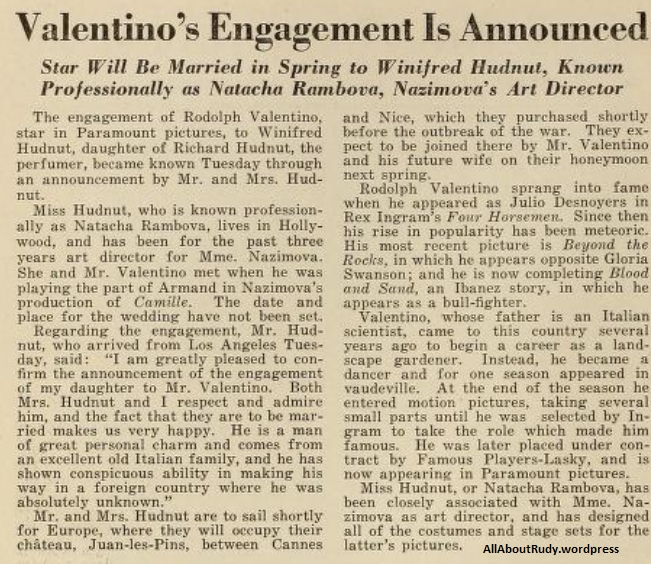
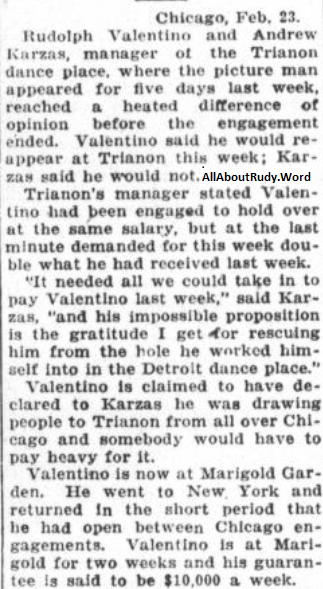
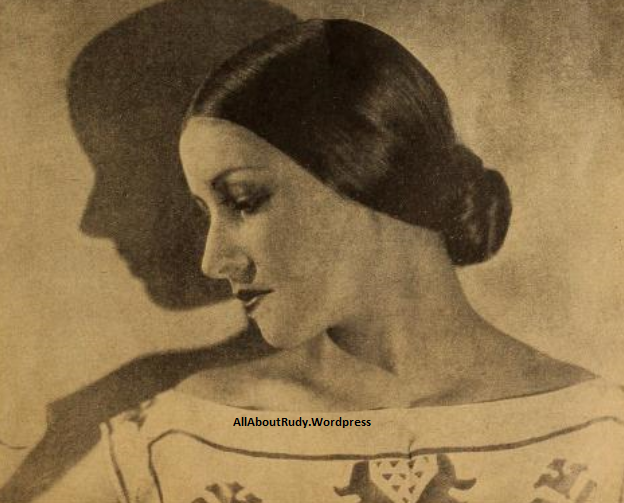
12 Jul 1936 – In Hollywood
When you enter the reception room at the MGM the chap who takes your name is just as likely as not to be Jean Valentino, nephew of the late Rudolph Valentino. He’s been working there quietly, since March of last year, and is, they do say the sole support of his father Alberto and mother. Jean is dark like his uncle but doesn’t resemble him. He’s in his yearly 20’s and has no acting ambitions. He tinkers radios in his spare time and would like to be a sound engineer. One of these days, probably he’ll be sending his own name in.
1 Jun 1934 Mae Murray to Return to the Stage in “The Milky Way”
Mae Murray, film start of the silent pictures and best known for the “Merry Widow”, will take over the leading feminine role in “The Milky Way” at the Cort Theater on Monday evening, 11 Jun. Her role will be that of Ane, originally performed by Gladys George and now in the hands of Mildred West. Mae Murray originally a Follies girl and then the dancing partner of Clifton Webb for a time has not appeared on the legitimate stage in more than a decade. She is entertaining the cast of “The Milky Way” with the idea of beginning a stage career as a straight non-singing or dancing comedy actress.
1926 – Dick Lawrence Review – The Death of Valentino
https://archive.org/details/DickLawrenceReview-TheDeathOfValentino
I found this interesting clip that radio personality Dick Lawrence, host of the weekly Dick Lawrence Revue on Saturday nights on WNIB and WNIZ in Zion, talked about the death of Rudolph Valentino. Dick Lawrence had the ability to provide a vintage perspective that is long lost in today’s modern world.Series of broadcasts from WNIB, Chicago, about history, stories, music and popular culture from America’s past. Produced and narrated by historian and radio-personality Dick Lawrence
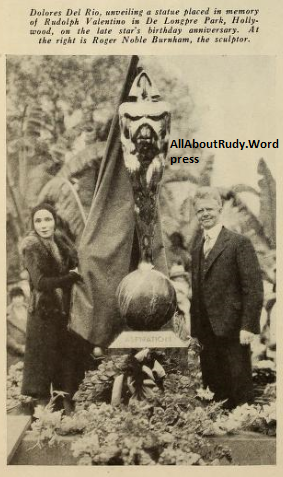
Categories: Uncategorized
Tags: Aspiration De Longpre Park, Delores Del Rio, Rudolph Valentino
Leave a comment
 All About Rudolph Valentino
You must be logged in to post a comment.