
Posts Tagged With: Natacha Rambova
25 Nov 1922
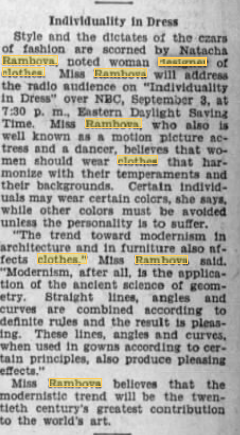
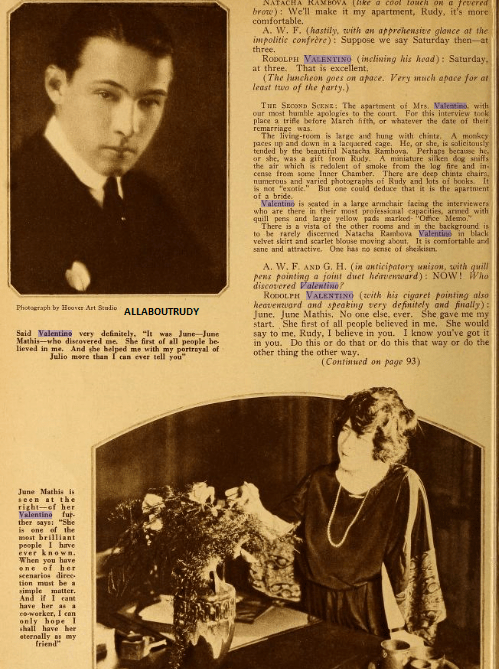
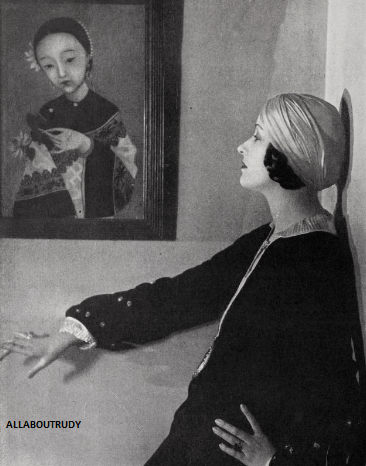
Since their rather sensational wedding it is interesting to note that Natasha Rambova Valentino says “it was not love at first sight it was good comradship more than anything else”..
Categories: Uncategorized
Tags: Natacha Rambova
29 Dec 1925 – Should a Wife Deny a Husband Children?
The question of a wife’s right to deny her husband children is raised again, in an article in Liberty this week. The recent pending divorce of Rudolph Valentino and his liberal wife as the basis for this discussion. This question is as old as the human race. It has caused more arguments and marital discord. Nations have been split by it and kingdoms almost rent in twain. Thrones have tottered and churches trembled in the balance. What do readers thing of it DOES A WIFE HAVE THE RIGHT TO DENY CHILDREN TO HER HUSBAND? The times will pay rewards of $3, $5, $7 for the best three letters on the subject.
Of this great question, Valentino in Liberty, “If Mrs. Valentino is through with me, I am through her and this marriage-until I can have children and give them the kind of care and love, I had as a boy”.
Then the wife known as Natacha Rambova is quoted “We were married four years ago, and it was an intense romantic love afair. Gradually we found out it was a mistakem and we separated a matrimonial vacation the newspapers called it. You cna’t blame us because we thought our marriage would be perfect. Young people havent much sense about love and no provision. Anway, we weren’t married with the cold-blooded idea in a few years we would get a divorce, amuse ourselves again with another marriage. I believe in divorce. Where two people are injuring each other by bad feeling they ought to be separated.”
Stay tuned to this blog for updates to this article.
Categories: Uncategorized
Tags: Natacha Rambova, Rudolph Valentino

1923 – Our First Married Christmas By Rudolph Valentino
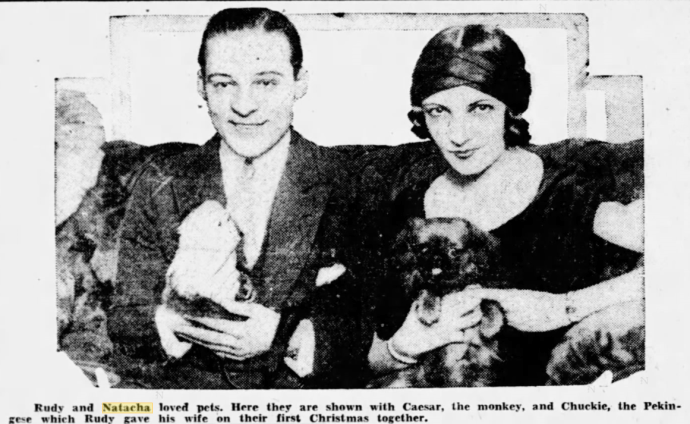
Finally, the Mineralava Dance Tour was over and we could settle down as a married couple. Our new home is perfect and I can imagine many happy years ahead. A home filled with light, love, laughter, pets and children. So, we take time to enjoy our first Christmas tree as a married couple. The lights on our tree were the most beautiful too me. My beloved wife by my side, in our new home with hardly any furniture. But it didn’t matter we had weathered worse situations before. I gave my wife a monkey and a pekinese. She was delighted like a child but it was the happiness in her eyes that made everything worthwhile. I adore her and feel whole when we are together.
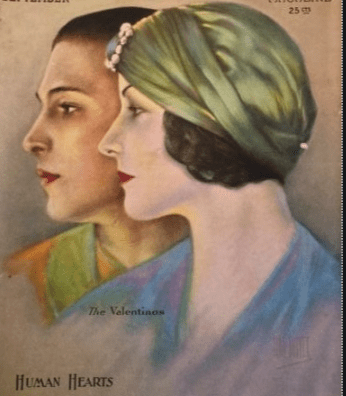
This time of the year, brings one of reflexions and looking forward to the future. We will continue to work together to achieve dreams and dream even bigger and better. To all of my fans I would like to wish you all a joyous holiday.
Categories: Uncategorized
Tags: Natacha Rambova, Rudolph Valentino
1924 – Superstitious Movie Folk
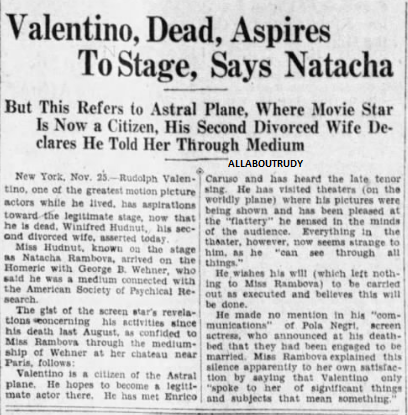
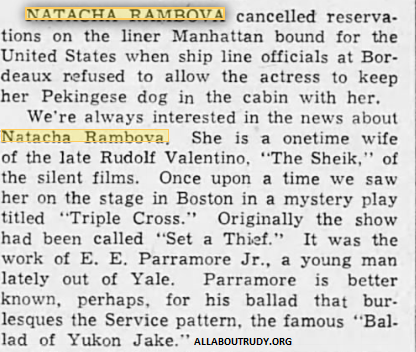
Agnes Ayres does not like to have anybody sing in her dressing room. But her chief faith in luck is bound up in a wonderful Columbia Clock which has been in her family for years. It is a marvelous mechanism, being made entirely of wood and although of a great age is still running. Miss Ayres firmly believes that her success depends upon the possession of this clock, and so carefully, does she guard the treasure she will not even allow it to be photographed. Her movie colleague, Rudolph Valentino has declared to friends he has no superstitions. But one might wonder why he waited until 14 March to be married to the delightful Natacha Rambova when he could of done so on the 13th as well. Perhaps the fascinating Mrs. Valentino objects to the fatal number. Who knows might be because his first wedding ceremony took place on 13 May. Douglas Fairbanks, Sr. has no faith in crystals or superstitions. Gloria Swanson loves black cats and so tender was her care of the original two pets of the Lasky Studio they sent for all their friends, in-laws, and descendants until 327 cats now live on the lot. This is lucky for the butcher and the cats. Theodore Kostloff treasures a pre-war ten rouble gold piece, now worth $2 million in paper money. Bebe Daniels grandmother has a wonderful collection of dolls and few people know this is a direct result of Bebes belief that good luck follows the purchase of a new doll. Lila Lee is very superstitious about the beginning day of a new film. If she leaves her home in the morning, forgetting something important, she will not turn back herself, but send a messenger after she reaches the studio.
Categories: Uncategorized
Tags: Bebe Daniels, Gloria Swanson, Lila Lee, Natacha Rambova, Rudolph Valentino, Theodore Kosloff
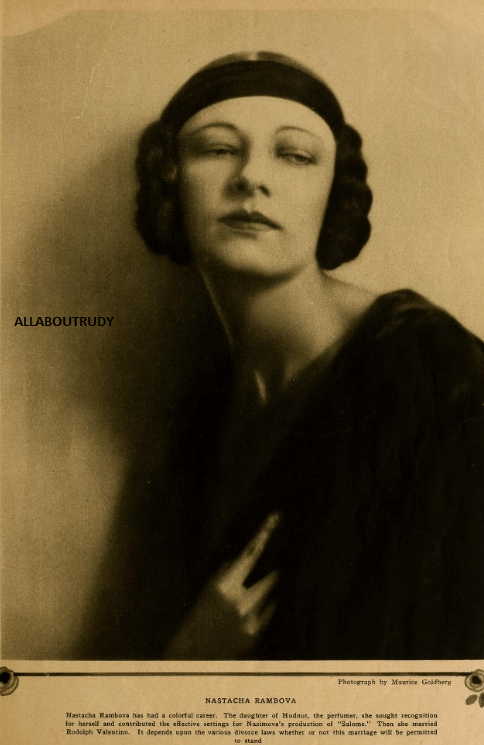
28 Jun 1931 – The Case of Why Rich Women Prefer to Divorce in Paris
This writer is going to use the divorce case of Winifred Hudnut/Natacha Rambova versus Rudolph Valentino as an example of why women prefer to divorce in Paris. So we know that Winifred/Natacha was granted a divorce in Paris simply on the fact Valentino wrote a letter to her that he definitely and purposely left her and decided to cease all relations with her. Thus she was “grossly insulted”. But lets not forget Winifred got her knickers in a twist when she was no longer Valentino’s de facto manager and barred from movie studios. Hudnut and Valentino journeyed to Paris and it was no secret they were planning to divorce. The ruling of the Seine trial was Hudnut was entitled to all of the rights of as an American because her marriage was in Crowne Point, Indiana and “gross insult” was grounds for divorce. Most French writers contend there are three grounds for divorce under French Civil Code. Grounds for divorce are innumerable: Article 229 A husband may divorce his wife on the basis of her infidelity.Article 230 A wife may divorce her husband on the basis of his infidelity. Article 231 Both spouses may reciprocally divorce each other on the basis for violence, cruelty, or gross insults.Article 232 The condemnation of one of the spouses to a corporal punishment shall be another cause for divorce. Although no local difference is suppose to exist, so as far as husband and wife are concerned French authorities contend that in the case of an indiscretion the courts always seem to look with more indulgence upon the false step of the husband than of the wife.
Categories: Uncategorized
Tags: Natacha Rambova, Rudolph Valentino, Winifred Hudnut
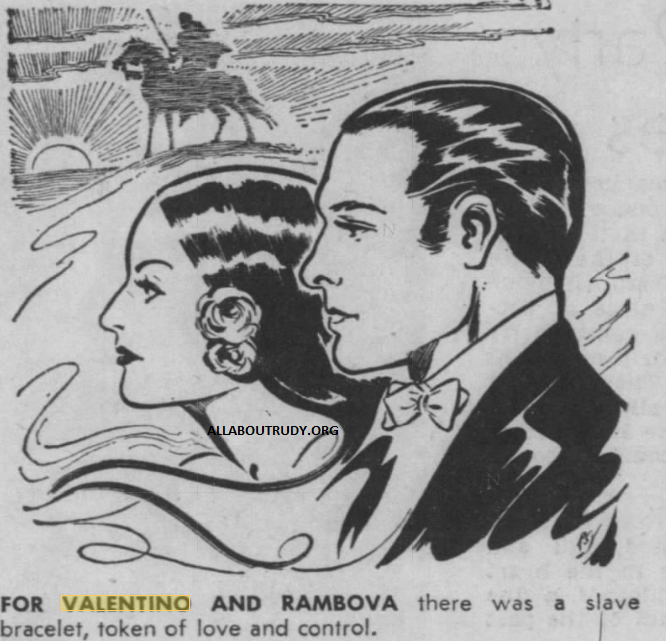
24 Jan 1929 -Richard Hudnut Estate Left to his Wife
Richard Hudnut perfume mogul and a former father-in-law to Rudolph Valentino left his entire estate to his wife with the exception of $4000 bequest according to the terms of his will. Mr. Hudnut claimed Foxlair Camp as his legal residence. The will was filed by the National City Bank, New York with Mrs. Hudnut and their stepdaughter Natacha Rambova as executors. The petition gives value of the real estate as $10,000 and personal property $50,000, but it is understood the estate is actually many times over these figures. The will first provides Woodlawn Cemetery Inc of Bronx County shall be given the Hudnut burial lot and $4000. Mr. Hudnut’s first wife is buried there and the will provides that plots shall be provided for other relatives. The remainder of the estate is given to his present wife. The will provided in the event she died before him for $110,000 in specific bequests to nephews, grandnephews and friends leaving the residue of the estate to Miss Rambova. The will states that “for reasons I deem sufficient I have omitted from the provisions of this will” Frank Hudnut (Half-brother), Maude Louis Chaplin (Half-sister), Eugene Beals (Son of the first marriage). Mr. Hudnut had previously given large considerable amounts of money to Mrs Beals the will said.
Categories: Uncategorized
Tags: Foxlair, Mrs. Richard Hudnut, Natacha Rambova, Richard Hudnut
1922 Hudnut Summer Home, Foxlair, North Creek, NY
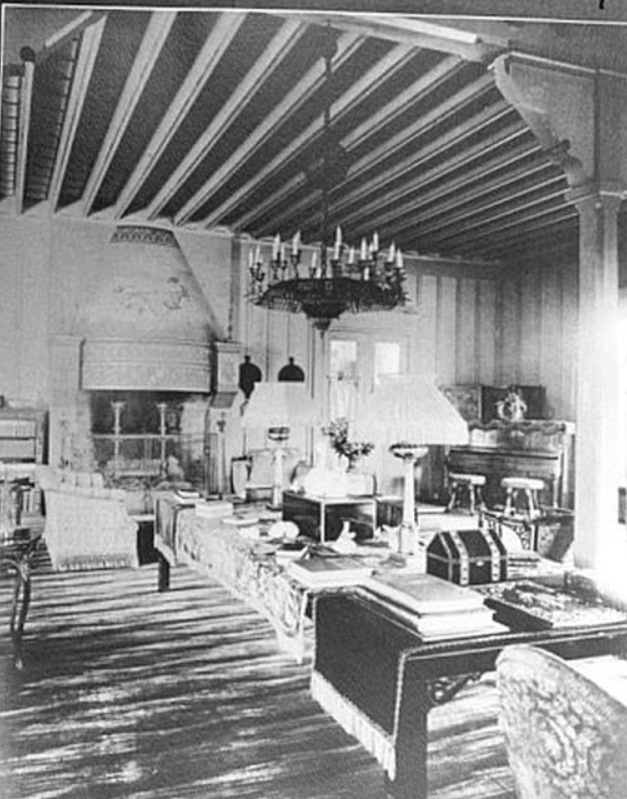
Richard Hudnut, entrepreneur and New York City businessman, often visited the Adirondacks with his family. In 1890, he discovered the Oregon valley in the Town of Johnsburg in Warren County, and by the turn of the century had purchased 1,200 acres of land there. Although it took him 10 years to acquire the estate it was the ultimate summer home. Foxlair was located near North Creek, NY in the Adirondack’s. The main house was 270 foot long and was three stories high with a huge double staircase and a veranda across the front. Foxlair was fashioned in a French Chateau style that was favored by Richard Hudnut and was furnished with European furniture. One of Richard Hudnuts trusted employees Thomas Thornloe was superintendent for the estate as well as over 40 servants on staff, a 9-hole golf course along the valley and a host of barns for carriages and animals. The estate also had a Japanese Teahouse and a nature house built near the river. There was also a large aviary to grace the porch. Every summer during the afternoons, dancing pigeons put on a show for the famous guests who came from around the world to enjoy the great outdoors and the legendary Hudnut hospitality. In 1922, his adopted daughter Natacha Rambova went to Foxlair in seclusion during her future husband’s ongoing legal battle over his movie contract with Famous Players-Lasky.
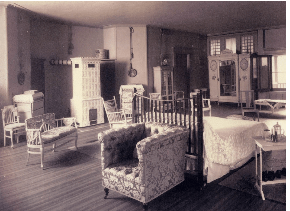
This was a family residence until 1938. After Richard Hudnuts death the estate was endowed to the Police Athletic League of NYC as a summer camp for boys. In 1970’s, Foxlair was burned to the ground IAW the Adirondack Park Agencies Master Land Use and Development Plan which required all state land to be kept in a natural state. There are still remnants of the stone foundation to be found and overgrown stone stairways.
Categories: Uncategorized
Tags: Mrs. Richard Hudnut, Natacha Rambova, Richard Hudnut, Rudolph Valentino
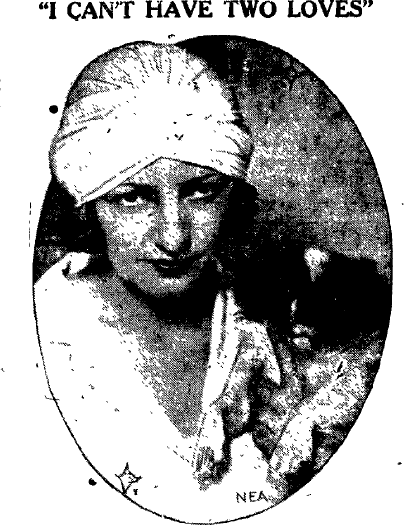
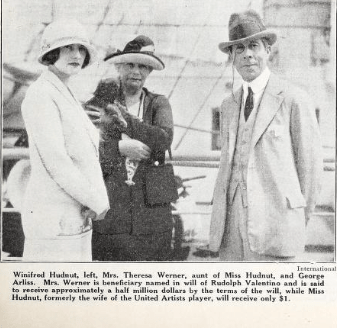
16 Apr 1931 NY Gossip
The slinkingly frocked and perfectly turbaned Natacha Rambova is carrying on at her modernistically fronted shop a few steps off Fifth Avenue daily. Her salon is a junkle-jumble of bags, perfume, objects d’art, Indian scarves, antique jewelry, modern costume jewelry, and Persian brocades. She opened it shortly after the passing of Rudolph Valentino and it is a flitter of black glass and chrome. Miss Rambova chief diversion is attending spiritualistic seances and is said to be convinced she has received numerous messages from the film star.
Categories: Uncategorized
Tags: Natacha Rambova
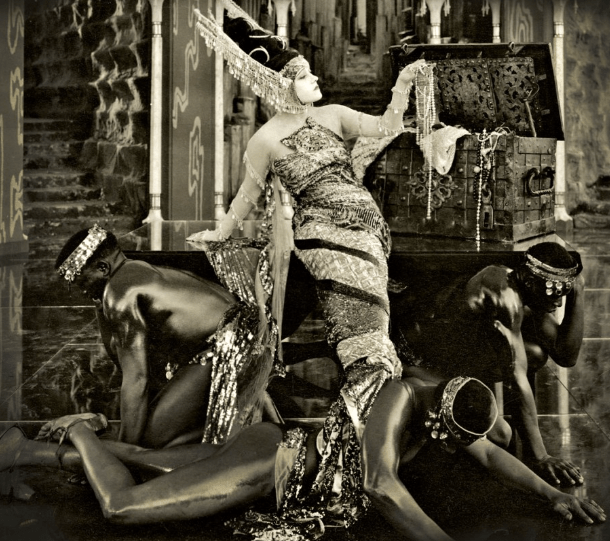
1919 – Gloria Swanson’s costume designed by Natacha Rambova.
Categories: Uncategorized
Tags: Gloria Swanson, Natacha Rambova
21 Mar 1923 -Mineralava Dance Tour Begins.
Rudolph Valentino the much admired, in search of a beauty! Finally, the whole country will see the famous silent-film star and dancer accompanied by his charming wife who will also be his dance partner in what will be a memory that will never be forgotten. A combination dance tour and beauty contest on a grand scale sponsored by the Mineralava Beauty Clay Company. Rudolph Valentino will forsake active work in the motion picture studios and will be on this wonderful tour of cities across this country in search of a typical American Beauty, who may, if the fates are propitious, be the leading woman of his next super picture when he returns to the screen. The rise of this magnetic young screen star has been meteoric! It is doubtful whether any other individual of the screen has so captured the hears and imaginations of the American public. Two of the most notable productions ever made own no little of their vast popularity and appeal to Rudolph Valentino’s personality, to his skill in pantomime and his sympathetic interpretation of emotions both hectic and subdued. His brilliant work in “The Four Horsemen” made him at once the foremost screen figure and following this his wonderfully passionate interpretation of the central character in “The Sheik” won for him a popularity that has made him a household name. Wherever, he goes on his present tour the cities turn out to greet him as if he were a national hero. In each city, He and his wife will give a public exhibition of graceful dancing, and then, from a bevy of beauties previously selected by a special committee Mr. Valentino himself will present the trophy and a dance.
Categories: Uncategorized
Tags: Mineralava Dance Tour, Natacha Rambova, Rudolph Valentino
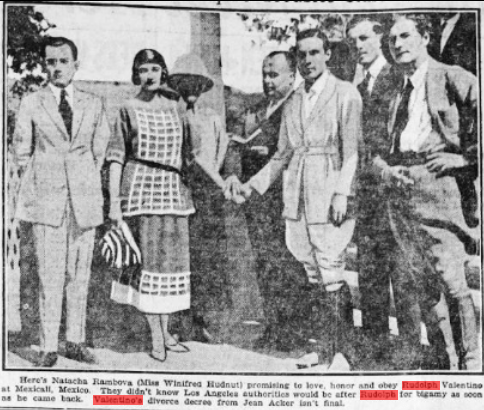
1922 – Rudolph Valentino & Natacha Rambova first marital attempt
Categories: Uncategorized
Tags: Natacha Rambova, Rudolph Valentino
4 Mar 1930 – Rudy and Jean Acker Wed on Wild Impulse At a Giddy Party and Separate at the End of the Dance.
The legendary Rudy who fed on mash notes, the lounge lizard, the sheik, with only a gross sensory appeal was no more the real Valentino than black is white says Natacha Rambova. He was a great artist, she says, be he wasn’t given the credit for the real art he had. His unusual abilities were neglected to emphasize the grosser side. This forced him into a role he hated to play. He was not a great actor in the sense of Bernhardt or Booth were. Bernhardt studied a role until her brain dictated the emotions. Rudy absorbed his role emotionally and played it intuitively. Natacha Rambova met Rudy in a movie office in Hollywood she recalls. Rudy and I wanted to be married, but we couldn’t because of Jean Acker and she was making it difficult as possible for him to get his divorce. It was during the film of “The Sheik” that divorce proceedings were started and reached their peak of difficulties; so it was a trying time for us both. This early marriage took place shortly after Rudy came to Hollywood just as a lark at a party. From the first, it was a mistake but all Hollywood, of course was crazy mad. People act on impulse and have regrets later. Rudy and Jean Acker scarcely knew each other. They had met one evening at Pauline Fredericks planned a horseback ride together and during that ride became engaged. A few hours later Rudy sauntered into the Hollywood Hotel, where he chanced to meet May Allison and Mr. and Mrs. Maxwell Garger. In the exuberance of a man in love he confessed to them he was going to be married. Mr. and Mrs. Garger were planning a party next evening as a farewell to Richard Rowland, President of Metro. As a sort of fillip to the event, they suggested he get a marriage license immediately and turn their party into a wedding. Rudy, impractical and careless agreed. After the ceremony and supper, they danced until 2:00 a.m. when the bride unceremoniously left him. Jean at that time, was working with Fatty Arbuckle in “The Round Up” and when the disillusioned bride groom sought her out on location the next morning he found she had skipped to Los Angeles. He followed her there only to be told she could never return to him. Rudy left at one for New York to make tests for “The Four Horsemen” and Jean asked for an annulment. They didn’t see each other again for four months. The success from this movie turned Rudy from a penniless nobody to a genuine movie star and Miss Acker changed her demands from annulment to divorce with alimony. Rudy fought this and asked for a divorce in the meantime. He continued to pay dearly for this mistake of his youth even after the divorce was granted. Jean Acker continued to use this to her financial advantage. For example, she went on a vaudeville tour using the last name of Valentino. She started insisting people call her Mrs. Valentino. She was never a real wife but she certainly did what she could to look like she was the one that was wrong when in reality the injured party was Rudy.
Categories: Uncategorized
Tags: Jean Acker, Natacha Rambova, Rudolph Valentino
12 Aug 1923 – Valentino Sifts Ashes of his Dead Loves with Poetry
“To rake over the dead ashes of a burnt out love one must use the pen point of poetry” –Rudolph Valentino.
Behold the sensitive soul of a Sheik, self-revealed to a world of worshippers. Rudolph Valentino master lover of the silver screen, forcibly exiled from film land, declares he has found consolation in the Muse of Poetry. A volume of poems and epigrams bearing his signature has just been published. Flaming orange, symbolic of passions torch, contrasted with the black of disillusion, appropriately clothe the slender sheaf of verse in which the screen troubadour sings his first serenade to the public. “Day Dreams” he modestly calls his offering. “Just dreams a bit of romance, a bit of sentimentalism, a bit of philosophy”. They were written, he tells us during his enforced inactivity, “to forget the tediousness of worldly strife”.
“I am a slave, yet free as birds above, Sold into bondage by the tender kiss of love”
Sings Rudolph, the adored of a million maidens. Love indeed, is the stuff that makes up most of the Sheik’s dreams. Among all the love inspired stanzas that Valentino has penned in words as ardent as the glances and embraces which have won him his title as screenland’s champion lover, not a single offering is dedicated to his present wife. The initials of Winifred Hudnut, step=daughter of the millionaire, and known to the stage as Natacha Rambova, are conspicuous by their absence. But her are dedications galore to others, whose identity is veiled behind the non-committal initials: “M”, “B”, “O”, “MK”, “AT” “EB” “GS” and “J”. Still more mystifying is the dedication of the whole book “To J.C.N.G. my friends here and there”. Trying to fit these initials to well-known personages of the screen and artistic world will be one of the favorite indoor sports of the season, guaranteed to start a lively discussion anywhere. Shakespeare has kept the world guessing over four centuries in regard to the identity of a certain dark lady of this celebrated sonnets. Now comes Rudolph with his dozen or more mysterious affinities to puzzle the public. Who is the fortunate friend whose inspirations has led the Romeo of filmland to protest: “Possessing the jewels of the earth, Holding within my grasp the scepter of the universe, all these would but make me more the pauper. Were, I beggared of your love”? Who is E.B.? who will be envied by damsels all over the country, when they read the plea of her tempestuous wooer: “O Love, when you leave me, do not say rather, beloved of my heart, we will meet at sunshine tomorrow,” A kingdom for a key to the secrets locked up behind those initials, Mr. Valentino! A thousand lovers rolled into one and you have the romance make-up of the inner Valentino as revealed by his verses. Sometimes he naively declares:
“Till we kiss our lips, of the mate of our soul. We will never know love has reached its goal.” More often he is the sophisticated Don Juan, reflecting cynically: “I do not care for anything that comes easily, It never lasts I know, but I fell in love with you easily. But not lastingly I know”. Then inconsistently enough, he turns to reproach someone else for being just as fickle. But enough of the offerings laid so generously on the altar of love. They fulfill the promise of the Valentino who thrilled the nation as the on-screen lover of Alice Terry, Nazimova, Agnes Ayres, Nita Naldi, Patsy Miller, Gloria Swanson. A many sided personality emerges from the orange covers of “Day Dreams”. Day dreaming Rudolph is the life-story of the actor-dancer-poet, with many a flash-back into the days of discouragement and disillusion of the first eight years, in America. It is the struggle of the unknown Italian youth in a strange land that lives again in the verses between the pages of this book. Many of the lyrics owe their inspiration to Nature. Rudolph’s intimate knowledge of growing things comes from his early training as an agriculturist, and recalls the humble past of the future Sheik who left the fruitful farms of his native Italy to work in America as a landscape gardener. Religion plays an important part in the nature of worship of Valentino, who sees God’s handiwork everywhere, and pays tribute to its observations. It’s a sad, sad, world to Rudolph Valentino despite all the popularity that has come to him in the past two years. The author of “Day Dreams” if his revelations are to be considered as bona fide, is a young man who takes himself and his art seriously. His verses are filled with melancholy. The idol of the world of movie fans doesn’t seem very much thrilled by his sudden attainment of the pinnacles of success. Far from being satisfied with things as they are “Happiness you wait for us Just beyond, Just beyond. We know not where, nor how we shall find you. We only know you are waiting, waiting just beyond”.
Categories: Uncategorized
Tags: Day Dreams Book, Natacha Rambova, Rudolph Valentio, Winifred Hudnut
25 Jul 1943 – A Bookman’s Holiday By Charles Collins
It was said, that Rudolph Valentino’s book of verses, “Day Dreams” was ghost writed by Gordon Seagrove, former Chicago Tribune reporter and thereafter an advertising stylist, it was slightly off the track. The truth in a nugget is that Mr. Seagrove nearly wrote “Day Dreams”. The inside story, in his own words, is better than the original. “I didn’t write one line of ‘Day Dreams’ says the erstwhile skipper of the yacht Vanadis,” and if I did I would be glad to atone for it on the scaffold. But..when the great lover was becoming a biological urge I saw him in a dancing exhibition, I think in the Bismarck Gardens. When he ended his program countless frustrated mommas took off their wrist watches, rings, etc. and threw them on the stage. That did something to me. How, I pondered, could Seagrove get some of those coconuts? So he hatched up a scheme for a deluxe volume of love poetry by Valentino, to be written and published by himself (Gordon Seagrove), and submitted to the Great Lover who said “Yes”. A serious accident in the Mackinac yacht race delayed the ambitious Seagrove, but after he had been patched up in the hospital ‘all bound with woolen string and wires” he began to write the poems. “It was Eddie Guest with allot of hot Italian background says Seagrove, “a whiff of the desert and a dash of ‘pale hands I loved beside the Shalimar”. All in all, it was good, heart-mellowing stuff, calculated to knock the matrons not into one loop but three. In due course, the verses were sent to Hollywood and approved. “But here the dirty hand of romance smote me. Valentino had met and fallen in love with Winifred Hudnut, also known as Natacha Rambova. This lady, who was a pallid kind of poet of the E.F. Cummings incoherent school, took one look at my meaty efforts and vetoed them forthwith. She substituted her own stuff, which now appears in Day Dreams – a new love in versification, in my opinion.. Rudolph Valentino was also the alleged author of a volume of memoirs called “My Private Diary” issued by the Occult Publishing Company, Chicago in 1929. It’s ghost writer has not yet confessed but I can tell you Rudolph Valentino did not write this book but Natacha Rambova who should get the writers credit.
Categories: Uncategorized
Tags: Charles Collins, Day Dreams Book, Natacha Rambova, Rudolph Valentino
July 1923 – Marriage Under Difficulties
Wherein the strenuous time Rudolph Valentino has had in getting himself married to Natacha Rambova had anhything to do with it or not, but anyway Rudi is slated for the hospital suffering from a nervous breakdown. All of the nurses at prestigious John Hopkins Hospital are aflutter over the ‘sheiks’ pending arrival. But he can cheer up on one point, Indiana authorities say he is legally married at last.
Categories: Uncategorized
Tags: Natacha Rambova, Rudolph Valentino
Aug 1922 – Not Quite A Hero
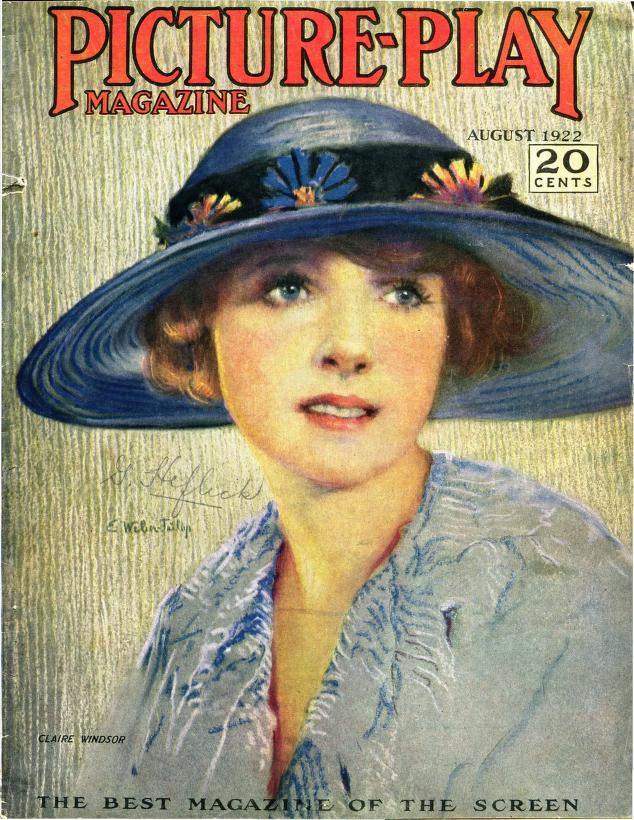
In the heat of discussion about Rudolph Valentino in which everyone who ever goes to the movies seems to be taking part what the man is really like is almost lost sight of in the maze of conjecture, misconception, and exaggeration spread about him. Here he is as he really is. Once upon a time, there was a young man who was not a perfect specimen of American manhood. He was not remarkably dauntless not brave. His appearance did not suggest shining virtue nor impeccable nobility. In spite of the fact that he lacked all the glorious qualities of a real movie hero, Rudolph Valentino went into the movies. The casting director whom he interviewed decided he wasn’t the sort of man who would appeal to an American girl. He did not seem fitted to jump off cliffs, rescue fair maidens, or register high-minded devotion in the close-ups. They admitted however, that he could dance and that he was a good type for what is recognized about the studios, and nowhere else as a “society villain” But they forgot to find out whether or not he could act. Sometimes big movie organizations are careless about such things. I am not, going to tell you about “How One Young Man Made Good” I don’t need to. You probably saw “The Four Horsemen of the Apocalypse” But I am going to set forth my theory of his phenomenal rise to fame, the secret of his success. It is this? He does not look like your husband. He is not in the least like your brother. He does not resemble the man you mother thinks you should marry. He is not the nice boy who takes you to all the high school dances. And so women go to see him in motion pictures because he typifies romance. Out in Hollywood, the men who know him like him. The women who know him but they won’t tell. As for Valentino himself, he doesn’t talk about it. If you happen to be one of those irate fans who have been disgusted with the interviews in which his opinions on love and the ladies have been set forth at wearying length, please accept my word for it that such statements which he really made were wrung from him and that some of them were as new and strange to him when he saw them on the printed page. If he ever saw them as they were to you. Certainly, I found him shy on all such subjects; he honestly does not want to be considered a matinee idol. You cannot blame him, for where are the matinee idols of yesteryear? I have tried to talk to Valentino about love, women and matrimony. Every time, I broached the subjects he side-stepped them. But let us hasten on to the interview. I met Mr. Valentino on the Lasky lot. With me was the perfect Valentino fan when she saw him come up to us both she said “please introduce me by my maiden name and don’t say anything about my husband and baby”. Whereupon she removed her wedding ring, and slipped it into her handbag. There’s a little bit of bad in every good little girl. Mr. Valentino suggested luncheon and escorted us to his motor. “It needs cleaning” he explained “but it runs beautifully”. In half a minute we were a half mile away. When Mr. Valentino made his entrance into the restaurant every woman in sight gave a moan of joy and all the women tourists were oh so glad they had come to California. Mr. Valentino did not look to the left or the right but at the menu card. Our luncheon was the result of a promise. When I saw the preview of “The Four Horsemen” in New York, June Mathis who wrote the scenario came up to me, “Keep an eye on my Julio. I picked him myself and, if he isn’t one of the coming favorites I’ll eat that film”. After the picture, I saw June and congratulated her. So there I became the perfect fan. He found out the perfect fan loved to dance and so he talked about dancing and orchestras and about the charm of sitting in a pleasant restaurant with agreeable and well-behaved persons all about you. He hates vulgarity and vulgar dancing. Then he turned to me and said June Mathis discovered me and gave me a part when life was not so easy. And now, she will write all my pictures. She is a capable, humorous and generous woman. I am eternally grateful to her. No one realizes how much she had to do with the success of “The Four Horsemen” she was on the set every day. She suggested a hundred small touches. And now she will supervise “Blood and Sand”. I am immensely glad because it is the first picture in which I am in the starring role. And I know that I can trust Miss Mathis advice and good judgement. Mr. Valentino was quite sincere. He is not half-hearted about his praise or his blame. Sometimes when it comes to blaming actors, actresses or directors, he refuses to be politic. Who says that the Italian’s are a suave race? But his greatest virtue is his loyalty to his friends. With all the feminine world accepting him as a romantic figure, he refuses to accept his role; his good qualities are commonplace. I said that he evaded discussing love, marriage and women. Yet, I discovered indirectly what sort of woman he does like. During our conversation, he professed an admiration for only one type; he likes clever, sophisticated, amusing and capable women. He has no eyes for the beautiful and brainless. Although he probably won’t admit if he did. I think he rather likes em’ rather strong-minded. No power on earth can make him speak even tolerantly of his picture “The Sheik”. In vain, do you tell him the movie has made money, that brought him stardom, that it is one of the most popular pictures of the year. Mr. Valentino will simply reply the movie was a fatal error and hopes he will never appear in another picture like it. “What nonsense it was. I neither acted like an Englishman or an Oriental” I was obliged to play like an emotional Italian. It was all out of character. The Oriental is stolid and the Englishman prides himself on self-control. “When the picture came out, I received many letters and some were flattering. But the intelligent critics told me what they thought of my acting. They said that Ihat I had achieved a little success and that evidently I was content to take advantage of that success. Letters like that are not pleasant are they? I am not trying to please those who are easily pleased. I value the opinion of the intelligent critics. This maybe a blow to the Valentino fans, but he honestly dislikes silly letters. “Just now, I need honest criticism and good advice, I appreciate it. Again, Mr. Valentino seemed sincere. Success has made him sensitive and hypercritical of his own work. He is not vain but shrew and careful minded that he takes his popularity with large grains of salt. “Hollywood” said Valentino is a small town not physically but mentally”. A great deal has been said about the frivolous of the movie colony. All of us need honest recreation. We need to forget the studio when our work is finished. I like to dance and I like to go to restaurants with my friends. But I don’t like vulgarity in dancing and so-called wild times I have seen in the cafes in Los Angeles were rather childish and silly. Several years ago, New York had become a delightful and cosmopolitan city. Out here we have to still learn how to amuse ourselves. One cannot escape boredom merely by going out and spending allot of money. No reformer is needed to tell the better-class actors and actresses that they cannot enjoy themselves merely by going out and drinking too much. I am afraid, I have made Rudolph Valentino a serious young man. Most of the time he wears a mask, and he uses his charming manners as a sort of guard. He has no particular pose; he is a dignified and courteous gentleman and is witty in a sharp way. When he spoke of the conventional “happy ending” to movie stories the perfect Valentino fan hung on his words. “The happy ending” has come to be nothing but a rubber stamp. I think the public is tired of it. After all, only one love affair in a thousand ends happily. And an affair of that sort is too dull to be interesting. Romance doesn’t make men and women happy. Human beings are made happy by such things as success, food, a good home, pleasant friends. Romance is something that makes them more than just happy. A refutation of the Pollyanna philosophy. Love doesn’t make the world go round it makes it go sidewise, zigzag, up and down and backward.. In his attitude, toward his art, he reminds me of the adored Caruso. When Caruso made a sensational success in opera, the wise men said that he couldn’t stay a public favorite. Caruso remained a favorite until he died. Valentino and Caruso are much alike in their way of talking and speaking. Caruso was supposed to have a wicked voice whatever that means and Valentino is supposed to have wicked eyes. At heart, Valentino is the same as Caruso and one of the most interesting things about him is the violently contrasting opinions in the outbursts of feeling that his sensational success has caused. If you’ve been reading ‘What the Fans Think’ you know what I mean. I know of no one in pictures the mention of whose name will start so violent a discussion. Hazel Shelly told you, last month that he was vain, calculating, and upstage. She refused to meet him. Hazel is entitled to her opinion, but you missed the chance of your life. Years from now, you’re going to sit down and cry about it. Ethel Sands gave a good impression of him thoroughly honest and to my mind accurate. And now, having given my own appraisal, I wish to add the opinions of some of those who have worked for him. June Mathis “I have worked with Rudy a long time. I can assure you he is a nice boy. He has been the target of professional jealousy. He has kept his head and his temper. He is reasonable and not all temperamental. After finishing “Blood and Sand” Nita Naldi discussed Valentino. “When I came out here, I did not think he could act”. Now I apologize. He is a real actor and I suppose some of our love scenes will look pretty warm. The script called for them. Valentino was courteous and decent. Some actors and I have played with prominent ones like to spoil the scene by putting in little asides. Valentino does not. Said Lila Lee “Blood and Sand” was a real inspiration. Imagine Fred Niblo, Valentino, and June Mathis working on the same picture. Valentino sn’t a bit mean about wanting the star part. Mrs. Mathis “we are all fond of Rudy. I like an accomplished man. He speaks five languages and plays and sings beautifully. The perfect Valentino fan ended up the chorus “I would leave my husband for him but I am afraid I would annoy him.” Mr. Valentino is a wonderful relief he doesn’t flirt, he is quite sincere. By the time you read this you will have known for some weeks that Rudolph Valentino is married again. The lucky lady is Natacha Rambova alias Winifred Hudnut. Valentino’s opinions on his marriage are sound: “it will be the best thing in the world for me. I shall have a clever wife to advise and encourage me. I know that I shall be very happy we have the same friends and same tastes.” Both Natacha and Rudy will be the most charming couple in Hollywood. They have established their own intellectual circle, and they are far from the mad movie set. Is she jealous of his leading women? I don’t think so. She merely smiles as Valentino bows to his favorite heroine. It is easy for a woman to fall in love with her man, but it is hard for her to gain his respect and devotion and this Natacha Rambova alias Winifred Hudnut has done.
Categories: Uncategorized
Tags: June Mathis, Natacha Rambova, Rudolph Valentino
26 Dec 1917 – Vera Fredowa
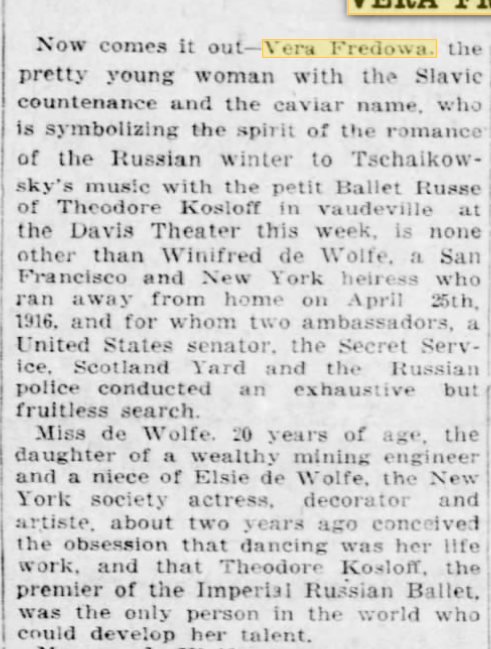
Categories: Uncategorized
Tags: Natacha Rambova, Vera Fredowa, Winifred Hudnut

3 Nov 1926- The Secrets of Valentinos Last Romance
A cat may look at the Queen but a little chorus girl even though she may be one of Ziegfeld’s most glorified may not publicly make indiscreet remarks about a great movie star. This Marion Kay Benda, one of the follies beauties, discovered when, in an interview given immediately after the death of Rudolph Valentino she said “He was not engaged to marry Miss Negri, you’ll notice all the statements have come from her. He never denied any of them because he was too fine. He did think a great deal of her, but he had absolutely no intention of marrying her. I know. He often, in my presence, refused to speak to her on long distance telephone calls. “No one knew him as I did. He was the most wonderful person I have ever known. I can’t believe that he is dead. He was so fine, so wonderful, so sincere, and I know he liked me very much. He couldn’t stand “rounder’s” and his ideals were of the highest. In every sense of the word he was an artist.” A rumor was circulating at that time that Miss Benda and Valentino were secretly married a few weeks before, this the show girl denied. “Oh those things always are said” she complained. “People cannot understand being simply good friends. I’ve known Mr. Valentino for four weeks and I saw him a great deal. Often we hired a cab and drove through Central Park after the show and then there were early morning walks and talks.” It was in the company of Miss Benda that Valentino attended his last social evening. The two of them, accompanied by Buzz Warburton, jr. went to Texas Guinn’s Night Club on the evening preceding the star’s fatal operation. During Valentino’s illness there was a long procession of greater and lesser lights of the theatrical world calling at the hospital and leaving flowers, but all visitors were denied admittance to the sickroom. And it wasn’t of his companions in the night clubs and after-theater suppers that Rudolph spoke when he was strong enough to talk but of his friends in the movie world. Welcome enough, then, were the tempestuous Polish star’s long-distance telephone calls. The little chorus girl who believes that “no one knew him as I knew him” was evidently quite forgotten. Her change as a protégé of the famous sheik had been snatched from her, and the limelight of public interest shone on her only for a moment and then promptly turned in another direction. Stars in the movie world are the “clannish” on earth. They have their scraps and jealousies, rivalries and revenges in private life, just like other folks, but it is an unwritten law that those shall never be divulged for publication. One great consolation Miss Negri has, and that is that it was her image which floated across the mind of Valentino the last moment before he lost conscious contact with life. Dawn was just breaking in the sky when Dr. Meeker noticed that his patient was trying to say something. After a night of agony he was too weak to raise his voice above a whisper. The doctor placed his ear near the dying star’s lips and just managed to catch the words “Pola, Pola” if she does not come in time…tell her I think of her. Those were the last words Valentino uttered in English. From that time on, until he passed away at midday, delirium and coma alternated, and all the incoherent remarks which passed his lips were in the old mother tongue. This message was relayed by Dr. Meeker to Mary Pickford and from her to Norma Talmadge. The Polish actress received it in the Campbell undertaking rooms at the funeral of Valentino began. There was so much talk about whether Pola and Rudy were or were not engaged that finally the star herself denied it. “We were not formally betrothed,” she gave out the statement while enroute to Hollywood on the funeral train. “Rudy never believed in formal engagements neither do I”. “The reason the betrothal was never announced was that Rudy thought such an arrangement appeared too businesslike a proposition, and I agreed with him.” We frequently discussed our marriage plans for next April, and our closest friends knew of them. We thought our private lives belonged to us, and we did not want to make publicity of it. In a very clever composition contained in a book of poems in verse and prose which the late star published two years ago, he expressed a pessimistic viewpoint towards romance. Under the title “The Kaleidoscope of Love Synonyms and Antonyms,” he describes its birth, rise, fall, and disintegration. Is analysis runs as follows:
A-Adoration, Anticipation, Affinity, Arguments
B-Beauty, Bliss, Bitterness, Bondage
C-Caresses, Circumstances, Confidence, Charm
D-Desire, Delusion, Dreams, Divorce
E-Ecstasy, Engagement, Ego, End
F-Fascination, Forgetfulness, Flatter, Faith
G-Gossip, Gratitude, Gifts, Goodbye
H-Happiness, Honor, Heartache, Hell
I-Intuition, Irony, Idolatry, Integrity
J-Jealousy, Joy, Justice, June
K-Kisses, Keepsakes, Knowledge, Kismet
L-Lips, Loneliness, Logic, Longing
M-Marriage, Morality, Money, Man
N-No, Nearest, Novelty. Never
O-Opposition, Own, Offering, Opulence
P-Passion, Promise, Pride, Proposal
Q-Quality, Quest, Queries, Quarrels
R-Romance, Reveries, Realization, Remembrance
S-Sympathy, Sacrifice, Shame, Settlement
T-Thoughts, Truth, Temper, Tears
U-Unkindness, Understanding, Uncertainty, Unfaithfulness
V-Virtue, Vanity, Vows, Vengeance
W- Wisdom, Wishes, Wedlock, Woman
X-The unknown love
Y-Youth, Yearning, Yes, Yawn
Z=Zenith, Zest, Zeal, Zero
So he described in 26 versions the span between the alpha and the omega of the little game of love. In real life, Valentino was as much the great lover as he was on the screen, but he failed to domineer over the ladies he wooed and won without the air of the scenario writer to chasten their independence of spirit. Jean Acker, his first wife, went “on the road” in vaudeville very shortly after their marriage, and it was not until a few weeks before the star’s death that they were reconciled. Natacha Rambova, her successor, also insisted on putting her career first, and, in spite of many reported attempts to adjust matters, this marriage too went on the rocks. Had Valentino Married Pola, would their union have been any more permanent? At the time the exotic Natacha Rambova left her famous husband, ostensibly on a “vacation from matrimony” she was asked if a divorce were in the offering. “I don’t know,” she answered. “There will simply have to be some sort of adjustment. And frankly I haven’t the least idea how we can arrange matters so that we can live together without constant irritation cropping up. “My husband wants me to give up work and devote myself to the home. If I did that, what should I do with all my idle hours?” We have servants who are much more capable of running the house than I am. I have always worked all my life I have had the urge to create. I cannot give this up it is part of myself”. So Natacha Rambova sailed to Paris. At the finish of his picture Valentino came to New York. He as was his habit, refused to commit himself beyond giving more or less of a repetition of what his beautiful wife had said. He was seen a lot in the company of Mae Murray, who had just returned from Paris, where she had obtained a divorce from Bob Leonard, the Broadway matchmakers got busy, but both denied any romantic attachment. Miss Murray intimated that reconciliation with her former husband might be possible; Valentino was less frank, but those who looked wisely declared that the Valentino-Rambova frayed romance was on the verge of a renaissance. As things turned out, the little follies girl was quite correct in her statement that Rudy and Pola were not engaged. However, she spoke out of her turn and was set down.
Categories: Uncategorized
Tags: Natacha Rambova, Pola Negri, Rudolph Valentino
2 Dec 1926- Valentino is Still Making Films
Natacha Rambova declares that she is having spirit talks with her former husband, Rudolph Valentino. In the first place, she claims that he gave her his impressions of His own funeral, saying he disliked intensely the public’s lack of reverence. ‘It looked to much as though they were out to see a ‘show the screen star complained. Valentino also told her that he is quickly making -friends on the ‘other side.’ His first astral friendship, he said, was with.’ Caruso; whom he said he found a most likeable fellow. Life on the astral plane would appear to be very much like that of the world Valentino has left. In any event according to Natacha Rambova their demand for moving pictures for she claims Valentino gave her details of resuming his screen career in the spiritual world. Valentino still loves no other woman in his life added Natacha.
Categories: Uncategorized
Tags: Natacha Rambova, Rudolph Valentino
28 May 1927 – Rudolph Valentino Sheik Deceased Film Star Makes Spirit Return
Categories: Uncategorized
Tags: Carol McKinstry, Natacha Rambova, Rudolph Valentino
“I am glad Rudy died when he did; while the world still adored him. The death of his popularity would have been a thousand deaths to him. Rudy belonged to the age of romance. He brought it with him; it went with him.” — Natacha Rambova.
Categories: Uncategorized
Tags: Death of Rudolph Valentino, Natacha Rambova
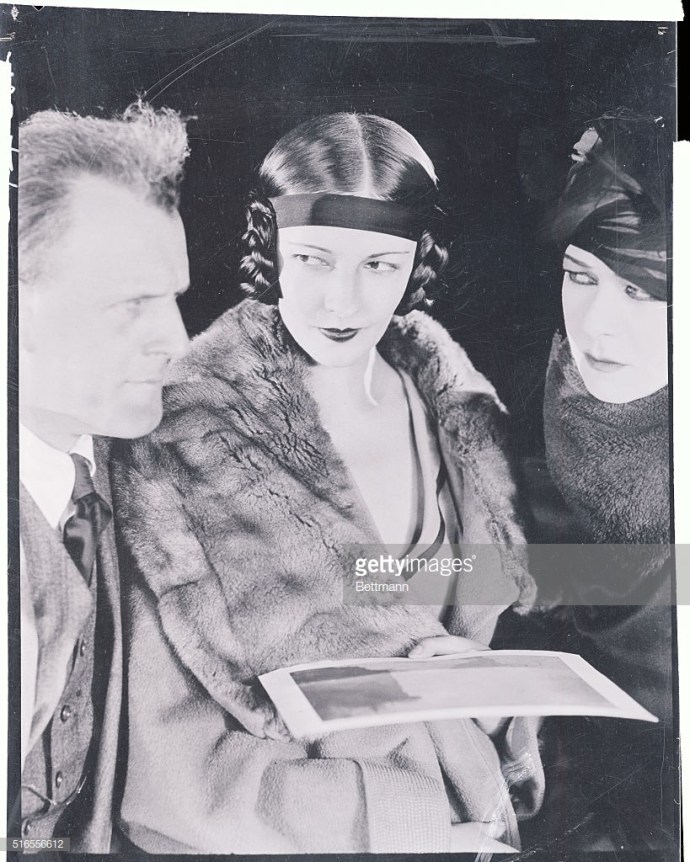
8 Aug 1960 – The Sheik Molded to her kind of man
Three weeks before his death at 31, Rudolph Valentino took stock and observed. “Life is too fast for me. A man should control his life. My life is controlling me.” Rudolph Valentino life was viewed thusly: vain, lazy handsome, well-built, slender, good-tempered. He wanted to make good and he wanted to make good in the he-man, two-fisted, bronco busting, poker-playing, stock-juggling America. But they called him a “pink powderpuff” of a man. Rambova didn’t though. The great lover was Natacha Rambova’s her man all hers. She molded him the way she wanted him. She drummed into him her philosophies, her moods. She was one of the “controlling factors” in the short but reasonably happy life of Rudolph Valentino. Rambova was a far more interesting and colorful figure than the legendary Valentino. She possessed amazing talent and a tremendous mind. Above all else she was an artist, a ballerina, a painter, an actress, designer, writer. Her maxim was “self-expression through art is the only worthwhile thing in life”. A writer said “Natacha didn’t need suggestions only obedience. When she gave a decisive judgement, anyone who countered was always wrong because she was always right. This was the second wife of the sometimes simple often lonely Valentino “the cinematic symbol of primitive love”. They were married about two years and most probably in love the entire time. Valentino worked Natacha for her brains, her beauty and she respected his talent and achievements. Men were jealous of him and envious. He lived a life that could have been better lived if the choices he made were based on thought rather than emotion.
Categories: Uncategorized
Tags: Natacha Rambova, Rudolph Valentino
“Fame is like a giant X-Ray. Once you are exposed beneath it, the very beatings of your heart are shown to a gaping world” Natacha Rambova, Dec 1922
Categories: Uncategorized
Tags: Natacha Rambova
1921 – Forbidden Fruit
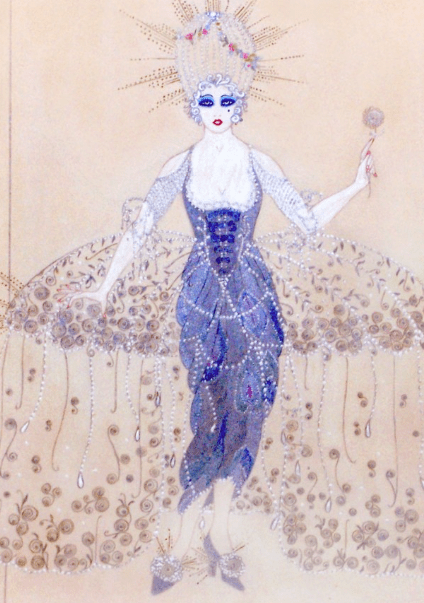
Design sketch by Natacha Rambova
Categories: Uncategorized
Tags: Natacha Rambova
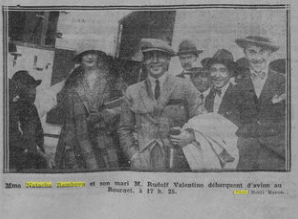
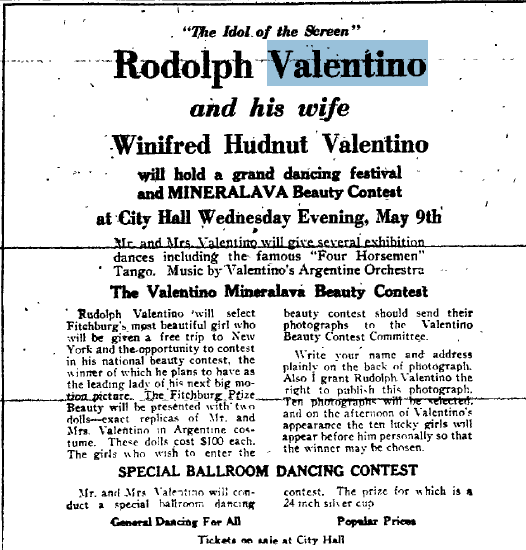
5 May 1923 – Mineralava Contest Fitchburg, MA
Categories: Uncategorized
Tags: Mineralava Beauty Contest, Natacha Rambova, Rudolph Valentino
16 Aug 1923 – Valentino on Vacation
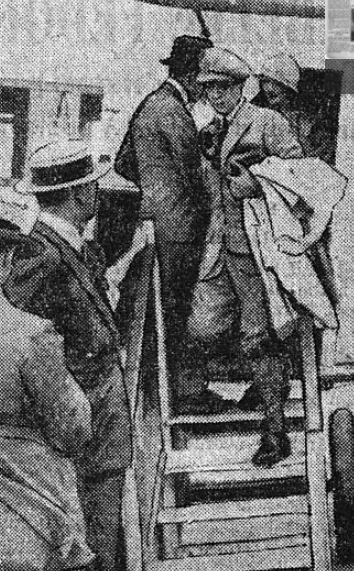
The foreign stars of the cinema, one after the other, come to France. Douglas Fairbanks and his wife Mary Pickford, and for ‘England the blonde’ Pearl White have already come smiling in the flesh to the enthusiasm of the crowds – under the Parisian sky. Yesterday, in its turn, a new star descended from the clouds, Rudolph Valentino, Prince Charming of the cinema and his charming wife Natacha Rambova. All of the famous silent film stars are in Paris. Mr. Valentino is having some rest before going back to New York to finish filming and judging an American Beauty Contest. The adoring crowds designated him as the most handsome man, was celebrating with his equally famous friends. The evening, in fact, a grand-banquet was setup for his party in the hotel. An international star, much more than American, Rudolpho Gugliemi was born in Castellaneta, and is actually called Rudolph Valentino. Eight years he went to America, started living a real movie; episodes by turns dramatic or triumphant. Dancer, then screen artist, he knows about Americans – and especially American cars – a vogue almost eclipses that of trolleys. Thus, after very romantic difficulties, he married, two years ago, the daughter of the perfume king, Mr. Richard Hudnut who goes by the name of Natacha Rambova. The photo taken shows Valentino, followed by his wife getting off the plane, at, Bourget. The arriving party will be going to Paris. Mr. Jacques Hébertot, Director theater of the Champs-Elysées, which is in Paris, France, in charge of his interests, has engaged him.
Categories: Uncategorized
Tags: Andre Davin, Douglas Fairbanks, Natacha Rambova, Rudolph Valentino
21 Aug 1925 – Mash Notes to Sheik Cause Wife to Leave
This author is not buying the excuse, Mrs. Rudolph Valentino is giving the press these days. “I won’t sit waiting for a husband who goes on lot at 5:00 a.m. and gets home at midnight and gets mails from girls in Oshkosh and Kalamazoo” and trying to look disappointed, reproachful and hurt while giving a press statement. Seems Mrs. Valentino is not good at fibbing and confessed the marital vacation is in reality a separation. George Ullman, Mrs. Valentino’s personal representative was with her today in charge of negotiations. He is not, her lawyer, and she could not conveniently remember her lawyers address. Ullman admitted he was open to the charge of alienating Mrs. Valentino’s artistic affections.
Categories: Uncategorized
Tags: George Ullman, Natacha Rambova, Rudolph Valentino
17 Dec 1922 – Valentino May Make Records
Valentino rumors may come and go, but Rudy himself is the authority for the statement that a big company is now being organized to put a stock of toilet preparations on the market bearing his charmed name. This it seems, cannot be prohibited by the injunction preventing him from working. Rudy’s attorney is considering several offers from a phonograph concern, said company wanting the romantic Italian to do some records. Whether or not the injunction prevents this will remain seen. There is no truth to the report that Valentino and his wife Natacha Rambova are going to England to appear in one of the Charles Cochran revues at a salary of $3500 a week or any salary.
Categories: Uncategorized
Tags: Natacha Rambova, Rudolph Valentino
26 Jan 1926
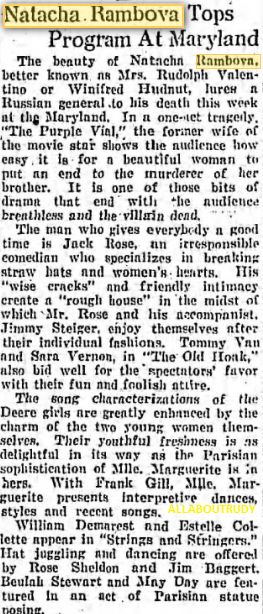
Categories: Uncategorized
Tags: Mrs. Rudolph Valentino, Natacha Rambova, Rudolph Valentino
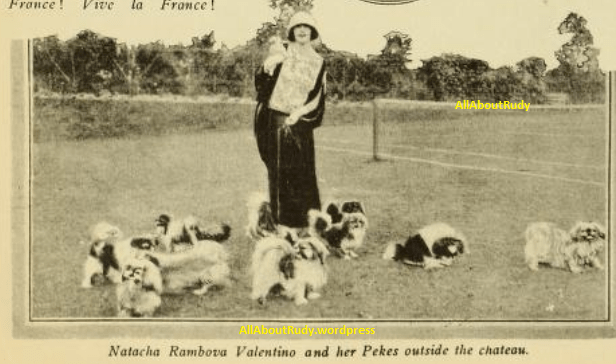
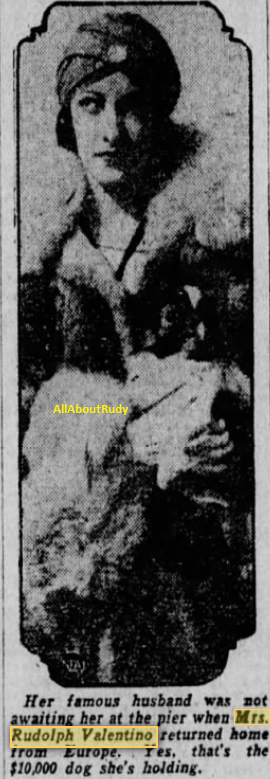
03 Jun 1922- She answers one question
At the time, Mrs.Valentino was in Mexico to be married. Before entering the courthouse, she hesitated long enough to answer a bold reporters question. “Do you love Valentino”? the reporter asked. The answer was “Forever” breathed the bride. Whereupon she disappeared into the silence away from the glare of publicity.
Categories: Uncategorized
Tags: Mrs. Rudolph Valentino, Natacha Rambova, Rudolph Valentino
1953 – Valentino Chapter The Public is Never Wrong
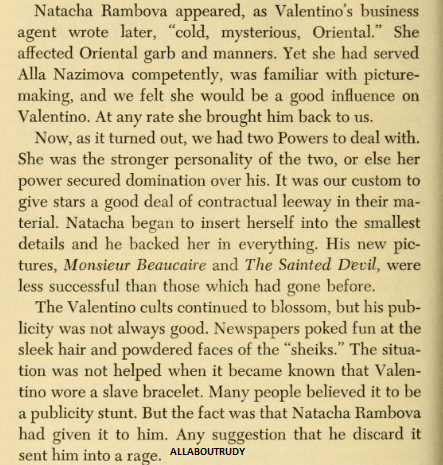
Late in 1921, our advertising copywriters took off their gloves, spit on their hands and hammered out some remarkable advice to the public. By this time all readers over forty, and doubtless most of those under, will have guessed the rest. The picture was, of course, The Sheik, with Rudolph Valentino. Top billing went not to Valentino but to the leading lady, Agnes Ayres. Valentino was twenty-six years old and had been in Hollywood for several years, dancing as a professional partner and sometimes playing bit movie parts, chiefly as a villain. Recently he had gained attention as a tango-dancing Argentine in The Four Horsemen of the Apocalypse, made by another company. When we hired him for The Sheik we expected that he would perform satisfactorily, but little more. We certainly did not expect him to convulse the nation. Valentino was as strange a man as I ever met. Before going into his personality, however, it would seem worthwhile, taking into account what happened afterward, to review The Sheik. The story was taken from a novel of the same title by Edith M. Hull, an Englishwoman. After publication abroad the book became a sensational best seller in America. We paid $50,000 for the screen rights, a very large sum for the time, with the idea that the novel’s popularity would assure the picture’s success. The story gets underway with Diana Mayo (Agnes Ayres), a haughty English girl visiting in Biskra, remarking that marriage is captivity. Since Diana is a willful adventurous girl who dislikes the restraining hand of her cautious brother, one knows that trouble is brewing the moment she spots Sheik Ahmed Ben Hassan (Rudolph Valentino) and their eyes meet. The distance between them is roughly 150 feet, yet she quails, to use understatement, visibly. One might have thought he had hit her on the head with a thrown rock. There was nothing subtle about film emotion in those days. Learning that non-Arabs are forbidden at the fete the Sheik is holding in the Biskra Casino that night, Diana disguises herself as a slave girl and wins admission. The Sheik discovers her identity as she is about to be auctioned off along with other slaves. He allows her to escape, but later that night appears under her window singing “I’m the Sheik of Araby, Your love belongs to me. At night when you’re asleep into your tent I creep. Valentino moved his lips hardly at all when he sang. As a matter of fact his acting was largely confined to protruding his large, almost occult eyes until vast areas of white were visible, drawing back the lips of his wide sensuous mouth to bare his gleaming teeth, and flaring nostrils. But to get back to the film story. Next day, the Sheik attacks Diana’s caravan and packs her off to the desert oasis camp. Though he regards her as his bride, she fends off his advances. Yet it is soon apparent that she is falling in love with him. After a week of virtual slavery Diana begins to like it at the camp. Then she learns that Raoul de Saint Hubert, a French author and friend of the Sheik is coming to visit. Ashamed to be found in her slave like condition by a fellow European, Diana stampedes her guard’s horse while riding in the desert and makes a dash for freedom. Her horse breaks a leg and she staggers across the sand toward a distant caravan. This is the caravan of the dread bandit Omair (Walter Long). Omair makes her a captive for plainly evil reasons. But soon the Sheik having been informed of Diana’s escape by the stampeded guard, attaches the caravan and rescues her. The French author (Adolph Menjou) rebukes the Sheik for what seems to him a selfish attitude toward the girl. Next day while Diana and the Frenchman are riding in the desert, Omair swoops down, wounds the author, and carries the girl off to his strong-hold. The Sheik gathers his horsemen and rides to the rescue. Meanwhile at the strong-hold, Omair pursues the “white gazelle” as he calls Diana, around and around a room in his harem house. One of the bandit’s wives is fed up with him, has advised Diana to commit suicide rather than become the brute’s victim. But Diana, having faith in the Sheik, fights gamely The Sheik and his horsemen assault the strong-hold’s walls. Once inside, the Sheik bests Omair in a hand-to-hand struggle. But at the moment of victory, a huge slave hits him a terrible blow on the head. For some day’s he lies at deaths door. Now the Frenchman tells Diana the true story of the Sheik. He is no Arab at all, but of English and Spanish descent. When a baby he was abandoned in the desert. An old sheik found him, reared him, had him educated in France, and eventually left him in command of the tribe. And so the story draws to a happy ending. The Sheik recovers and the two lovers set off for civilization and marriage. The public, especially the women, mobbed the theaters, and it was not very long before the psychologists were busying themselves with explanations. The simplest, I gathered, was that a surprisingly large number of American women wanted a mounted Sheik to carry them into the desert. Doubtless, for only a short stay, as in the case of Diana, after which they would be returned to civilization in style. Adult males were inclined to regard The Sheik with some levity. But the youths began to model themselves on Valentino, especially after he had appeared in Blood and Sand for us. In the latter picture, playing a Spanish bullfighter, he affected sideburns, sleek hair, and wide bottomed trousers. Soon thousands of boys and young men had cultivated sideburns, allowing their hair to grow long, plastered it down, and were wearing bell-bottomed pants. Lads in this getup were called “sheiks”. Thus two of Valentino’s roles were combined to get a modern sheik. As audience today viewing The Sheik laughs at the melodramatic story, the exaggerated gestures, and Valentino’s wild-eyed stares and heaving panting while demonstrating his affection for Diana. Yet some of the impact of his personality remains. He created an atmosphere of otherworldliness. And with reason, for there was much of it about him. Valentino born Rodolph Guguliemi in the village of Castellaneta in southern Italy of a French mother and an Italian father. When 18 he went to Paris and a year later migrated to New York City. It is known that he worked as a dishwasher, landscape gardener, paid dancing partner or gigolo. After a couple of years, he secured occasional vaudeville work as a partner of female dancers of more reputation than his own. Improvident by nature with expensive tastes, Valentino lived from day to day as best he could. All his life he was in debt, from $1. To $100,000, according to his status. Being fully convinced that a supernatural “Power” watched over him he did not worry. Mortal men found this power of Valentino’s hard to deal with. We raised his salary far above the terms of his contract. That seemingly only whetted the power’s appetite. It became downright unreasonable after Blood and Sand, with the lads of America imitating Valentino and women organizing worshipful cults. Evidently the power had mistakenly got the notion that we had agreed to make Blood and Sand in Spain any rate the idea crept into Valentino’s head. He became dissatisfied with his dressing quarters, wishing to be surrounded, apparently in the splendor of a powerful sheik of the dessert. Valentino rarely smiled on the screen and off, and I cannot recall ever having seen him laugh. It is true he could be charming when he wished. In dealing with a lady interviewer for example, he would give her a sort of look as if aware of something quite special in her, and treat her in an aloof but nevertheless cordial manner. On the other hand, he could be extremely temperamental. Harry Reichenbach, the public relations genius who had reversed Sam Goldwyn’s buzzer system, was now working for us. One day he called at Valentino’s dressing room to discuss publicity matters. “Does he know you”? a valet inquired. “Well”, Reichenbach replied “he used to borrow two or three dollars at a time from me and always knew to whom to bring it back”. The valet went away but soon returned with a word that his master was resting. It was my custom, as it had been in the old Twenty-sixth Street Studio, to go out on the sets every morning when in Hollywood. This provided an opportunity to get better acquainted with the players and technicians. Besides putting me closer to production, I hoped that such visits would make everybody feel that the business office was more than a place where we made contracts and counted money. The fact was that we kept as close tabs on the human element as on box-office receipts. Also, I was secretly envious of those who had an intimate hand in production, and, making myself inconspicuous, often watched activities. One day, I was privileged to see a Valentino exhibition such as I had been hearing about. He was arguing with an assistant director what about I did not know, and did not inquire. His face grew pale with fury, his eyes protruded in a wilder stare than any he had managed on the screen, and his whole body commenced to quiver. He was obviously in or near, a state of hysteria. I departed as quietly as I had come. The situation grew worse instead of better, and finally Valentino departed from the studios, making it plain that he had no intention of returning. We secured an injunction preventing him from appearing on the screen for anybody else. This did not bother him very much. He went on a lucrative dancing tour and was able to borrow all the money he needed. Valentino was married but the relationship had not lasted long, although it was still in technical force. Now he was in love with a beautiful girl named Winifred O’Shaughnessy. Her mother married Richard Hudnut, cosmetics manufacturer, and Winifred sometimes used his surname. She preferred, however, to be known as Natacha Rambova, a name of her own choosing. She was art director for Alla Nazimova, the celebrated Russian actress who was one of our stars. Like Valentino, Natacha believed herself to be guided by a supernatural power. They were married before Valentino’s divorce decree was final, and he was arrested in Los Angeles for bigamy. He got out of that by convincing authorities that the marriage was never consummated, and the ceremony was repeated as soon as legal obstacles were cleared away. Natacha Rambova appeared, as Valentino’s business agent wrote later, “cold, mysterious, oriental.” She affected Oriental garb and manners. Yet she had served Alla Nazimova competently, was familiar with picture making, and we felt she would be a good influence on Valentino. At any rate she brought him back to us. Now, as it turned out, we had two powers to deal with. She was the stronger personality of the two, or else her power secured domination over his. It was our custom to give stars a good deal of contractual leeway in their material. Natacha began to insert herself into the smallest details and he backed her in everything. His new pictures, Monsieur Beaucaire and The Sainted Devil, were less successful than those which had gone before. The Valentino cults continued to blossom, but his publicity was not always good. Newspapers poked fun at the sleek hair and powered faces of the “sheiks”. The situation was not helped when it became known that Valentino wore a slave bracelet. Many people believed it to be a publicity stunt. But the fact was that Natacha Rambova had given it to him. Any suggestion that he discard it sent him into a rage. A book he published, titled Day Dreams caused raised eyebrows. Both he and his Natacha believed in automatic writing and it seems that the real author was his power, or the combined powers, working through him. An item titled “Your Kiss” is a good sample.
Your kiss A flame Of Passions fire, The sensitive Seal Of love In the desire, The Fragrance of Your Caress; Alas At times I find Exquisite bitterness in Your kiss.
We did not care to renew Valentino’s contract, particularly since he and his wife wanted even more control over his pictures. He made arrangements with a new company, founded for the purpose, and work was begun on a film titled variously The Scarlet Power and The Hooded Falcon, dealing with the Moors in early Spain. Author of this story was Natacha Rambova. After the two had spent 80,000 traveling in Europe for background material and exotic props, the story was put aside. Another Cobra, was substituted with Natacha in full charge. It did poorly and the venture with the new company was at an end. Joseph Schenck was now handling the business affairs of United Artists, and he took a chance with Valentino being careful to draw the papers in a manner keeping decisions out of the hands of either Valentino or Natacha. Valentino accepted the terms, though reluctantly. Not long afterward the couple separated and Natacha sued for divorce. United Artists filmed The Son of the Sheik, which as it turned out, was the celebrated lover’s final picture. Valentino’s publicity became increasingly less favorable. He called his Hollywood home Falcon Lair, which opened him to some ridicule. The fun poked at the “sheiks” increased as the title of his new picture became known. He was in Chicago when the Chicago Tribune carried an editorial headed “The Pink Powder Puffs”. One of the editorial writers, it seems, had visited the men’s rest room of a popular dance emporium and there was a coin device containing face powder. Many of the young men carried their own powder puffs, and the could hold it under the machine and by inserting a coin get a sprinkle of powder. The editorial, taking this situation as its theme, viewed the younger male generation with alarm. Most of the blame was placed on “Rudy” the beautiful gardener’s boy, and sorrow was expressed that he had not been drowned long ago. IN an earlier editorial the Tribune made fun of his slave bracelet. Valentino’s “face paled, his eyes blazed, and his muscles stiffened” when he saw it according to the later account of his business manager. Seizing a pen, Valentino addressed an open letter “To the Man (?) Who Wrote the Editorial Headed “The Pink Powder Puffs” he handed it to a rival newspaper. “I call you a contemptible coward” Valentino had flung at the editorial writer, inviting him to come out from behind his anonymity for either a boxing or wrestling contest. After expressing hope that “I will have an opportunity to demonstrate to you that the wrist under the slave bracelet may snap a real fist into your sagging jaw,” he closed with “Utter Contempt”. That was in Aug 1925 Valentino came on to New York, and I was surprised to receive a telephone call from him inviting me to lunch. “It is only that I would like to see you” Valentino said “No business”. I would have agreed in any circumstance, but I was sure that he was telling the truth about not coming with a business proposition, since he was well set with United Artists. “Certainly, I answered where”? “The Colony” I had already guessed his choice since The Colony was probably New York’s most expensive restaurant. He liked the best. We set the time. Valentino and I had barely reached The Colony when it became apparent that every woman in the place having the slightest acquaintance with me felt an irresistible urge to rush to my table with greetings. Though overwhelmed, I remained in sufficient command of my senses to observe the amenities by introducing each to Valentino. He was 31 at this time, apparently in the best of physical condition, and, in this atmosphere at least was relaxed. I do not know whether his divorce decree was yet final, but Natacha Rambova was in Paris. Recently, Valentino’s name had been linked with that of Pola Negri one of our major stars. “I only wanted to tell you,” Valentino said after things had quieted down, “that I’m sorry about the trouble I made – my strike against the studio and all that. I was wrong and now I want to get it off my conscience by saying so”. I shrugged, “It’s water over the dam. In this business if we can’t disagree, sometimes violently, and then forget about it we’ll never get anywhere. You’re young. Many good years are ahead of you.” And so we dropped that line of talk. Valentino truly loved artistic things. He spoke of his ambition, when the time of his romantic roles was over, to direct pictures. I had the feeling that here was a young man to whom fame and of a rather odd sort had come too rapidly upon the heels of lean years, and he hadn’t known the best way to deal with it. “Telephone me any time”, I said as we parted, and we’ll do this again. I enjoyed myself”. And I had. A day or two later I picked up a newspaper with headlines that Valentino had been stricken with appendicitis. At first it was believed that he was in no danger. But he took a turn for the worse, Joseph Schenck and his wife Norma Talmadge came to our home to wait out the crisis. Schenck was bringing encouraging reports from the hospital, when suddenly there was a relapse. Valentino died half an hour past noon on August 23, 1925. It was a week to the minute since our meeting for lunch. I, for one, was stunned by the hysteria which followed Valentino’s death. In London, a female dancer committed suicide. In New York, a woman shot herself on a heap of Valentino’s photographs. A call came through to me from Hollywood “Pola Negri is overwrought, and she’s heading to New York for the funeral”. “Put a nurse, and a publicity man on the train,” I said, and “ask Pola to guard her statements to the press”. After Pola’s arrival, my wife and I called at her hotel to offer condolences. Though very much upset, she intended to remain in seclusion as much as possible. Valentino’s body was laid in state at Campbell’s Funeral Home at Broadway and 66th Street, with the announcement that the public would be allowed to view it. Immediately, a crowd of 36,000 mostly women gathered. Rioting described as the worst in the city’s history began as police tried to form orderly lines. Windows were smashed. A dozen mounted policemen charged into the crowd time and time again. After one retreat of the crowd, 28 women’s shows were gathered up. Women then rubbed soap on the pavement to make the horses slip. The funeral home was now barred to the public. Those who got in had nearly wrecked the place by snatching souvenirs but next day another crowd gathered when news spread Pola Negri was coming to mourn. She was spirited in through a side door. Word came out that she had collapsed at the bier, which she had and for some reason it excited the crowd. On the day of the funeral 100,000 persons, again mainly women lined the street in the neighborhood of the church in which it was being held. I was an honorary pallbearer, along with Marcus Loew, Joseph Schenck, Douglas Fairbanks, and others from the industry. Natacha Rambova was not present, being still abroad. But Valentino’s first wife Jean Acker, collapsed, and Pola Negri heavily veiled, was for many moments on the point of swooning once more. As the funeral procession left the church, the throngs fell silent except for subdued weeping of many of the women. The body was sent to Los Angeles for burial. The Valentino Cult, I am told, is still in existence. At any rate, enough women visit his grave every year to have provided the grave keeper with enough material for a book about them.
Resource
Adolph Zukor (1953). The Public is Never Wrong, Chapter 17, Putnam Publishers, New York.
Categories: Uncategorized
Tags: Adolph Zukor, Death of Rudolph Valentino, Natacha Rambova, Pola Negri, Rudolph Valentino
24 Dec – Our First Christmas
One thing we determined was we should have our first Christmas dinner and celebration together in our new home we recently purchased in Whitley Heights. The little furniture I had at the bungalow on Sunset Boulevard was carted up the hill and I finally moved into the new abode two days before Christmas. It was dreadful no hot water and no gas, but we were so excited to be in our own real home that nothing else mattered. The only furniture in the living room was a Christmas tree and one chair. But was a good time we had decorating that tree. It was the first either of us had for quite a few years. There was also a bulgy stocking for each of us tacked on to the fireplace mantle. Wreathes were hung in all the windows and red bells and a Santa Claus made up for the lack of other furnishings. The Christmas dinner was cooked entirely on a little electric stove. But at that moment we thought it was the best we had ever eaten. At midnight, we were to open our presents. We lit the candles on the tree and were just about to begin untying the packages when Rudy suddenly grabbed me by the army and dragged me upstairs. I was pushed into my bedroom and told not to dare to move until he called me down. Next, I heard him racing out of the house and down the hill. I couldn’t imagine what had happened. After 10 long minutes he returned. The outside door banged and I heard him rush downstairs. This was more than my curiosity could stand. I opened the door and called down, asking if I might now descend. No answer. Silence. Then a tiny muffled bark and I too ran downstairs. The head of a Pekinese puppy with two little paws were just visible peering out over the top of my stocking. Rudy stood beside it was waiting in childish expectation to see my surprise . I screamed with delight. I had been longing for another peke, having lost my last one the year before. We opened the rest of our packages, laughed cried and played with the puppy until the candles on the tree burned out. Rudy left and went to his apartment down the hill. Such was our first and happiest Christmas together in our first little home. After the holidays preparations would begin for his next picture “Blood and Sand”. But for this Christmas was one that I would remember with fondness and sadness.
Categories: Uncategorized
Tags: Natacha Rambova, Rudolph Valentino
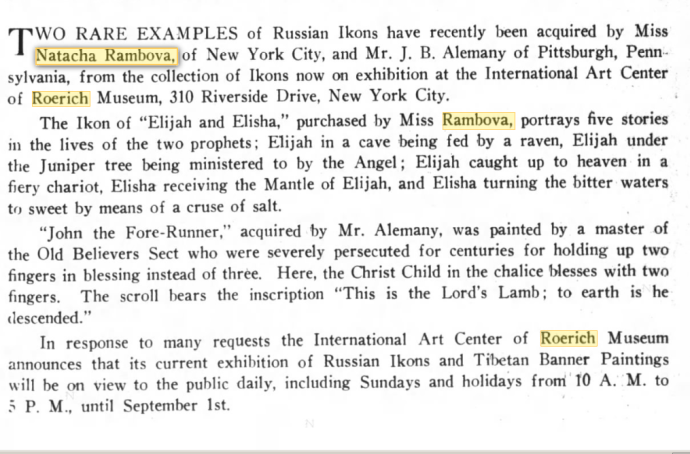
17 Oct 1930 – Natacha Rambova in Paris
Meanwhile, talking and walking we arrive at a French Restaurant and at a nearby table is the former wife of late film star Rudolph Valentino with her brunette tresses underneath a red turban. When her ex-husband died his brother Alberto Valentino was asked whom he wished to give the honor of pall-bearer. Alberto Valentino replied “The Italian Counsel of Hollywood Count Gardenico, Count Caraciccolo, Count Carminati; Charlie Chaplain, George Fitzmaurize, King Vidor”. They all were very special friends to my brother…
Categories: Uncategorized
Tags: Alberto Valentino, Natacha Rambova, Rudolph Valentino
12 Oct 1930 – The Truth About Rudolph Valentino By Natacha Rambova
Startled as I was. I looked back at my cards and said in a low voice to the boys: “Don’t look up or appear to notice it, but someone is on the veranda; I just saw the screen door open a trifle”. Nonsense said Rudy. “It’s only the wind”. “But no wind is blowing it’s too sultry”. Then again, that ghostly opening of the door and back of it the outline of a man. So I said in a still lower voice “I see a man peering in. Uncle Dickies revolver is in his top bureau drawer. Gerry, you run up and get it and Rudy and I will keep on playing cards as though we had noticed nothing”. Gerry arose, saying nonchalantly, “It’s my turn to get the drinks tonight” and sauntered unconcernedly out of the room. Rudy and I sat there, not daring to look up lest we spoil the neat little game we had planned, waiting for Gerry to come back. But why didn’t he come? What had happened? We never suspected that revolver in hand, he had run quickly down the backstairs, out the back door, and tiptoed stealthily along the veranda to the front of the house. The first we heard was Gerry’s voice ringing out “Damm you! Hold up your hands or I will shoot”. He had taken the eavesdropper by surprise. Rudy and I stood spellbound during the scuffle in the dark that followed. It was punctuated by muttered growls, the thud of heavy bodies then a silence that seemed interminable, and at least three quick shots. Far out in the darkness an agonized scream. Then dead silence. We both rushed to the window shrieking, “Gerry, Gerry are you killed”? NO answer. Like a flash Rudy bounded up the stairs shouting, there’s a shotgun in your mother’s room. I flew after him at equal speed. Mother who had retired early was lying in the darkness when Rudy burst in shouting “Gerry’s been killed” where is the shotgun? While mother fumbled for candles we had no electricity at Foxlair Rudy seized the gun and was off. I was hanging on his coat tails. “Don’t do it Rudy”. I was screaming. “You’ll be disfigured for life. Remember you belong to the screen the public”. Followed another scuffle in the dark, this one between Rudy and me, which ended with both of us flying out the front door into the night. When some 10 minutes later we returned, mud-bedraggled still toting our gun, we found Gerry standing in the living room, so thoroughly drenched and mud-encrusted that only the whites of his eyes and his teeth shone through the clay mask to identify him. He was administering first aid to mother, who a moment earlier, had entered the living room with her candle and mistaking Gerry for the miscreant had screamed for help and fainted. And now the story came out as much of it as we ever learned. Gerry on the veranda, had seized picked himself up, ran after the man and shot at him blind three times just like that. The station master at North Creek told us, when we made an inquiry that a stranger had left by the early morning train, a man who was in evident pain and walked with two canes holding one foot from the ground. He was well dressed, tall, young and good looking. He had driven up in a Ford car with another stranger, bought a ticket for New York and boarded the train, while his companion drove quickly away. One heavenly summer morning we sorrowfully bade goodbye to the beautiful mountains of Fox Lair. The trouble awaited us in New York was far worse that we had feared. Rudy suddenly found himself involved in a colossal litigation against the wealthiest, most powerful organization in the motion picture industry. Its giant tentacles were so far ramifying, its influence so widespread that Rudy, in his efforts, to combat them, was helpless as a lone swimmer in mid-ocean with every current and wind against him. His fight made cinema history. Other screen actors since motion pictures began had their tiffs and bouts with producers. These were mere children’s quarrels in comparison, in which the children were spanked and made to behave. Rudolph Valentino was a world famous star, the popular idol of two continents, with a gigantic following of fans, enormous pulling power at the box office. All the facts involved were so startling, the punishment he had to take was so severe, that the case, at the time, blazed in newspapers over the entire world, in headlines line those a few years ago, had announced victory or defeat in a war zone. But this was back in 1922 and 1923 the world very quickly forgets. I will briefly review the highlights. As soon as we perceived that the case could not be dismissed in a day, or a month, or a year, we made the best arrangements we could for a protracted stay in New York. Since mother and Uncle Dicky (Richard Hudnut) could no longer postpone their trip to Europe, we wired my aunt, Mrs. Werner always out first aid in trouble, to come on from the coast to be our chaperon. Mother and Uncle Dickie sailed off on the Olympic one morning wishing us good luck, which we needed and early the same evening auntie arrived from the coast. I must tell you about my beloved aunt Mrs. Theresa Werner. The world is familiar with her name because Rudy remembered her in his will. He loved her as much as I did even more, he used to tell me. As no other woman in the world could have done, she took the place of his own mother. Her home was in Salt Lake City, Utah but she often visited us in California and was one of those rare people who could be the third in a household without having the other two cordially wish she wasn’t. Auntie was never there when we didn’t want her and always there when we did, the most tactful, kindest, and most thoroughly adorable woman who ever lived. And how delighted we both were to see her. Auntie and I setup housekeeping in an attractive apartment on West 67th Street, while Rudy moved to the Hotel des Artistes to share an apartment with his friend, Frank Menillo. Gerry, exhausted by his long-term of service as companion and ex-officio chaperon, had by this time fled back to Hollywood. Under these arrangements both Rudy and I could have a taste of home life and still comply with the rule for “separate residences”until the long year should pass and we could be remarried. The first part of our litigations with Famous Players was very unfortunate. Our case was inadequately handled painfully so, we learned by that time it was too late to make amends. The facts which had made the real breach between Rudy and his producers were not even mentioned in the affidavit which our lawyer drew up. Famous Players promised Rudy first, that if he would finish “The Young Rajah” in Hollywood even though I had to fly to New York, that he might make his other pictures in the east, where we could be together. Second, that he might have the privilege of choosing his own director, his own pictures, in the future. None of these promises had been kept, which constituted Rudy’s case against them. But these important facts were not mentioned in the papers our lawyer drew up. The only points stressed in the case he made were ridiculous, petty annoyances, and complaints that Rudy did not have a dressing room of his own and between shots he had to sit on a stump in the sun: that he bawled out before the extras and prop boys in the studios other things that belittled him in the eyes of the court and the public.. What man in his sanity would go to court for petty grievances like these? Why a so-called lawyer should be so little interested in winning his case was something neither Rudy nor I could understand until later. As a result, Famous Players-Laskey were granted a complete injunction against Rudy, one of the most paralyzing injunctions ever issued by an American court. It barred him from production of any kind, not only on the screen and stage but from any kind of work whereby he might earn a legitimate livelihood. By the terms of this injunction he couldn’t even sweep the streets for a dime, drive a taxicab, or pull weeds in anyones garden nothing whereby he might support himself. And our finances in their usual precarious condition. Of course, this violated the personal liberty of a citizen of the U.S. so it was quickly modified. Yet, even so, it was bad enough. I, myself could have supported us both quite easily by dancing in vaudeville. Many offers of this kind were made but always when I found came to accept them I found there suddenly and mysteriously withdrawn. We checked on every side. Fortunately, a friend in need, Joe Godsol, then president of Metro came to our rescue. What we would have done without is generosity and kindness, I scarcely dare think. The help he gave us was entirely free from any security on Rudy’s part indeed, we had none to offer. Joe did not even ask interest on his loan nor accept it when offered. This unselfish proof of friendship will never be forgotten. Although the monetary debt was paid immediately the injunction was modified to permit Rudy to work, yet there are some debts money cannot pay. Our debt to Joe is one of these. Rudy’s case against Famous Players-Lasky finally settled after long litigations was significant in this respect. Now everything became suddenly quite different. On the Famous Players-Lasky lot in Hollywood every star had his or her special dressing room; private bungalows sprung up like mushrooms everything was done to make their work agreeable as possible. This sudden right-about-face in this treatment of actors was very amusing to us who had a sense of humor likewise gratifying. This radical change in attitude extended to all other organizations in the industry. But all this is a little ahead of my story. In his litigation with Famous Players-Lasky things continued to go badly until Rudy and I changed lawyers and secured Max Steuer to handle our case.
Categories: Uncategorized
Tags: Natacha Rambova, Richard Hudnut, Rudolph Valentino, Theresa Werner
26 Jan 1926 – Natacha Rambova in Maryland
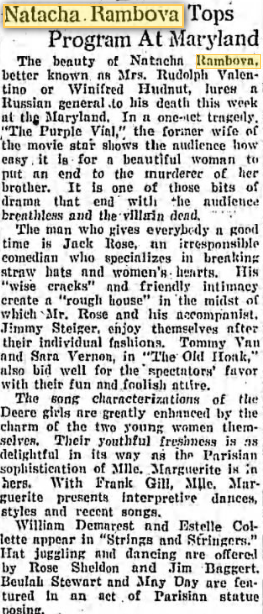
Categories: Uncategorized
Tags: Mrs. Rudolph Valentino, Natacha Rambova, Winifred Hudnut

8 Aug 1936 Silence Stirs Anxiety for Miss Rambova
Anxiety over the safety of Natacha Rambova former dancer and wife of the late Rudolph Valentino, who is a resident on the island of Mallorca off the coast of Spain, was expressed yesterday by her aunt, Mrs. Teresa Werner. According to Miss Werner, she has not heard from her niece directly since the beginning of the present civil war in Spain. However, Miss Werner said she received a cable yesterday from friends saying that Miss Rambova was unharmed. Her niece, is now the wife of Alvaro Urzaiz, retired Spanish Naval officer.
Categories: Uncategorized
Tags: Natacha Rambova, Rudolph Valentino
28 Oct 1929 – Roerich’s Shrine
On Manhattan’s socially outworn Riverside Drive, a skyscraper-Museum, dedicated to one man, was formally opened last week. The man was Professor Nicholas Constantinovich Roerich, famed Russian painter-writer-explorer-philosopher. The brick skyscraper, designed by Architect Harvey Wiley Corbett, uniquely graduated in tone from deep purple at the base to white at the top, symbolizes “growth,” houses more than 1,000 of Professor Roerich’s exotic paintings, is dedicated to international culture, world peace. Present at the dedication was the Professor himself and his two apple-cheeked sons. His audience wandered through the museum, marveled at the “Hall of the East” in which 100 ritual lights burned before a Tibetan shrine. The audience included turbaned Indians, grave Chinese, eager U. S. intellectuals, a brown woman with gems fastened in her nose, a plump white woman wearing a jingling Colombian Indian costume. Kermit Roosevelt dropped his eyes against curious stares. Natacha Rambova, white turbaned and weighted with gold invited the avid to her studio. Esoteric prattlers shook the Professor’s hands and looked for cheese wafers to nibble. There were no refreshments.
Categories: Uncategorized
Tags: Natacha Rambova, Nicolas Roerich
27 Jun 1948
Natacha Rambova was reported the first woman to wear turbans on American streets. Now that it is a popular thing La Rambova goes bareheaded.
Categories: Uncategorized
Tags: Natacha Rambova
24 Mar 1928 – Male Movie Stars More Fussy about their hair
A woman is fundamentally the same, whether she is a movie star or a Park Avenue society but the happiest moment in her life is when her hair turns out just right. That does not mean that women have a corner in the personal vanity market. NO woman in the world could be more fussy about their hair than a male movie star. These are the deductions of an expert, Ferdinand Joseph Graf, for three years, the official hairdresser to moviedom who is now at Arnold Constables. Mr. Grafs first job with Famous Players was to prepare the wigs for Valentino in “Monsieur Beaucaire”. Natacha Rambova the stars former wife, brought him out to the studio from the 5th Avenue beauty parlor she patronized for that purpose. He liked the work so well and the stars apparently liked him so he well became the official hairdresser at the studio for three years.
Categories: Uncategorized
Tags: Ferdinand Joseph Graf, Natacha Rambova, Rudolph Valentino
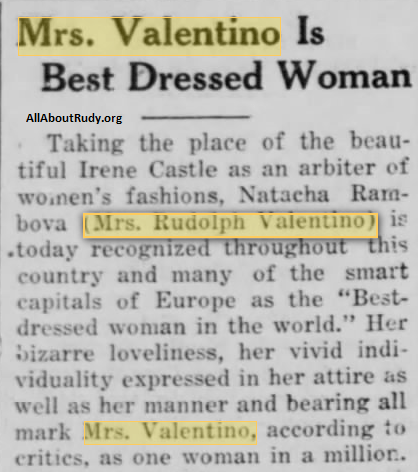
18 Jun 1922 – Scientists interests in Movie’s Happy Endings
Distinguished French psychologist Pierre Delenne, declared the other day his belief that much acting in the emotional dramas of the films may easily unfit men and women for meeting successfully the problems of reality which they have to face in every-day life. According to his theory, they can become so accustomed to the romantic, rose-colored glamour which the movies throw about everything that when they come into the harsh glare of actuality they are likely to be hopelessly blinded or to see things in such a distorted way that they make the saddest kind of mistakes. The movies are capable of more harm in this respect than the speaking stage, he thinks. While on the speaking stage an actor may play the same part for a year or longer, in the movies he crowds into the same space of time a great many different roles. Working at this continual high pressure in the world of make-believe, the movie actor may easily become obsessed, Professor Delenne thinks with the idea that everything must have a happy ending, particularly where love is concerned. That the swift triumph of true love over all sorts of obstacles is inevitable is the very breath of life of most of the great film successes. The scenario writers, directors, and continuity men hammer away at this false notion so persistently and elaborate it in so many ingenious ways that it is no wonder the actor should often get to taking it for the solemn truth. The awakening from his blissful dream that love is a n irresistible force comes when he runs against the stern realities of civilization’s laws and social conventions things which in the world where he has been living have been overcome with greatest ease. All this is extremely interesting to us here in America, where the movies had their birth and have reached their greatest development. Everybody will at once think that very possibly this theory maybe the true explanation of the extraordinary series of scandals in the motion picture world, which former Postmaster General Will Hays is now doing his best to bring to an end. Certainly it would seem that some such theory as Professor Delenne’s offers the only plausible excuse for the desperate changes which Rodolph Valentino, the famous heartbreaker o the films, has lately taken with his love. Unless he were obsessed with the idea that love must inevitably have its way and that there is bound to be a happy ending to every heart-burning romance, what could have possessed him to risk a prison term in order to possess the woman he loved, a few short weeks before the law said he should? In the movies, Rudolph Valentino ran to Mexico with the beauty for whom he “just couldn’t wait any longer” would have been quite all right. Such trivialities as the laws of the State of California would have been cast lightly aside or else bent in a way that would have served the scenario writers purpose just as well. And the final close-up of Rodolph and his perfume heiress would have shown them clinging to one another, approved of by everybody and tasting the first of an ever-lasting bliss. But, as Rodolph Valentino and Miss Hudnut have learned to their sorrow, the laws on the subject of bigamy are not the negligible things the scenario writers and movie directors would have us believe. What they planned to be the most fascinating of romantic dramas gives promise of winding up in a dismal tragedy just the sort of an unhappy last reel which no popular motion picture would tolerate for a minute. Instead of possessing the bride for whom he yearned with all the fire that has made him one of the most famous of screen lovers Rodolph Valentino is separated from her by width of a continent. In her home in the East she hides, distracted by anxiety over her lover’s predicament and by the pitiless publicity that has been thrust upon her. Out in California, alone and broken hearted, he impatiently awaits trial on a charge that may land him inside the gray walls of a state prison. “But even the fear of a prison term could not dim the flame of love that blazed so hotly in their hearts. Captions like this are of frequent occurrence in the films. Evidently Rodolph Valentino thought the sentiment they express founded on a truth which could be turned to the advantage of his love hungry heart. But now he and his perfume heiress know that only in the make-believe world of the films is love able to defy the law in such high-handed fashion. Bigamy is not so lightly regarded in real life, and for those suspected of it there are troublesome sheriffs and prosecuting attorneys, stern judges, and juries to be reckoned with. According to Professor’s Delenne’s theory many movie actors are in a condition quite similar to that of an unfortunate shimmy dancer who cannot keep from shimmying. They have loved so often and with such made impetuosity on the screen, and all their dreams have so invariably come true, that they have become carried away with the idea that such things are as easily possible in real life. So it was, it seems, with Rodolph Valentino. In the “Four Horsemen of the Apocalypse” “The Sheik” and countless other film successes he was always the all-conquering lover. He loved with an intensity that acknowledge no obstacles, brooked no delay. And just like this should it known in the California film world as Natacha Rambova. He had only recently received an interlocutory decree of divorce from Miss Jean Acker, the screen actress, and until the final decree was granted he had no legal right to marry again. But Valentino, with all the impetuosity that has made him famous as a screen lover fled across the Mexican border with his sweetheart and they were married. The close-up that followed was a grim contrast to the happy endings which are the delight of the movie goers.
Categories: Uncategorized
Tags: Natacha Rambova, Rudolph Valentino
May 1923 – Mineralava Dance Tour Stop Seattle, WA
During his 1923 Seattle visit, Rudolph Valentino was in the midst of a dispute with his studio, Lasky-Paramount. Battles over power and control were being waged behind-the-scenes, but publicly the actor claimed to be protesting the cheap program films to which he had been assigned, as well as the practice of block booking. In an era when popular movie stars routinely appeared in three or four new film releases a year, Valentino resisted the studio’s demand that he work. (Block booking was an early distribution practice whereby a studio would tie the releases of major stars to less ambitious efforts. Exhibitors wishing to screen “marquee” pictures had to sign exclusive agreements that forced them to also show the studio’s third-rate potboilers. Exhibitors strongly protested this arrangement. For failure to work, Lasky-Paramount eventually suspended Rudolph Valentino, and went as far as to obtain a court injunction preventing the actor from appearing onscreen until after his Paramount contract expired on February 7, 1924. The studio felt they had called Valentino’s bluff, since he and second wife, Natacha Rambova (formerly Winifred Kimball Shaughnessy) were heavily in debt. But the pair countered by mounting a personal appearance tour organized by George Ullman (later Valentino’s business manager), and sponsored by Mineralava, a beauty clay company. For 17 weeks, the couple gave dance exhibitions across the United States for a reported $7,000 per week, keeping Rudolph Valentino in the public eye and, based on their commercial pitches for Mineralava, providing the company with valuable exposure. The tour began in the spring of 1923 in Wichita, Kansas, where public schools closed on the day of his appearance. Despite the excitement that Rudolph Valentino brought to almost every stop on his itinerary, the star’s arrival in Seattle was relatively low-key. The Valentino’s were expected at 9:40 in the evening on May 30, 1923, traveling from Spokane in the star’s private rail car. From the train station, they were to be whisked to the Hippodrome at 5th Avenue and University Street, where Valentino was slated to help judge a combination dance contest/beauty pageant at 10:00 p.m. According to publicity for the event, the pageant served as a national search to help find the star’s next leading lady (a role which eventually went to veteran Paramount actress Bebe Daniels. Unfortunately, their train arrived much later than expected, and the Valentino’s entered the Hippodrome well after the dancing competition. The actor then sat with other judges behind a curtain for the remainder of the beauty pageant, which concealed him from the audience, most of whom had come solely for the opportunity to see the motion picture star in person. When all was said and done, Rudolph Valentino personally selected Katherine Cuddy, a local stenographer, as the beauty contest winner, turning down the half-hearted challenge of Seattle Mayor and fellow judge Edwin J. Brown (1864-1941) on behalf of another contestant. It is hoped that Brown’s candidate did not know that the Mayor was championing her cause, for the next day it was widely reported that Valentino rejected her for having bad teeth. (Ironically, Brown — who was a prominent Seattle dentist as well as a doctor, lawyer, and politician — did not notice this defect. The Valentino’s followed the beauty judging with an electrifying demonstration of their famous Argentine tango, recreating the dance scene from The Four Horsemen of the Apocalypse. Both were dressed for the part; as one account put it:
“It is in Rodolph’s [sic] blood to wear black velvet pantaloons and stamp his black patent leather boots and click castanets. His manner was quite Argentine; his hair quite brilliantine” (Dean). Natasha Rambova was also clad in black velvet, offset with a red Carmen like shawl. “[She] is very brave to put on a ten dollar pair of black silk stockings so close to her partner’s three inch silver spurs, noted Times reporter Dora Dean. The Private Valentino Dean managed to sneak backstage after the exhibition and take a spot in Rudolph Valentino’s dressing room, where she found the actor quite blunt about all the attention his appearances had been garnering. The moment he arrived at the Hippodrome, for instance, a large crowd of girls — “starving for romance,” the actor noted with some disdain — surged toward the stage. Adoration of this sort wore on Valentino, for it overshadowed his attempts to be taken seriously as a performer. “`From persons who saw the Four Horsemen I have received intelligent letters of appreciation,’ [Valentino] said. `I like them better than the adoring notes from little girls who want me for their sheik.’ `But what are you going to do, when all those darling girls want to see you ride [in] the desert and gnash your teeth?’ he was asked. “`Ah, they should stay at home with their husbands,’ said the slick-haired actor” (Dean). Wanda Von Kettler, writing for the Star, also managed to get herself into Rudolph Valentino’s dressing room at the Hippodrome. It must have been a crowded place: Mayor Brown and Washington’s Lieutenant Governor William Jennings “Wee” Coyle (1888-1977) also fought for space amongst a crowd of reporters and fans. According to Kettler: “Beside Rodolph Valentino sat Mrs. Valentino, his tall and slender brown-eyed wife, in her Argentine dancing costume. “He surveyed his guests. Then told them that he wasn’t a `sheik.’ “`Of course,’ he declared, with a somewhat resigned laugh, `I’ve gotten considerable publicity because of the name. But I don’t know if it’s been the right kind of publicity. The very sentimental girls think I’m all right. They like me. But what about the intelligent women – and the men? Don’t they think I’m a mollycoddle? They do. When I go back in pictures, after the fight with the movie concern is over, I’m going to prove that I’m not the type they think I am …’ “Valentino plans to write a book. He confided so to some of us Wednesday night. “`It’s going to be a book on the tango,’ he declared. `I’m going to teach all America to dance that dance. Everybody seems to like it, so why not help them learn it.’ “‘Dancing,’ he added, `is the greatest stimulant of the day, and is more and more being recognized as such. Since the event of prohibition it has increased 50 per cent.’ “Valentino doesn’t `mind’ the letters he receives from admiring ladies. “`I’m very glad to know,’ he explained Wednesday night, `that I’m being appreciated. I like to hear the opinion of the public, whether it’s for or against me. But I know the ladies aren’t `in love’ with me. They’re in love with an `ideal’ and they sometimes write to me as a result.’ “As for Mrs. Valentino – being a sheik’s wife doesn’t bother her at all. When asked about her stand on the matter, she laughed and replied, `I want him to be popular. The more popular he is, the better I like it'” (Kettler). Following the Hippodrome appearance, the Valentino’s traveled northward for scheduled engagements in Vancouver, British Columbia. They returned to Seattle on June 1, 1923, for a visit to Children’s Orthopedic Hospital, where they were guests of honor at the institution’s Pound Party. An annual charity event, the benefit took its name directly from its open request: In lieu of donations, the Hospital accepted a pound of anything — food, clothing, etc. — which could be used to help those in need. The Valentino’s were the hit of the function, which a spokesman later declared the most successful in the history of Children’s Orthopedic. In total, the event netted a record amount of food and clothing and almost $400 in donations, $10 of which came from the actor himself. Credit for the success was given solely to Rudolph Valentino’s appearance, which garnered much more public interest than past charity drives. It also attracted hundreds of fans to the front lawn of the Hospital, mostly young women hoping to catch a glimpse of the actor as he came and went from the gathering. Thankfully, the throng outside conducted itself in an orderly fashion and the party went off without a hitch. After partaking in an afternoon tea and reception, the Valentino’s went from bed to bed throughout the Hospital, visiting nearly every child and showing a sincere concern for their well-being. “A few of the sheik’s queries concerning child culture demonstrated a decided lack of knowledge on the subject but a willingness to learn,” the Post-Intelligencer got several nurses to admit afterward. “He was quite exercised over the lack of teeth in the mouth of one baby, age eight days” (Seattle Post-Intelligencer, June 2, 1923). After the Pound Party concluded, the Valentino’s slipped quietly out of the city, making their way first to Tacoma, then back down the coast toward Hollywood. The last word on Rudolph Valentino’s 1923 Seattle appearance fell to the Star, which produced a column entitled “Letters from Chief Seattle” after the city’s Indian namesake:
“Dear Rudy:
“I have met many movie stars, and most of them were painfully conceited. I am glad to see that egotism plays but little part in your character. It is more or less evident that you have been grossly caricatured by envious persons. Come back to Seattle soon and stay longer.”.
CHIEF SEATTLE” (“Letters to Chief Seattle”).
Categories: Uncategorized
Tags: Mineralava Dance Tour, Natacha Rambova, Rudolph Valentino
28 Jan 1926 – Cynthia Grey Tells Why Marriage of Rudolph Valentino’s Failed.
Being a bred-in-the-bone feminist, I am sure glad to finally stumble across a story based upon an interview with Mrs. Rudolph Valentino that gives her a fair break. Somehow the picture of Winifred Hudnut Valentino as the old-fashioned typed Pekingese fondling female did not ring true. And her lord and masters outbreak anent his noble craving for home and fireside and kidlets sounds quite posey and stagey and as though fresh from the fertile brain of that unoriginal lot, press agents, rather than warm and quivering from his own sorrowing heart. But most of the remarks accredited to Mrs. Valentino sound true. Her dissertation on the folly of an American girl marrying a European husband sounds mighty sensible to me. “Foreign men have such different ideas of marriage from Americans. Boys in Europe are taught to consider themselves much more important than girls. These boys, brought up to consider themselves lords of creation, expect wives to be subordinate. A wife is someone to make him comfortable, minister to his wants, provide sympathy when he needs nothing, keep herself well in the background”. And we regard this especially worthy of thought as it comes from Mrs. Valentino’s ruby lips. “Now I don’t mind doing all this. It’s a pleasure to make one’s husband happy and comfortable when one loves him. But what wore me out was my foreign husband’s acceptance of all these things as though they were merely my duty, my day’s work, instead of a consideration for him and a matter of love”. And, apropos of Rudy’s paternal manifestations readers may recall his heralded yearning for offspring with which his wife wouldn’t oblige the ex-wife fires one like this. “Rudy might like noiseless, dressed up children, but – “. And that unfinished sentence is only What Every Woman Knows. Then about the matter of Mrs. Valentino working. “I work because I was energetic. A man’s love doesn’t compensate for the boredom and depression of being a loafer. For a woman to give up all work just to devote herself to loving a man is a great mistake. Because only an egocentric wants a woman to devote her life to admiring him”. Well and ably spoken Winifred Hudnut Valentino or Natacha Rambova. We’re for you. You have a good head and said head has doped out a much better analysis of why your marriage failed than has either your erstwhile Rudy or his press agent.
Categories: Uncategorized
Tags: Mrs. Rudolph Valentino, Natacha Rambova, Rudolph Valentino
26 Feb 1926 – Natacha Rambova News Advertisement
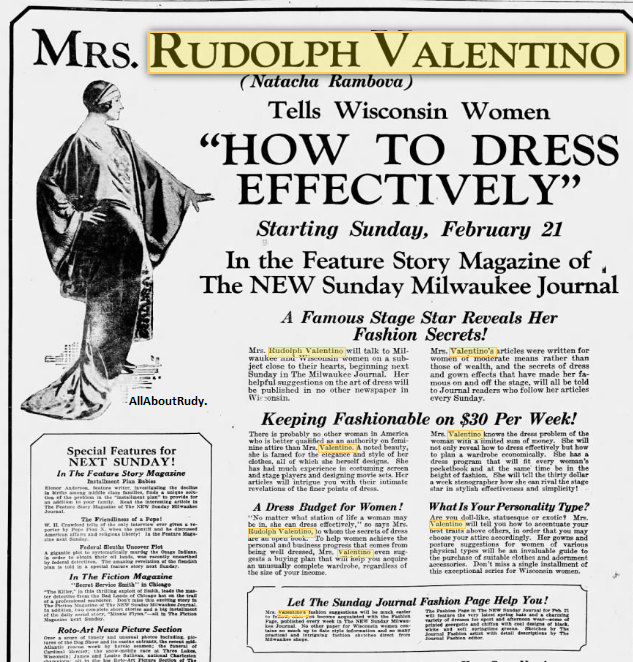
Categories: Uncategorized
Tags: Mrs. Rudolph Valentino, Natacha Rambova
24 Feb 1932 – Loses Valentino Box
Howard Kemp, Justice of the Peace, in this Gretna Green woods adds this one to the ‘meanest thieves list’. Of the thousands of boxes that contained wedding rings of couples he married, the miscreant who entered this place made off with only one the box in which Rudolph Valentino purchased the ring he gave Natacha Rambova when the justice married them a number of years ago.
Categories: Uncategorized
Tags: Natacha Rambova, Rudolph Valentino
15 Oct 1977 – Glad You Asked That
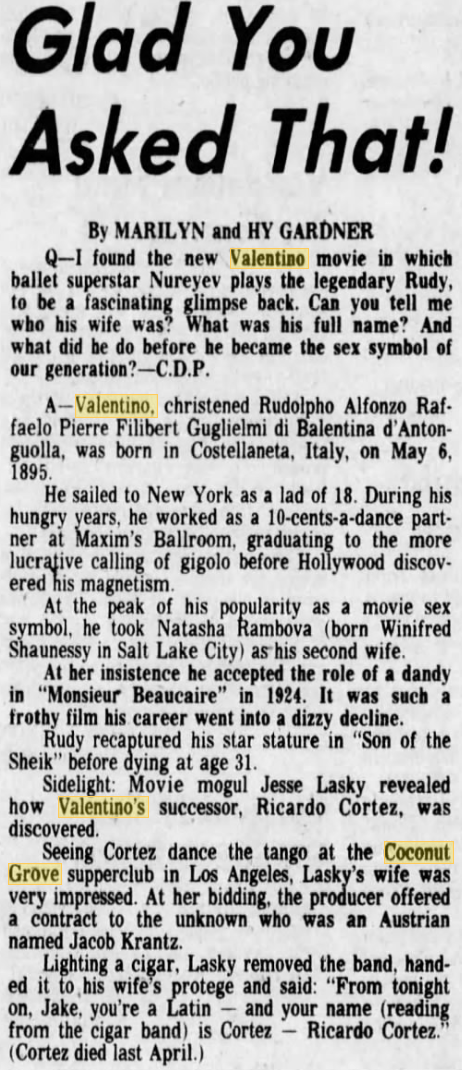
Categories: Uncategorized
Tags: Natacha Rambova, Rudolph Valentino
09 Jan 1976 – Former Motion Picture Executive Misses Silent Movie Star
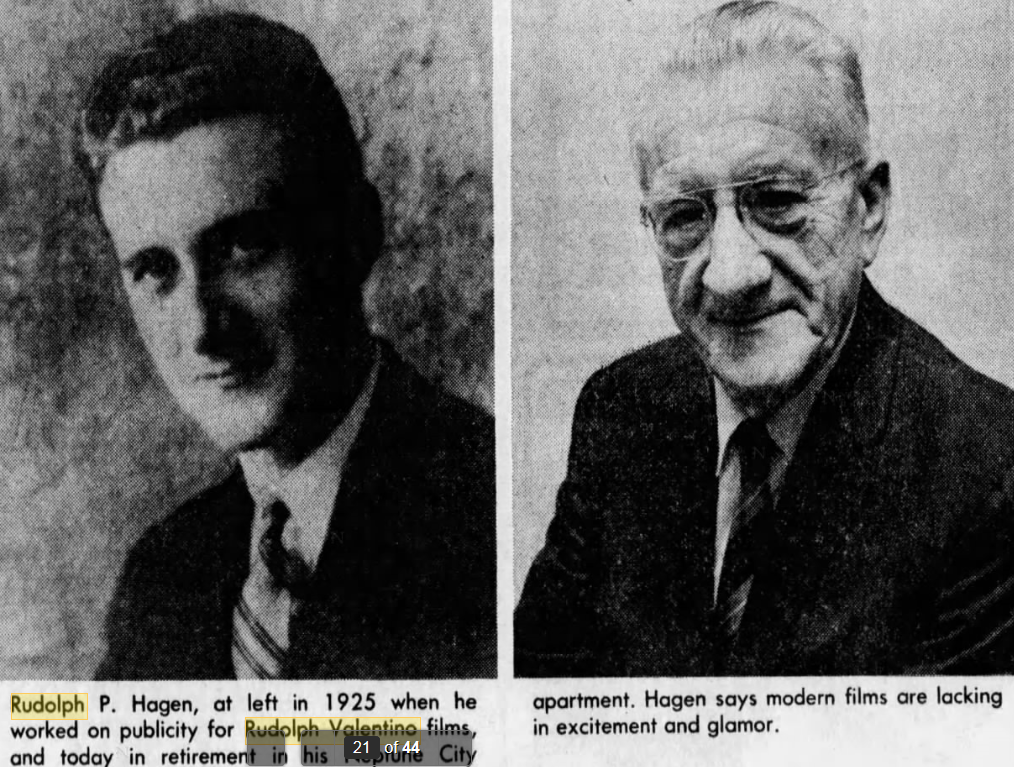
If you happen to possess a “personally autographed” photo of screen actor Rudolph Valentino, chances are that it was actually signed by another Rudolph. Rudolph Hagen, Neptune City who is now 75 spent nearly 40 years in the motion picture industry, behind the scenes in production and distribution of silent and sound movies. In 1925, Hagen was in charge of accounting for Ritz Carlton Pictures in Hollywood was temporarily recruited to sign several hundred photographs of Valentino to fill the requests by his adoring fans. “I studied Valentino’s signature and remember that it was very unique with the letters d and a being different. After some practice, I was able to duplicate it almost exactly” he recalled. Valentino was under contract with Ritz Carlton at the time starring in its first production “Cobra” with Nita Naldi, a well-known vamp of the day. Mr. Hagen saw a great deal of Valentino at the studio and was impressed by his friendly manner. “He was very nice to everyone and very much the gentleman. He spoke with a slight Italian accent which women found charming” Mr. Hagen explained. Throughout the four months it took to film “Cobra”. Hagen remembers, Valentino followed a strict program of exercise. “Valentino had a very trim athletic physique which he maintained through a vigorous exercise regimen. He encouraged all of us at the studio to exercise to keep fit. He was an excellent dancer and horseman as well. At the age of 30, Valentino appeared to be in the best of health. Following completion of “Cobra” Valentino was to star in “The Hooded Falcon” for Ritz Carlton a film written by his controversial wife Natacha Rambova. “We obtain a vicious wild falcon for the movie and had to hire a bird trainer to care for it. The studio spent approximately $50,000 in preparation for production”. Because of the constant demands and interference on the part of Valentino’s wife who wanted control over every phase of production, and the projected $900,000 cost of the film, “The Hooded Falcon” never materialized. Following the cancellation of Valentino’s contract. It was Hagens responsibility to tie-up the loose ends of the production giving the studio staff its final paychecks, taking inventory of the wardrobe, and returning all props, including the wild falcon. “Cobra” was Valentino’s last completed picture for the studio. He died suddenly in 1926. “It was sadly ironic that a man who was so devoted to physical fitness should die at such an early age. His life style was incredibly luxurious with rich food and drink every day. He crowded 70 years of living into a mere 36”. After the bankruptcy of Ritz Carlton, Hagen declined an offer from studio boss J.D. Williams to join him in England where he was starting a new production company, British National Pictures. However, Williams gave him letters of introduction to several motion picture executives. One letter led to Harry Warner, President of Warner Bros. who offered him a job that was to last 32 years. In the same year, Hagen met his first wife Irene Hussey whom he married in 1927. Hagen’s rise in the motion picture industry was a far cry from his humble beginnings when his first job in 1928 was in bookkeeping for First National Pictures, which distributed silent films. There he became associated with one of the founders at First National and later Ritz Carlton. When asked to assess the changes in movies over the years Hagen said “I miss the glamour of the old films they had star value. I’m nostalgic for the movies of Rudolph Valentino, James Cagney, Barrymore etc. They lack the important ingredient and that is star quality.
Categories: Uncategorized
Tags: Natacha Rambova, Nita Naldi, Ritz Carlton Pictures, Rudolph Valentino
25 Mar 1928 – Male Movie Stars more fussy about hair
A woman is fundamentally the same, whether she is a movie star or a Park Ave society bud the happiest moment in her life is when her hair turns out just right. But that does not mean that women have a corner in the personal vanity market. NO woman in the world could be more fussy about their hair than a male movie star. These are the deductions of an expert, Ferdinand Joseph Graf, for three years, the official hairdresser to moviedom who is now at Arnold Constables. Mr. Grafs first job with Famous Players was to prepare the wigs for Valentino in “Monsieru Beaucaire”. Natacha Rambova the stars wife, brought him out to the studio from the 5th Ave beauty parlor she patronized for that purpose. He liked the work so well and the stars apparently liked him so he well became the official hairdresser at the studio for three years.
Categories: Uncategorized
Tags: Natacha Rambova, Rudolph Valentino
17 Mar 1923 – Valentino and Wife to Appear in Dallas Next Week
Rudolph Valentino and his wife will appear in Dallas on 24 March. They with the ten-piece Coleman’s Band from the Montmarte, New York City, are touring the country, traveling on the “Mayflower” the private car of Ex-President Wilson. Since Valentino is prohibited from appearing in any theatre, he is following his old vocation, that of dancing and as a dancer he will appear at Gardner Park Auditorium in a very unique program. The band will play one hour for the general public to dance, followed by a dancing contest. Mr. Valentino presenting the prize to the winner. After this Rudolph will give his famous dance of “The Four Horsemen” followed with the Argentinian Tango with Mrs. Valentino as his partner.
Categories: Uncategorized
Tags: Mineralava Dance Tour, Natacha Rambova, Rudolph Valentino
Mar 1916 – Famous Russian Dancer Theodore Kosloff Sues Mrs. de Wolfe
Mrs. Winifred de Wolfe was sued for approximately $2,000 which he said is due him in payment for dance lessons and gowns furnished her daughter. Mr. George Battle, the de Wolfe attorney said that Miss de Wolfe told her mother that is she would pay the claim she would not see Kosloff anymore, but Mrs. de Wolfe remained adamant because she contended the claim was unjust.
Categories: Uncategorized
Tags: Natacha Rambova, Theodore Kosloff, Winifred De Wolfe
 All About Rudolph Valentino
You must be logged in to post a comment.